
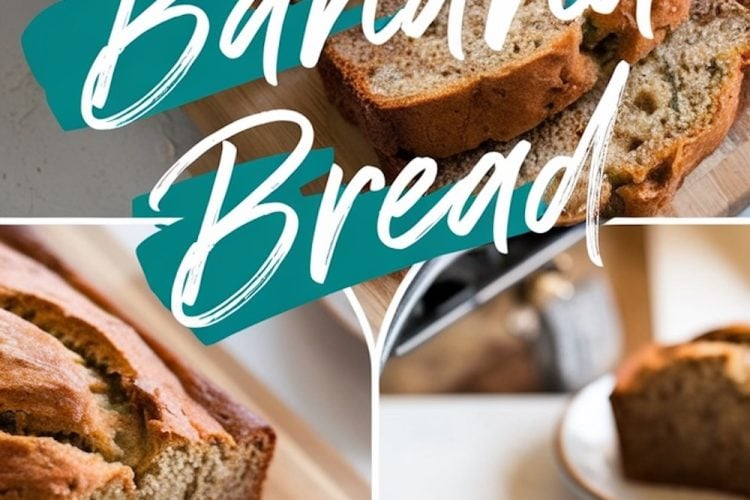
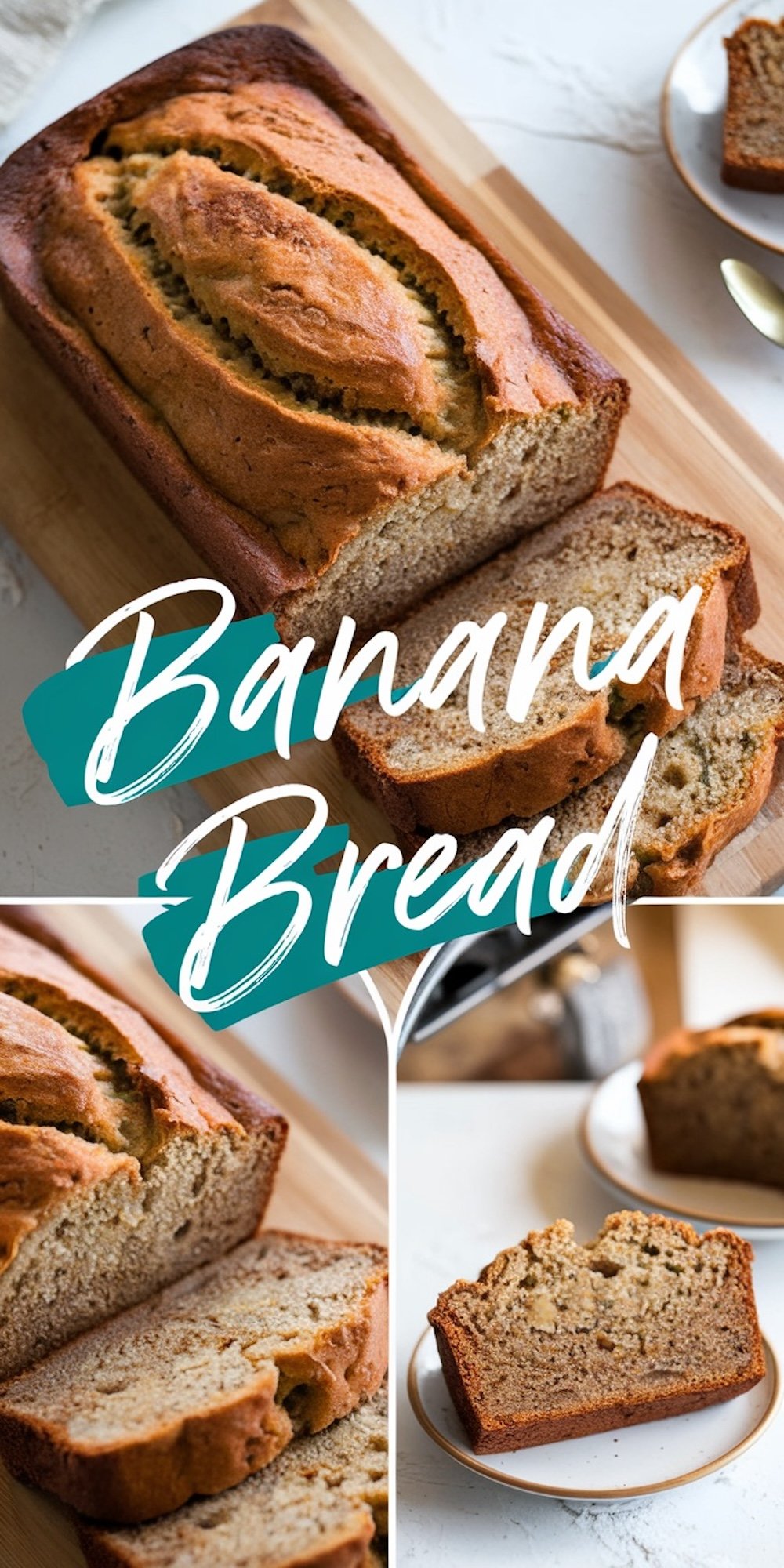
This classic banana bread is a moist, lightly spiced loaf made with 3 ripe bananas, melted butter, white and brown sugar, and baking soda. It bakes in a 9×5 inch pan at 350°F (175°C) for 50 to 60 minutes, takes about 75 minutes from start to finish, and gives you 10 thick slices.
Two things decide how it turns out. The bananas need to be heavily spotted, and the flour gets folded in only until the last dry streak disappears. My mother never threw out an overripe banana, and this is the loaf she was saving them for.
Following a special diet?
Every recipe on this site can be converted to gluten-free, vegan, dairy-free, keto, nut-free or egg-free with adjusted ratios so nothing falls flat.
Try the Recipe Converter →This Loaf by the Numbers
- Pan: one 9×5 inch loaf pan, greased and lined with parchment
- Oven: 350°F (175°C) for 50 to 60 minutes
- Time: 15 minutes prep, about 75 minutes total, plus cooling
- Yield: 10 slices
- Bananas: 3 large, very ripe, about 1½ cups mashed
- Butter and sugar: ½ cup (115 g) melted butter, ¾ cup (150 g) granulated sugar, ¼ cup (50 g) brown sugar
- Leavening: 1 teaspoon baking soda, no baking powder
- Keeps: 3 days at room temperature, 1 week in the fridge, 3 months in the freezer
How Ripe Should the Bananas Be?
Riper than you would want to eat. The skins should be mostly brown and the fruit soft through the peel. By then most of the starch has turned to sugar, so the bread tastes of banana and bakes up moist. Yellow bananas give a pale loaf that is dry by day two.
Measure after mashing. About 1½ cups is right for 1¾ cups (220 g) of flour. A fourth big banana sounds generous, but the extra water weighs the crumb down and leaves a gummy strip under the crust. Frozen bananas work well: thaw them in a bowl and add the liquid that runs out, because that is banana juice.
No spotted bananas? Bake them unpeeled at 300°F for 15 to 20 minutes, until the skins turn black, and cool before mashing.
Baking soda is the only leavening. It works because bananas and brown sugar are slightly acidic, and it helps the crust brown.
Mixing the Batter Without Making It Tough
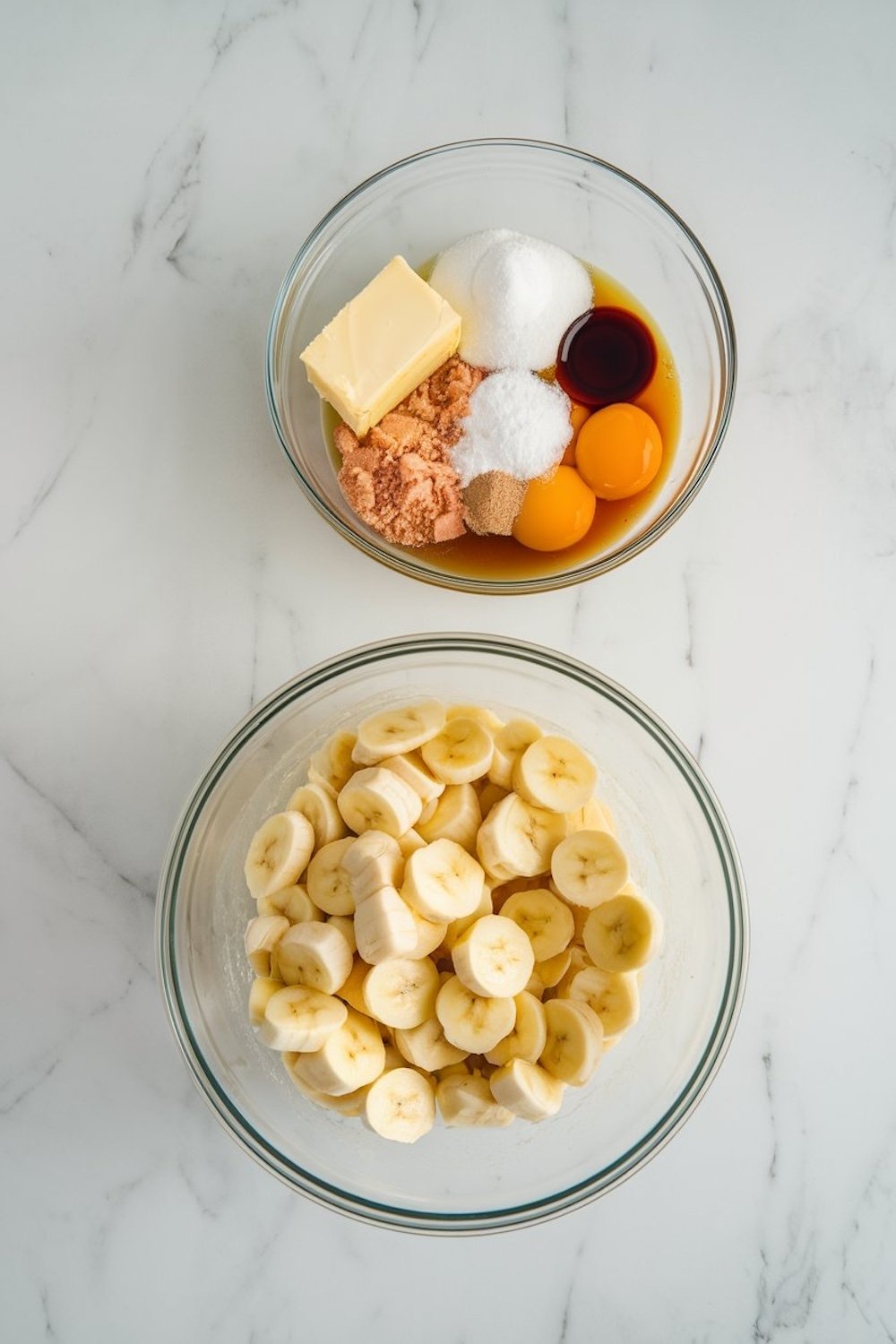
Whisk the flour, baking soda, salt and cinnamon in a medium bowl. In a large bowl, mash the bananas with a fork until mostly smooth, leaving a few small lumps. Those turn into soft, sweet pockets in the crumb.
Let the melted butter cool for 5 to 10 minutes before it goes in. Hot butter starts to cook the eggs and makes the batter greasy. Stir it into the bananas with both sugars, then add the eggs and vanilla and stir until the mixture looks glossy and even.
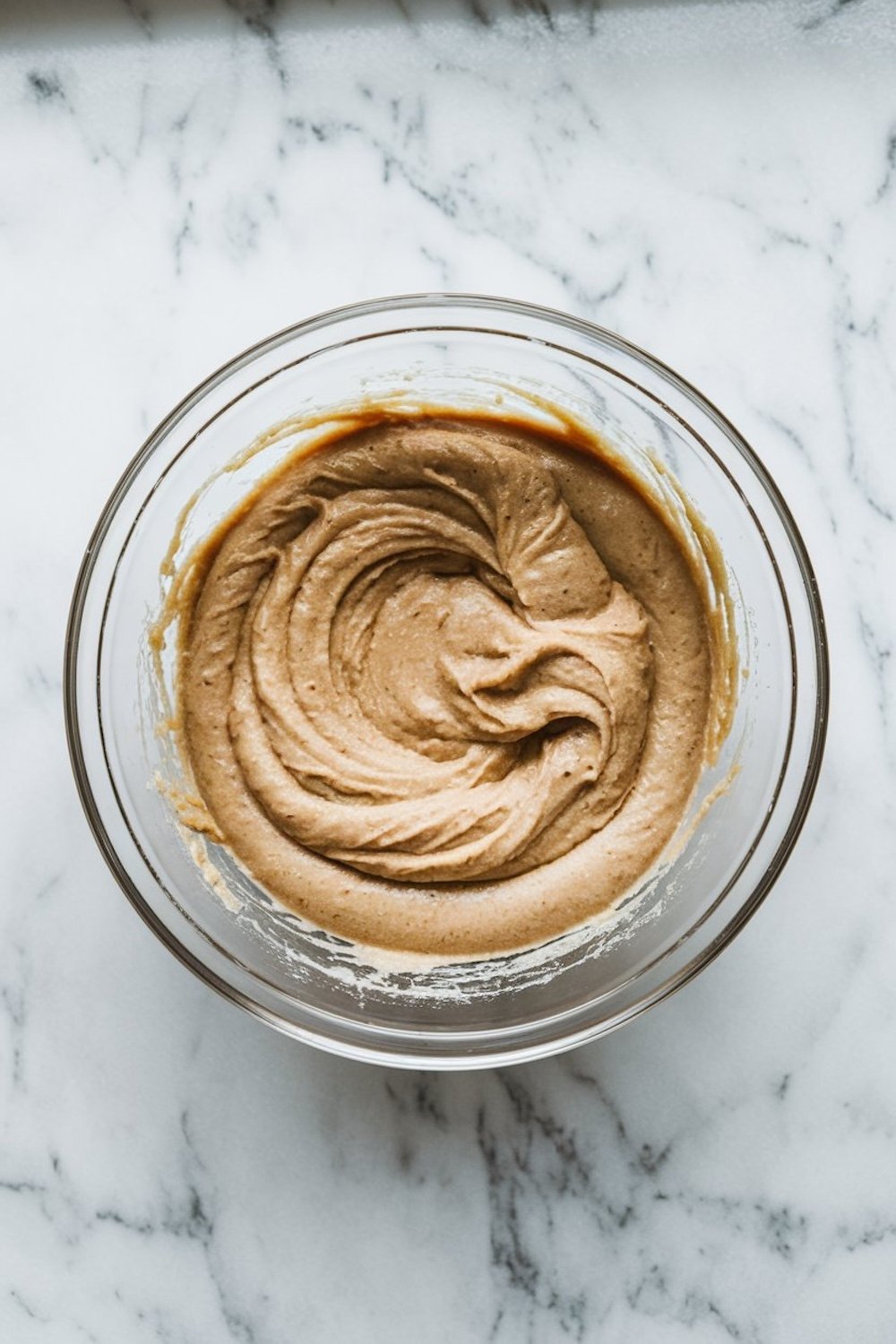
Now the step that matters most. Add the dry ingredients a little at a time and fold with a spatula, scraping the bottom of the bowl, just until you cannot see dry flour. The batter should be thick and slightly lumpy. Beating it at this point builds gluten, and the loaf comes out tough, with tunnels running up through the middle.
Butter or Oil in Banana Bread?
Butter gives this loaf a rich, faintly caramel flavor and a crust that browns well. Oil keeps a loaf soft a day longer because it stays liquid at room temperature, but it adds almost no flavor.
To swap, use 6 tablespoons of a neutral oil such as canola for the ½ cup butter, since butter is partly water. For more flavor instead, brown the butter until it smells nutty, then cool it before mixing.
Walnuts, Pecans or Chocolate Chips
The mix-ins are optional: ½ cup chopped walnuts or pecans, ½ cup chocolate chips, or both. Stop at about 1 cup in total and fold them in with the last few strokes. Toast the nuts at 350°F for about 8 minutes first and they stay crisp. A pinch of nutmeg or a handful of shredded coconut also works.
For a loaf built around the extras, try chocolate chip walnut banana bread, blueberry banana bread or honey oat banana bread.
Baking Until the Center Is Set
Spread the batter in the lined pan and smooth the top. If you like, slice a banana lengthwise and lay it on top, cut side up. It sinks a little and caramelizes in the oven.
Start checking at 50 minutes. A toothpick in the center should come out clean or with a few moist crumbs, never wet batter. The top should be deep brown, split down the middle, and spring back when you press it. With an instant read thermometer, the center reads 200 to 205°F. If the top is dark before the middle is set, lay a sheet of foil loosely over the pan for the last 10 to 15 minutes.
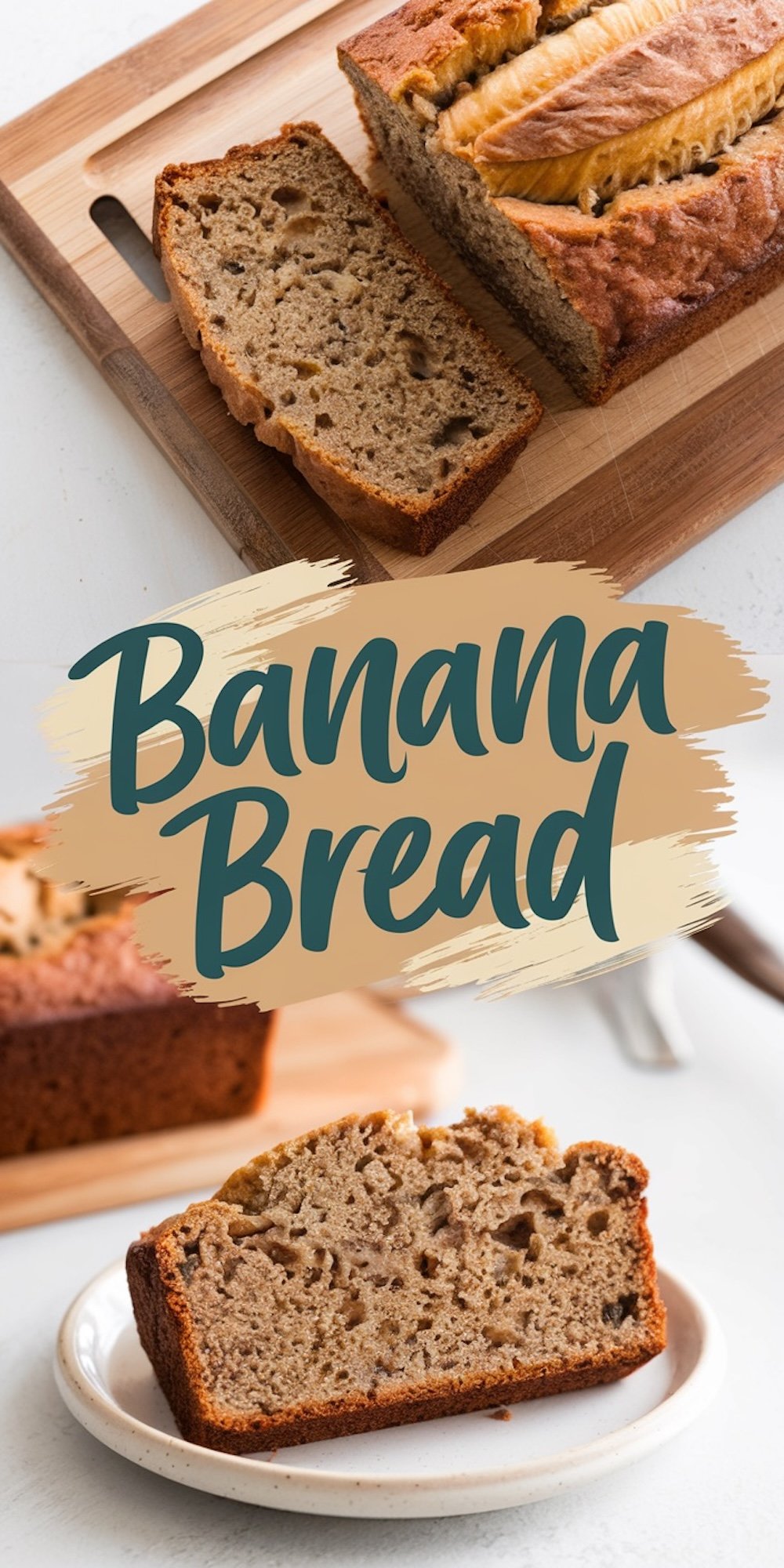
Leave the loaf in the pan for 10 minutes, then lift it out by the parchment onto a wire rack and let it cool completely. It is still setting inside while it is warm, and a slice cut too early squashes into a gummy line. My mother insisted on that wait, and she was right.
If It Sinks, Turns Gummy or Comes Out Dry
- Sunken middle: it came out too soon, or the oven runs cool. Bake until the toothpick is clean and check your oven with a thermometer.
- Gummy strip under the top: too much banana, or it was sliced warm. Keep to about 1½ cups mashed and cool it fully.
- Dense and tough: the batter was overmixed after the flour went in. Fold, do not beat.
- Dry and crumbly: overbaked, or the bananas were not ripe enough. Check at 50 minutes and wait for brown skins.
- Flat loaf: the baking soda is old. Drop a pinch into vinegar; if it does not fizz hard, replace it.
Keeping, Freezing and Serving Slices
Keep the cooled loaf in an airtight container at room temperature for up to 3 days, or in the fridge for up to a week; chilled slices are best toasted. To freeze, wrap the loaf or single slices tightly in plastic wrap and put them in a freezer bag for up to 3 months. Frozen slices go straight into the toaster.
At home we eat it with soft butter or a drizzle of honey, with coffee or a glass of cold milk. Cinnamon butter is a good spread for toasted slices, and a spoonful of caramelized bananas turns one into dessert.
Short Answers Before You Bake
What makes this a classic banana bread?
It keeps to the old formula: ripe bananas, butter, sugar, eggs, flour and baking soda, with no yogurt, sour cream or oil. Nuts and chocolate chips are optional extras.
What temperature and how long do you bake banana bread?
Bake it at 350°F (175°C) for 50 to 60 minutes in a 9×5 inch pan, until a toothpick comes out clean and the center reaches 200 to 205°F.
Can I use an 8×4 inch loaf pan?
Yes. The loaf bakes taller, so fill the pan no more than three quarters full and expect 5 to 10 extra minutes.
Can I make it gluten free?
This loaf needs all-purpose flour. For a gluten free loaf, use my almond flour banana bread, which is built for it. For a lighter, cakey version, see this banana cake.
Classic Banana Bread Recipe
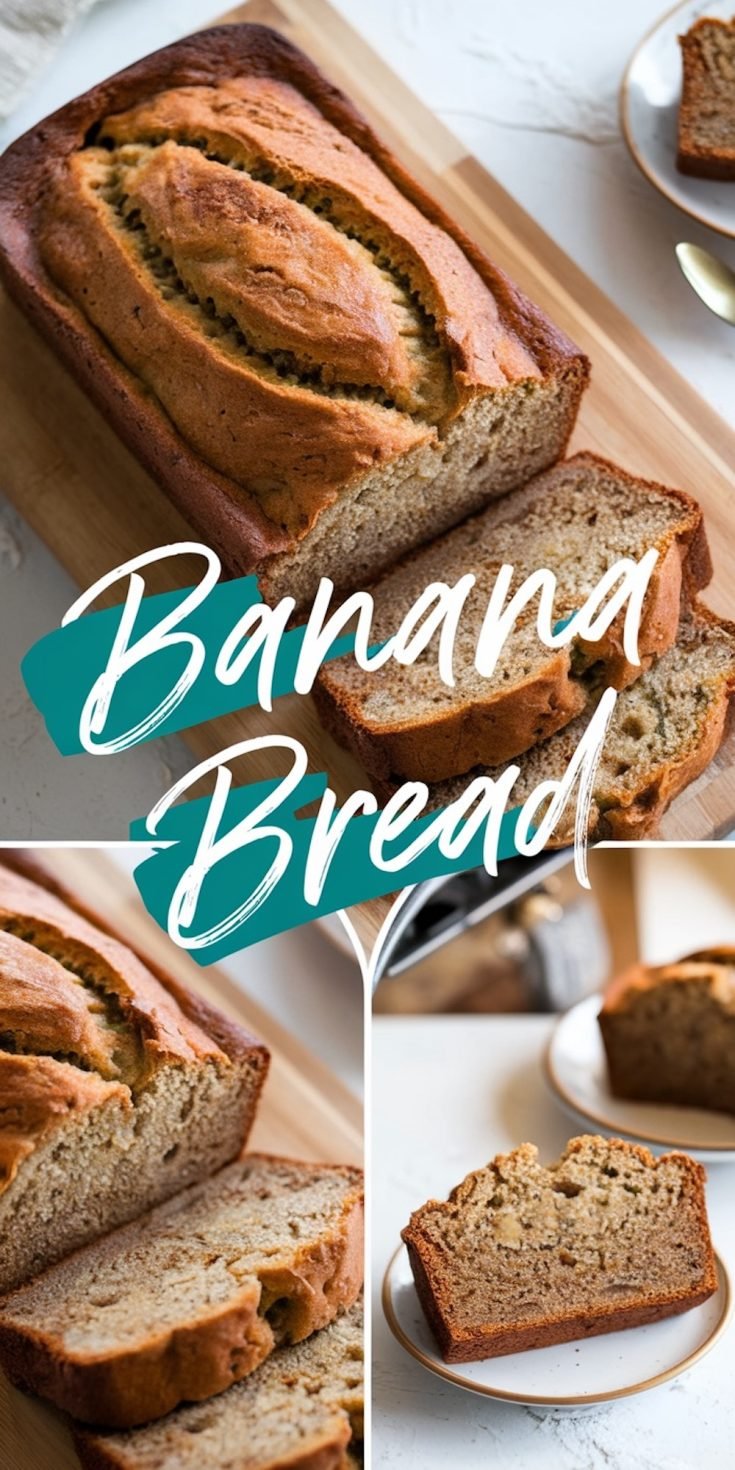
This classic banana bread is a moist, old-fashioned loaf made with 3 ripe bananas, melted butter, granulated and brown sugar, eggs, vanilla, flour and baking soda, with optional cinnamon. It bakes in a 9x5 inch pan at 350°F for 50 to 60 minutes, takes about 75 minutes in total, and makes one tender loaf of 10 slices. Use heavily spotted bananas, about 1 1/2 cups mashed, and fold the flour in only until no dry streaks remain, so the traditional banana bread stays soft instead of dense. Serve it for breakfast with butter or honey, pack it for lunch boxes, or fold in walnuts, pecans or chocolate chips. It keeps 3 days at room temperature, a week in the fridge and 3 months frozen.
Ingredients
- FOR THE DRY INGREDIENTS
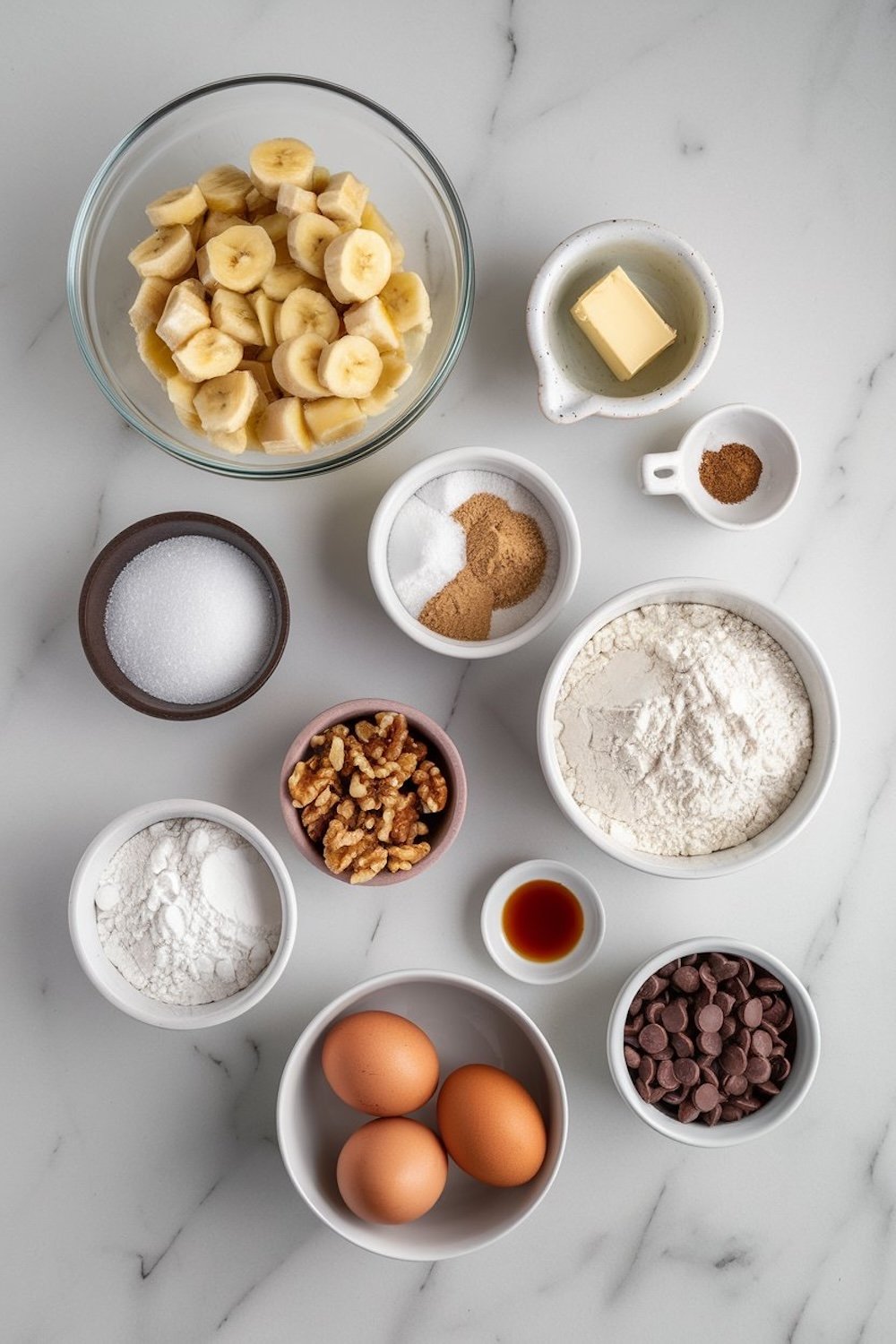
- 1 ¾ cups (220g) all-purpose flour
- 1 teaspoon baking soda
- ½ teaspoon salt
- 1 teaspoon ground cinnamon (optional)
- FOR THE WET INGREDIENTS
- 3 large ripe bananas, mashed (about 1 ½ cups)
- ½ cup (115g) unsalted butter, melted and cooled
- ¾ cup (150g) granulated sugar
- ¼ cup (50g) brown sugar
- 2 large eggs, at room temperature
- 1 teaspoon pure vanilla extract
- OPTIONAL MIX-INS
- ½ cup chopped walnuts or pecans
- ½ cup chocolate chips
Instructions
- PREP YOUR OVEN AND PAN: Preheat the oven to 350°F (175°C). Grease a 9x5-inch loaf pan and line it with parchment paper for easy removal.
- COMBINE DRY INGREDIENTS: In a medium-sized bowl, whisk together the all-purpose flour, baking soda, salt, and cinnamon. Set aside.
- MIX WET INGREDIENTS: In a large mixing bowl, mash the bananas until smooth with a few lumps remaining. Add the melted and cooled butter, granulated sugar, and brown sugar. Stir until well combined. Mix in the eggs and vanilla extract until fully incorporated.
- COMBINE WET AND DRY INGREDIENTS: Gradually add the dry ingredients to the wet ingredients. Gently fold them together using a spatula until no streaks of flour remain. Avoid overmixing to maintain a tender texture. If using optional mix-ins like nuts or chocolate chips, fold them in at this stage.
- BAKE THE BREAD: Pour the batter into the prepared loaf pan, smoothing the top with a spatula. For a decorative touch, slice a banana lengthwise and place it on top of the batter. Bake for 50–60 minutes, or until a toothpick inserted into the center comes out clean.
- COOL AND SLICE: Allow the banana bread to cool in the pan for about 10 minutes. Then, transfer it to a wire rack to cool completely before slicing and serving.
Notes
Use very ripe bananas with mostly brown skins, about 1 1/2 cups mashed. More banana than that makes the center heavy and gummy.
Let the melted butter cool for 5 to 10 minutes before mixing so it does not cook the eggs.
Fold the dry ingredients in only until no flour shows. Overmixing gives a tough loaf with tunnels.
The bread is done when a toothpick comes out clean and the center reads 200 to 205°F. If the top browns too fast, cover it loosely with foil for the last 10 to 15 minutes.
Cool completely before slicing.
Store leftovers in an airtight container at room temperature for up to 3 days, or refrigerate for up to a week. Freeze for up to 3 months, wrapped tightly in plastic wrap and placed in a freezer-safe bag or container.
Nutrition Information
Yield
10Serving Size
1Amount Per Serving Calories 221Total Fat 9gSaturated Fat 3gTrans Fat 0gUnsaturated Fat 5gCholesterol 39mgSodium 252mgCarbohydrates 33gFiber 3gSugar 10gProtein 5g

Hi Emma, I’ve been comparing many a banana bread recipe, and some recipes require that you cream softened butter with the sugars, while others, like yours, utilize melted butter. I ask why do you opt for going the melted butter route? How does it impact the texture and outcome of the bread?
Thank you!!
Hi Dionakaye, great question, and one I’ve gone back and forth on myself over the years.
I use melted butter in this banana bread because it creates a softer, more moist texture, which works really well here. It also makes the process simpler since you can just stir everything together without needing a mixer.
Creaming butter with sugar introduces more air into the batter, which gives you a lighter crumb. That’s great for cakes, but with banana bread, I actually prefer the slightly denser, tender result that comes from melted butter.
It’s really about the kind of texture you’re after. This version leans rich, moist, and easy. Thanks again for asking about the why behind it