

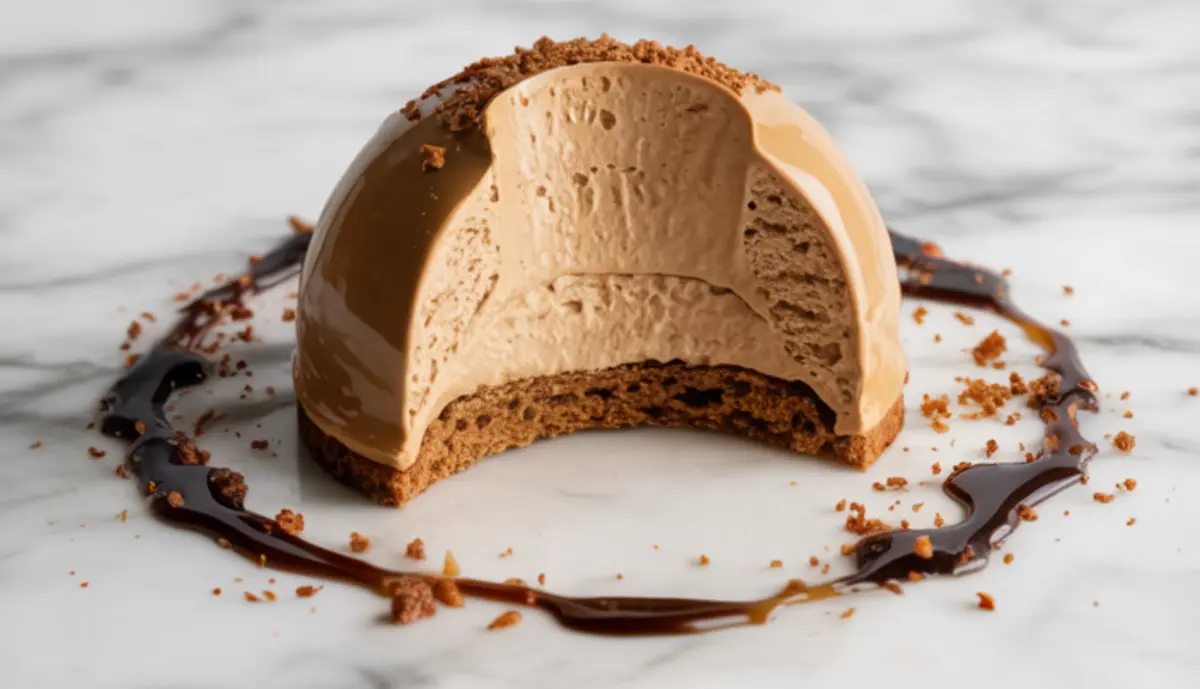
These gingerbread latte mousse domes are a light espresso gingerbread mousse set in dome molds on a spiced gingerbread cookie round, then covered in a glossy white chocolate mirror glaze. The recipe makes 6 domes and takes about an hour of hands-on work, plus at least 6 hours in the freezer.
The one thing that decides how they look: glaze the domes while they are frozen hard, with the glaze cooled to 90°F (32°C). Get those two right and the glaze sets in a thin, even shell instead of sliding off. That is the whole trick.

Following a special diet?
Every recipe on this site can be converted to gluten-free, vegan, dairy-free, keto, nut-free or egg-free with adjusted ratios so nothing falls flat.
Try the Recipe Converter →What Goes Into a Gingerbread Latte Mousse
Think of a gingerbread latte turned into a spoonable dessert. The base is ¼ cup strong espresso warmed with 2 tablespoons brown sugar, ½ teaspoon cinnamon, ¼ teaspoon ground ginger and a pinch of nutmeg. Gelatin goes in next, then ⅓ cup melted white chocolate and a little vanilla. If you like the drink, my gingerbread latte uses the same spice mix in a mug.
Espresso is worth it here. Brewed coffee works, but its flavor fades behind the spices and the molasses in the cookie. Espresso stays in front, so the mousse tastes like a latte and not only like spice.
The body comes from 1 cup cold heavy cream, whipped with ¼ cup mascarpone. The mascarpone is optional. It makes the mousse a little richer and steadier, which helps when the domes sit in the freezer for a few days.
Baking the Gingerbread Cookie Rounds for the Dome Base
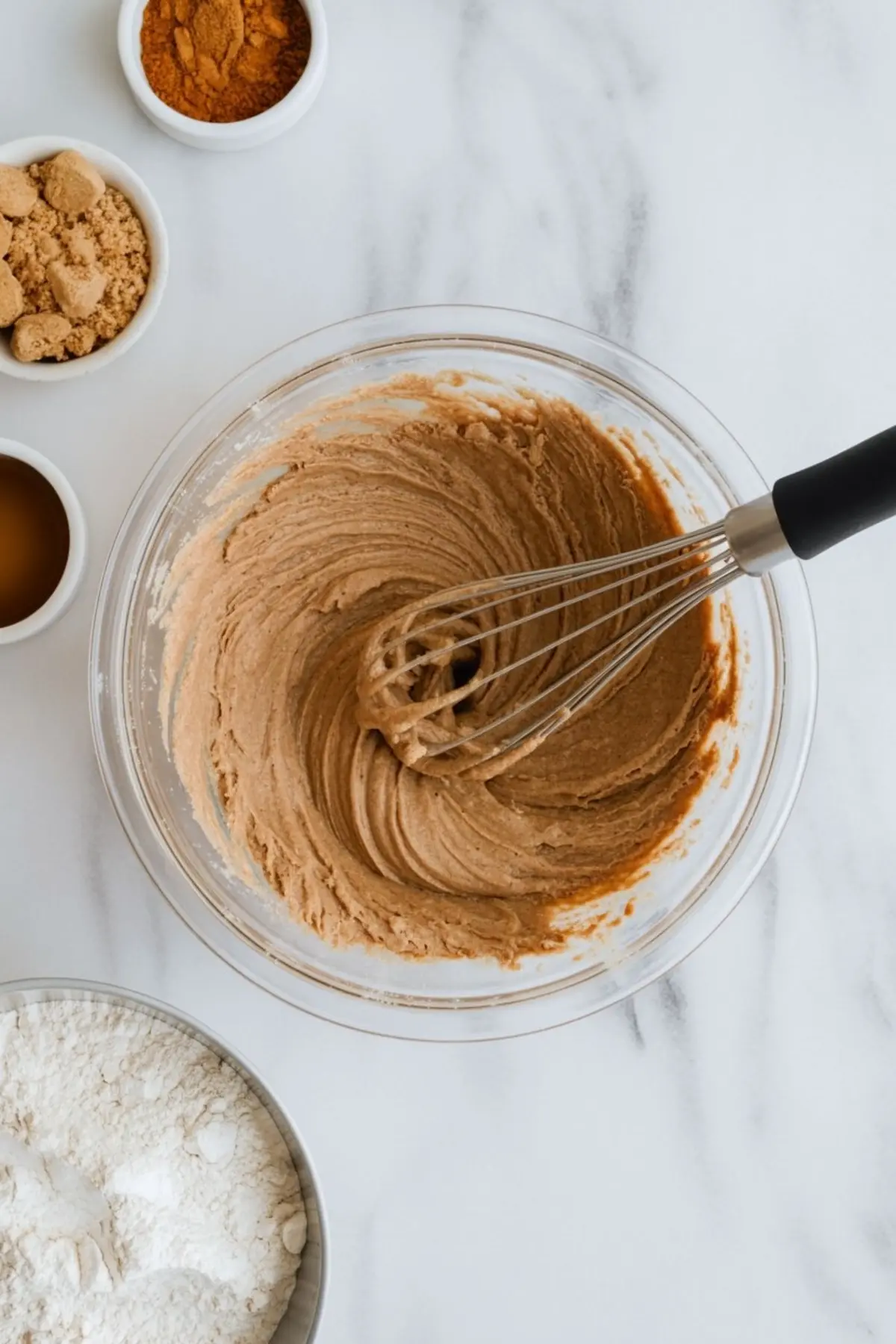
The base is a small batch gingerbread dough: flour, baking soda, salt, ginger, cinnamon and cloves, with 6 tablespoons butter creamed with brown sugar, ¼ cup molasses and one egg yolk. It bakes firm enough to carry the mousse but stays short and tender when you cut through it.
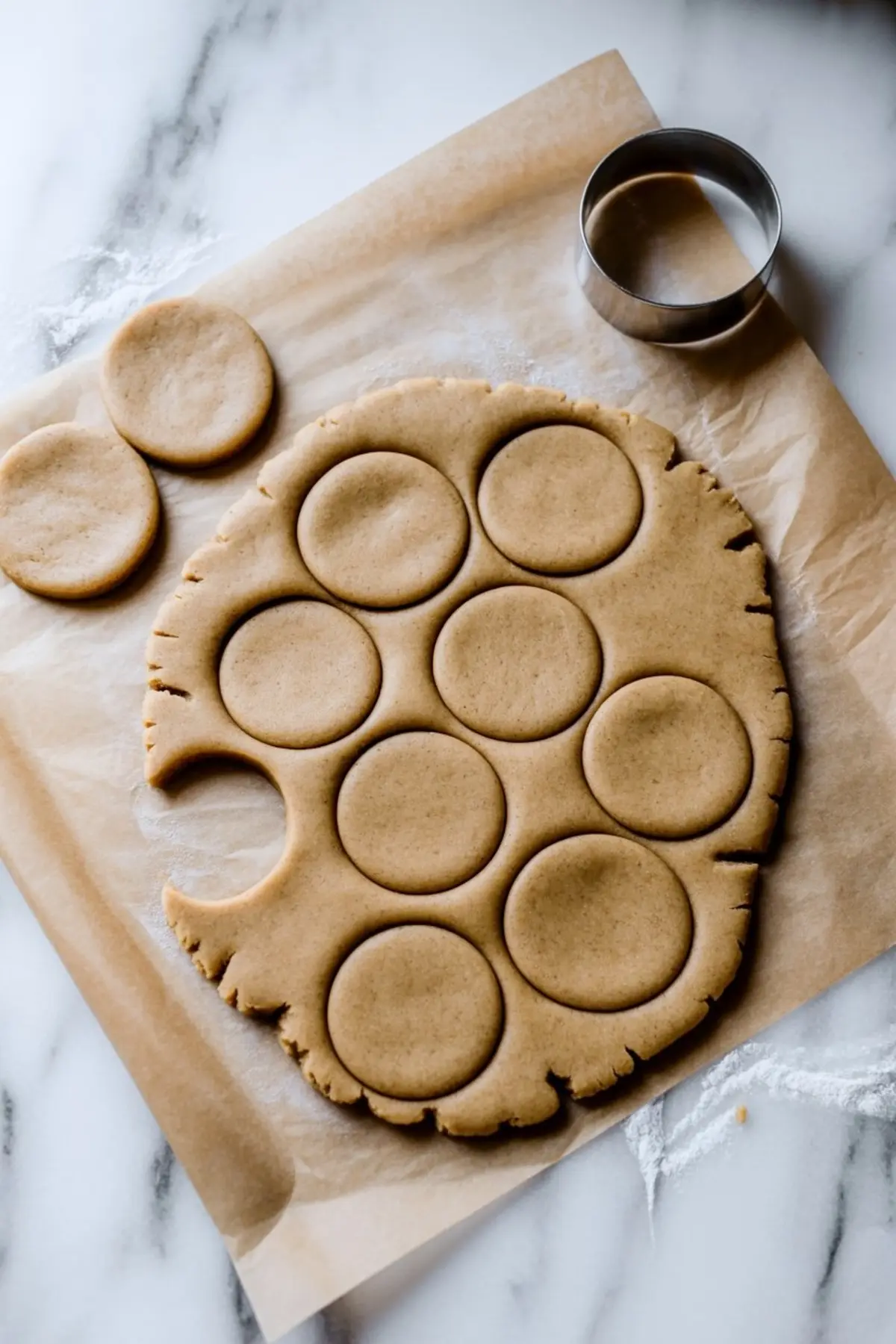
Roll the dough ¼ inch thick and cut the rounds before baking, slightly larger than the open side of your dome mold. Bake at 350°F (175°C) for 8 to 10 minutes, until the edges are set and the centers no longer look wet, and leave a little room between the rounds because the baking soda makes them puff and spread as they bake.
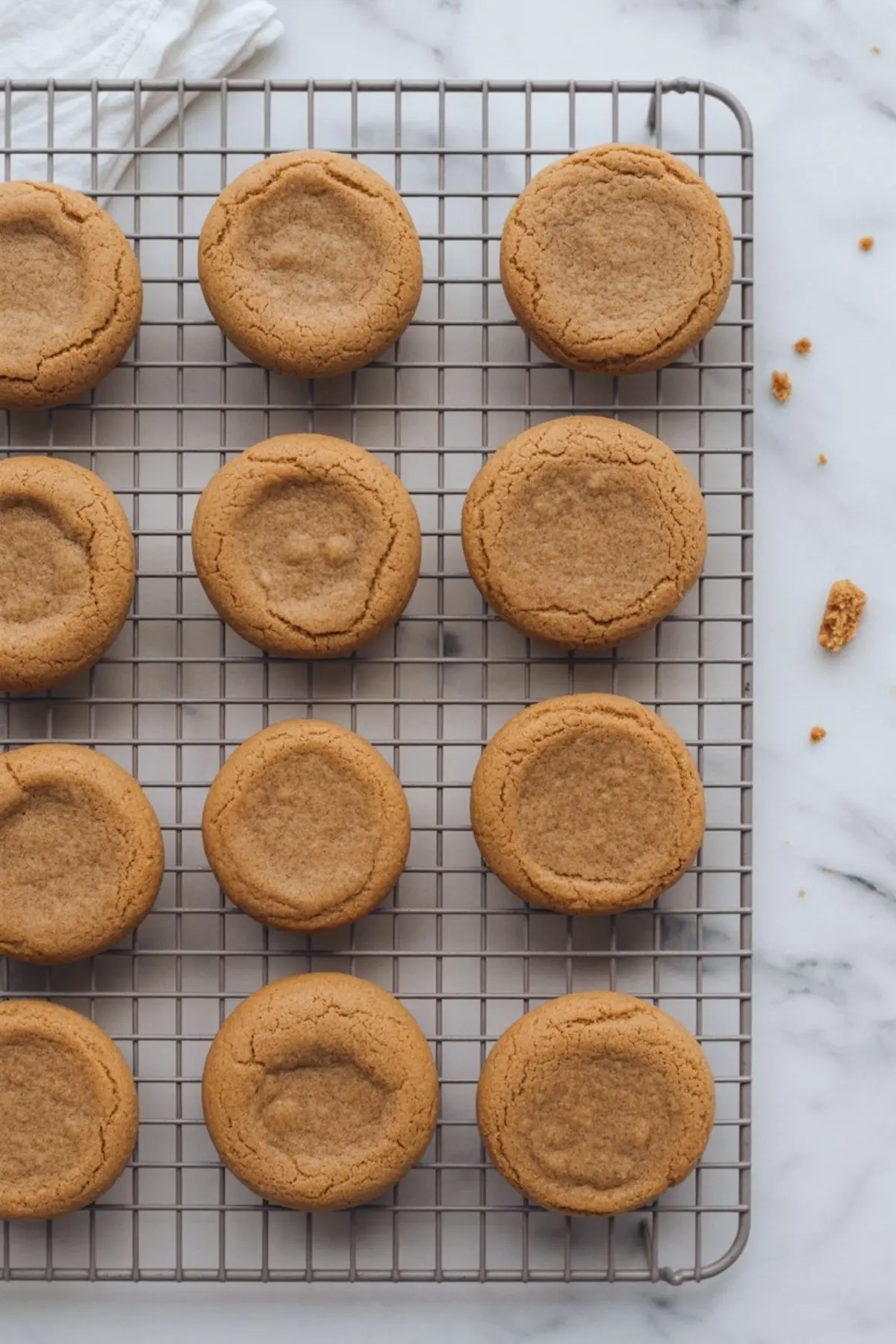
If a round comes out too wide, press the same cutter over it while it is still warm and lift off the extra. Once cool, the cookie snaps instead of trimming cleanly. For a softer, chewier cookie on its own, try my gingerbread crinkle cookies.
More Christmas Bakes to Try
Four more festive favorites for your holiday baking.




Folding the Espresso Mousse Without Losing Air
Sprinkle 1 teaspoon gelatin over 2 tablespoons cold water and leave it for 5 minutes. Warm the espresso, sugar and spices until steaming but not boiling, stir in the gelatin until no grains are left, then add the melted white chocolate and vanilla.
Now you have to wait. The base has to cool to room temperature before it meets the cream. Too warm and it melts the whipped cream, so the mousse turns soupy and dense. Wait too long and the gelatin starts to set, which leaves rubbery lumps you cannot fold out. If the base has thickened, set the bowl over hot water for a few seconds and stir until it pours again.
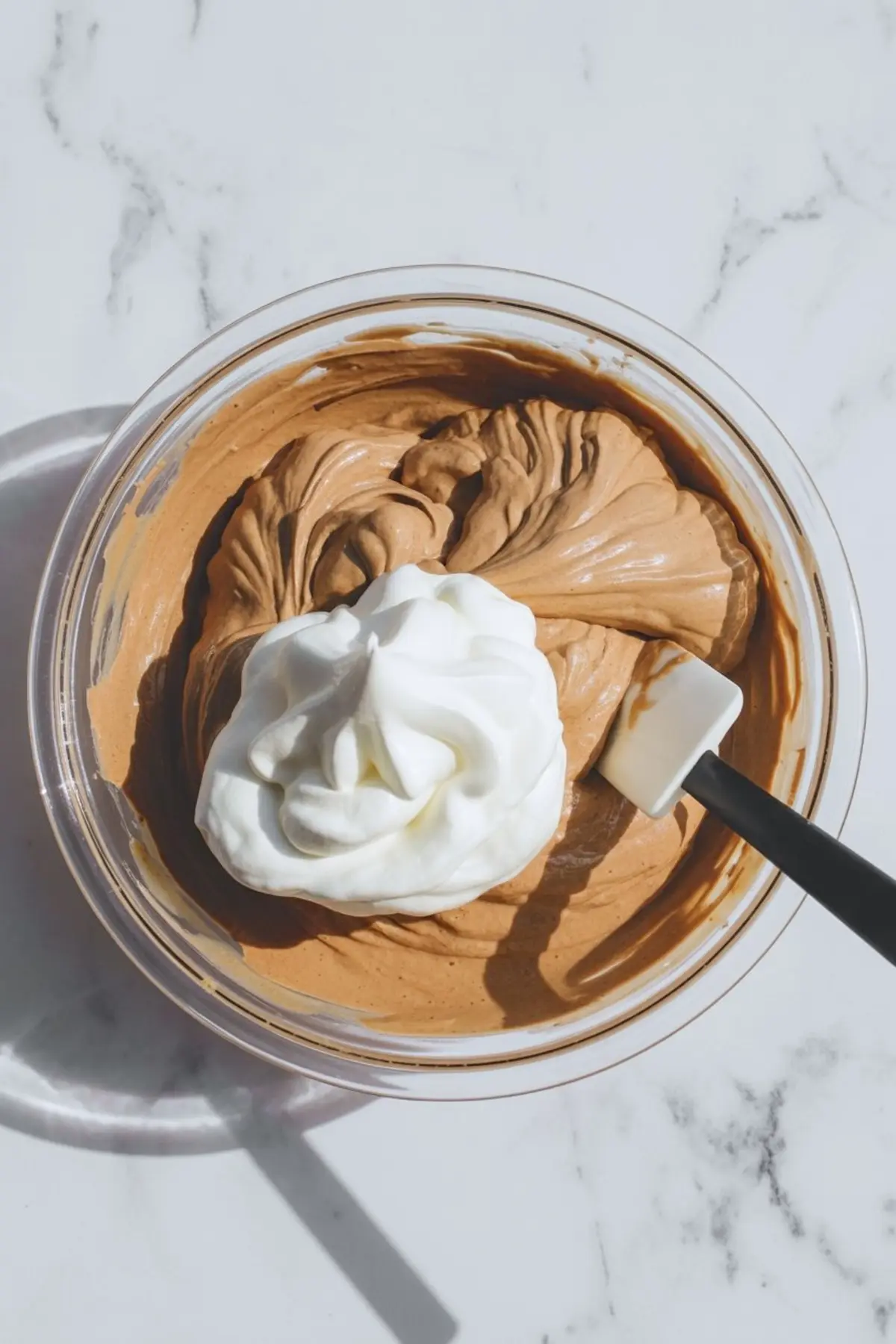
Whip the cream and mascarpone only to soft peaks, where the tip flops over when you lift the whisk. Stiffer cream turns grainy once the base goes in. Add the base in two parts and fold with long strokes from the bottom of the bowl, turning the bowl as you go. Stop as soon as there are no streaks. The mousse should look smooth and pale tan, like the photo above.
Filling the Dome Molds and Freezing Them Solid
Spoon the mousse into the silicone dome molds until they are about ¾ full. Press one cookie round into each mold, flat side up, until it sits level with the top and the mousse comes up around the edge. Tap the tray on the counter to release trapped air.
Freeze for at least 6 hours, or overnight. Overnight is safer. The domes need to be frozen all the way through, not just firm on the outside, or they tear when you unmold them and soften under the warm glaze. A glossy silicone mold gives a glossy dome; a matte mold leaves its texture on the mousse. The same mold method works for my triple chocolate mousse domes.
Mascarpone or Cream Cheese in Gingerbread Mousse?
Mascarpone melts into whipped cream and keeps the coffee and spice clear. Use mascarpone if you can. Cream cheese adds tang and weight, so the mousse turns stiffer and a little savory. If you have neither, leave it out: the gelatin still sets the mousse, it is just slightly lighter and softer.
Pouring a Glossy Mirror Glaze Over the Domes
Bloom 1½ teaspoons gelatin in 2 tablespoons cold water. Heat ½ cup sugar, ¼ cup water and ⅓ cup sweetened condensed milk until it just starts to boil, take it off the heat and stir in the gelatin. Pour it over ⅓ cup chopped white chocolate, wait 1 minute, then blend with an immersion blender. Add a few drops of brown gel color if you want it to match the mousse.
Bubbles are the usual problem. Keep the blender head fully under the surface and tilt the container so it never pulls in air, then pour the glaze through a fine sieve. Do not skip the sieve. Let it cool to 90°F (32°C). Hotter glaze runs off thin and shows the mousse through it. Colder glaze goes thick and leaves ridges.
Unmold the frozen domes onto a wire rack set over a tray, then pour from the top center in one steady pass so the glaze flows down every side at once, let it drip for a few minutes, then lift each dome with an offset spatula. The glaze that collects in the tray can be chilled and gently rewarmed to 90°F for another round.
Make-Ahead Plan for Christmas Mousse Domes
- Up to a week ahead: bake the cookie rounds, fill the molds and freeze. Wrap the tray once the domes are solid.
- On the day: make the glaze, unmold and glaze the frozen domes, then add the decoration.
- Before serving: keep the domes in the fridge for about 2 to 3 hours so the mousse thaws to creamy, not icy, in the center.
- Leftovers: keep covered in the fridge and eat within a day or two; the cookie base softens slowly under the mousse.
Keep glazed domes covered and away from the fridge fan, which leaves dull spots on the glaze. A mini gingerbread cookie on top, a light dusting of cocoa or a little edible gold is all they need.
For a Christmas dessert table, they sit well next to something sliceable like gingerbread cheesecake bars and a plate of gingerbread truffles. For one large centerpiece instead of six small desserts, see my gingerbread wreath.
Gingerbread Mousse Dome Questions
Can I make this gingerbread mousse without dome molds?
Yes. Spoon the mousse into 6 small glasses, crumble the baked cookie rounds on top and chill until set, at least 4 hours. Skip the mirror glaze; it only works on a frozen, smooth surface.
Is this a gingerbread entremet?
It is a small, simple one, made of a mousse, a cookie base and a mirror glaze with no separate insert, which makes it a good first entremet to try if you have never made one.
Can I use regular coffee instead of espresso?
Yes, use ¼ cup very strong brewed coffee. The coffee flavor will be lighter and the spices will come through more.
Why did my mirror glaze slide off the domes?
Either the glaze was too warm or the domes were not frozen solid, so next time cool the glaze to 90°F and glaze the domes straight from the freezer.

Save these gingerbread latte mousse domes to your Christmas board for December. If you want more dome desserts after these, my chocolate raspberry cheesecake domes use the same kind of mold.
Gingerbread Latte Mousse Domes

These gingerbread latte mousse domes are a light gingerbread mousse made with espresso, whipped cream, mascarpone, white chocolate, cinnamon and ginger, set on a baked gingerbread cookie round and covered in a white chocolate mirror glaze. The recipe makes 6 domes with about 1 hour of work and at least 6 hours in the freezer. The domes are glazed while frozen solid with the glaze cooled to 90°F, so the gingerbread mousse gets a thin, glossy shell. Serve them as a plated Christmas dessert, on a holiday dessert table, or as a small gingerbread entremet for a dinner party. Freeze the unglazed domes up to a week, glaze on the day and thaw 2 to 3 hours in the fridge.
Ingredients
- FOR THE GINGERBREAD COOKIE BASE
- 1 ½ cups all-purpose flour
- ½ tsp baking soda
- 1 tsp ground ginger
- ½ tsp ground cinnamon
- ¼ tsp ground cloves
- ¼ tsp salt
- 6 tbsp unsalted butter, softened
- ¼ cup brown sugar
- ¼ cup molasses
- 1 egg yolk
- FOR THE COFFEE-GINGERBREAD MOUSSE
- 1 tsp powdered gelatin
- 2 tbsp cold water
- 1 cup heavy cream (chilled)
- ¼ cup mascarpone (optional)
- ¼ cup strong brewed espresso or coffee (cooled)
- ⅓ cup white chocolate, melted
- 2 tbsp brown sugar
- ½ tsp cinnamon
- ¼ tsp ground ginger
- Pinch of nutmeg
- ½ tsp vanilla extract
- FOR THE MIRROR GLAZE
- 1 ½ tsp powdered gelatin
- 2 tbsp cold water
- ⅓ cup sweetened condensed milk
- ½ cup sugar
- ¼ cup water
- ⅓ cup white chocolate, chopped
- A few drops of brown gel food coloring (optional)
- OPTIONAL DECORATION
- Mini gingerbread cookies
- Cocoa powder for dusting
- Edible glitter or gold leaf
Instructions
- MAKE THE GINGERBREAD COOKIE BASE: Preheat the oven to 350°F (175°C). In a medium bowl, whisk together the flour, baking soda, salt, ginger, cinnamon, and cloves. In another bowl, cream the softened butter and brown sugar until light and fluffy. Add molasses and egg yolk, mixing until fully incorporated. Gradually add the dry ingredients to form a soft dough. Roll out the dough to ¼-inch thickness and cut into circles slightly larger than the base of your dome molds. Place on a lined baking sheet and bake for 8–10 minutes until edges are set. Let cool completely on a wire rack.
- PREPARE THE MOUSSE: Bloom the gelatin by sprinkling it over cold water and letting it sit for 5 minutes. In a small saucepan, gently heat the espresso, brown sugar, cinnamon, ginger, and nutmeg until warm but not boiling. Add the bloomed gelatin and stir until fully dissolved. Remove from heat and stir in the melted white chocolate and vanilla extract. Let the mixture cool to room temperature. In a separate bowl, whip the cold cream and mascarpone (if using) to soft peaks. Gently fold the cooled coffee mixture into the whipped cream until smooth and light.
- ASSEMBLE THE DOMES: Fill silicone dome molds about ¾ full with the mousse. Press one cookie round gently into each mold, flat side up, aligning it with the bottom. Smooth the edges if needed. Place the molds in the freezer and freeze for at least 6 hours or overnight, until completely firm.
- MAKE THE MIRROR GLAZE: Bloom the gelatin in cold water and set aside. In a small saucepan, combine the sugar, water, and sweetened condensed milk. Heat over medium until it just begins to boil, then remove from heat and stir in the bloomed gelatin until dissolved. Pour the hot mixture over the chopped white chocolate and let sit for 1 minute. Use an immersion blender to blend until smooth, being careful to avoid incorporating air bubbles. Add a few drops of brown food coloring if desired. Let the glaze cool to 90°F (32°C) before using.
- GLAZE THE DOMES: Remove the frozen mousse domes from the silicone molds and place them on a wire rack set over a tray to catch excess glaze. Working quickly, pour the mirror glaze evenly over each dome in a single, continuous motion. Let the glaze drip off and set for a few minutes. Transfer the domes to a serving tray using an offset spatula. Decorate with mini gingerbread cookies, a light dusting of cocoa powder, or edible glitter as desired. Keep chilled until serving.
Notes
Use glossy silicone dome molds; matte molds leave their texture on the mousse. Let the gelatin coffee base cool to room temperature before folding; if it starts to set, warm the bowl over hot water for a few seconds and stir until fluid. Whip the cream and mascarpone only to soft peaks. Domes can be made and frozen up to one week ahead; glaze them straight from the freezer on the day you serve them, with the glaze at 90°F (32°C), then keep them in the fridge 2 to 3 hours before serving. For a stronger coffee flavor, use espresso rather than brewed coffee.
Nutrition Information
Yield
6Serving Size
1Amount Per Serving Calories 883Total Fat 46gSaturated Fat 28gTrans Fat 1gUnsaturated Fat 15gCholesterol 182mgSodium 355mgCarbohydrates 109gFiber 2gSugar 77gProtein 11g

Would love to try this recipe but a couple of questions first. I have silicone molds from cocoa bombs- is that the size you recommend? Recipe says to whip cream and mascarpone cheese together- at once, or fold cheese into whipped cream? Thanks!
Appreciate the questions, Jolene 😊 Yes, cocoa bomb molds should work well. That size gives a nice balance between mousse and cookie without being too rich. For the cream and mascarpone, I whip them together in the same bowl until soft peaks form. That step helps everything stay light and smooth when you fold in the coffee mixture later. Let me know how it turns out if you give it a try.
This looks fabulous! How do you get the gingerbread man to stand on top of the dome?
That’s a great question, Tami. The glaze helps a bit, but it’s best to press the gingerbread men gently into the mousse while it’s still slightly soft, right after glazing. Once the domes are chilled again, they’ll firm up and hold the cookies in place. If you’re working in a warm kitchen, a tiny dab of melted chocolate on the base of each cookie can help anchor them securely.
Can you please provide an actual size for the domes? Or a link the domes you use?
Hi Lisa 😊
I use 2.75-inch (7 cm) silicone half-sphere molds for these domes. That size gives a nice balance between visual impact and portion size, especially if you’re serving them as part of a holiday dessert spread.
They hold about 90–100 ml each, which works perfectly with the mousse texture and cookie base. If you’re using a different size, just adjust the cookie diameter slightly to match and be sure not to overfill.
Hi there, just a quick question. How do I keep the glaze to stop at the right at the base of the mousse?
When I want the glaze to stop cleanly at the base, I freeze the domes until they’re completely solid, then set them on a rack that’s lifted just a bit higher. That little bit of height helps the glaze drip off without pooling around the bottom. I also pour in one slow motion rather than circling back, which keeps the edge neat 😊.
You say you cut the bases larger than the mold, but then you shove the cookie into the dome. Those seem contradictory? Is the photo your work or AI? Do you have more process photos??
The cookie bases are cut a touch larger so they line up neatly once the domes come out of the molds. When the mousse is fully frozen, it’s firm enough that the cookie sits in place without needing to force it in. That part can look confusing without visuals, so I’m planning to add a few extra process photos to make it clearer 😊.
How in the world do you keep the cookie from getting covered in the glaze?
Totally get the confusion. The domes are assembled upside down in silicone molds: mousse goes in first, then the cookie is pressed on top (which ends up being the base). After freezing solid, they’re popped out and glazed while still upside down cookie side stays facing down the whole time. Since the cookie is already sealed into the bottom and the glaze is poured gently over the curved frozen mousse, it runs off the sides and doesn’t reach underneath. No flipping happens after glazing, what was the top during freezing becomes the bottom once served. Hope that clears it up a bit 😊
Hi!
I’m looking forward to trying this recipe, but should I be concerned about the texture of the mousse getting weird while it thaws underneath the mirror glaze? Or the thawing impacting the glaze? Also how far in advance of serving should I do the glaze so my guests aren’t spooning frozen mousse? I’ve never froze a mousse before and I know sometimes the air in them can get compressed in this process. Appreciate your response!
Hi, Kaytia! These are great questions, especially if it’s your first time working with frozen mousse. You’re absolutely right that texture matters, and the good news is, if the mousse is stabilized well (with gelatin, as in this recipe), it holds up beautifully through freezing and thawing. I’ve made these domes several times, and the mousse stays light and smooth after thawing without becoming dense or watery.
The mirror glaze actually benefits from going onto frozen domes—it sets more cleanly and gives that shiny finish without melting the mousse. Just make sure your glaze is at the right temperature (around 90–95°F or 32–35°C) when pouring.
For serving, I usually glaze them the day before, then store them in the fridge overnight. That gives the mousse enough time to thaw gently and evenly. If you’re tight on time, glazing them 4 to 5 hours ahead and letting them thaw in the fridge works too. By serving time, they’ll be fully thawed and ready without losing their structure.
Let me know how it goes if you try them 😊
So you are holding the dome by the cookie base while you pour the gelatin over the whole thing without it ever touching the cookie? Wow, you are good. I made the mistake of taking the domes out of the freezer before I finished the gelatin, and it took a while to cool, so the mousse was a bit soft. I had the domes sitting on a wire rack over waxed paper and poured the gelatin over each one with a ladle. It worked but it covered the cookie edges and moving them was a sticky job. If the domes aren’t perfect to start, every crack or bubble shows. I didn’t work hard enough packing the mousse into the mold to ensure there were no imperfections.
Hi Allane Ball, that’s such a relatable experience. The gelatin timing can definitely make or break the finish, especially if the mousse starts to soften before the glaze is ready. I’ve run into the same issue before, and yes, those tiny bubbles or cracks show up like spotlighted flaws once the glaze hits. What’s helped me is keeping the domes frozen solid and placing them on an upside-down glass or small jar when glazing. That way, the cookie base stays untouched and you get a clean drip. The wire rack method works too, but like you said, it can get tricky once the glaze touches the edges. Honestly, it sounds like you handled it really well given the challenge. The next round will go smoother, especially with how much care you’re already putting into it 😊
It would be a nice recipe if it had metric weights and measurements listed.
I made this recipe for christmas, and it was a hit! Everything worked out well. I had a cookie cutter that fit the mold perfectly, and I cut post baking since they spread when baked.
As some others had commented, you cannot glaze these and NOT expect to get the glaze on the cookie, as the photo shows. The only way you can accomplish this is to glaze the dome first, then place it on the cookie. Since my cookie was the same size as the dome, I just glazed it, let it sit to get tacky, then placed sprinkles around the bottom to hide the drip.
Thanks for sharing how it turned out. Using a matching cutter and glazing before placing the dome was a smart call, and the sprinkle trick to cover the drip is exactly the kind of detail that makes a big difference. Love hearing how you made it work for you 😊