
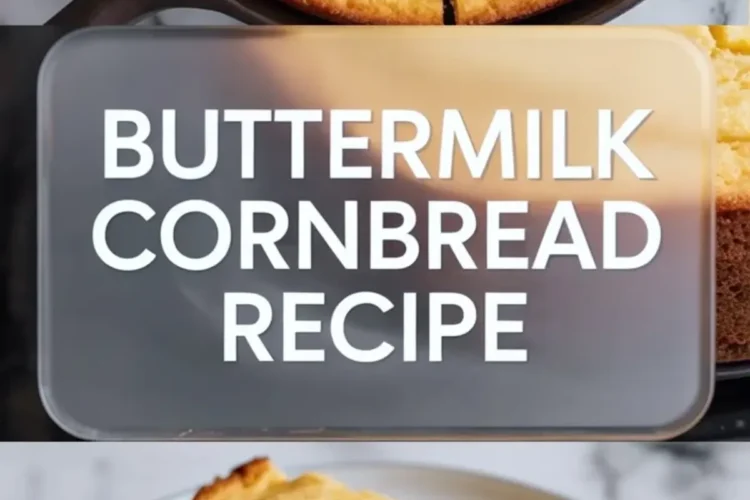
This buttermilk cornbread recipe creates soft slices with a tender crumb and golden crust using simple pantry ingredients. Many home bakers search for an easy buttermilk cornbread recipe, a classic cornbread recipe buttermilk method, or a homemade cornbread that pairs well with soups and stews. This homemade buttermilk cornbread delivers balanced flavor, gentle sweetness, and a moist texture that holds together beautifully when sliced.
A well-balanced cornbread with buttermilk depends on a simple ratio of cornmeal, flour, eggs, and dairy. A hot skillet forms the crust, while the buttermilk brings tenderness and flavor. The result tastes rich, slightly sweet, and deeply comforting. Warm slices spread with butter always disappear quickly in my kitchen.
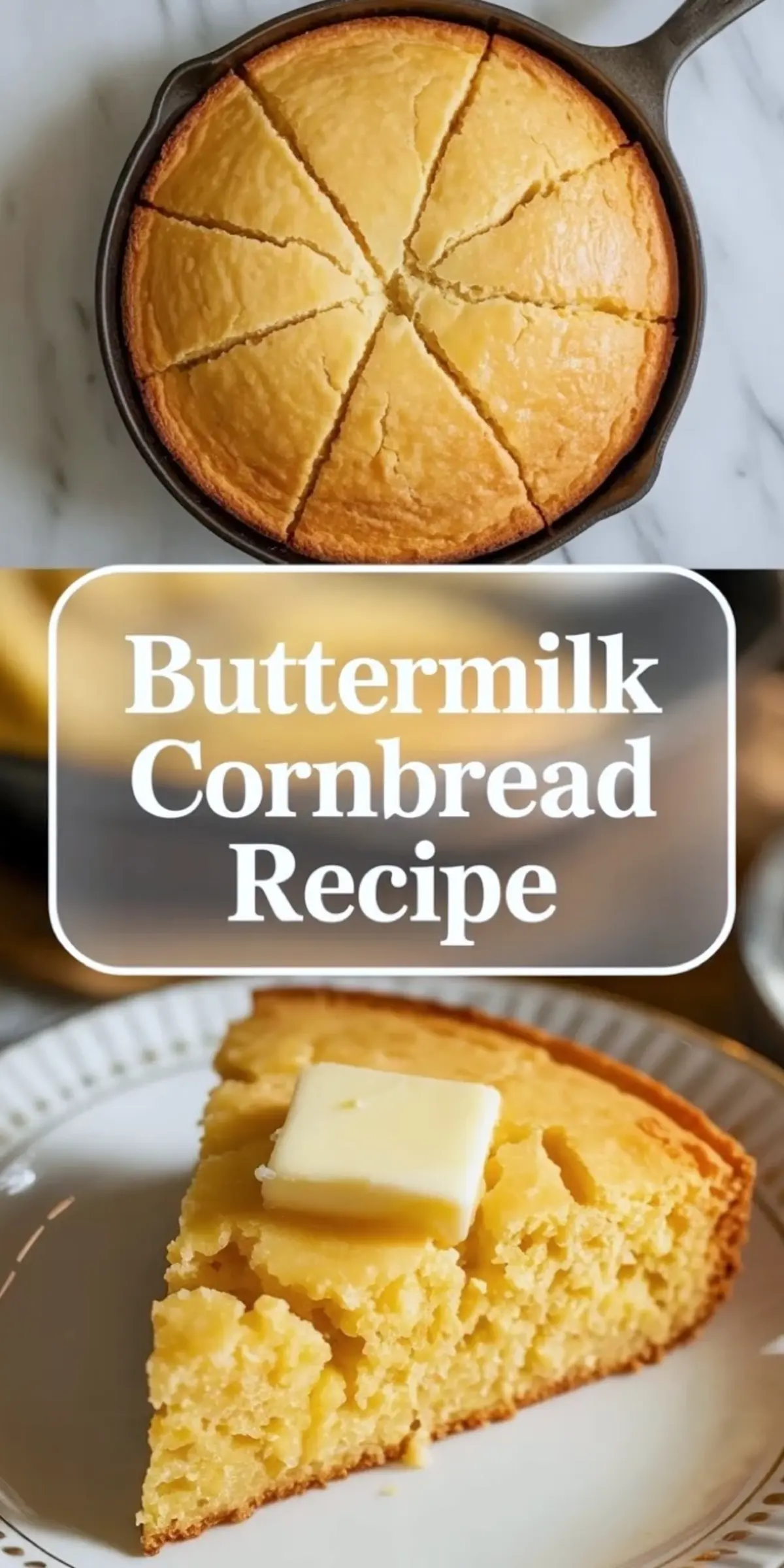
What Makes It Work
This southern cornbread recipe relies on a balanced mix of cornmeal and flour. Cornmeal delivers flavor and texture. Flour softens the crumb and gives structure so slices stay tender rather than crumbly.
A hot cast iron skillet makes a big difference. The batter touches the heated buttered pan and forms a golden crust immediately. That first quiet sizzle tells you everything is working as intended. I still pause every time I hear it.
Leavening also plays a role here. Baking powder lifts the batter, while baking soda reacts with the buttermilk to produce a lighter texture. The balance keeps the cornbread airy yet moist.
Another cornbread breakfast idea appears in this Cornbread Waffles Recipe. That recipe uses a similar batter concept, though the waffle iron changes the texture in a fun way.
What You Need
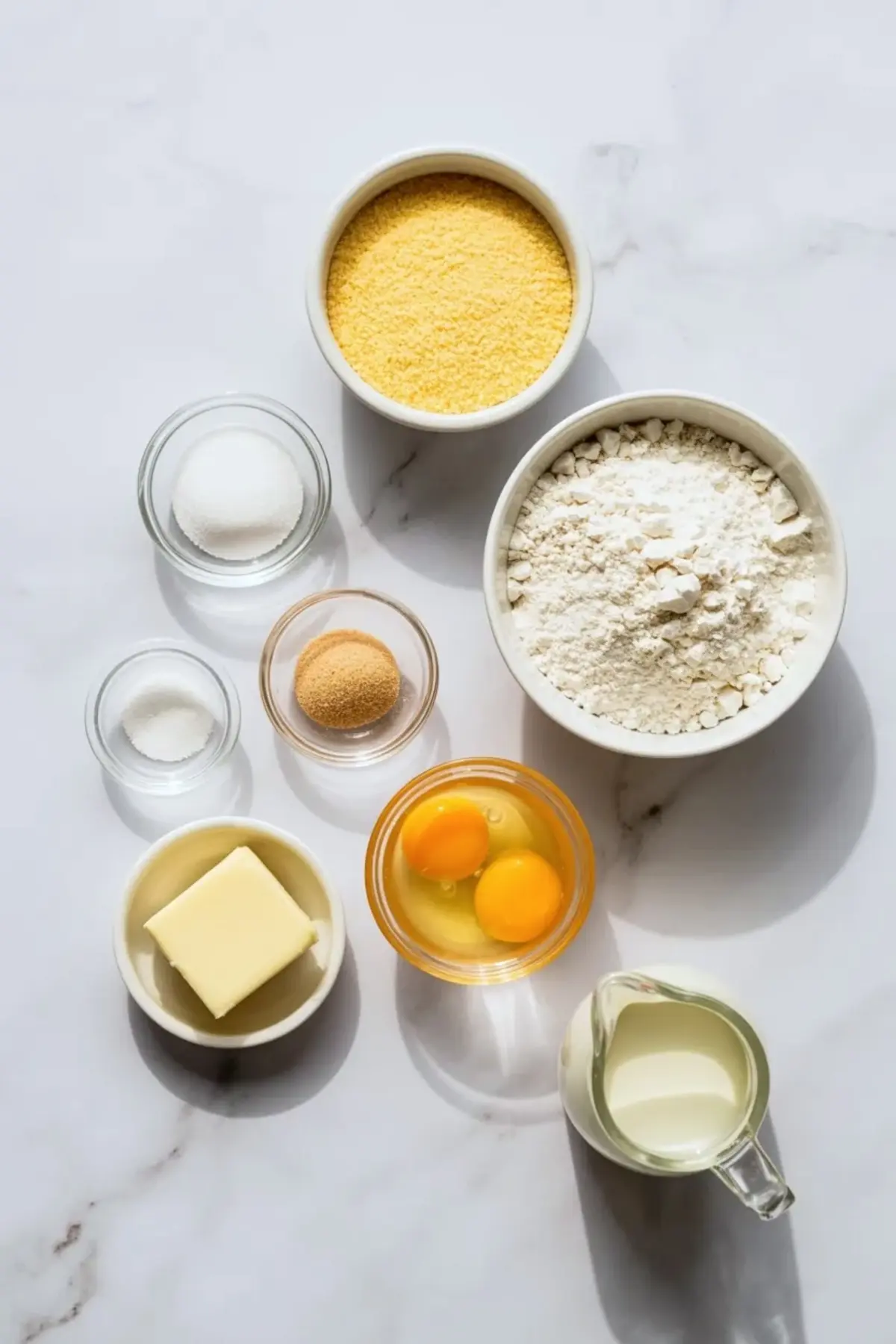
Cornmeal brings the classic flavor that defines a good corn bread recipe. Fine or medium grind both work well. Fine grind creates a softer crumb. Medium grind adds a slightly rustic texture.
All purpose flour stabilizes the structure. Cornmeal alone creates a crumbly bake. Flour gives the slices enough strength so they hold together cleanly.
Granulated sugar adds a light sweetness. Many southern cornbread recipe traditions use little sugar, yet a small amount balances the corn flavor nicely.
Eggs provide richness and structure. Room temperature eggs blend smoothly with the batter and help the crumb set properly. The batter turns glossy once everything combines.
A related variation appears in these Cornbread Muffins with Sour Cream Center. That recipe uses dairy in a slightly different way and produces a softer interior.
Key Ingredient Spotlight: Buttermilk
Buttermilk shapes the texture and flavor of homemade buttermilk cornbread. The acidity reacts with baking soda and lifts the batter during baking. That reaction creates the light crumb people expect from a good cornbread recipe with buttermilk.
Full fat buttermilk also adds richness. The batter becomes smooth and creamy, and the finished slices stay moist even after cooling. I often notice the aroma first. Warm corn and dairy fill the kitchen quickly.
If buttermilk sits out of reach, milk mixed with a small splash of lemon juice can step in. The acidity helps replicate the same chemical reaction.
Another dairy-focused variation appears in this Moist Honey Cornbread Recipe. Honey changes the sweetness and creates a softer crumb.
How to Make It
The oven heats first while the cast iron skillet warms inside. That step matters more than many people expect. A fully heated pan builds the crust before the interior begins baking.
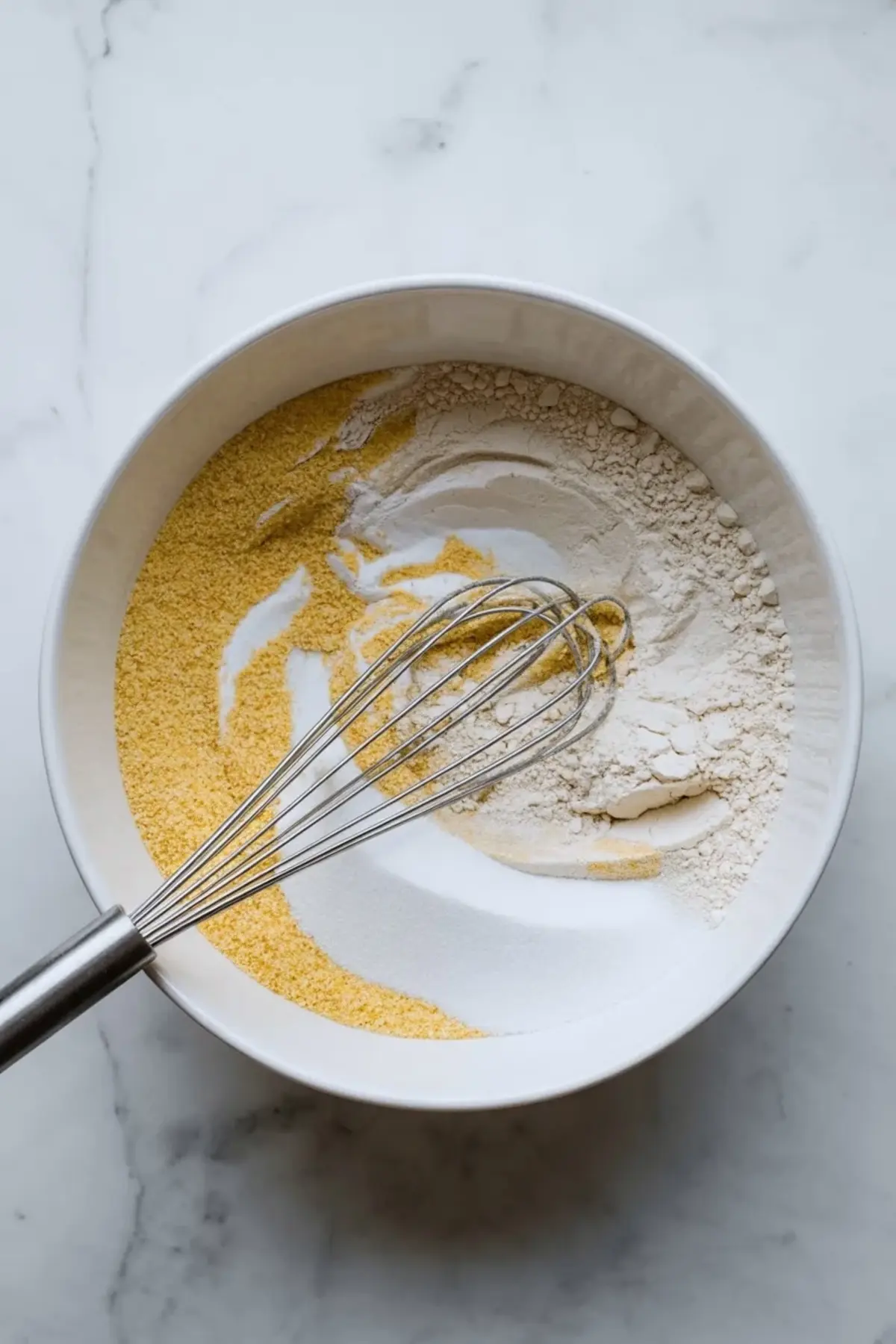
Dry ingredients whisk together in one bowl. Cornmeal, flour, sugar, baking powder, baking soda, and salt should look evenly blended before liquids join the mixture.
Wet ingredients combine in another bowl. Buttermilk, eggs, and melted butter form a smooth mixture that pours easily into the dry ingredients.
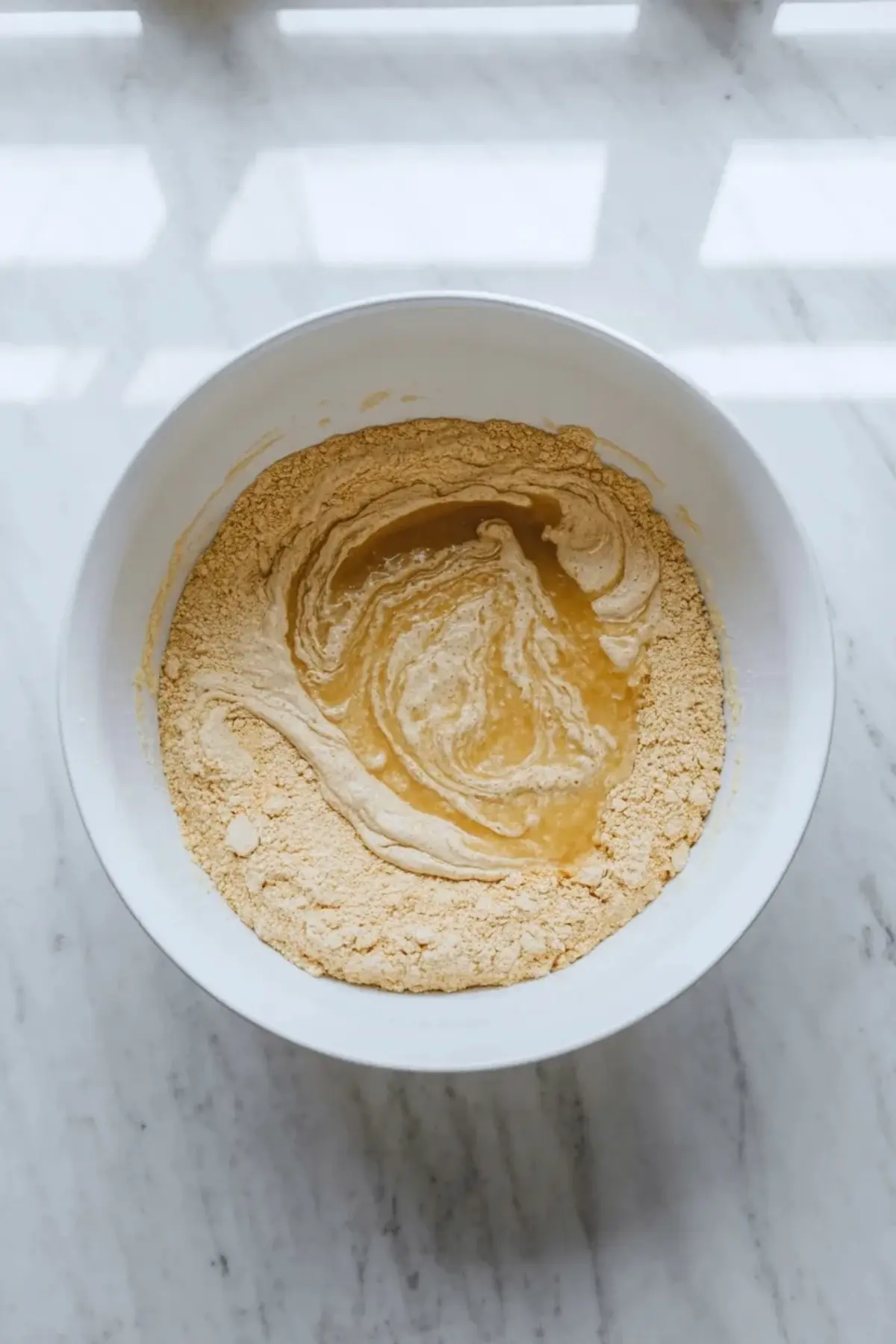
The batter mixes gently with a spatula until no dry streaks remain. Small lumps remain normal. Overmixing produces dense cornbread, so I stop stirring early.
The hot skillet receives butter first, then the batter. A soft sizzle signals the start of that crisp crust. The batter spreads easily across the pan.
How to Tell It’s Done
The top turns golden brown when baking finishes. The edges pull slightly away from the skillet as the crumb sets.
A toothpick inserted into the center should come out clean. The surface also feels springy when lightly pressed.
The aroma often signals doneness before the timer rings. Warm corn and butter create a comforting scent that fills the kitchen.
Troubleshooting
Dry cornbread usually results from too much flour or extended baking. Accurate measurement and oven timing prevent that issue.
Dense texture often comes from overmixing. Gentle stirring preserves the light crumb.
Pale crust usually means the skillet lacked sufficient heat. Preheating the pan solves that quickly.
Ways to Change It
Jalapeño and cheddar bring savory flavor. Add half a cup shredded cheese and diced peppers.
Honey adds deeper sweetness. Replace part of the sugar with two tablespoons honey.
Fresh corn kernels add texture. Half a cup folded into the batter creates small bursts of sweetness.
Storage
Fresh cornbread stays soft at room temperature for two days when stored in an airtight container.
The refrigerator extends storage to four days. Gentle reheating restores the texture.
The freezer works well for longer storage. Wrap slices individually and warm them later in the oven.
Practical Tips
Room temperature ingredients blend more smoothly. The batter mixes quickly and evenly.
A cast iron skillet creates the best crust. Heavy metal pans hold heat longer and brown the edges well.
A short resting period after baking helps the crumb set. Clean slices become easier to cut.
How to Serve It
Serve warm slices with butter and honey. Pair with chili or hearty soups.
Add alongside barbecue or roasted vegetables. Slice and toast leftovers in a skillet for breakfast.
Save This Recipe
Save this buttermilk cornbread recipe to your Pinterest board so it stays easy to find whenever you want warm homemade cornbread. Share a comment below if you bake it and tell me how it turned out or what variation you tried.
Buttermilk Cornbread Recipe
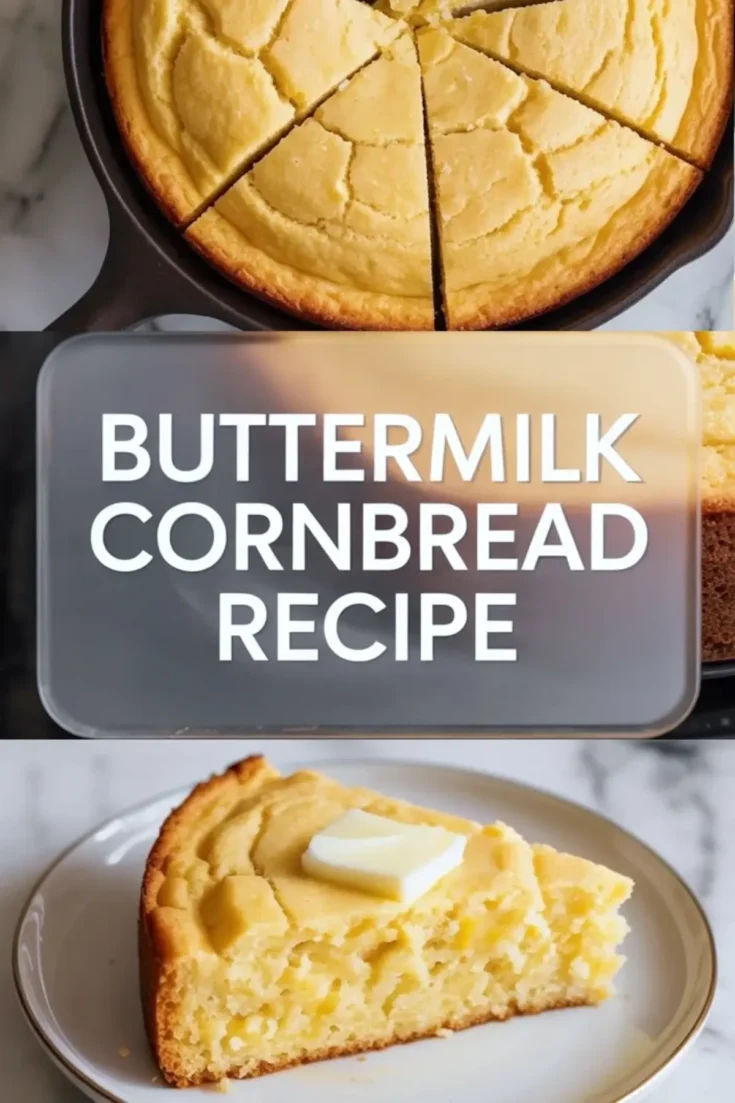
This tender buttermilk cornbread recipe delivers a soft crumb and rich flavor with a golden crust. Made with simple ingredients, this classic cornbread recipe buttermilk method creates moist slices that pair beautifully with savory meals.
This traditional cornbread with buttermilk brings the comforting flavor of a southern cornbread recipe straight to your table. The batter comes together quickly, making it an easy buttermilk cornbread recipe for weeknight dinners or weekend baking.
Add this warm homemade buttermilk cornbread to your collection of dependable corn bread recipe favorites. If you enjoy classic cornbread recipe with buttermilk, this soft cornbread buttermilk bake also stands out among the best homemade cornbread recipes.
Ingredients
- 1 cup yellow cornmeal (fine or medium grind)
- 1 cup all-purpose flour
- 1/4 cup granulated sugar
- 1 tablespoon baking powder
- 1/2 teaspoon baking soda
- 1 teaspoon salt
- 1 cup full-fat buttermilk, room temperature
- 2 large eggs, room temperature
- 1/2 cup unsalted butter, melted
- 1 tablespoon unsalted butter, for the skillet
Instructions
PREHEAT OVEN: Preheat the oven to 400°F (200°C). Place a 9-inch cast-iron skillet inside the oven while it heats so the pan becomes very hot, which helps create a crisp, golden crust.
MIX DRY INGREDIENTS: In a large mixing bowl, whisk together the cornmeal, flour, sugar, baking powder, baking soda, and salt until evenly combined and free of lumps.
COMBINE WET INGREDIENTS: In a separate bowl, whisk the buttermilk, eggs, and melted butter until the mixture looks smooth and fully blended.
COMBINE BATTER: Pour the wet mixture into the bowl of dry ingredients. Stir gently with a spatula or wooden spoon until just combined. Stop mixing as soon as no dry streaks remain. A few small lumps are normal and help keep the cornbread tender.
PREPARE SKILLET: Carefully remove the hot skillet from the oven using oven mitts. Add 1 tablespoon of butter to the pan and swirl until fully melted, coating the bottom and slightly up the sides.
ADD BATTER TO SKILLET: Immediately pour the batter into the hot skillet. A soft sizzle should occur as the batter hits the pan. Spread the batter evenly with a spatula.
BAKE CORNBREAD: Return the skillet to the oven and bake for 20 to 25 minutes, or until the top is golden brown and a toothpick inserted into the center comes out clean.
COOL AND SLICE: Remove the skillet from the oven and allow the cornbread to rest for at least 10 minutes. Resting helps the structure set, making clean slices easier. Cut into 8 wedges and serve warm.
Notes
For extra crisp edges, ensure the skillet is fully heated before adding the batter.
Reduce the sugar slightly if a less sweet cornbread is preferred.
Store leftovers in an airtight container at room temperature for up to 2 days or refrigerate for up to 4 days. Reheat gently before serving for best texture.
