
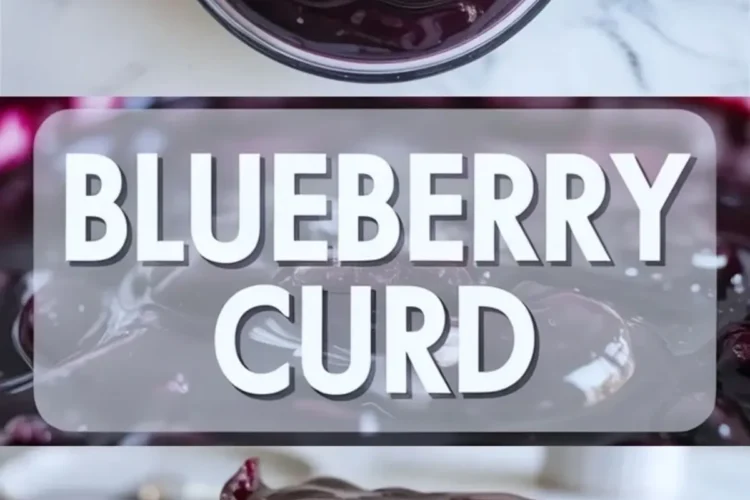
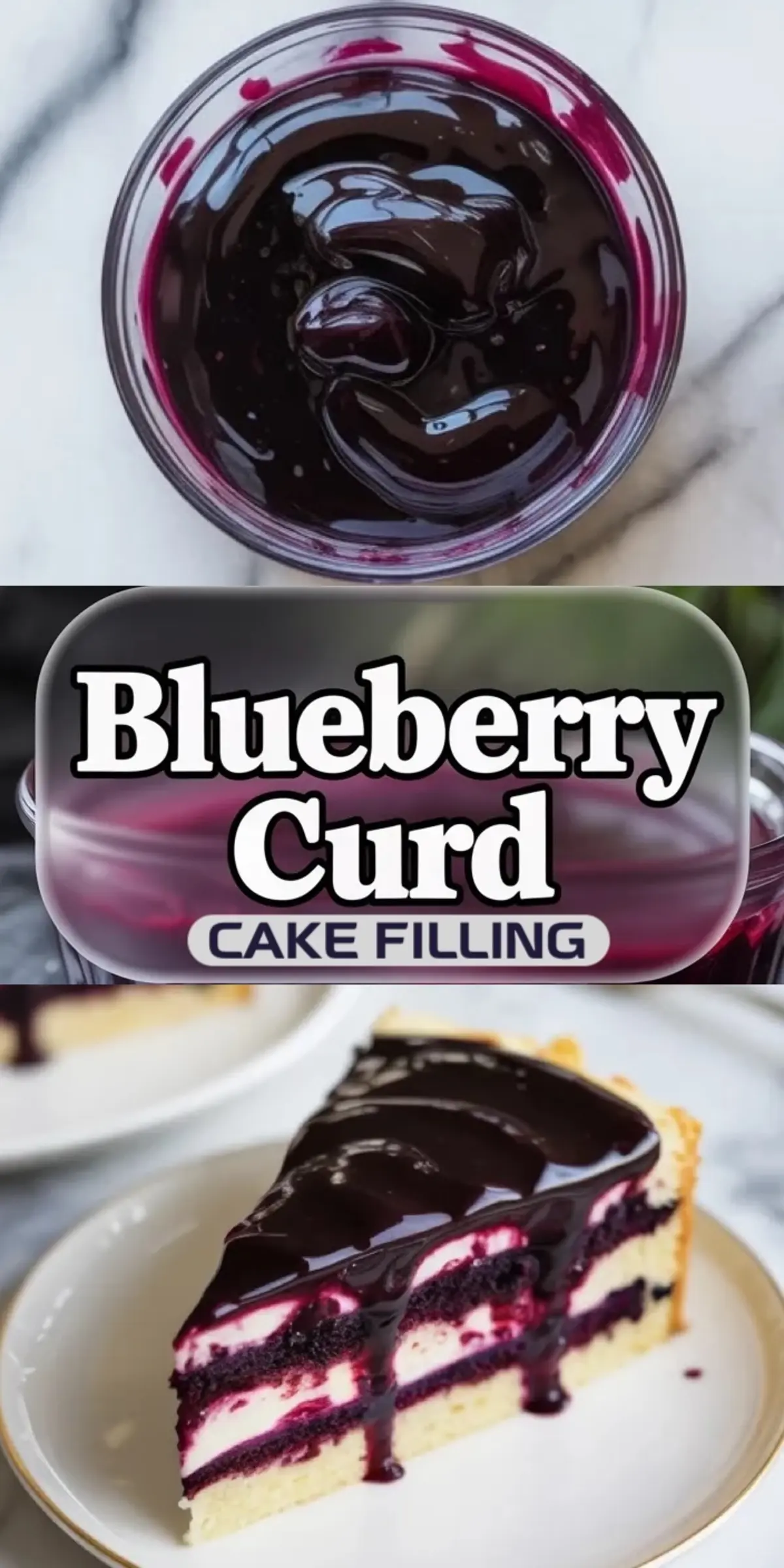
This homemade blueberry curd recipe blends fresh or frozen blueberries with lemon zest, butter, and eggs for a smooth, spoonable spread. It works beautifully in a blueberry curd tart, layered in cake, or swirled into yogurt. The quick cook time and vibrant color make it a favorite for fruit desserts and berry curd tarts, and it’s an easy entry into any collection of blueberry ideas or curd recipes.
Blueberries cook down fast. When you start with two cups and simmer them with fresh lemon juice, the fruit breaks down in minutes. That gives a concentrated base for a deeply flavored curd. After blending and straining, you’re left with a silky mixture that takes on color and tartness depending on the berries you use.
Following a special diet?
Every recipe on this site can be converted to gluten-free, vegan, dairy-free, keto, nut-free or egg-free with adjusted ratios so nothing falls flat.
Try the Recipe Converter →This recipe relies on the classic curd ratio: fruit purée, eggs for thickening, and butter for richness. But blueberries need coaxing. They don’t behave like lemon or passionfruit. Without the lemon juice and zest, the flavor stays flat. That small acid addition pulls brightness to the front and gives balance to the sugar.
I’ve tried skipping the straining step. The texture always suffers. Tiny skins remain no matter how long you blend. Straining keeps the curd smooth enough to spread under a clean layer of Swiss meringue or pipe into a small tart shell.
What You Need
Blueberries form the base. Fresh blueberries give a cleaner finish, but frozen work just as well. If you can find wild blueberries, even better. The color deepens and the flavor sharpens with almost no adjustment.
Lemon juice and zest bring balance. I always use fresh juice. Bottled won’t give the same clarity. Zest adds a deeper citrus note, which matters here because the blueberries don’t carry as much natural acidity as something like raspberry or lemon.
Egg yolks thicken the curd while the whole egg supports structure. I use one whole egg and two yolks. The texture holds up in cake layers without becoming too firm or rubbery.
Granulated sugar adds sweetness without masking the berry flavor. I don’t recommend brown sugar or maple syrup here. It muddies the color.
Butter adds body and sheen. I use unsalted, always. Salted throws off the balance, especially in something this delicate.
Why Butter Matters Most
Butter changes everything. When you stir it in off the heat, it cools the curd slowly and builds that velvety texture. You’ll see the mixture go from slightly glossy to glassy smooth. That’s how you know it’s ready. If it still looks dull, the butter hasn’t fully emulsified.
You can substitute dairy-free butter in the same quantity, but expect a slightly thinner texture. I’ve also tried coconut oil in a pinch. It works, but the flavor pulls too tropical for a classic berry curd tart.
How to Make It Right
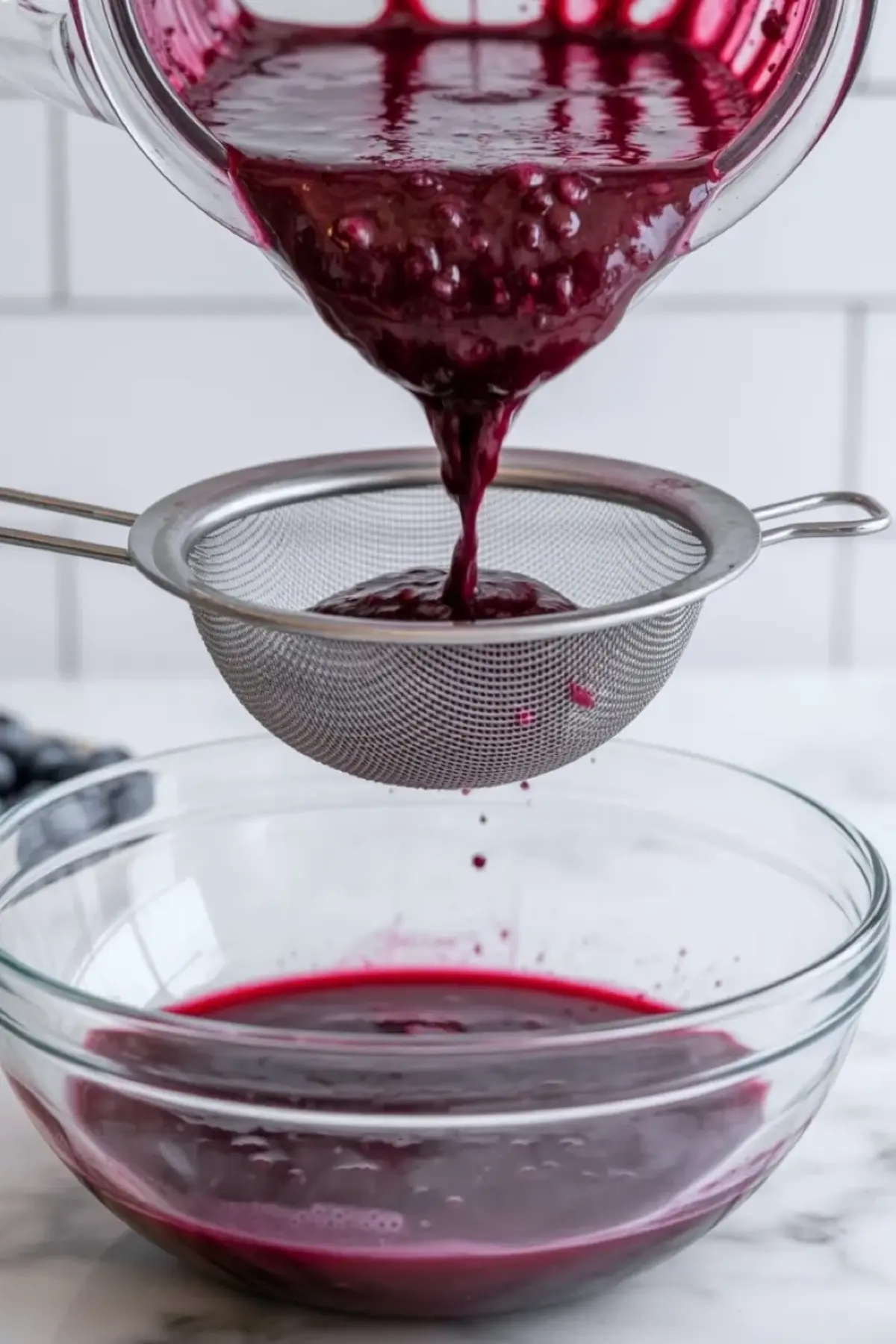
Start with a simmer. The berries should soften enough to burst open. You don’t need to mash them. Once they’re soft, blend and strain while still warm. Don’t let the mixture cool too much before adding the egg mixture, or it won’t incorporate smoothly.
Heat gently once the eggs are in. Stir constantly. Look for the curd to thicken just enough to coat the back of your spoon. If you see bubbles forming around the edges, pull it off the heat fast. That means it’s close to curdling.
Stir in the butter last. Don’t rush it. The slower it melts, the smoother the finish.
If you’re also planning to make a breakfast spread, this pairs well with the flaky richness of a Blueberry Cream Cheese Croissant Casserole.
How to Know When It’s Done
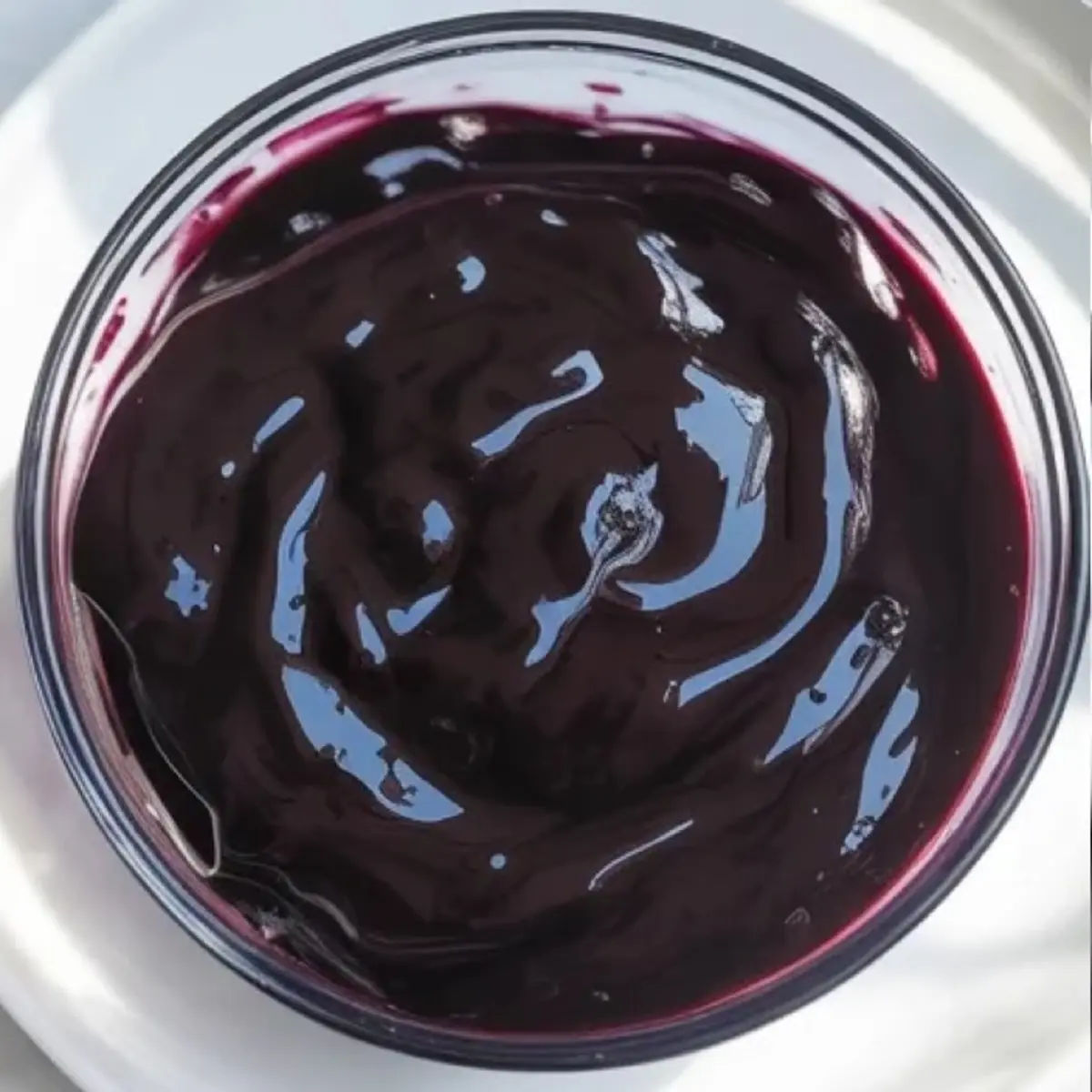
Use your spoon. A properly thickened curd coats the back cleanly and doesn’t slide off in a thin layer. It should leave a clear trail when you run your finger through it.
If it’s too runny, cook it longer but don’t raise the heat. If it’s lumpy or grainy, the eggs overheated. That’s usually a sign it was left on the stove too long or wasn’t stirred consistently.
Color can help too. A deep purple shade tells you the berries cooked through. Pale curd means it was pulled early or the fruit-to-egg ratio is off.
Common Problems and Fixes
Curd too runny after chilling? Return it to the pan and cook gently for another 2 to 3 minutes.
Curd looks dull? Butter wasn’t fully mixed in. Try warming it slightly and whisking again.
Taste too sweet? Add a half teaspoon of lemon juice and stir well.
Tiny lumps? Strain it one more time before storing. It won’t fix overcooked eggs, but it will improve texture.
Ways to Change It
For a Blueberry Lemon Curd, increase lemon juice to 3 tablespoons and cut the sugar slightly.
To make a Blueberry Curd For Cakes, add ½ teaspoon of cornstarch before thickening for a firmer texture.
For a Berry Curd Tart, mix this with an equal amount of raspberry or blackberry curd for a more complex filling.
Want to match it with a cake layer? Try layering it between vanilla sponge and this Strawberry Cake Filling for a spring-themed flavor mix.
Storage and Shelf Life
Store it in a glass jar with a tight lid. It lasts up to 10 days in the fridge. I usually add plastic wrap pressed on top to avoid skin.
To freeze, spoon into freezer-safe containers with room for expansion. Thaw overnight in the fridge. It may need a light whisk after thawing to restore texture.
Tips from the Test Kitchen
Use a silicone spatula to stir. It catches the edges better than a spoon and prevents sticking.
Don’t skip the straining step. It makes or breaks the texture.
For a deeper color, go with wild blueberries. For a stronger lemon kick, zest the lemon right before using.
If you’re making multiple curds in a day, keep a clean sieve ready for each batch to avoid flavor crossover.
I like pairing it with chocolate. A spoonful between layers of this Chocolate Mousse Filling adds depth and contrast.
Save This Blueberry Curd For Later
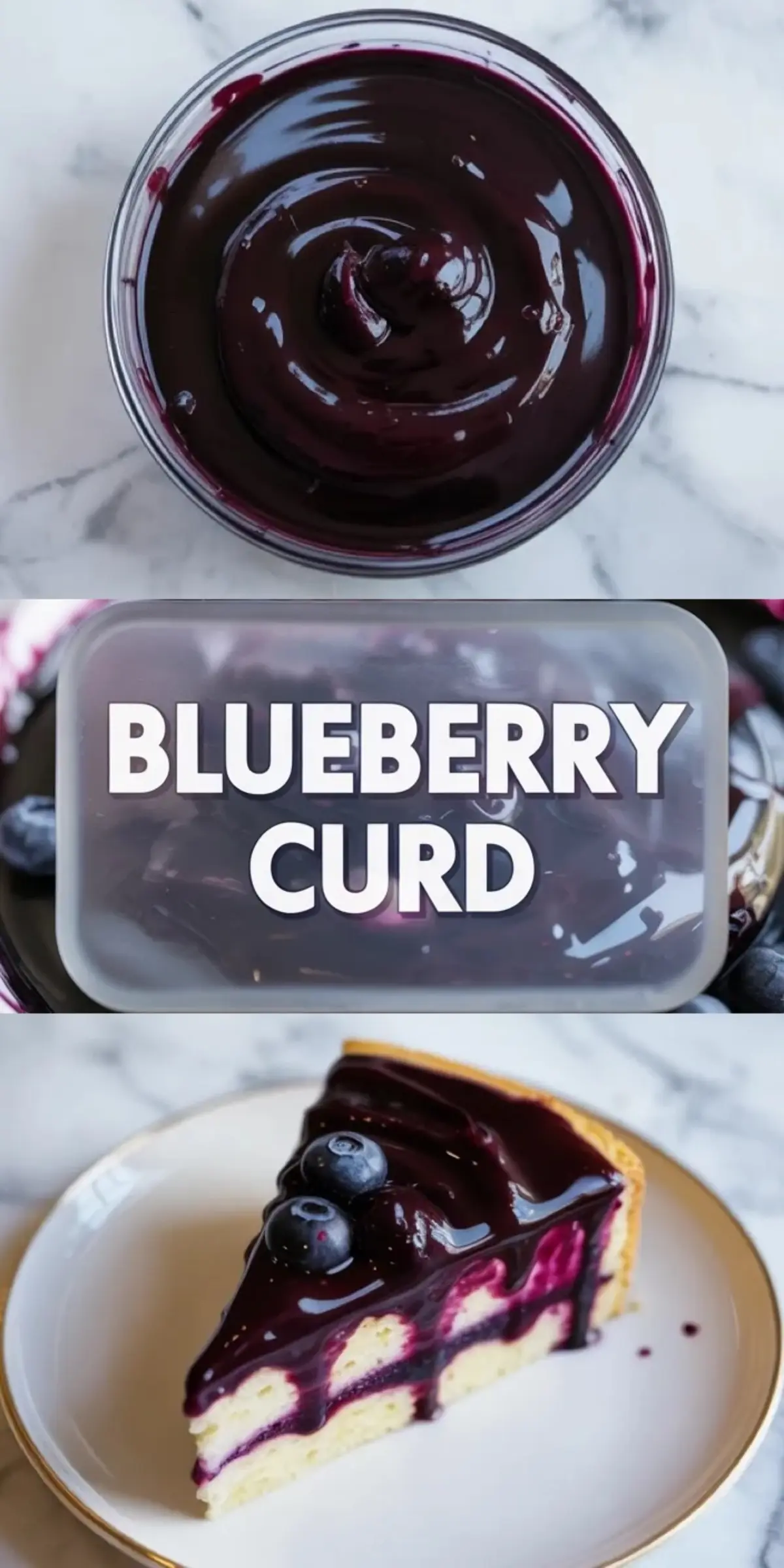
Pin this homemade blueberry curd recipe so you can always find it when you’re planning fruit desserts. If you try it in a tart, cake, or even on toast, I’d love to hear how you used it.
Drop a comment below with your variation or questions. Let’s swap notes.
Blueberry Curd Recipe
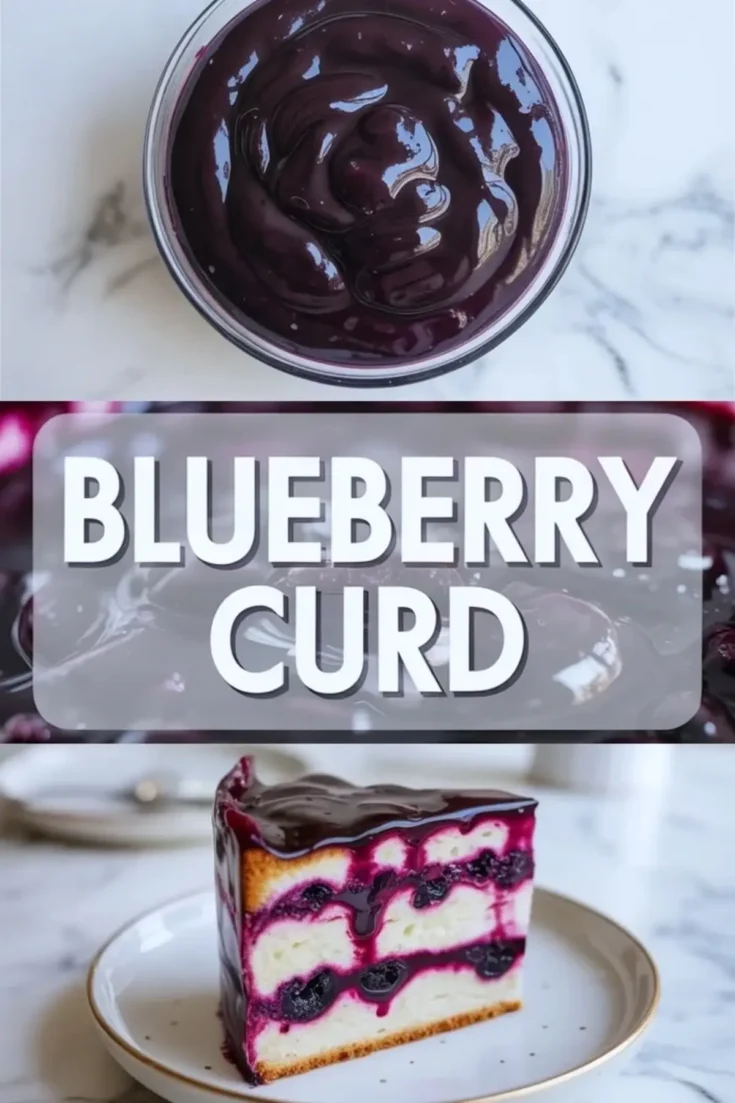
This blueberry curd recipe is sweet, tangy, and silky smooth. Use it as a filling for a blueberry curd tart, a spread for toast, or layered in a blueberry curd cake. Perfect for adding flavor to berry curd tarts, breakfast pastries, or even as a topping for yogurt. This homemade blueberry curd is a versatile favorite among blueberry ideas and fruit desserts. If you enjoy making curd recipes from scratch, this quick and easy option belongs in your recipe collection.
Ingredients
- 2 cups fresh or frozen blueberries
- 1/3 cup granulated sugar
- 2 tablespoons lemon juice
- 1 teaspoon lemon zest
- 2 large egg yolks
- 1 large whole egg
- Pinch of salt
- 4 tablespoons unsalted butter, cut into cubes
Instructions
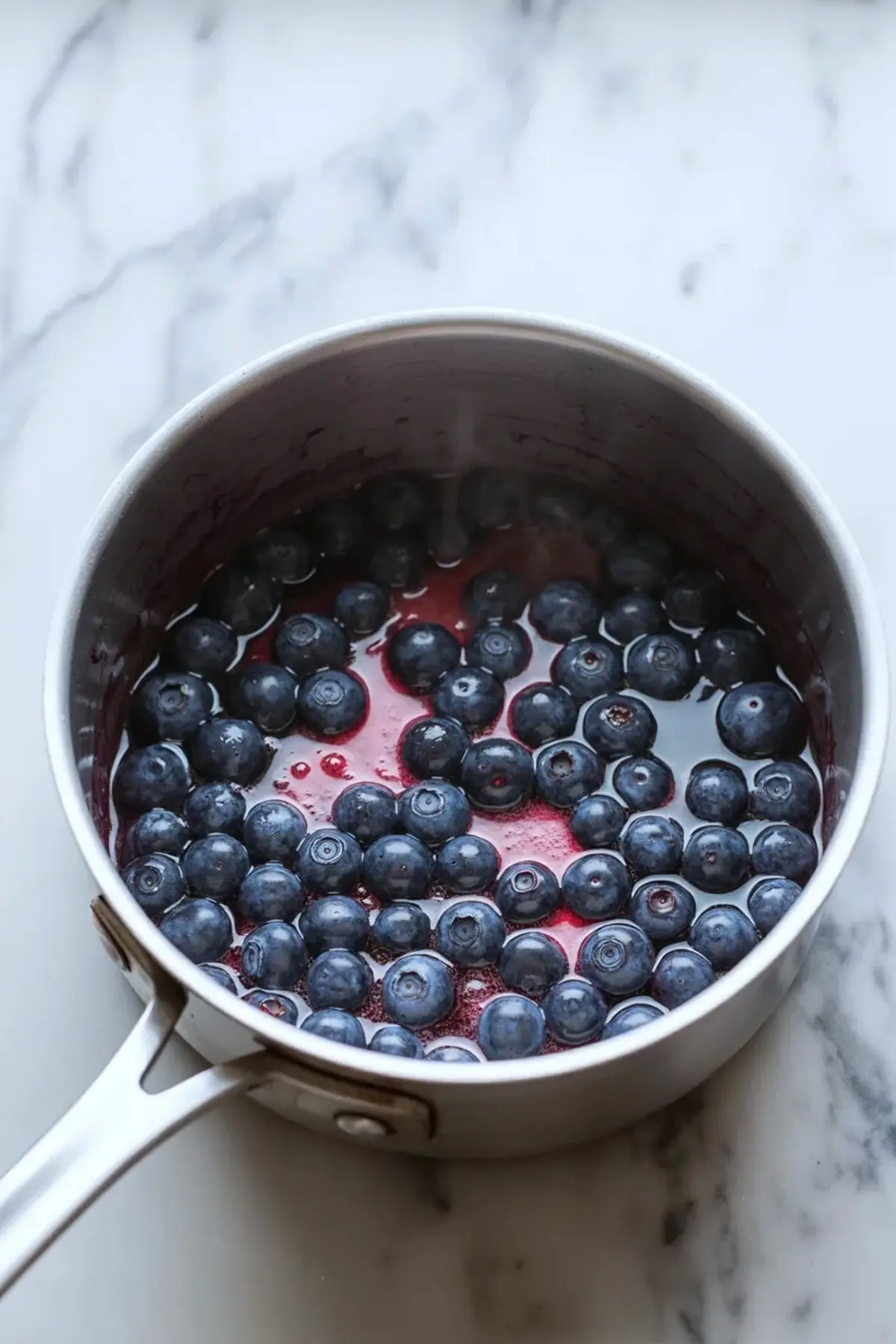
- COOK THE BLUEBERRIES: In a small saucepan, combine the blueberries, lemon juice, and lemon zest. Cook over medium heat, stirring occasionally, until the berries soften and release their juices, about 5 to 7 minutes.
- BLEND AND STRAIN: Transfer the cooked mixture to a blender or use an immersion blender to purée until smooth. Pour the purée through a fine mesh sieve back into the saucepan to remove skins and seeds. You should be left with a thick, vibrant purple mixture.
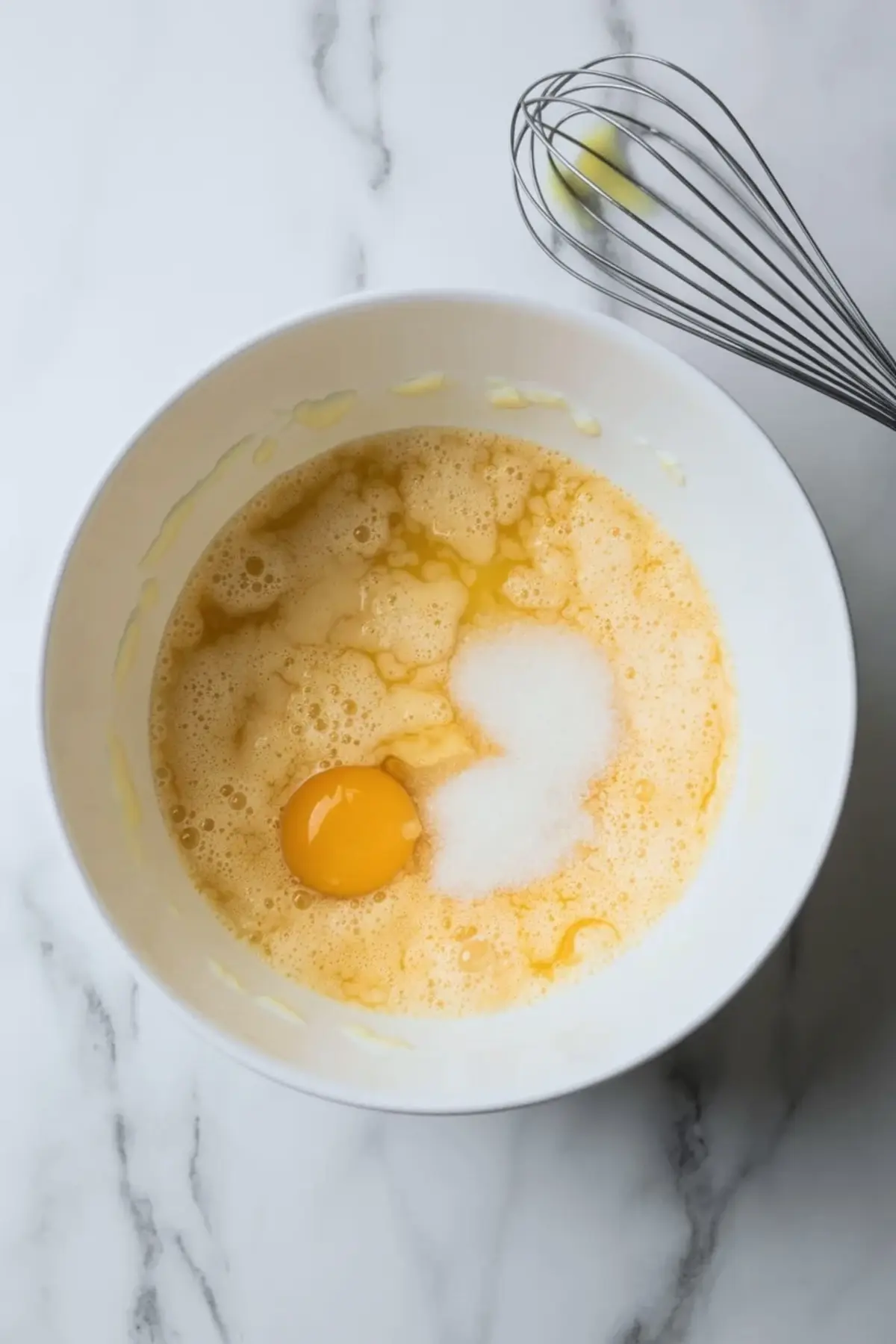
- ADD EGGS AND SUGAR: In a separate bowl, whisk together the egg yolks, whole egg, and sugar. Slowly whisk this mixture into the warm blueberry purée, then add a pinch of salt and stir to combine.
- COOK THE CURD: Return the saucepan to the stove over low to medium heat. Cook gently, stirring constantly with a rubber spatula or wooden spoon, until the curd thickens enough to coat the back of a spoon. Avoid boiling. This will take about 8 to 10 minutes.
- ADD BUTTER: Remove the saucepan from heat. Stir in the butter cubes, mixing until they are fully melted and the curd is glossy and smooth.
- COOL AND STORE: Let the curd cool for 10 to 15 minutes, then transfer to clean jars or containers. To prevent a skin from forming, press plastic wrap directly onto the surface before sealing. Refrigerate once cooled completely. The curd will thicken further as it chills.
Notes
Blueberry curd keeps well in the refrigerator for up to 10 days. For a more tart flavor, add an extra teaspoon of lemon juice. For a deeper color, use wild blueberries if available.
Nutrition Information
Yield
1Serving Size
1Amount Per Serving Calories 1214Total Fat 63gSaturated Fat 34gUnsaturated Fat 30gCholesterol 678mgSodium 230mgCarbohydrates 147gFiber 14gSugar 127gProtein 22g
