
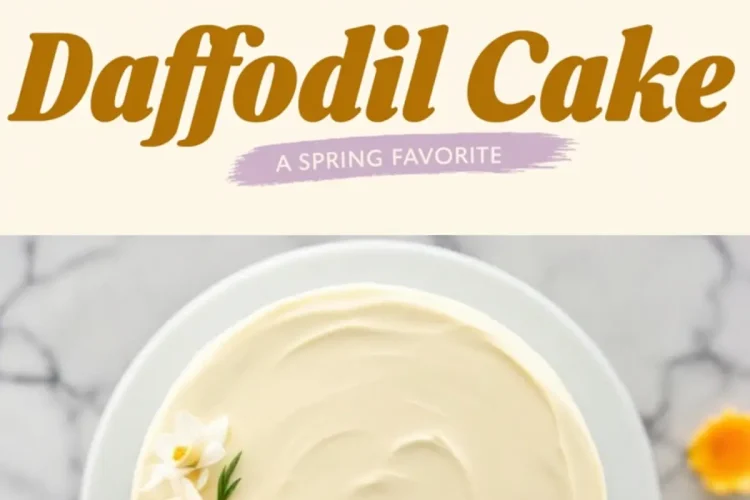
Spring calls for a cake that feels like sunshine on a plate. That is exactly what this Daffodil Cake delivers. You are about to learn how to make a light, fluffy cake that blends angel food and sponge textures into one stunning dessert. This isn’t just another spring cake recipe. This is the one I bring out every year because it always works, always impresses, and always feels fresh.
You will walk away from this recipe knowing how to create those distinct layers, how to whip egg whites for maximum height, and how to decorate with a touch of spring elegance. This cake stands tall and proud on any dessert table. If you are looking for minimalist bday cake inspiration with a spring flower touch, stay right here. You are in good hands.

Following a special diet?
Every recipe on this site can be converted to gluten-free, vegan, dairy-free, keto, nut-free or egg-free with adjusted ratios so nothing falls flat.
Try the Recipe Converter →Why Daffodil Cake Works Every Time
I have baked dozens of spring cakes over the years, but few match the balance this one offers. The angel food portion keeps the crumb airy, while the sponge layer brings moisture and depth. Each slice shows off those delicate layers, almost like a tulip opening in the sun.
The flavor carries hints of vanilla with a subtle lift from lemon zest. The buttercream finishes the cake with a creamy layer that holds everything together without overwhelming the palate. You do not need elaborate techniques. You just need a steady hand and a little patience.
Many recipes focus on heavy fillings or overly sweet frostings. My approach keeps the spotlight on the cake itself. This is why I always recommend this one for spring birthday cakes, bridal showers, or Easter gatherings.
The Key Ingredients That Make This Cake Stand Out

The structure depends entirely on properly whipped egg whites. Room temperature eggs are critical here. Cold egg whites resist volume, while warm ones open up and allow air to build inside. That trapped air is what lifts the angel food portion without the need for leaveners.
The cake flour adds tenderness, while cream of tartar stabilizes the meringue. I use both vanilla and almond extracts for subtle depth, though you can skip the almond if you prefer a pure vanilla profile.
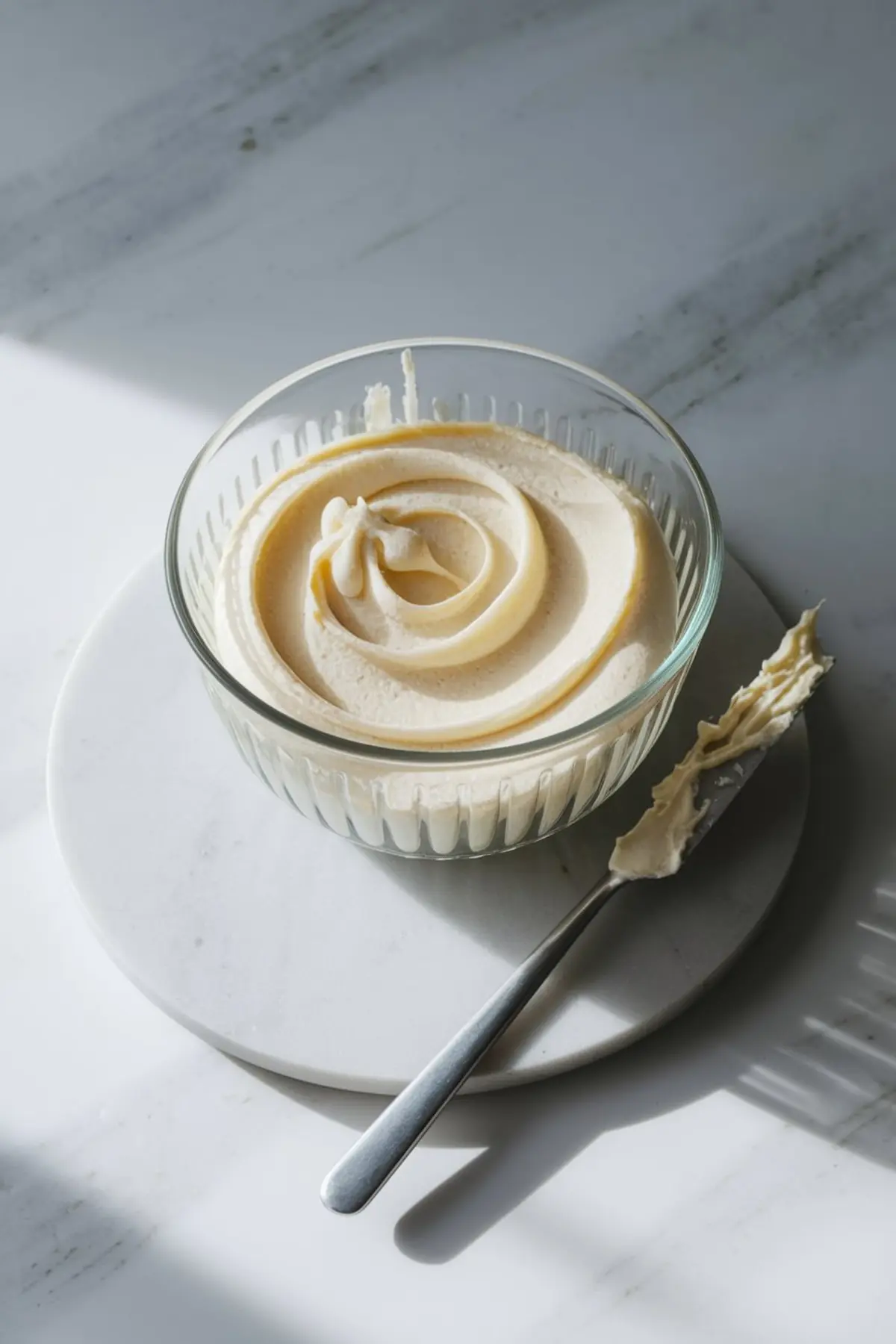
The buttercream requires nothing fancy. Soft butter, powdered sugar, and heavy cream build the base. A pinch of salt prevents it from tasting flat. I always sift the powdered sugar, as any lump left behind will show in the final texture.
My Personal Test: Angel Food Tube Pan vs Round Pans
I’ve tested this recipe in both a traditional tube pan and regular 8-inch round pans. Both produce excellent results, but the tube pan gives a higher, more dramatic rise thanks to its tall sides and central column that helps the batter climb.
When using round pans, make sure they have tall sides to support the batter. Avoid greasing any pan. The batter needs to cling to the surface as it rises. Greased sides cause collapse, which wastes all the effort put into whipping the egg whites.
In my notes, the tube pan creates a slightly more stable crumb, but round pans offer easier stacking for layered presentation if you plan a more elaborate lemon cake decoration.
How to Fold the Batters Without Losing Volume
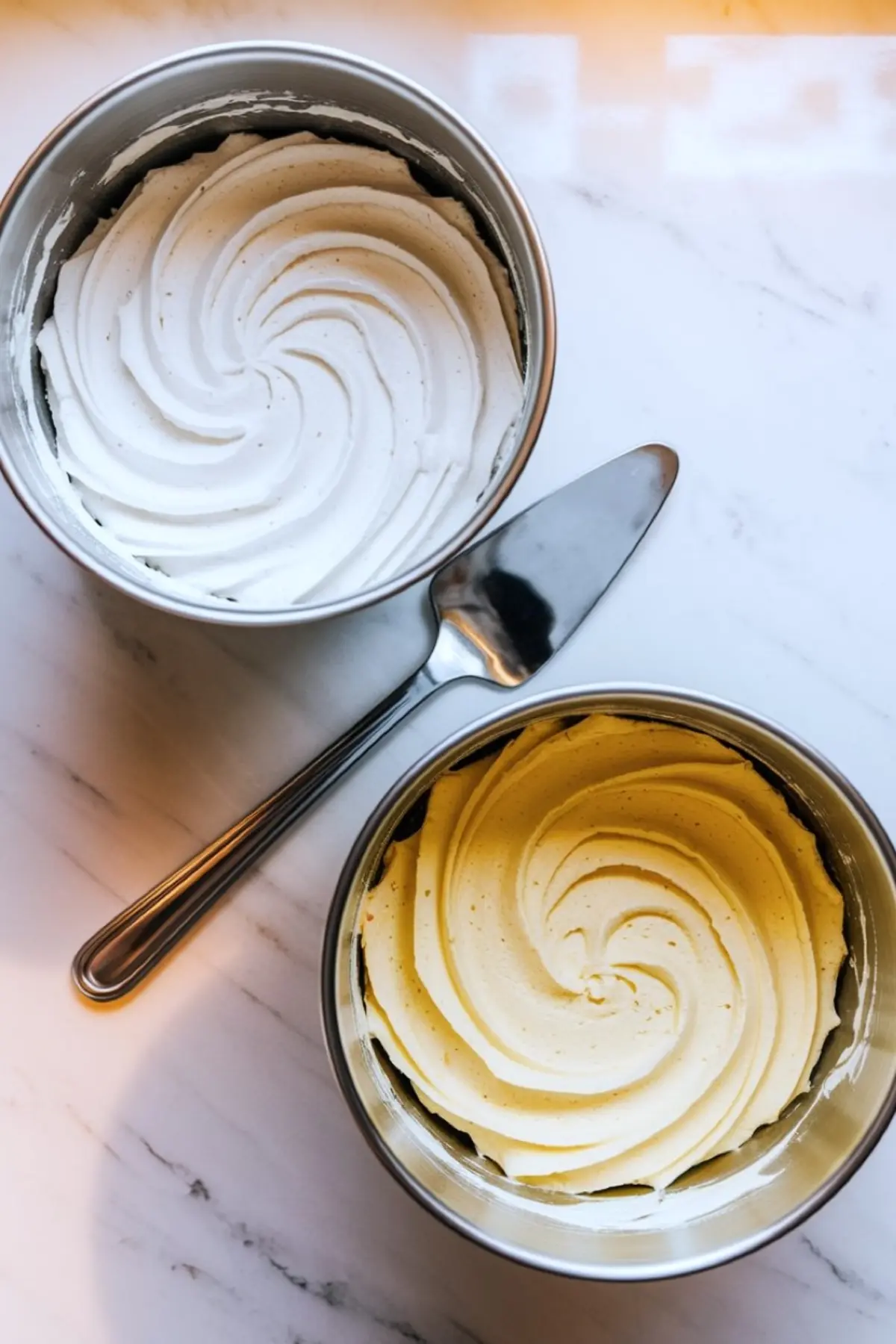
The most delicate part of this recipe sits in the folding step. I work slowly with a wide spatula, scooping under the batter and gently turning it over itself. Never stir or press down, or you risk breaking the bubbles you worked so hard to create.
You will divide the whipped egg whites into two portions. Half blends with the egg yolk mixture and flour, forming the yellow sponge layer. The other half remains pure for the angel food layer. This is what gives the daffodil cake its signature visual contrast inside.
Assembling for That Beautiful Spring Flower Look
When layering the two batters into your pan, you can alternate scoops for a marbled appearance or keep them separate for more distinct bands of color. I often swirl gently with a thin spatula for a natural petal-like pattern. This little detail always gets compliments.
After baking, invert your tube pan immediately. This prevents collapse while cooling. Angel food and sponge hybrids rely entirely on the structure set during baking. I use a sturdy bottle to balance the pan upside down on my counter until fully cooled.
Once cooled, I apply a smooth layer of buttercream. Sometimes I pipe soft waves along the sides for a more modern pastel yellow cake look, which works beautifully for minimalist bday cakes or tulip birthday cake themes. A light sprinkle of yellow sanding sugar gives it a subtle sparkle.
You can also browse my Lemon Cake Recipe if you want more citrus-focused options. Both sit beautifully on a spring cake table.
Decorating Ideas for Spring Cakes
Fresh edible flowers like daffodils or tulips make natural companions for this cake. When available, I add a few sprigs of rosemary or mint to mimic spring foliage. The green adds contrast without overpowering the soft yellow palette.
For spring cakes ideas that need to travel or sit out longer, fondant flowers hold up better than fresh ones. I’ve brought this to several garden parties, and fondant decorations always last through unpredictable weather.
If you want more fruit-forward options for your spring birthday cakes, take a look at my Simple Fruit Cake or the vibrant Lemon Pistachio Cake. Both complement the daffodil cake perfectly on a dessert spread.
Serving and Storage Notes
I recommend slicing this cake with a serrated knife. The gentle sawing motion keeps the layers intact and avoids compressing the crumb.
The cake stores well at room temperature under a cake dome for one day. For longer storage, I place it in the refrigerator, where it stays fresh for up to three days. Bring it back to room temperature before serving to restore the full texture and flavor.
If you frost with fresh flowers, add them just before serving to maintain their color and structure.
Why This Cake Always Delivers Confidence

I keep returning to this Daffodil Cake because it delivers consistent results. The method respects the ingredients, builds structure naturally, and offers flexibility in presentation. You do not need advanced skills or specialty tools.
You only need focus during folding and attention to oven time. After that, the cake almost builds itself.
Save this recipe on Pinterest so you have it ready for your next spring event. And if you bake it, I would love to hear how it turned out. Share your questions or results in the comments. This helps all of us learn and improve together.
Daffodil Cake Recipe
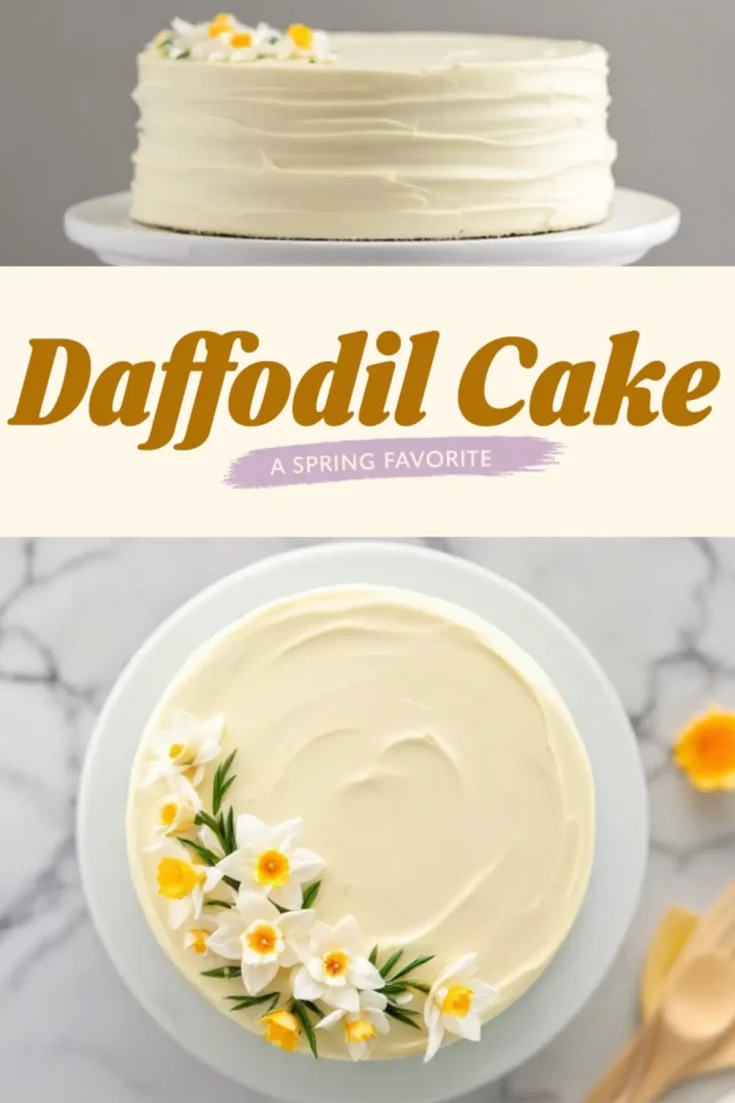
This Daffodil Cake brings the brightness of spring into every slice with a soft, airy texture and delicate flavor. It combines a white angel food batter and a yellow sponge batter for a light and fluffy crumb that looks as beautiful as it tastes. Vanilla buttercream adds a smooth finish, while optional floral decorations provide a seasonal touch. Perfectly balanced in sweetness and texture, this cake is made with whipped egg whites and rich yolks to create distinct layers that come together harmoniously in every bite.
Ingredients
- FOR THE CAKE
- 1 cup cake flour, sifted
- 1 ½ cups granulated sugar, divided
- 12 large eggs, separated (room temperature)
- 1 ½ tsp cream of tartar
- ¼ tsp salt
- 1 ½ tsp pure vanilla extract
- ½ tsp almond extract (optional)
- Zest of 1 lemon (optional)
- FOR THE BUTTERCREAM
- 1 cup unsalted butter (room temperature)
- 4 cups powdered sugar, sifted
- 2–3 tbsp heavy cream or milk
- 1 tbsp vanilla extract
- Pinch of salt
- OPTIONAL DECORATIONS
- Edible daffodil flowers or fondant daffodils
- Fresh rosemary or mint sprigs
- Yellow sanding sugar
Instructions
- PREHEAT THE OVEN: Set the oven to 350°F (175°C). Do not grease your pan. Use a tube pan for best height or two 8-inch round cake pans with tall sides. This allows the cake to rise by gripping the sides of the pan.
- BEAT EGG WHITES: In a clean, dry bowl, beat egg whites with cream of tartar and salt until soft peaks form. Slowly add ¾ cup of granulated sugar while beating until stiff, glossy peaks form.
- MAKE EGG YOLK BATTER: In a separate bowl, beat the egg yolks until thick and pale. Gradually add the remaining ¾ cup sugar and beat until the mixture ribbons off the beater. Stir in vanilla, almond extract if using, and lemon zest.
- FOLD IN FLOUR: Gently fold the sifted cake flour into the egg yolk mixture, working carefully to preserve volume and avoid deflating the batter.
- COMBINE BATTERS: Divide the egg white mixture in half. Fold one half gently into the egg yolk-flour batter to create the yellow sponge layer. Reserve the other half as the white angel food layer.
- LAYER INTO PAN: Spoon both batters alternately into the pan for a marbled effect, or layer one on top of the other for a bold contrast. Lightly swirl with a spatula if desired for a visual pattern.
- BAKE: Bake for 35–40 minutes, or until the surface is golden and springs back when touched. A toothpick inserted into the center should come out clean. Invert the tube pan immediately and let it cool upside down. If using round pans, place on a wire rack and cool completely before removing from pans.
- MAKE BUTTERCREAM: Beat butter until creamy. Gradually add sifted powdered sugar, then mix in vanilla, salt, and cream or milk a little at a time until desired consistency is reached.
- ASSEMBLE AND DECORATE: If needed, level cake layers. Spread a layer of buttercream between layers, then frost the entire cake smoothly or with light texture. Add optional edible flowers, fresh herbs, or sanding sugar for decoration.
Notes
Ensure eggs are at room temperature for optimal volume. Do not open the oven during baking to prevent collapse. Use a serrated knife to cut clean slices. Cake can be stored covered at room temperature for 1 day or refrigerated for up to 3 days.
Nutrition Information
Yield
12Serving Size
1Amount Per Serving Calories 649Total Fat 33gSaturated Fat 19gTrans Fat 0gUnsaturated Fat 12gCholesterol 267mgSodium 167mgCarbohydrates 81gFiber 0gSugar 70gProtein 9g
