
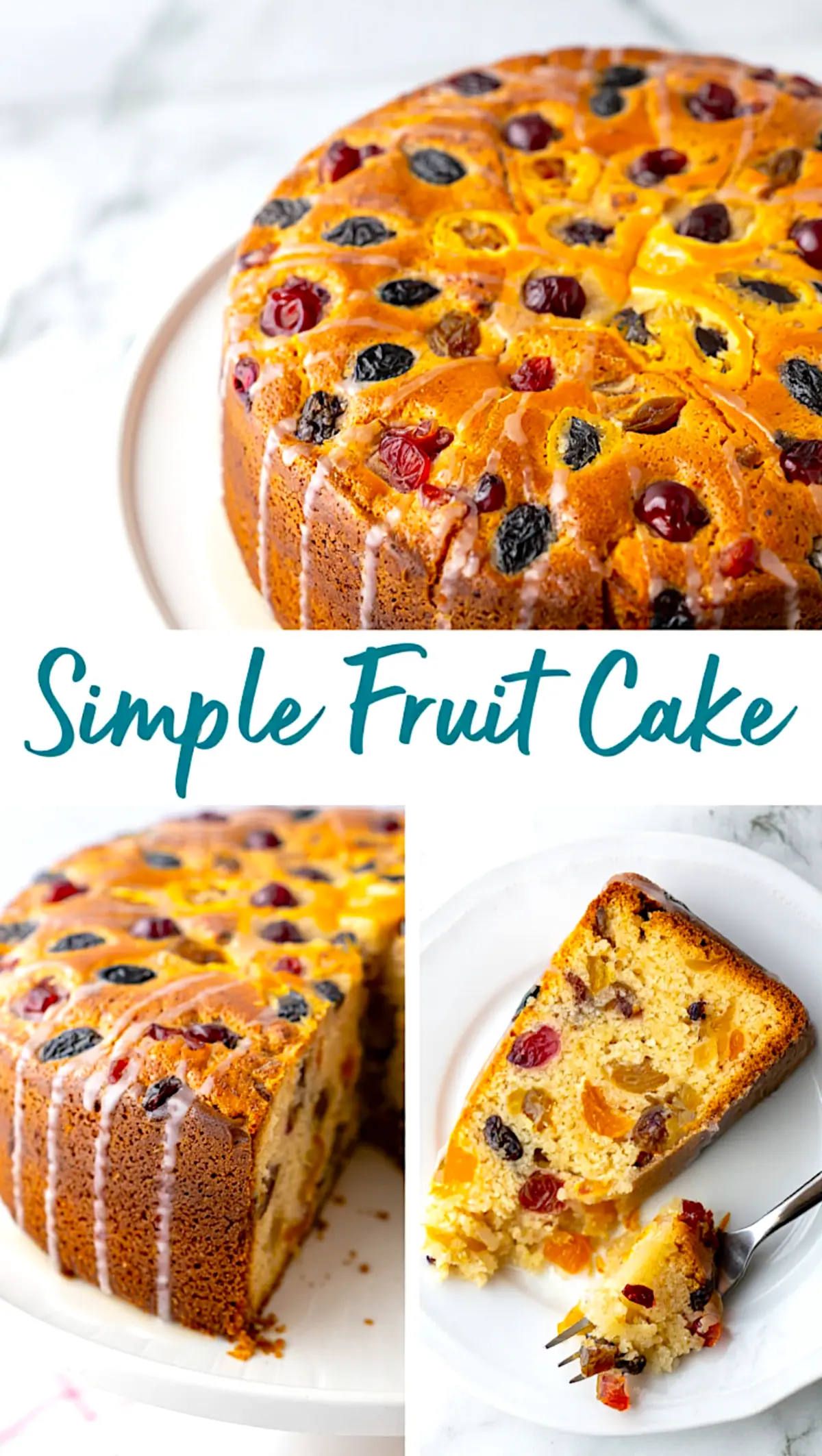
You came here because you want a fruit cake you can actually pull off. You want the flavor, the texture, and the look, but without the weeks of soaking and complicated steps.
You will get that here.
This simple fruit cake skips the alcohol soak entirely. It gives you a moist, buttery crumb, packed with colorful dried fruits that stay soft and flavorful. I have baked enough of these to know exactly where things usually go wrong. And I can tell you how to get it right.
You can serve this for holidays, birthdays, or even casual gatherings. Once you know how to balance the fruit, batter, and moisture, you control the outcome every time.
Following a special diet?
Every recipe on this site can be converted to gluten-free, vegan, dairy-free, keto, nut-free or egg-free with adjusted ratios so nothing falls flat.
Try the Recipe Converter →The Key to Moist Fruit Cake Without Alcohol Soaking
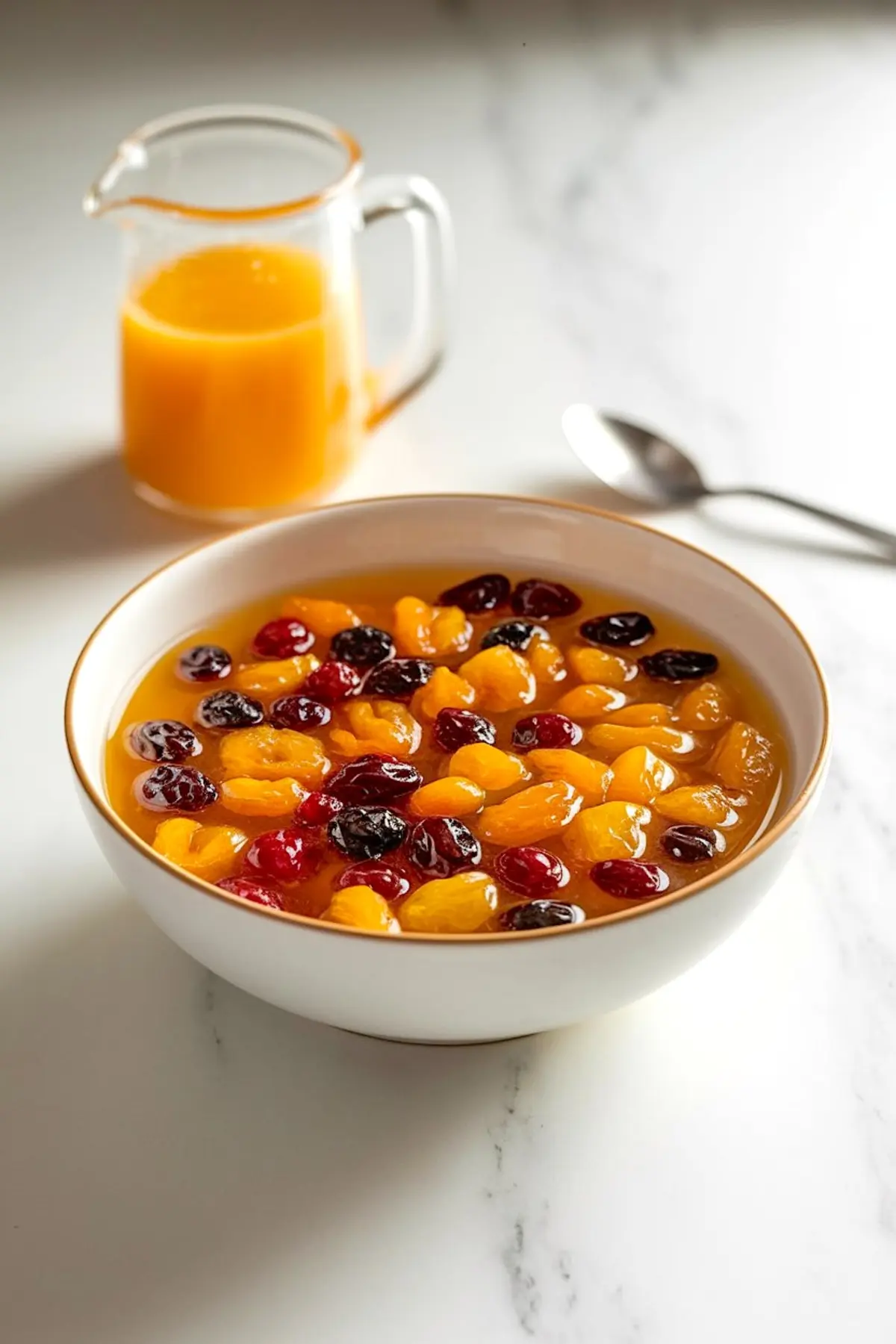
The first challenge is softening the dried fruit. Traditional recipes often call for weeks of soaking in alcohol. Here, I use fresh orange juice instead.
The orange juice softens the fruit quickly while adding bright flavor notes. The citric acid gently breaks down the tougher parts of the dried fruits. This short soak works beautifully and keeps your prep time manageable.
The result is fruit that blends seamlessly into the batter instead of sinking or turning chewy.
The Right Fruit Mix Makes The Cake Shine
I always recommend using a mix of raisins, sultanas, cranberries, chopped apricots, and cherries. Each fruit brings something different to both flavor and color.
Apricots and cherries add visual contrast. Raisins and sultanas provide sweetness and a soft texture. Cranberries bring a gentle tartness that balances the overall taste.
You can adjust proportions based on what you have on hand. But don’t skip the variety. That balance is part of what makes this fruit cake stand out.
How the Butter and Sugar Creaming Affects Texture
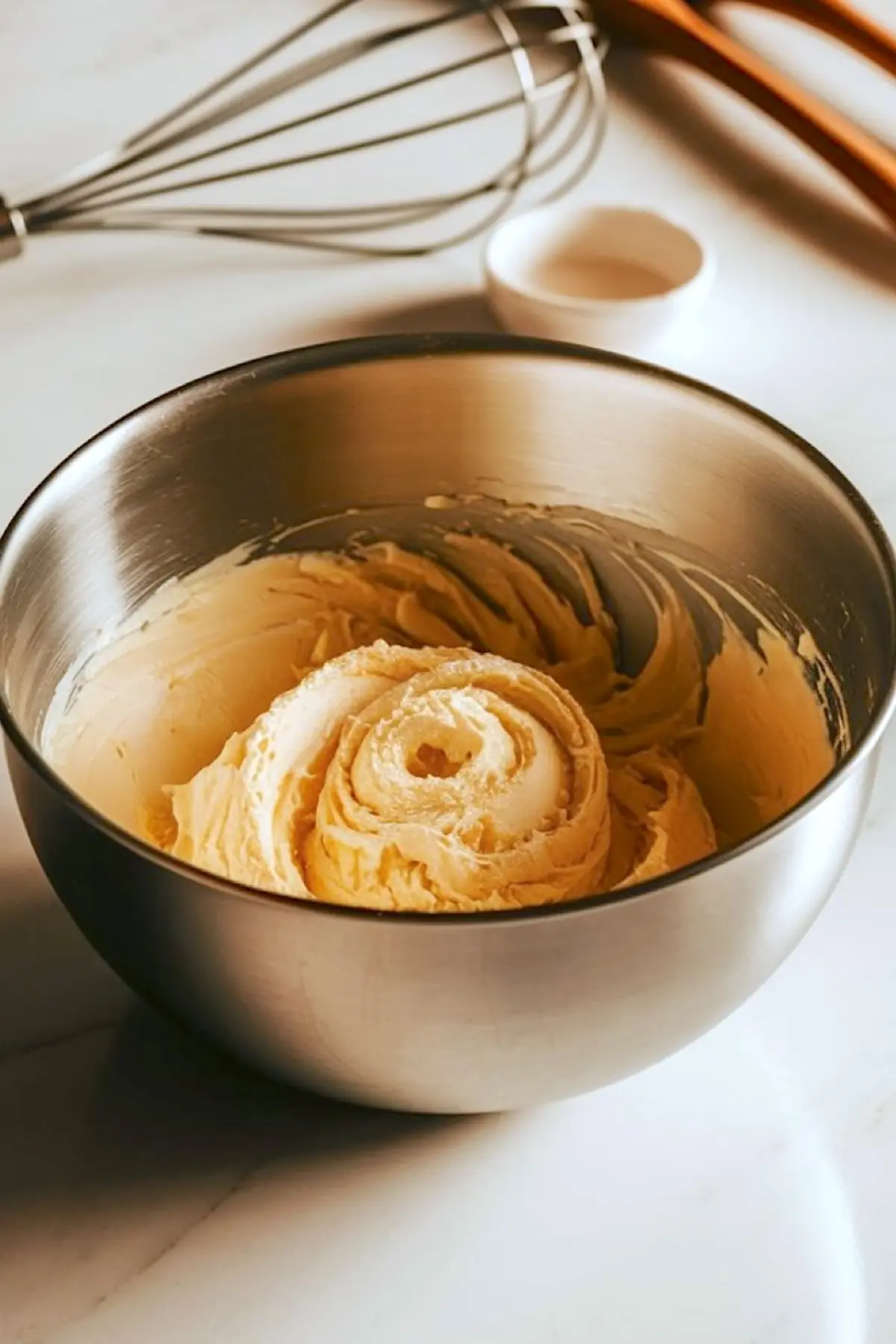
This part often gets rushed, and that’s a mistake.
Creaming butter and sugar together builds the cake’s structure. The process traps air, which later expands during baking, creating a light but moist crumb.
I always mix for about three to five minutes until the mixture turns pale and fluffy. Don’t cut this step short.
Eggs: Temperature Makes a Difference
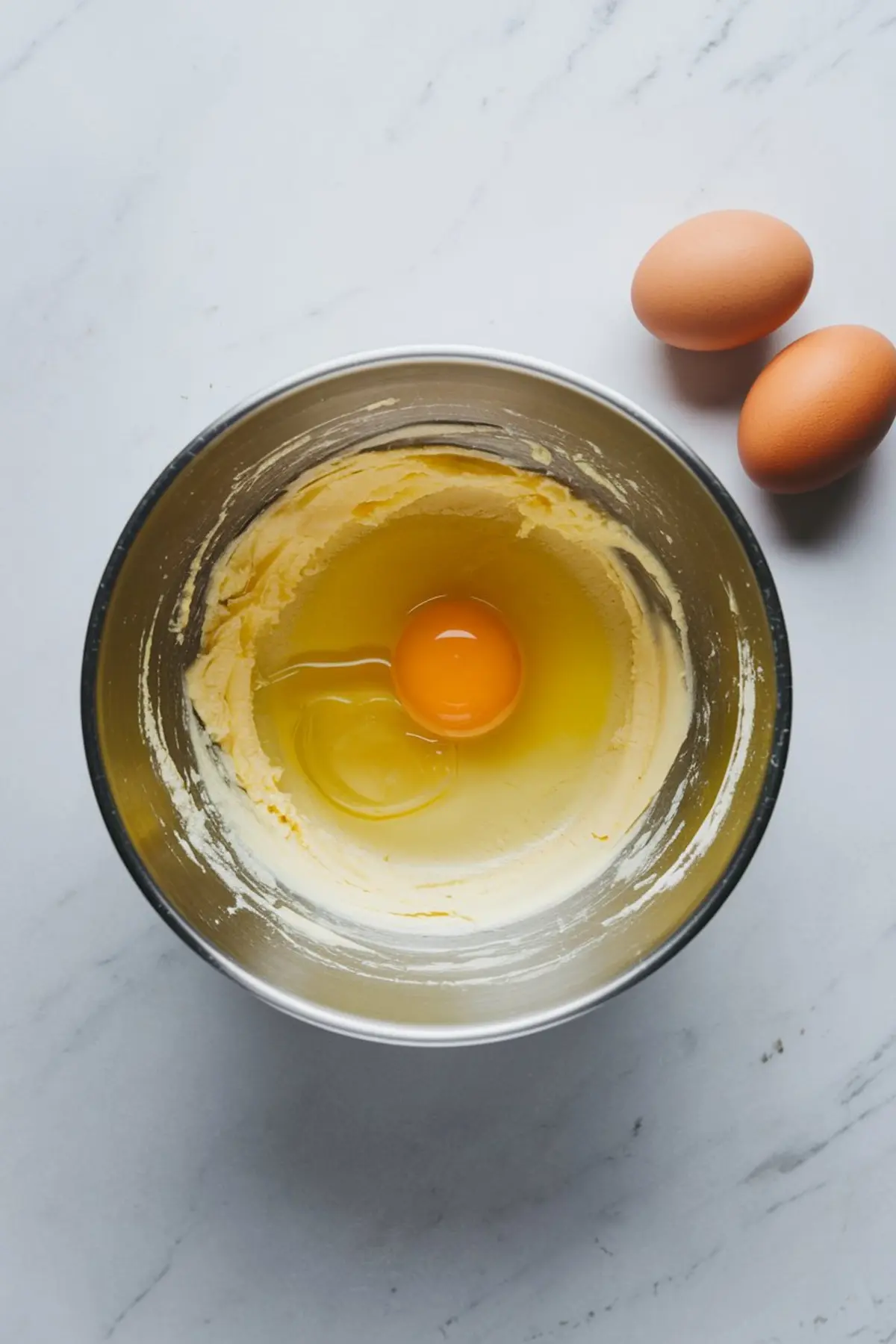
Cold eggs can break your batter.
I use room-temperature eggs because they blend evenly with the butter mixture. Cold eggs can cause curdling, making the batter unstable. If you forget to take them out early, place them in warm water for a few minutes before using.
Dry Ingredients: The Cinnamon Question
Some recipes overload fruit cakes with spices. Here, I only add a touch of cinnamon.
In my experience, too much spice can bury the fruit flavors. The minimal cinnamon rounds out the taste without overwhelming the natural sweetness of the dried fruit and citrus.
The One Small Step That Prevents Fruit Sinking
This makes or breaks many fruit cakes. You must coat the soaked fruit lightly in flour before folding it into the batter.
The flour coating helps suspend the fruit throughout the cake. Without it, the fruit often sinks during baking.
I measure two tablespoons of flour from the dry mixture and toss it with the drained fruit before adding everything together.
Comparing Orange Juice vs Lemon Juice Soaking
I’ve tested both in my kitchen.
Orange juice gives a rounder, slightly sweeter note that complements the butter and vanilla. Lemon juice adds a sharper brightness but can edge into tartness if overdone.
When I want a strong citrus profile, I replace half the orange juice with lemon. For a softer, more classic taste, I stick to orange juice entirely.
Baking and Testing for Doneness
This cake needs a slow bake at 325°F (160°C). The lower temperature gives the batter time to set without drying out the fruit.
Always test doneness by inserting a skewer into the center. It should come out clean. Depending on your oven, baking usually takes between 60 and 75 minutes.
Let the cake cool in the pan for about 10 minutes before transferring it to a wire rack. This prevents breakage.
The Glaze: Optional But Worth It
I often add a simple glaze once the cake cools fully.
Mix powdered sugar with either orange or lemon juice. This adds a glossy finish and a light citrus flavor. Use just enough juice to create a pourable consistency.
If you plan to decorate with fresh fruit slices or candied citrus, the glaze helps them adhere and stay vibrant.
Serving Ideas: How I Like to Present It
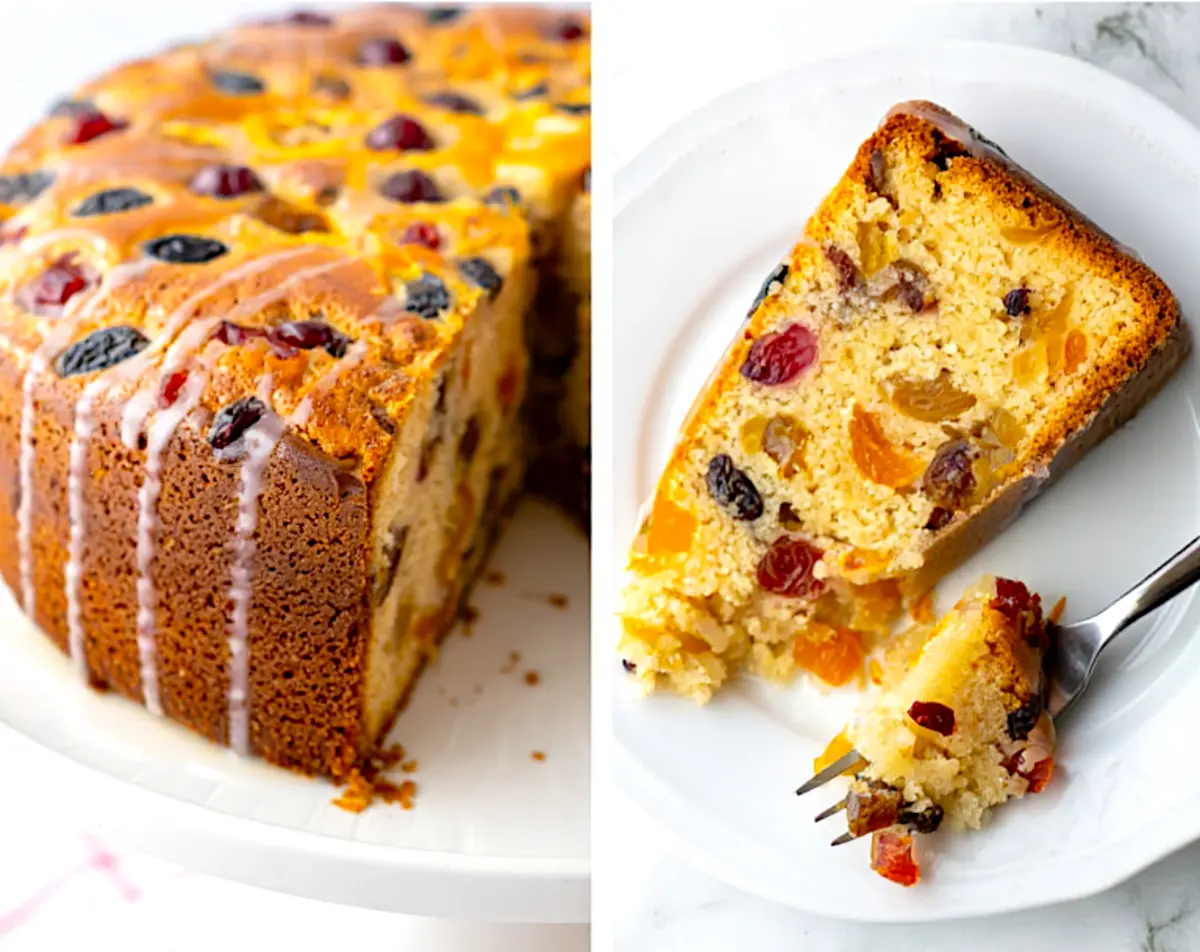
This cake fits many occasions. For a birthday fruit cake, I sometimes decorate the top with thinly sliced fresh fruits or a few candied orange peels.
You can also use this as a base for fruit cake designs that include simple ribbons, sugared cranberries, or even a light dusting of powdered sugar for holiday tables.
Compared to my Red Velvet Cake or Vanilla Cake Recipe, this fruit cake offers a richer chew with bursts of flavor from the dried fruits, making it a reliable alternative for guests who enjoy fruity cakes.
Storage: Why This Cake Holds Up Well
One advantage of this recipe is its shelf life.
Once fully cooled, I wrap it tightly and store it at room temperature. It stays moist for up to five days. The dried fruits help retain moisture, and the butter-based batter prevents it from drying out.
You can freeze it as well. Wrap in plastic, then foil, and freeze for up to one month. Thaw overnight at room temperature before serving.
Frequently Asked: Can I Use Fresh Apples Instead?
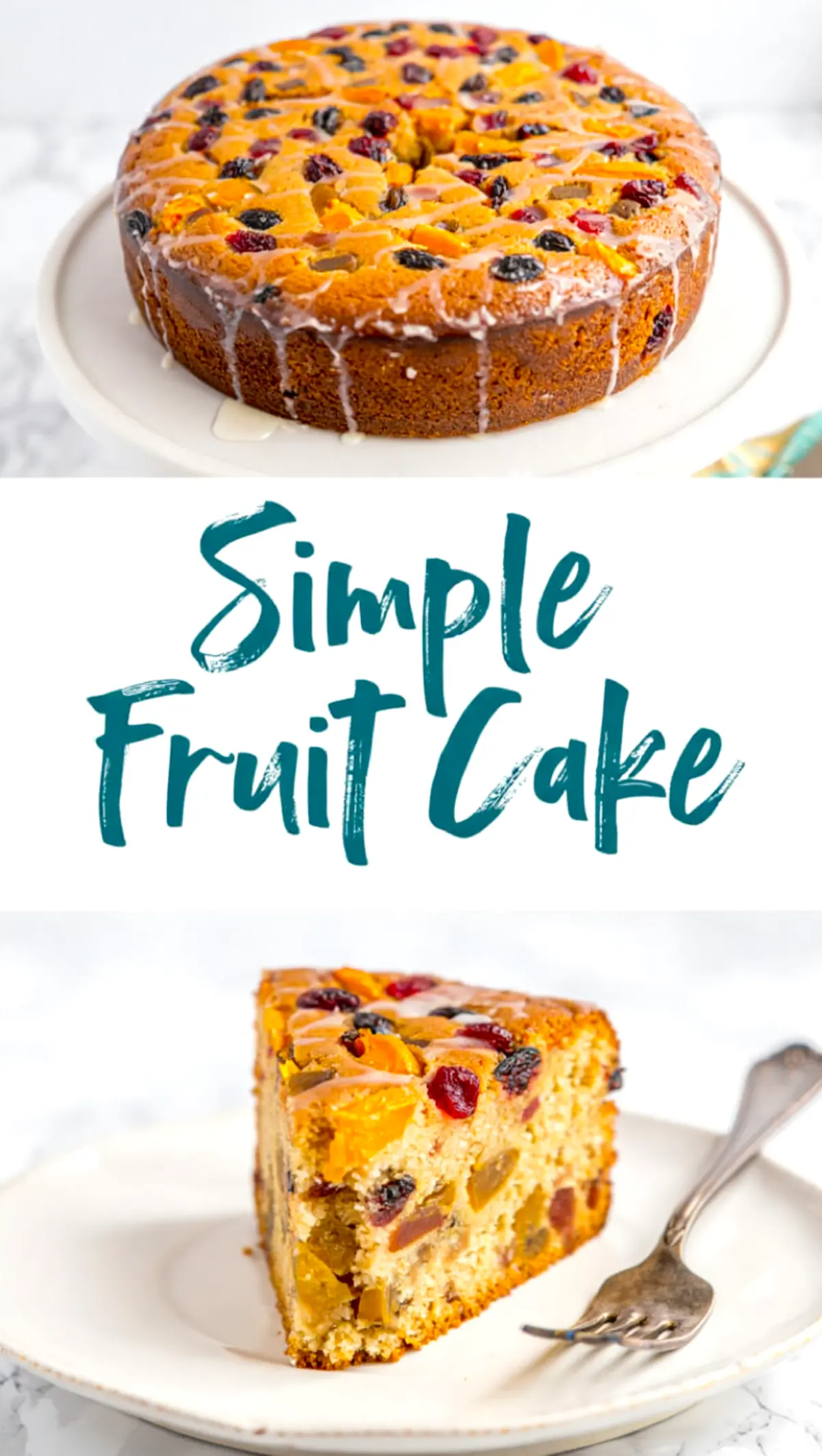
I’ve tried it, but I recommend sticking to dried fruits.
Fresh apples release too much moisture during baking, which alters the crumb texture and may cause sogginess. Dried fruits provide sweetness and structure without destabilizing the batter.
If you crave something apple-based, consider making an Apple Cake where apples shine as the star ingredient.
Pin and Share: Join My Baking Table
Save this simple fruit cake recipe to your Pinterest boards so you can always find it for holidays or quick celebrations. If you bake it, I would love to hear how it turned out for you. Drop your questions, tips, or even your own fruit mixes in the comments below. Let’s share our baking notes.
Simple Fruit Cake Recipe
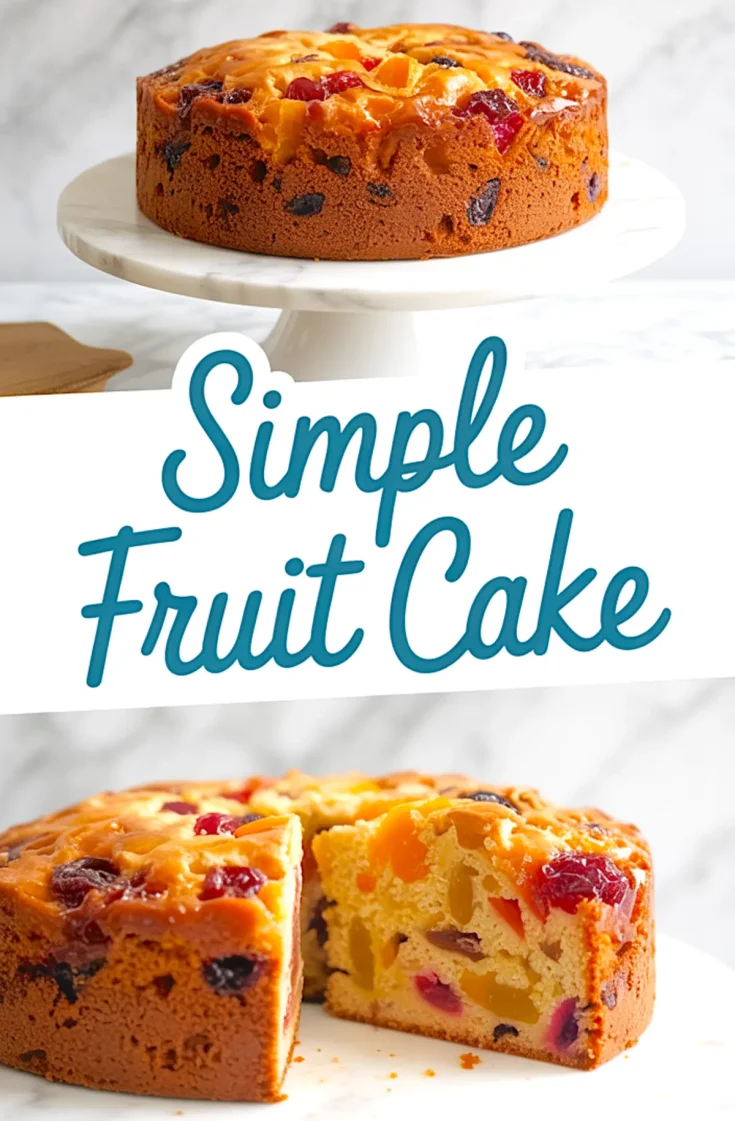
Moist, buttery fruit cake filled with recognizable dried fruits like raisins, cranberries, apricots, and sultanas. No alcohol soaking required—just a quick soak in orange juice makes this classic holiday cake easy and flavorful.
Ingredients
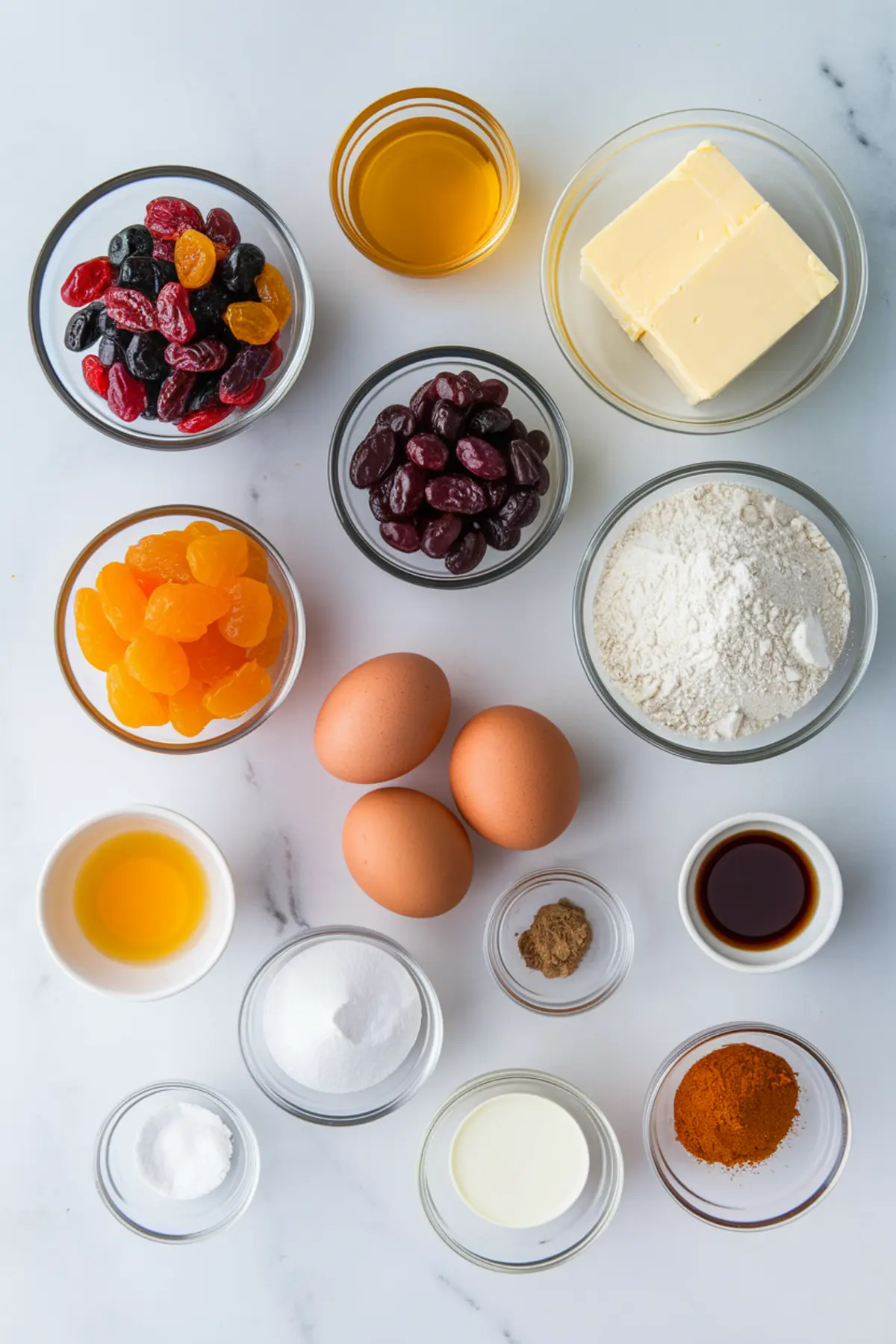
- 2 cups (300g) mixed dried fruit (raisins, cranberries, chopped apricots, sultanas, cherries)
- ½ cup (120ml) orange juice or warm water
- 1 cup (225g) unsalted butter, softened
- 1 cup (200g) granulated sugar
- 4 large eggs, room temperature
- 2 ½ cups (310g) all-purpose flour
- 2 tsp baking powder
- ½ tsp salt
- 1 tsp vanilla extract
- Zest of 1 orange
- ¼ tsp ground cinnamon (optional)
- for the glaze (optional):
- ½ cup powdered sugar
- 1–2 tbsp lemon or orange juice
Instructions
- PREPARE THE FRUIT: In a medium bowl, combine the dried fruits and orange juice. Let them sit for 15–30 minutes so the fruit softens and absorbs the liquid while you prepare the batter.
- MAKE THE BATTER: Preheat the oven to 325°F (160°C). Grease and line an 8-inch round or square cake tin with parchment paper. In a large bowl, cream together the softened butter and granulated sugar until pale and fluffy, about 3 to 5 minutes. Add the eggs one at a time, mixing thoroughly after each addition. Stir in the vanilla extract and orange zest.
- MIX THE DRY INGREDIENTS: In a separate bowl, whisk together the flour, baking powder, salt, and optional cinnamon. Gradually add this dry mixture to the wet ingredients, stirring just until the batter is combined and smooth.
- ADD THE FRUIT: Drain off any remaining juice from the soaked fruit. Toss the fruit with 2 tablespoons of the measured flour to help prevent sinking. Gently fold the coated fruit into the batter until evenly distributed.
- BAKE: Pour the batter into the prepared cake tin and smooth the top. Bake for 60 to 75 minutes, or until a skewer inserted in the center of the cake comes out clean. Allow the cake to cool in the pan for 10 minutes before transferring to a wire rack to cool completely.
- GLAZE (OPTIONAL): In a small bowl, stir together the powdered sugar and lemon or orange juice until smooth. Drizzle over the fully cooled cake for a light, citrusy finish.
Notes
For a stronger citrus flavor, substitute half the orange juice used for soaking with lemon juice. The cake stores well wrapped at room temperature for up to 5 days.
Nutrition Information
Yield
12Serving Size
1Amount Per Serving Calories 190Total Fat 3gSaturated Fat 1gTrans Fat 0gUnsaturated Fat 1gCholesterol 65mgSodium 219mgCarbohydrates 36gFiber 2gSugar 13gProtein 5g
