
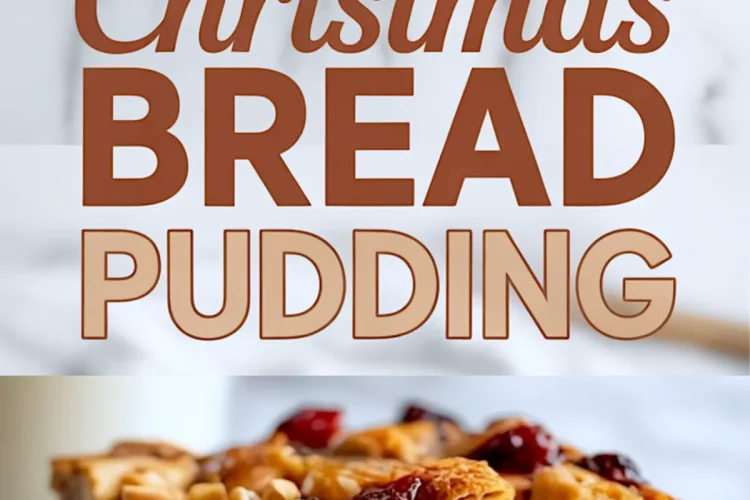
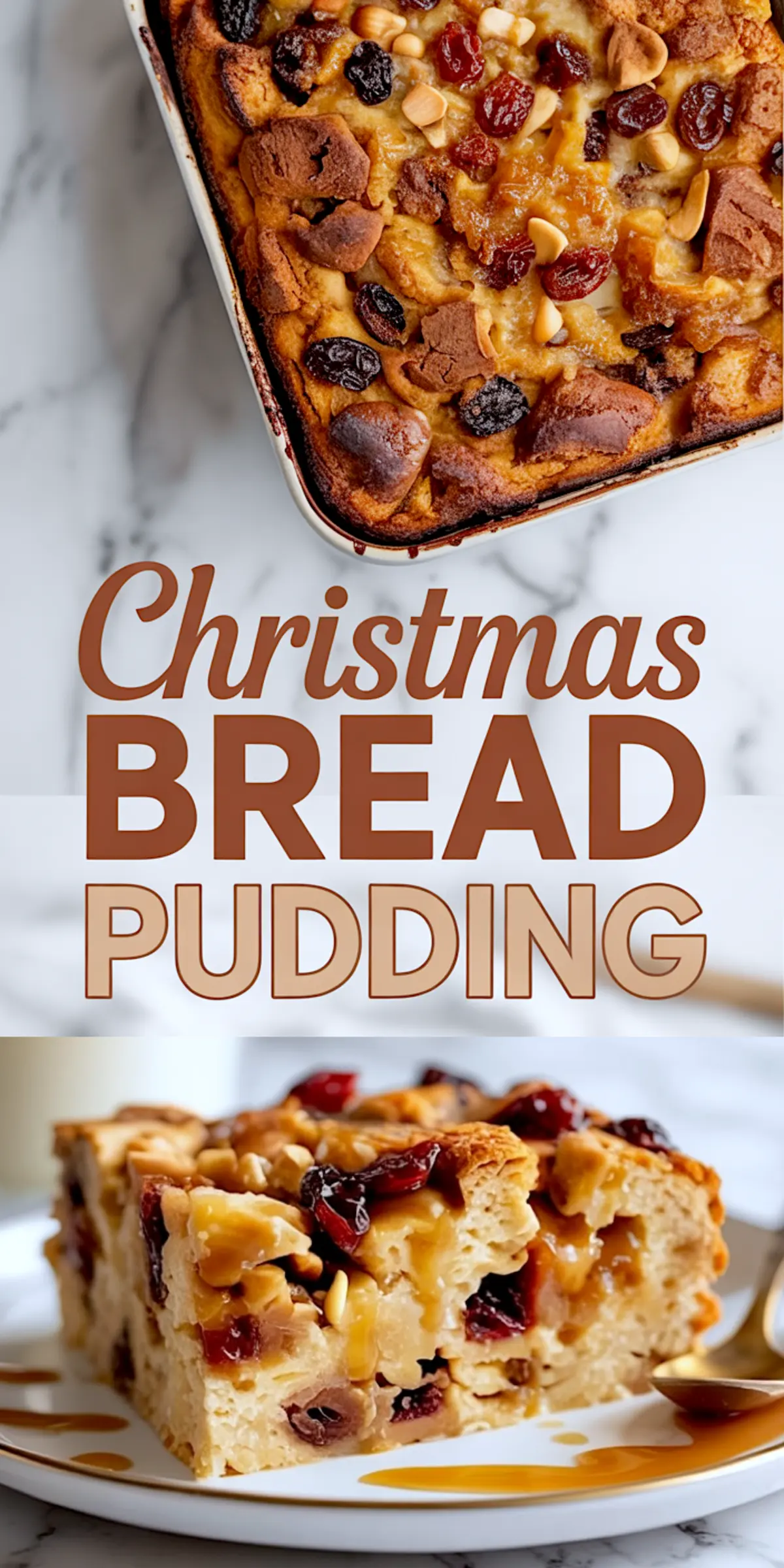
Christmas bread pudding has a way of taking simple ingredients and turning them into something you proudly place on the holiday table.
This recipe teaches you how to use day-old bread, warm spices, dried fruit, and nuts to create a holiday bread pudding that tastes both traditional and special. You’ll learn why each ingredient has a place, how to bring out the best flavors, and how to make sure your Christmas bread pudding recipe earns repeat requests.
I’ve made this version for years. Every winter bread pudding I’ve baked since has been measured against it.
Following a special diet?
Every recipe on this site can be converted to gluten-free, vegan, dairy-free, keto, nut-free or egg-free with adjusted ratios so nothing falls flat.
Try the Recipe Converter →The Holiday Base: Bread and Custard That Matter
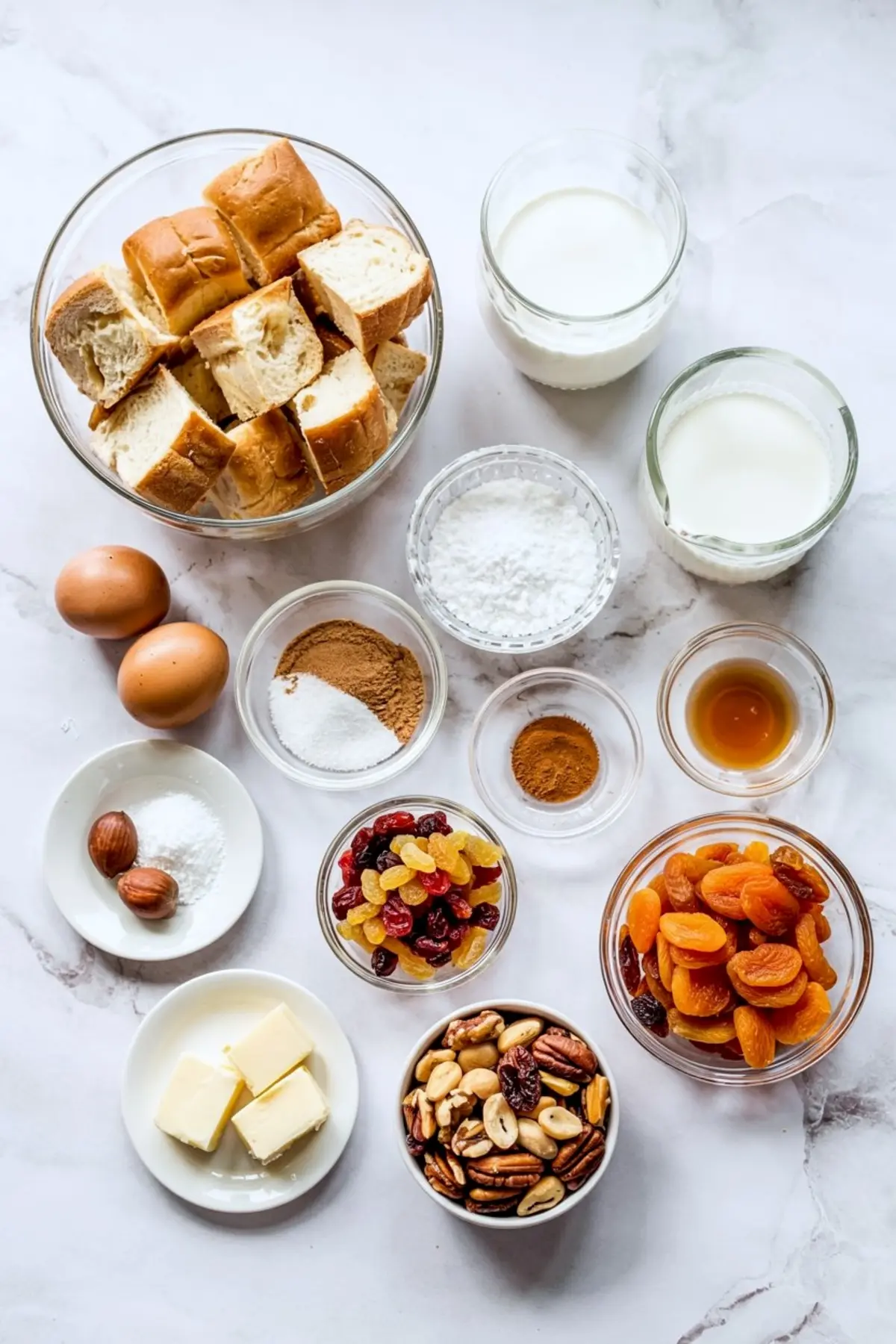
Brioche or challah makes the best bread pudding recipe for Christmas because both breads hold their shape while soaking up custard. Their soft, egg-rich crumb creates a tender center that never turns soggy. I’ve tested sturdier sandwich bread and while it works in a pinch, brioche adds richness that feels right for a holiday bread pudding.
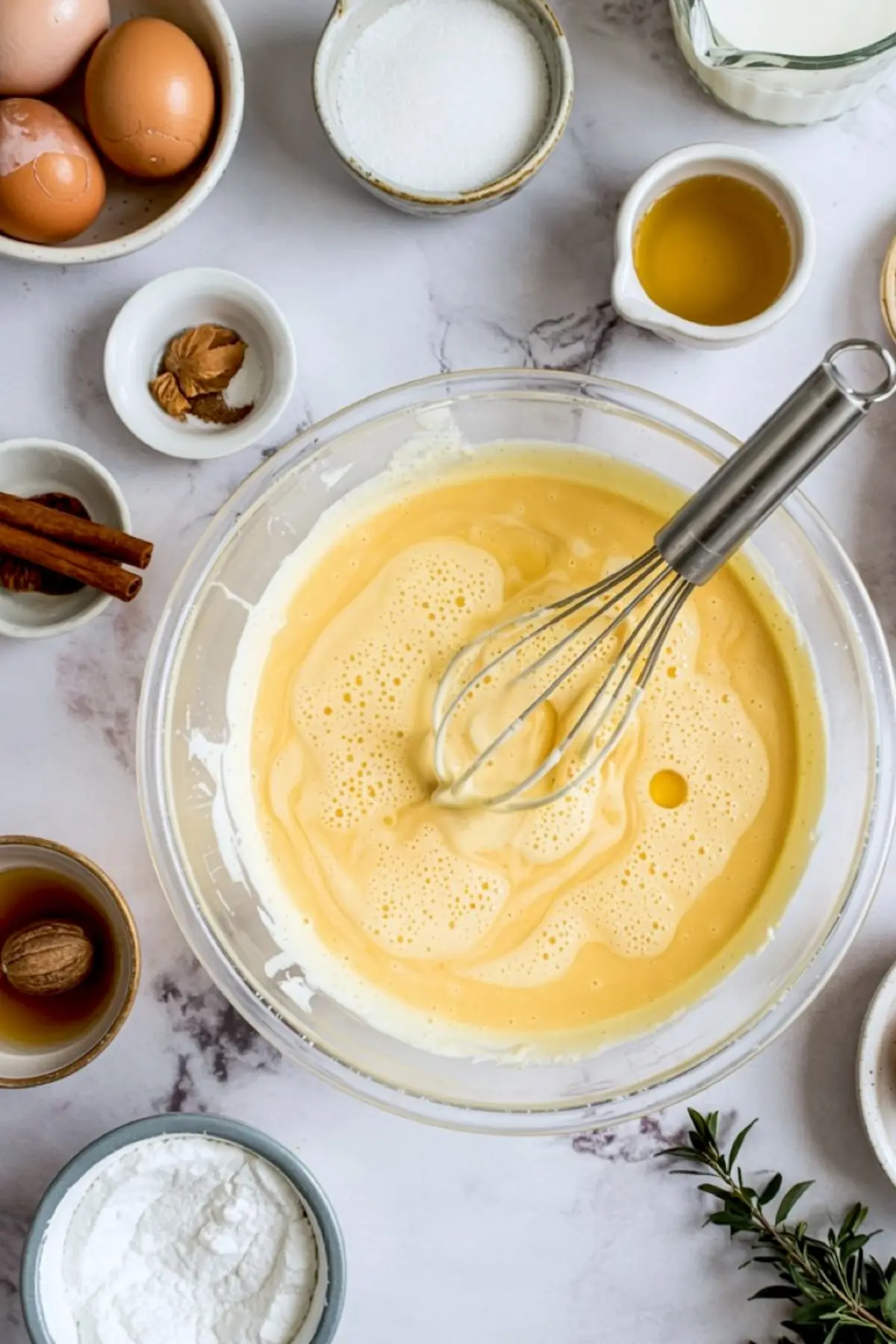
Milk and cream form the custard. Using both gives balance. Whole milk lightens the texture, heavy cream deepens it. Eggs bind the liquid into a soft custard once baked. Sugar and vanilla bring sweetness, and cinnamon with nutmeg add warmth. Every spoonful carries holiday comfort.
For an extra layer, I sometimes grate orange zest into the custard. The fragrance cuts through the richness and pairs beautifully with dried fruit.
The Dried Fruits That Define the Season
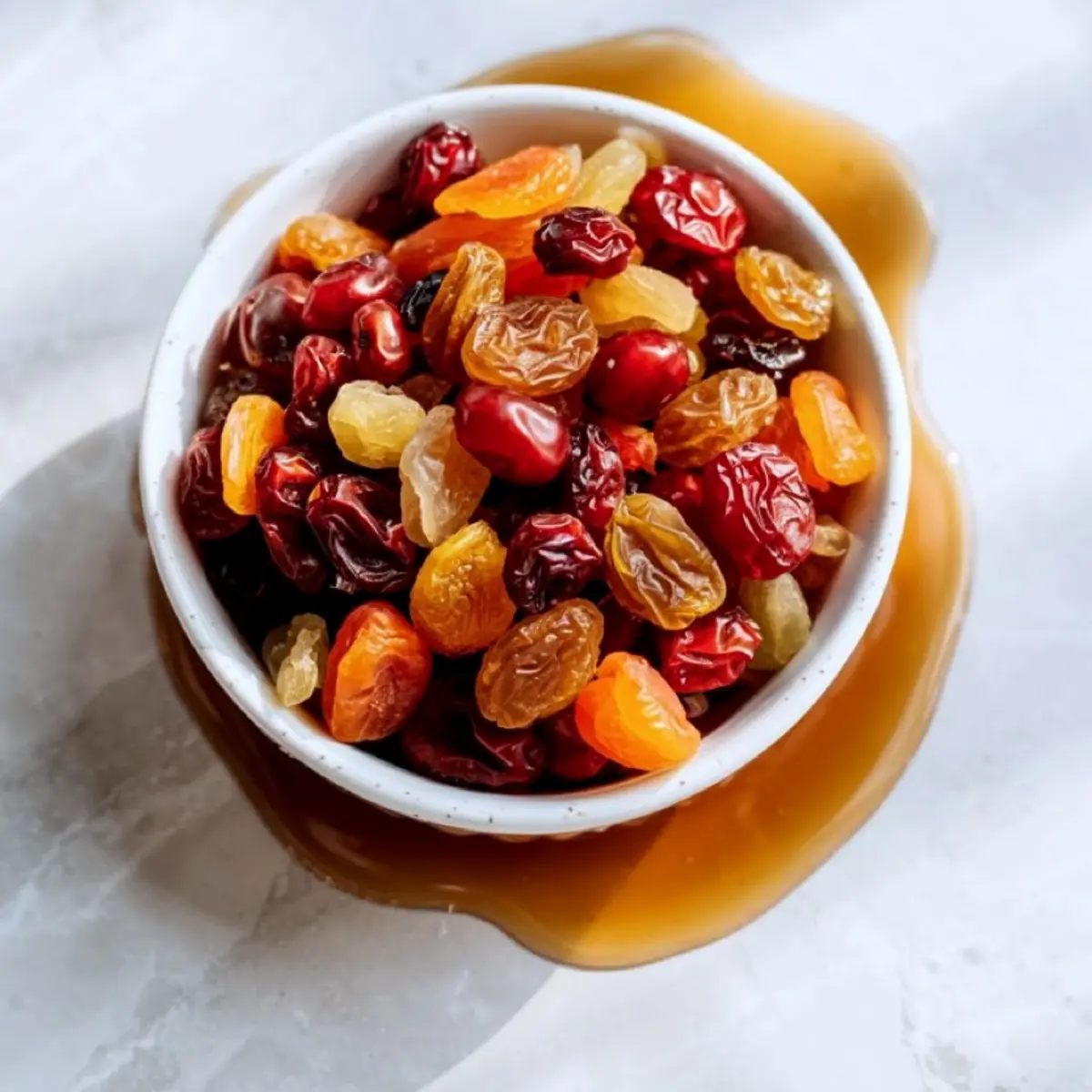
Cranberries, raisins, and apricots give this dessert color and natural sweetness. Each fruit adds its own voice. Cranberries bring tartness. Golden raisins mellow with honeyed flavor. Apricots provide chew and a deeper fruit note.
Soaking the dried fruit in orange juice or a splash of rum is a step worth the few minutes. It plumps them, preventing dryness, and threads a subtle flavor through the dish. I’ve rushed this step before and regretted it—the difference is clear.
This mixture of fruit turns a simple bread pudding into a true holiday bread pudding recipe that belongs on every December table.
Nuts for Crunch and Balance
Bread pudding needs contrast. Soft custard alone can feel heavy. A scattering of nuts changes that. Hazelnuts bring toastiness, almonds give a clean bite, and pecans add sweetness. Chopped and spread over the top, they toast as the pudding bakes.
I keep half of the nuts pressed into the custard and half sprinkled on top for both texture and appearance. A final dusting of brown sugar on the surface creates a gentle caramel crust that pairs with the crunch.
For families with nut allergies, the recipe holds up beautifully without them. The dried fruit alone carries the character of the dessert.
Custard Soaking Notes and Overnight Rest
Once the custard is poured over the bread cubes, time becomes an ingredient. Letting it sit for at least 20 minutes at room temperature helps every cube absorb the liquid.
In my notes, I’ve compared resting at room temperature to an overnight soak in the fridge. Overnight gives deeper flavor and a more uniform custard texture. Room temperature works if you need a quicker dessert. Both are valid choices depending on your schedule.
That pause before baking is where the bread transforms from cubes into something more unified and flavorful.
Baking to the Right Finish
Bread pudding should bake until the edges are golden brown and the center no longer jiggles with liquid custard. The top develops crisp texture while the inside stays custardy and soft.
I let mine cool for 10 to 15 minutes before serving. The custard sets further, making slices easier to serve cleanly. A drizzle of caramel sauce or a dusting of powdered sugar finishes it off without overshadowing the natural flavor.
If you want more Christmas dessert ideas with the same cozy spirit, you might enjoy this Christmas Cake Idea which makes an elegant centerpiece for the table.
Comparison That Makes a Difference: Brioche vs. Challah
I’ve baked this bread pudding with both brioche and challah. Brioche has more butter, which gives a richer custard base and a softer texture. Challah is slightly drier and less sweet, which means it absorbs more custard and gives a lighter chew.
If you prefer a dessert that leans creamy and indulgent, brioche is the way. If you want something structured with a little more chew, challah performs beautifully. I keep both notes in my book because the choice changes the character of the dish without changing the method.
Serving Bread Pudding at the Holiday Table
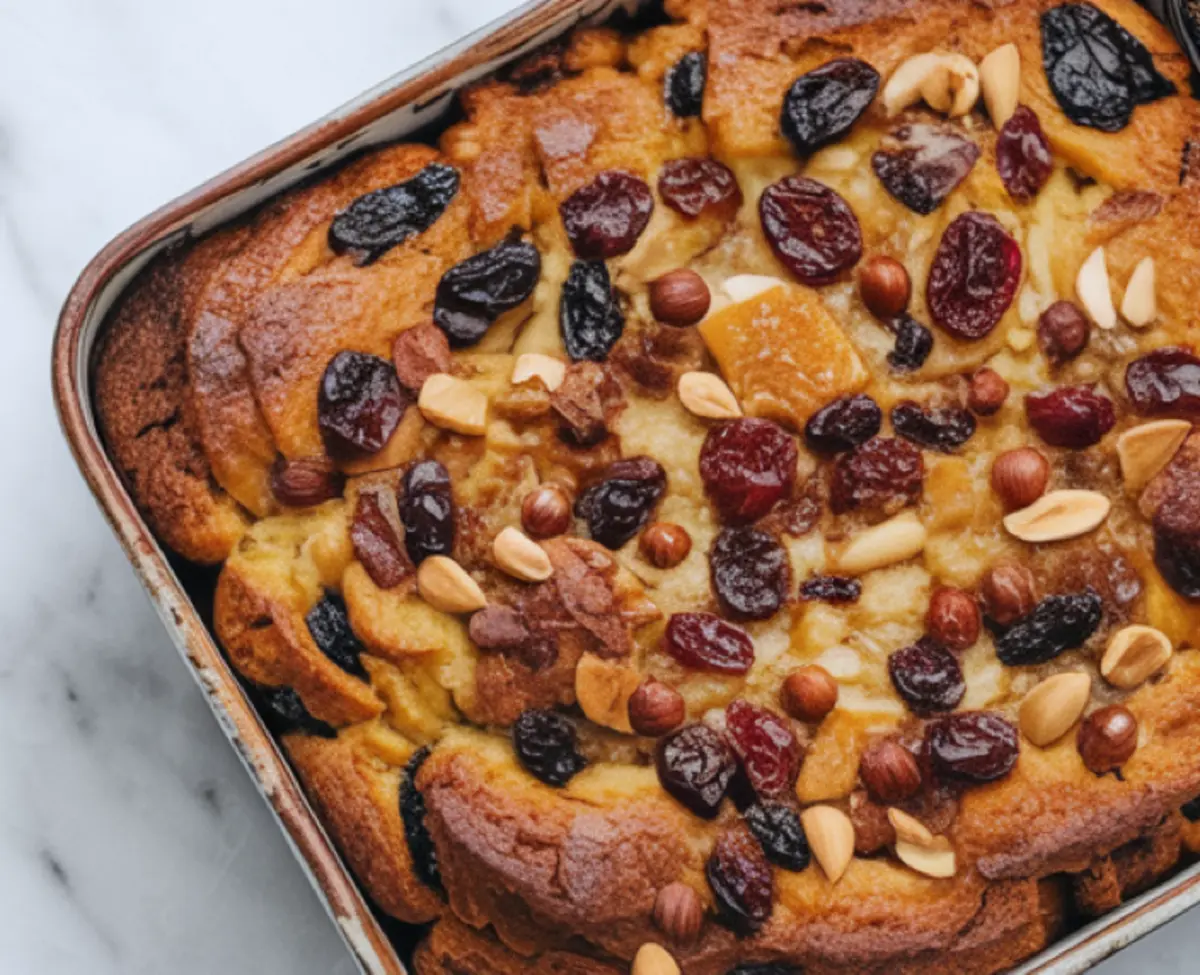
Serve this bread pudding warm with a jug of cream or a bowl of whipped cream nearby. Powdered sugar dusted just before serving makes it look snowy and festive.
Bread pudding is a generous dessert. You can portion it into squares for guests to help themselves. I’ve even sliced cold leftovers and packed them into lunchboxes the next day. They hold up well.
Pairing it with hot drinks adds even more warmth. A mug of Christmas hot chocolate beside a plate of bread pudding feels like holiday indulgence done right.
Storing and Reheating Without Losing Quality
Bread pudding reheats well. Store leftovers covered in the fridge for up to three days. To bring it back to life, reheat in the oven at 300°F until warm. The oven keeps the texture crisp on top, unlike the microwave which can soften it too much.
For those who like to prepare ahead, this dessert can be baked the day before and reheated. I’ve done this often when my holiday oven schedule was already full of roasts and pies.
For a sweet contrast to this custardy bake, try these chewy Christmas sugar cookie bars. They balance well with a spiced dessert like bread pudding.
A Tradition Worth Keeping
Christmas bread pudding carries more than flavor. It carries tradition. You start with old bread and end with a dessert that belongs at the table alongside more elaborate sweets.
It feels humble, yet it never disappears from the platter. Guests return for seconds because it tastes like comfort, and comfort is what people remember.
If you want another holiday recipe that celebrates simple ingredients, this Christmas Cracker Toffee is a quick candy that delivers crunch and sweetness with ease.
Save and Share This Recipe
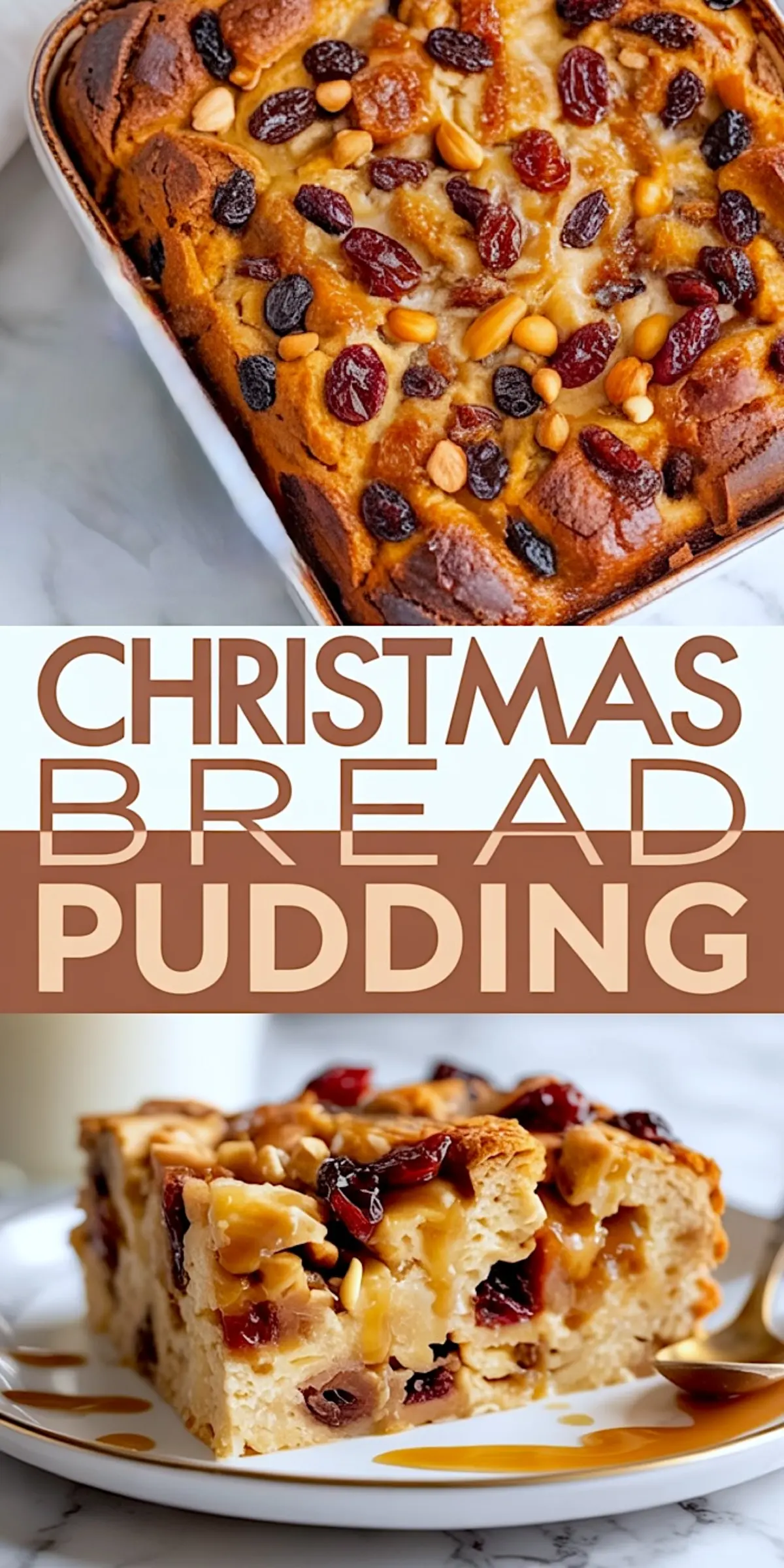
Pin this recipe so you can return to it each December.
Leave a comment below if you try it. I’d love to hear how your Christmas bread pudding turned out, or if you made any changes that worked for your family.
Creating a community around recipes keeps them alive, and every story adds to the tradition.
Christmas Bread Pudding Recipe
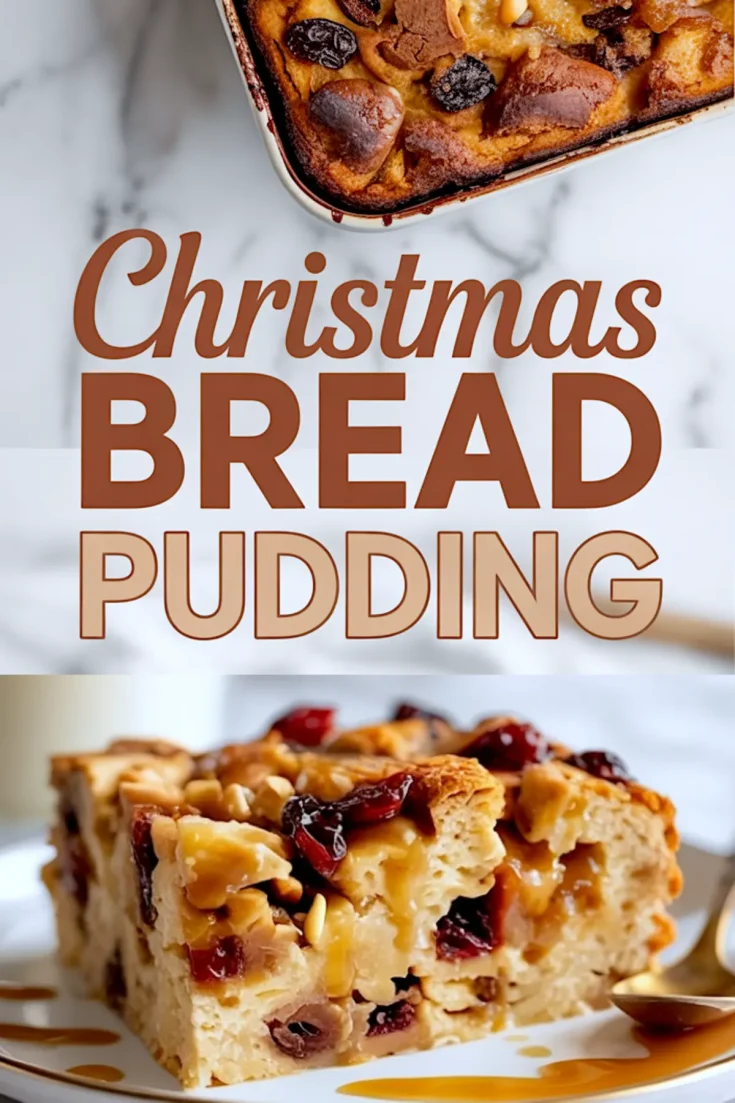
Christmas bread pudding turns day-old bread into a soft, custardy dessert with warm spices and golden edges. I soak the bread in a rich cinnamon-vanilla custard, then bake until the top is crisp and the center stays soft. This Christmas bread pudding recipe is easy to prep and feels like a holiday classic. I serve it warm with a little cream or powdered sugar, especially after big dinners. If you’re planning a winter bread pudding for a crowd, this version holds up well. It’s one of those holiday bread pudding recipes that earns repeat requests every year. Save it under best bread pudding recipe ideas or keep it with your favorite bread pudding recipe list for cozy baking.
Ingredients
- FOR THE BREAD PUDDING
- 6 cups day-old brioche or challah, cubed (about 1-inch pieces)
- 2 cups whole milk
- 1 cup heavy cream
- 4 large eggs
- 1 cup granulated sugar
- 2 teaspoons pure vanilla extract
- 1 teaspoon ground cinnamon
- ¼ teaspoon ground nutmeg
- ½ teaspoon salt
- ¾ cup dried cranberries
- ½ cup golden raisins or regular raisins
- ½ cup dried apricots, chopped
- ½ cup mixed nuts (hazelnuts, almonds, pecans), roughly chopped
- 2 tablespoons unsalted butter, for greasing the baking dish
- OPTIONAL ADD-INS
- Zest of 1 orange
- 1 tablespoon dark rum or brandy
- 2 tablespoons brown sugar, for topping
- OPTIONAL TOPPING
- Caramel sauce, for drizzling
- Powdered sugar, for dusting
Instructions
- PREHEAT THE OVEN AND PREP THE DISH: Preheat your oven to 350°F (175°C). Grease a 9x13-inch baking dish generously with butter and set it aside.
- SOAK THE DRIED FRUIT: In a small bowl, combine the dried cranberries, raisins, and chopped apricots. If using rum or orange juice, pour it over the fruit and let sit while preparing the custard to keep the fruit plump and flavorful.
- WHISK THE CUSTARD: In a large mixing bowl, whisk together the eggs, granulated sugar, cinnamon, nutmeg, salt, vanilla extract, whole milk, and heavy cream until the mixture is smooth and fully combined.
- ASSEMBLE THE BREAD PUDDING: Add the cubed brioche or challah to the prepared baking dish. Pour the custard mixture evenly over the bread cubes. Use a spatula to press down gently, making sure the bread soaks up the custard. Evenly distribute the soaked fruits and half of the chopped nuts on top, pressing them lightly into the surface. Sprinkle the remaining nuts and optional brown sugar over the top.
- REST THE MIXTURE: Let the assembled bread pudding sit at room temperature for 20–30 minutes to allow the bread to fully absorb the custard. Alternatively, cover and refrigerate overnight for deeper flavor and texture.
- BAKE UNTIL SET: Bake the bread pudding uncovered for 40–50 minutes, or until the top is golden brown and the custard is set in the center. A knife inserted into the middle should come out mostly clean with no liquid custard remaining.
- COOL AND SERVE: Allow the bread pudding to cool for 10–15 minutes after baking. Serve warm, topped with a drizzle of caramel sauce or a dusting of powdered sugar if desired.
Notes
For extra flavor, try adding orange zest to the custard or swapping rum for brandy. Using a mix of nuts adds texture, but feel free to stick with just one type if preferred. Bread pudding can be made a day ahead and reheated before serving.
Nutrition Information
Yield
10Serving Size
1Amount Per Serving Calories 585Total Fat 23gSaturated Fat 12gTrans Fat 0gUnsaturated Fat 10gCholesterol 152mgSodium 328mgCarbohydrates 86gFiber 3gSugar 68gProtein 10g
