

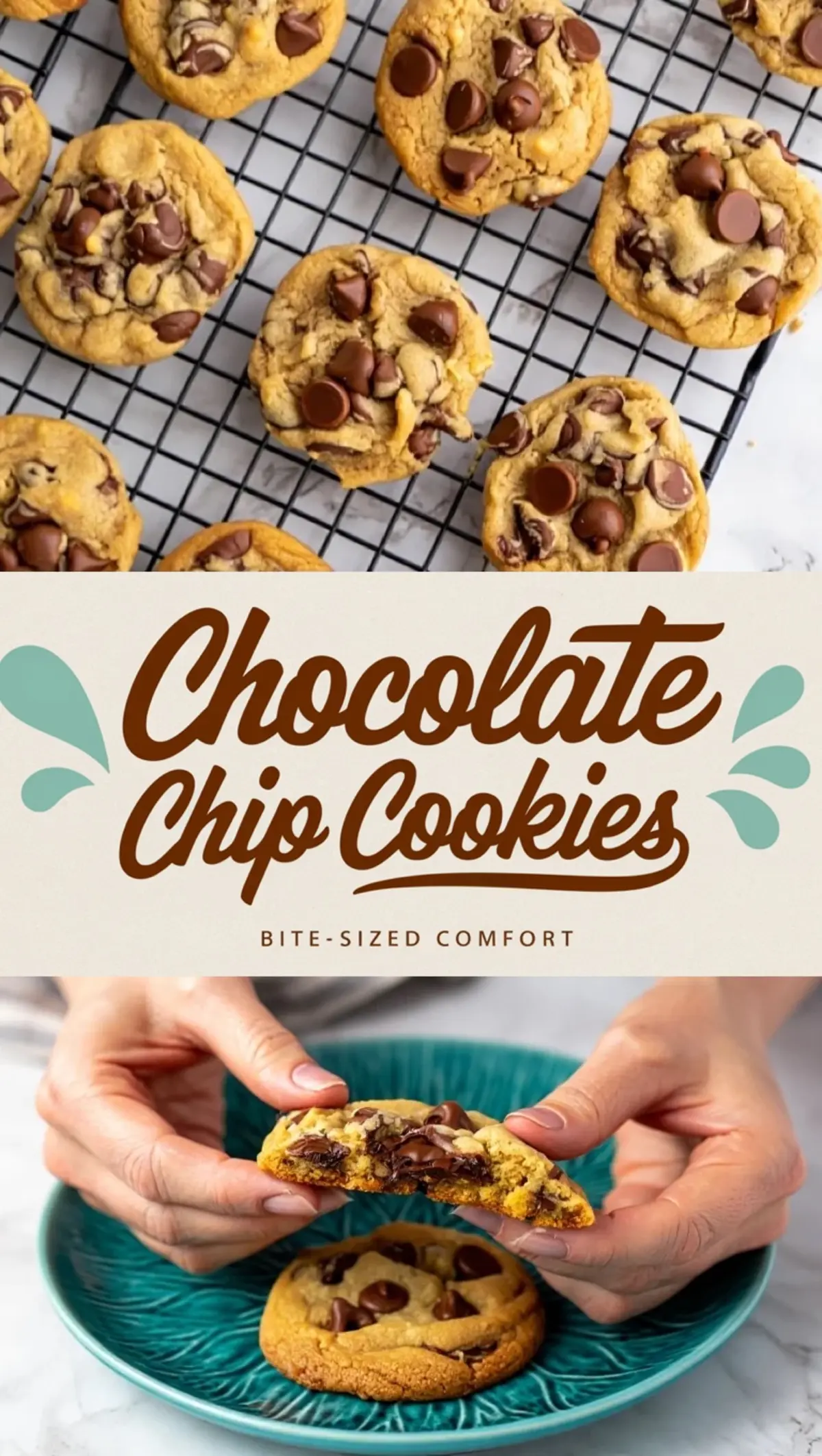
If you’ve ever baked cookies that turned out flat, too crisp, or dry the next day—this recipe solves that. These chewy chocolate chip cookies stay soft in the middle, with golden edges that don’t harden as they cool.
There’s no shortage of chocolate chip cookie recipes online. Some are too cakey. Others spread too much. A few look great in photos but disappoint on day two.
These cookies stay soft, chewy, and balanced. The edges bake just enough to hold their shape. The center keeps that slight gooey bite everyone reaches for first. I’ve tested dozens, and this is the only homemade chocolate chip cookie recipe I come back to without second-guessing.
If you’re looking for cookies that actually feel satisfying to make—this one makes sense. No chilling. No tricks. Just clear steps and solid results.
Following a special diet?
Every recipe on this site can be converted to gluten-free, vegan, dairy-free, keto, nut-free or egg-free with adjusted ratios so nothing falls flat.
Try the Recipe Converter →Why Sugar Ratio Matters in Chocolate Chip Cookies
This recipe works because of the sugar ratio. It uses both brown and white sugar, which most easy chocolate chip cookiesdo, but the balance here is what changes the game.
Brown sugar brings moisture and chewiness thanks to the molasses content. Granulated sugar gives structure and those crisp edges. Skip one or lean too hard into the other, and you’ll lose the texture that makes these so addictive.
I learned this the hard way after a few too many dry batches from “low sugar” versions floating around Pinterest. This ratio doesn’t just work—it holds up for days.
No-Chill, No-Fuss: The Kind of Recipe You’ll Actually Use
I love brown butter chocolate chip cookies, but most of the time I just want something simple that doesn’t involve extra steps. That’s why I stick to softened butter here—just enough structure to keep the dough soft without needing a chill time.
Everything mixes in a straightforward way. Start by creaming the butter with both sugars. That creates air pockets and gives the dough the structure it needs. Add eggs and real vanilla extract. (Don’t use imitation—this recipe’s too simple to hide behind weak flavors.)
Then whisk your dry ingredients: all-purpose flour, baking soda, and salt. The spoon-and-level method matters more than most people think. Too much flour leads to dense cookies that won’t spread right.
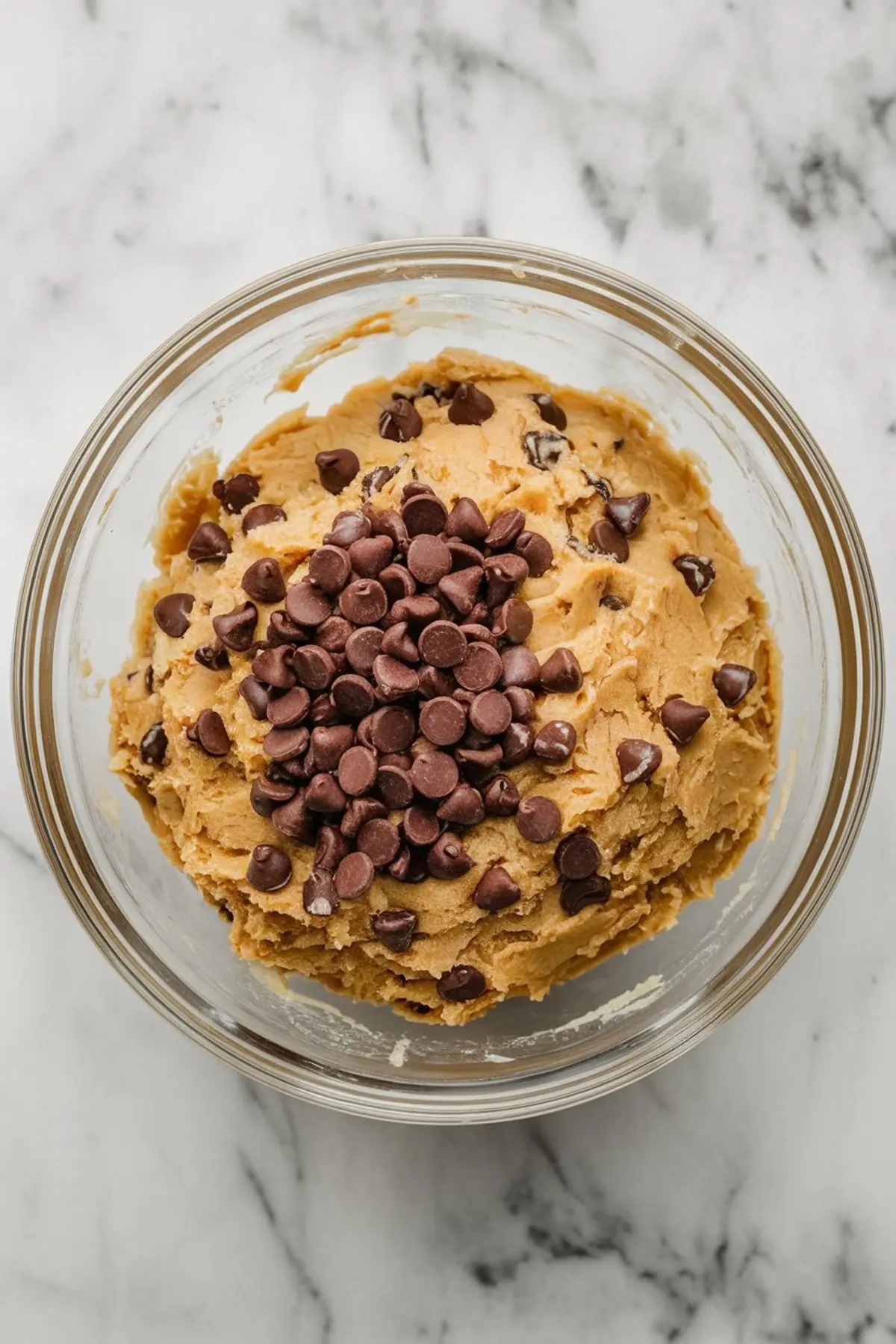
Fold in semi-sweet chocolate chips or chopped chocolate chunks. I usually go for a mix—chips give that classic bite, chunks melt into pools. You can use milk chocolate or dark depending on your taste, but the base holds either way.
Scoop, Sprinkle, Bake: How These Cookies Hold Their Shape Without Chilling
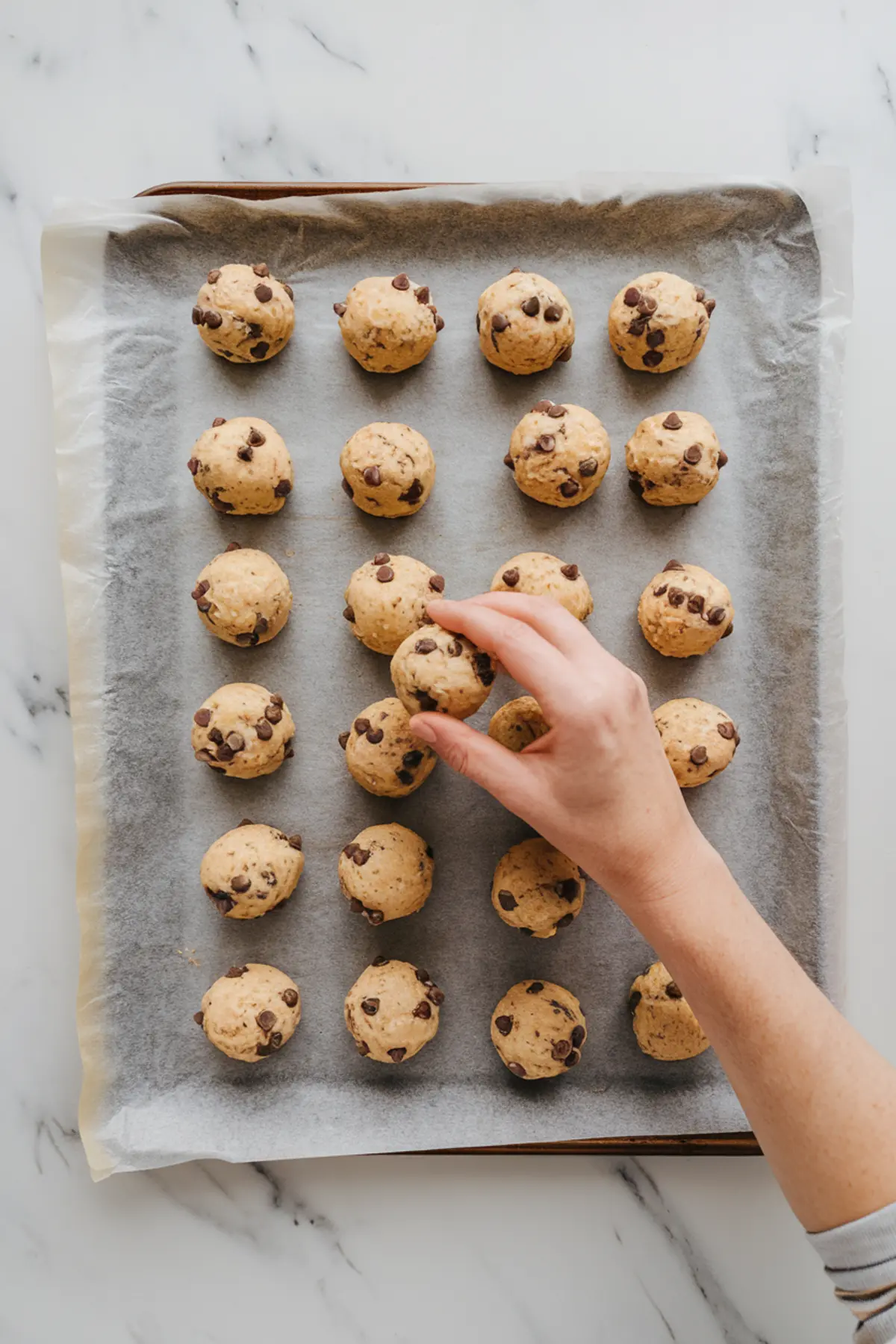
These cookies bake right after mixing. Use a cookie scoop if you have one—it helps with even baking. Space them a couple of inches apart since they do spread, just not too much.
Right before baking, I like to top each dough ball with a pinch of flaky sea salt. It’s optional, but the contrast cuts the sweetness in a way that makes people reach for seconds.
Bake at 350°F until the edges turn golden and the center looks slightly underdone. That’s the trick. The residual heat from the tray finishes baking the centers. Pulling them too late dries them out, and that soft middle disappears.
Let them cool on the sheet for at least five minutes before transferring. I used to skip this, and it always ended with broken cookies.
Make-Ahead and Storage Tips That Actually Work
These chewy chocolate chip cookies store well in an airtight container for up to five days. They stay soft and don’t get crumbly, which is another reason I like this base.
You can also freeze the raw dough in pre-scooped balls. That way, you’re only ever 10 minutes away from a freshly baked cookie. I keep a batch in the freezer year-round.
For guests, I serve these with berries or a glass of cold milk. For myself, I reheat one in the microwave for ten seconds and call it a reset.
And if you want something seasonal, try Maraschino Cherry Chocolate Chip Cookies for an extra toasty flavor.
Troubleshooting Tips from Someone Who Messed These Up Before
If your cookies come out dry, your butter was likely too soft or your flour too packed.
If they spread too much, your oven may run hot—or you might have skipped that first step where butter should still feel cool to the touch.
And if they’re too pale, let them sit in the oven another 30 seconds—but don’t wait for a browned top. That usually means they’ve gone too far.
Want to experiment? Fold in chopped walnuts, switch to white chocolate chips, or try adding a dash of cinnamon for a cozy flavor shift.
Final Thoughts: Keep This One Handy
This is the best chocolate chip cookie recipe I’ve used for results that hold up across batches. It’s soft, chewy, and doesn’t rely on chilling or complicated methods. Once you make it once, you won’t need to look for another.
If you’re into gluten-free spins, I’ve also had great feedback on Almond Flour Chocolate Chip Cookies—lighter texture, same craveable flavor.
Pin this recipe so you can come back to it. And if you make it, tell me how it turned out in the comments—or let me know what variation you tried. Let’s swap notes.
The Best Chocolate Chip Cookies

Soft in the center, golden on the edges, and packed with rich chocolate chips, these classic chocolate chip cookies are a comfort bake with reliable results. The recipe uses a balance of brown and white sugar for the right amount of chew and crisp, and a touch of flaky sea salt on top adds contrast to the sweetness. This dough is easy to mix and bakes into cookies that stay soft even after they cool.
Ingredients
- 1 cup (2 sticks) unsalted butter, softened
- 3/4 cup light brown sugar, packed
- 1/2 cup granulated sugar
- 2 large eggs
- 2 teaspoons pure vanilla extract
- 2 1/4 cups all-purpose flour
- 1 teaspoon baking soda
- 1/2 teaspoon salt
- 2 cups semi-sweet chocolate chips (or chopped chocolate chunks)
- Optional: flaky sea salt for topping
Instructions
- PREHEAT THE OVEN: Preheat the oven to 350°F (175°C) and line two baking sheets with parchment paper or silicone baking mats.
- CREAM BUTTER AND SUGARS: In a large mixing bowl, beat the softened butter, light brown sugar, and granulated sugar together on medium speed for 2–3 minutes until the mixture is light and fluffy.
- ADD EGGS AND VANILLA: Add the eggs and vanilla extract to the bowl and mix until just combined, scraping down the sides as needed.
- COMBINE DRY INGREDIENTS: In a separate bowl, whisk together the all-purpose flour, baking soda, and salt until evenly distributed.
- MIX DRY AND WET INGREDIENTS: Gradually add the dry ingredients to the wet mixture, mixing on low speed until the dough is just combined and no streaks of flour remain.
- FOLD IN CHOCOLATE: Use a spatula to fold in the chocolate chips or chopped chocolate chunks by hand, mixing until evenly distributed throughout the dough.
- PORTION DOUGH: Scoop the dough onto the prepared baking sheets using a cookie scoop or tablespoon, spacing the cookies about 2 inches apart to allow for spreading.
- ADD SEA SALT (OPTIONAL): If using, lightly sprinkle flaky sea salt on top of each dough ball before baking.
- BAKE: Bake the cookies for 9–11 minutes, or until the edges are lightly golden and the centers look just set. Do not overbake; the cookies will finish setting on the baking sheet.
- COOL: Let the cookies cool on the baking sheet for 5–10 minutes before transferring to a wire rack to cool completely. For warm cookies, serve shortly after baking.
Notes
For consistently soft and chewy cookies, it’s important to measure flour correctly—use the spoon-and-level method rather than scooping directly from the bag, which can compact the flour and lead to dry, dense cookies. The softened butter should be cool to the touch and not overly warm; too-soft butter can cause the cookies to spread too much during baking. Creaming the butter and sugars properly introduces air into the dough, which contributes to a lighter texture, so don’t skip or shorten this step.
The combination of light brown sugar and granulated sugar is key—brown sugar adds moisture and chew from the molasses content, while granulated sugar helps the cookies hold their structure and develop crisp edges. For best results, use high-quality pure vanilla extract and real butter, as flavor matters in a simple recipe like this.
If you prefer a more intense chocolate flavor, you can replace part of the chocolate chips with chopped dark chocolate or use a mix of milk and dark chocolate chunks for contrast. For added depth, try browning the butter first, then letting it cool slightly before creaming it with the sugars—this adds a nutty, caramel-like undertone that enhances the overall flavor.
Chilling the dough is not required for this recipe, but if time allows, refrigerating the dough for 30 minutes to 24 hours can improve texture and flavor. Chilled dough tends to spread less and bake up thicker with a richer, more developed taste.
To freeze the dough, portion it onto a parchment-lined baking sheet and freeze until firm. Transfer the frozen dough balls to a zip-top bag or airtight container and store for up to 3 months. Bake directly from frozen at 350°F (175°C), adding 1–2 extra minutes to the bake time as needed.
Store baked cookies in an airtight container at room temperature for up to 5 days. To maintain softness, add a slice of bread to the container—the cookies will draw in the moisture from the bread and stay soft longer. Rewarm individual cookies in the microwave for 8–10 seconds to restore that fresh-from-the-oven texture.
Nutrition Information
Yield
20Serving Size
1Amount Per Serving Calories 194Total Fat 6gSaturated Fat 4gTrans Fat 0gUnsaturated Fat 2gCholesterol 20mgSodium 161mgCarbohydrates 34gFiber 1gSugar 21gProtein 3g

Best Chocolate Chip Cookies