
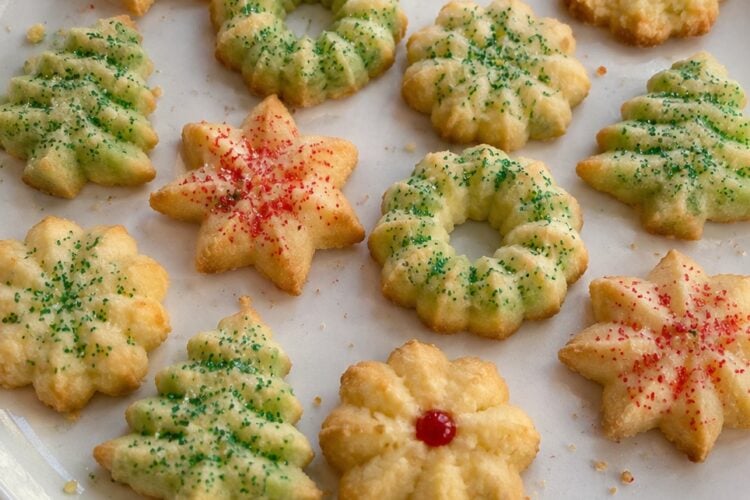
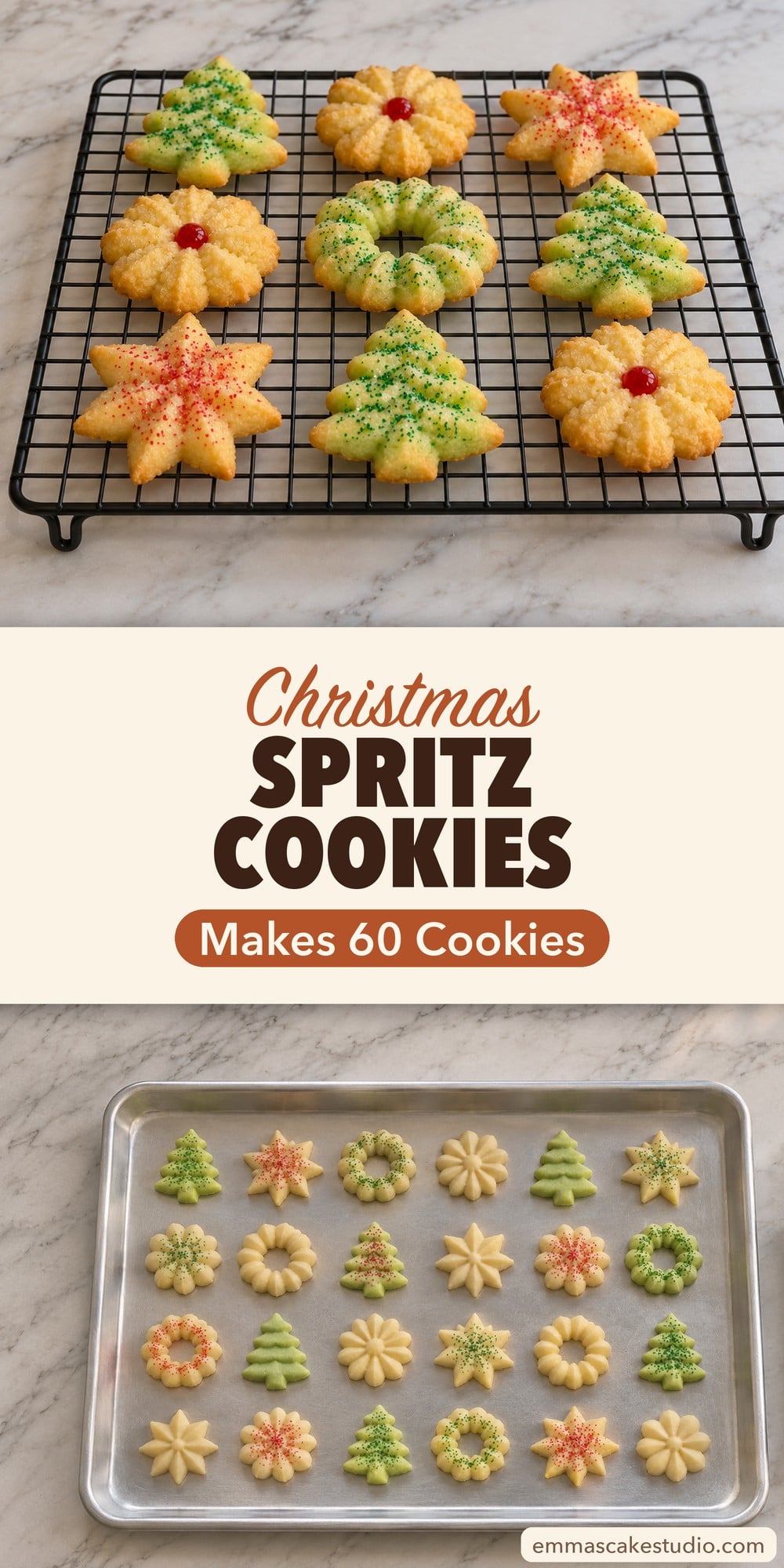
Spritz cookies spend only 7 to 9 minutes in the oven, so a full batch of 60 is pressed, baked and cooling in a little over an hour. They are small butter cookies pushed through a cookie press into trees, wreaths, stars and flowers. The trick sits under the dough, not in it: press onto a cold, bare metal sheet with no parchment and no grease. The raw dough has to grip the pan, or it lifts off with the press and the shape never forms.
This is the cookie I make when the tray needs volume. One bowl of dough turns into five dozen crisp, almond scented cookies that hold their ridges, travel well and keep for two weeks. That makes them good for early December baking, before the cookie exchange invitations start. They are a different thing from rolled and cut butter cookies: softer dough, no rolling pin, no chilling.
Following a special diet?
Every recipe on this site can be converted to gluten-free, vegan, dairy-free, keto, nut-free or egg-free with adjusted ratios so nothing falls flat.
Try the Recipe Converter →Butter at 67°F and No Baking Powder
The dough has to be soft enough to push through a small disc and firm enough to keep a sharp edge in a hot oven. Butter temperature decides most of that, and at about 67°F it dents under a finger but still looks matte rather than shiny or wet. Warmer butter slumps in the oven. Cold butter jams the press.
This butter spritz cookies dough uses 1 cup of butter, ⅔ cup of sugar, one whole egg and 2¼ cups of flour. There is no baking powder or soda. Leavening makes cookies puff and spread, and puffing is what blurs the ridges.
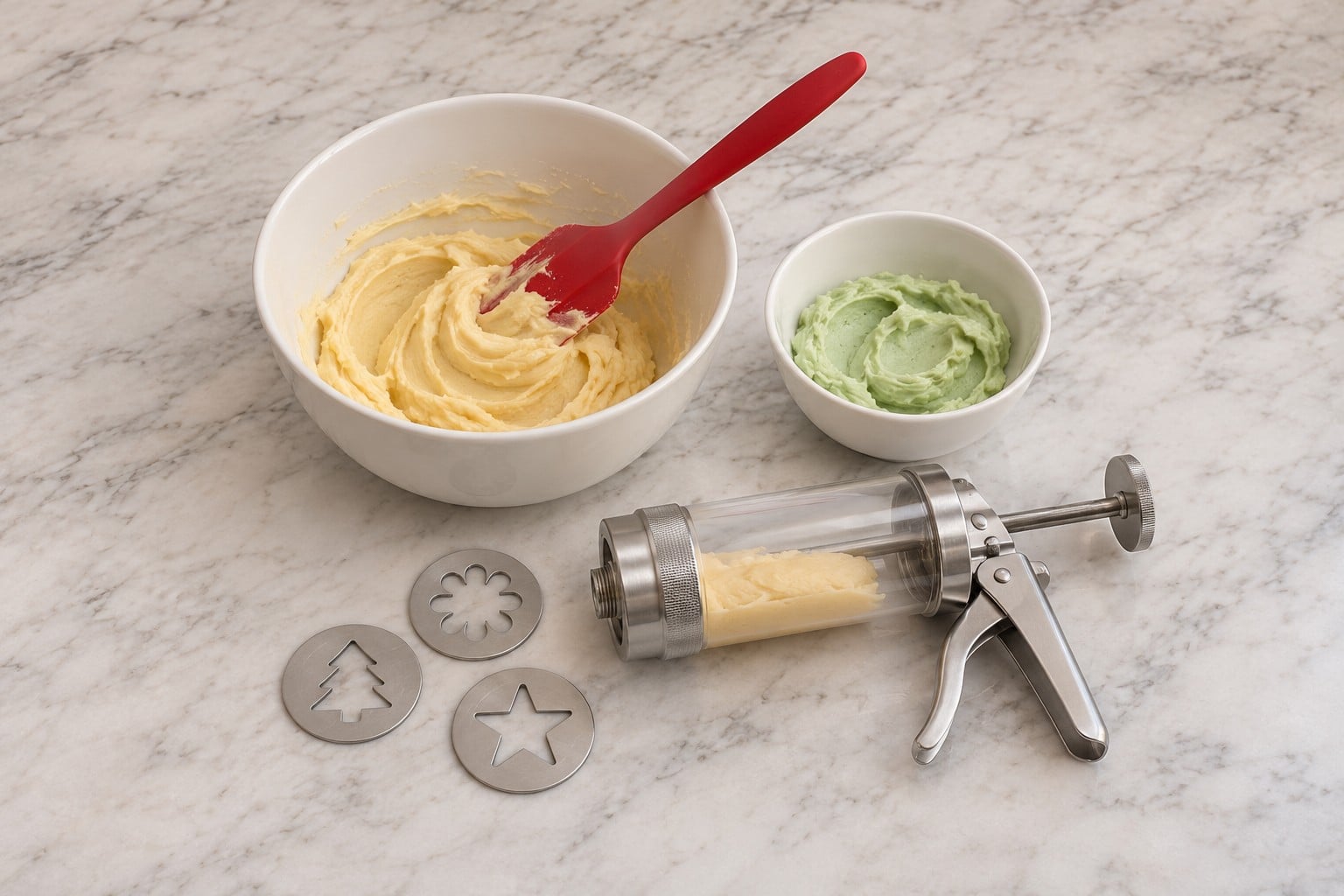
Mix the flour in on low. Stop as soon as the dry streaks are gone. To make green trees and wreaths, split the dough and work gel coloring into half of it with a spatula. Liquid coloring adds water and makes the dough sticky.
Loading the Press and Getting One Clean Click
Roll the dough into a log a little narrower than the barrel and slide it in, then screw on the disc. The first two or three cookies from every fresh load come out lopsided while the dough settles. Scrape those back into the bowl.
Hold the press straight up with its base resting flat on the pan. Click once. Pause for a second, then lift straight up. Some presses need two clicks for the bigger discs. Leave about an inch between cookies, which fits 24 on a half sheet pan.
Why the Sheet Has to Be Bare and Cold
When you lift the press, the cookie stays behind only if the dough sticks to the metal better than to the disc. Parchment and silicone slide. Grease is worse. A warm pan softens the butter on contact, so the dough smears instead of holding.
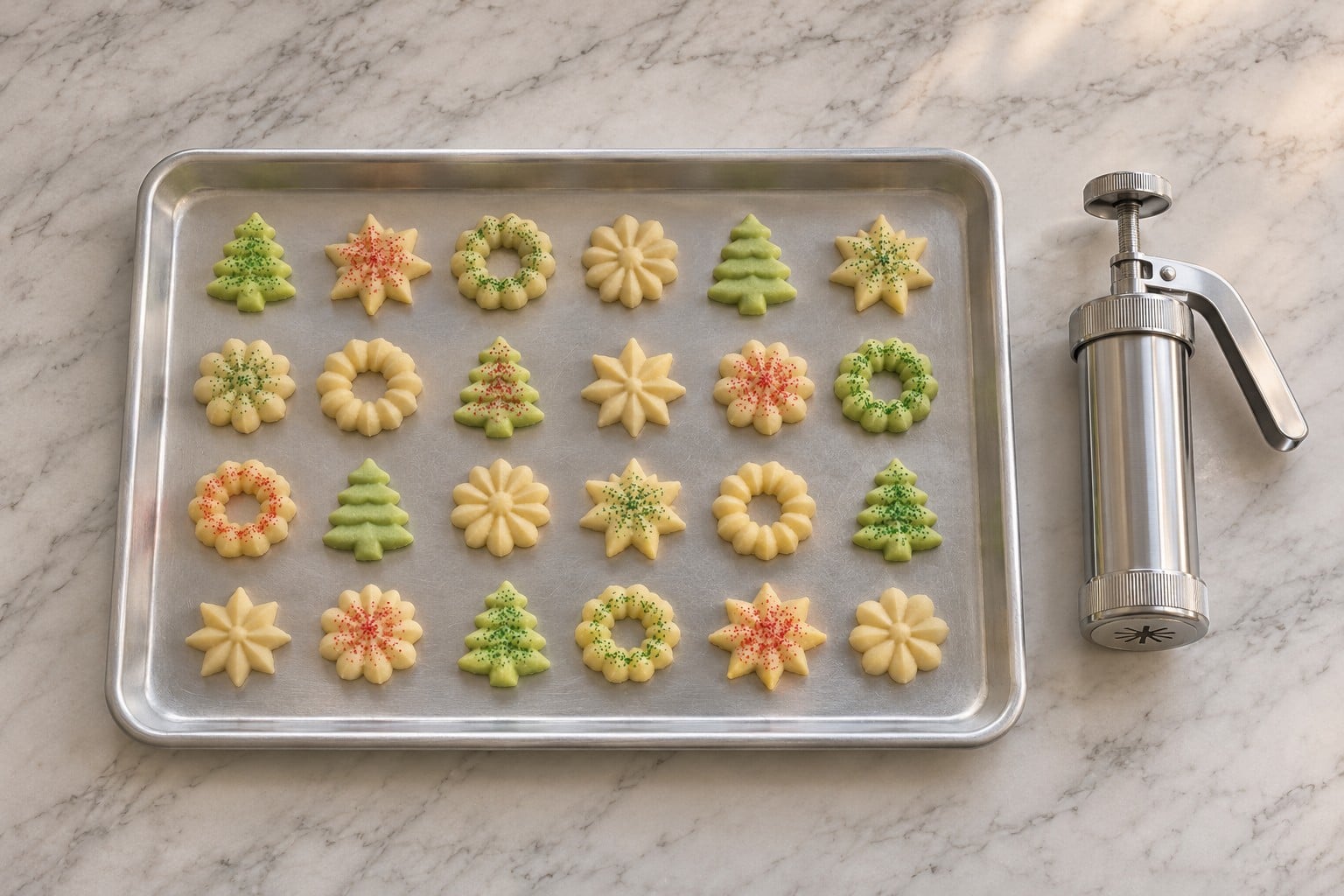
Use plain aluminum. Keep two or three sheets in rotation, and after each bake let the pan cool completely, or run it under cold water and dry it well, before you press the next round onto it. Add sanding sugar or a piece of candied cherry now, while the dough is raw, so it bakes on.
Baking Until the Edges Just Turn
Bake one sheet at a time at 375°F for 7 to 9 minutes. Watch the edges. They are done when the rims are just turning golden and the tops are still pale, and a minute too long and the butter flavor goes toasty and the green turns olive.
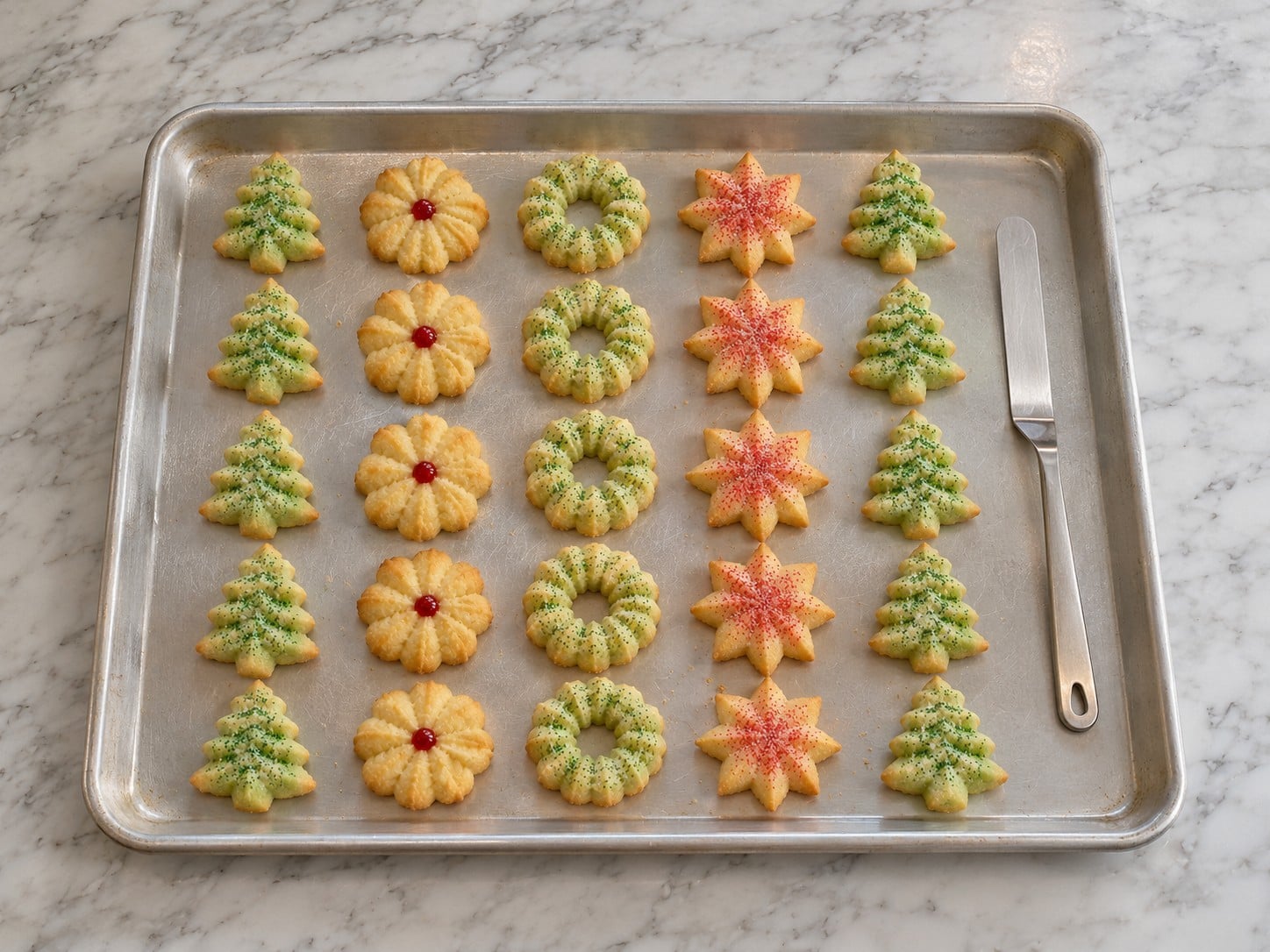
Two minutes on the pan, no more. Then slide a thin spatula under each one and move it to a rack. Wait longer and they glue themselves to the unlined metal. They snap.
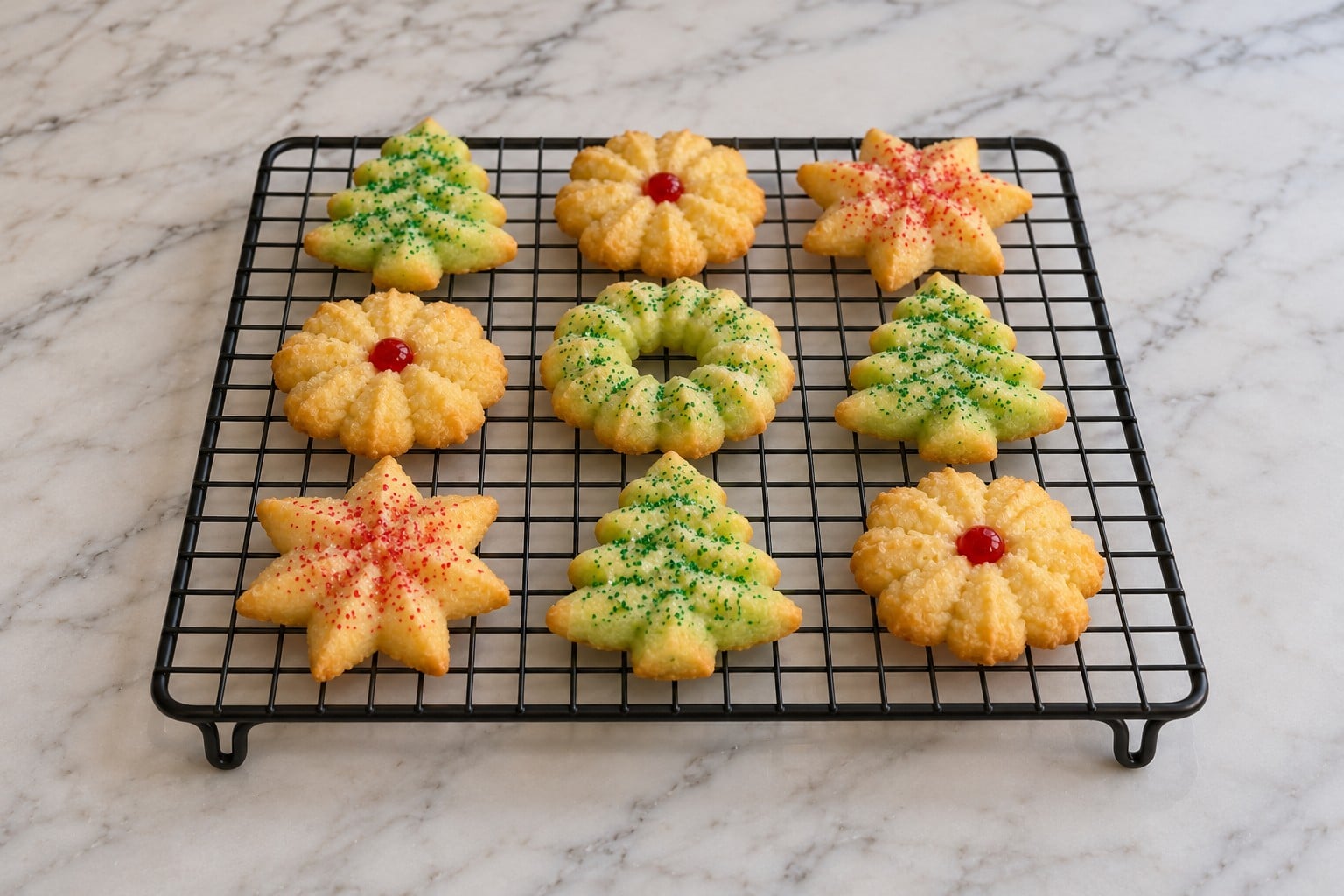
Almond or Vanilla, Press or Piping Bag
Flavor first. This recipe uses both: 1 teaspoon of vanilla and ½ teaspoon of almond extract, which is the taste most people remember from a grandmother’s tin. For an all vanilla cookie, skip the almond and use 2 teaspoons of vanilla. For orange, swap the almond for 1 teaspoon of finely grated zest. Almond extract is strong, so never go past ¾ teaspoon.
Then the tool. A cookie press gives identical shapes and is fast once the dough is right. Without one, this dough also pipes through a piping bag with a large open star tip into rosettes and rings. Piped cookies come out a little thicker, so give them 9 to 10 minutes.
When the Shapes Won’t Release
Cookies that pull up with the press point to one of three causes: the pan is lined, greased or warm, the dough is too cold, or the press is tilted. Fix the pan first. Then look at the dough, because if it is fridge cold, leave the filled barrel on the counter for 10 minutes. When the dough oozes and the shapes look soft and rounded, it is too warm; chill the barrel for 5 minutes. Dough that will not move at all usually has too much flour, and 1 tablespoon of milk worked in loosens it.
Tins, Trays and Two Weeks of Keeping
These Christmas spritz cookies are dry, crisp and small, which is why they last. In an airtight tin at room temperature they keep 2 weeks, and baked cookies freeze for 3 months. The raw dough keeps 3 days in the fridge, but let it warm up before it goes in the press.
Pack them in rows on their edges with parchment between layers. On a tray they fill gaps between bigger cookies like the Christmas M&M cookies and jam filled Christmas thumbprint cookies. For a rolled dough with royal icing, see these classic Christmas butter cookies. Raspberry linzer cookies add color, and these Christmas cookie packaging ideas cover the boxes and bags.
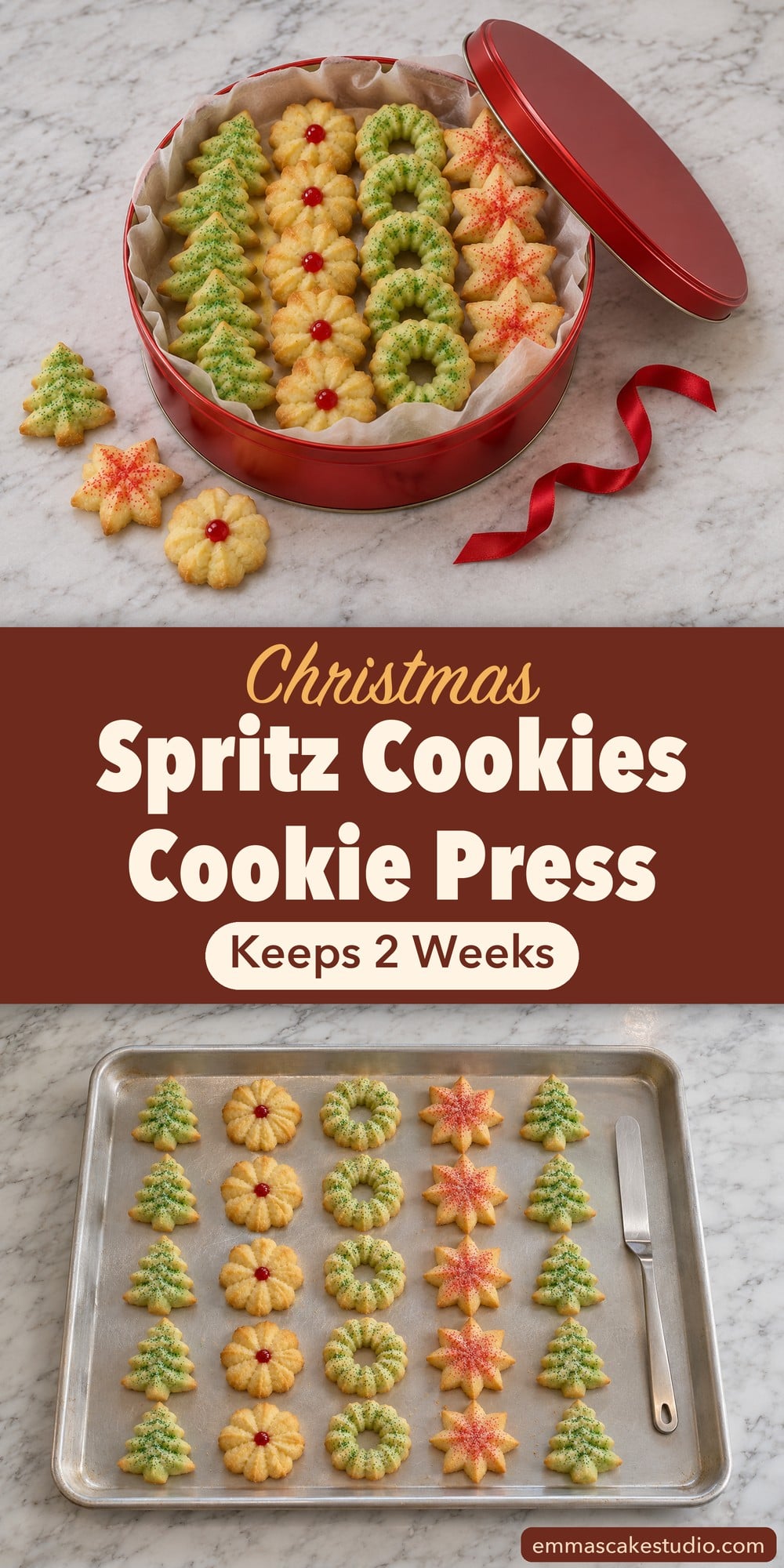
One batch of this spritz cookie recipe fills about four small gift tins of 15, with a few left for the baker.
Spritz Cookies
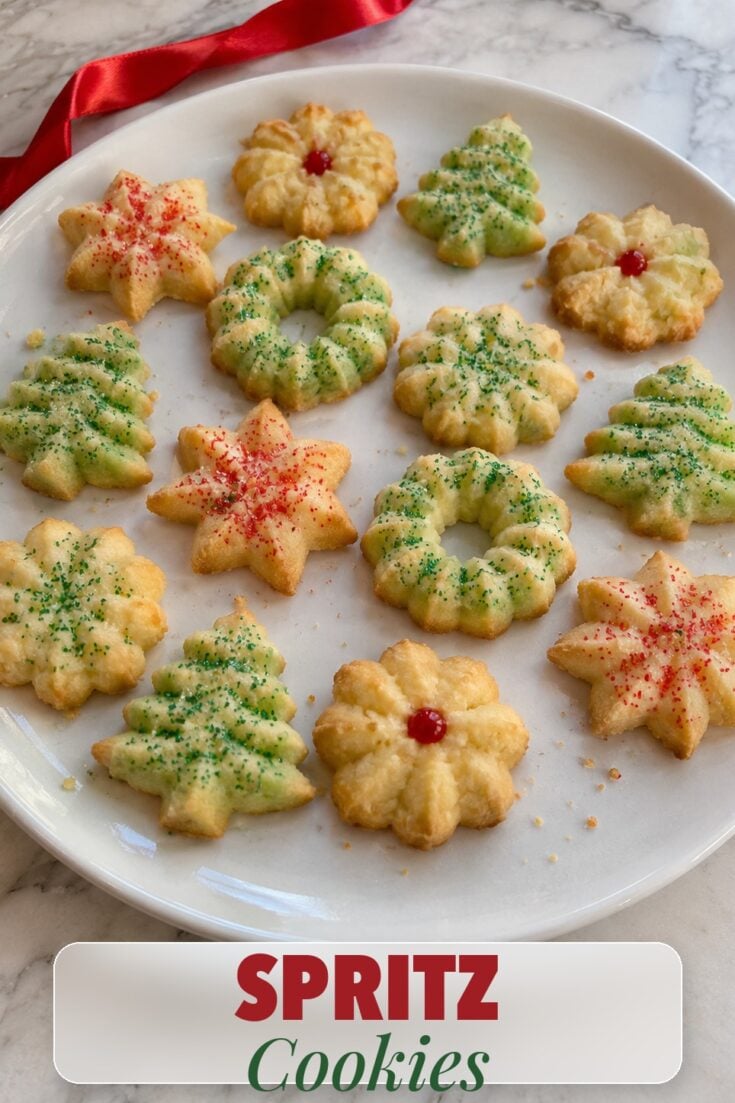
Spritz cookies are small, crisp butter cookies pushed through a cookie press into trees, wreaths, stars and flowers, flavored with vanilla and almond extract. The soft dough uses 1 cup of butter, 2/3 cup of sugar, one egg and 2 1/4 cups of flour with no baking powder, so the pressed ridges stay sharp. Press it onto a cold, bare metal sheet so it sticks, then bake at 375°F for 7 to 9 minutes; the batch makes about 60 cookies. Pack them into Christmas cookie trays, gift tins and cookie exchanges, or leave a small plate of them out for Santa with the milk. Use all vanilla instead of almond if you like, and keep them in an airtight tin for up to 2 weeks.
Ingredients
For the dough
- 1 cup (227 g) unsalted butter, softened to about 67°F
- 2/3 cup (133 g) granulated sugar
- 1 large egg, room temperature
- 1 teaspoon vanilla extract
- 1/2 teaspoon almond extract
- 1/4 teaspoon fine salt
- 2 1/4 cups (281 g) all-purpose flour, spooned and leveled
- Green gel food coloring, a few drops
For decorating
- 2 tablespoons red and green sanding sugar
- 6 candied cherries, cut into small pieces
Instructions
- Get the pans ready: Heat the oven to 375°F (190°C). Set out 2 or 3 plain metal baking sheets with no grease, no parchment and no silicone mat. Keep them cool.
- Cream the butter: Beat the butter and sugar on medium speed for 2 minutes, until light and creamy.
- Add the flavor: Beat in the egg, vanilla extract, almond extract and salt, then scrape the bowl.
- Add the flour: On low speed, add the flour and mix only until a soft, smooth dough forms with no dry streaks.
- Color half: Divide the dough in half and work a few drops of green gel coloring into one half with a spatula.
- Load the press: Roll each half into a log, slide it into the cookie press barrel and screw on the disc you want.
- Press: Hold the press straight up with its base flat on the cold sheet, give one full click, then lift straight up. Space the cookies 1 inch apart, about 24 per sheet. Top with sanding sugar or a cherry piece.
- Bake: Bake one sheet at a time for 7 to 9 minutes, until the edges are just turning golden.
- Lift and cool: Let the cookies sit on the sheet for 2 minutes, then slide a thin spatula under each one and move it to a wire rack. Let the sheet cool fully before pressing the next batch.
Notes
The one mistake to avoid: pressing onto parchment, a silicone mat or a greased or warm pan. The dough has to grip a cold, bare metal sheet, or it lifts off with the press.
Butter should be about 67°F, soft but still matte. Cold dough jams the press; warm dough slumps.
Dough too stiff to press: work in 1 tablespoon of milk. Dough too soft: chill the filled barrel for 5 minutes.
No press: pipe the dough with a large open star tip and bake 9 to 10 minutes.
Make ahead: the dough keeps 3 days in the fridge; let it soften before pressing. Baked cookies keep 2 weeks in an airtight tin or 3 months frozen.
Nutrition Information
Yield
60Serving Size
1 cookieAmount Per Serving Calories 55Total Fat 3gSaturated Fat 2gCholesterol 11mgSodium 11mgCarbohydrates 6gFiber 0gSugar 3gProtein 1g
