
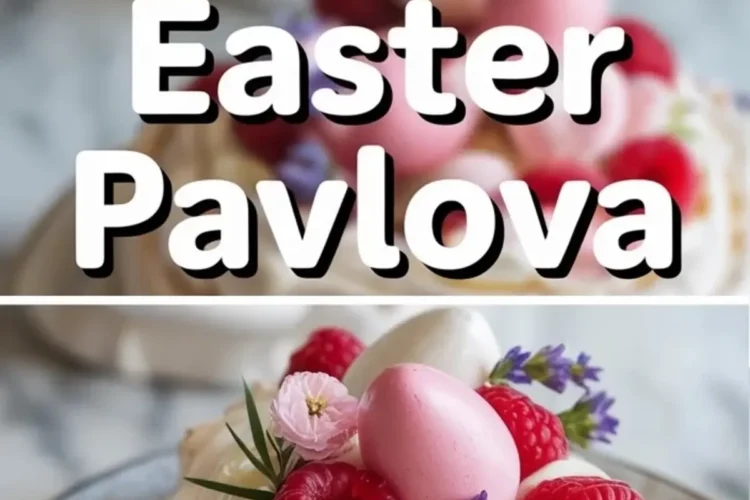
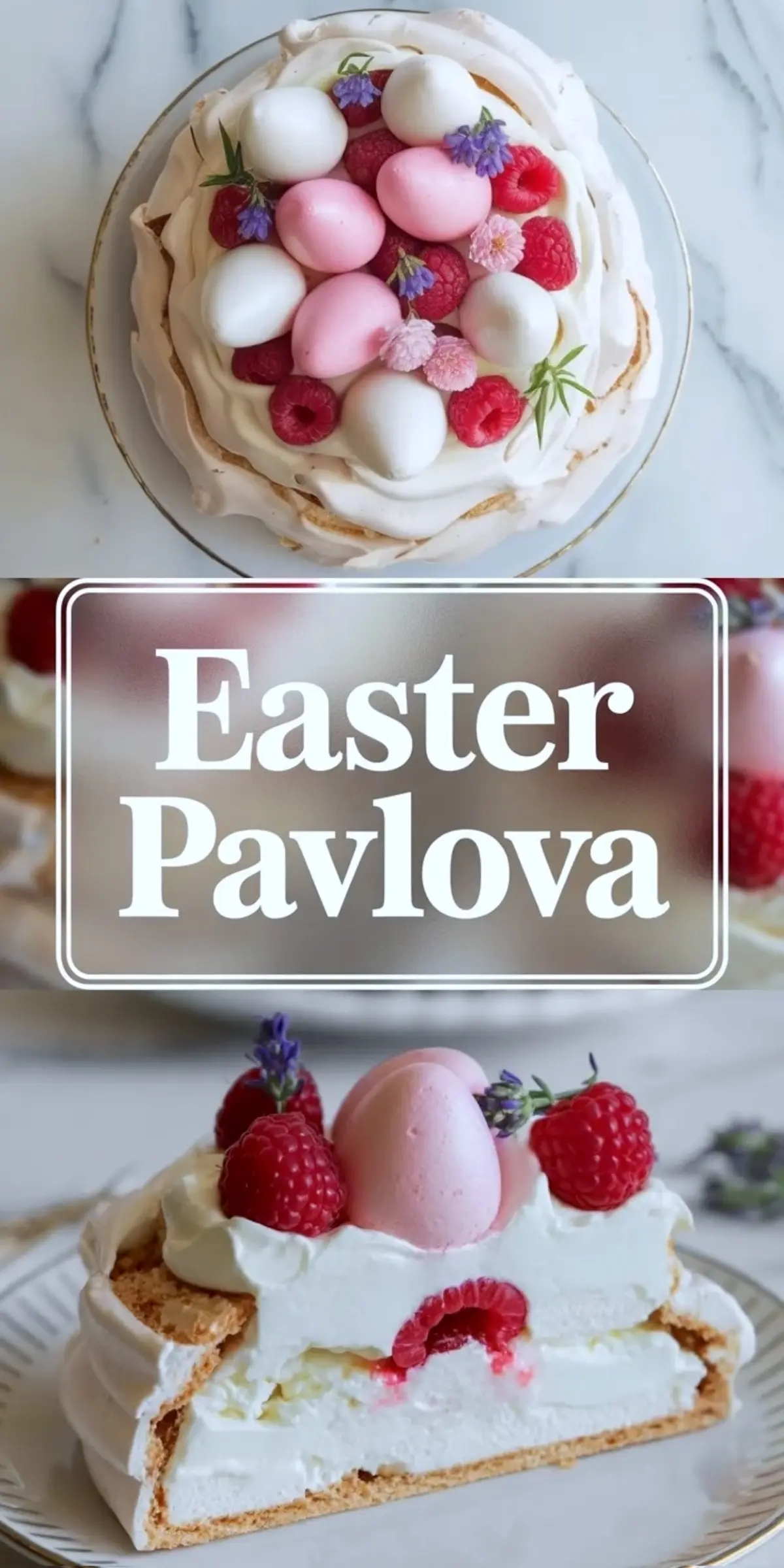
This Easter Pavlova recipe features a crisp meringue shell with a soft, marshmallow-like center, filled with whipped cream and topped with fresh raspberries, edible flowers, and pastel candies. It’s a light and elegant dessert that fits right into your Easter desserts Pavlova board. The recipe works equally well for individual Easter meringue nests or one large Pavlova Easter centerpiece.
Following a special diet?
Every recipe on this site can be converted to gluten-free, vegan, dairy-free, keto, nut-free or egg-free with adjusted ratios so nothing falls flat.
Try the Recipe Converter →The balance between sugar and egg whites defines this Pavlova recipe. A 1:1 ratio by weight is critical. With four egg whites at room temperature and one cup of caster sugar, the structure forms correctly. It sets crisp edges on the outside while keeping the interior soft and chewy.
Some recipes skip the vinegar and cornstarch. This one keeps them in. Together, they help stabilize the meringue and prevent collapse during baking. A low oven temp and a long cool-down in the oven are what keep the shell from cracking.
You’ll notice this texture holds toppings without sinking. That’s the sign of a Pavlova that’s been whipped and baked properly.
Ingredient Choices That Make a Difference
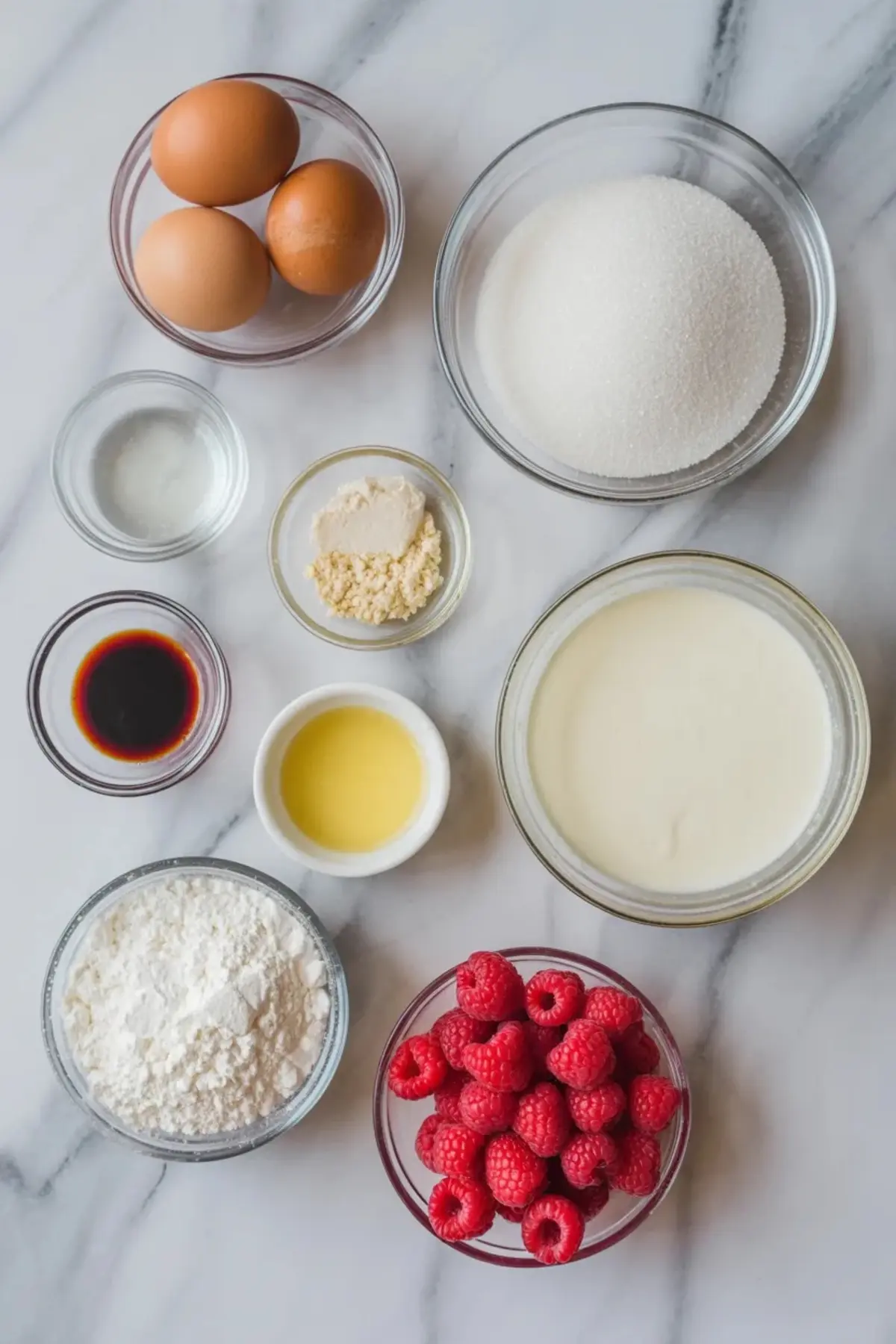
Room temperature egg whites whip faster and hold air better than cold ones. That difference matters when trying to create volume and structure without overbeating. Caster sugar dissolves more evenly than granulated sugar, so you won’t end up with gritty streaks or weeping spots.
White vinegar and cornstarch both work as stabilizers. They’re subtle, but they give the Pavlova a slightly chewy center that doesn’t dry out completely. I’ve tried skipping them, and the result always feels hollow.
Vanilla extract rounds out the flavor. It softens the sweetness and adds a bakery-like finish. The whipped cream, made with powdered sugar and vanilla, should taste clean and light, not overly rich. A thicker cream would fight the meringue. This one just settles into place.
If you’re making this alongside other treats like Simple Easter Dip, this texture contrast works beautifully.
Spotlight on the Meringue Structure
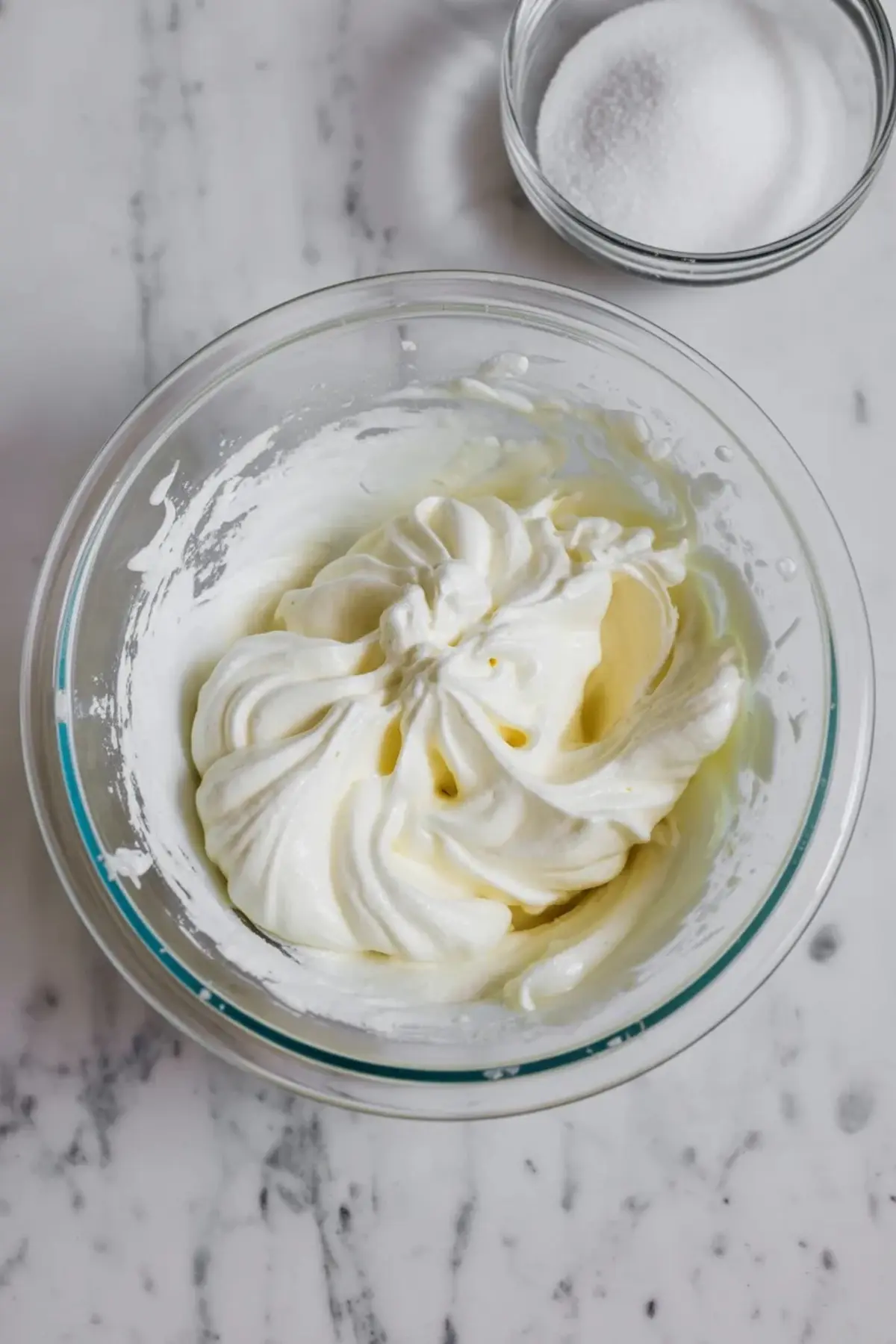
Meringue is fragile before it’s baked, but if whipped to the right stage glossy and thick with stiff peaks it becomes dependable. The trick is slow sugar addition. One tablespoon at a time gives it time to dissolve. Rushing this step leads to a grainy texture or sugar beads forming during the bake.
Once you reach that point, rub a little between your fingers. It should feel smooth. If you still feel grit, keep beating. But once smooth, stop immediately. Overwhipping can cause separation.
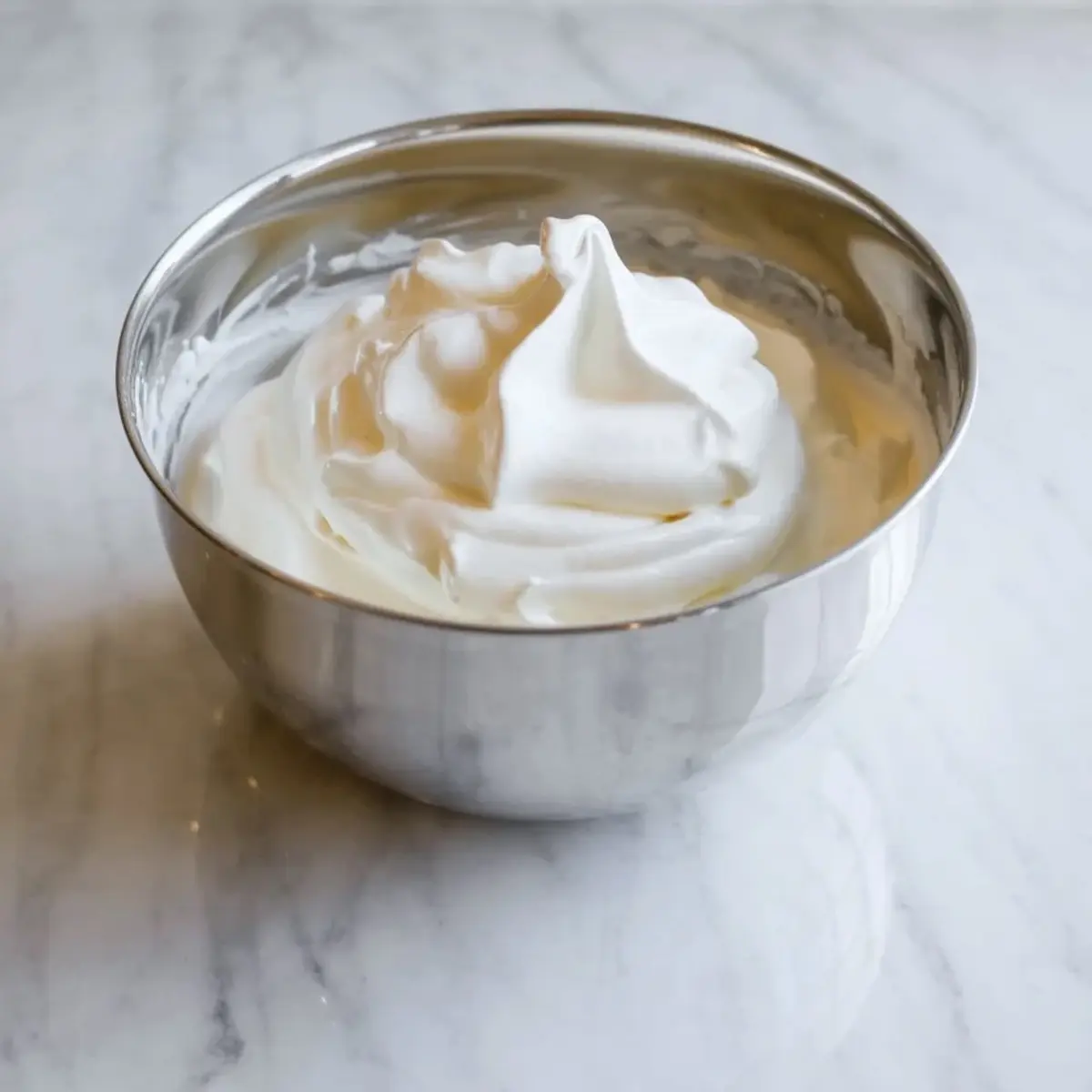
When folding in vinegar, starch, and vanilla, be gentle. I always switch to a silicone spatula here. Deflating it at this stage will flatten the base and ruin that marshmallowy core.
What It Looks Like While You Make It
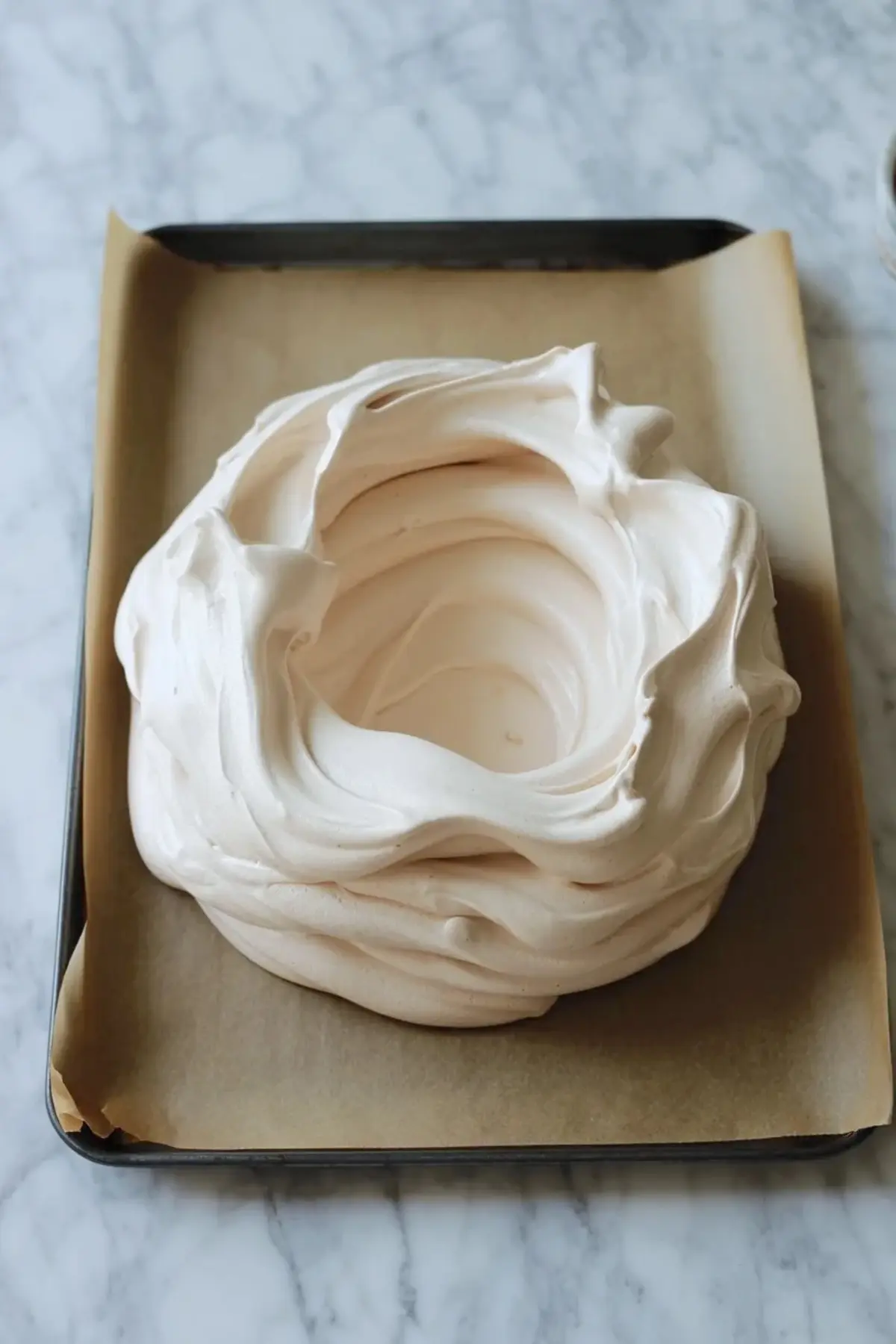
When shaped on the tray, the Pavlova should look like a shallow bowl. The center should dip slightly, just enough to hold whipped cream. If you’re making Easter Pavlova nests instead, use a large spoon to create individual wells.
While baking, you’ll see the edges set and the surface turn matte. That’s good. If it browns, the oven’s too hot. After the time is up, turn the oven off and crack the door. That slow cooling is your best defense against cracking.
You can prepare the base ahead, just like I do when planning Easter Dirt Cake for the same table.
How You Know It’s Baked Right
A baked Pavlova should lift easily from the parchment. The base will feel firm, but you’ll hear a slight crackle when you tap the shell. Inside, it should still feel soft. If it sticks, bake for 10 minutes longer.
If it’s gummy inside, the oven was too cool. If it’s hollow and dry, it stayed too long. You want something between a toasted marshmallow and a soft cookie. That’s the sweet spot.
Avoiding Common Mistakes
If the meringue spreads too much on the tray, it wasn’t whipped enough. You’ll also notice this if it doesn’t hold its shape. If it weeps sugar syrup during baking, the sugar wasn’t dissolved properly. If it cracks badly after baking, the oven cooled too fast.
Use a pencil guide under parchment to help keep your shape consistent. And always beat the whites in a clean, grease-free bowl. Even a trace of fat can ruin your volume.
Variations That Work Well
You can make mini nests by spooning 6–8 smaller rounds instead of one large circle. Each should be 3 inches wide. You can add lemon zest to the meringue or swap raspberries for blackberries or kiwi for a tart twist.
For a chocolate version, sift 2 teaspoons of cocoa powder into the cornstarch step. It darkens the shell and adds a subtle cocoa tone. A few drops of almond extract in the whipped cream give it a bakery finish.
This works well as a light counterpoint to richer recipes like Easy Easter Punch at brunch.
How to Store and Serve It Right
The Pavlova base stays crisp in an airtight container for up to 24 hours at room temperature. Do not refrigerate the base—it will soften. If needed, store in a cool, dry place.
Once assembled, serve within 30 minutes. The whipped cream begins to soften the shell quickly. You can store leftovers in the fridge, but expect a softer texture after a few hours.
Freezing is not recommended. The meringue will crack and collapse after thawing.
Testing Tips That Help Every Time
Always start with fresh eggs. Older whites don’t whip as well. Avoid making Pavlova on humid days. Moisture in the air changes how sugar behaves.
Use a hand mixer or stand mixer with a whisk attachment. Avoid plastic bowls—they hold oil residue. And cool the base completely before adding whipped cream.
If you’re doubling the batch for a bigger crowd, bake on two trays but stagger them in the oven. That helps the heat circulate.
Ideas for Serving This Easter Pavlova
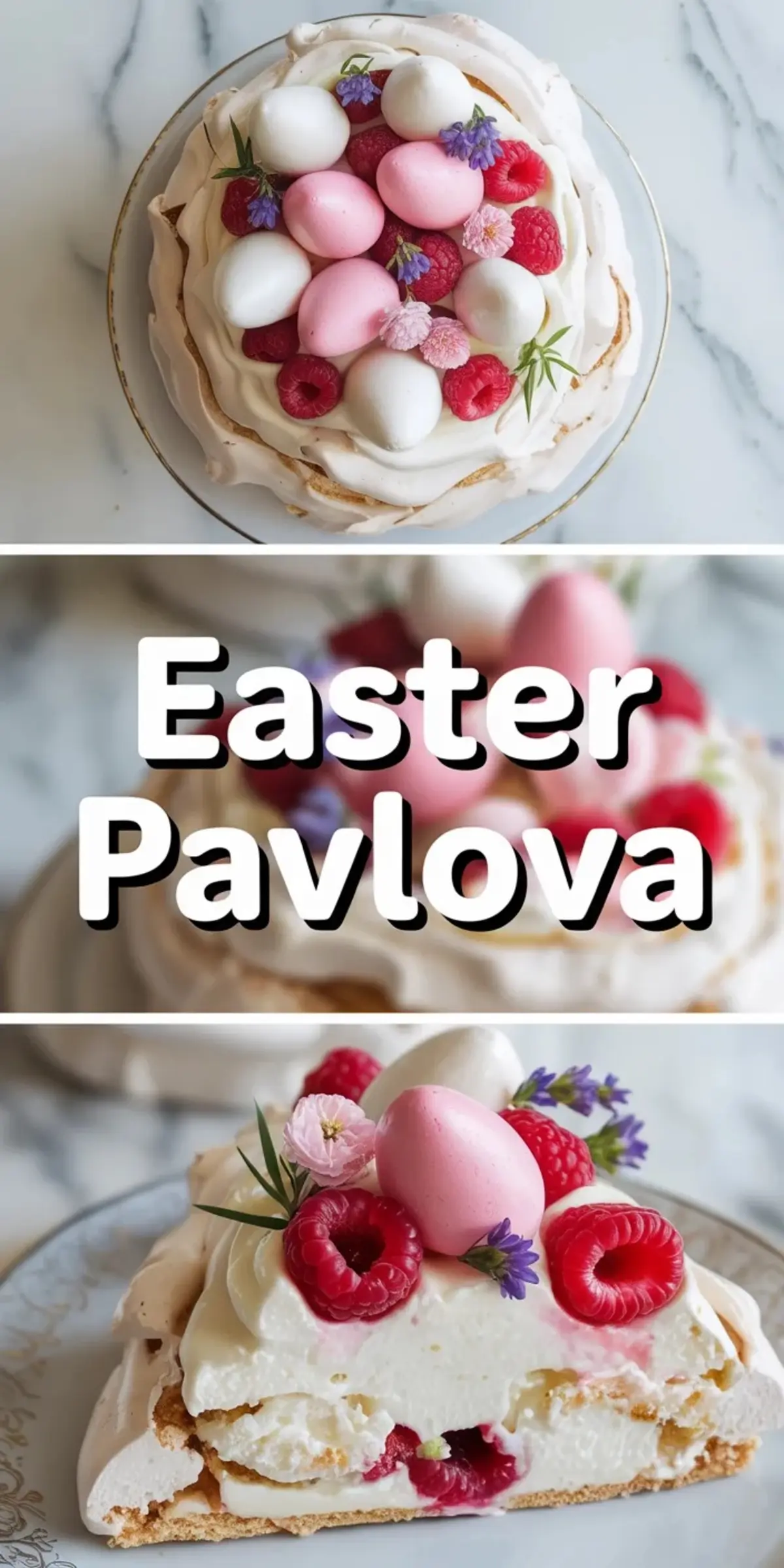
Serve in slices on a cake stand with fresh mint. Add colorful sprinkles for kids. Garnish with edible flowers for brunch.
Add meringue eggs to turn it into an Easter Pavlova nest centerpiece. Pair with Easter Meringue Cookies for a matching theme. Or serve it alongside fruit platters and cold drinks on a spring afternoon.
Save This Recipe and Share Your Twist
Pin this recipe to your Easter Desserts or Elegant Desserts board so it’s ready when the season arrives.
Tell me how yours turned out in the comments or let me know what fruit combinations you used.
Easter Pavlova Recipe
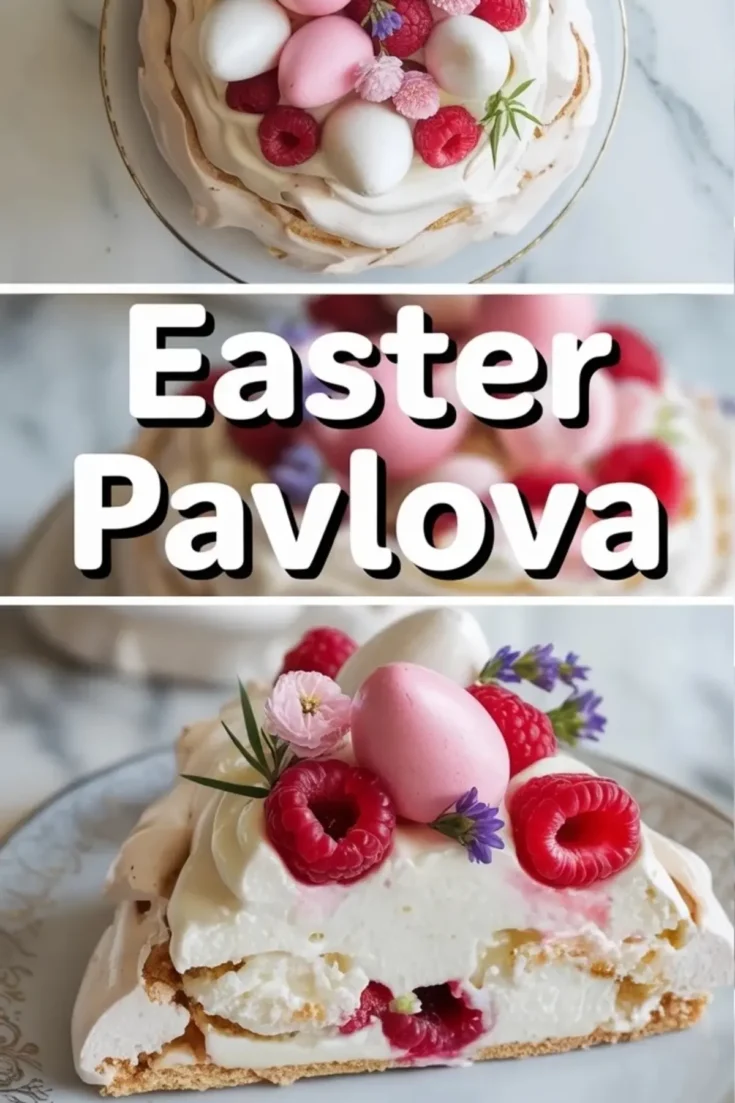
Celebrate spring with this easy Easter Pavlova recipe, topped with seasonal fruits and shaped into Easter Pavlova nests. Learn how to make delicate Easter meringue cookies and Easter meringue nests with crisp edges and a soft center. Ideal for elegant gatherings, these light and airy treats are a favorite among Easter desserts Pavlova lovers. Perfect for colorful tables, festive brunches, and show-stopping Pavlova Easter ideas.
Ingredients
- FOR THE PAVLOVA BASE
- 4 large egg whites, room temperature
- 1 cup (200g) caster sugar
- 1 tsp white vinegar
- 2 tsp cornstarch
- 1 tsp vanilla extract
- FOR THE TOPPINGS
- 1 cup heavy cream (cold)
- 2 tbsp powdered sugar
- 1/2 tsp vanilla extract
- 1 1/2 cups fresh raspberries
- Edible flowers (such as violets, dianthus, or lavender)
- Meringue eggs or mini pastel candies (store-bought or homemade)
Instructions
- PREHEAT AND PREP: Preheat the oven to 250°F (120°C). Line a baking sheet with parchment paper and, if desired, draw an 8-inch circle on the underside of the parchment to use as a shaping guide for the pavlova.
- MAKE THE MERINGUE: In a clean, dry mixing bowl, beat the egg whites on medium speed until soft peaks form. Gradually add the sugar, one tablespoon at a time, beating continuously until the meringue is thick, glossy, and smooth to the touch. Rub a small amount between your fingers to ensure the sugar is fully dissolved before proceeding.
- FOLD IN STABILIZERS: Gently fold in the white vinegar, cornstarch, and vanilla extract using a spatula. Mix just until combined, taking care not to deflate the meringue.
- SHAPE THE BASE: Spoon the meringue onto the prepared baking sheet, using the circle as a guide. Shape into a round with smooth sides and a shallow well in the center to hold the toppings later.
- BAKE AND COOL: Bake for 1 hour 15 minutes. After baking, turn off the oven and let the pavlova cool inside with the door slightly ajar for 1 hour. This gradual cooling helps prevent cracking.
- WHIP THE CREAM: In a cold mixing bowl, whip the heavy cream with powdered sugar and vanilla extract until soft peaks form. The cream should hold its shape but remain smooth and airy.
- ASSEMBLE THE PAVLOVA: Carefully transfer the cooled pavlova base to a serving platter. Spoon the whipped cream into the center well, then top with fresh raspberries. Garnish with edible flowers and pastel meringue eggs or mini candies. Serve immediately after assembling for best texture.
Notes
Avoid assembling the pavlova too far in advance; moisture from the cream and fruit can soften the meringue. Prepare the base a day ahead and store in an airtight container, then add toppings just before serving.
Nutrition Information
Yield
8Serving Size
1Amount Per Serving Calories 285Total Fat 12gSaturated Fat 7gUnsaturated Fat 4gCholesterol 35mgSodium 37mgCarbohydrates 43gFiber 3gSugar 38gProtein 3g
