

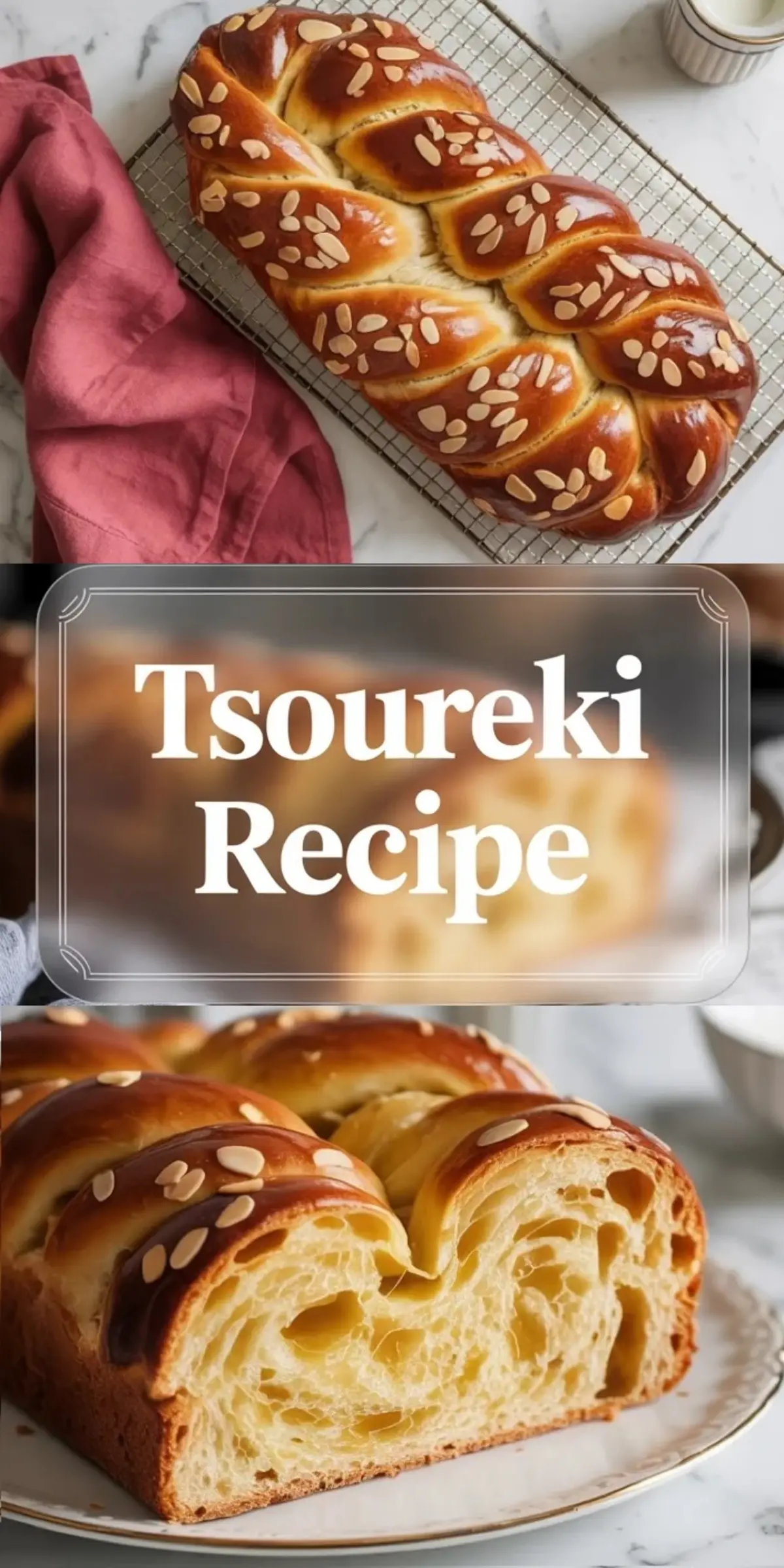
Traditional Greek Tsoureki is a soft, braided Greek Easter Brioche Bread enriched with eggs, butter, orange zest, and warm spices. This Tsoureki Recipe creates a fragrant Greek Sweet Bread with a tender crumb and golden crust that defines Greek Easter Bread and many Greek Easter Recipes. The slow rise and balanced ratio of fat to flour give this Easter Bread its airy pull and gentle sweetness, which is why I return to this Greek Easter Bread Recipe each spring.
The structure comes from strong kneading and proper hydration. Four cups of flour to three quarters cup warm milk and two eggs create a dough that feels soft yet holds a braid.
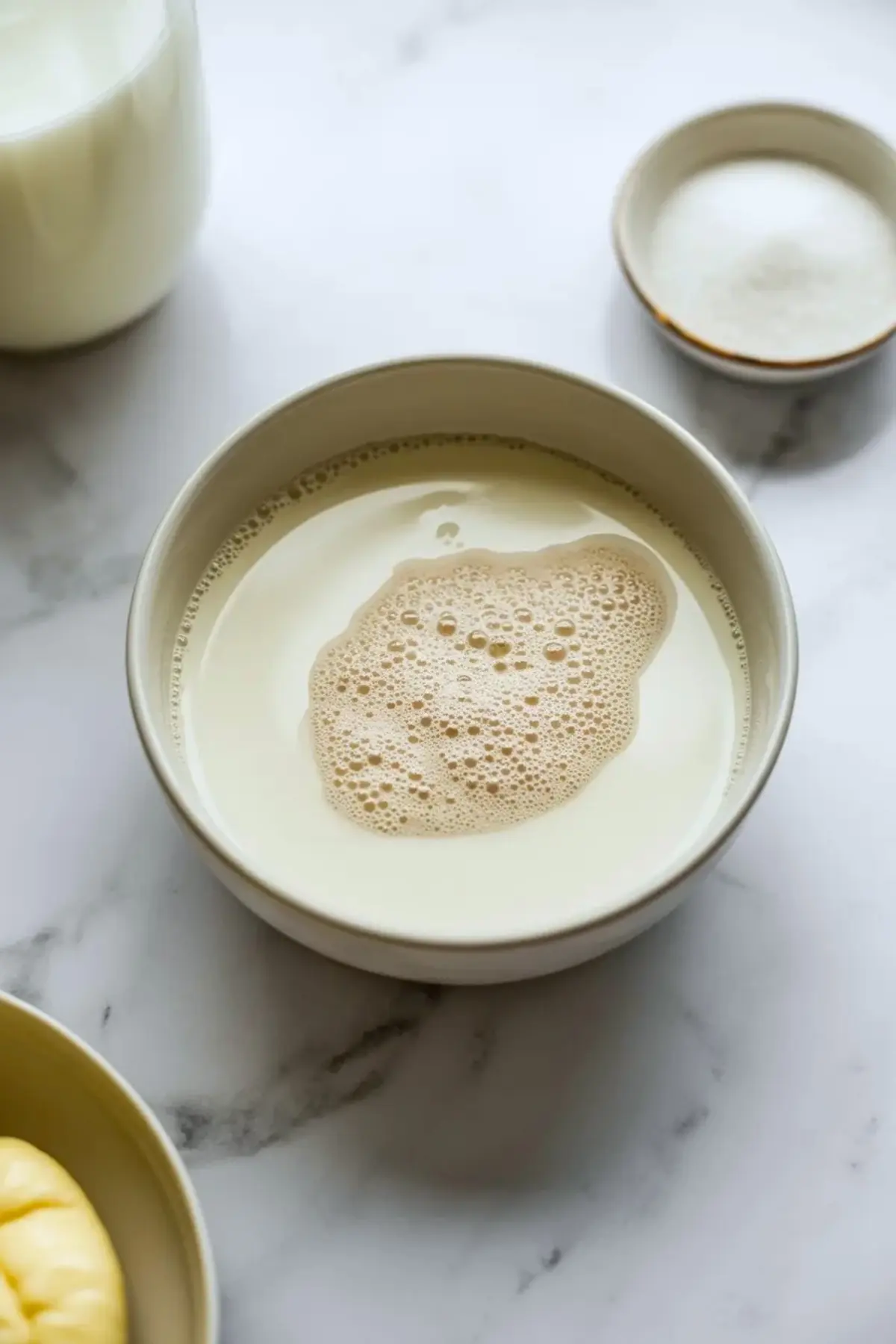
Yeast needs warmth and a small spoon of sugar to wake up fully. I wait for a full foam cap before mixing, because that foam tells me the bread will rise with strength.
Butter adds richness but also slows fermentation. Half a cup works well here. More butter would weigh the crumb down, and less would leave it dry. I tested both, and this balance feels right.
What You Need and Why
All purpose flour gives this Greek Tsoureki Recipe its familiar stretch. I choose unbleached flour with moderate protein, because high protein can toughen the crumb.
Warm milk hydrates and softens. I heat it gently so it feels warm but never hot. Hot milk can weaken yeast, and I learned that the hard way once.
Eggs enrich the dough and add that golden color that defines Greek Easter Bread. Room temperature eggs blend smoothly and prevent streaks in the dough.
Butter brings flavor and tenderness. I melt it and cool it slightly so it mixes evenly without scrambling the eggs.
Orange zest lifts the sweetness. Fresh zest smells bright and clean. Mahleb and mastic give that classic Greek Breads aroma. I grind them fresh for a sharper scent. The difference shows in the final loaf.
Key Technique Spotlight: Kneading for Stretch
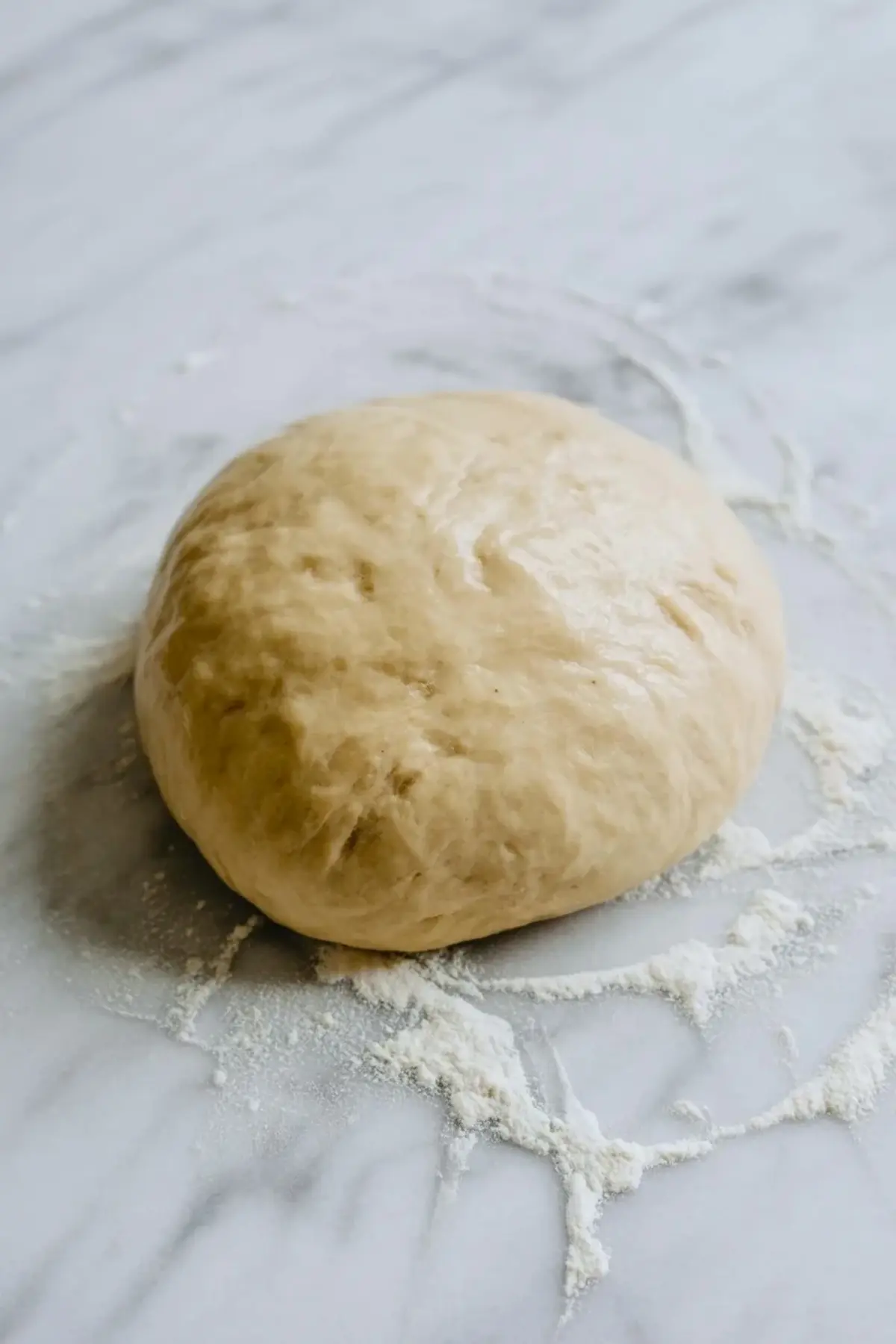
Kneading builds gluten, which creates the signature pull when you slice Tsoureki Greek Easter Bread. I knead for a full ten minutes, sometimes twelve.
The dough should feel smooth and slightly tacky. I stretch a small piece between my fingers. It should stretch thin before tearing. That window tells me the braid will hold shape and rise tall.
If you lack mahleb or mastic, keep the zest and proceed. The bread will still taste like a beautiful Greek Sweet Bread. The spices add tradition, yet structure comes from gluten.
How To Make It Step by Step
Activate the yeast with warm milk and a spoon of sugar. Wait until it turns foamy and fragrant. That scent means life.
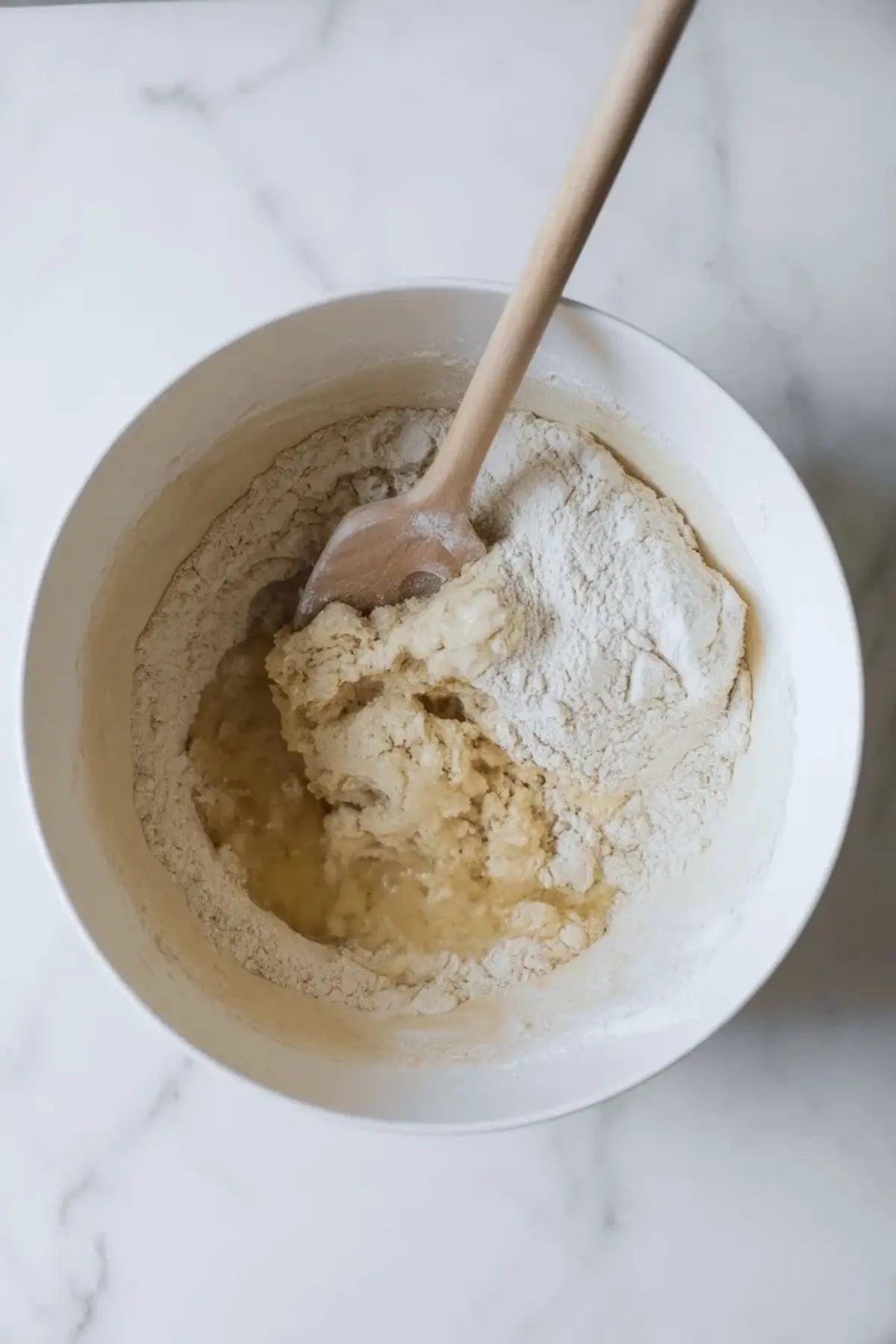
Mix flour, sugar, salt, zest, and spices in one bowl. Whisk eggs and melted butter in another, then stir in the yeast mixture. Combine wet and dry until a soft dough forms.
Knead until smooth and elastic. The surface should look slightly glossy. Place the dough in a greased bowl and let it rise until doubled, about ninety minutes.
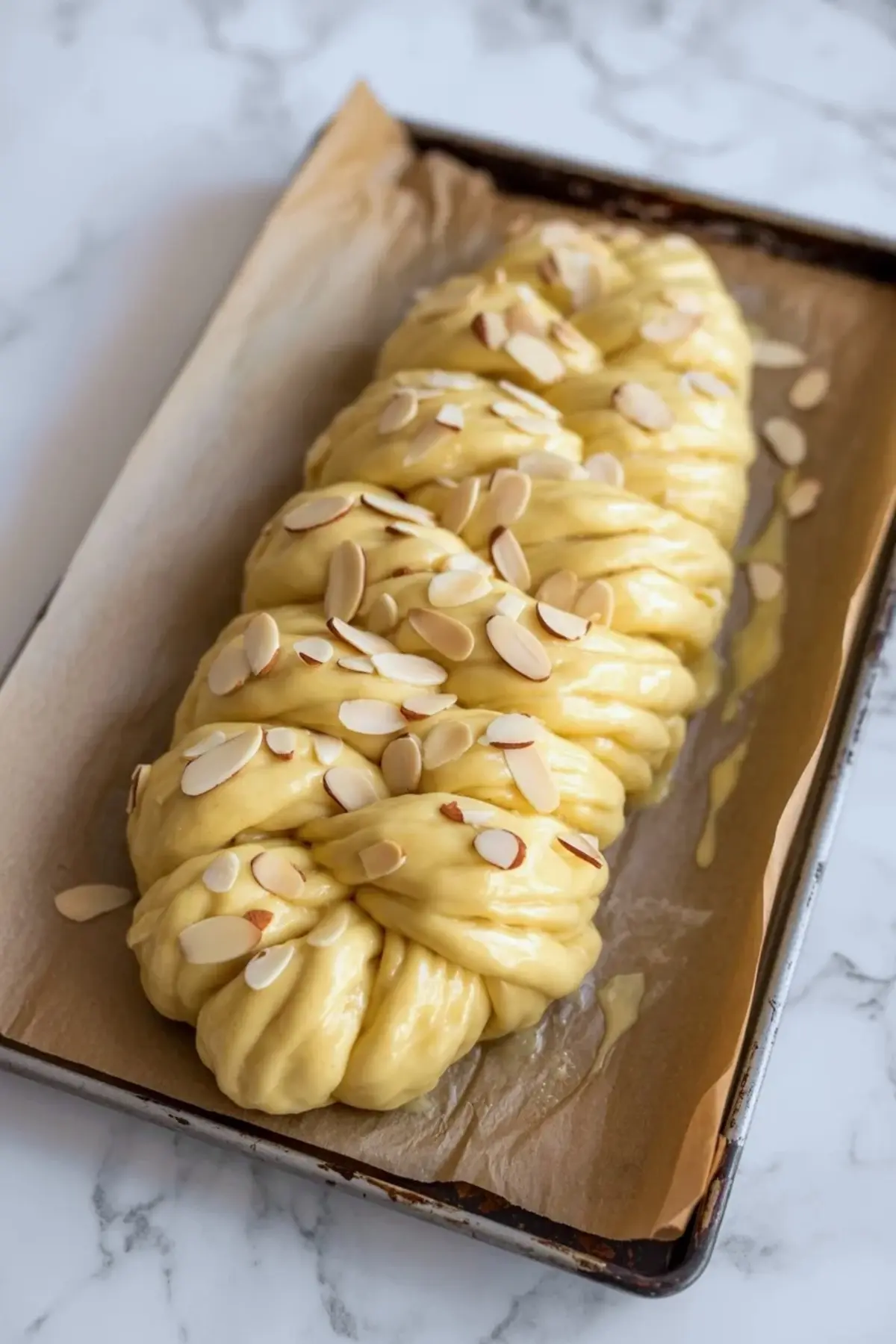
Divide into three ropes and braid tightly. Tuck the ends under. Let the braid puff again before baking. I always pause here and admire the shape. It feels ceremonial.
Brush with egg wash and sprinkle almonds. Bake at 350 degrees until deep golden brown, about twenty five minutes.
How To Tell It Is Done
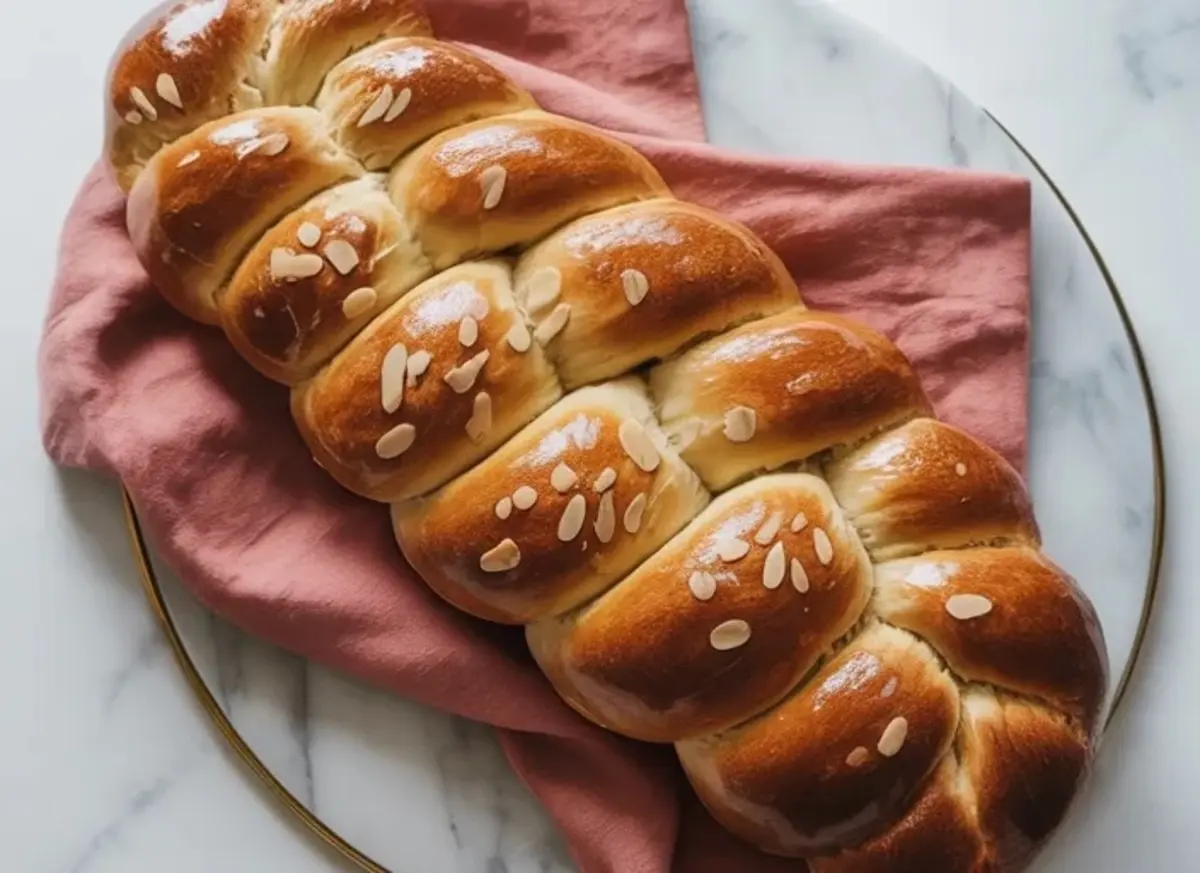
The crust should look richly golden, not pale. The loaf should sound hollow when tapped on the bottom.
An instant read thermometer should show about 190 degrees inside. I trust temperature most, especially with enriched dough.
If the top darkens too quickly, cover loosely with foil. That small step keeps the crust even.
Troubleshooting Common Issues
Dense crumb usually means under kneading. Knead longer next time and check the stretch test.
Flat braid often means weak shaping. Braid tightly and allow a full second rise.
Dry texture can come from too much flour. Add flour slowly during kneading and stop when the dough feels soft.
Lack of flavor may mean stale spices. Grind mahleb and mastic fresh for best aroma.
Ways To Change It
Add a red dyed egg in the center before baking for a classic Greek Easter look. Press it gently into the braid.
Replace almonds with sesame seeds for a different crunch. Two tablespoons work well.
Fold in a handful of chocolate chips for a modern twist. I use about half a cup for subtle sweetness.
Reduce sugar slightly for a less sweet Easter Bread. Lower it by two tablespoons if you prefer a milder loaf.
If you enjoy lighter desserts with Greek yogurt, try my Greek Yogurt Lemon Bars.
For a protein rich option, see Healthy High Protein Brownie Bites with Greek Yogurt.
You might also like this creamy Chocolate Greek Yogurt Dessert.
Storage and Freshness
Store Tsoureki wrapped at room temperature for up to three days. The crumb stays soft if sealed well.
Refrigeration can firm the bread. I prefer room temperature storage unless the kitchen feels very warm.
Freeze tightly wrapped slices for up to two months. Thaw at room temperature and warm briefly before serving.
Practical Tips From My Kitchen
Weigh flour for accuracy. Five hundred grams keeps the texture consistent.
Let the dough rise in a draft free space. I use my oven with the light on.
Cool completely before slicing. Warm bread can compress and lose its airy pull.
Use a serrated knife for clean cuts. Press gently and saw slowly.
How To Serve It
Serve slices plain with coffee in the morning. Toast lightly and spread with butter for a richer bite.
Pair with jam for a sweet breakfast. Place it at the center of your Greek Easter table as a showpiece.
Save This Recipe
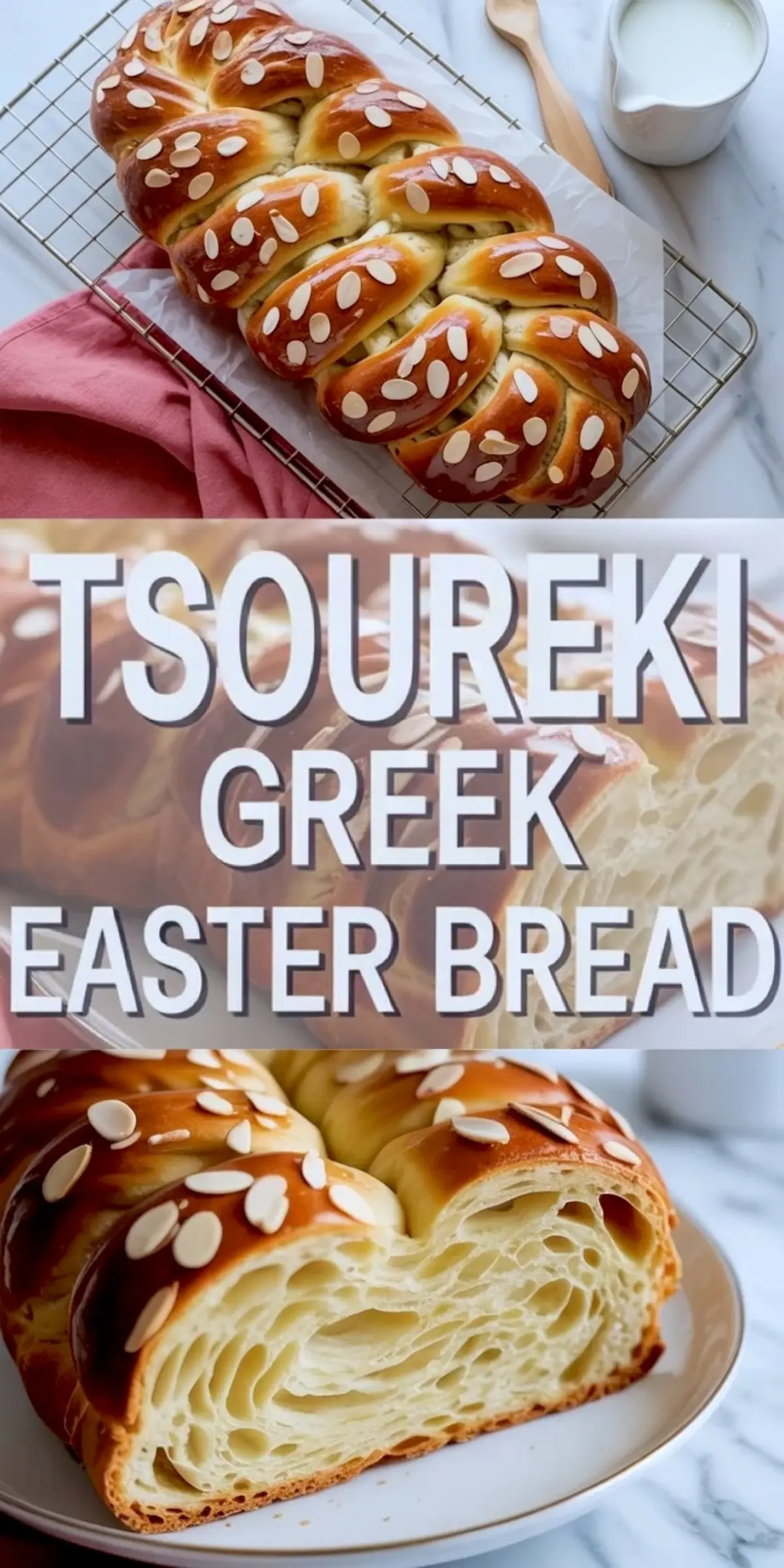
Save this Tsoureki Recipe to your Easter board so you can bake it again next Greek Easter. Share in the comments how your Greek Tsoureki Recipe turned out or ask me anything that came up during baking. I love hearing your notes and small adjustments.
Tsoureki Recipe

Celebrate Greek Easter with this authentic Traditional Greek Tsoureki, a soft and aromatic Greek Easter Brioche Bread enriched with eggs, butter, and warm spices. This classic Tsoureki Recipe creates a beautifully braided Greek Sweet Bread with a tender crumb and golden crust. Known as Tsoureki Greek Easter Bread, it’s a staple in Greek Easter Recipes and a centerpiece for the holiday table. This detailed Greek Easter Bread Recipe guides you through making homemade Greek Breads with the perfect texture and flavor. Serve this festive Easter Bread as part of your Easter Bread Recipe collection and enjoy a timeless Greek Easter Bread tradition that brings warmth and celebration to every slice.
Ingredients
- FOR THE DOUGH
- 4 cups (500 g) all-purpose flour
- 2 ¼ teaspoons (7 g) active dry yeast
- ¾ cup (180 ml) warm milk (not hot)
- ½ cup (100 g) granulated sugar
- 2 large eggs, room temperature
- ½ cup (115 g) unsalted butter, melted and slightly cooled
- Zest of 1 orange
- ½ teaspoon ground mahleb (optional)
- ¼ teaspoon ground mastic (optional)
- ½ teaspoon salt
- FOR THE TOPPING
- 1 egg
- 1 tablespoon milk
- 2–3 tablespoons sliced almonds
Instructions
ACTIVATE THE YEAST: Combine the warm milk and 1 tablespoon of the sugar in a small bowl. Sprinkle the yeast over the milk and let it sit for 8–10 minutes until foamy. If the mixture does not foam, replace the yeast before continuing.
PREPARE THE DOUGH: Whisk together the flour, remaining sugar, salt, orange zest, mahleb, and mastic in a large mixing bowl. In a separate bowl, whisk the eggs and melted butter until combined, then stir in the yeast mixture. Pour the wet ingredients into the dry ingredients and mix until a soft dough forms.
KNEAD THE DOUGH: Transfer the dough to a lightly floured surface and knead for 10–12 minutes until smooth and elastic. The dough should feel soft and slightly tacky but not sticky. Add flour one tablespoon at a time only if necessary. Test readiness by stretching a small piece; the dough should stretch thin before tearing.
FIRST RISE: Place the dough in a lightly greased bowl and cover with a clean towel. Let it rise in a warm area for 1 ½ to 2 hours until doubled in size.
SHAPE THE BRAID: Gently deflate the dough and divide it into three equal portions. Roll each portion into a rope about 16–18 inches long. Arrange the ropes side by side and braid tightly. Tuck the ends underneath and transfer the braid to a parchment-lined baking sheet.
SECOND RISE: Cover the braided dough loosely and let it rise for 45–60 minutes until puffy and slightly expanded.
APPLY EGG WASH AND BAKE: Preheat the oven to 350°F (175°C). Whisk the egg with 1 tablespoon milk and brush evenly over the braid. Sprinkle sliced almonds over the top. Bake for 25–30 minutes until deep golden brown and fully baked through. If the top browns too quickly, cover loosely with foil during the final minutes. Cool completely on a wire rack before slicing.
Notes
For best flavor, use freshly ground mahleb and mastic.
Store wrapped at room temperature for up to 3 days.
Bread can be frozen tightly wrapped for up to 2 months. Thaw at room temperature before serving.
Nutrition Information
Yield
12Serving Size
1Amount Per Serving Calories 448Total Fat 11gSaturated Fat 6gUnsaturated Fat 5gCholesterol 70mgSodium 120mgCarbohydrates 76gFiber 2gSugar 11gProtein 11g
