

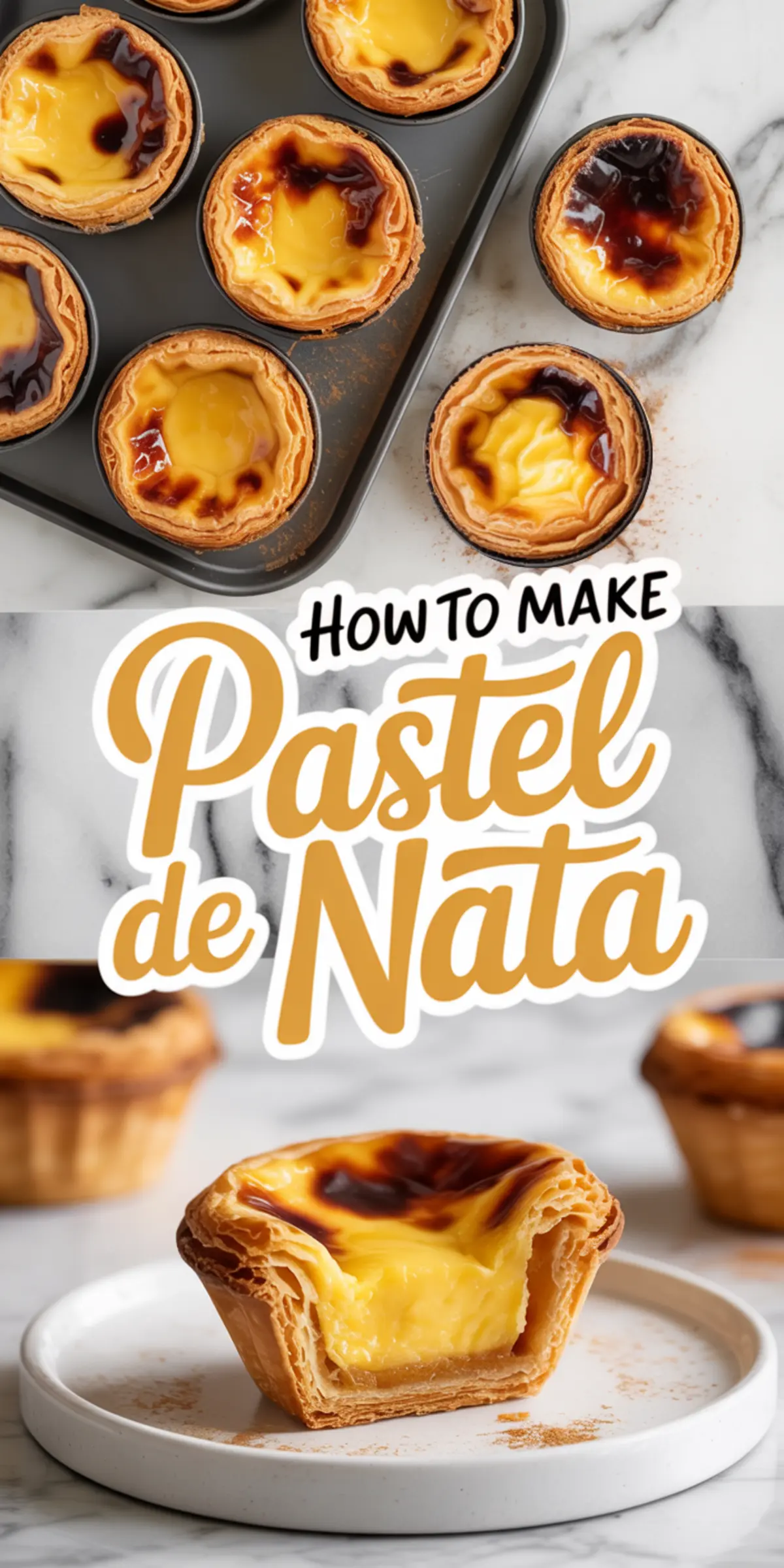
There’s a reason these little golden tarts have lasted centuries. A good Pastel de Nata delivers two things: crisp layers of flaky pastry and a glossy, creamy custard with just the right scorch on top.
This version stays true to that goal but uses store-bought puff pastry for convenience without giving up the character. You’ll get that caramelized crown and warm vanilla scent without spending all day making dough.
What You’ll Learn and Why You Can Trust This Method
This recipe walks you through making authentic Portuguese egg tarts at home, without professional ovens. Without shortcuts that strip away flavor.
You’ll see how the sugar syrup and milk base are layered, not just stirred together. You’ll understand how the high heat gives you that telltale blistered top.
And most importantly, you’ll bake with confidence knowing this method has been tested and refined. I’ve made more versions of these than I care to admit, and this balance of flavor and structure holds up.
Following a special diet?
Every recipe on this site can be converted to gluten-free, vegan, dairy-free, keto, nut-free or egg-free with adjusted ratios so nothing falls flat.
Try the Recipe Converter →Shaping the Puff Pastry for Proper Layers
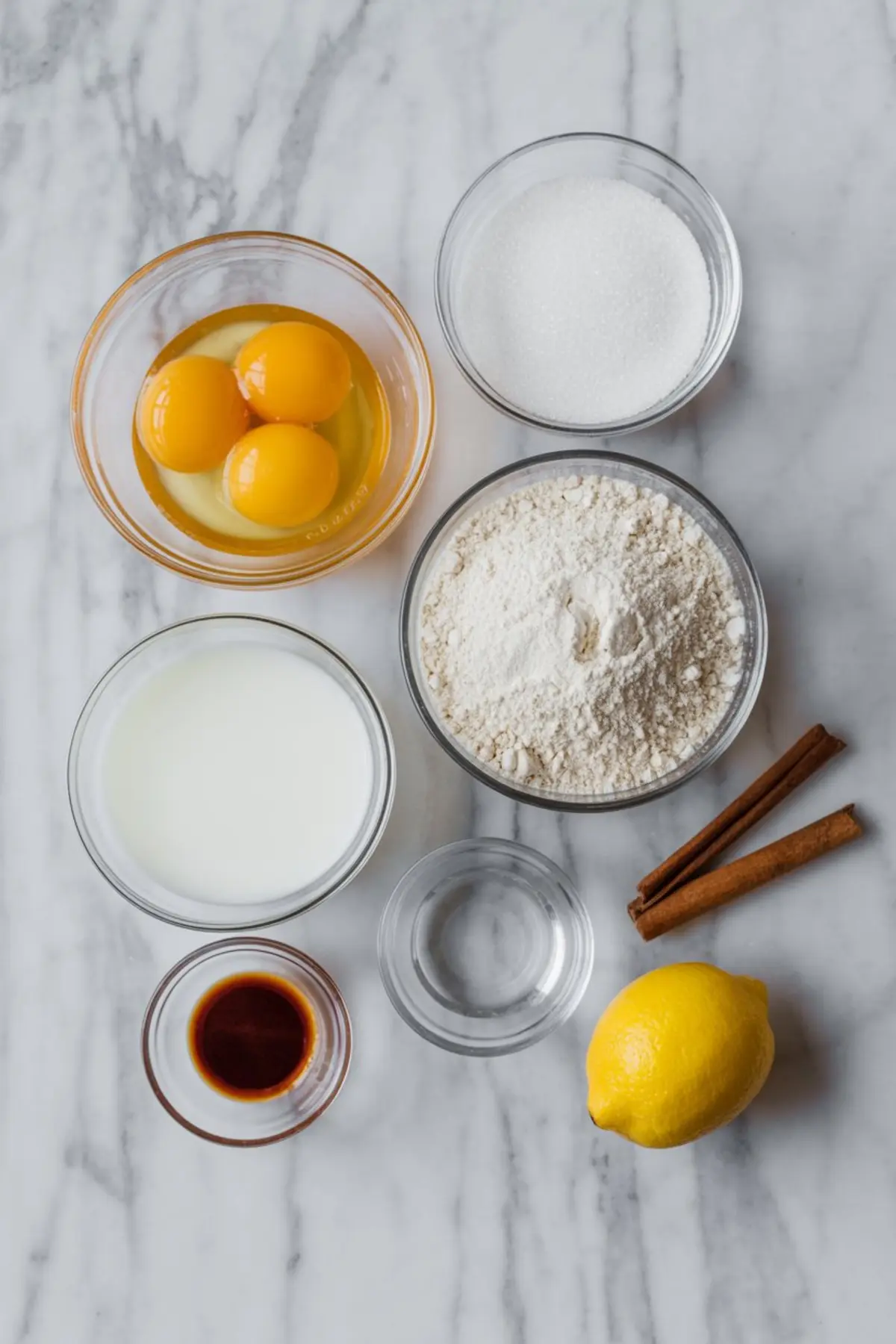
Start with one thawed sheet of good-quality puff pastry. Roll it tightly from the short edge into a log, then slice that into rounds.
That roll gives you visible spiral layers once pressed into the tin. Use your thumbs to spread each disc into a thin, even shell.
Keep the pastry cold so it holds its shape once the hot custard hits it.
Infusing the Milk with Cinnamon and Lemon
Whole milk takes on warmth from a cinnamon stick and a strip of lemon peel. Keep the heat low, you want infusion, not boiling.
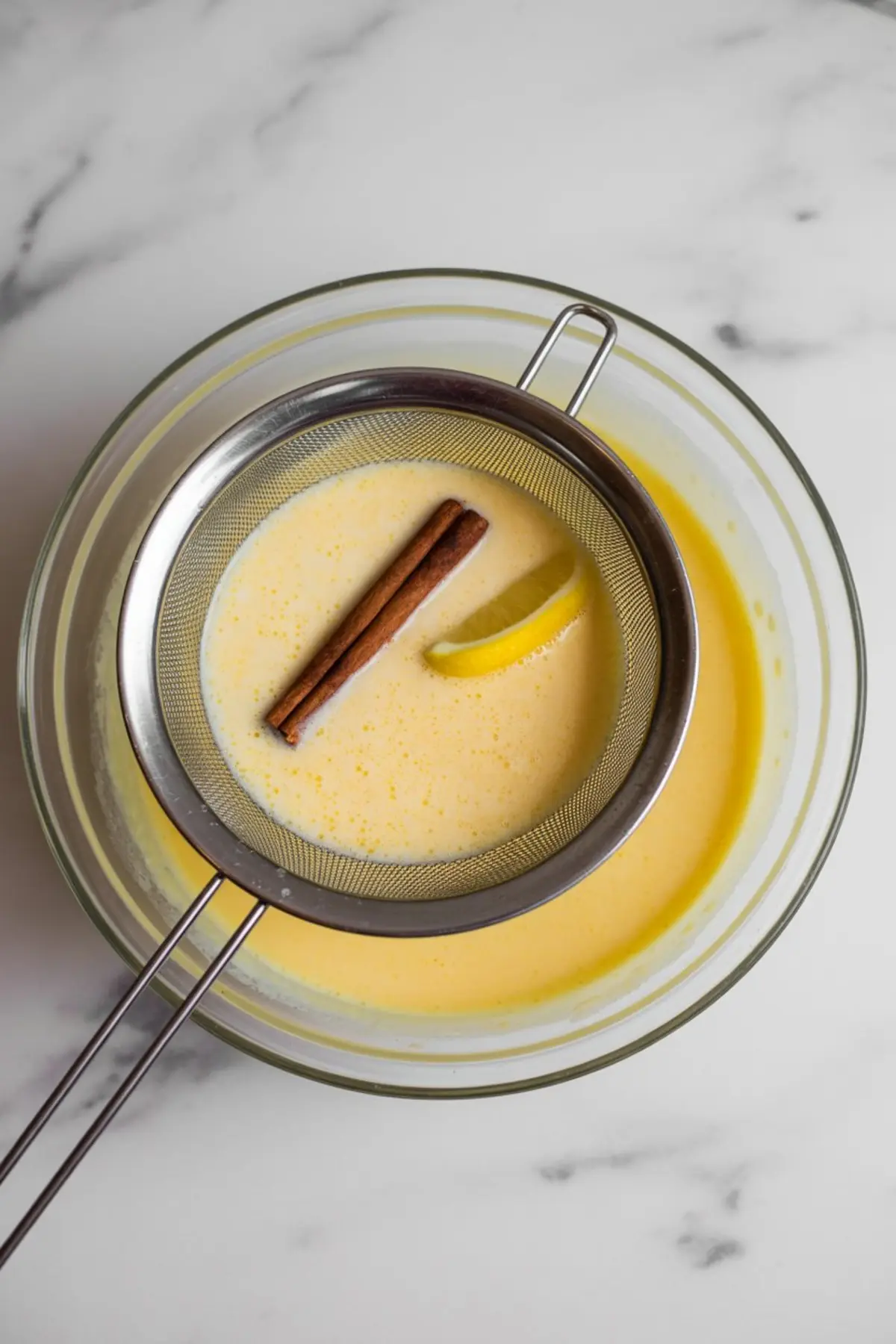
Five minutes of steeping gives you the aromatic base these tarts are known for. It’s a small step, but it makes the custard sing.
If you skip this, the filling risks tasting flat.
Thickening the Base without Overcooking
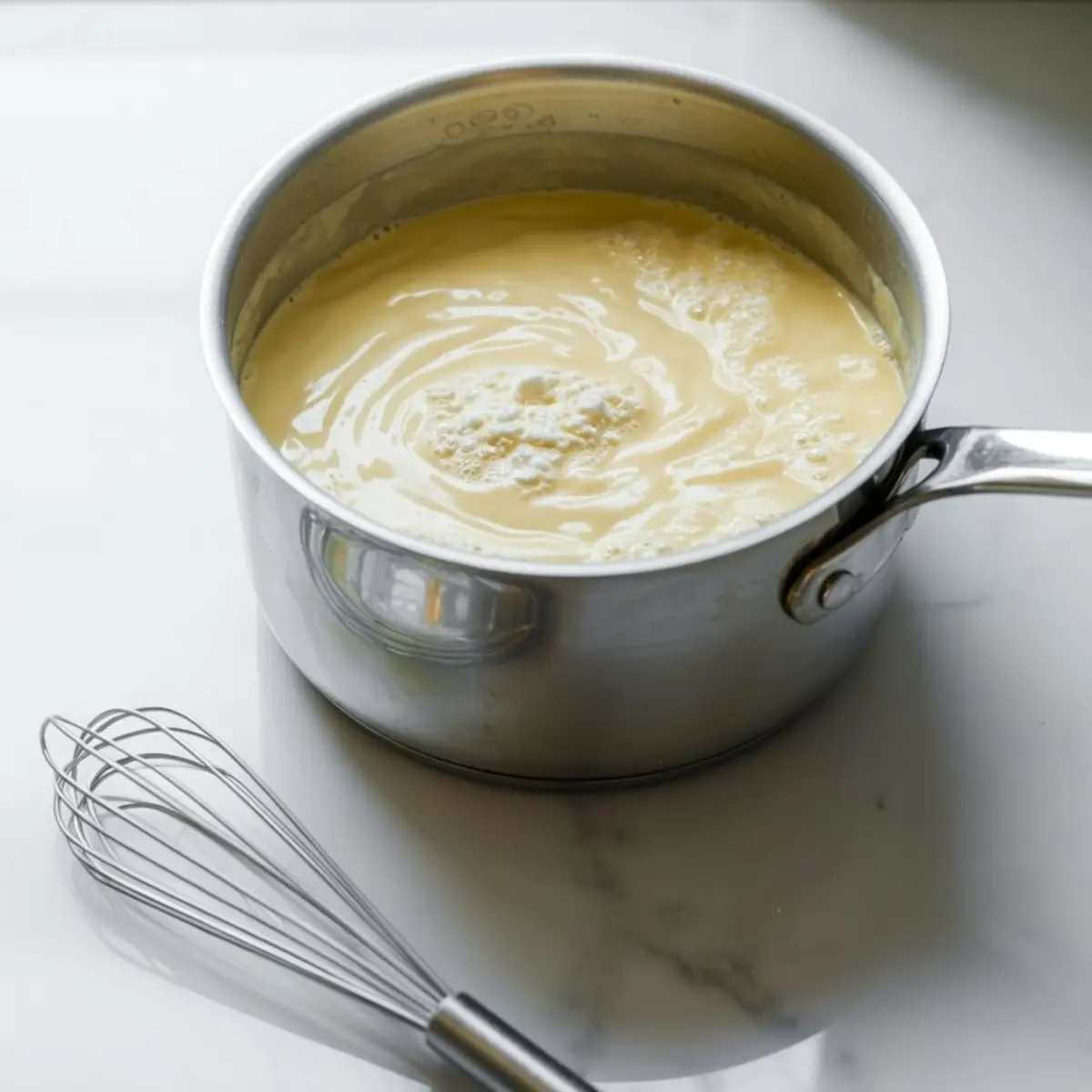
Mixing a bit of flour with warm infused milk prevents lumps and builds the right texture. Once it thickens slightly, pull it off the heat.
You’re not aiming for pudding here, just body. This step gives the custard enough strength to hold its shape after baking.
For something creamier and looser, like my Pumpkin Pudding Recipe, the technique shifts.
Building the Sugar Syrup and Marrying the Two Mixtures
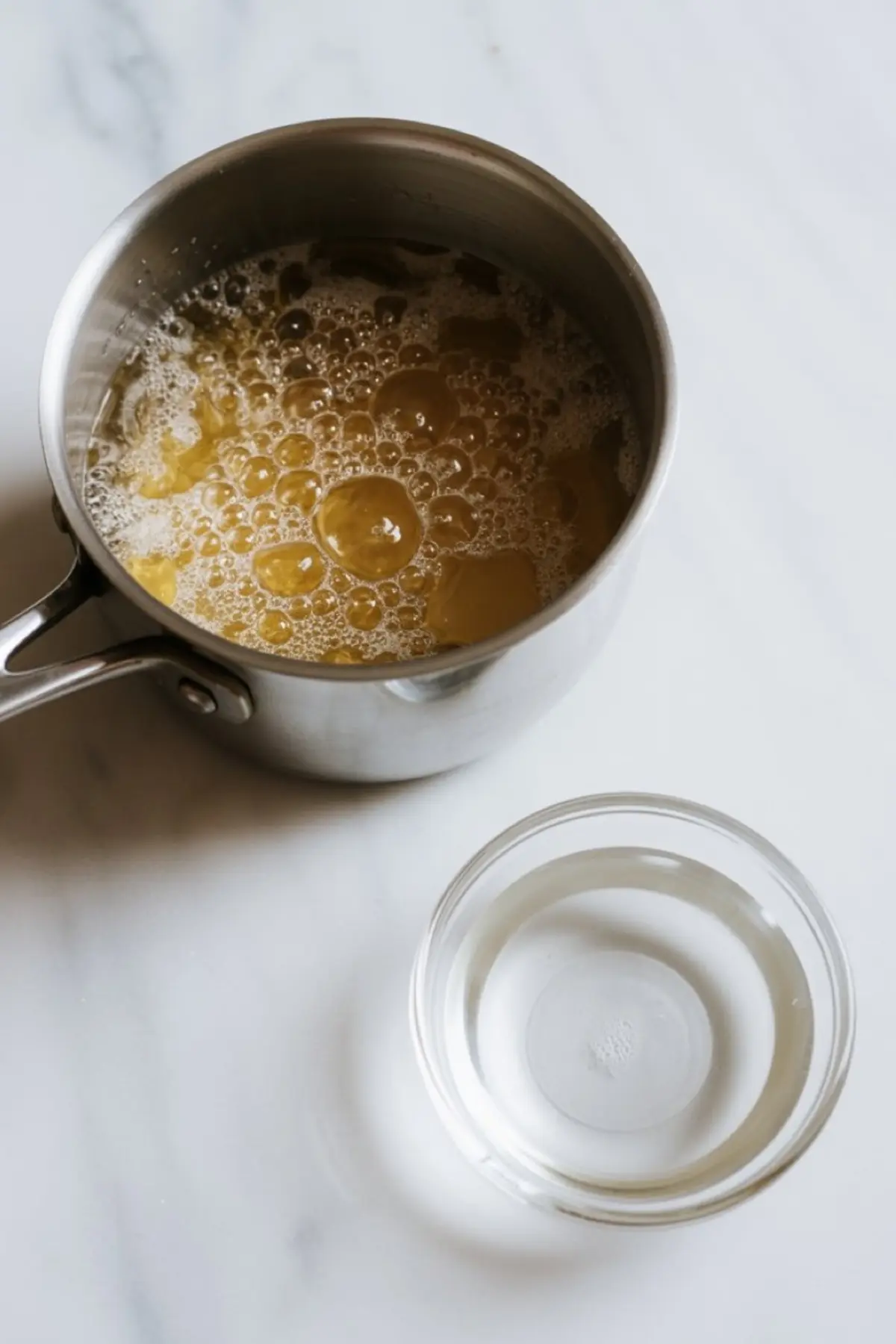
In a second saucepan, sugar and water become syrup. Don’t stir it.
Just bring it to 220°F and take it off the heat. Then pour it slowly into the milk mixture, whisking constantly.
This is where it comes together: heat meets fragrance, structure meets sweetness. Strain the mix to remove the cinnamon and lemon.
Let it cool for a few minutes.
The Custard Comes Alive with Yolks and Vanilla
Six egg yolks give the filling that signature color and richness. Whisk them with a little vanilla, then gradually stir in the warm (not hot) milk-sugar blend.
If the custard’s too hot, it scrambles. Keep your patience here.
Once combined, you’ll have a silky batter that pours easily into the shells.
Temperature Matters More Than You Think
Heat your oven to 500°F or its highest setting. You need that burst of heat to caramelize the tops and crisp the pastry.
Moderate heat won’t give you the same finish. This step is closer to making Pumpkin Crème Brûlée than baking a simple tart.
Fill and Bake with Care
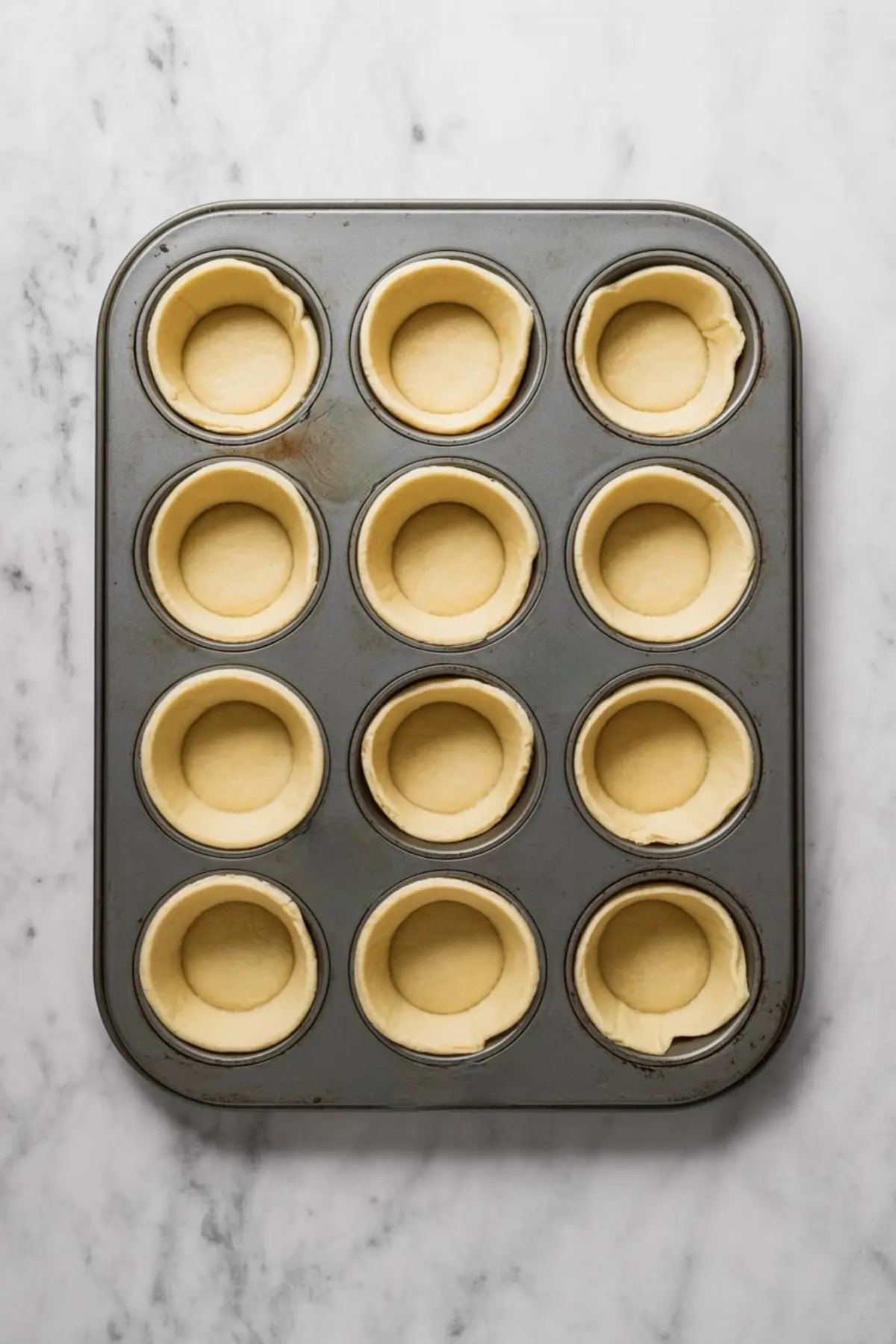
Pull your muffin tin from the fridge. Pour the custard in, leaving a little room at the top.
Don’t overfill or the custard might bubble over. Bake until the tops are spotted and golden, about 10 to 12 minutes.
They should look a little burnt in places. That’s not a mistake.
That’s what sets Portuguese Custard Tarts Pastel De Nata apart.
Cooling and Serving Tips That Actually Matter
Let the tarts cool in the pan briefly, then move them to a wire rack. They firm up as they cool.
Serve slightly warm or at room temperature. Some prefer powdered sugar.
Others add cinnamon. I usually go for both.
And if you enjoy fruit-forward desserts, pairing these with something like this Pear Tart Recipe adds seasonal contrast.
How They Compare to Other Custards
Compared to something like a classic Custard Pie, the texture of these tarts is firmer and the flavor more concentrated.
The small size helps too, you get more caramelized edge and less bland middle.
Each bite holds its structure. And unlike bite-size lemon chess tartlets, these don’t rely on citrus tang to carry them.
A Note on Puff Pastry vs. Homemade Dough
I’ve made these with both traditional laminated dough and store-bought puff pastry. The homemade version does yield slightly more buttery layers, but the time trade-off is steep.
For a weekday bake or a quick treat, quality puff pastry works. The caramelization still shows up.
The custard still sings. In my notes, I’ve found the biggest difference isn’t texture but aroma.
Homemade dough has more depth. But not enough to stop me from reaching for the freezer section.
How to Store and Enjoy Later
These tarts taste best the day they’re made. But if you’ve got leftovers, store them in an airtight container at room temperature for up to 2 days.
Reheat in a 375°F oven for about 5 minutes to revive the pastry. Avoid microwaving.
That just softens the shell. Freeze them only if you must.
They’ll lose some flake.
Save This Pastel de Nata Recipe for Later

If you’re planning fall bakes, these sit nicely next to Pumpkin Crème Brûlée or a cozy Custard Pie.
Save this post to your Portuguese Desserts board and come back to it anytime. Leave a comment if you make them, let me know how they turned out, or ask if you run into trouble.
We’re always baking better when we share.
Pastel de Nata Recipe
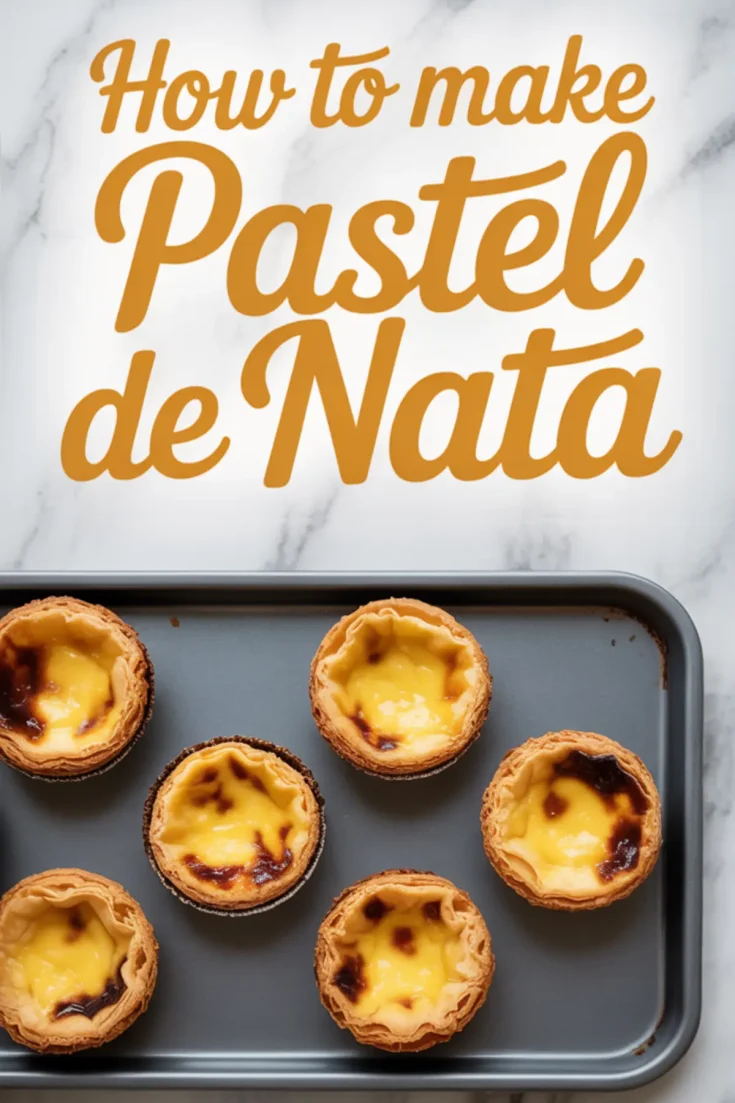
Golden Portuguese custard tarts are known for their crisp, flaky pastry and creamy egg custard with a caramelized top. This recipe uses puff pastry to simplify the process while preserving the traditional flavor and texture. Serve them slightly warm with a sprinkle of powdered sugar or cinnamon.
Ingredients
- 1 sheet puff pastry (thawed if frozen)
- 1 cup (240 ml) whole milk
- 1 cinnamon stick
- 1 strip lemon peel (just the yellow part)
- 3 tbsp (24 g) all-purpose flour
- 1 ¼ cups (250 g) granulated sugar
- ⅔ cup (160 ml) water
- 6 large egg yolks
- 1 tsp vanilla extract
Instructions
- PREPARE THE PASTRY: Roll the thawed puff pastry sheet tightly from the short side into a log. Cut the log into 12 equal pieces. Place each round into a lightly greased muffin tin cup. Using your thumbs, press the dough into the bottom and up the sides of each cup to form a thin pastry shell. Place the tin in the refrigerator to chill while you prepare the custard.
- INFUSE THE MILK: In a small saucepan, combine the whole milk, cinnamon stick, and strip of lemon peel. Heat over medium just until the milk is warm but not boiling. Remove from heat and allow the mixture to steep for 5 minutes to infuse the flavors.
- THICKEN THE MILK BASE: In a medium bowl, whisk the flour with a few tablespoons of the warm milk until smooth and lump-free. Return the flour mixture to the saucepan with the rest of the milk. Cook over low heat, stirring constantly, until the mixture thickens slightly. Remove from heat.
- MAKE THE SUGAR SYRUP: In a separate saucepan, combine the granulated sugar and water. Bring to a boil without stirring and cook until the syrup reaches 220°F (104°C) on a thermometer. Remove from heat immediately.
- COMBINE SYRUP AND MILK MIXTURE: While whisking continuously, slowly pour the hot sugar syrup into the thickened milk mixture. Continue to whisk until fully combined. Strain the mixture through a fine mesh sieve to remove the cinnamon stick and lemon peel. Let it cool slightly.
- ADD EGG YOLKS: In a clean bowl, whisk the egg yolks with the vanilla extract until smooth. Slowly add the warm (not hot) custard mixture to the yolks, stirring constantly to avoid curdling. Mix until fully combined and smooth.
- PREHEAT THE OVEN: Preheat your oven to 500°F (260°C), or as high as your oven will go. The high temperature is key for achieving the signature caramelized top and crisp pastry.
- FILL THE TARTS: Remove the chilled muffin tin from the fridge. Pour the custard into each pastry shell, filling each about three-quarters full. Do not overfill to avoid overflow during baking.
- BAKE: Place the muffin tin in the preheated oven. Bake for 10 to 12 minutes, or until the custard is set and the tops have developed dark caramelized spots. The pastry should be crisp and golden.
- COOL AND SERVE: Remove the tarts from the oven and allow them to cool in the tin for a few minutes before transferring to a wire rack. Serve warm or at room temperature with optional powdered sugar or cinnamon sprinkled on top.
Notes
Use high-quality puff pastry for best results. Be sure the custard is not too hot when adding the yolks to avoid scrambling. The tarts are best the day they are baked.
Nutrition Information
Yield
12Serving Size
1Amount Per Serving Calories 181Total Fat 4gSaturated Fat 1gTrans Fat 0gUnsaturated Fat 3gCholesterol 110mgSodium 52mgCarbohydrates 27gFiber 1gSugar 2gProtein 7g
