

This apple galette is a free-form tart: one 12 inch round of butter pastry folded over 3 thinly sliced, cinnamon-spiced apples and baked flat on a sheet pan at 400°F for 35 to 40 minutes. It serves 6 to 8 and needs no pie dish.
The finish is what makes it mine: a cup of apple cider simmered down with brown sugar, brushed over the apples the moment the galette comes out.

Following a special diet?
Every recipe on this site can be converted to gluten-free, vegan, dairy-free, keto, nut-free or egg-free with adjusted ratios so nothing falls flat.
Try the Recipe Converter →The Numbers Before You Start
- Crust: 1¼ cups flour, ½ cup cold unsalted butter, 3 to 4 tablespoons ice water
- Filling: 3 medium apples, sliced about ⅛ inch thick, with 1 tablespoon flour to hold the juice
- Shape: roll to 12 inches, leave a 2 inch border, fold it up into pleats
- Bake: 400°F (200°C) for 35 to 40 minutes on a parchment-lined sheet
- Glaze: 1 cup apple cider and 2 tablespoons brown sugar, simmered about 15 minutes
- Timeline: about 2 hours, most of it the 1 hour dough chill
A Cold, Flaky Galette Dough
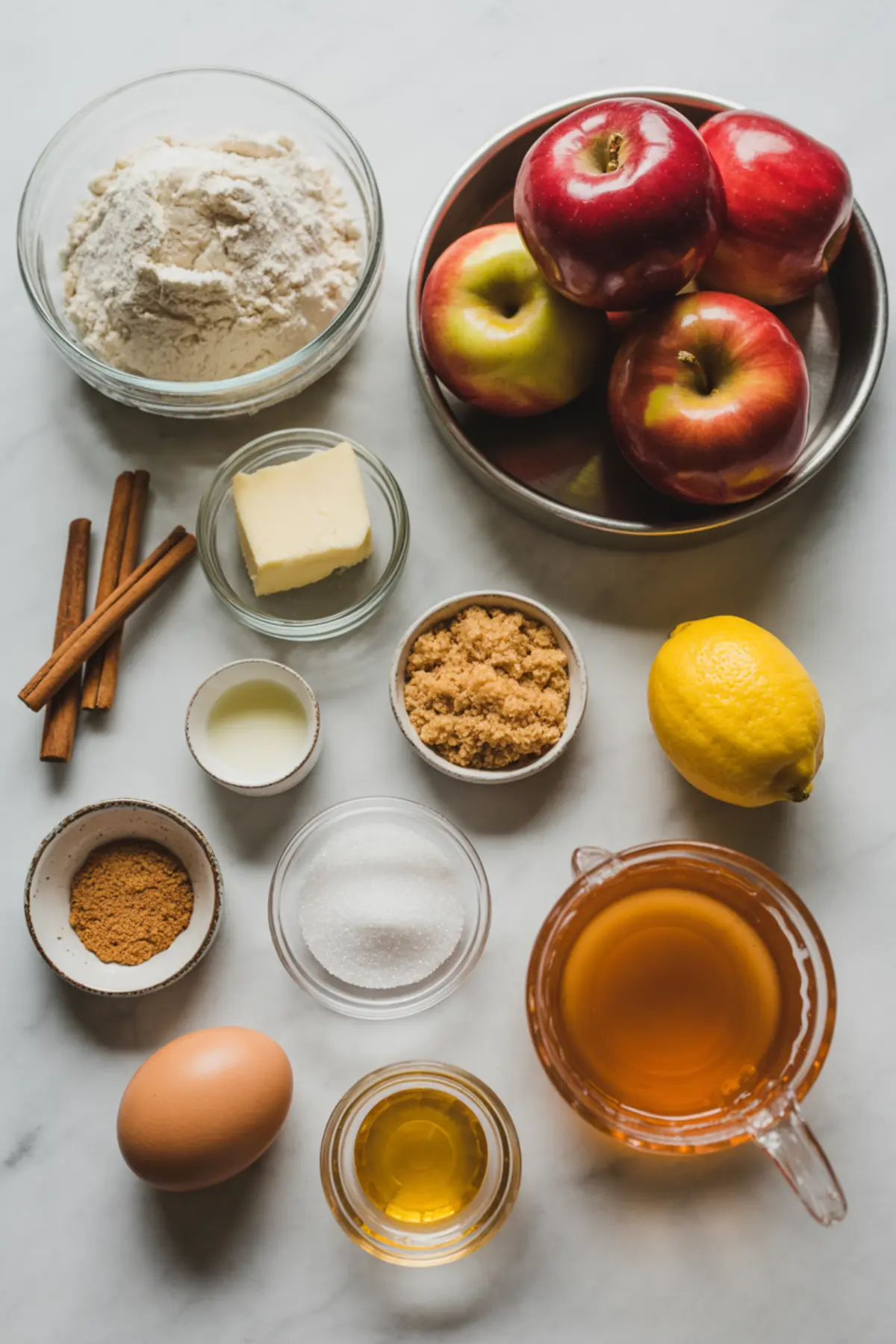
The crust is plain butter pastry, and it depends on temperature more than on skill. Whisk the flour, salt and sugar, then cut in the cold butter with a pastry cutter or your fingertips until the bowl looks like wet sand with pebbles in it. Those pea-sized bits of butter melt in the oven and steam the layers apart.
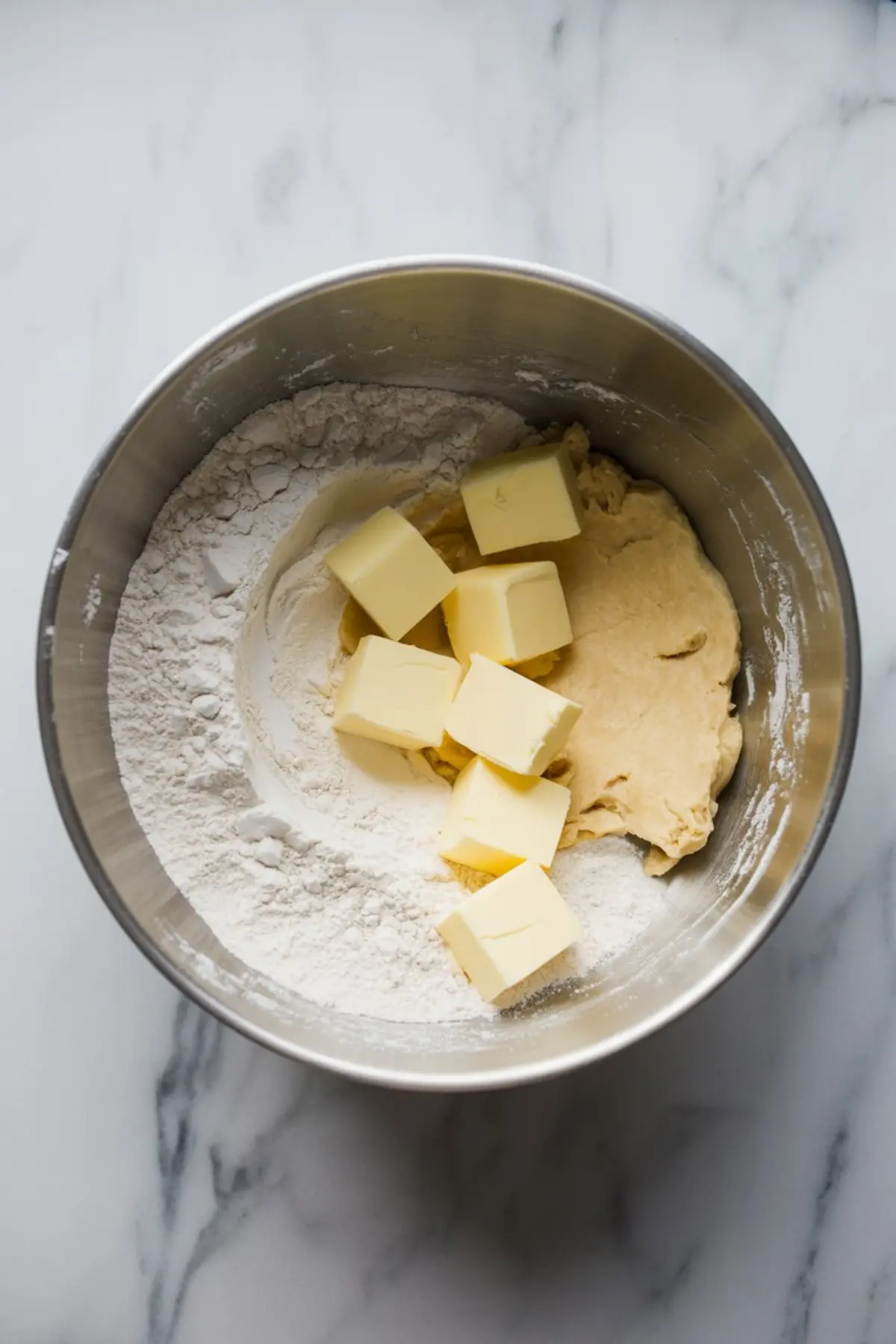
Add the ice water a tablespoon at a time. Three tablespoons usually work for me, and I always pause before the fourth, because too much water turns the dough tough and gummy. Squeeze a handful: if it holds together without feeling sticky, it is ready.
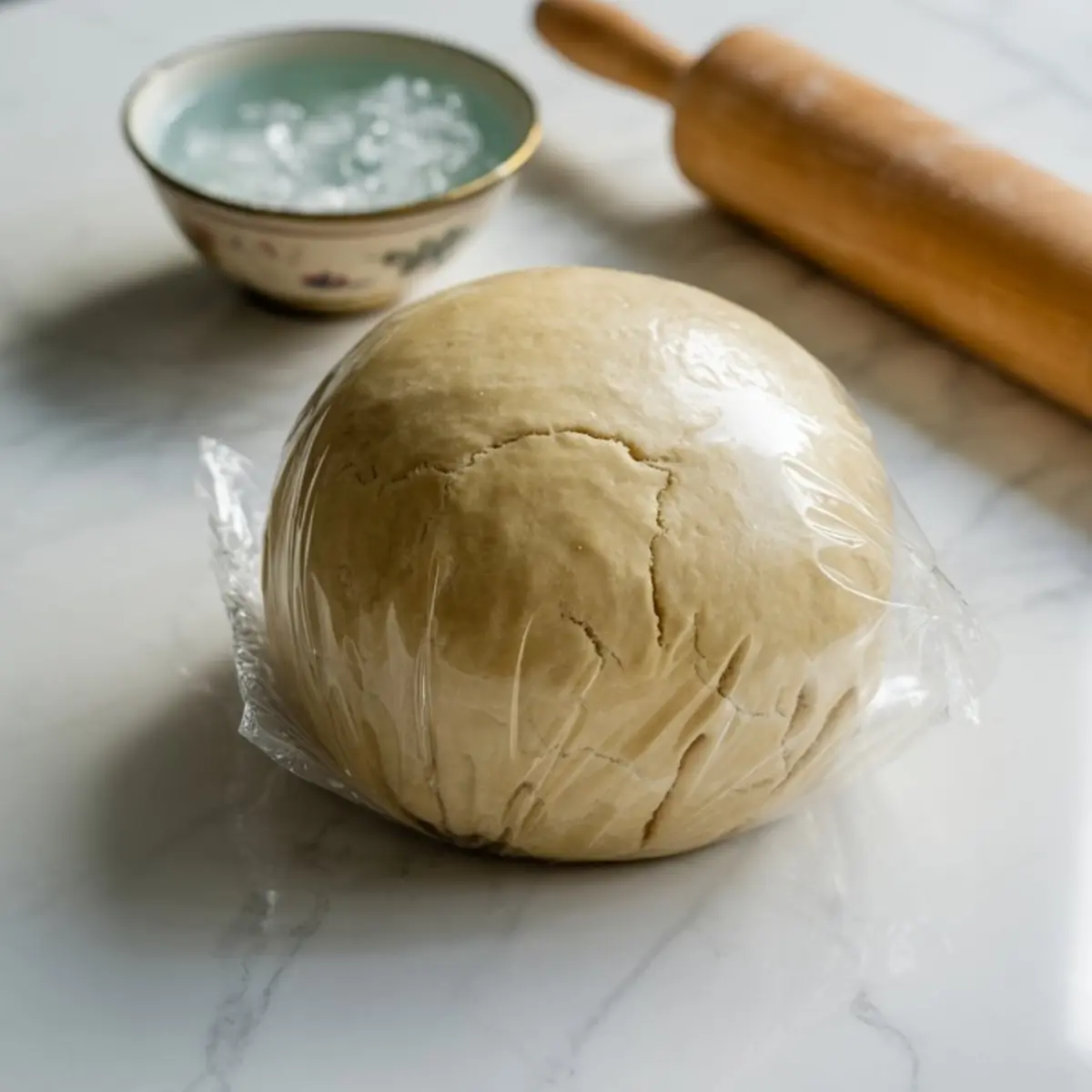
Press it into a disk, wrap it and chill it for at least 1 hour. That rest relaxes the gluten, so the round rolls out smooth and does not shrink back. I tried pastry flour once, and it made the edge too soft to hold a pleat.
European or Regular Butter?
I have made this crust with European-style butter and with standard American sticks. The higher fat butter tastes richer and gives a more defined flake, but it softens faster in your hands. If you are new to galette dough, use regular unsalted butter. It stays firm longer while you fold.
Which Apples to Use and How Thin to Slice Them
I use a mix: Granny Smith for acidity, Honeycrisp for a slice that keeps its shape, and Gala for sweetness. Any firm apple works. Soft, mealy apples collapse into sauce on a crust this thin.
Slice them about ⅛ inch thick. In a galette the apples are only one or two layers deep, so thin slices cook through in the same 35 minutes the crust needs. Toss them with lemon juice first so they stay pale, then with both sugars, cinnamon, the tablespoon of flour and vanilla. Let the bowl sit while the dough chills; the flour thickens the juice the apples release.
Rolling, Filling and Pleating the Edge
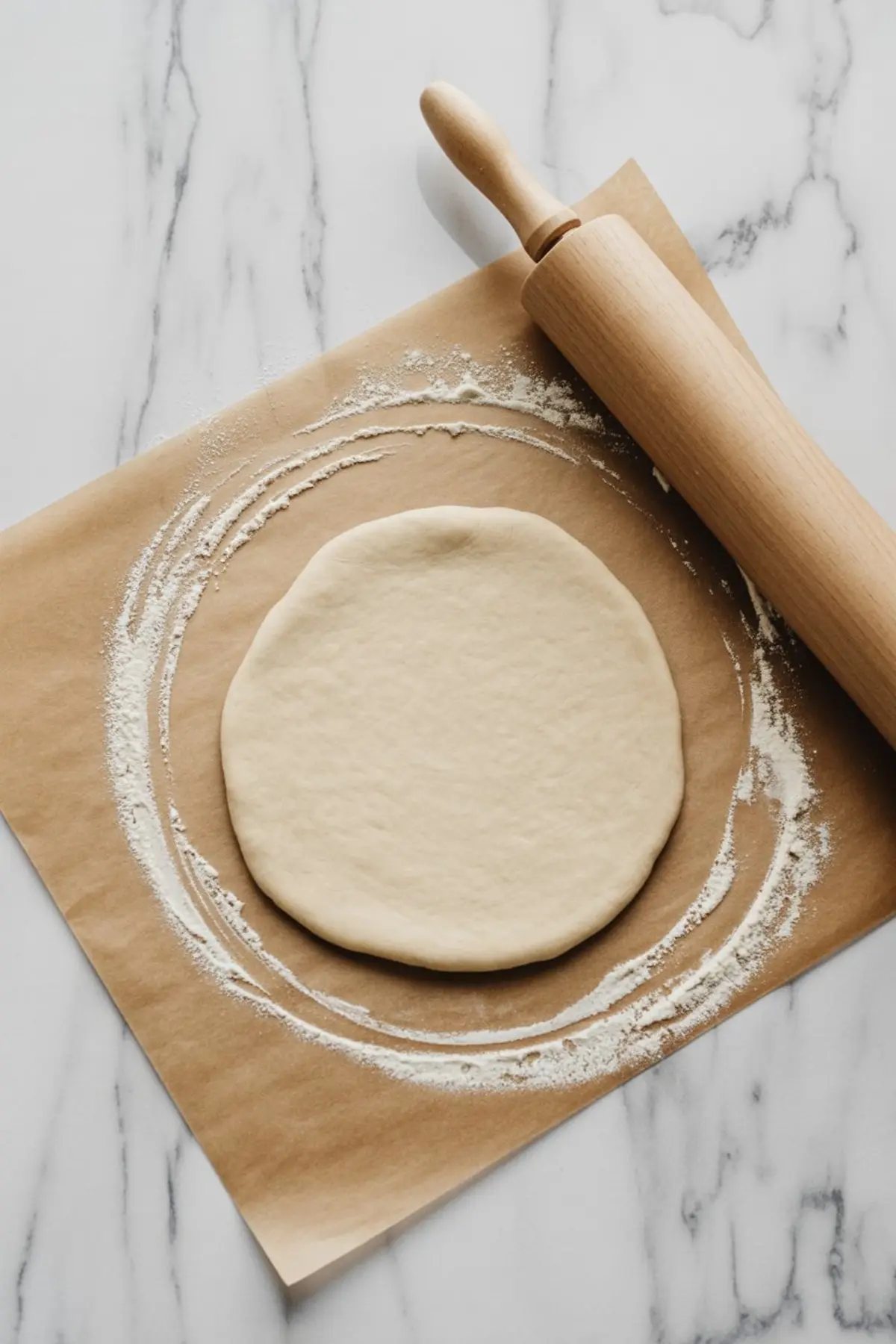
Heat the oven to 400°F. Take the dough out of the fridge 5 minutes before rolling so it bends instead of cracking. Roll it to a 12 inch circle on a floured surface, turning it every few passes so it stays round. Move it to the parchment-lined sheet now. Once it is filled, it is too heavy to move without tearing.
Arrange the apples in overlapping circles or loose rows, leaving a clean 2 inch border. Leave the extra juice in the bowl, and keep the border dry: wet dough at the fold is where leaks start. Nothing has to line up. Fold the border up over the apples, pleating as you go, then brush the crust with beaten egg and sprinkle it with coarse sugar for crunch.
If the dough felt soft while you were folding, put the whole sheet in the fridge for 10 to 15 minutes. The same fold works for a rustic peach galette or a plum galette later in the year.
Baking Until the Bottom Is Golden
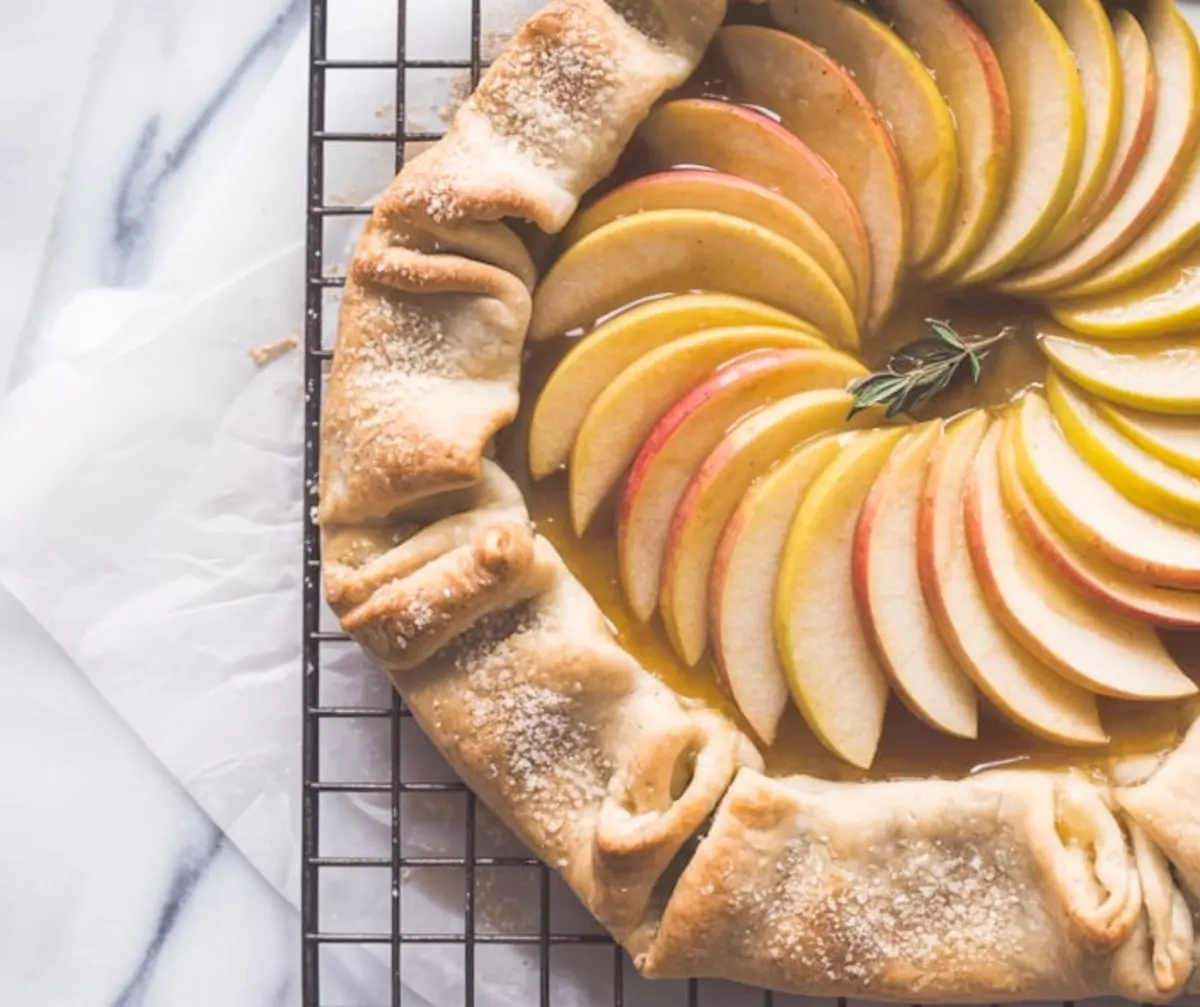
Bake on the lower-middle rack for 35 to 40 minutes, rotating the pan halfway for even color. The galette is done when the pleats are deep golden, the juices bubble in the middle, and a knife slides into an apple slice without resistance.
Check the bottom before you pull it. Lift an edge of the parchment with a spatula: the underside should be browned, not pale. A pale bottom means a soft slice, so give it another 5 minutes if needed.
The Apple Cider Glaze
While the galette bakes, simmer the cider and brown sugar in a small saucepan over medium heat for about 15 minutes. It is ready when the bubbles turn large and slow and the syrup coats the back of a spoon. Take it off the heat and stir in the butter and the pinch of salt. Use fresh sweet cider, store-bought or homemade apple cider, not hard cider.
Brush the warm glaze over the apples as soon as the galette comes out of the oven. It soaks into the hot fruit and sets into a shiny coat. I tried it once without the glaze and missed it: the reduced cider makes the apples taste more like apple.
Apple Galette or Apple Pie?
A galette uses one crust instead of two, bakes flat on a sheet pan instead of in a dish, and needs only 3 apples. A double crust apple pie takes twice the dough, a lot more apples and a long cool so the filling sets. Choose the galette for a weeknight or a small table. Choose the pie when you want tall slices for a crowd, with an apple pie filling you can cook days ahead.
If you prefer store-bought dough, one refrigerated round works here. The dough from my pie crust recipe also folds well if you already have a batch in the fridge.
When the Galette Leaks, Slumps or Stays Pale
- Juice leaks out of the pleats: the border got wet, or the bowl juice went in with the apples. Pleat tightly and leave the bowl juice behind.
- The edge slumps and loses its folds: the butter was too warm. Chill the assembled galette for 10 to 15 minutes before it goes in.
- The dough cracks when you fold it: it is too cold. Let it sit for a few minutes, and press any cracks closed with a damp fingertip.
- The bottom is pale and soft: bake lower in the oven and a few minutes longer, and check the underside with a spatula.
- The glaze set too thick: it was reduced too far. Warm it over low heat with a tablespoon of cider until it brushes on again.
Serving, Storing and Making It Ahead
Serve it warm or at room temperature. Give it 15 minutes on the pan so the juices settle and the slices hold.
Leftovers keep covered at room temperature for a day, then in the fridge for 2 to 3 more. Reheat slices in a toaster oven or a 350°F oven for 5 to 10 minutes. The microwave softens the crust. To get ahead for a holiday, make the dough and freeze the wrapped disk, then thaw it overnight in the fridge. I have done that before a gathering.
For more ways to use fall apples, try apple turnovers with puff pastry, apple pie cheesecake bars, maple glazed apple pie bars, or a pear tart when pears are in season. If you try this galette, tell me in the comments which apples you used.
Apple Galette Recipe

This apple galette is a rustic free-form tart made with a flaky butter crust, thinly sliced apples, brown sugar, cinnamon and a reduced apple cider glaze. The crust is rolled to 12 inches, folded over 3 apples with a 2 inch border and baked flat on a sheet pan at 400°F for 35 to 40 minutes, giving 6 to 8 slices. A tablespoon of flour in the filling thickens the juices, and the cider is simmered with brown sugar into a sticky glaze that is brushed on while the galette is hot. Serve this apple galette recipe warm with ice cream or crème fraîche for fall dinners or Thanksgiving, or as an easier choice than apple pie. It keeps for 1 day at room temperature and 3 days in the fridge.
Ingredients
- For the crust:
- 1 ¼ cups all-purpose flour
- ½ teaspoon salt
- 1 tablespoon granulated sugar
- ½ cup (1 stick) cold unsalted butter, cut into cubes
- 3 to 4 tablespoons ice water
- For the filling:
- 3 medium apples (mix of sweet and tart), thinly sliced
- 1 tablespoon lemon juice
- 2 tablespoons brown sugar
- 1 tablespoon granulated sugar
- 1 teaspoon ground cinnamon
- 1 tablespoon all-purpose flour
- 1 teaspoon vanilla extract
- For the cider glaze:
- 1 cup apple cider
- 2 tablespoons brown sugar
- 1 tablespoon butter
- Pinch of salt
- For the finishing touch:
- 1 egg, beaten (for egg wash)
- 1 tablespoon coarse sugar (for sprinkling)
Instructions
- MAKE THE DOUGH: In a large bowl, whisk together the flour, salt, and sugar. Add the cold butter cubes and use a pastry cutter or your fingertips to work them in until the mixture resembles coarse crumbs. Add ice water one tablespoon at a time, mixing gently until the dough comes together. Shape the dough into a disk, wrap in plastic wrap, and refrigerate for at least 1 hour.
- PREPARE THE APPLE FILLING: Toss the sliced apples with lemon juice in a large bowl to prevent browning. Add the brown sugar, granulated sugar, cinnamon, flour, and vanilla extract. Stir until the apples are evenly coated, then set aside to rest while the dough chills.
- ROLL AND ASSEMBLE: Preheat the oven to 400°F (200°C). On a lightly floured surface, roll out the chilled dough into a 12-inch circle. Transfer the dough to a parchment-lined baking sheet. Arrange the apple slices in slightly overlapping circles, leaving a 2-inch border around the edge. Fold the edges of the dough over the apples, pleating as you go to create a rustic shape. Brush the crust with the beaten egg and sprinkle with coarse sugar.
- BAKE: Place the assembled galette in the preheated oven and bake for 35 to 40 minutes, or until the crust is golden brown and the apples are tender. Rotate the pan halfway through baking for even browning if necessary.
- MAKE THE CIDER GLAZE: While the galette bakes, combine the apple cider and brown sugar in a small saucepan over medium heat. Simmer until reduced to a thick, syrupy consistency, about 15 minutes. Stir in the butter and a pinch of salt. Once the galette is out of the oven, brush the apple filling generously with the warm cider glaze.
Notes
Use a mix of firm tart and sweet apples such as Granny Smith, Honeycrisp and Gala, sliced about 1/8 inch thick. Keep the 2 inch border dry so the pleats seal, and leave extra juice in the bowl. If the dough softens while you fold it, chill the assembled galette for 10 to 15 minutes before baking. Bake on the lower-middle rack until the underside is browned. The glaze is ready when it coats a spoon; if it sets too thick, warm it with a splash of cider. The dough disk can be frozen and thawed overnight in the fridge. Store leftovers covered for 1 day at room temperature, then up to 3 days in the fridge, and reheat in the oven to keep the crust crisp.
Nutrition Information
Yield
8Serving Size
1Amount Per Serving Calories 209Total Fat 3gSaturated Fat 2gTrans Fat 0gUnsaturated Fat 1gCholesterol 29mgSodium 175mgCarbohydrates 43gFiber 3gSugar 23gProtein 3g
