

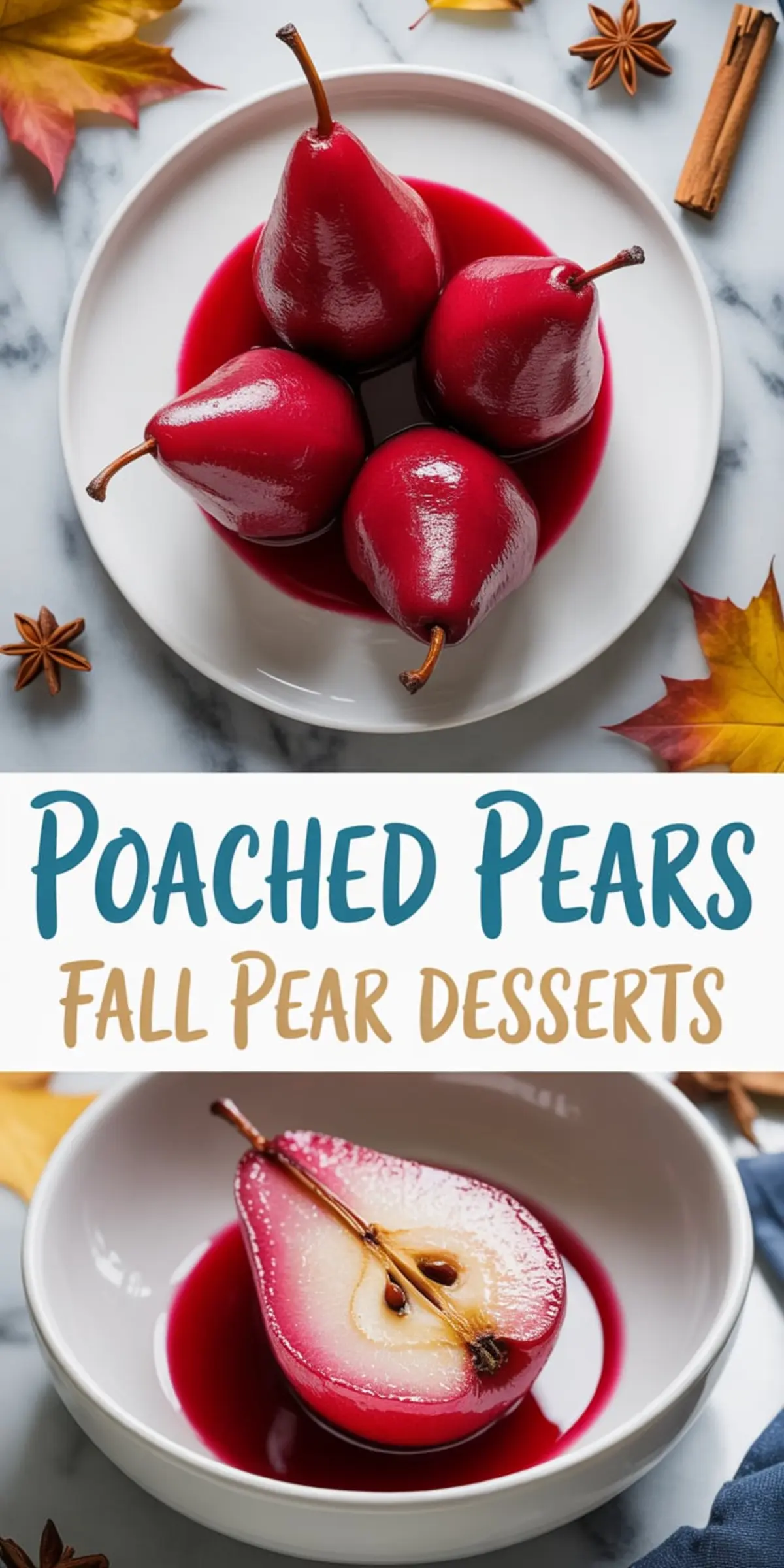
Poached pears look like something out of a French patisserie window, but making them doesn’t require a pastry diploma. This recipe calls for little more than patience, a good bottle of wine, and a few whole spices.
Once the pears are peeled and simmering, the kitchen smells like mulled wine. It becomes quiet work, the kind you can do with music in the background and a wooden spoon in hand.
In this post, you’ll learn how to make red wine poached pears that hold their shape, absorb flavor all the way through, and shine on the plate with a jewel-toned syrup. You’ll also understand why some pears cook better than others and what to do with the leftovers, if any remain.
Following a special diet?
Every recipe on this site can be converted to gluten-free, vegan, dairy-free, keto, nut-free or egg-free with adjusted ratios so nothing falls flat.
Try the Recipe Converter →Why These Red Wine Poached Pears Stand Out
This isn’t just about soaking fruit in alcohol. The recipe balances tart, ripe pears with dry red wine, sugar, and spices that steep gently into the fruit.
As the pears soften, they darken from the outside in, taking on the color and depth of the wine. A cinnamon stick and cloves provide warmth. Star anise lends quiet depth. The orange peel lifts the whole thing.
I’ve served these warm over ice cream and cold on their own. In both cases, the silence that follows the first bite says more than compliments. Their elegance lives in the restraint.
You can see how the flavors build just like they do in my Pear Tart Recipe, where texture and temperature contrast to highlight the fruit.
Choosing the Right Pears for Poaching
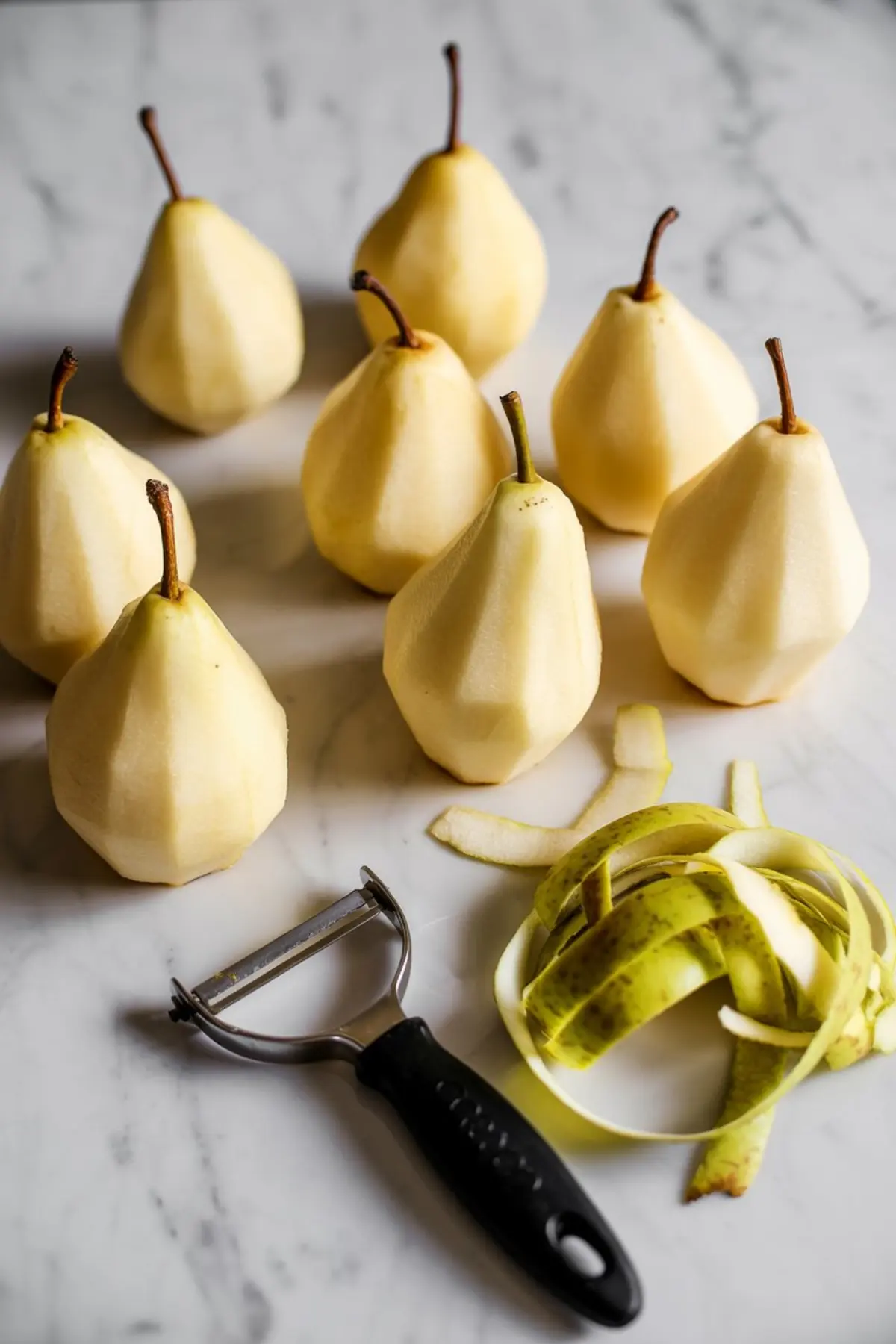
Bosc and Anjou pears work best because they hold their structure without turning mushy. Their flesh soaks up the wine while keeping enough firmness to plate cleanly. Overripe pears collapse. Under-ripe ones resist the poach.
I’ve tested this with Bartletts. They broke down too quickly. Bosc stays reliable, even after 30 minutes on a low simmer. If you’re wondering what to do with fresh pears that are just shy of soft, this is your answer.
For a different approach to cooked pears that leans into crisp textures, visit the Pear Cream Cheese Crisp recipe. It plays the opposite note but with equal success.
How to Infuse Deep Flavor Into the Poaching Liquid
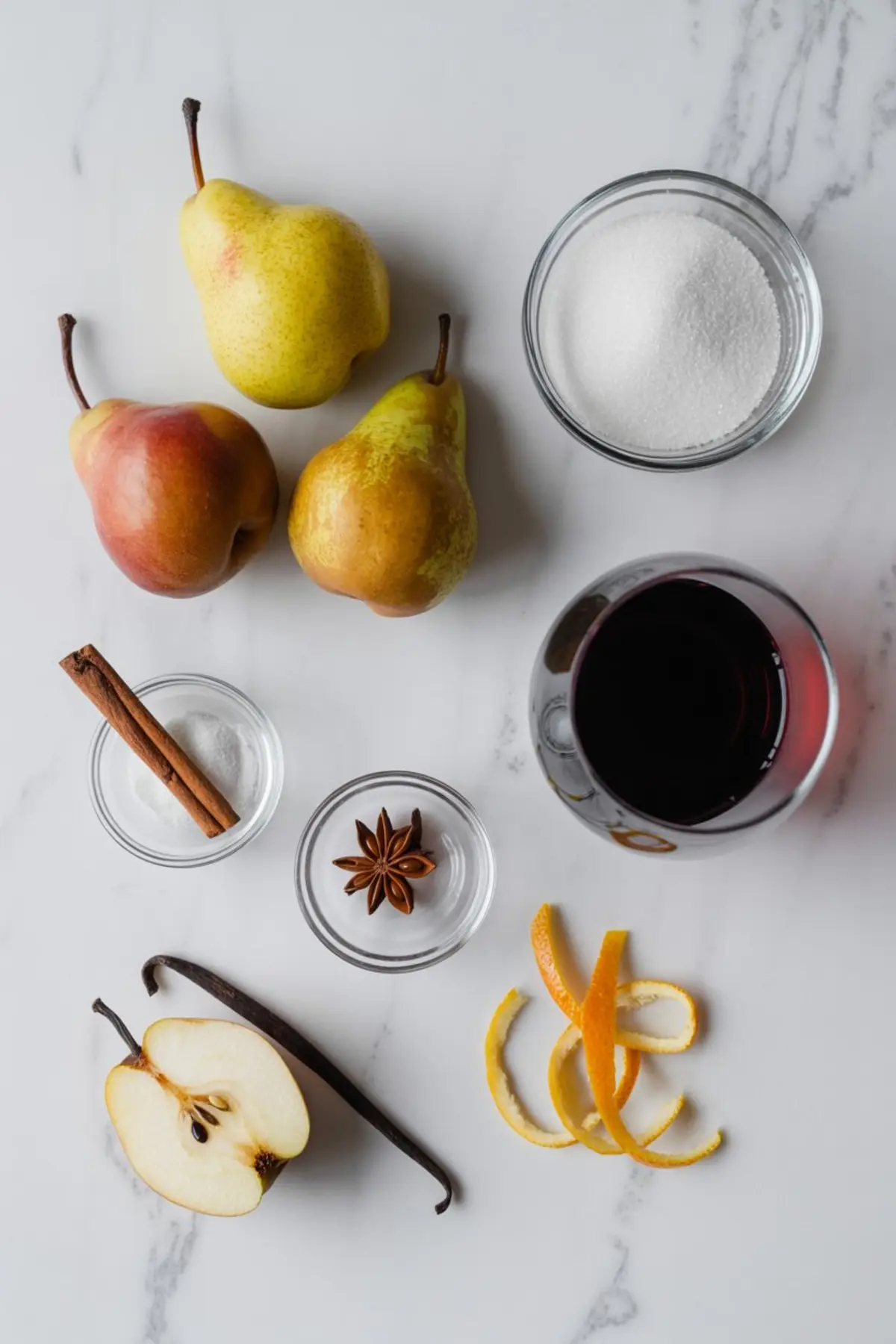
Start with a bottle of dry red wine. I usually use Cabernet Sauvignon or Shiraz. Both bring enough tannin to support the sugar and citrus. Once warmed, the wine gets layered with spices and just enough sugar to mellow the sharp edges.
The vanilla, cinnamon stick, star anise, cloves, and orange peel need time to release their character. Don’t rush this. Let the liquid simmer gently before you lower in the fruit.
The smell reminds me of late October. There’s something old-fashioned about it. Like heating cider on the stove, but darker and quieter.
Comparison: Vanilla Bean vs Extract in Poaching Syrup
I’ve used both. The split vanilla bean gives a deeper flavor and a slightly richer aroma. The extract works well if you’re short on time or ingredients. In my notes, I find that using half a bean split lengthwise offers more complexity. The seeds float gently in the syrup, catching light when served.
But don’t skip the vanilla altogether. The wine needs it.
Simmering the Pears to Tender Without Breaking Them
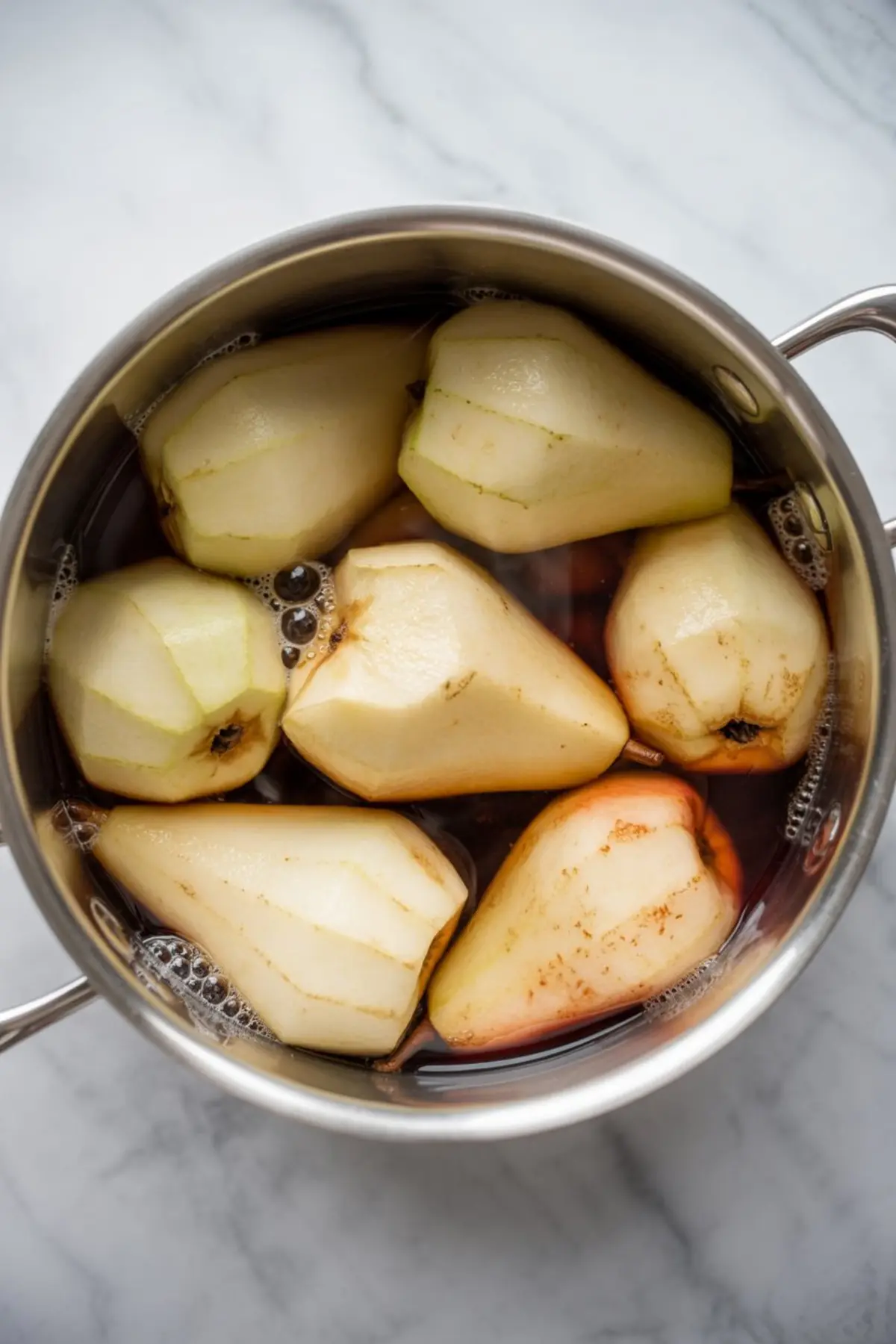
Once you add the pears, lower the heat to a soft simmer. Turn the fruit occasionally to color them evenly. Don’t let the pot boil. Boiling roughens the surface and weakens the stem.
Depending on ripeness, it usually takes 25 to 30 minutes. A small knife should slip in with no resistance, but the pear should still hold its upright shape.
Letting them cool in the wine makes a difference. The flesh deepens in color, and the flavor intensifies.
Reducing the Wine Syrup for a Glossy Finish
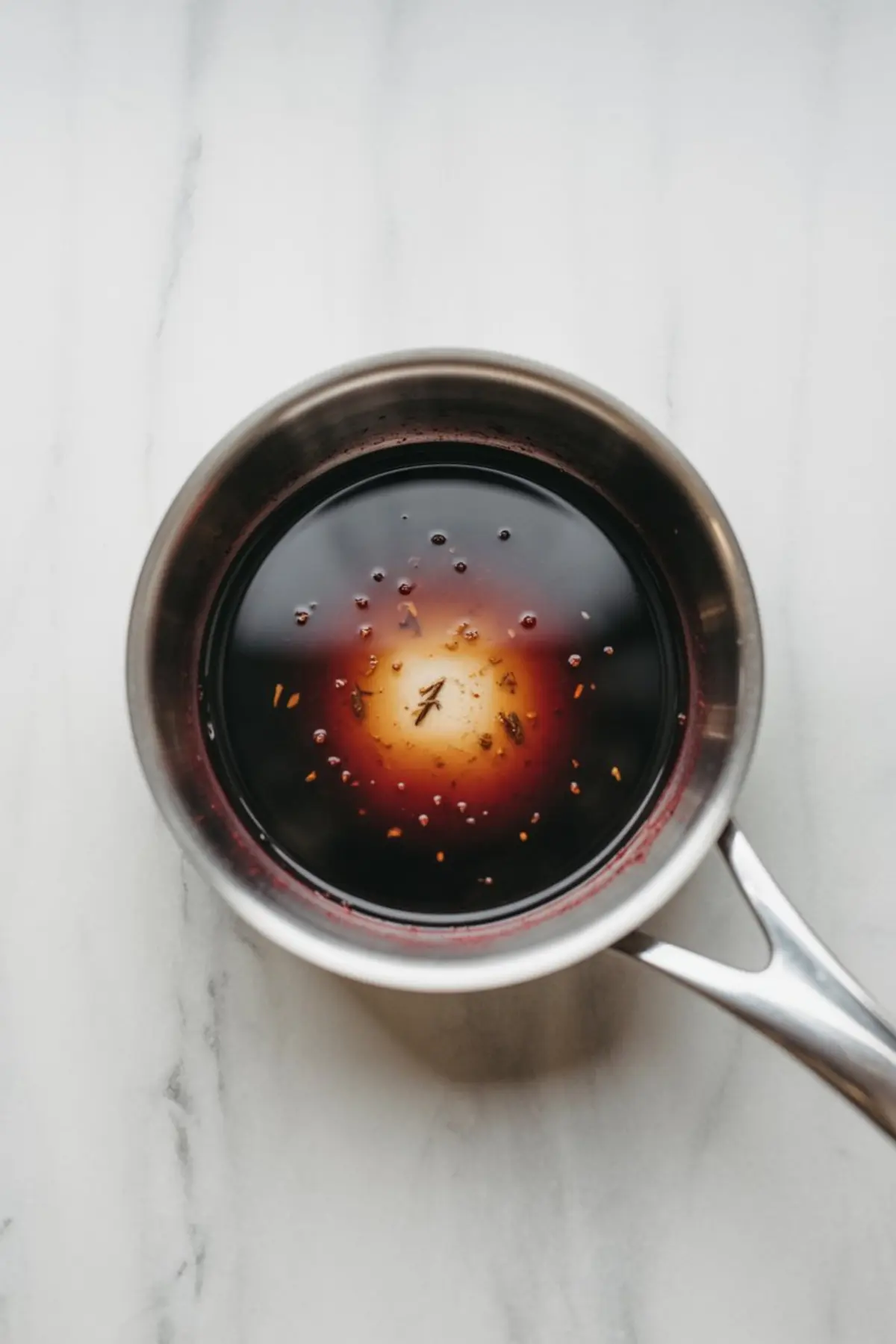
Once the pears are set aside, return the poaching liquid to a simmer. Let it reduce by half. The syrup should coat a spoon and run slow, like honey in autumn.
This step brings everything together. It concentrates the spices and pulls the sweetness forward without overpowering the fruit.
For a smoother result, strain out the whole spices before reducing. I often leave the orange peel in. It adds brightness.
Serving and Storage Tips for Poached Pears with Wine
Serve the pears upright in shallow bowls, drizzled with warm syrup. Add a spoonful of vanilla whipped cream or Greek yogurt if serving cold. If you’re serving warm, soft vanilla ice cream melts gently into the syrup.
These keep well. You can store them in the wine syrup in the refrigerator for up to 3 days. I usually let them come to room temperature before serving, but they also reheat gently on the stovetop.
For a smooth fall transition, pair this with something from my Pear Butter Recipe. A slice of toasted bread with pear butter and one chilled poached pear makes a quiet but elegant brunch plate.
Save This Recipe and Share Your Version Below
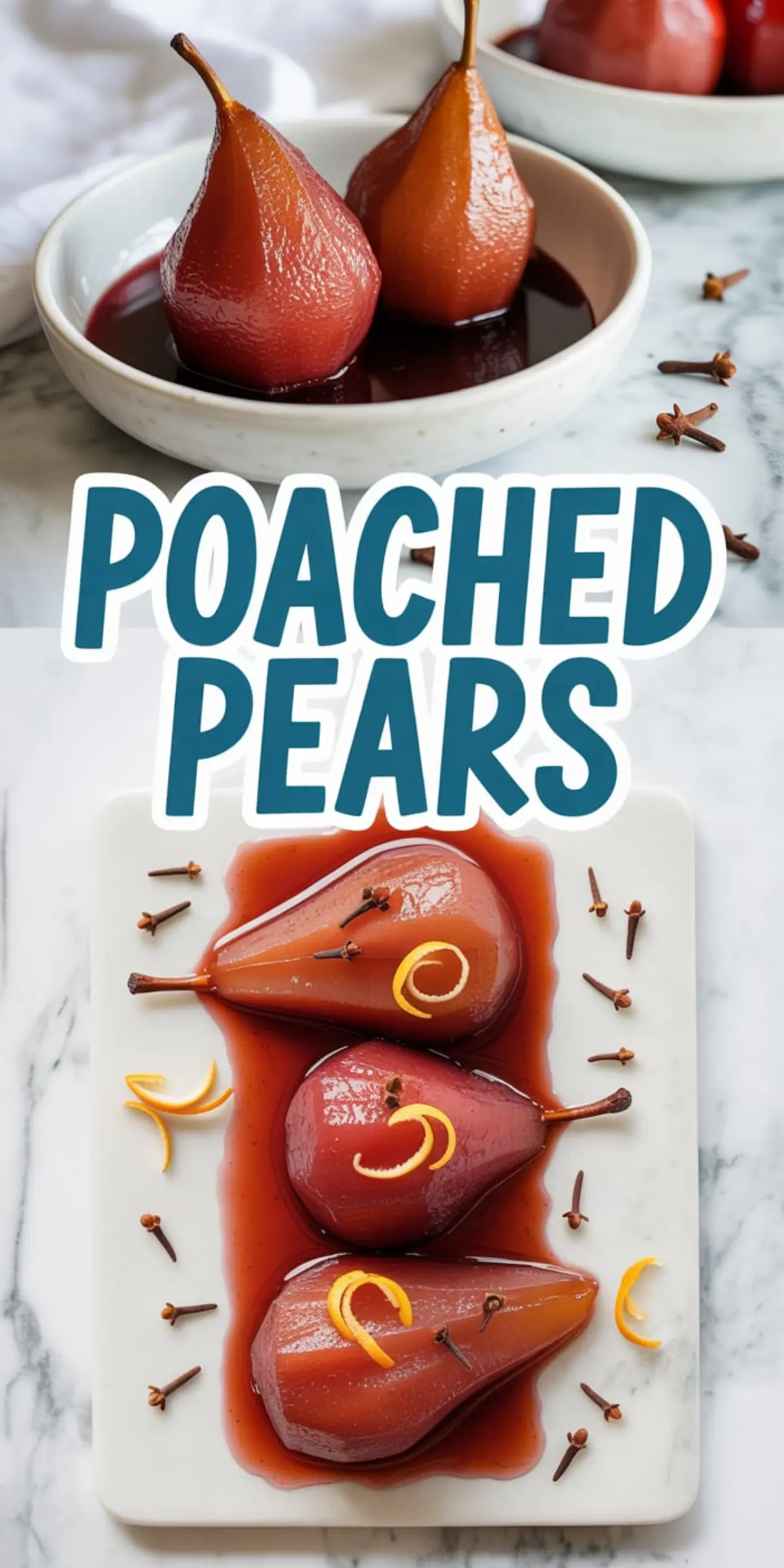
Pin this recipe to your favorite Pear Dessert Recipes board to revisit anytime fall cravings come around. It also makes a lovely idea if you’re searching for Canning Pears Recipes or want to impress guests without baking.
If you try these poached pears, I’d love to hear how they turned out. Share in the comments—what wine did you use? Did you try a twist with cardamom or lemon zest? Let’s build a table of fall desserts together.
Red Wine Poached Pears
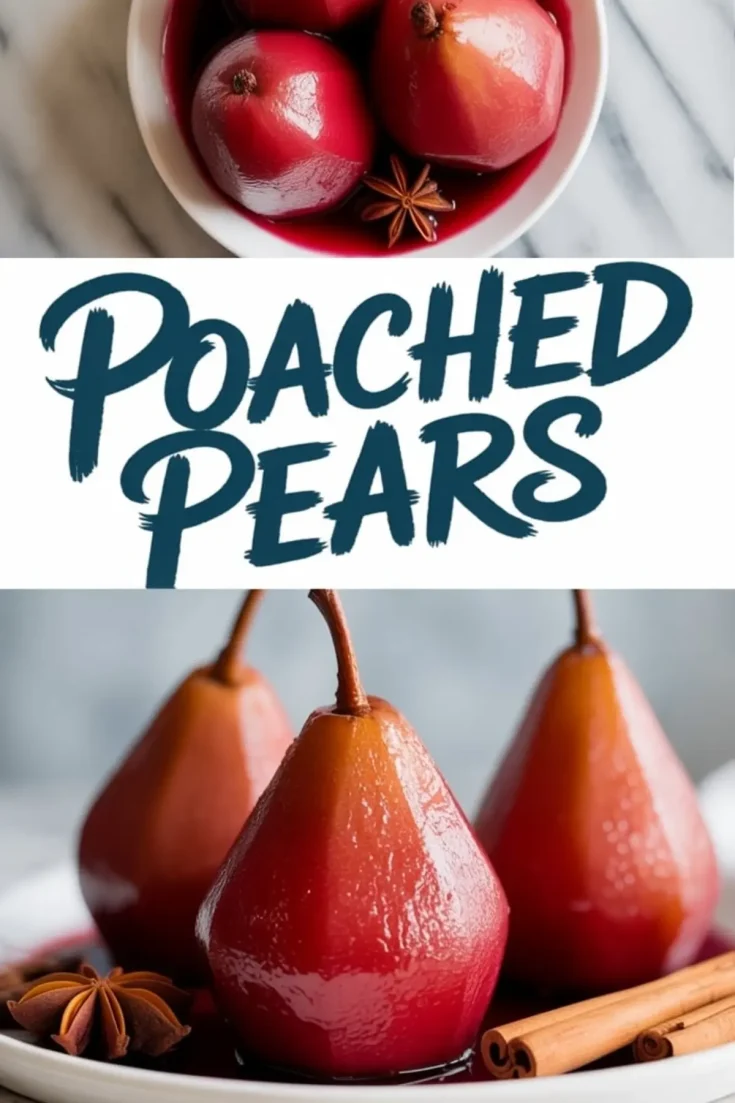
Red wine poached pears are a simple yet visually striking dessert made by gently simmering peeled pears in a spiced red wine mixture until they become tender and richly colored. The pears absorb warm flavors from cinnamon, star anise, cloves, and orange peel while cooking in the wine. Once poached, the remaining liquid is reduced into a syrup for serving. This dish can be served warm or chilled and pairs well with whipped cream, ice cream, or on its own. The recipe highlights the balance of sweetness, spice, and fruitiness with minimal effort and maximum visual appeal.
Ingredients
- 4 firm pears (Bosc or Anjou work best)
- 1 bottle (750ml) dry red wine (such as Merlot, Shiraz, or Cabernet Sauvignon)
- 3/4 cup granulated sugar
- 1 cinnamon stick
- 2 whole star anise
- 4 whole cloves
- 1 strip of orange peel (use a vegetable peeler)
- 1/2 vanilla bean, split (or 1 teaspoon pure vanilla extract)
- Optional: zest of 1 lemon or orange for garnish
Instructions
- PEEL THE PEARS: Carefully peel the pears, keeping the stems attached for presentation. Optionally, use a melon baller to core them from the bottom without cutting through the top.
- PREPARE THE POACHING LIQUID: In a large saucepan, combine the red wine, sugar, cinnamon stick, star anise, cloves, orange peel, and vanilla. Stir gently and bring to a simmer over medium heat.
- ADD THE PEARS: Gently place the peeled pears upright in the simmering poaching liquid. Ensure they are mostly submerged. If necessary, turn them occasionally or tilt the pan slightly during cooking.
- SIMMER GENTLY: Lower the heat and simmer the pears for 20 to 30 minutes, depending on size and ripeness. They should be tender when pierced with a knife but still hold their shape.
- COOL IN THE LIQUID: Turn off the heat and allow the pears to cool in the poaching liquid for at least 30 minutes. This step helps deepen both color and flavor.
- REDUCE THE SAUCE: Once the pears have cooled, remove them carefully and set them aside. Return the liquid to a simmer and cook until it reduces by half into a syrupy consistency, about 10 to 15 minutes.
- SERVE: Place each pear on a serving plate or in a shallow bowl. Spoon the warm red wine syrup over the top and garnish with citrus zest or reserved spices if desired.
Notes
The poached pears can be made a day ahead and stored in the syrup in the refrigerator. Reheat gently or serve chilled. You can substitute the spices based on preference—cardamom pods or allspice can be used for variation.
Nutrition Information
Yield
4Serving Size
1Amount Per Serving Calories 304Total Fat 0gSaturated Fat 0gTrans Fat 0gUnsaturated Fat 0gCholesterol 0mgSodium 5mgCarbohydrates 73gFiber 7gSugar 59gProtein 1g
