
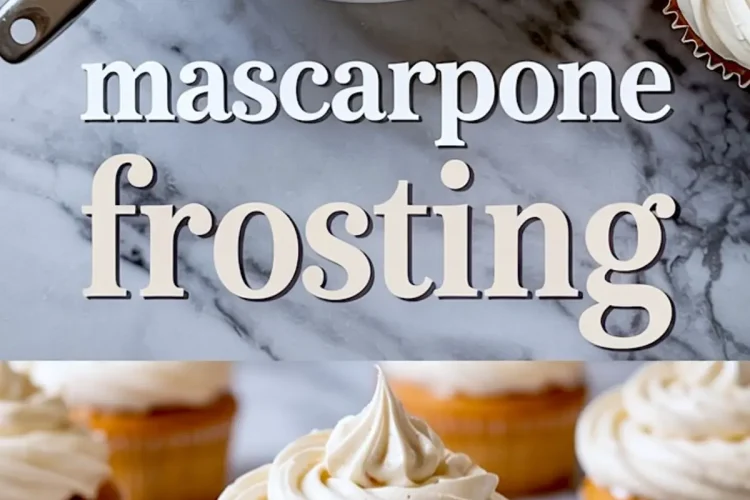
Mascarpone frosting sits in that rare sweet spot between rich and airy.
It gives you structure without weight, sweetness without overload, and a flavor that whispers cream instead of shouting sugar. This recipe creates a whipped mascarpone cream that’s pipeable, smooth, and versatile enough to frost cupcakes, layer cakes, or fill soft cookies and tarts.
You’ll learn how to make a mascarpone buttercream frosting that’s light, yet holds firm peaks. This version avoids butter altogether and relies instead on the clean richness of mascarpone cheese and the volume of cold heavy cream. No cook time. No complicated technique. And most importantly, no oversweet, heavy mouthfeel.
Let’s get into why this is my default when I want something that tastes fresh, yet pipes like a dream.
Following a special diet?
Every recipe on this site can be converted to gluten-free, vegan, dairy-free, keto, nut-free or egg-free with adjusted ratios so nothing falls flat.
Try the Recipe Converter →Why Mascarpone? Understanding the Backbone of This Frosting
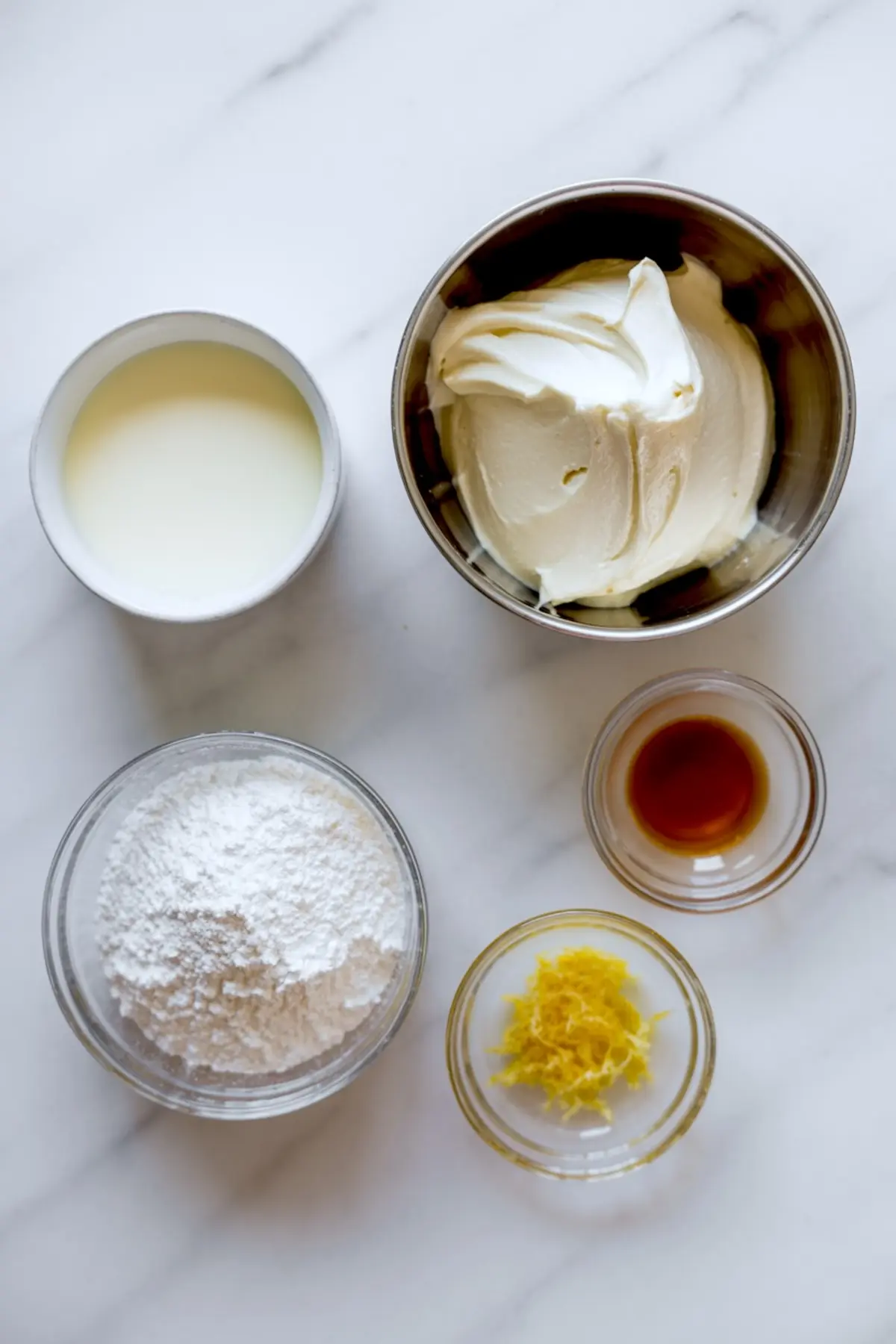
Mascarpone cheese gives this frosting its character.
It’s not tangy like cream cheese. It’s mellow, buttery, and full-bodied without feeling heavy. I use it when I want a frosting that can sit proudly on a cake without overpowering the flavor underneath. It works beautifully on vanilla sponges, berry cakes, and even lemon tarts. For strawberry shortcakes or genoise layers, I always come back to this.
This whipped mascarpone cream gives a silky, clean finish. Not cloying. Not flat.
You’ll want to use mascarpone cheese straight from the fridge. Cold mascarpone helps the mixture stay stable when whipped with cream. Warm mascarpone can break or turn grainy. That small detail makes a big difference.
If you’re curious about other soft frostings for delicate cakes, I’ve also shared a whipped cream frosting that’s equally light but even airier in finish.
The Cream is Not Just a Filler. It’s the Volume and the Lift.
Heavy cream builds the body of this frosting.
It whips up quickly and adds volume without extra weight. I always use full-fat cream labeled 36% or higher. Lighter creams don’t hold shape as well and can weep in warm kitchens.
In my notes, I’ve compared whipping the cream alone first vs. beating everything at once. Whipping the cream separately gives you more control. You’ll see those soft peaks form, and once they do, you’re halfway done. Combining everything at once might save a bowl, but it’s harder to judge when to stop.
If you want a more butter-forward flavor and firmer structure, you could try my vanilla buttercream frosting. But for something more delicate, this mascarpone version wins every time.
Powdered Sugar Adds Sweetness and Texture, Not Just Taste
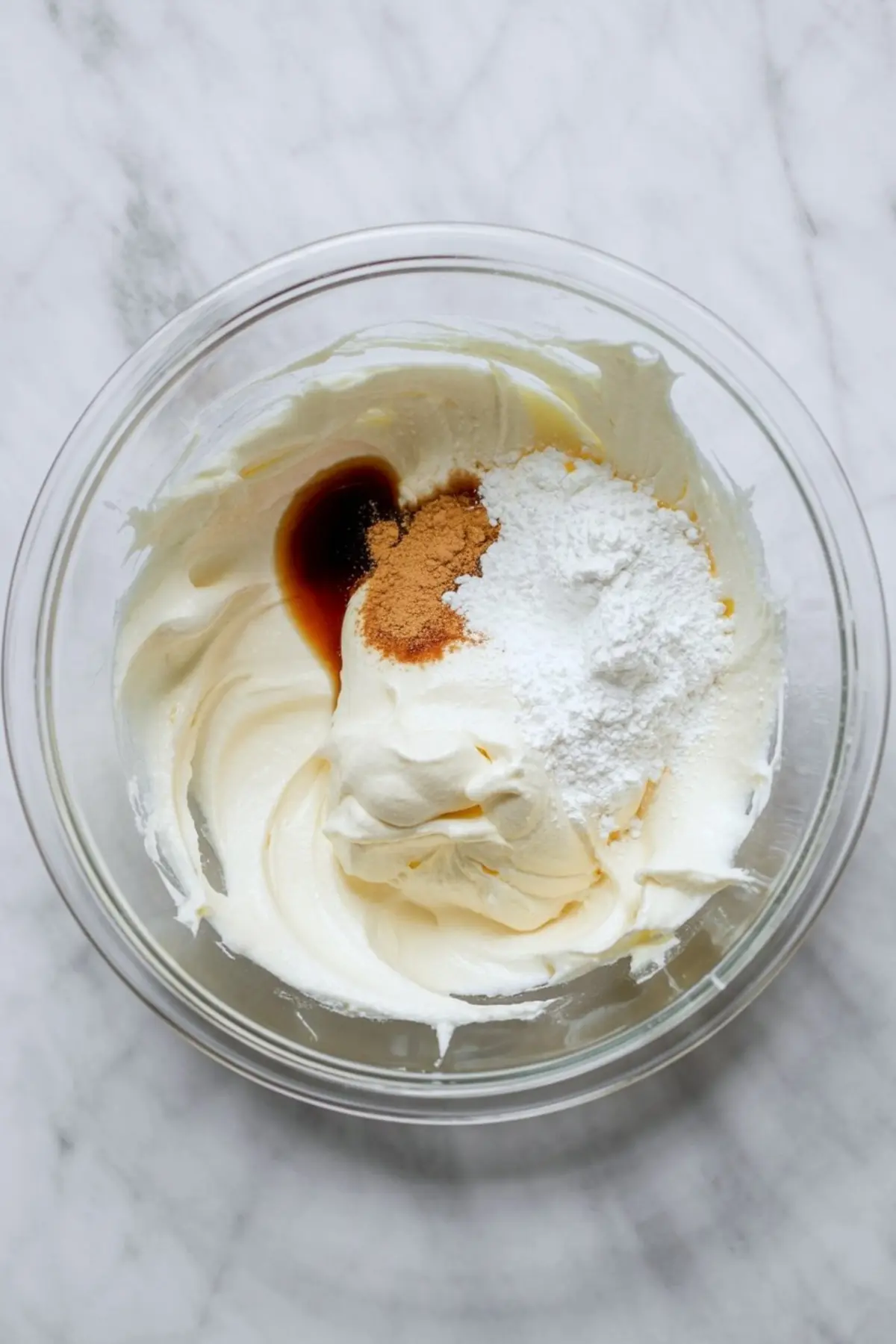
Powdered sugar gives structure to the whipped mascarpone.
Half a cup is enough. More than that, and you start losing the clean flavor. I always sift it before adding. That quick step avoids lumps and keeps the texture silky. Especially if I’m planning to use a piping tip, I don’t skip this.
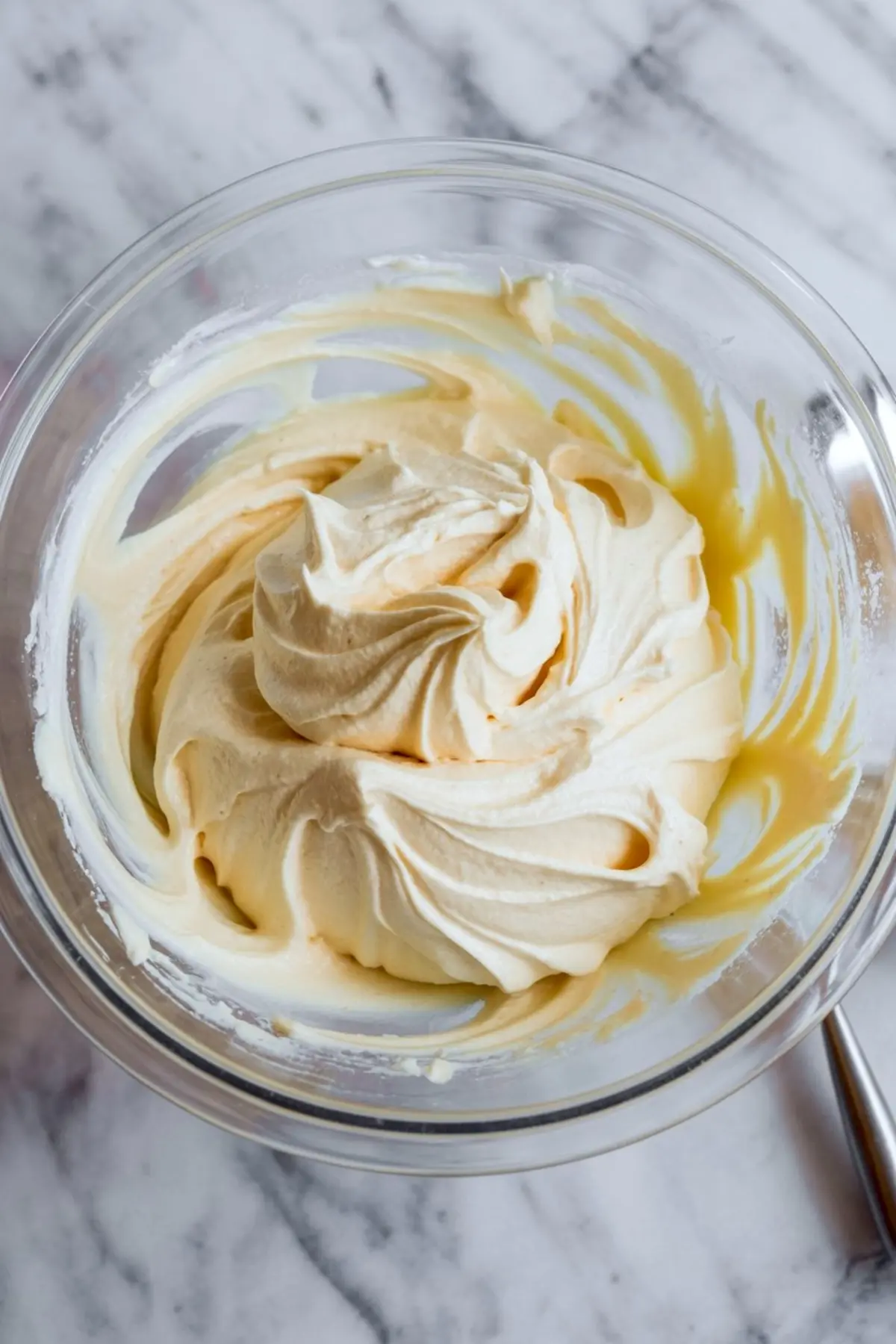
Unlike buttercreams that rely on sugar for stability, this frosting depends more on the cream and mascarpone. The sugar sweetens without turning it stiff.
If you’re curious about old-fashioned frostings that rely on cooked sugar, take a look at my 7 minute frosting. That one’s fluffier but needs a bit more effort.
Vanilla or Citrus? A Small Twist That Changes Everything
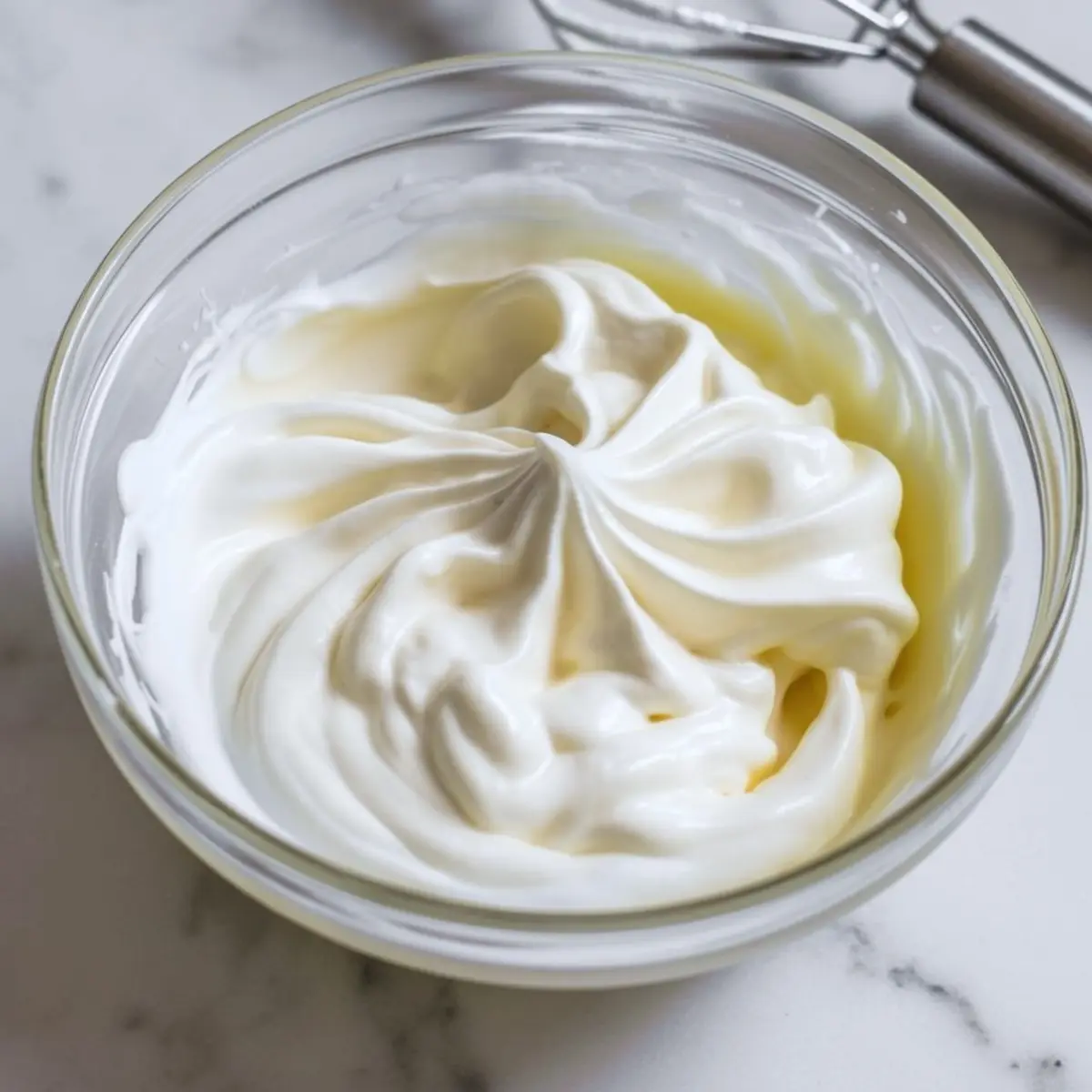
Vanilla extract keeps the flavor classic.
I use pure extract, not imitation. The warmth of vanilla rounds out the richness of mascarpone. But if I’m making this to go on top of a lemon cake or a raspberry tart, I reach for citrus zest instead.
A little lemon or orange zest changes the tone completely. It adds brightness without sourness. Just a microplane and a fresh fruit—that’s all it takes.
This frosting, with lemon zest, works wonders piped on pistachio cupcakes or strawberry cake. With vanilla, it feels more classic, more neutral. It’s a small change, but the flavor shift is noticeable.
How to Serve It: Piped Peaks or Swirled Clouds
This frosting holds shape beautifully.
You can spread it casually with an offset spatula, or pipe it into neat swirls with a star tip. It’s soft enough to feel light but firm enough to sit on cupcakes without drooping.
I often use it for naked cakes where the frosting needs to sit between layers without slipping. It also holds up well on bundt cakes and tea cakes that need a pretty finish but not too much sweetness.
If you need a frosting with a stronger maple tone for fall bakes, try my maple frosting. That one pairs better with spice cakes and pecan layers.
Storing Tips and Freshness Notes
Mascarpone frosting needs the fridge.
You can make it a day ahead, cover it tightly, and refrigerate. Before using, give it a gentle re-whip by hand or with a mixer on low. It comes back to life easily if you’ve kept it cold.
I wouldn’t freeze it. The texture changes and the cream can split. But for short-term prep, it’s reliable. I’ve used it for cakes that needed to be frosted in the morning and served in the evening. No issues with slippage or softening.
One Comparison That Will Help You Choose the Right Frosting
If you’re deciding between mascarpone frosting and cream cheese frosting, here’s what I’ve found.
Cream cheese gives a sharper bite. It has a tang and a dense structure. Great for red velvet and carrot cake. But mascarpone gives a softer finish. It’s smoother, more neutral, and less sweet overall. I prefer mascarpone for fruit-forward cakes or when I want the frosting to complement rather than dominate.
If I had to choose one for a summer berry cake, I’d go mascarpone. For a spice cake or something with molasses, I’d lean toward cream cheese.
Save This Mascarpone Frosting Recipe and Share Your Bake
This mascarpone frosting recipe gives you something smooth, light, and elegant.
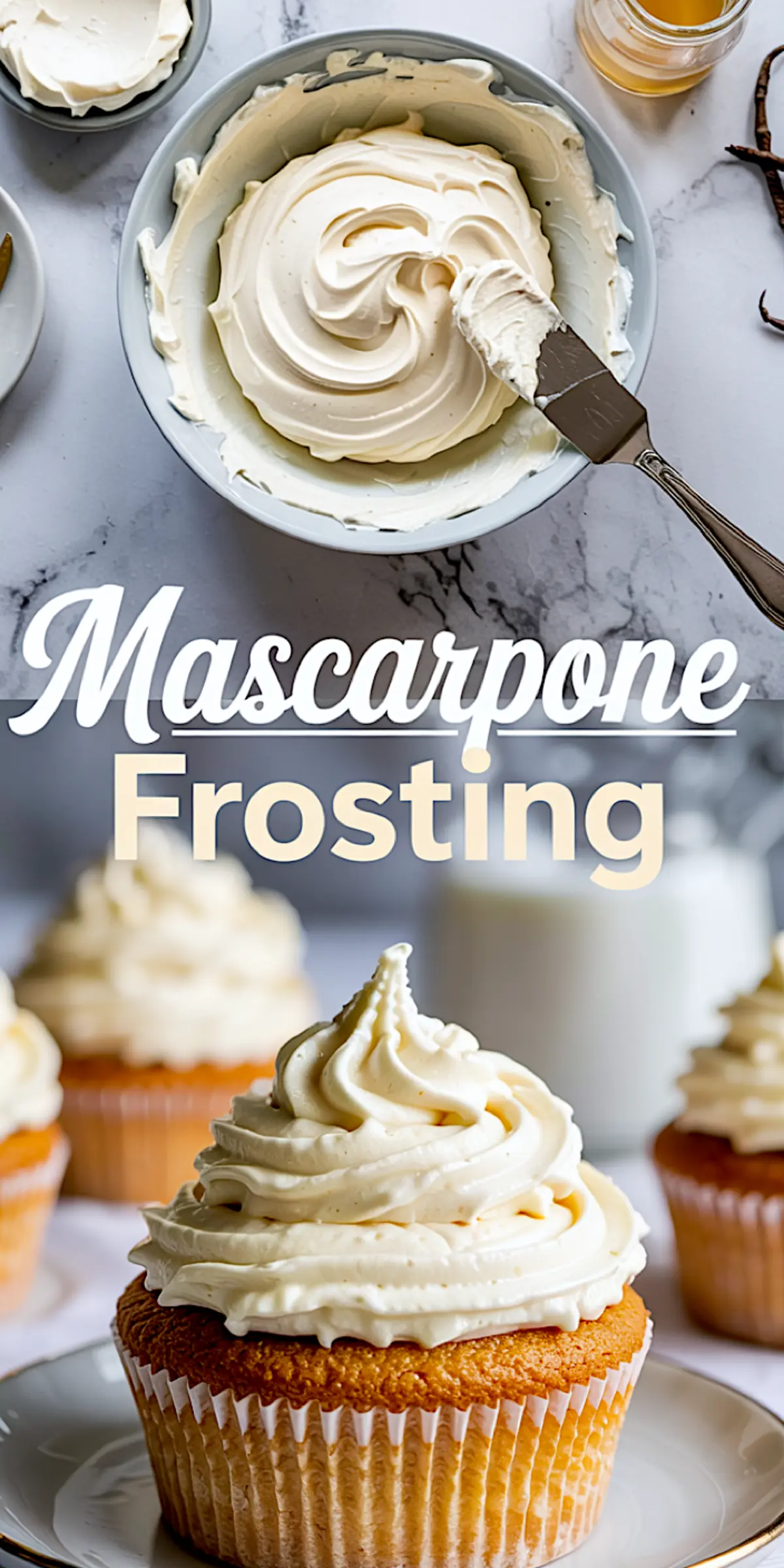
It’s stable, pipes beautifully, and has a fresh cream flavor that balances well with citrus, berries, or vanilla cakes. You’ll reach for this when you want something different from standard buttercream. And once you try it, I suspect you’ll keep it in your regular rotation.
Save this to your Cake Recipes or Frosting Ideas board on Pinterest so you can come back when your next bake calls for a lighter touch.
And if you try it, I’d love to hear from you. Share how it turned out in the comments—or ask me anything if you run into a question. I’m happy to help.
Mascarpone Frosting Recipe
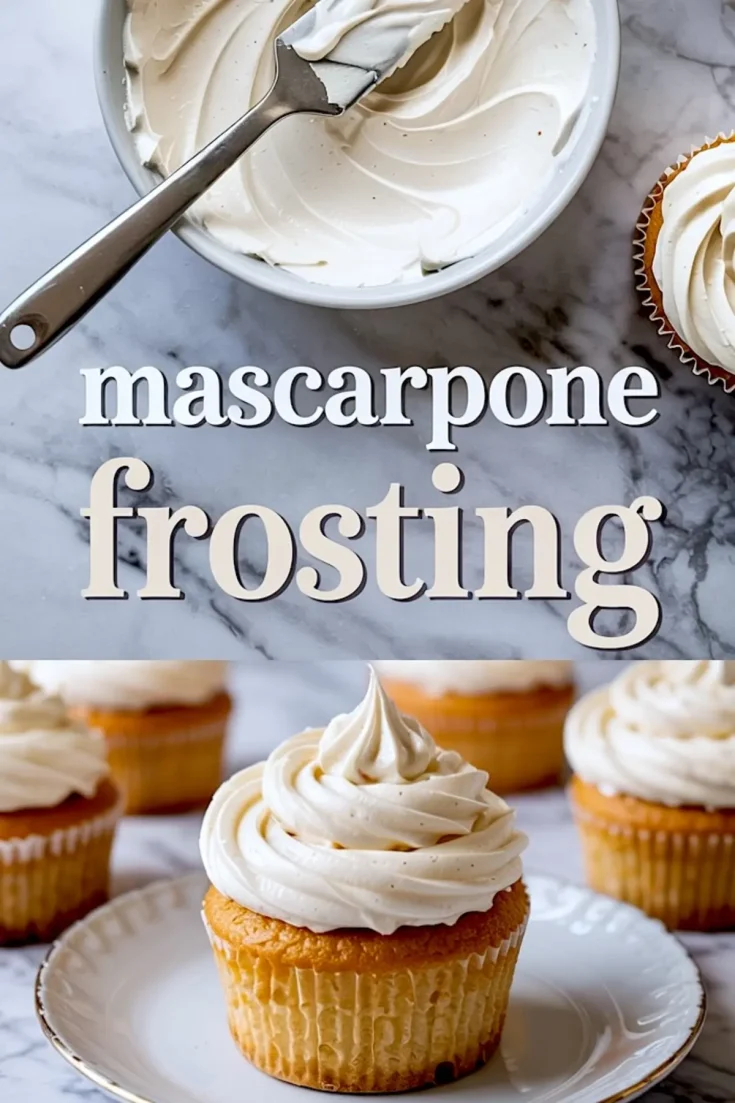
This mascarpone frosting recipe is a rich yet airy alternative to traditional buttercream—perfect for topping cakes, cupcakes, and layered desserts. Made with mascarpone cream, a touch of vanilla, and whipped to smooth perfection, it’s ideal for when you want something less sweet but still indulgent. Whether you’re frosting a sponge cake or filling a tart, this mascarpone icing adds elegance and flavor. Try this whipped mascarpone cream as a stable, pipeable option for decorating, or use it as a filling for pastries. A must-save for anyone who loves mascarpone recipes and easy frosting recipes with a gourmet twist.
Ingredients
- 1 cup (240ml) heavy cream, cold
- 8 oz (225g) mascarpone cheese, cold
- 1/2 cup (60g) powdered sugar, sifted
- 1 tsp pure vanilla extract
- Optional: zest of 1 lemon or orange
Instructions
- CHILL THE EQUIPMENT: Place your mixing bowl and whisk attachment (or beaters) in the refrigerator or freezer for 10 to 15 minutes to help maintain stability while whipping.
- WHIP THE CREAM: In the chilled bowl, pour in the cold heavy cream. Beat on medium-high speed until soft peaks form, which should take 2 to 3 minutes. Stop once the cream forms gentle waves and holds its shape lightly.
- ADD MASCARPONE AND FLAVORINGS: Add the cold mascarpone cheese, sifted powdered sugar, and vanilla extract to the whipped cream. Begin mixing on low speed to combine, then increase to medium-high speed.
- BEAT TO FIRM PEAKS: Continue beating just until the mixture thickens and holds firm peaks, about 1 to 2 minutes. Stop immediately once the frosting is thick and spreadable to avoid curdling.
- USE OR STORE: Use the frosting immediately to pipe or spread. If not using right away, cover and refrigerate for up to 1 day. Re-whip gently before using if needed.
Notes
Use only cold mascarpone and cream to ensure the frosting remains thick and stable. Avoid overbeating once the mascarpone is added to prevent separation. The optional citrus zest can add a bright flavor that pairs well with vanilla or fruit-based cakes.
Nutrition Information
Yield
1Serving Size
1Amount Per Serving Calories 1877Total Fat 166gSaturated Fat 106gTrans Fat 6gUnsaturated Fat 49gCholesterol 517mgSodium 130mgCarbohydrates 94gFiber 5gSugar 82gProtein 15g
