
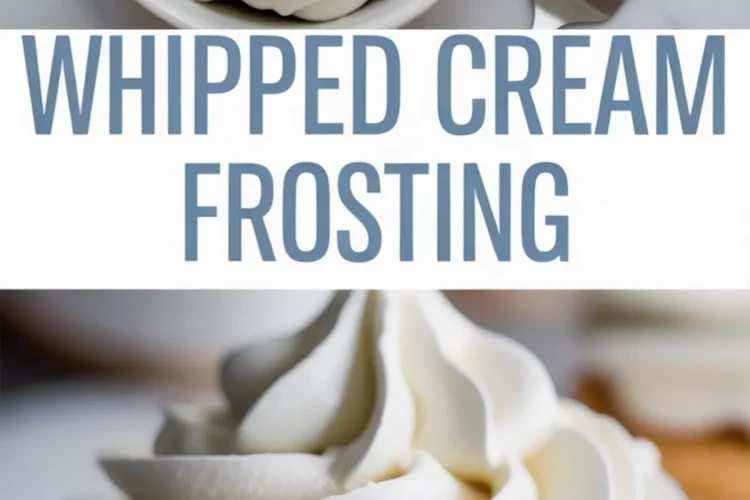
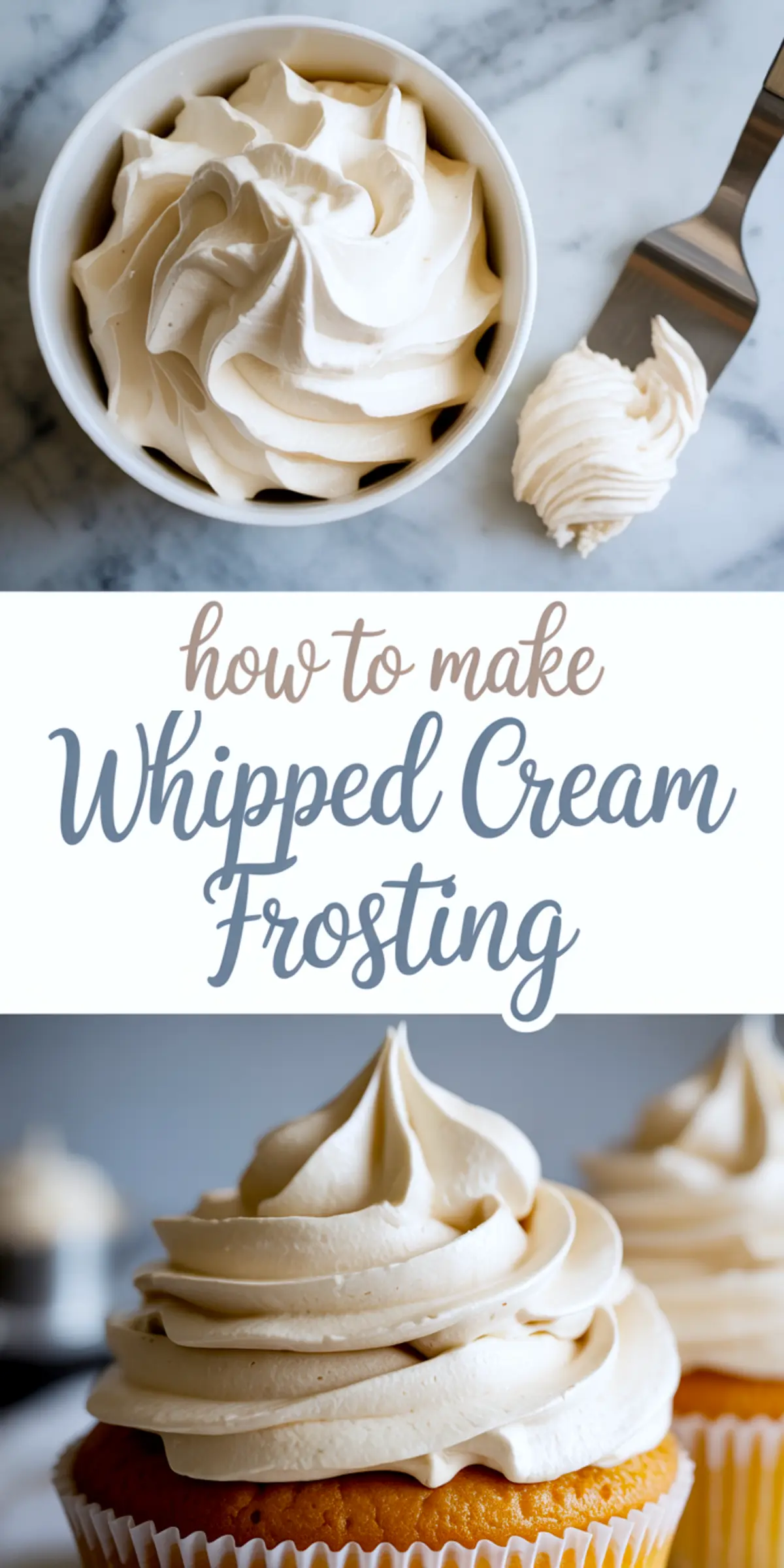
That’s the first thing I tell anyone asking how to keep whipped cream frosting from sliding off a cake on a warm day. You’ll learn how to make stabilized whipped cream frosting in this recipe, but more importantly, you’ll learn how to control it make it smooth enough to spread and strong enough to pipe.
This method uses just a few ingredients and walks you through both options: one with instant pudding mix and another with unflavored gelatin. I’ve used both in my bakery depending on the dessert, the season, and the shelf life needed.
They each serve a purpose, and once you try them, you’ll understand why this is the frosting I come back to for summer cakes, cupcake frosting, and whipped cream desserts that need to last beyond the hour.
Following a special diet?
Every recipe on this site can be converted to gluten-free, vegan, dairy-free, keto, nut-free or egg-free with adjusted ratios so nothing falls flat.
Try the Recipe Converter →Why This Frosting Belongs in Your Recipe Rotation
This isn’t just whipped cream on top of a dessert. It’s whipped frosting you can pipe, swirl, or dollop in thick ribbons. The difference comes down to stabilizing. Without a stabilizer, your frosting risks weeping, softening, or melting.
Recipes with whipping cream often stop at sugar and vanilla, which works fine if you’re serving immediately. But if you’re making cupcakes the night before or assembling a layered cake, you need something extra to hold structure. That’s where instant pudding or gelatin steps in.
If you’re working with whipped cream desserts like trifles or fruit-topped pies, this version makes sure your cream doesn’t sink by morning. And for layer cakes, it’s a dream soft and light, yet firm enough to stack.
How to Prepare and Chill Equipment for Faster, Firmer Whip
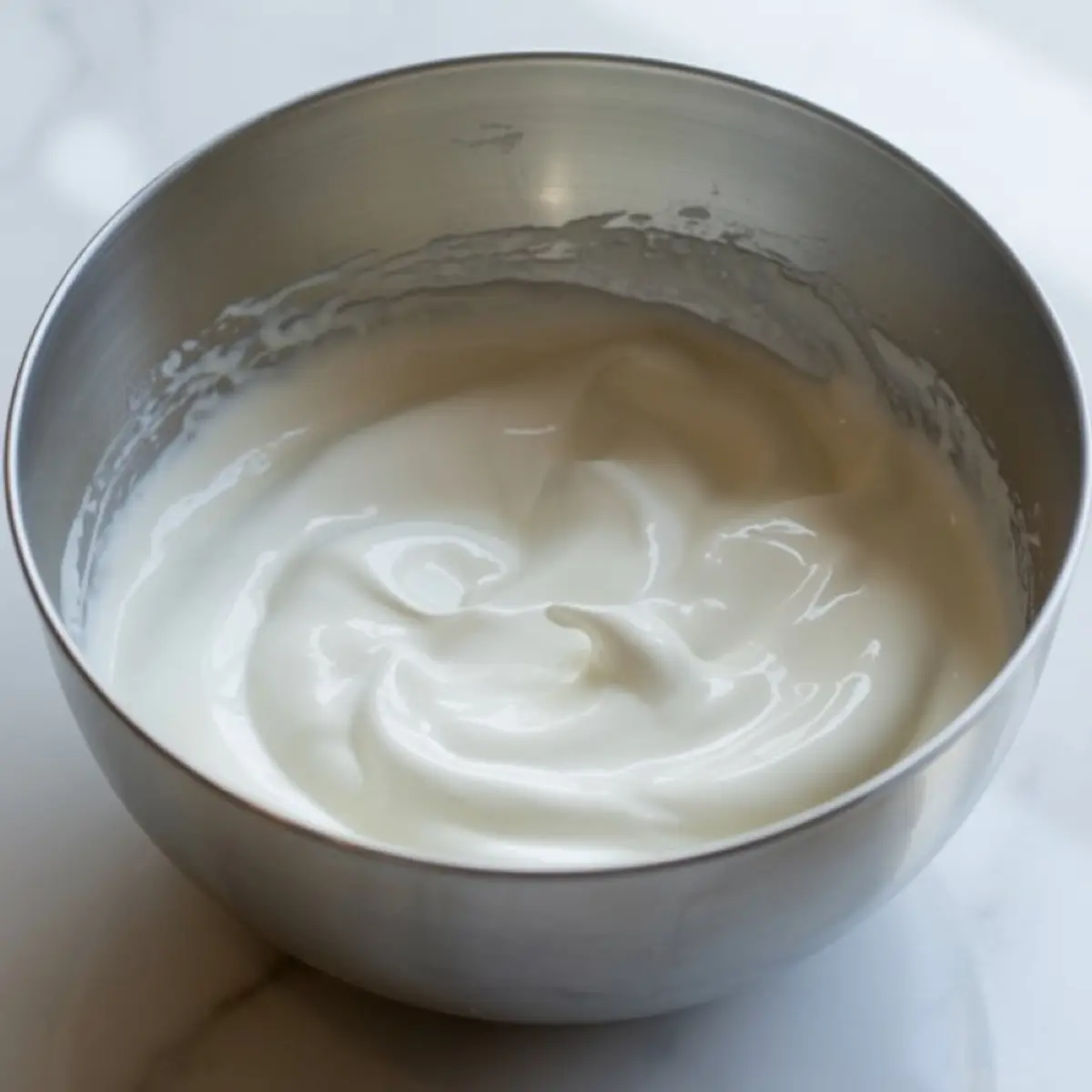
A cold bowl makes all the difference.
Before whipping, I always place my mixing bowl and beaters in the freezer for 10 to 15 minutes. Cold equipment encourages the cream to aerate quickly, which reduces the chance of overwhipping.
It’s a small detail, but it consistently improves the texture and speed of whipping.
If you’re planning to make other frostings during prep, this is a good moment to check out my full frosting recipe collection while your bowl chills.
Instant Pudding Mix vs. Gelatin: Which Stabilizer Should You Use?
I’ve tried both methods in commercial and home kitchens.
Here’s how I decide:
If I’m frosting cupcakes and want subtle vanilla flavor with no extra steps, I go with instant vanilla pudding. It blends right in, adds a touch of sweetness, and requires no blooming or heating.
But if I need maximum stability for warm days or long transportation, I use unflavored gelatin. It holds up better under heat, stays firmer longer, and keeps its shape even under fruit or fondant.
In my notes, I’ve found that gelatin gives a slightly smoother finish, while pudding makes the frosting taste more nostalgic—like childhood desserts.
How to Whip the Cream and Add Flavors Without Overbeating
Once the bowl is chilled, pour in the cold heavy whipping cream.
Always check the label to make sure it’s at least 36% fat. That fat content matters. Lower-fat creams don’t whip the same way and collapse more easily.
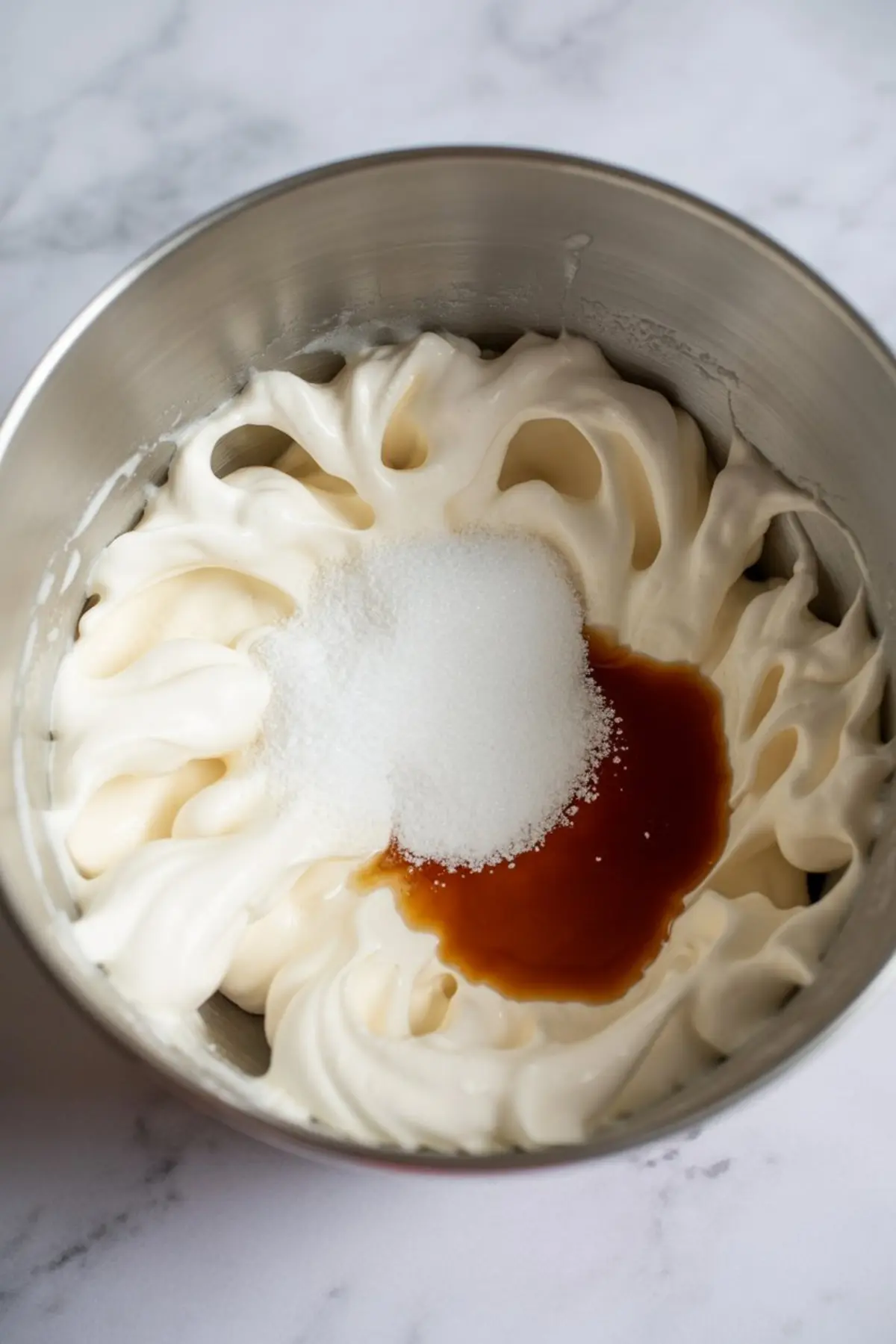
Start at medium speed. You’re watching for soft peaks—not stiff, not runny, just the point where the beaters begin to leave trails. That’s when I pause and add sifted powdered sugar and pure vanilla extract.
A quick note: if you haven’t tried my vanilla buttercream frosting, it makes a great contrast if you’re layering cakes with multiple flavors.
Once your sugar and vanilla are in, continue whipping slowly. Then, if you’re using gelatin, drizzle in the cooled mixture while whipping. If you’re using pudding, just sprinkle it in evenly and keep going.
Watch closely. Once the frosting holds stiff peaks that don’t fall over, stop immediately. Overwhipping makes the texture grainy and ruins the lightness.
Serving Tips and How to Store Stabilized Whipped Frosting
Use this frosting immediately for piping or smoothing onto cakes. The structure is strongest right after whipping, which makes it ideal for cupcake swirls or layered fillings.
If you need to store it, place the frosting in a covered container in the refrigerator for up to 24 hours. Before reusing, whip it briefly by hand or with a mixer on low to restore volume.
This frosting pairs beautifully with fruit-forward desserts and lighter cakes. For a richer, contrasting option, my peanut butter frosting creates a bold balance.
You can also experiment with flavor variations. A little almond extract, a splash of orange zest, or a spoonful of maple cream cheese frosting folded in can completely change the mood.
How I Use It Across Different Desserts
In my bakery notebook, I keep notes on which frosting I use per dessert.
For sponge cakes with fruit, I use stabilized whipped cream with gelatin.
For chocolate cupcakes, I often mix in a tablespoon of cocoa powder and use the pudding version.
For pies, I serve this as a topping just before slicing.
And for those who ask if it’s sweet enough—the answer is yes. But it won’t overpower anything. This is meant to complement, not dominate.
If you’re working on multiple layers or more intricate decorations, you might want to explore Cool Whip cream cheese frosting as an alternative. It’s heavier, but gives another stable option with a richer profile.
Pin and Share Your Creations
If you’ve made this stabilized whipped cream frosting recipe, I’d love to hear how you used it.
Did you pipe tall swirls on cupcakes? Frost a strawberry shortcake? Layer it between lemon chiffon cake?
Let me know in the comments. Or ask any questions if you’re unsure about cream percentages, equipment, or texture.
Save this recipe to your frosting or dessert board on Pinterest so you always have a reliable go-to for whipped cream frosting that holds.
And next time you’re frosting a cake the night before, trust this method. It won’t let you down.
Whipped Cream Frosting Recipe
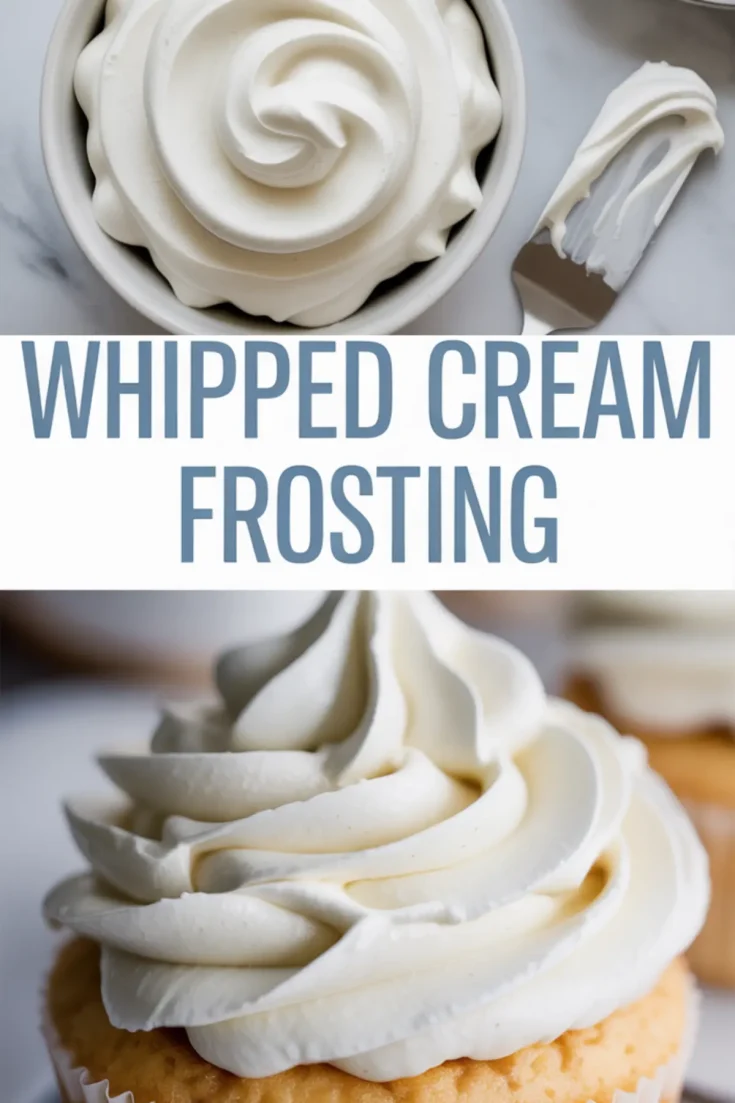
Whipped cream frosting is light, fluffy, and perfect for topping cakes, cupcakes, and pies. I love making it with fresh cream, sugar, and vanilla for a simple whipped cream frosting recipe that tastes fresh and not too sweet. Some bakers call it whipped frosting, others stabilized whipped cream frosting when it’s made to hold shape longer. I’ve tested recipes with whipping cream for cupcake frosting, as well as stabilized whipped cream desserts for layered cakes, and both work beautifully. Among homemade frosting options, whipped cream frosting stands out for being versatile, quick to prepare, and always a crowd-pleaser.
Ingredients
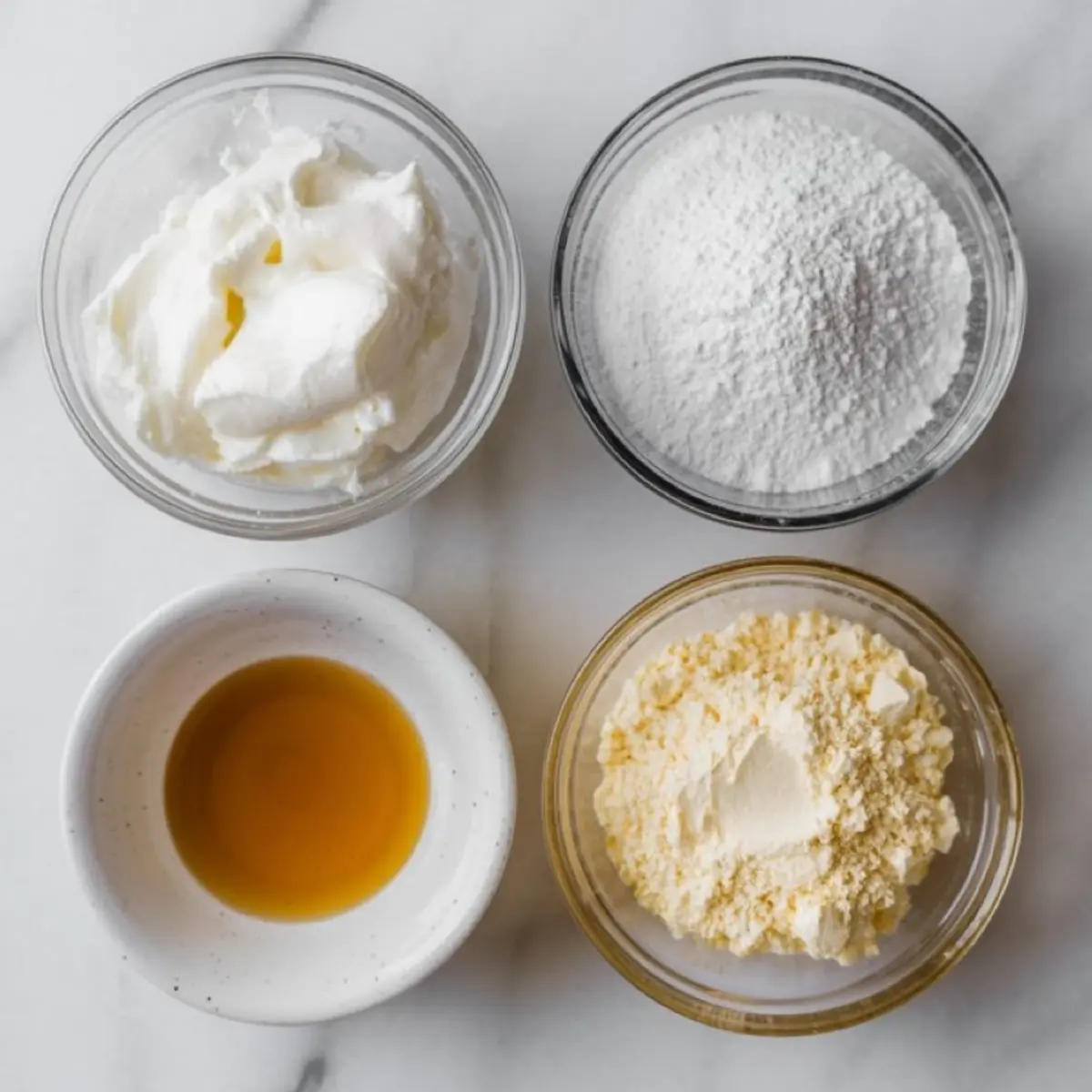
- 2 cups (480ml) heavy whipping cream, cold
- 1/2 cup (60g) powdered sugar, sifted
- 1 tsp pure vanilla extract
- 2 tbsp instant vanilla pudding mix OR 2 tsp unflavored gelatin
Instructions
- CHILL EQUIPMENT: Place the mixing bowl and beaters in the freezer for 10 to 15 minutes to ensure everything is cold before whipping. Cold equipment helps the cream whip quickly and hold its shape better.
- BLOOM GELATIN (IF USING): If using unflavored gelatin, sprinkle 2 teaspoons over 2 tablespoons of cold water in a small bowl. Let it sit for 5 minutes to bloom. Microwave for 5 to 10 seconds until dissolved, then let cool slightly before using. Skip this step if using instant pudding mix.
- BEGIN WHIPPING: Pour the cold heavy cream into the chilled mixing bowl. Beat on medium speed until the cream begins to thicken and soft peaks just start to form.
- ADD SWEETENER AND FLAVOR: Add the sifted powdered sugar and vanilla extract. Continue whipping on medium-high speed until soft peaks hold their shape but are still smooth.
- ADD STABILIZER: Slowly drizzle in the cooled gelatin mixture or sprinkle in the pudding mix while continuing to whip. Beat just until stiff peaks form, stopping immediately when the frosting holds a firm peak that does not fall over. Avoid over-whipping, which can cause the texture to become grainy.
Notes
For the most stable results in warm environments, unflavored gelatin provides better hold than pudding mix.
Use immediately for best piping consistency. Store leftovers in the refrigerator for up to 24 hours. Re-whip lightly if needed.
Make sure your cream is labeled “heavy whipping cream” or contains at least 36% fat for the best results.

Can you use this frosting on cookie cakes?
You can use it on a cookie cake. The stabilized version holds its shape well, especially if you use the gelatin. I’d add it after the cookie cake has cooled fully, since the warmth can soften the whipped texture. It gives a light, creamy finish that pairs nicely with a chewy cookie base 😊.
Can you use this on a layered cake?
You can, Rachel, but with a few things to keep in mind. This whipped cream frosting is light and airy, which works beautifully for simple layer cakes, especially if they’re being served the same day. That said, it’s not as sturdy as buttercream, so it won’t hold up as well for tall or heavily decorated cakes, especially in warm conditions.
If you’re using it between layers, I’d recommend keeping the layers fairly thin and chilling the cake well before serving. For extra stability, you can also add a bit of mascarpone or cream cheese to the whipped cream—it helps it hold its shape without changing the flavor too much. I’ve done that for summer cakes when I needed it to stay firm a little longer. Let me know what kind of cake you’re making, I’d be happy to help you tweak it.
Why do you have to use it within 24 hrs? Does it separate and fall if not? Reason I ask is I need to practice the piping a couple days ahead of time as I’m sure it’s going to take me a bit of time to do the cake details
Yes, Carla the whipped cream frosting can start to lose stability after 24 hours, especially if it sits at room temp or isn’t stabilized well. It doesn’t exactly fall apart, but it can get looser or weep a little. If you’re piping details in advance, you might want to add a bit of gelatin (there’s a note on that in the post) to help it hold longer.
Will it keep its stability if kept in the fridge for a little over 24 hours? I plan on making a small 2 layer 6inch smash cake tomorrow for a party Sunday and the mom wants this kind of frosting
Hi, Shannia! Yes, it will hold up well in the fridge for a little over 24 hours as long as it’s made as written and kept chilled the entire time. I’ve made cakes the day before with this frosting and they stayed stable when refrigerated properly.
For a 6-inch two-layer smash cake, it’s a great choice. Just whip to stiff peaks and store it in the coldest part of the fridge. Add delicate decorations the day of the party if possible 😊