
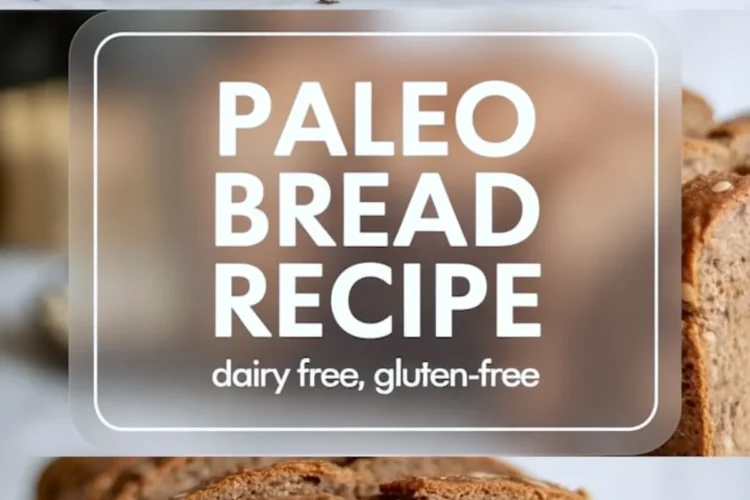
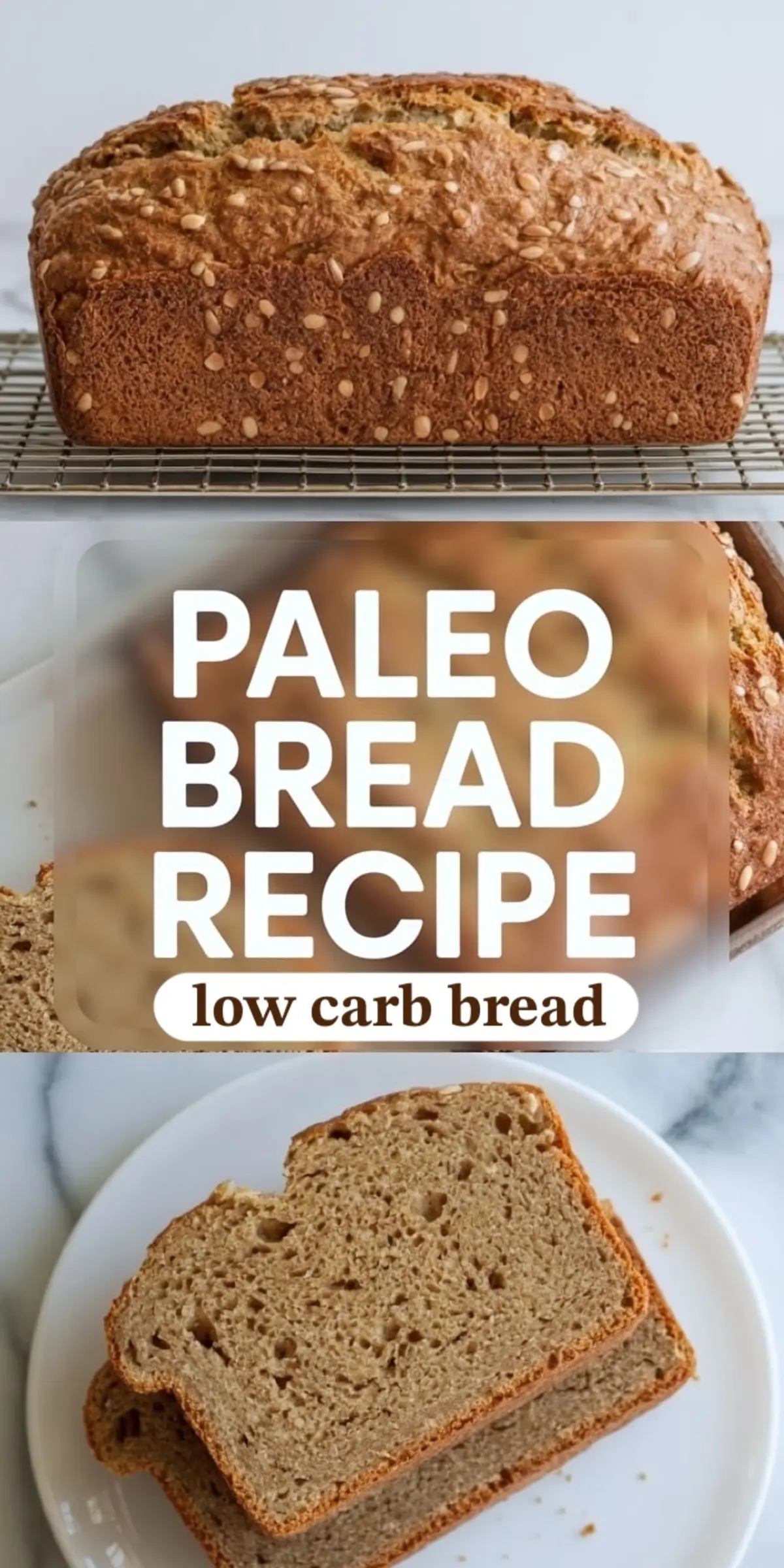
This Paleo Bread recipe uses almond flour, flaxseed meal, and coconut flour to create a healthy gluten free bread with a tender crumb and satisfying texture. It’s a dependable option for breakfast bread recipes, low-carb meals, or anyone building a list of healthy gluten free recipes. The loaf holds together well, slices cleanly, and tastes balanced enough to pair with sweet or savory toppings.
Following a special diet?
Every recipe on this site can be converted to gluten-free, vegan, dairy-free, keto, nut-free or egg-free with adjusted ratios so nothing falls flat.
Try the Recipe Converter →A mix of almond flour and coconut flour builds structure without grains. Almond flour brings moisture, while coconut flour adds density and absorbs excess liquid. Flaxseed meal helps bind the batter. I like to include a tablespoon of psyllium husk for extra structure, especially if the loaf needs to hold up to slicing and toasting.
The acid from apple cider vinegar activates baking soda. That’s what gives the loaf its lift without yeast. It bakes into a slightly domed top with a golden crust that feels almost bakery-made, though the ingredients stay clean and minimal.
Each flour has a job. The balance of 2 cups almond to ¼ cup coconut is intentional. More coconut flour dries the crumb. Less almond flour leaves it too soft. This is where many paleo breads collapse or bake dense in the center.
The Role of Each Ingredient
Super-fine almond flour creates the softest crumb. I avoid coarse or homemade almond meals here. It’s worth getting the blanched variety too. The coconut flour needs to be fresh and fluffy. If it clumps in the bag, it’s already drawing moisture. That throws off the texture.
Flaxseed meal adds bulk and fiber. It also introduces a faint nutty flavor. I usually refrigerate mine and grind small batches at home to keep it fresh. If that’s not an option, look for vacuum-sealed bags.
Psyllium husk is optional but helpful. I notice the loaf slices straighter and doesn’t cave in at the middle when I add it. The texture becomes more like sandwich bread.
The liquid base combines eggs, almond milk, and a bit of oil. I tend to use olive oil, but melted coconut oil works too. A tablespoon of honey or maple syrup lifts the flavor without making it sweet. You can skip it, but I usually don’t.
I use sesame seeds or sunflower seeds on top depending on what I have. Sunflower adds crunch. Sesame gives it a nuttier edge. Either makes the loaf feel finished.
You’ll find another seed-based idea in this Berry Almond Protein Bars recipe if you want more snackable options with a similar base.
What Psyllium Husk Does Best
This one tablespoon makes a visible difference. Without it, the loaf stays soft but breaks apart more easily. With it, the bread holds shape, rises taller, and cools without collapsing.
It’s especially helpful if you want to toast it or make sandwiches. If you don’t have psyllium, the bread still works, but slice it after it’s fully cooled and don’t make the slices too thin.
If you’re experimenting with Guinness Oatmeal Bread, the structure doesn’t depend on psyllium, but in paleo recipes like this, it plays a bigger role.
How the Batter Comes Together
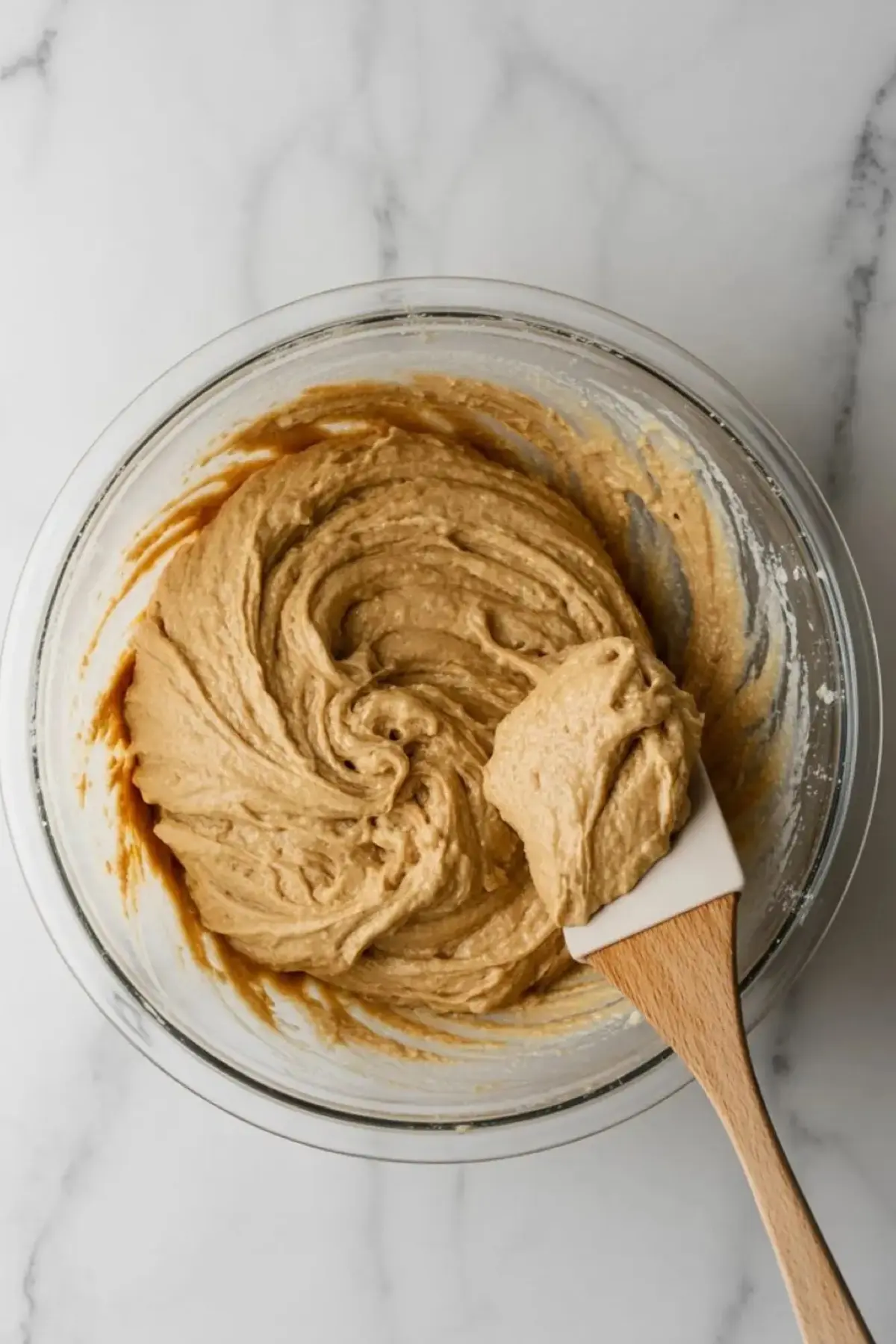
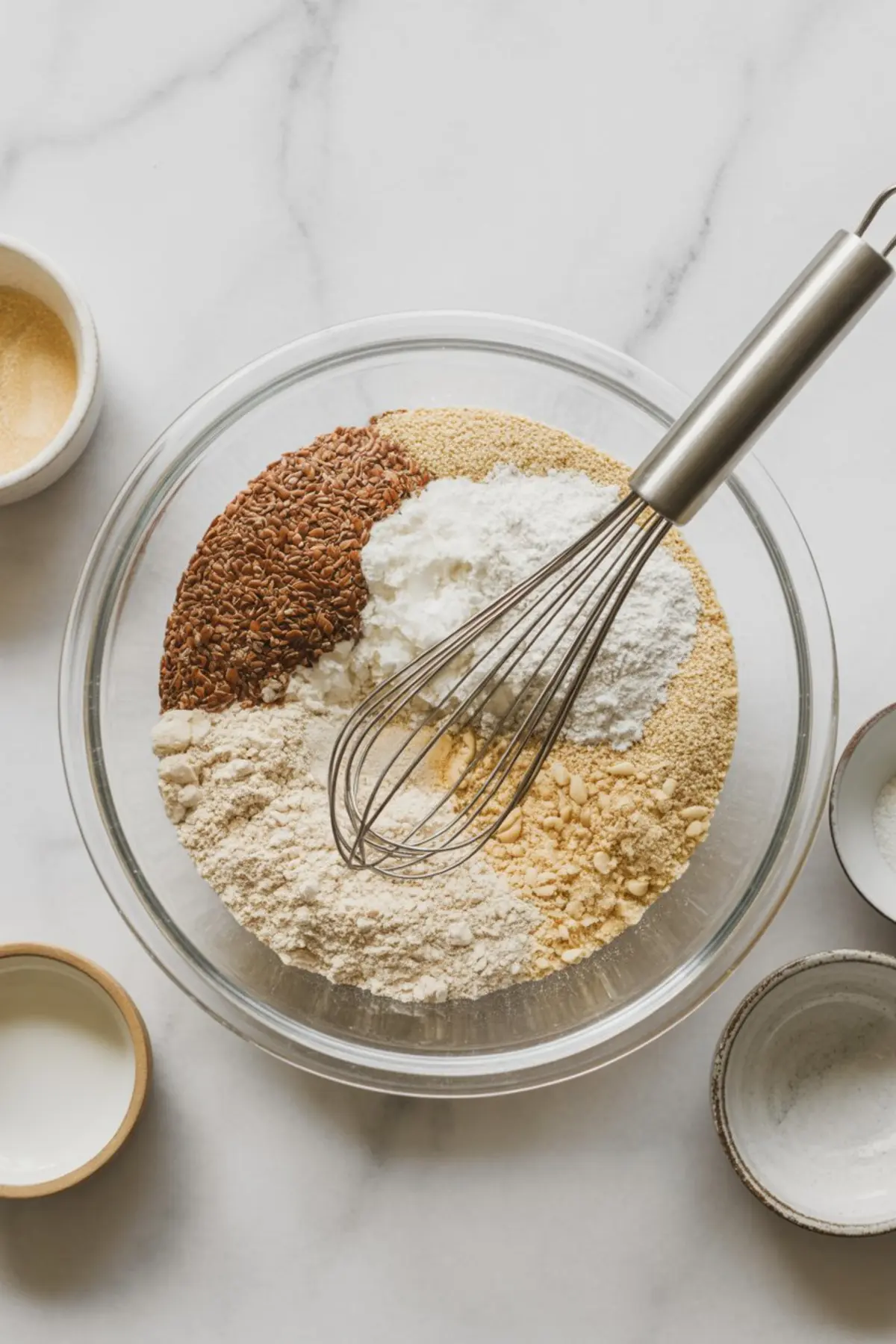
Dry ingredients mix easily with a whisk. I make sure there are no clumps in the coconut flour or flax. That’s the only step I don’t rush. Lumps here lead to pockets of dry flour in the baked loaf.
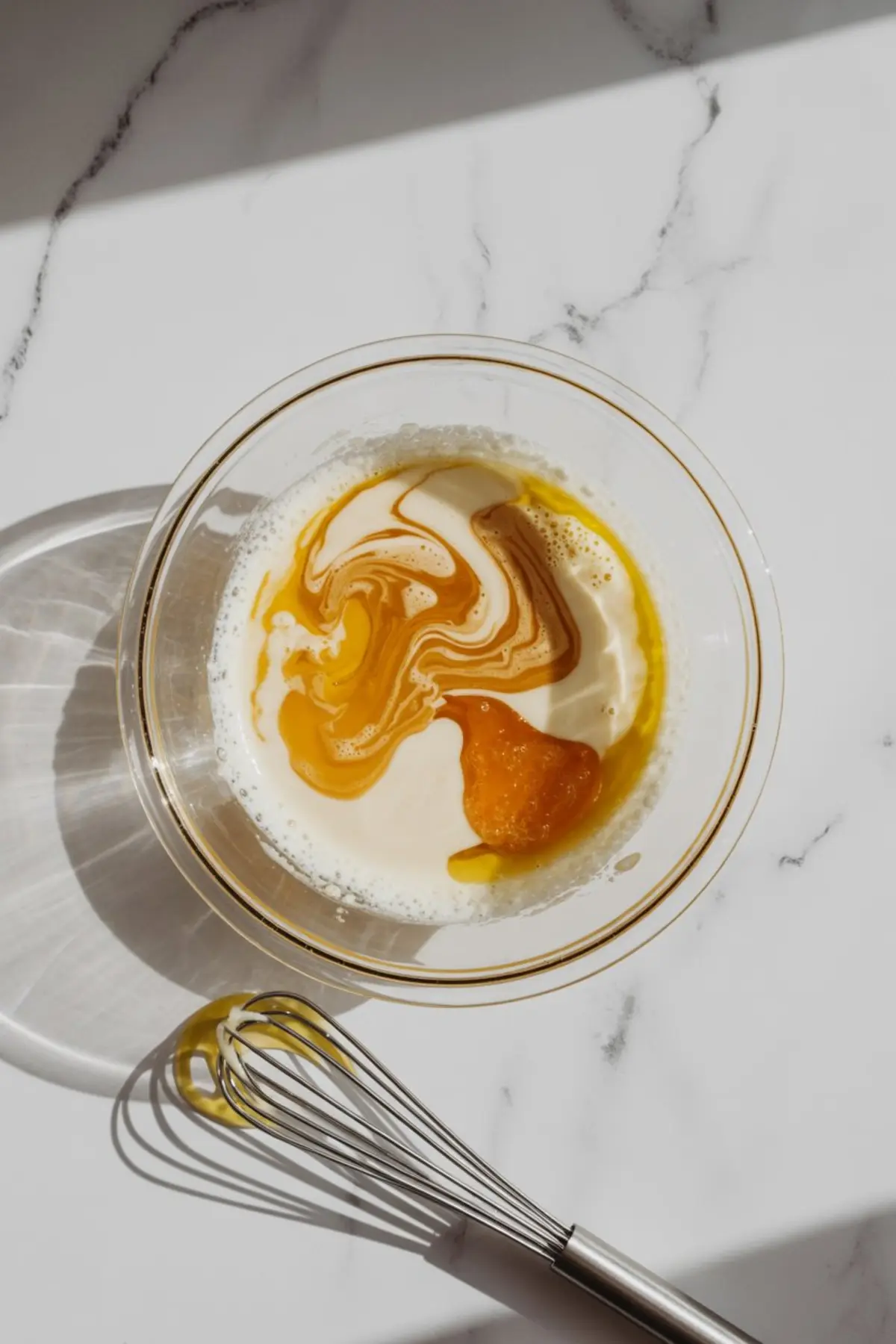
Wet ingredients whisk quickly too. The eggs, milk, oil, vinegar, and honey need to blend fully before adding to the dry bowl. The batter becomes thick and scoopable. It should not pour. A too-wet batter creates a gummy loaf.
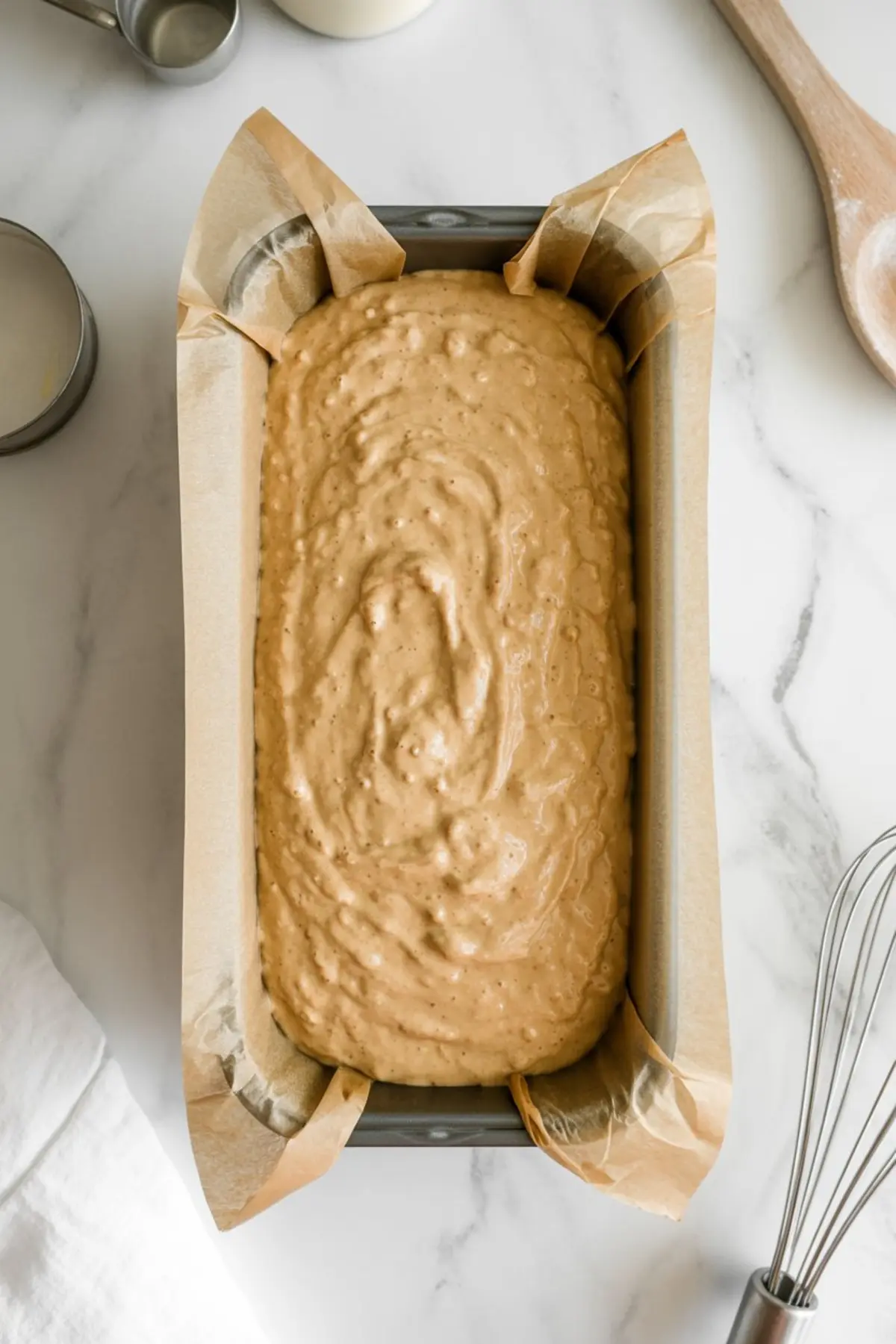
After spreading it into the pan, smoothing the top helps it bake evenly. I sprinkle seeds on top just before it goes in the oven. The loaf rises evenly and browns at the edges around minute 40. At 50 minutes, a toothpick usually comes out clean.
You can use the same sensory timing I do when baking Coconut Flour Pancakes. Visual cues are your best guide.
How to Know It’s Fully Baked
I check the color first. A pale loaf usually means underdone. I look for a warm golden top and a slightly cracked surface. A toothpick inserted in the center should come out clean, but I also lightly press the center. It should spring back and feel firm, not soft.
If the top browns too quickly, place a piece of foil over the pan during the last 10 minutes. Don’t slice the loaf hot. Cooling completely on a rack helps it set. Slicing early causes the crumb to fall apart.
If Something Goes Wrong
If the loaf is dense in the middle, the batter may have been too wet or the flour measurements too loose. I spoon and level every dry ingredient.
If it’s too dry, there may have been too much coconut flour. Next time, weigh it or reduce it slightly.
If it sinks in the center, it likely needed more baking time. Make sure the middle springs back before removing it.
For cookie lovers trying to cut sugar, this sugar free chocolate cookie recipe has similar ingredient values and structure tips.
Variations That Still Work
Add 1 tablespoon chia seeds for extra fiber.
Swap olive oil with melted ghee for a more buttery flavor.
Mix 2 tablespoons chopped nuts into the batter for crunch.
Use cinnamon and a pinch of nutmeg for a breakfast version.
All of these preserve the loaf’s structure and taste, just with a new texture or flavor profile.
How to Store and Reheat
This bread keeps on the counter in an airtight container for 2 days. I usually refrigerate mine on day three. It stays fresh up to 5 days chilled.
For longer storage, slice and freeze each piece. I wrap mine in parchment and place them in a sealed bag. They reheat in the toaster without drying out.
A Few Tips That Help
Use parchment to line the pan. It makes the loaf easy to remove.
Cool fully before slicing. I leave it for 1 hour before cutting.
Use fresh flours. Older coconut flour absorbs more liquid.
Whisk everything well. Any dry pockets won’t bake out.
Choose a light metal pan. Dark pans brown too quickly.
A loaf like this gives me the same dependable feel I get from healthy oat-based breakfasts but with paleo ingredients and gluten-free flours.
Save This Recipe and Share What You Think
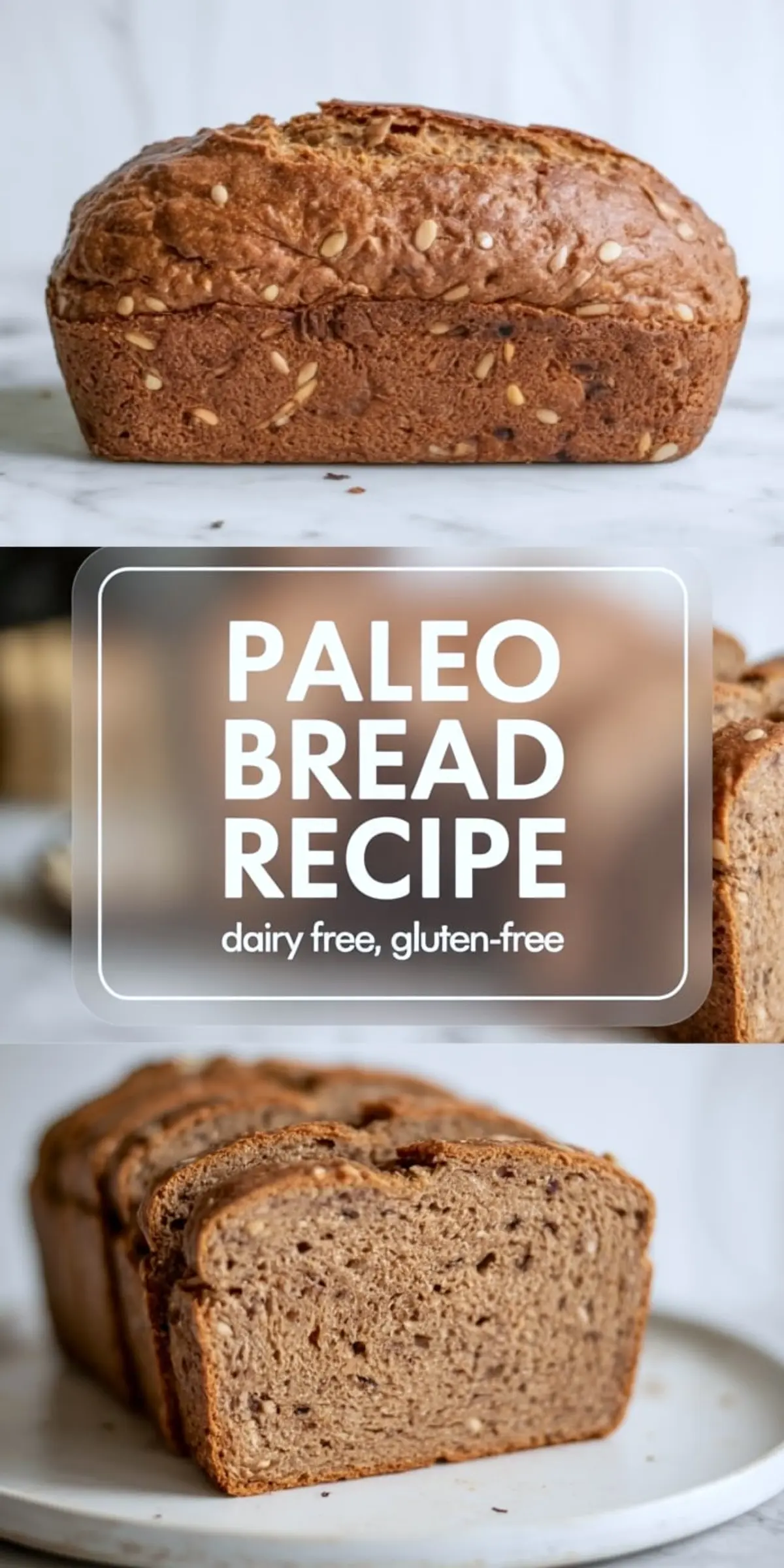
Save this Paleo Bread recipe to your Healthy Bread or Gluten Free Baking board on Pinterest so it’s easy to find again.
Tried it? Let me know how it turned out in the comments. Share what substitutions worked or what you’d change next time.
Paleo Bread Recipe
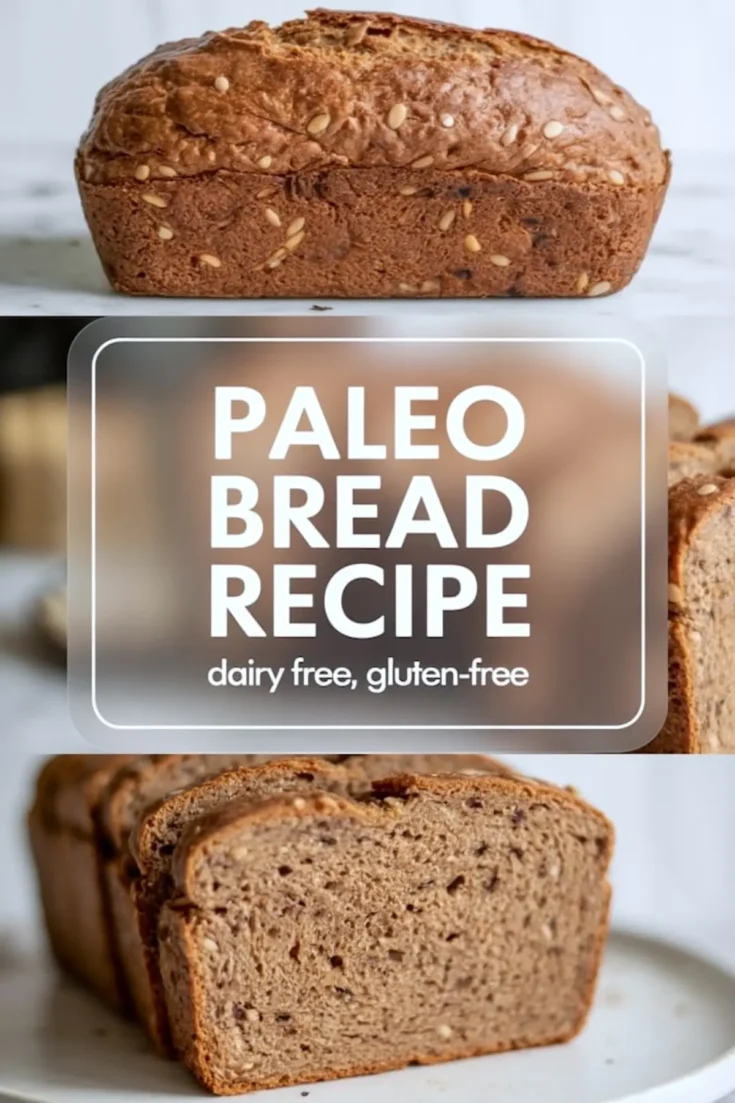
This homemade paleo bread is soft, satisfying, and perfect for anyone looking for a healthy gluten free recipe. Made with nutrient-dense ingredients, it’s a great option for clean eating, low-carb lifestyles, and paleo-friendly bread swaps. Enjoy it toasted for breakfast or as a side with your favorite meal. This simple loaf fits right into your rotation of paleo seed bread, healthy bread, and breakfast bread recipes. A go-to option for anyone baking with intention and wholesome ingredients.
Ingredients
- 2 cups almond flour (super-fine works best)
- 1/4 cup flaxseed meal
- 1/4 cup coconut flour
- 1 tbsp psyllium husk (optional, for better structure)
- 1 1/2 tsp baking soda
- 1/2 tsp fine sea salt
- 5 large eggs
- 1/4 cup unsweetened almond milk (or any non-dairy milk)
- 1 tbsp apple cider vinegar
- 1 tbsp olive oil or melted coconut oil
- 1 tbsp raw honey or maple syrup (optional for a hint of sweetness)
- 2 tbsp sesame or sunflower seeds (for topping, optional)
Instructions
- PREHEAT THE OVEN: Set your oven to 350°F (175°C). Lightly grease a standard loaf pan and line it with parchment paper to prevent sticking and allow for easy removal.
- MIX THE DRY INGREDIENTS: In a large mixing bowl, whisk together the almond flour, flaxseed meal, coconut flour, psyllium husk (if using), baking soda, and salt until well combined and no clumps remain.
- BLEND THE WET INGREDIENTS: In a separate medium bowl, whisk together the eggs, almond milk, apple cider vinegar, oil, and honey or maple syrup (if using) until the mixture is smooth and fully blended.
- COMBINE THE MIXTURES: Pour the wet ingredients into the bowl with the dry ingredients. Stir with a spatula or wooden spoon until a thick, uniform batter forms. The batter should be dense and scoopable, not runny.
- TRANSFER TO PAN: Spoon the batter into the prepared loaf pan. Use a spatula to spread it evenly and smooth out the top. Sprinkle sesame or sunflower seeds over the surface if desired.
- BAKE THE LOAF: Place the loaf in the center of the oven and bake for 45 to 50 minutes, or until the top is golden brown and a toothpick inserted in the center comes out clean.
- COOL THE BREAD: Remove the pan from the oven and let the loaf cool in the pan for 10 minutes. Then transfer it to a wire rack to cool completely. Do not slice until fully cooled to maintain the structure and texture of the bread.
Notes
Store the cooled bread in an airtight container at room temperature for 1–2 days, or refrigerate for up to 5 days. For longer storage, freeze individual slices and toast as needed.
