
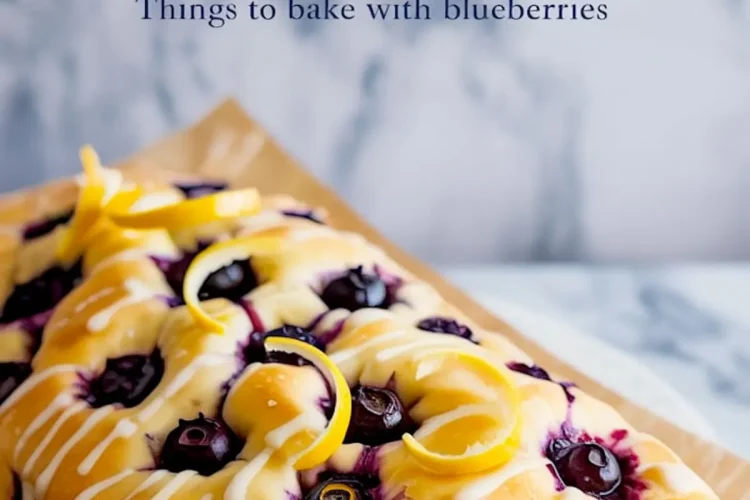
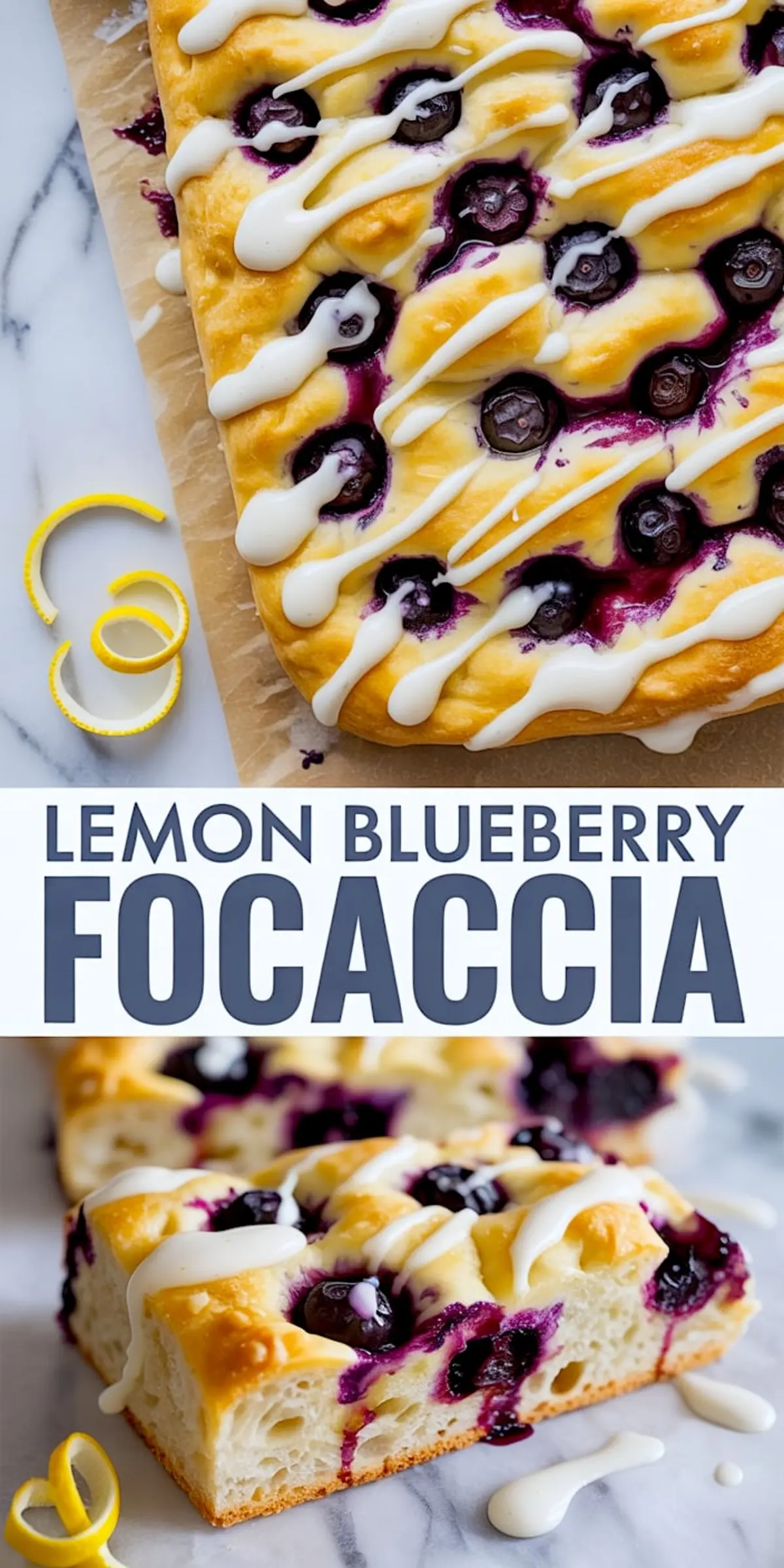
Lemon blueberry focaccia is a soft olive oil yeast bread baked in a 9×13 inch pan, with fresh blueberries and lemon zest pressed into the dimples and a lemon glaze drizzled over the top. It takes about 2 hours 25 minutes, most of it rising time, and cuts into 8 generous squares.
The dough is the same simple, slightly sweet base I use for my cinnamon roll focaccia. What changes is the top. Dry the berries well, press them in gently, and wait a few minutes before you glaze.
Following a special diet?
Every recipe on this site can be converted to gluten-free, vegan, dairy-free, keto, nut-free or egg-free with adjusted ratios so nothing falls flat.
Try the Recipe Converter →What One 9×13 Pan of Focaccia Takes
- Pan: one 9×13 inch pan, generously oiled
- Oven: 400°F (200°C), 20 to 25 minutes
- Rises: 1 to 1½ hours in the bowl, then 30 to 40 minutes in the pan
- Total time: about 2 hours 25 minutes, with 20 minutes of hands-on prep
- Yield: 8 servings
- Topping: 1 cup fresh blueberries and the zest of 1 lemon
- Glaze: 1 cup powdered sugar, 2 tablespoons lemon juice, 1 teaspoon zest, 1 tablespoon milk
A Soft Olive Oil Dough With a Little Sugar
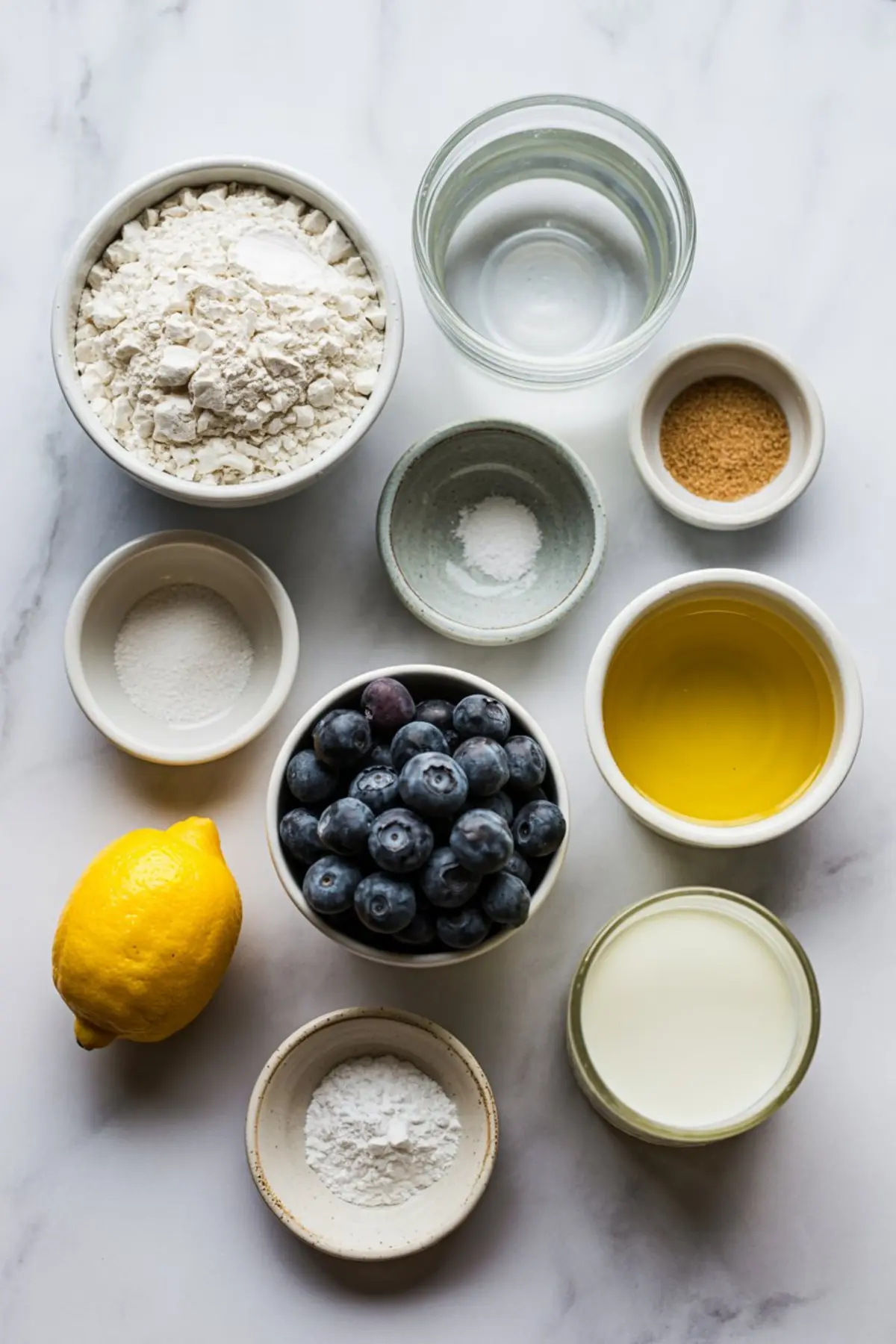
You need 3½ cups (420g) all-purpose flour, 1¼ cups (300ml) warm water, one packet (2¼ teaspoons) of active dry yeast, 2 tablespoons sugar, 1 teaspoon salt, and ¼ cup (60ml) olive oil, plus more for the pan.
The sugar might surprise you if you usually bake savory focaccia. It does two jobs here. It feeds the yeast, and it gives the bread a faint sweetness that sits well under the berries and glaze without turning it into cake. All-purpose flour keeps the crumb tender and a little softer than a bread flour focaccia.
If you like this, my sweet focaccia bread uses a similar idea with a chewier, less fruity result.
Reading the Two Rises
Stir the warm water, yeast and sugar together and wait 5 to 7 minutes. It should look foamy on top. No foam means the yeast is old or the water was too hot, and the dough will not rise properly, so start again with fresh yeast.
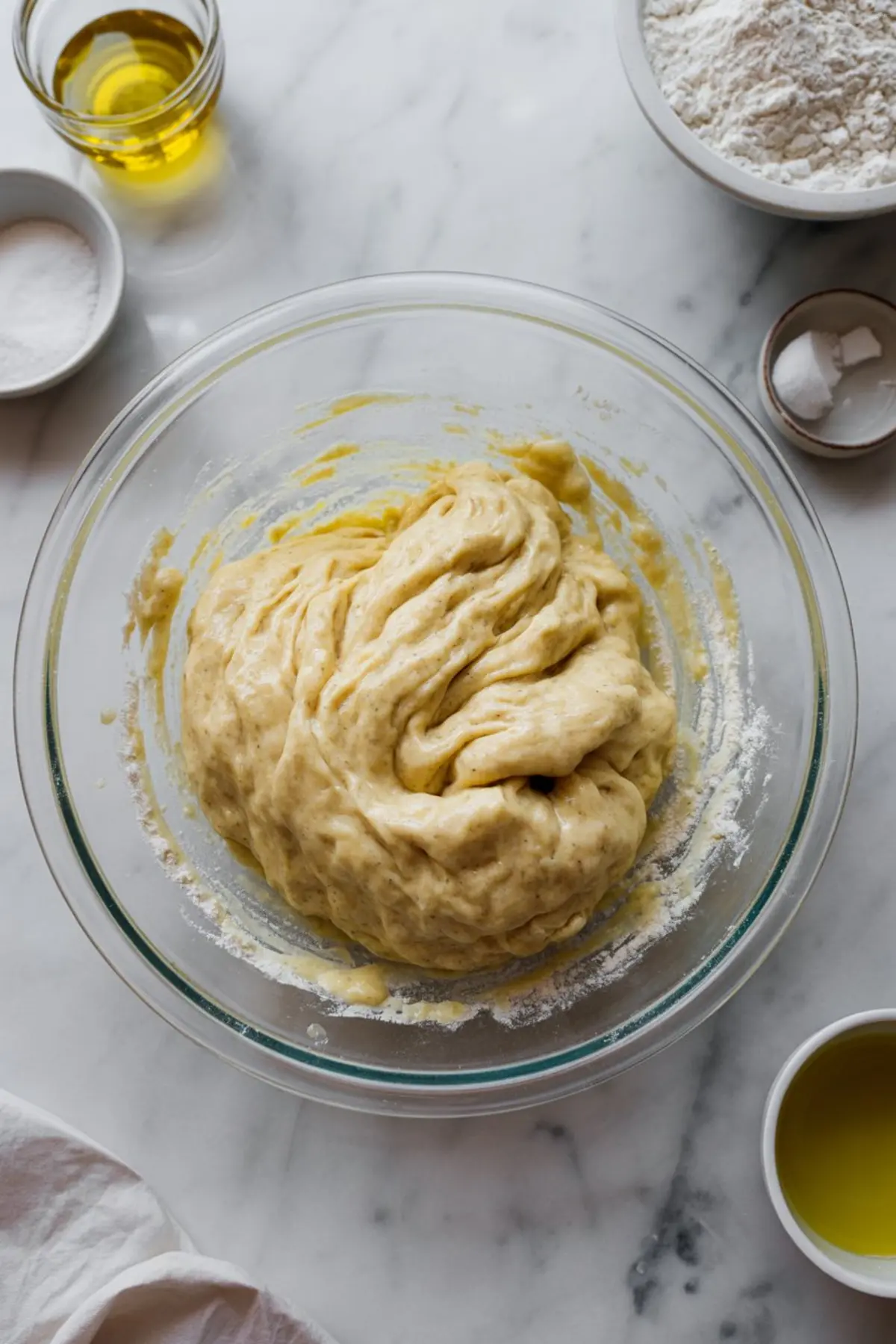
Add the flour and salt, stir to a shaggy dough, then add the oil and knead for 6 to 8 minutes by hand or with a dough hook. You want it smooth and stretchy but still a little tacky. Resist adding more flour. That slight stickiness is what keeps the baked bread soft.
Cover the bowl and let it rise for 1 to 1½ hours, until doubled. A floured finger pressed into the dough should leave a dent that fills back slowly. In a cold kitchen it can take the full 1½ hours or a little longer; go by the size, not the clock.
Dimpling the Dough and Pressing in the Blueberries
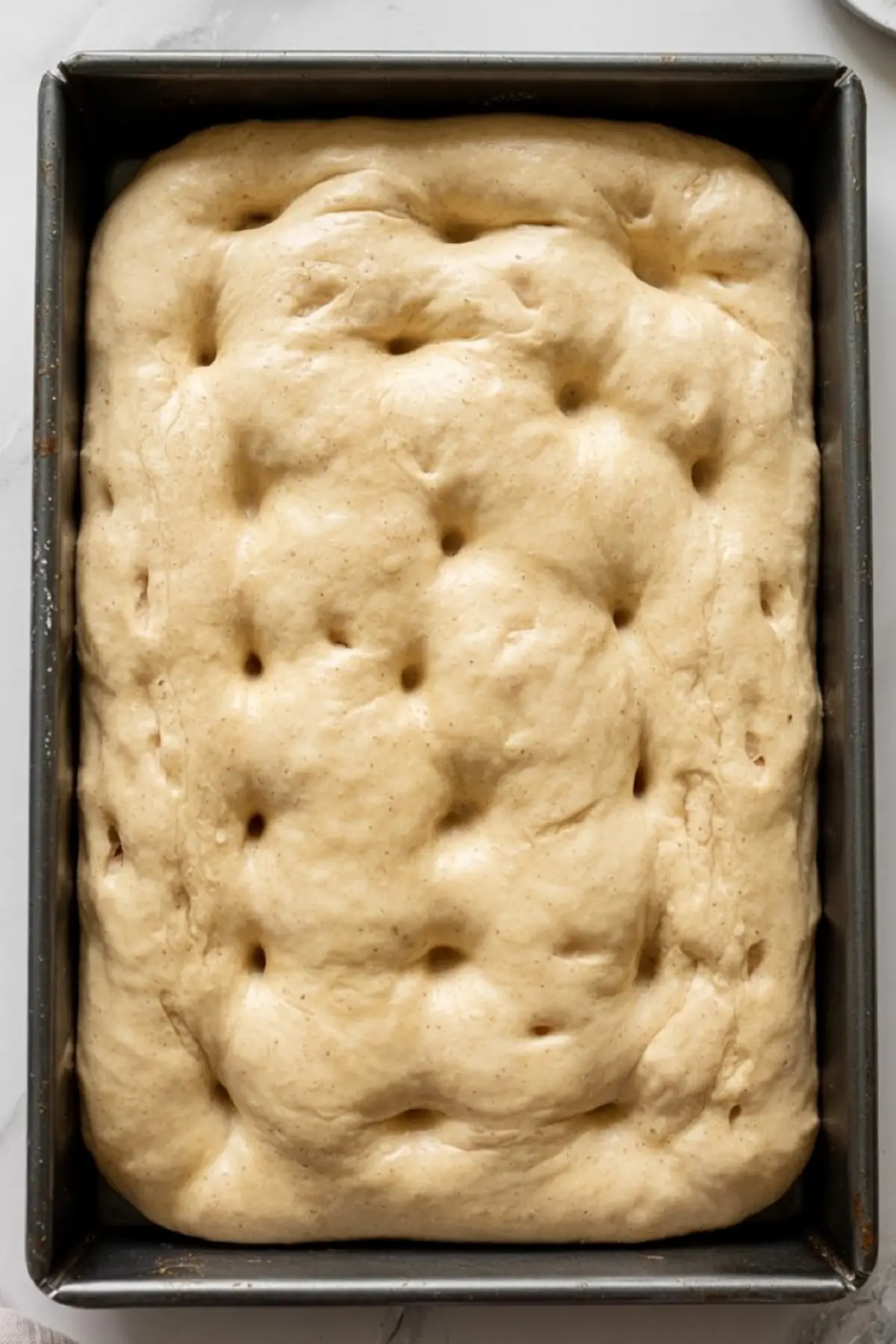
Pour a good slick of olive oil into the 9×13 pan. It looks like a lot, but it is what fries the bottom crisp. Tip the dough in and stretch it gently toward the corners. If it springs back, leave it for 10 minutes and try again.
Cover and let it rise in the pan for 30 to 40 minutes while the oven heats to 400°F (200°C). It is ready when it looks puffy and jiggles a little when you shake the pan.
Oil your fingertips and press deep dimples all over, right down to the pan, leaving the outer edge puffy. Rinse the blueberries and pat them completely dry. Wet berries leave a pool of water in each dimple and a pale, damp patch underneath. Press them in gently so they sit in the dimples without bursting. Scatter the lemon zest over the top, and add the optional tablespoon of sugar if your berries taste tart.
How to Tell the Focaccia Is Baked Through
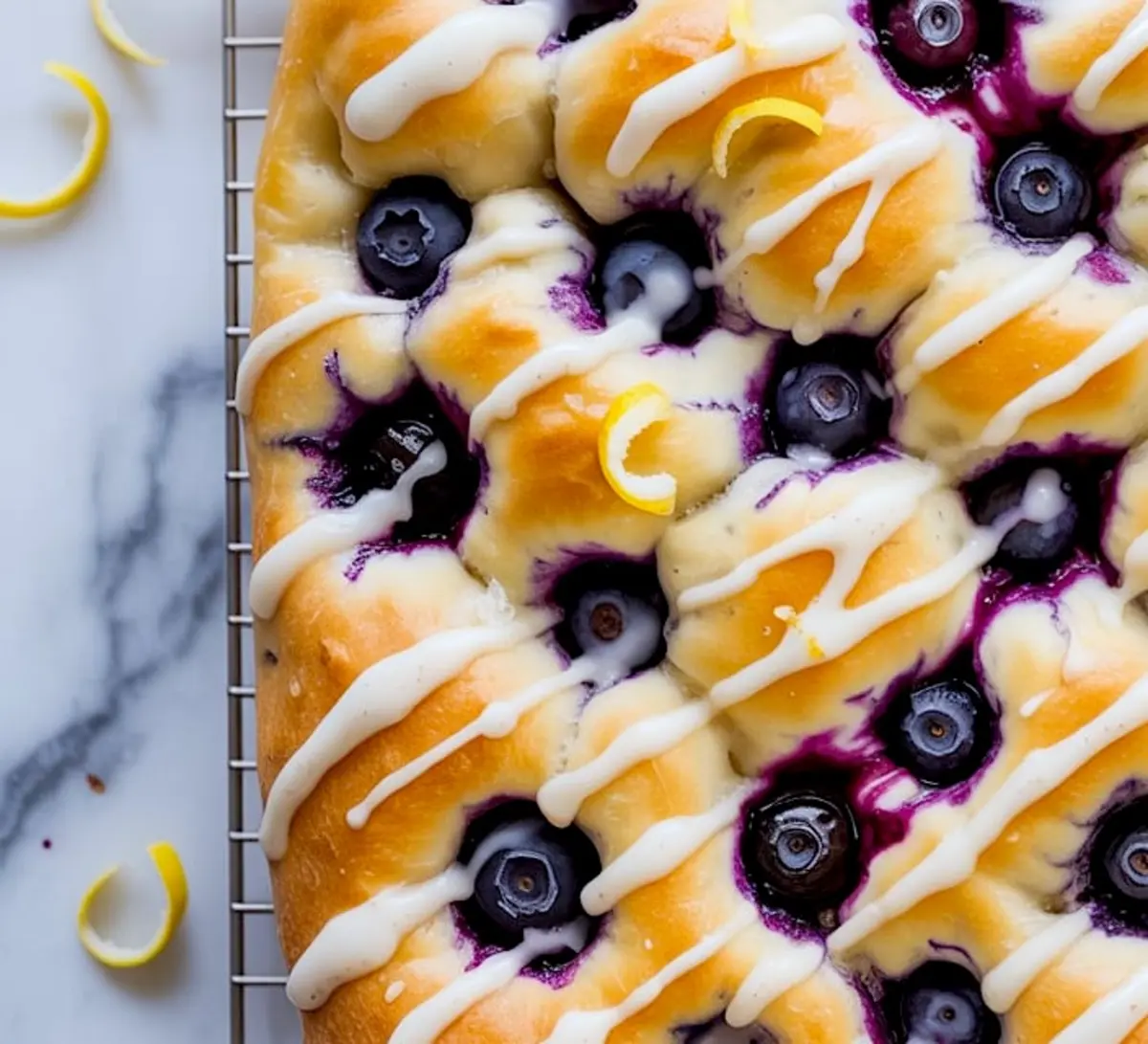
Bake for 20 to 25 minutes. The top should be deep golden, the edges crisp and pulling away from the pan, and the berries just starting to burst. Your kitchen will smell of warm lemon and olive oil.
The center bakes slower than the edges because the berries carry so much juice. Before you take it out, lift a corner with a spatula. The underside should be browned and crisp, and the bread should sound hollow when tapped. A pale, soft bottom needs another 3 to 5 minutes.
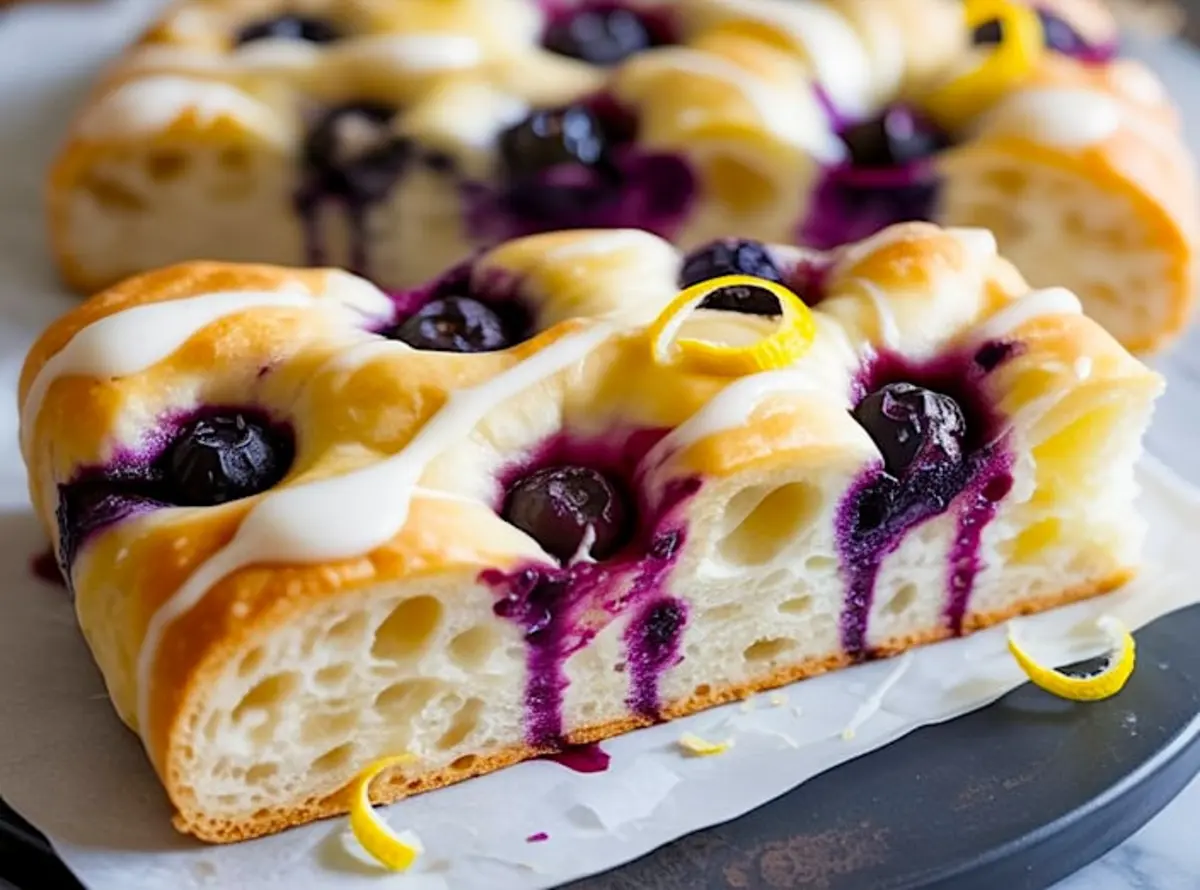
Inside, you are looking for an open, airy crumb with purple streaks where the berries burst. Tight, heavy crumb usually means the second rise was cut short.
Glazing Lemon Blueberry Focaccia Without a Puddle
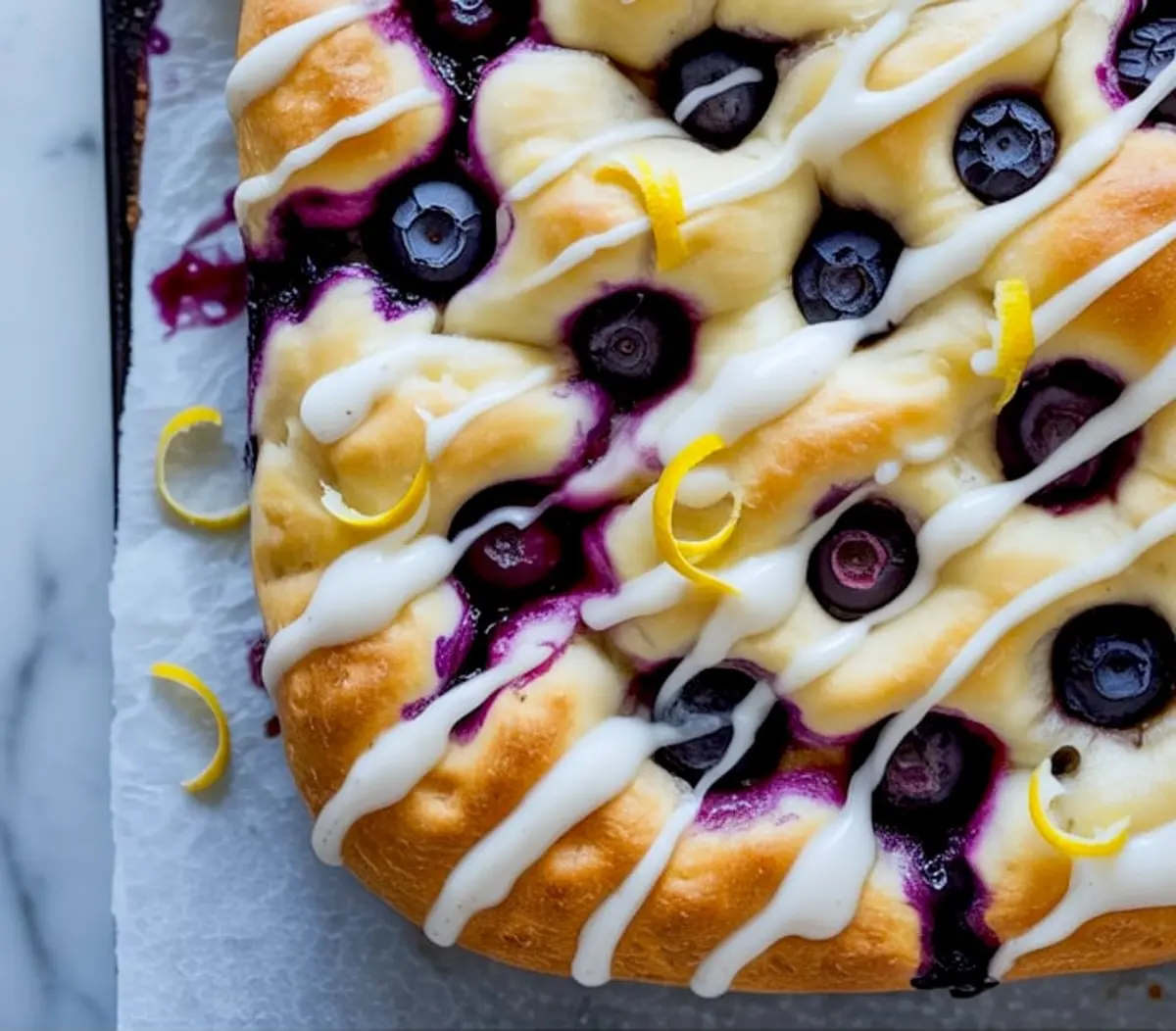
Let the bread cool in the pan for 10 to 15 minutes. Meanwhile, whisk 1 cup powdered sugar with 2 tablespoons fresh lemon juice, 1 teaspoon zest, and 1 tablespoon milk until smooth. It should fall from the whisk in a thick ribbon.
Glaze poured on the moment the pan leaves the oven melts into a thin syrup and runs into the corners. After a short rest it soaks in just a little and sets with a soft shine. Thin it with milk a teaspoon at a time, or stiffen it with a spoonful of powdered sugar. Leave out the milk for a sharper, more lemony glaze that some kids find too tart.
Why Fresh Blueberries Beat Frozen Here
I have tried both, and fresh wins clearly. Frozen berries release a lot of water as they thaw, which bleeds blue-gray into the dough and leaves the crumb under each berry soggy. Fresh berries hold their shape and caramelize a little where they touch the hot pan.
Blackberries or raspberries will work, but they are softer and collapse more in the oven, so press them in even more gently.
Blueberry Cheesecake Focaccia and a Crumble Topping
For a blueberry cheesecake focaccia, beat 4 ounces of softened cream cheese with 2 tablespoons sugar and a little of the lemon zest. After dimpling, spoon small dollops into some of the dimples and press the blueberries in around them. Bake as usual. The cream cheese turns lightly golden at the edges and stays creamy inside, and the glaze still goes on after the 10 to 15 minute rest.
For a blueberry crumble focaccia, rub together butter, flour and sugar into coarse crumbs and scatter a thin layer over the berries before baking. Keep it thin, or the topping weighs down the dough. If crumb topping is your favorite part, try my blueberry coffee crumb cake, or turn the same flavors into blueberry cheesecake cookies.
Lemon Blueberry Focaccia vs Lemon Blueberry Pound Cake
Same flavors, very different bakes. The focaccia is a yeast bread: light, airy, only gently sweet, and best eaten the day it is made. A lemon blueberry pound cake is rich with butter and eggs, slices cleanly, and keeps for days. For something in between, my blueberry olive oil snack cake has the same olive oil note with a cake crumb.
Need a faster lemon blueberry bake? Lemon blueberry cookies skip the rising time entirely.
Serving, Storing and Reheating the Squares
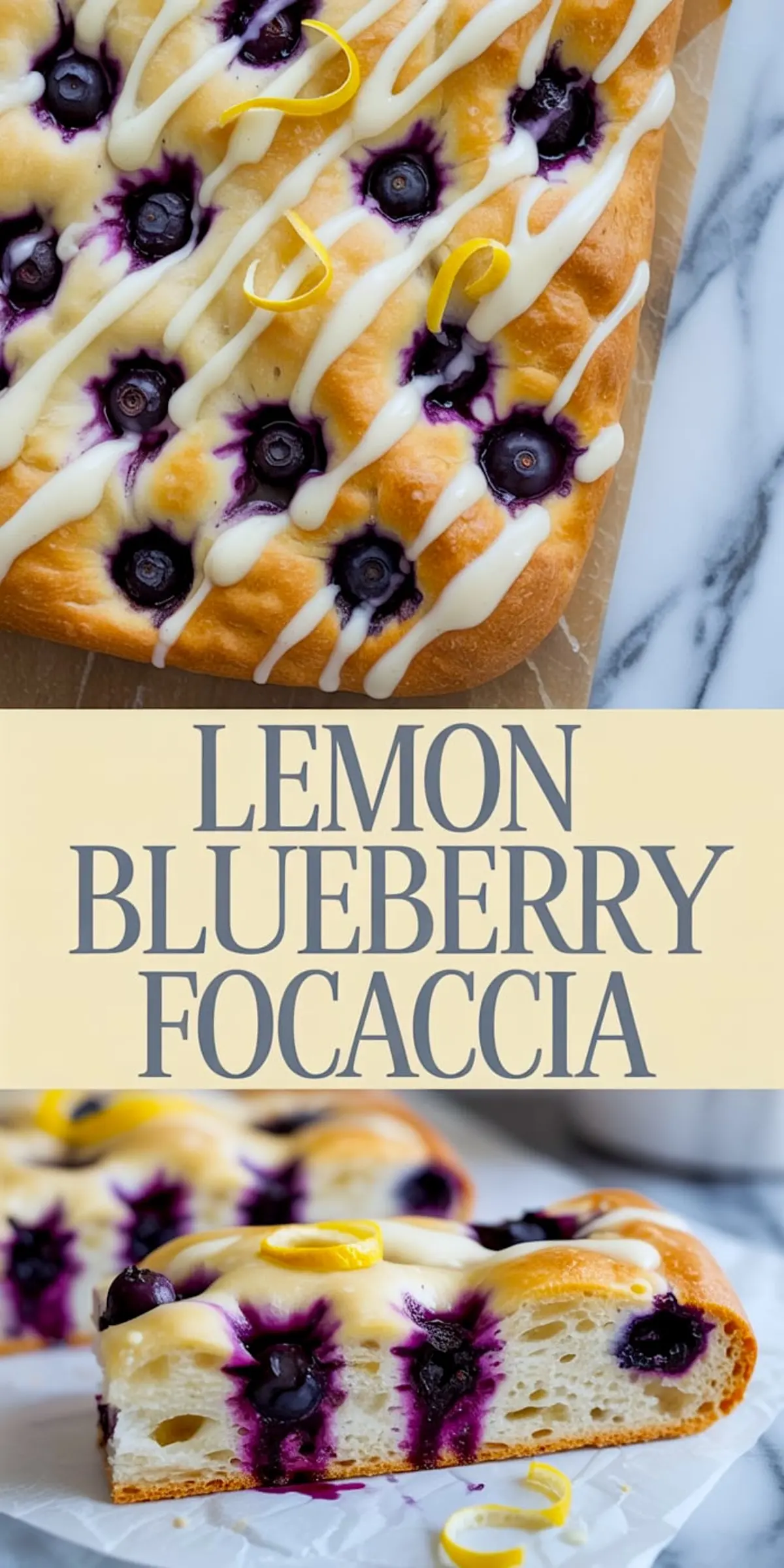
Serve it warm, cut into 8 squares. For breakfast I like it with a drizzle of honey or a spoonful of Greek yogurt. For dessert, a spoonful of whipped ricotta works well, because its slight saltiness balances the glaze.
It is at its best the day it is baked. Wrap leftovers tightly and keep them at room temperature for up to 2 days. Skip the fridge, which firms and dries the crumb. Warm a square at 300°F for about 5 minutes to soften it again. On a brunch table it sits nicely next to a lemon blueberry dump cake.
Lemon Blueberry Focaccia Questions
Is lemon blueberry focaccia sweet or savory?
Mostly sweet, but lightly so. The dough has only 2 tablespoons of sugar, and most of the sweetness comes from the berries and the lemon glaze, so it works for breakfast as well as dessert.
Why is my blueberry focaccia dense?
Usually the dough did not double in the first rise, extra flour was kneaded in, or the second rise in the pan was cut short. Let it get visibly puffy before you dimple it.
Can I skip the glaze?
Yes. Without it the bread is less sweet and good with butter or a thin layer of jam.
Lemon Blueberry Focaccia
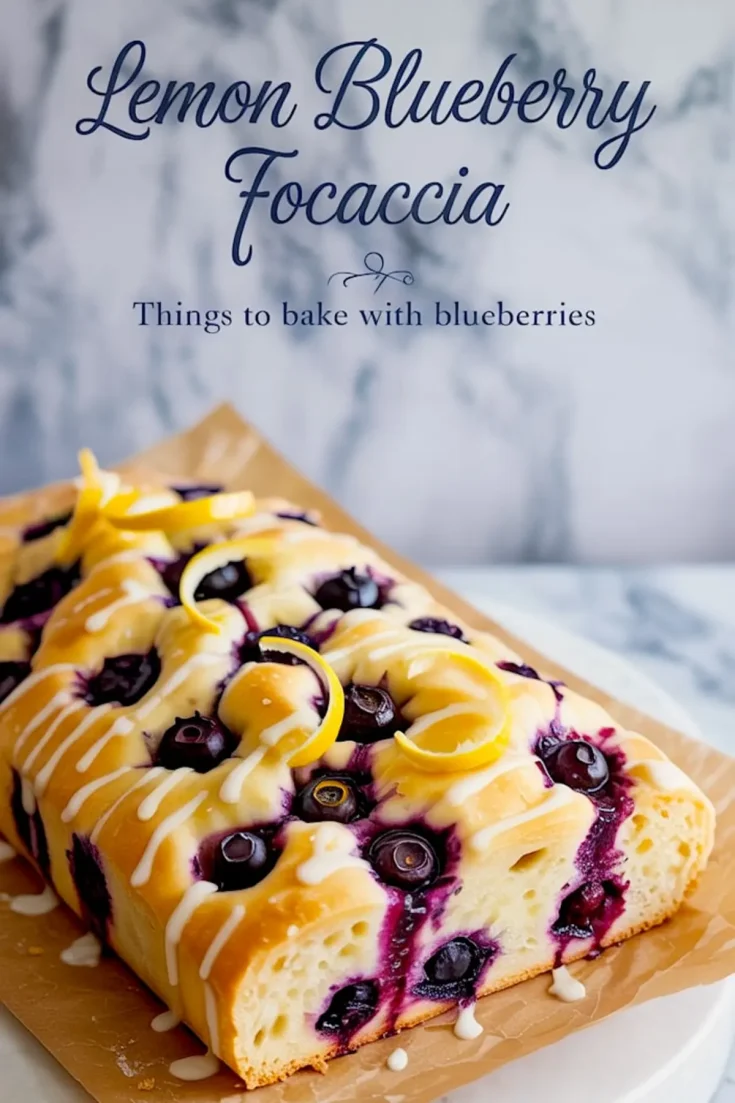
This lemon blueberry focaccia is a soft, slightly sweet yeast bread made with an olive oil dough, fresh blueberries, lemon zest, and a simple lemon glaze. It bakes in one 9x13 inch pan at 400°F for 20 to 25 minutes, takes about 2 hours 25 minutes with both rises, and cuts into 8 squares with crisp edges and an airy, pillowy crumb. The berries are pressed into deep dimples after the second rise, and the glaze goes on after a 10 to 15 minute rest so it soaks in slightly instead of running off. Serve this blueberry lemon focaccia bread warm for brunch, breakfast with yogurt or honey, or dessert with whipped ricotta. Dollop sweetened cream cheese into the dimples for a blueberry cheesecake focaccia. Best the day it is baked.
Ingredients
- FOR THE FOCACCIA DOUGH
- 3 ½ cups (420g) all-purpose flour
- 1 ¼ cups (300ml) warm water
- 2 ¼ tsp (1 packet) active dry yeast
- 2 tbsp sugar
- 1 tsp salt
- ¼ cup (60ml) olive oil, plus more for greasing
- FOR THE TOPPING
- 1 cup fresh blueberries
- Zest of 1 lemon
- 1 tbsp sugar (optional, for sprinkling before baking)
- FOR THE LEMON GLAZE
- 1 cup powdered sugar
- 2 tbsp fresh lemon juice
- 1 tsp lemon zest
- 1 tbsp milk (adjust as needed for consistency)
Instructions
- MAKE THE DOUGH: In a large mixing bowl, stir together warm water, yeast, and sugar. Let the mixture sit for 5–7 minutes until foamy. Add flour and salt and stir until a shaggy dough forms. Add olive oil and knead for 6–8 minutes, either by hand or with a dough hook, until the dough is smooth and elastic but still slightly tacky. Transfer to a greased bowl, cover, and let rise for 1 to 1.5 hours or until doubled in size.
- SHAPE AND SECOND RISE: Grease a 9x13-inch pan generously with olive oil. Transfer the dough to the pan and stretch it gently to fit the shape of the pan. Cover and let rise again for 30–40 minutes while you preheat the oven to 400°F (200°C).
- ADD THE TOPPINGS: Dimple the surface of the dough with your fingers. Gently press the blueberries into the dimples. Sprinkle lemon zest evenly across the top and optionally dust with 1 tablespoon sugar for added sweetness.
- BAKE: Bake the focaccia for 20–25 minutes until the top is golden and the edges are lightly crisp. Remove from the oven and let cool for 10–15 minutes before adding glaze.
- MAKE THE GLAZE: In a small bowl, whisk together powdered sugar, lemon juice, lemon zest, and milk until smooth. Drizzle over the warm focaccia and allow it to set for a few minutes before slicing and serving.
Notes
Use fresh blueberries and pat them completely dry; frozen berries release too much liquid and stain the dough. If the yeast is not foamy after 5 to 7 minutes, start again with fresh yeast. Do not add extra flour to the slightly tacky dough; it keeps the bread soft. The focaccia is done when the top is deep golden and the underside is browned and crisp. Let it cool 10 to 15 minutes before glazing. Adjust the glaze with a little more milk or powdered sugar. Best enjoyed the same day; wrap leftovers and keep at room temperature up to 2 days, then rewarm at 300°F for about 5 minutes.
Nutrition Information
Yield
8Serving Size
1Amount Per Serving Calories 456Total Fat 9gSaturated Fat 3gTrans Fat 0gUnsaturated Fat 5gCholesterol 0mgSodium 454mgCarbohydrates 86gFiber 3gSugar 24gProtein 8g
