

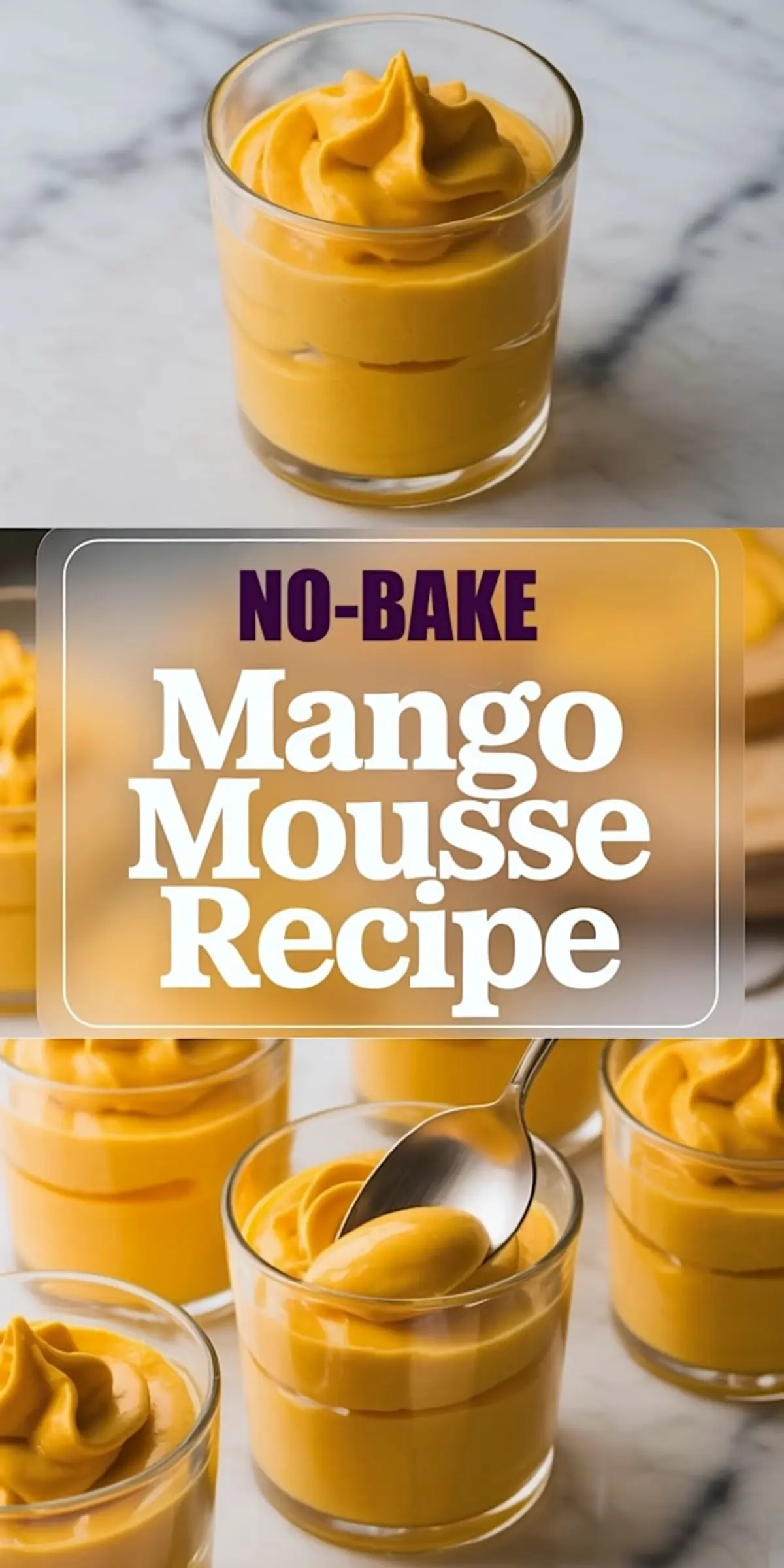
This mango mousse recipe brings together fresh mango puree, softly whipped cream, and a splash of citrus to create one of the easiest no bake desserts you can make. It’s smooth, fruity, and ready to chill in under 20 minutes. Whether you’re craving a light mango dessert, browsing mousse dessert recipes, or looking for mango dessert recipes easy enough for weekdays, this mousse checks all the boxes with zero cooking required.
Whipped cream gives the mousse its lift.
Following a special diet?
Every recipe on this site can be converted to gluten-free, vegan, dairy-free, keto, nut-free or egg-free with adjusted ratios so nothing falls flat.
Try the Recipe Converter →Mango brings the body. The ratio leans toward the fruit so it stays bright and clean, not overly rich. One cup of mango puree to half a cup of cream keeps things fresh.
Some versions lean heavily on gelatin or condensed milk. I chose a gentler structure here.
The option to add a bit of gelatin helps if you’re serving this ahead or layering it into other no bake desserts like mousse cakes or trifles. You’ll still get a soft-set texture without turning it rubbery.
For more no bake mousse ideas like this, my 11 No Bake Mousse Recipes post includes citrus, chocolate, and berry versions too.
Why These Ingredients Work Together
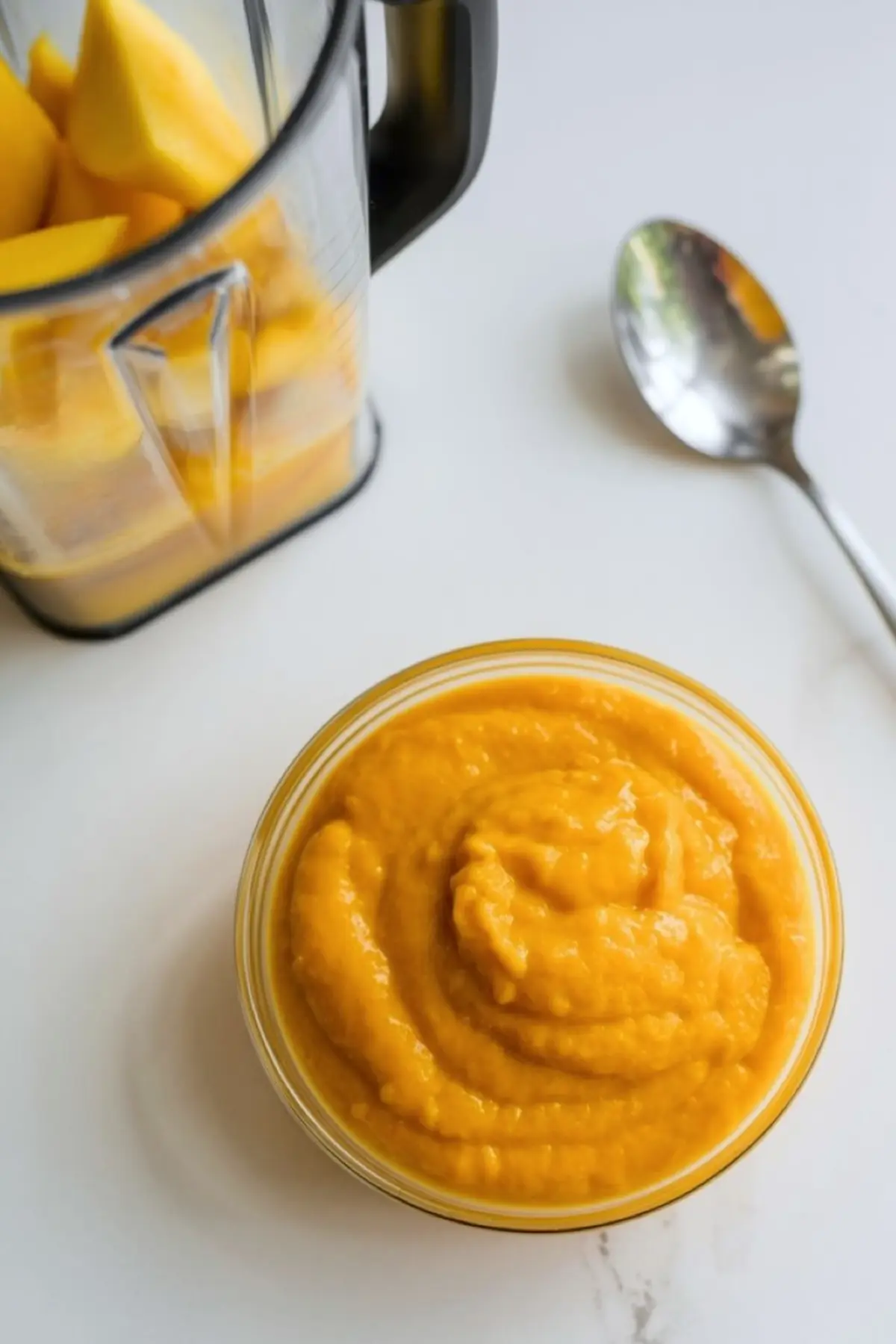
Fresh mango puree holds everything together. Alphonso or Ataulfo mangoes give the deepest color and strongest flavor, but any ripe variety will work. The goal is a thick, naturally sweet puree without added sugar.
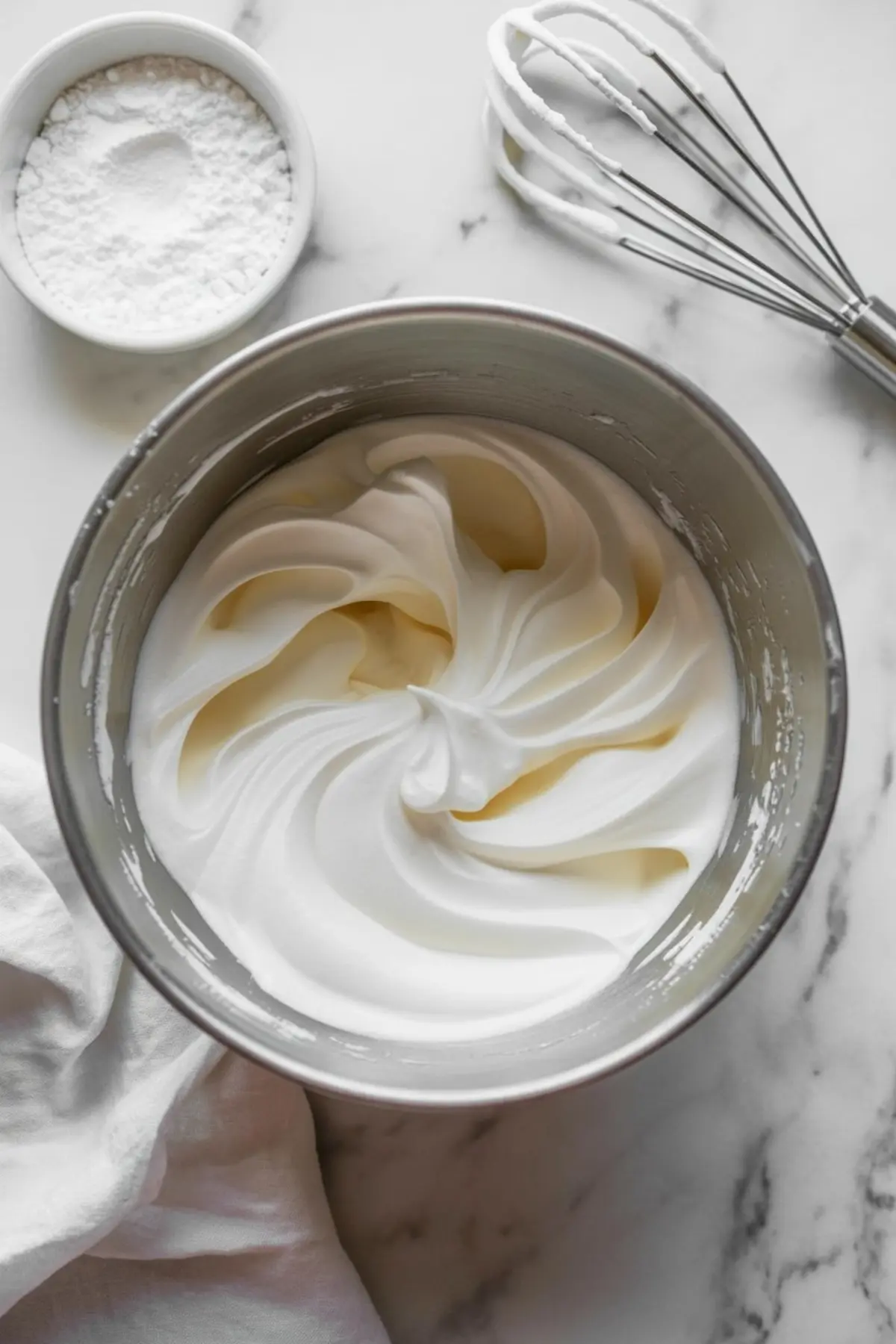
Heavy cream adds air and softness. It needs to be cold so it whips properly. Powdered sugar keeps the sweetness fine and smooth without affecting the cream’s structure. I avoid granulated sugar here, which can leave a gritty finish.
Citrus juice lifts the flavor. Just a teaspoon of lemon or lime cuts the sweetness and balances the richness. A bit of zest adds sharpness.
The gelatin is optional, but if you’re planning to transport the mousse or want it to hold up on a buffet, it helps stabilize the final texture.
Fresh Mango is the Star
Ripe mango makes or breaks this dessert.
You want that lush golden color and bright tangy-sweet flavor. If you’re using fresh mango, strain the puree after blending to remove fibers. I skip this step only if I’m using very soft Ataulfo mangoes that blend ultra smooth.
Store-bought mango puree works too, especially in winter. Just double-check that it’s unsweetened. Sweetened puree can throw off the balance. I learned that the hard way once and had to stir in extra lemon juice to fix it.
For another elegant take on mango puree, this Mango Panna Cotta uses similar ingredients in a firmer format with creamier base layers.
Building the Right Texture Without Cooking
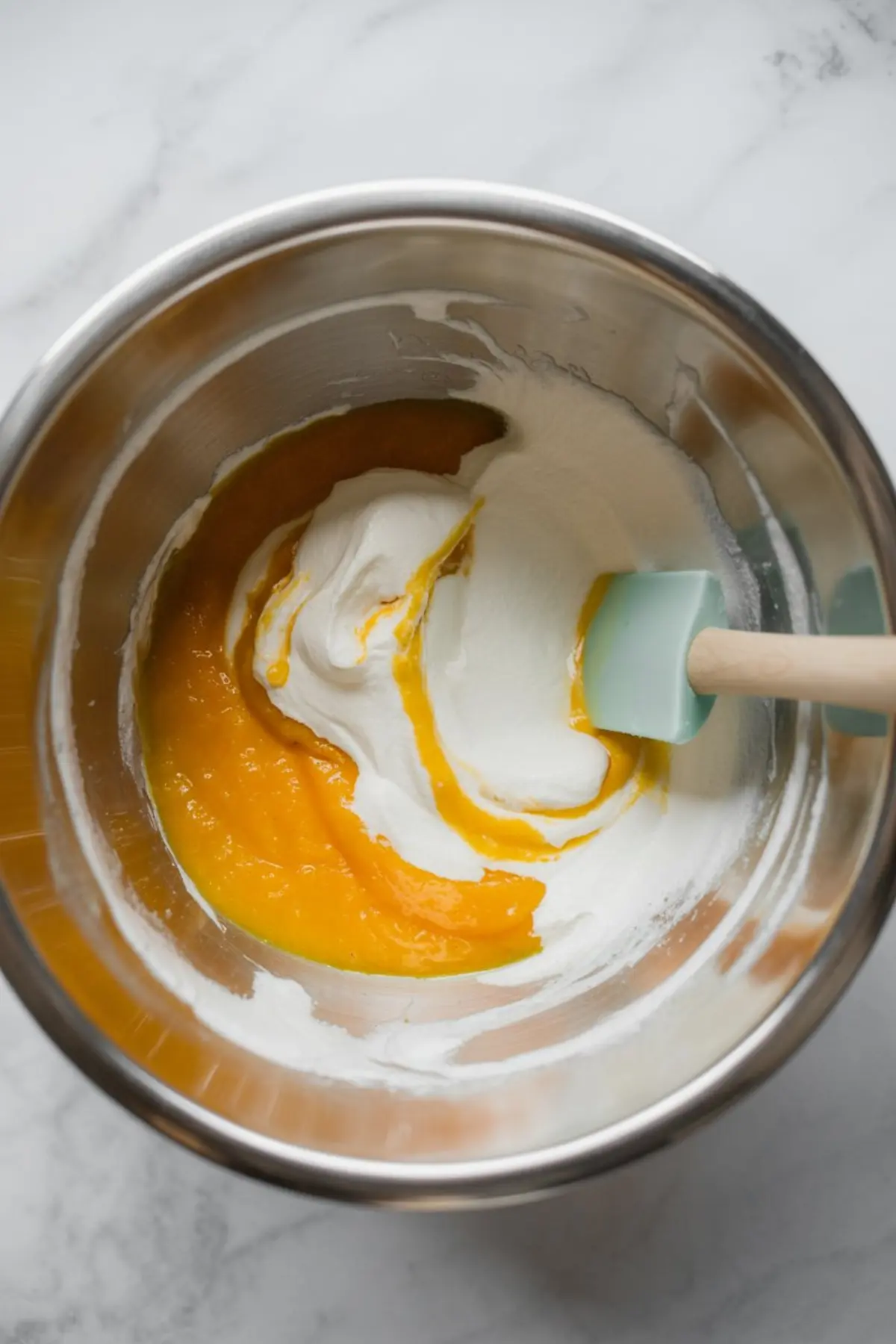
Start by blending the mango first. I always measure a full cup of finished puree. If it’s too loose or watery, the mousse won’t set right. A quick strain with a fine mesh sieve solves that.
Whip the cream until stiff but smooth. Over-whipping can make it grainy. The cream should still feel soft and glossy. I watch for trails from the whisk that hold without clumping.
Fold the mango in slowly. This is where the mousse takes shape. If you add it too fast or stir too hard, you’ll lose the air. Gentle folds, a few at a time, work better than dumping it all in at once.
This method also works well in layered no bake desserts like Chocolate Mousse Brownies where you want the mousse to hold its shape without hardening too much.
How You Know It’s Set
The mousse should look matte on top, not wet or shiny.
Give it a light shake after chilling. It should barely jiggle. Press gently with a spoon and you’ll feel soft resistance without sinking straight in. If it’s still loose after 3 hours, leave it in for another hour uncovered.
Gelatin-based versions will hold firmer, especially in tall glasses. I use that option for events or summer days where it might sit out a while.
Small Problems, Quick Fixes
If your mousse is runny, the mango might have had too much water. Use a thicker puree or strain it next time.
If it tastes too tangy, reduce the lemon juice or skip the zest. Some mangoes are already quite acidic.
If it feels too dense, the cream was likely over-whipped. Start with soft peaks and stop as soon as it thickens.
If the texture looks streaky, the folding wasn’t even. Use a wide spatula and take your time.
Flavor Variations to Try
Swap lemon juice for passion fruit pulp for a tangier twist. Use 1 tablespoon of pulp in place of the lemon juice.
Add a tablespoon of coconut cream for a tropical vibe and a slightly richer texture.
Mix in a pinch of cardamom with the mango puree to enhance the aroma. I sometimes do this with Indian Alphonso mangoes.
Layer with crushed vanilla cookies and extra cream for a parfait-style mousse.
If you want another simple fruit mousse with protein, this High-Protein Cottage Cheese Chocolate Mousse has a completely different base but whips up just as easily.
How to Store It
In the fridge, this keeps for up to 3 days. Cover the glasses to prevent drying.
You can freeze it, but texture softens slightly after thawing. Freeze in individual cups and thaw in the fridge overnight.
I don’t recommend reheating. Serve chilled or just slightly cooler than room temp.
Helpful Tips from Testing
Use a glass bowl for whipping the cream. It stays cold longer. Taste your mango before starting. If it’s too tart, add a bit more sugar.
Stick with powdered sugar. Liquid sweeteners can make the mousse watery. Bloom the gelatin fully before heating. Let it cool before adding.
Use a piping bag or spoon carefully to avoid smudging the glass rims.
How to Serve It
Top with whipped cream and chopped pistachios. Spoon into shot glasses for party trays.
Layer with crushed graham crackers. Serve in hollowed mango halves for a fun look.
Garnish with mint and a mango curl for clean presentation. Chill in ramekins and unmold before serving for plated desserts.
Save This Recipe

Pin this Mango Mousse so you have it ready next time you need an easy mango dessert.
Tried it? Let me know how it turned out in the comments. Or share your twist on it. I’d love to hear.
Mango Mousse Recipe

This no bake mango mousse is creamy, fruity, and simple to prepare. Made with fresh fruit, it’s a standout among mango dessert recipes and perfect for fans of light desserts. Enjoy this smooth mango mousse dessert as an effortless option for summer or whenever you want something refreshing. A top pick in mousse recipes and mango recipes, this treat combines flavor and ease. Add it to your favorites if you’re after dessert recipes easy, mousse desserts, or quick mango dessert ideas.
Ingredients
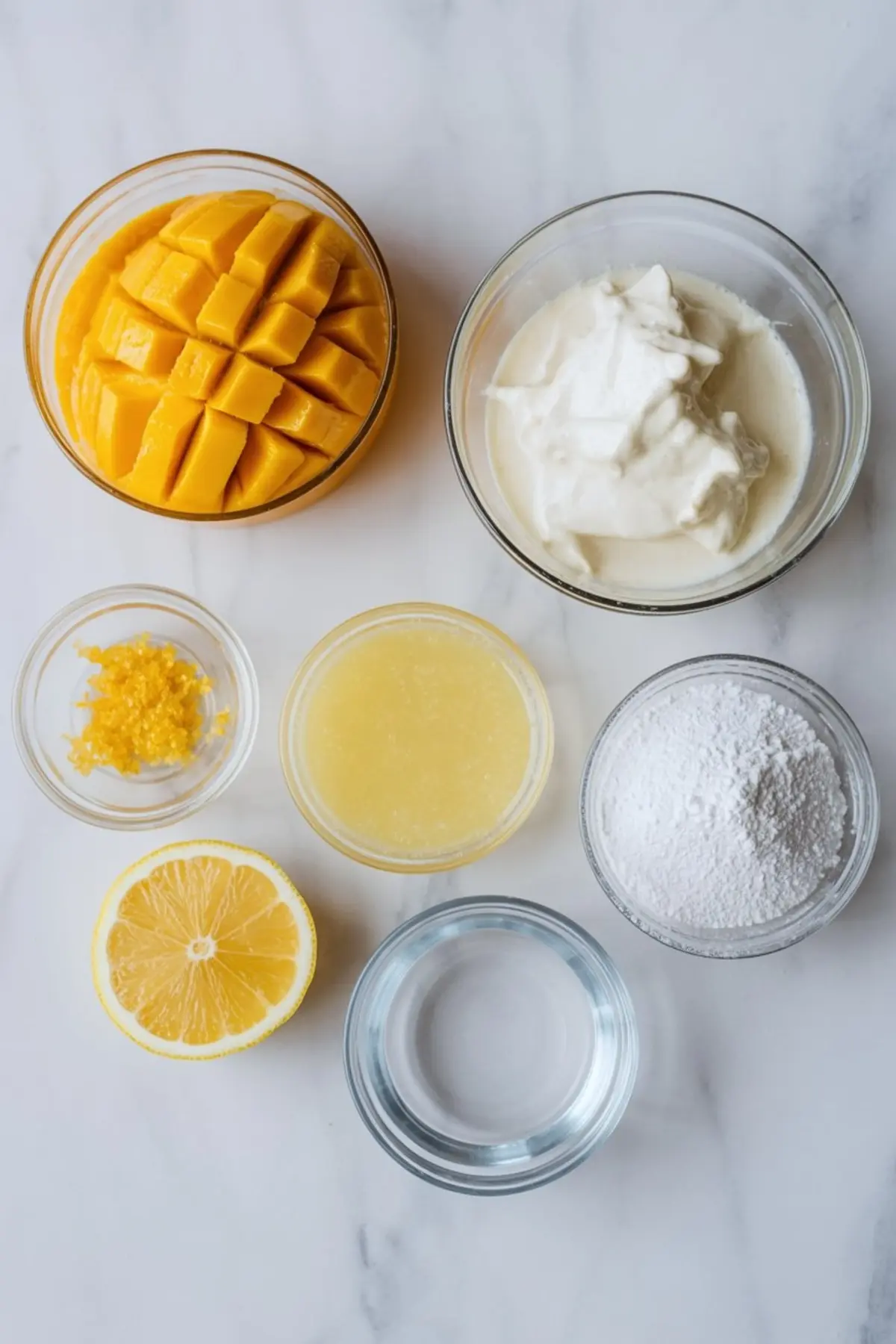
- 2 ripe mangoes (Alphonso or Ataulfo preferred) or 1 cup mango puree
- 1/2 cup heavy whipping cream, chilled
- 2 tablespoons powdered sugar
- 1 teaspoon lemon or lime juice
- 1/2 teaspoon lemon zest (optional)
- 1 teaspoon unflavored gelatin (optional)
- 2 tablespoons cold water (for blooming gelatin)
- Optional Garnishes:
- Whipped cream
- Mint leaves
- Chopped pistachios or toasted coconut
Instructions
- PREPARE THE MANGO PUREE: Peel and dice the ripe mangoes, then blend until completely smooth. For the silkiest texture, strain the puree through a fine-mesh sieve to remove fibers. You should have about 1 cup of thick mango puree.
- BLOOM THE GELATIN (OPTIONAL): In a small bowl, combine unflavored gelatin with cold water and let it sit for 5 to 10 minutes to bloom. Once bloomed, gently heat in the microwave for 5 to 10 seconds or melt over a double boiler. Allow it to cool slightly before mixing into the mango puree.
- WHIP THE CREAM: In a chilled mixing bowl, whip the heavy cream until soft peaks form. Add powdered sugar and continue whipping until stiff peaks form, being careful not to over-whip so the cream remains smooth.
- COMBINE: Gently fold the mango puree into the whipped cream using a spatula. If using gelatin, add it at this stage once slightly cooled. Stir in lemon juice and zest. Taste and adjust sweetness as needed. Fold carefully to preserve the airy texture.
- CHILL: Spoon or pipe the mousse into serving glasses or ramekins. Cover and refrigerate for 2 to 4 hours until the mousse is fully set and chilled.
Notes
For best flavor and texture, use fresh, ripe mangoes. If using store-bought mango puree, make sure it's unsweetened. Gelatin is optional but helpful for structure if preparing in advance or for transport.
Nutrition Information
Yield
4Serving Size
1Amount Per Serving Calories 239Total Fat 12gSaturated Fat 7gUnsaturated Fat 4gCholesterol 36mgSodium 13mgCarbohydrates 33gFiber 3gSugar 31gProtein 4g
