

This pineapple pie is a double crust fruit pie: chopped pineapple in a thick, glossy cornstarch syrup, baked under a buttery lattice top until the filling bubbles through the gaps. It makes one 9 inch pie, 8 slices, and takes about 2 hours 10 minutes, most of it hands-off chilling and baking, plus 2 hours of cooling before you cut it.
The filling is 2 cups chopped pineapple, ½ cup pineapple juice, ¾ cup sugar and ¼ cup cornstarch, with lemon juice and vanilla. Fresh or canned both work. The one step that decides whether it slices cleanly is boiling the syrup until it turns glossy before the fruit goes in.

Following a special diet?
Every recipe on this site can be converted to gluten-free, vegan, dairy-free, keto, nut-free or egg-free with adjusted ratios so nothing falls flat.
Try the Recipe Converter →Pineapple Pie by the Clock
- Yield: one 9 inch pie, 8 slices
- Pan: a standard 9 inch pie pan, not deep dish; the filling is about 3 cups
- Oven: 400°F (200°C), 35 to 40 minutes
- Timing: 30 minutes prep, 1 hour chilling the dough, 40 minutes baking, at least 2 hours cooling
- Fruit: fresh pineapple or one 20 ounce can of pineapple in juice
- Keeps: up to 3 days covered in the fridge
Fresh or Canned Pineapple?
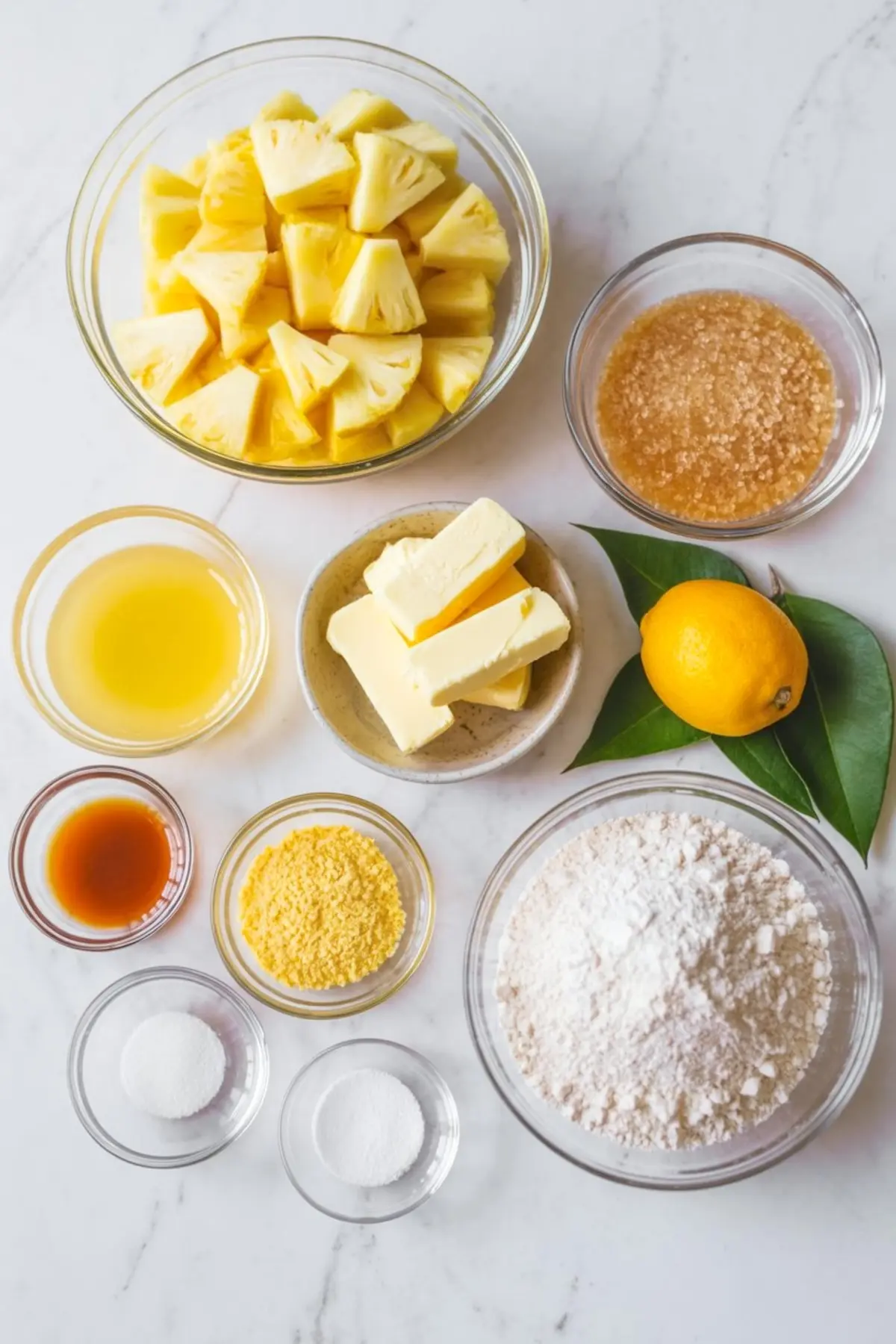
Both make a good pie, and I have baked it both ways. Fresh pineapple tastes sharper and the pieces keep a little more bite. Canned is softer and sweeter, and it is the easy choice in autumn and winter when fresh pineapples are expensive or underripe.
With canned fruit, one 20 ounce can of pineapple chunks or tidbits in juice usually gives about 2 cups of drained fruit plus enough juice for the ½ cup the syrup needs. Drain it well, then pat the pieces dry on paper towels. Any liquid left on the fruit thins the filling once it is baked.
With fresh fruit, pick a pineapple that smells sweet at the base and gives slightly when pressed. Cut out the woody core, chop the flesh into ½ inch pieces so the lattice lies flat over them, and use bottled pineapple juice or the juice you catch on the board.
The Glossy Filling and Why It Has to Boil
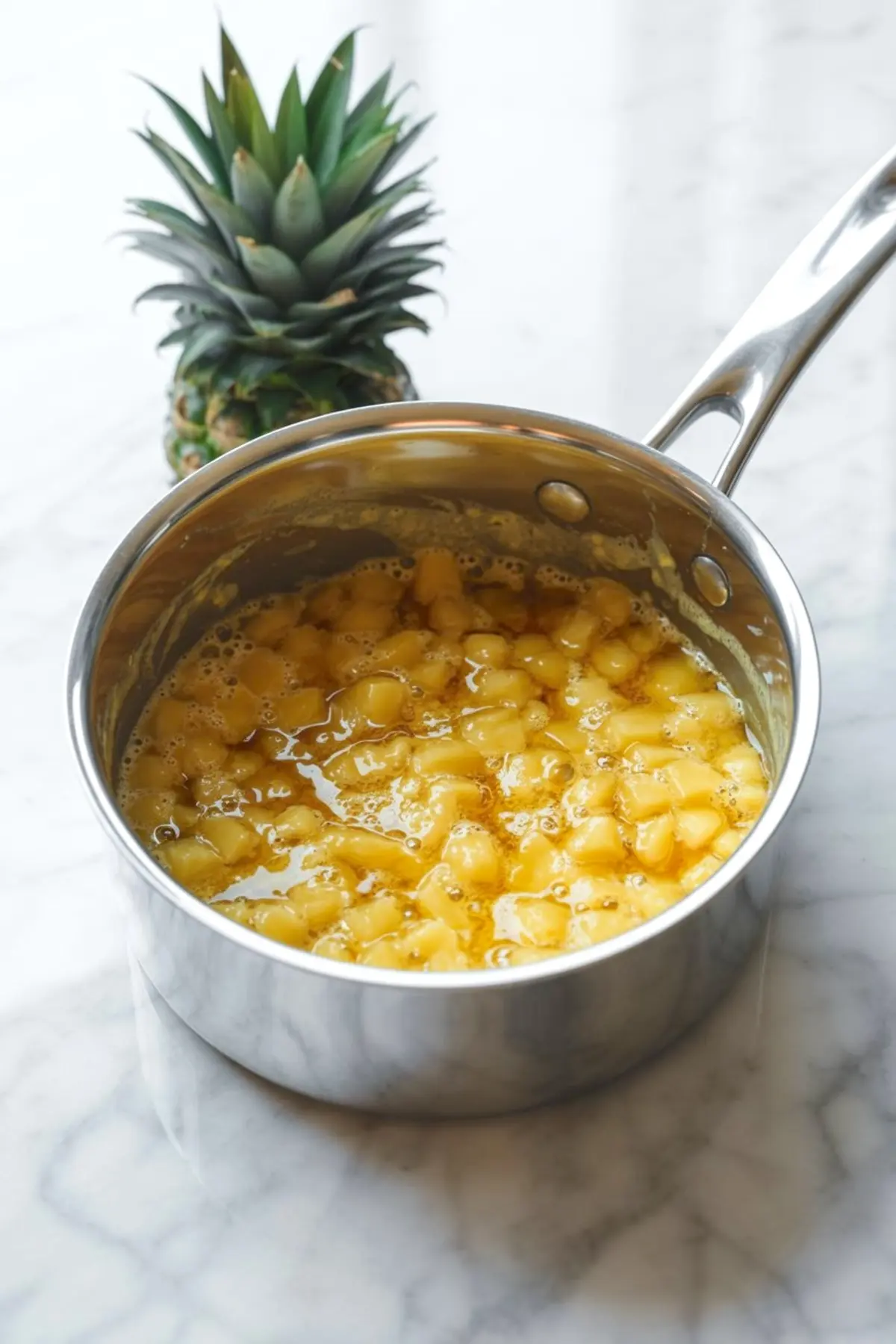
Whisk the sugar, cornstarch and salt together in a saucepan first. Mixing the cornstarch into the dry sugar keeps it from clumping when the pineapple juice and lemon juice go in. Cook over medium heat and keep whisking.
For a minute or two nothing seems to happen. Then the syrup turns from cloudy to clear and glossy and gets thick, like pudding. Let it bubble while you whisk. Cornstarch only thickens fully once it boils, and syrup pulled off the heat early is the usual reason a pineapple pie runs across the plate.
Take the pan off the heat, stir in the vanilla and the chopped pineapple, and let the filling cool completely. Spread it in a shallow dish if you want it to cool faster. Warm filling melts the butter in raw dough, and that is how you get a pale, soggy bottom crust.
Mixing and Rolling the Pie Crust
Stir the flour, sugar and salt, then cut in the cold cubed butter until you have coarse crumbs with some pea-size bits left. I do this with my fingers because you can feel when the butter pieces are the right size. Those bits melt in the oven and leave the flaky layers.
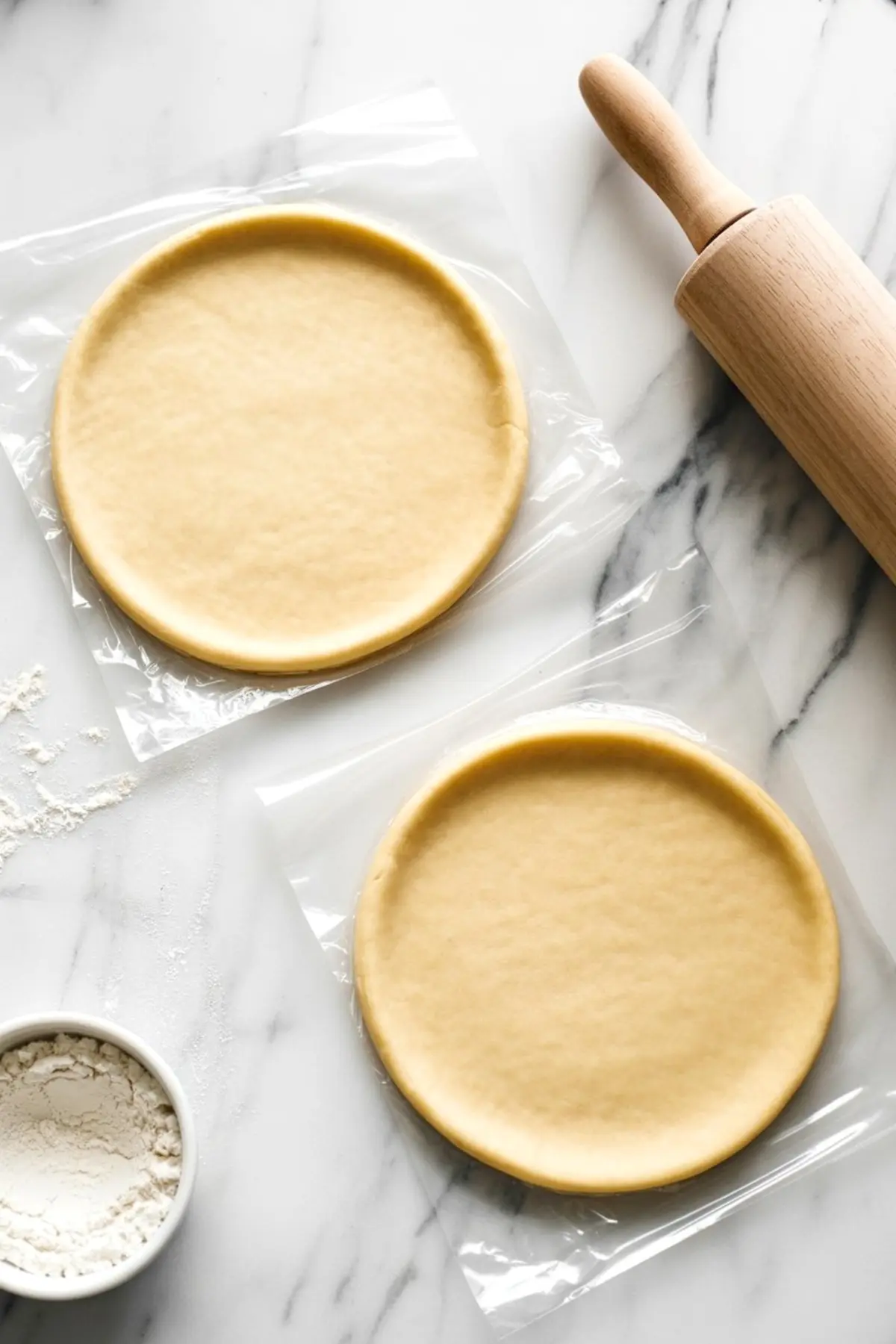
Add the 6 tablespoons of ice water a spoonful at a time. The dough is ready when a handful holds together when pressed but does not feel sticky. Shape two discs, wrap them and chill for at least 1 hour. If you want a crust guide with more detail, my pie crust recipe uses the same butter method, and the lemon pie recipe is good practice for a citrus filling.
Roll one disc into a 12 inch round on a lightly floured surface, ease it into the 9 inch pan without stretching it, and trim the edge. Spoon in the cooled filling and spread it flat to the edges so the lattice sits evenly.
Lattice or Full Top Crust?
I have made this pie both ways. The lattice is my choice here: the gaps let steam escape, so the filling thickens in the oven instead of bubbling over, and you can see the bubbles that tell you it is done. A full top crust works too. Cut 4 or 5 slits in it for the steam, and expect slightly softer slices.
For the lattice, roll the second disc and cut 1 inch strips. Lay half of them across the pie in one direction, then weave the rest through, folding back every other strip as you go. If the strips stretch or tear, chill them for 5 minutes and they will lift cleanly. Trim the overhang and crimp it with the bottom crust. The same weave works on my peach pie and cherry pie.
Baking Until the Center Bubbles
Whisk the egg with 1 tablespoon of milk and brush it over the lattice and the edge. Bake at 400°F (200°C) for 35 to 40 minutes, on the lower rack so the bottom crust browns under the juicy filling.
The pie is done when the lattice is deep golden and thick, slow bubbles show in the gaps in the middle, not just at the edges. If the rim darkens before then, usually around the 25 minute mark, cover it loosely with foil or a crust shield.
If Your Pineapple Pie Goes Wrong
- Filling runs when sliced: the syrup did not boil long enough, or the pie was cut warm. Give it the full 2 hours; chilled slices hold even better.
- Watery layer on top: canned fruit went in wet. Next time pat it dry after draining.
- Pale, soft bottom: the filling was still warm, or the pie baked too high in the oven. Use the lower rack.
- Strips sag or break: the dough got warm. Chill the cut strips for 5 minutes before weaving.
Old Fashioned Pineapple Raisin Pie
Pineapple raisin pie is an old fashioned twist on this pie, and it needs only one extra ingredient. To make it, stir ½ cup raisins into the hot syrup together with the pineapple and let them sit as the filling cools, so they plump up and soak in some of the juice. Everything else stays the same. Golden raisins look neater against the yellow fruit; dark raisins give a deeper, sweeter taste.
Serving and Keeping It
Dust slices with powdered sugar, or serve them with whipped cream or vanilla ice cream. The pie can go to the table chilled or slightly warm. Chilled slices cut the cleanest.
Cover leftovers and keep them in the fridge for up to 3 days. The crust softens a little after the first day; 10 minutes in a 350°F oven crisps a slice again. Skip freezing the baked pie: cornstarch fillings tend to weep and turn spongy once thawed. For more pineapple bakes, try my pineapple cake filling, pineapple jam or pineapple dump cake, and the coconut cream pie if you want another tropical pie. Pin this one to your pie board, and tell me in the comments whether you went fresh or canned.
Pineapple Pie Recipe

This pineapple pie is a double crust fruit pie made with chopped pineapple, pineapple juice, sugar, cornstarch, lemon juice and vanilla, baked in a buttery homemade crust with a lattice top. It makes one 9 inch pie, 8 slices, and bakes at 400°F for 35 to 40 minutes, then cools for 2 hours so the thick, glossy filling sets and slices cleanly. The key step is boiling the cornstarch syrup until it turns clear and glossy before the pineapple goes in. Use fresh pineapple or one 20 ounce can of pineapple in juice, drained and patted dry. For an old fashioned pineapple raisin pie, stir ½ cup raisins into the hot filling. Keep leftovers covered in the fridge for up to 3 days.
Ingredients
- FOR THE PIE FILLING
- 2 cups chopped pineapple (fresh or canned, drained)
- 1/2 cup pineapple juice (from the can or fresh)
- 3/4 cup granulated sugar
- 1/4 cup cornstarch
- 1 tablespoon lemon juice
- 1/2 teaspoon vanilla extract
- Pinch of salt
- FOR THE PIE CRUST
- 2 1/2 cups all-purpose flour
- 1 tablespoon sugar
- 1 teaspoon salt
- 1 cup unsalted butter, cold and cubed
- 6 tablespoons ice water (plus more if needed)
- FOR ASSEMBLY
- 1 egg
- 1 tablespoon milk
- Powdered sugar (optional, for dusting)
- Whipped cream or vanilla ice cream (for serving)
Instructions
- MAKE THE PIE CRUST: In a large bowl, stir together flour, sugar, and salt. Add cold cubed butter and cut it into the flour using a pastry cutter or your fingers until the mixture forms coarse crumbs. Gradually drizzle in ice water, mixing just until the dough holds together. Divide the dough into two discs, wrap each in plastic wrap, and refrigerate for at least 1 hour.
- PREPARE THE PINEAPPLE FILLING: In a medium saucepan, whisk together sugar, cornstarch, and salt. Add pineapple juice and lemon juice, whisking until smooth. Cook over medium heat, whisking constantly, until the mixture boils and thickens into a glossy, pudding-like texture. Remove from heat, stir in vanilla extract and chopped pineapple, and let the filling cool completely.
- ROLL OUT THE DOUGH: On a lightly floured surface, roll out one chilled dough disc into a 12-inch round. Transfer it to a 9-inch pie pan and press it gently into the bottom and sides. Trim the edges if needed. Pour the cooled pineapple filling into the crust and spread evenly.
- MAKE THE LATTICE TOP: Roll out the second dough disc and cut it into 1-inch wide strips. Lay half of the strips horizontally over the filling, spacing them evenly. Weave the remaining strips vertically to create a lattice pattern. Trim excess dough and crimp the edges to seal.
- BAKE THE PIE: Preheat the oven to 400°F (200°C). In a small bowl, whisk the egg and milk together to make an egg wash. Brush it over the lattice and edges of the crust. Bake the pie for 35–40 minutes, or until the crust is golden and the filling is bubbling. If the edges brown too quickly, cover them loosely with foil.
- COOL AND SERVE: Allow the pie to cool at room temperature for at least 2 hours so the filling can fully set. Serve with a dusting of powdered sugar, whipped cream, or a scoop of vanilla ice cream if desired.
Notes
Canned pineapple works in place of fresh: one 20 ounce can of chunks or tidbits in juice usually gives about 2 cups of drained fruit and enough juice for the syrup. Drain it well and pat the pieces dry so the filling does not turn watery. Boil the syrup until it is glossy and thick; under-cooked cornstarch is why a pie runs when sliced. Cool the filling completely before it goes into the crust. If the lattice strips stretch or tear, chill them for 5 minutes. Bake on the lower rack and cover the edges with foil if they brown too fast. Cool at least 2 hours before cutting. Store covered in the fridge up to 3 days; freezing the baked pie is not recommended.
