

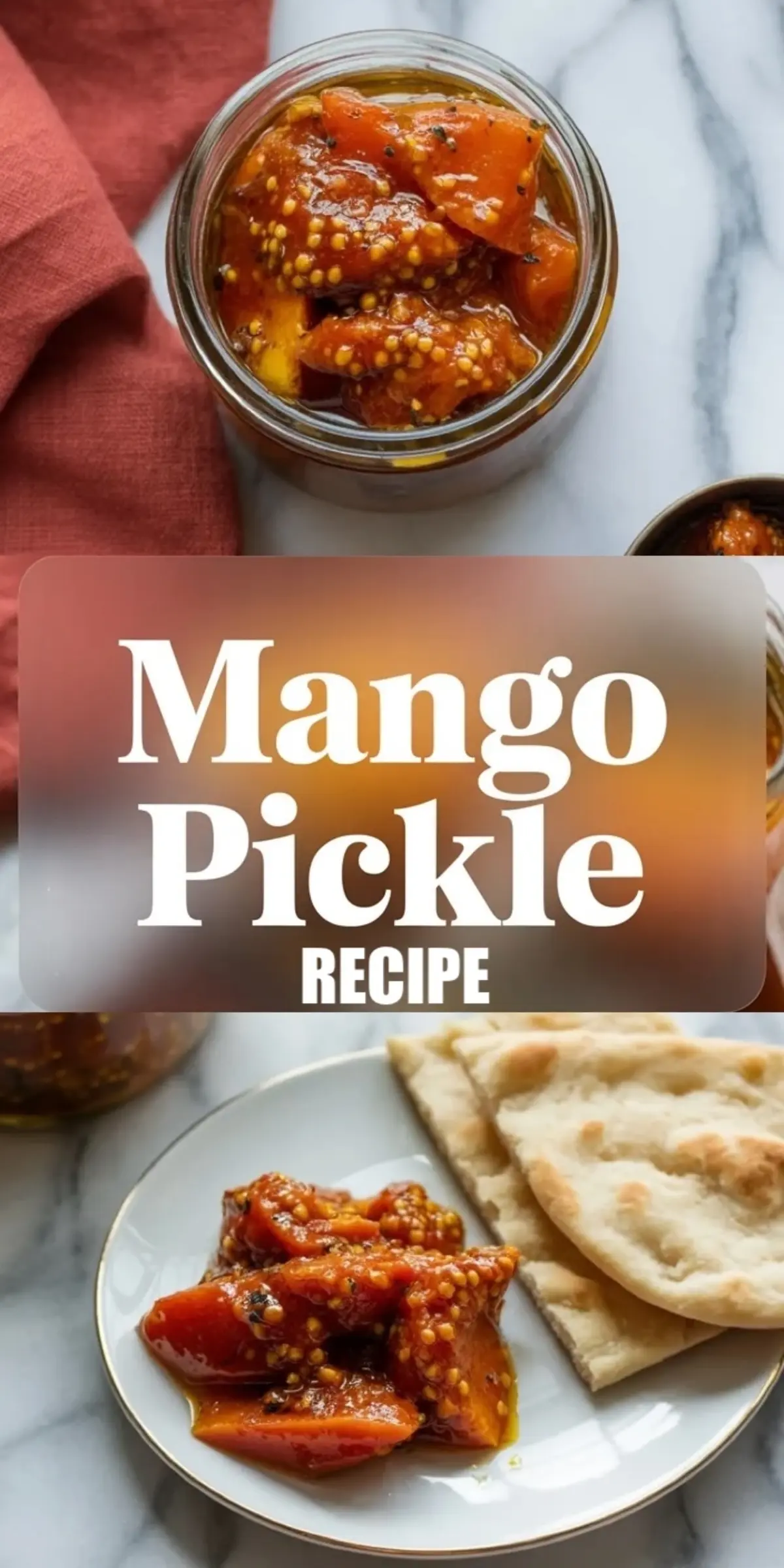
This spicy mango pickle recipe uses raw mangoes, toasted whole spices, and mustard oil to create an easy mango pickle with bold heat and tang. It’s inspired by traditional mango pickle recipes Indian households pass down and fits any fan of pickling recipes, mango pickle Indian flavors, or homemade pickled mango condiments.
You’ll get a thick, glossy syrup clinging to tart mango chunks, spiced with red chili, fennel, and mustard seeds. The flavor deepens over time, and the texture softens while keeping its bite. Serve it with rice, parathas, or even grilled meats for contrast.
Following a special diet?
Every recipe on this site can be converted to gluten-free, vegan, dairy-free, keto, nut-free or egg-free with adjusted ratios so nothing falls flat.
Try the Recipe Converter →Letting the mango rest with salt and turmeric creates the foundation. That step draws out moisture and firms the flesh so it absorbs flavor instead of breaking down. It’s easy to skip, but I’ve tested it both ways. This extra time changes the result completely.
Toasting the whole spices changes the oil flavor. That quick step lifts the aroma and brings warmth that ground spices alone can’t match. Toasted spices, especially fennel and fenugreek, give this mango pickle its signature fragrance.
I use ½ cup jaggery for about 500g of mango. That amount balances the tartness, adds body, and helps create the thick coating syrup that makes this feel complete. Skip jaggery, and it’ll lack depth.
What Each Ingredient Adds
Raw mangoes must be firm and tart. Too soft and the pieces fall apart. Too sweet and you lose the contrast. I use unripe mangoes that feel heavy for their size and have a greenish peel. If they smell fruity, they’re already too ripe.
Turmeric acts as both a flavor and a natural preservative. Salt plays the same double role. I always use sea salt or kosher salt, never iodized. Iodine can react with fermentation and leave odd flavors.
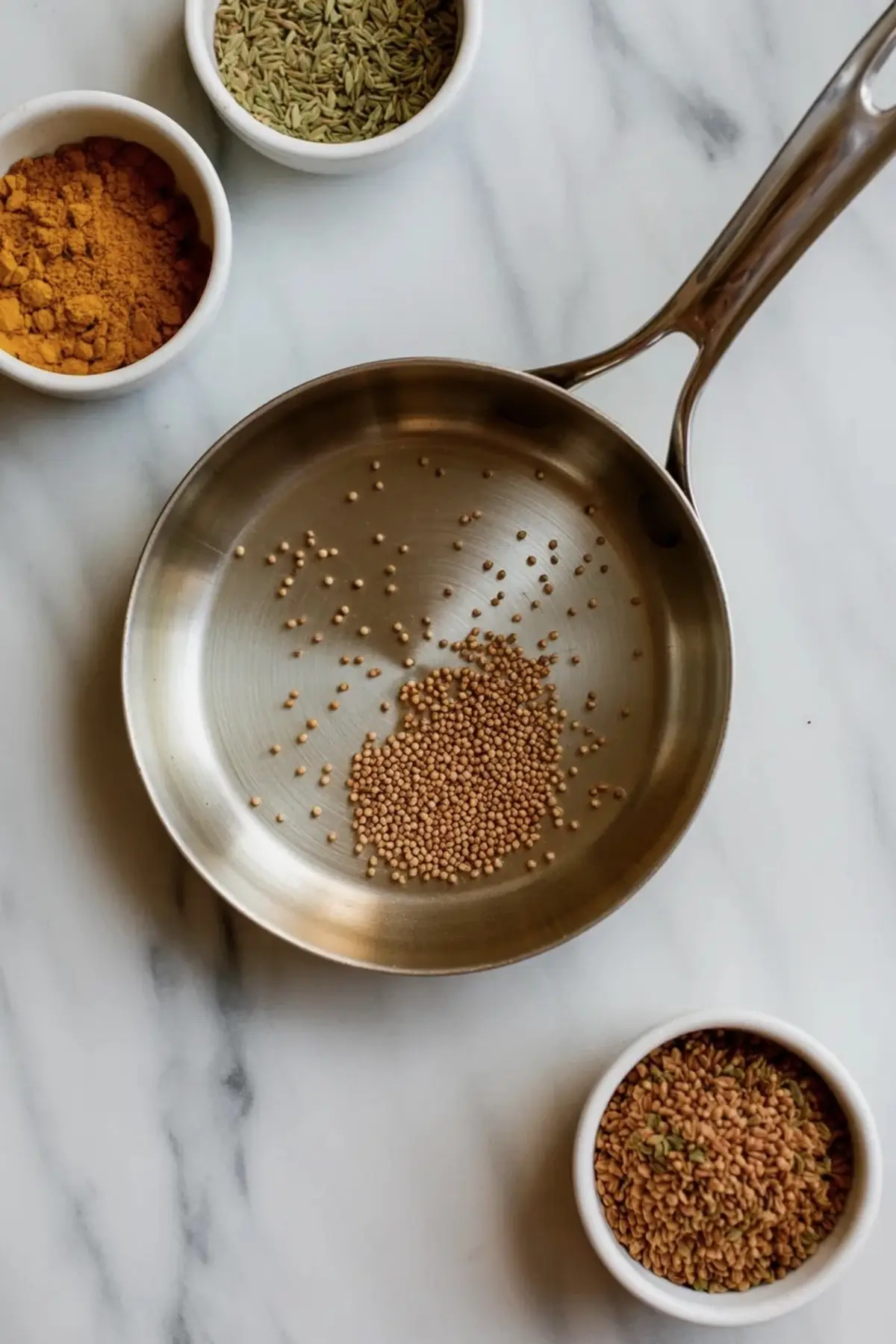
For the spices, I keep it simple. Whole mustard seeds give the pickle its sharp edge. Fennel seeds round it out with sweetness. Fenugreek brings a faint bitter note that balances the jaggery.
Jaggery gives more than sweetness. It softens and thickens the liquid into a sticky syrup that clings. You can use brown sugar, but the flavor will flatten. Vinegar sharpens everything and preserves it.
Mustard oil changes the personality of this dish. If you’re unfamiliar, it can smell strong when raw, but once heated past the smoking point, it mellows and turns earthy. I use ½ cup, but you can try half mustard oil and half neutral oil if you’re easing into the flavor.
If you’re looking for another mango-based condiment, try my Mango Chutney Recipe.
The Oil and Spice Technique
Mustard oil must be heated until it just begins to smoke. That removes bitterness. Then I let it cool for a minute before adding spices. The crushed spices bloom fast, so stir immediately.
Once the mangoes hit the pan, you’ll notice they soak up the oil quickly. That’s what you want. When you add jaggery and vinegar, keep the heat low. Stir slowly and watch as the syrup forms. It takes about 10 minutes.
A similar visual happens when I make Mango Mochi when the mixture thickens and coats the spoon evenly, you know you’re close.
Knowing When It’s Done
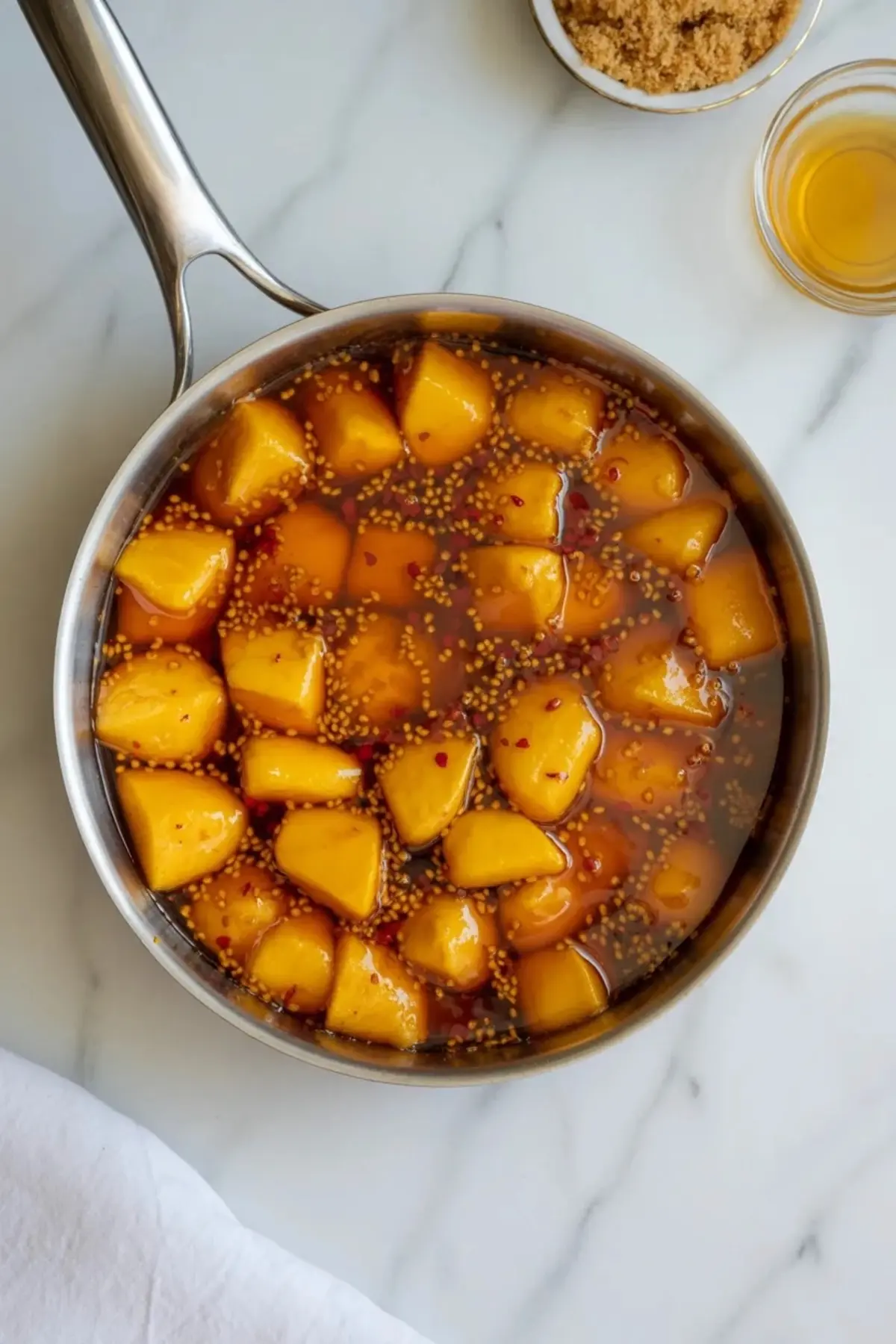
The syrup should coat the back of a spoon and leave a trail when you drag your finger through it. The mangoes should look softened but still hold shape.
If the syrup feels watery, keep simmering. If it looks dry and sticky too soon, reduce the heat. Overcooked syrup can taste bitter, so keep an eye on the color. A deep golden hue is your signal.
How To Fix Common Mistakes
If your pickle tastes too salty after curing, stir in a bit more jaggery and vinegar. If it’s too sweet, add a touch of red chili powder.
If the oil floats above everything after cooling, don’t worry. Stir it again before serving. If mold forms, the jar likely had moisture. Always dry mangoes fully and use sterilized jars.
You can also explore Mango Float Recipe if you’re craving a sweet mango dish instead.
Mango Pickle Variations
You can reduce the jaggery to ¼ cup for a sharper taste. You can also try green chili slices in place of some red chili powder. Some prefer adding garlic—just toast a few crushed cloves and stir in with the spices.
Add kalonji seeds (black onion seeds) for extra aroma. Or use apple cider vinegar for a fruitier background.
How To Store It Right
Once cooled, store it in a glass jar with a tight lid. It keeps for 2 weeks at room temperature if kept dry. In the fridge, it lasts a month. I always use a clean spoon to avoid contamination.
If you want to freeze it, portion into small jars and freeze for up to 3 months. Thaw overnight in the fridge.
Quick Notes From My Kitchen
Use a heavy-bottom pan to avoid scorching the jaggery. Sterilize jars with hot water and dry fully.
Don’t skip resting the salted mangoes. That step builds flavor. The smell will intensify by the second day. That’s a good thing.
The pickle thickens as it cools. Don’t judge texture while warm. You can pair this with savory breakfasts like Matcha Chia Pudding to add a spicy contrast.
Serving Suggestions
Spoon it next to dal and rice. Add it to a paratha roll with paneer.
Use it as a sandwich spread with grilled chicken. Mix into yogurt for a spicy dip.
Add to a cheese board for contrast. I even use it on toasted sourdough with a fried egg on top.
Save and Share This One
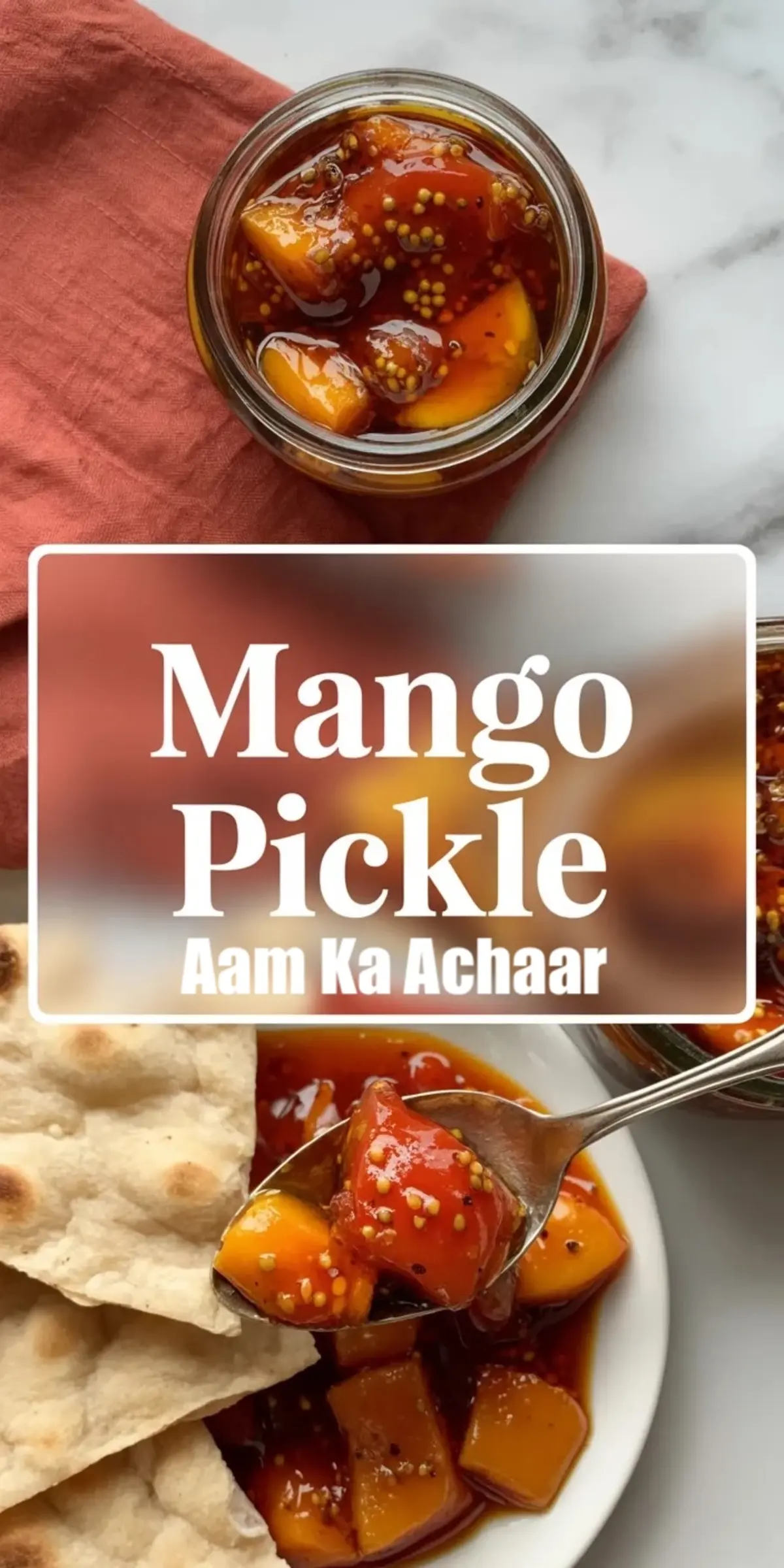
Save this Pickled Mango Recipe to your Mango Recipes or Pickling Recipes board on Pinterest for later.
If you make it or try a variation, I’d love to hear about it. Leave a comment below and share how it turned out!
Mango Pickle Recipe

This spicy mango pickle is a bold, flavorful addition to any meal. Inspired by traditional Mango Pickle Recipes Indian style, it’s made using raw mango, simple spices, and oil. Learn how to make Aam Ka Achaar at home with this easy mango pickle method. Ideal for fans of pickling recipes, this pickled mango recipe delivers tangy heat and rich flavor. Perfect as a side with rice, paratha, or curry. If you love mango pickles or want to try a classic mango pickle Indian recipe, this one’s for you.
Ingredients
- Raw mangoes – 3 medium-sized (about 500g), firm and slightly sour
- Salt – 2 tsp (non-iodized, like sea salt or kosher salt)
- Turmeric powder – 1 tsp
- Red chili powder – 1½ tsp
- Mustard seeds (yellow or black) – 2 tsp
- Fennel seeds – 1 tsp
- Fenugreek seeds – ½ tsp
- Jaggery (or brown sugar) – ½ cup, grated
- Vinegar – 2 tbsp (white or apple cider vinegar)
- Mustard oil (preferred) or neutral oil – ½ cup
Instructions
- PREPARE THE MANGOES: Wash and dry the mangoes thoroughly to avoid moisture, which can cause spoilage. Cut them into bite-sized chunks, keeping the skin on. Toss the pieces with salt and turmeric in a glass bowl, cover, and let rest at room temperature for 12 to 24 hours to draw out moisture and enhance flavor.
- TOAST AND CRUSH THE SPICES: In a dry pan over low heat, toast the mustard seeds, fennel seeds, and fenugreek seeds for 1 to 2 minutes until fragrant. Remove from heat and let cool slightly, then coarsely crush them using a mortar and pestle or spice grinder.
- COOK THE PICKLE BASE: In a saucepan, heat mustard oil until it reaches smoking point, then remove from heat and let cool slightly. Stir in the crushed spices and red chili powder. Add the salted mango pieces along with any liquid they've released. Mix in the grated jaggery and vinegar, then simmer on low heat for 10 to 15 minutes, stirring often, until the jaggery melts and forms a thick syrup that coats the mangoes.
- STORE AND CURE: Transfer the hot pickle to a clean, sterilized glass jar. Let it cool completely before sealing. Store in a cool, dry place or refrigerate. Allow the pickle to rest for 2 to 3 days before serving to let the flavors meld and deepen.
Notes
For best results, use raw, firm mangoes with a naturally tart flavor. Non-iodized salt is important to prevent spoilage. Mustard oil adds a traditional sharpness, but you can substitute with a neutral oil if preferred. The pickle will continue to thicken and intensify in flavor over time.
