
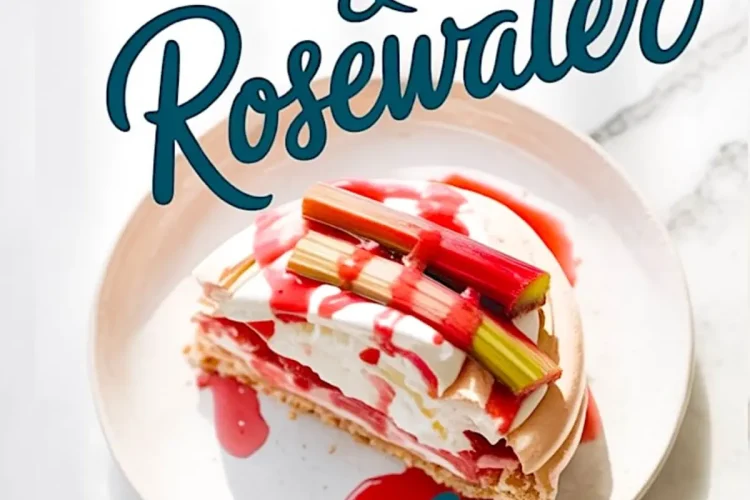
light pink pavlova with floral poached rhubarb and softly whipped cream
Spring always feels like a gentle reset. The kind that clears the shelves and asks for something simple, light, and honest. This rhubarb and rosewater pavlova is my answer every time.
You’re about to make a dessert that holds its shape with quiet grace. A crisp shell, a marshmallow-soft center, tart ribbons of rhubarb, and just enough floral note to bring curiosity to every bite. If you’ve been intimidated by meringue before, don’t be. You don’t need to chase perfection here, just patience and clean hands.
You’ll learn how to make a pink pavlova base that keeps its height and chew. You’ll poach rhubarb until it yields to the spoon, and you’ll finish the whole thing with a gentle swirl of whipped cream. I’ll walk you through everything I’ve learned after making this more than a dozen times across many springs. And I’ll show you why this pavlova turns out better than many rhubarb cakes or trifles.
Following a special diet?
Every recipe on this site can be converted to gluten-free, vegan, dairy-free, keto, nut-free or egg-free with adjusted ratios so nothing falls flat.
Try the Recipe Converter →How to Make Pavlova That Doesn’t Collapse
The egg whites matter more than anything here. Room temperature is essential. Cold whites don’t whip the same. I’ve made that mistake in a rush before and ended up with a flat base.
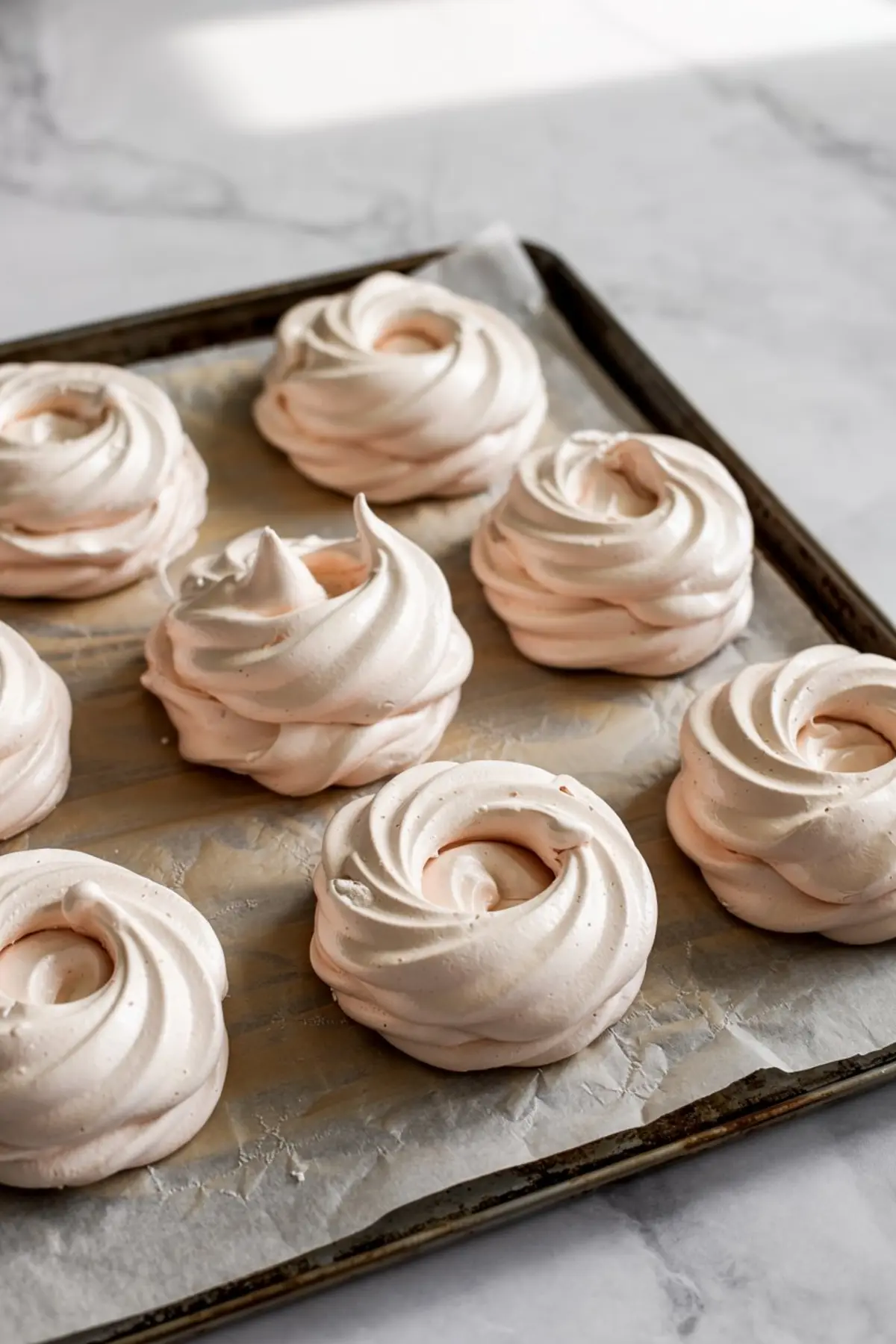
Once your peaks form, sugar goes in slowly. I count one spoon at a time. That patience builds volume. Add the vinegar and cornstarch right at the end. These are what give pavlova its chew instead of a dry snap. A tiny swirl of food coloring isn’t necessary, but the soft pink tint helps make this feel like a celebration on a plate.
Shaping the pavlova is forgiving. I always trace a circle on parchment and pile it up high in the middle, swirling the sides with the back of a spoon. Leave a dip in the center. That’s where the cream and fruit will sit.
After baking, I let it cool right inside the oven. Leave the door slightly ajar. Don’t rush it. Sudden cold air will make it crack more than usual
How to Poach Rhubarb with Flavor and Shape Intact
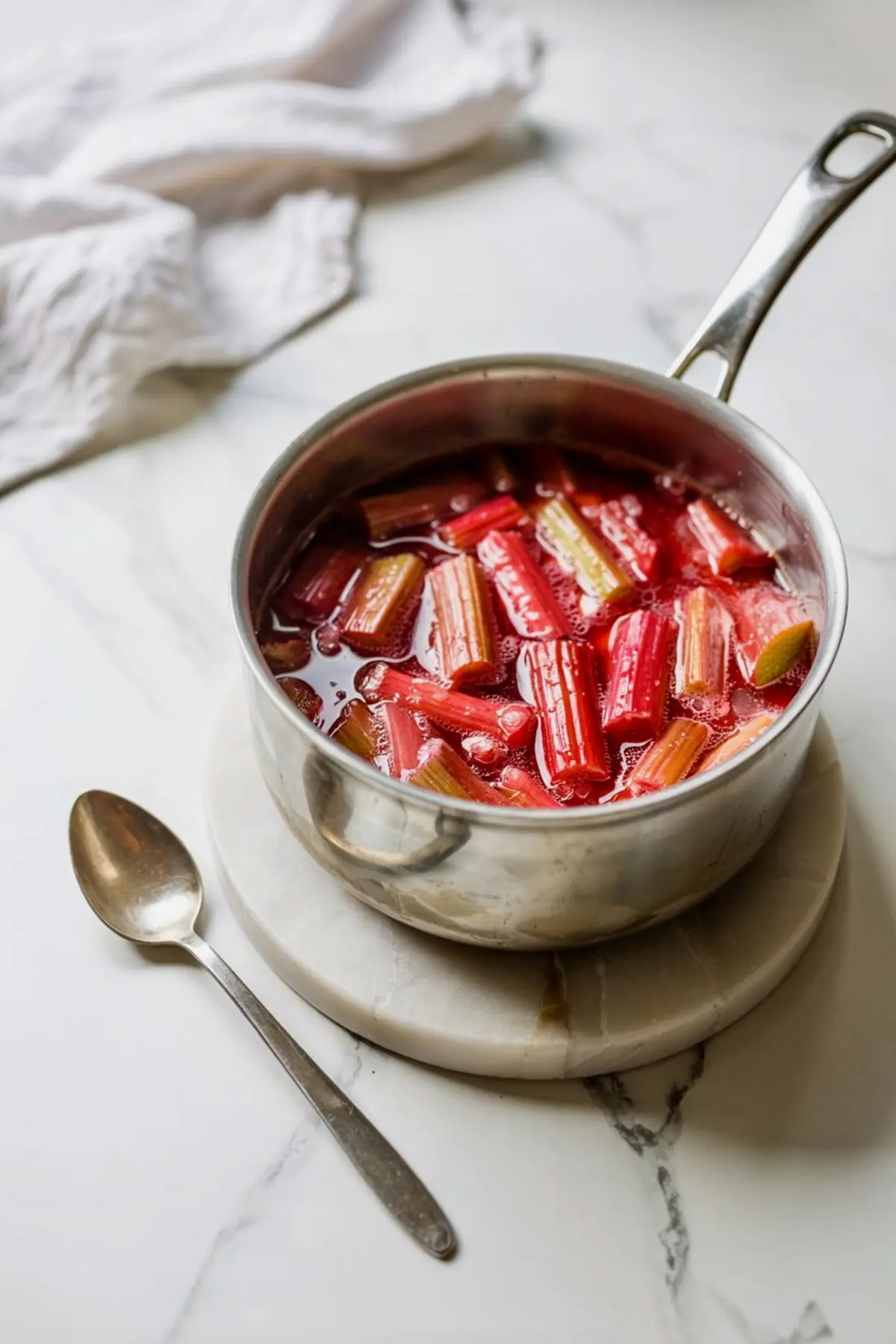
Fresh rhubarb has a narrow window. Too much heat and it turns into a slush. But handled gently, it keeps its shape and lets the rosewater shine.
I simmer sugar and water in a wide pan until the grains dissolve. Rhubarb batons go in for about six minutes. You’ll know they’re ready when they start to bend without falling apart. I lift them out with a slotted spoon. The key is to let them cool on their own, not in the pan, so they don’t keep cooking.
Once they’re out, I stir rosewater into the syrup. That syrup becomes your drizzle later. The smell alone is worth the effort. I use just enough rosewater to give it a lift. Too much, and it starts to taste like soap.
How to Build Flavor with Whipped Cream
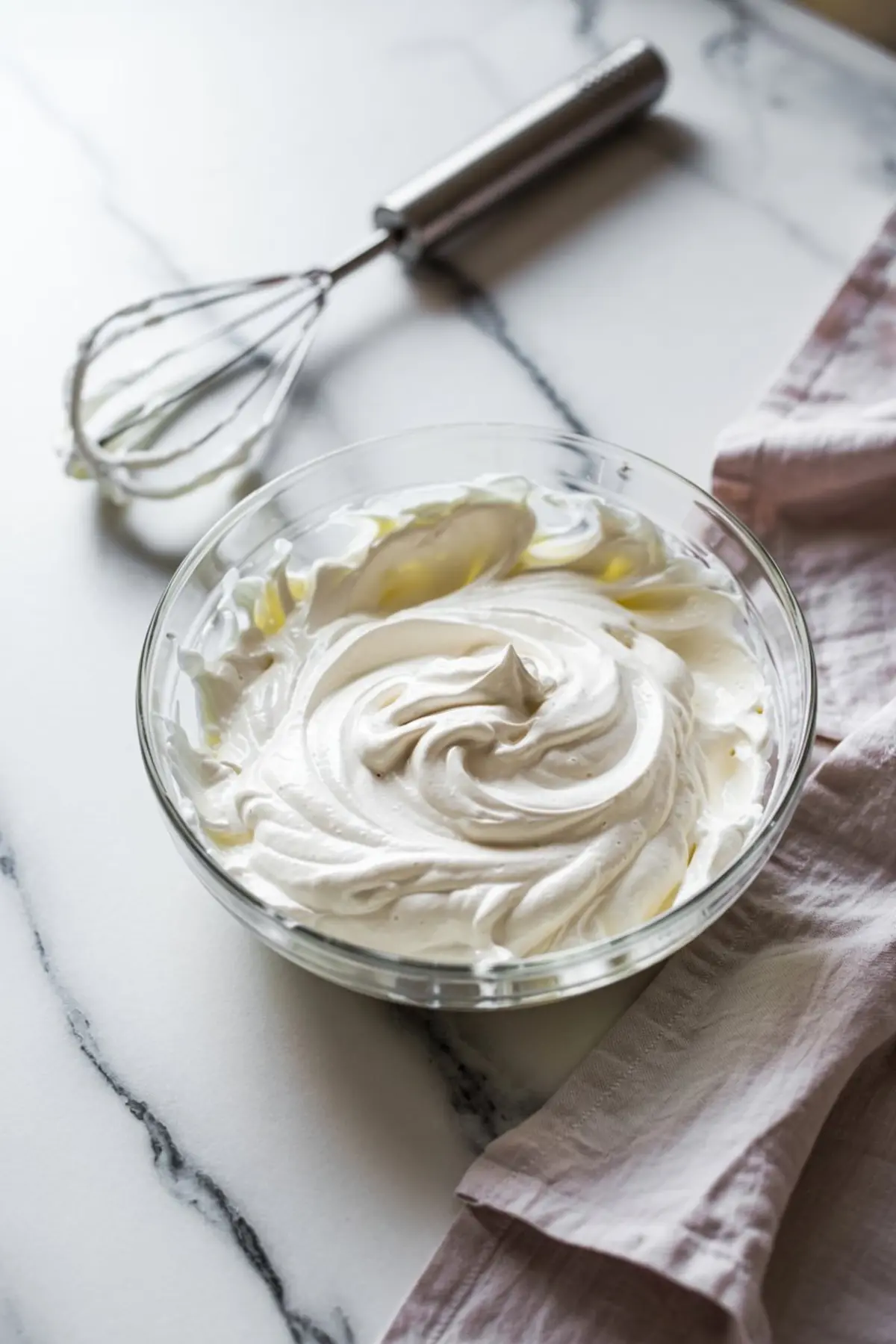
Heavy cream on its own is fine, but with a touch of vanilla and powdered sugar, it supports the whole dessert. I whip just until soft peaks form. Too stiff, and it fights the texture of the pavlova.
The cream gives a soft landing for the compote. It balances the tang and lifts the floral notes. I’ve also tried adding crème fraîche before, but I find it overcomplicates the finish. This dessert works best when kept simple.
Assembling the Pavlova Without Losing Structure
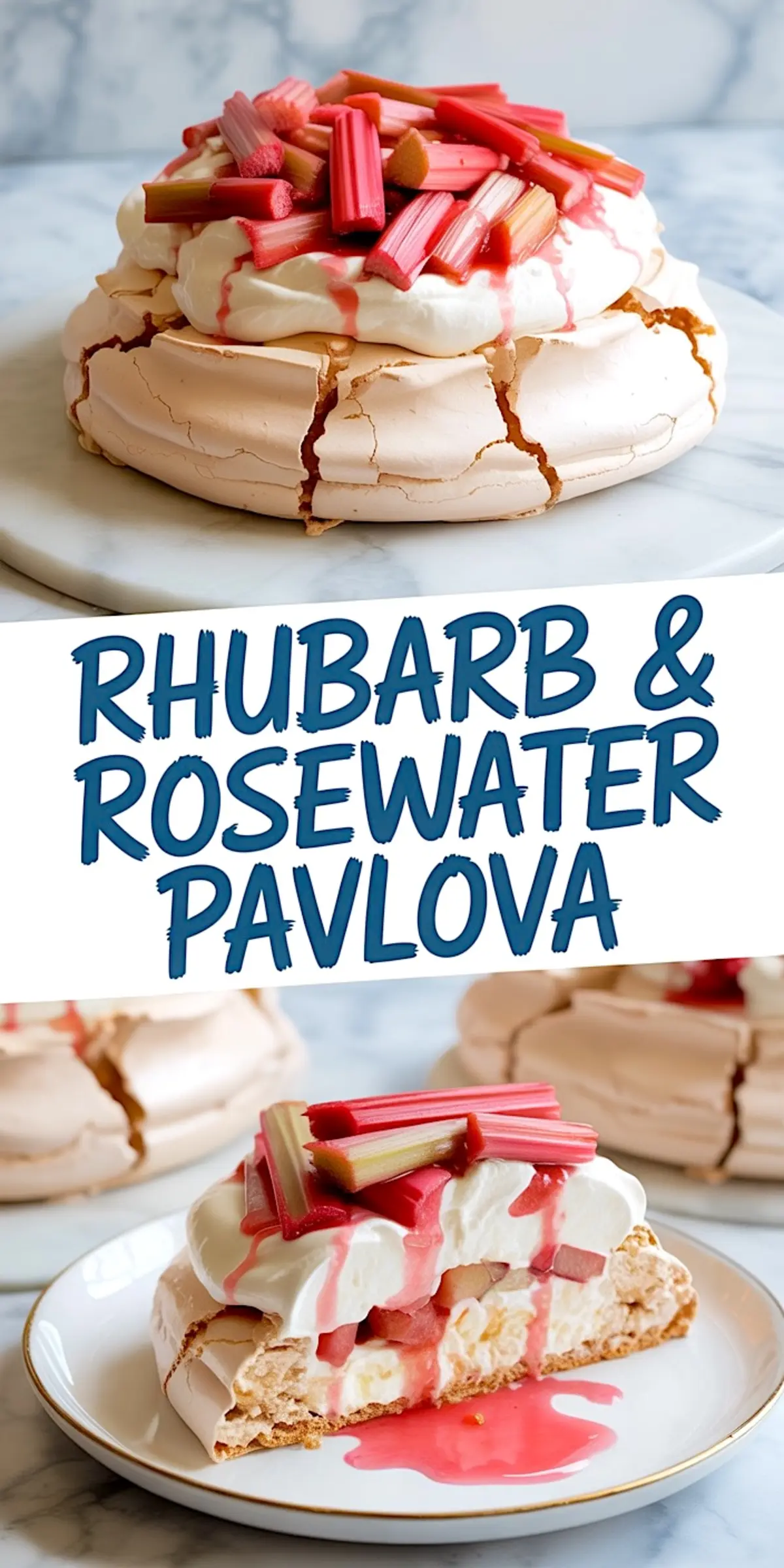
Once the pavlova is fully cooled, I move it gently onto a serving plate. It will crack a little — that’s normal. I layer half the compote first, spreading it with the back of a spoon. Then the whipped cream, followed by the rest of the rhubarb. Finish with the rose syrup drizzled over everything and the reserved batons arranged on top.
That last step makes it look like a bakery showpiece, even if your pavlova has leaned to one side or cracked more than expected.
If you liked this, my Peach Pavlova with Honey Drizzle is another take with stone fruit and golden syrup instead of rosewater. More summer, less floral.
Serving and Storing Rhubarb Pavlova
Serve this the same day you assemble it. The pavlova base holds its crispness for hours, but overnight with cream on top turns it soggy.
That said, the base stores well on its own. I’ve kept mine in an airtight tin for 24 hours without issue. Just keep it dry. You can also store the rhubarb and cream separately in the fridge and assemble fresh the next day.
If you’re serving a crowd, make two smaller pavlovas instead of one large one. I’ve done this for showers and brunches, and it’s easier to cut and plate.
If rhubarb’s your spring fruit of choice, try my easy Rhubarb Dump Cake next. It’s less structured, more relaxed, but delivers that same tart-sweet hit.
Before You Go: Save and Share
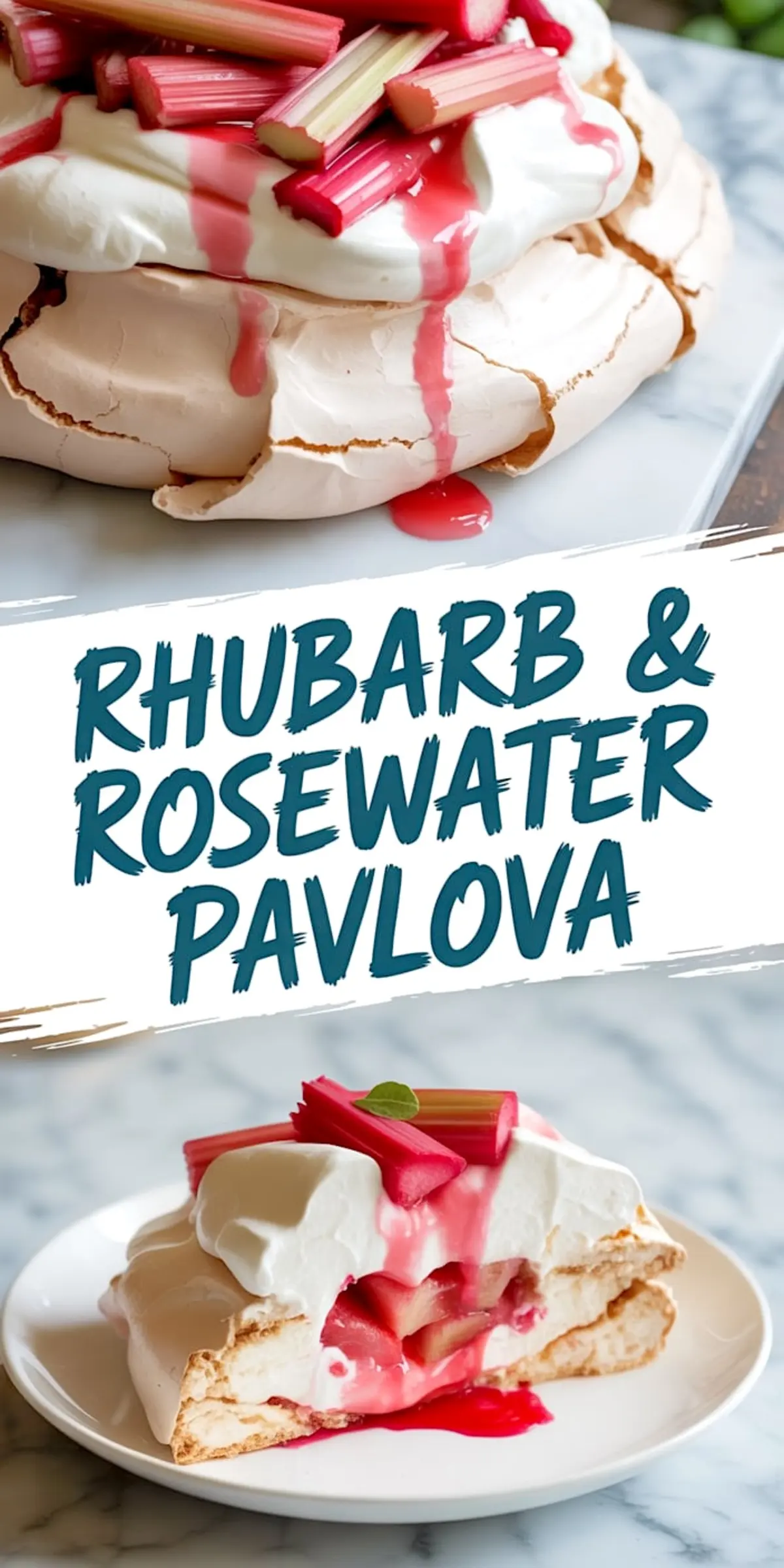
This rhubarb and rosewater pavlova is one of those recipes that turns ordinary ingredients into something with presence. If this feels like something you’d love to serve for a spring table, pin it now to your seasonal dessert boardand save it for later.
Tried this? Let me know in the comments how it went for you. I’d love to hear your tweaks, your toppings, or your questions. We learn more by sharing.
Rhubarb & Rosewater Pavlova
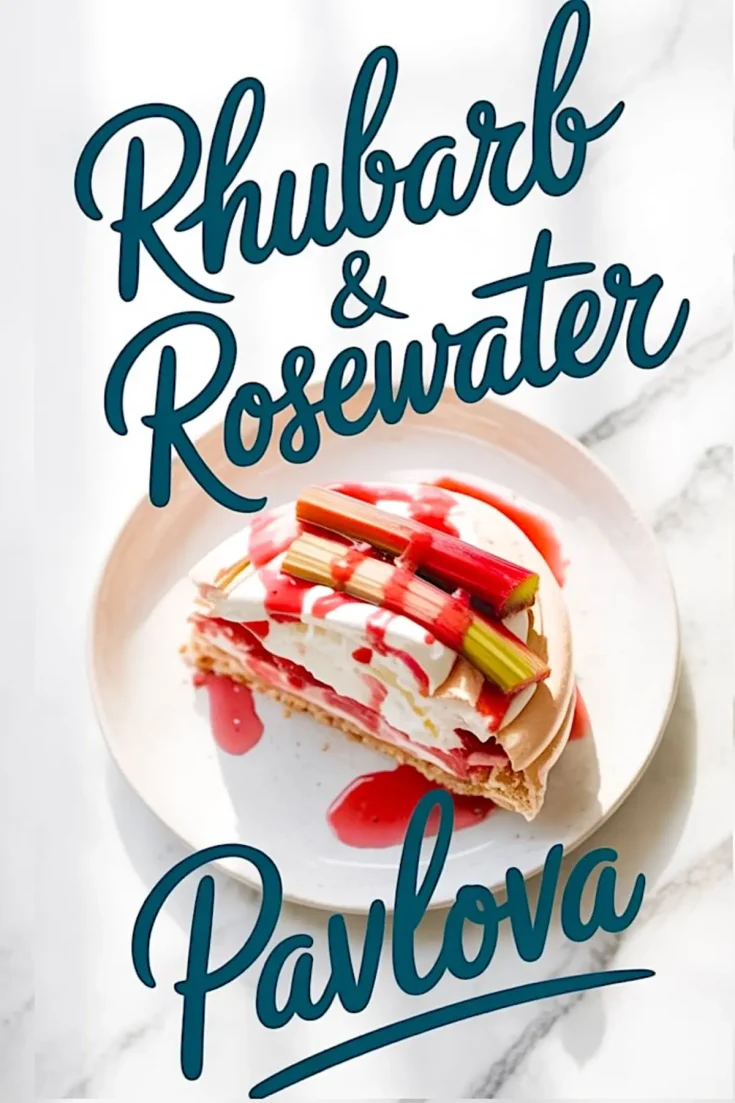
A crisp yet tender pink pavlova layered with lightly poached rhubarb and softly whipped cream, finished with a touch of rosewater. This spring dessert balances sweet, tart, and floral flavors with elegance and ease.
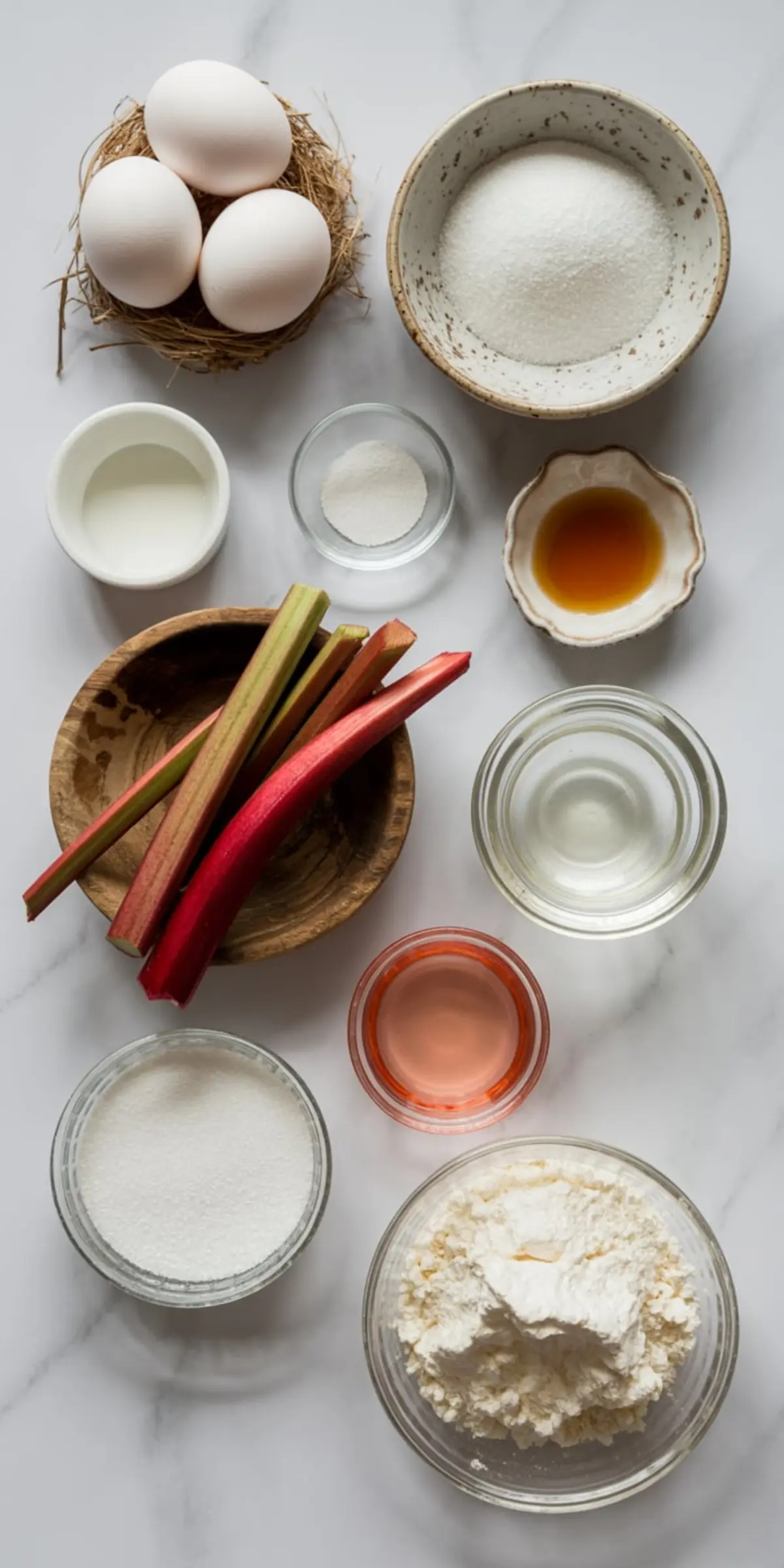
Ingredients
- FOR THE PINK PAVLOVA BASE
- 4 large egg whites, at room temperature
- 1 cup (200g) caster sugar
- 1 tsp white vinegar
- 1 tsp cornstarch
- 1 tsp vanilla extract
- A drop of pink or rose gel food coloring (optional)
- FOR THE RHUBARB FILLING
- 5 stalks of rhubarb, trimmed and cut into 2-inch batons
- 1/2 cup (100g) granulated sugar
- 1/2 cup (120ml) water
- 1–2 tsp rosewater, to taste
- FOR THE WHIPPED CREAM
- 1 cup (240ml) heavy cream
- 2 tbsp powdered sugar (optional)
- 1/2 tsp vanilla extract
Instructions
- PREPARE THE PINK PAVLOVA BASE: Preheat oven to 300°F (150°C) and line a baking tray with parchment paper; draw a 7–8 inch circle as a guide. In a clean, dry bowl, beat egg whites on medium speed until soft peaks form. Add sugar one tablespoon at a time, beating until the mixture forms glossy stiff peaks. Gently fold in vinegar, cornstarch, vanilla extract, and a small drop of food coloring if using. Spoon the meringue onto the parchment, shaping into a round with high swirls and a shallow dip in the center. Reduce oven temperature to 250°F (120°C) and bake for 1 hour 15 minutes. Turn off oven and cool pavlova completely inside with the door slightly ajar.
- MAKE THE RHUBARB & ROSEWATER COMPOTE: In a shallow saucepan, combine sugar and water and bring to a simmer. Add rhubarb batons and cook for 5–7 minutes until just tender but intact. Use a slotted spoon to transfer rhubarb to a plate and let cool. Stir rosewater into the remaining syrup and let cool completely. Reserve several batons and some syrup for topping. Lightly mash or chop the remaining rhubarb into a chunky compote.
- WHIP THE CREAM: In a clean bowl, whip heavy cream with powdered sugar and vanilla until soft peaks form. Keep refrigerated until ready to use.
- ASSEMBLE THE PAVLOVA: Place the cooled pavlova base on a serving plate. Spoon half the rhubarb compote into the center and spread gently. Top with whipped cream, then spoon remaining compote over the cream. Drizzle reserved rose syrup and finish with the reserved rhubarb batons arranged decoratively on top.
Notes
The pavlova base can be made a day ahead and stored in an airtight container. Assemble just before serving to maintain texture. Use rosewater sparingly to avoid overpowering the dessert.
Nutrition Information
Yield
8Serving Size
1Amount Per Serving Calories 94Total Fat 3gSaturated Fat 2gTrans Fat 0gUnsaturated Fat 1gCholesterol 10mgSodium 37mgCarbohydrates 11gFiber 1gSugar 9gProtein 3g
