

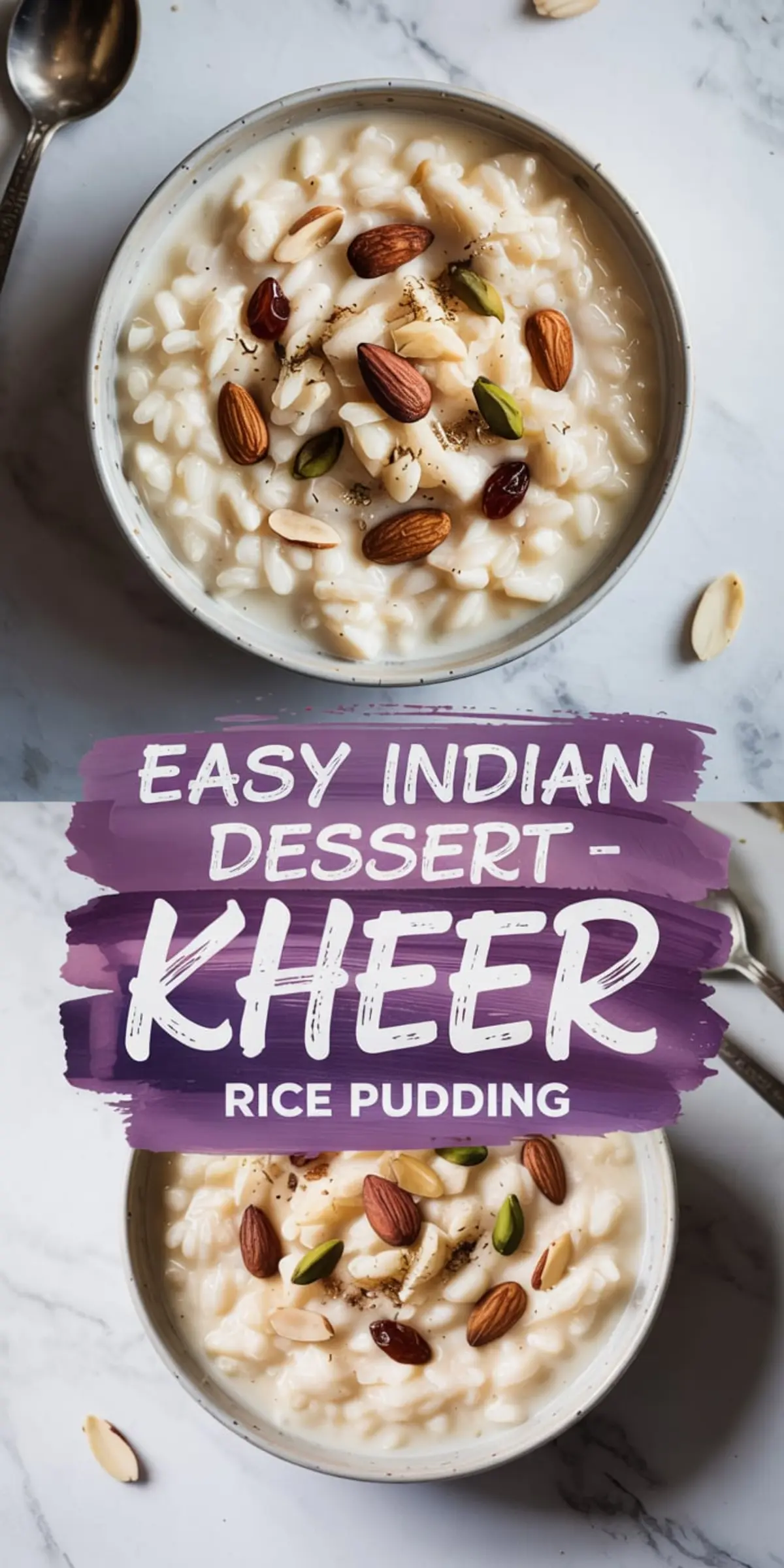
This kheer recipe speaks to home cooks who want something honest.
You’ll find it under “easy Indian desserts,” but it deserves more credit than that. It’s rich, lightly spiced, and deeply nostalgic. You won’t need condensed milk, shortcuts, or processed ingredients.
You’ll simmer full-fat milk and soaked basmati rice until they thicken into a soft, creamy pudding. Sugar and cardamom round out the flavor. Toasted nuts add warmth. A little rose water, if you like. The steps are short. The result feels long.
If you’re looking for a way to bring something soft and traditional to your summer table without turning on the oven, start here.
Following a special diet?
Every recipe on this site can be converted to gluten-free, vegan, dairy-free, keto, nut-free or egg-free with adjusted ratios so nothing falls flat.
Try the Recipe Converter →Why This Version of Kheer Works So Well
In my notes, this is labeled “weekday kheer.” It comes together fast, but still gives you the texture you’d expect from a dessert that’s simmered longer.
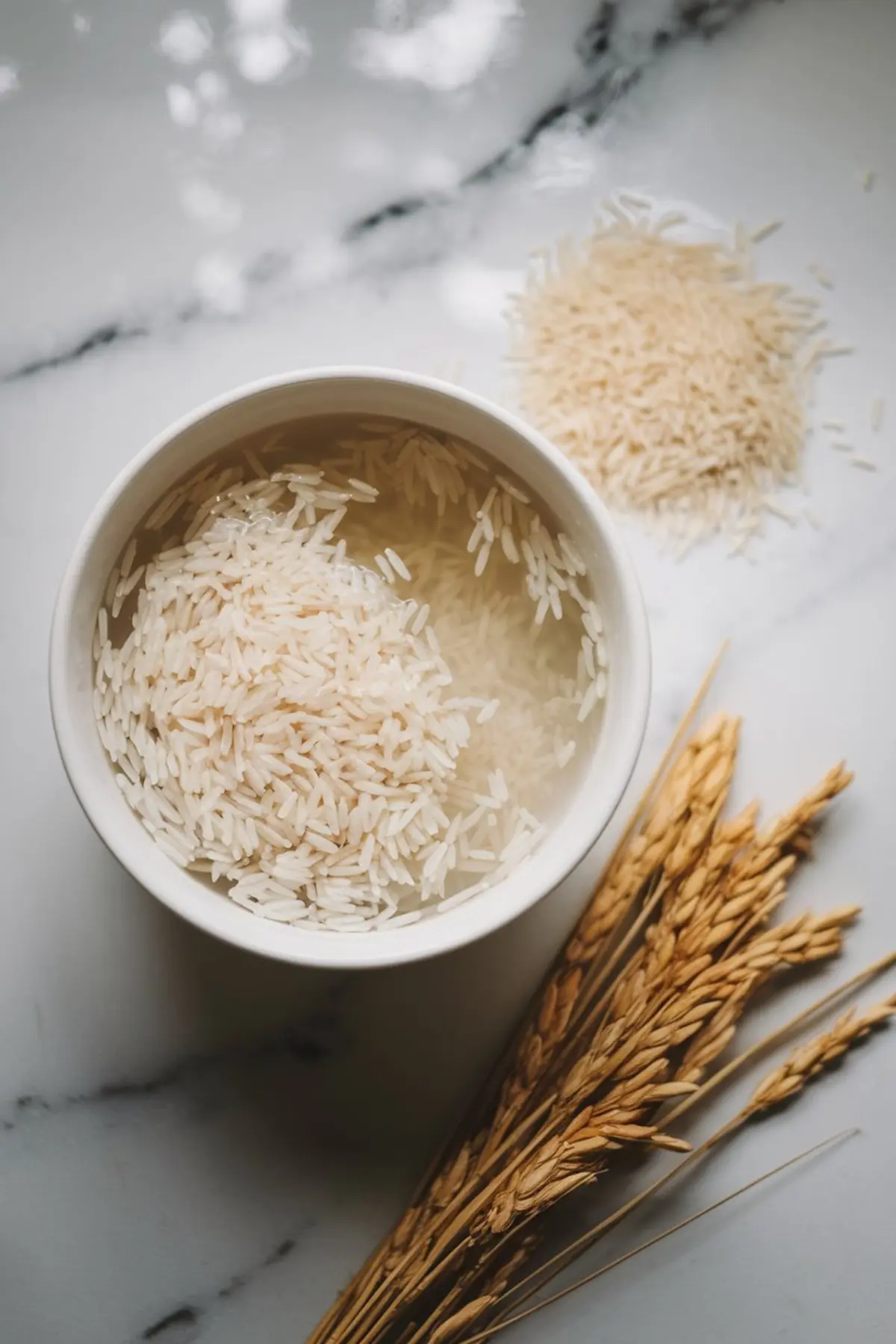
Basmati rice needs a rinse and a 30-minute soak. This isn’t extra. It allows the rice to cook quickly and evenly in the milk. Don’t skip it.
Full-fat milk thickens best and holds the natural sweetness. Skim milk doesn’t coat the rice as well, and the pudding can turn thin or break. If I have guests, I always stick with whole milk.
Cardamom adds the recognizable scent of traditional kheer. Ground works if you’re short on time. Crushed pods give more flavor but need to be strained if you want a smoother finish.
The Short Simmer Is the Secret
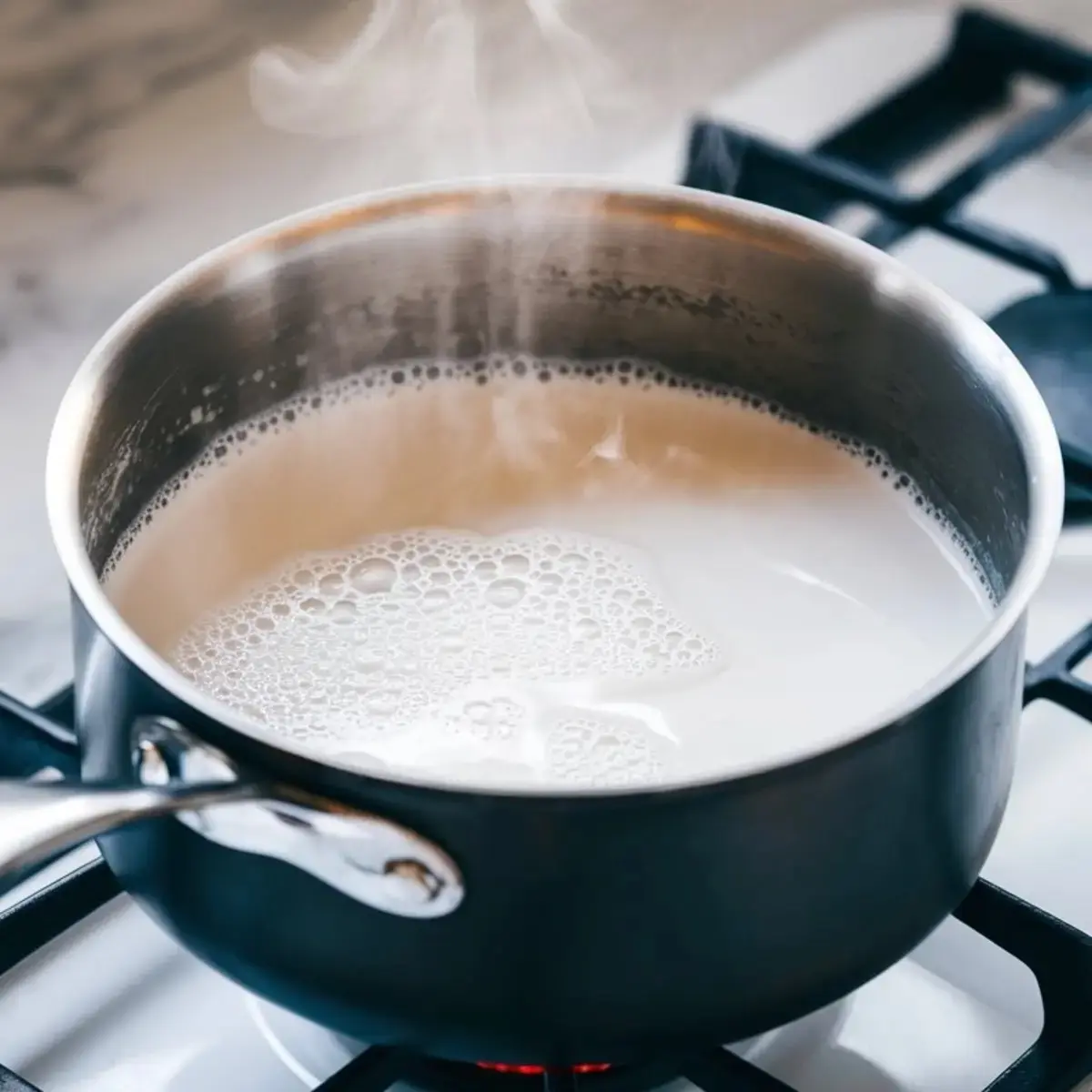
Once your milk starts to bubble gently, lower the heat right away. Add the drained rice and let it simmer on low.
I stir every two to three minutes. That sounds like a lot, but it prevents scorching and helps break the rice just enough to release starch.
After about 30 to 40 minutes, the pudding thickens. The rice softens. The spoon starts to drag slightly through the milk. That’s when it’s ready for sugar.
Add the sugar and cardamom. Stir until the sugar melts completely. If you’re using saffron, this is the moment to drop it in. I crumble it lightly between my fingers to help it bloom.
Nuts and Raisins Need Heat, Not Just Mixing
Raw nuts in kheer taste flat. I always fry chopped almonds, cashews, and golden raisins in a small spoonful of ghee.
The raisins puff up, the nuts darken slightly, and the smell changes. It’s the difference between something tossed in and something developed.
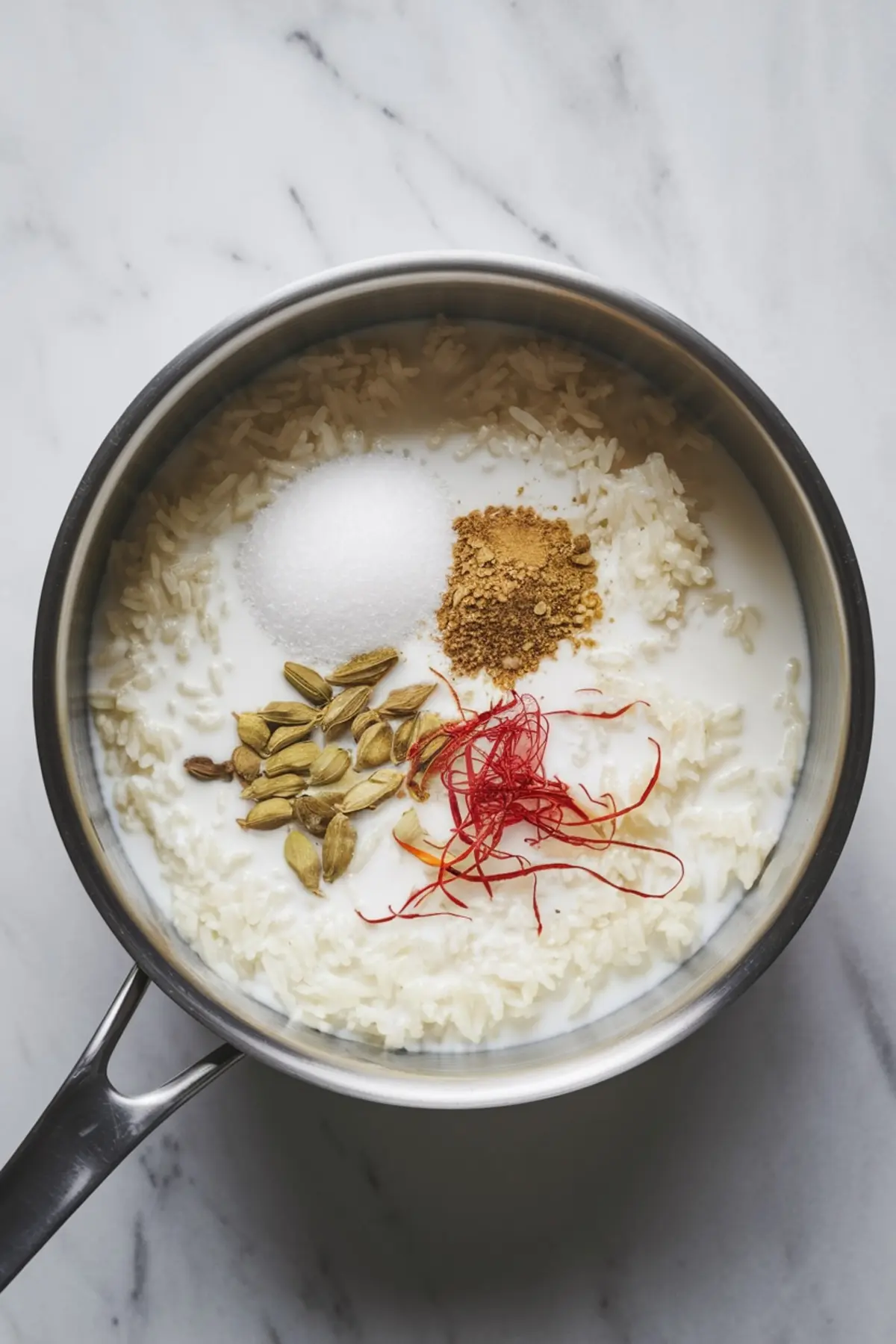
Add the fried mixture into the kheer and stir well. That little pan of ghee-toasted ingredients pulls everything together. It also gives you texture, which matters in a soft dessert.
Optional Floral Notes: Rose Water or Kewra
Some leave these out, and that’s fine. But when I want the kheer to feel more festive, I stir in a teaspoon of rose water at the end.
You don’t need more than that. Overdo it, and the dish becomes perfume. Add it after removing the pot from heat so the flavor stays balanced.
I skip it entirely when serving children. For adults, it adds a delicate finish that stays on the spoon.
Serving Kheer Warm vs. Chilled
Kheer is flexible. You can serve it warm right from the pot. That’s how I like it on quiet evenings, with a little spoon and no toppings.
But cold kheer hits different on summer days. It thickens in the fridge, almost like a loose pudding cup. If it firms too much, stir in a tablespoon of milk before serving to loosen it.
Store it in a sealed glass container for up to three days. Avoid shallow bowls. The rice dries out, and the top layer forms a skin.
Reheat gently on the stovetop if you want it warm again. Do not boil. Add milk slowly and stir constantly to bring it back to its original texture.
This Kheer Belongs on Every Easy Indian Desserts List
Some recipes call for condensed milk or shortcuts. This one doesn’t. It leans on basic ingredients, minimal hands-on time, and smart cooking steps.
You don’t need a pantry full of specialty products to get flavor. You need patience, the right rice, and the discipline to stir.
This kheer recipe makes space for conversation and quiet. It feels familiar, like something your mother or grandmother would hand you without fuss, in a small steel bowl with a smile.
Share, Save, and Let Me Know
Pin this kheer recipe to your easy Indian desserts board or your summer pudding favorites. That way it’s ready when you need it again.
If you make it, I’d love to hear how it turned out. Warm or chilled? Rose water or not? Let’s build a conversation in the comments—your kitchen stories make mine better.
Kheer Recipe (Indian Rice Pudding)
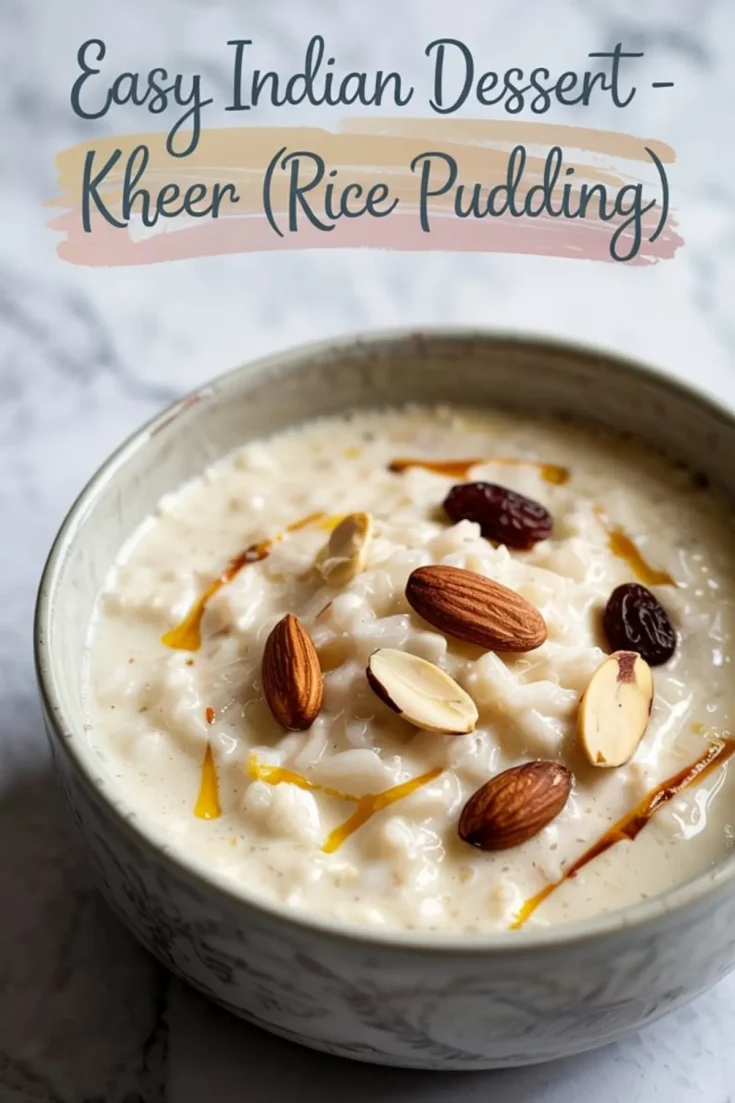
A creamy Indian rice pudding made with slow-simmered milk, basmati rice, and aromatic spices. This classic comfort dessert is sweetened with sugar and finished with nuts, raisins, and optional floral notes.
Ingredients
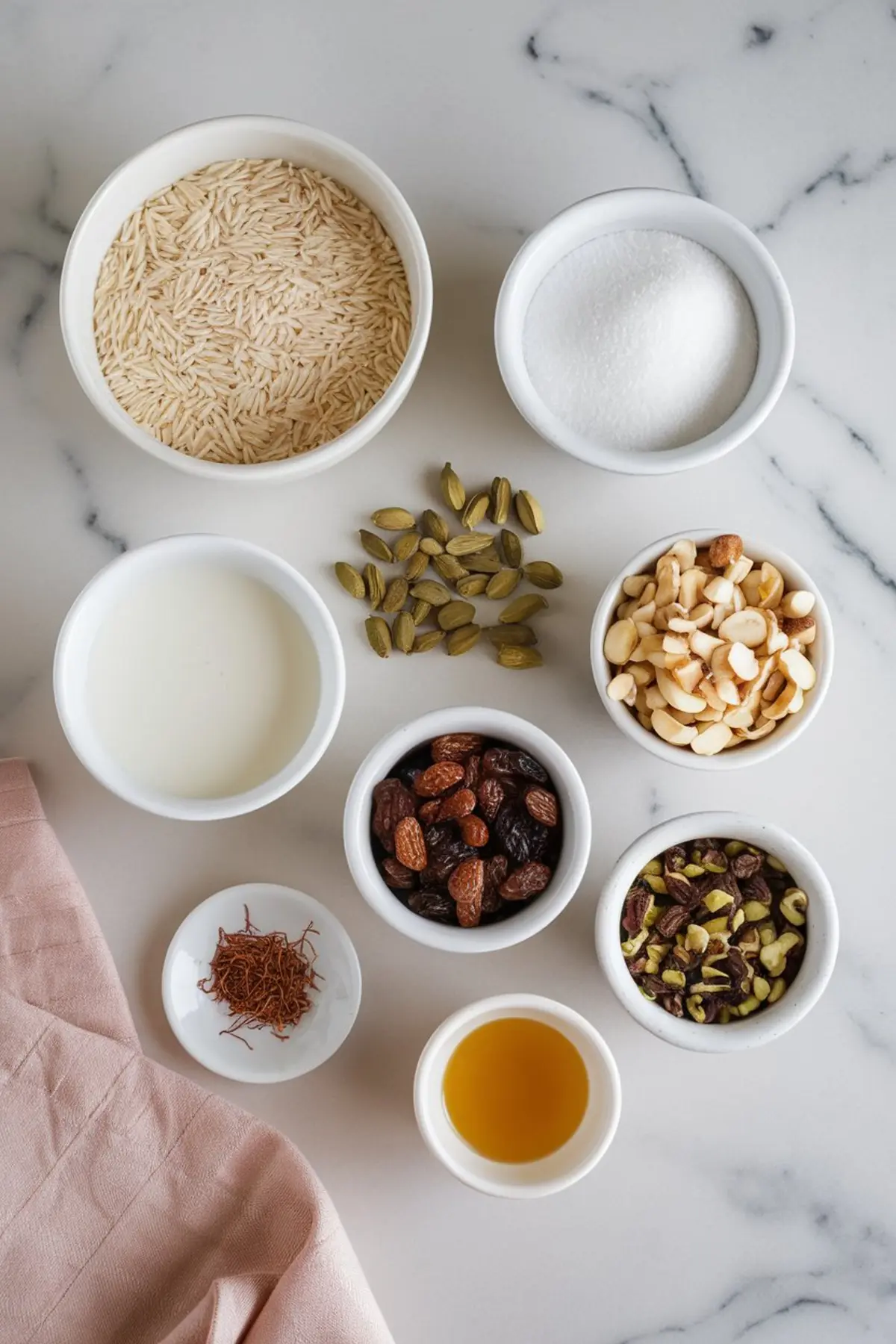
- 1/4 cup basmati rice (rinsed and soaked for 30 minutes)
- 4 cups whole milk (full-fat works best)
- 1/4 cup sugar (adjust to taste)
- 1/4 teaspoon ground cardamom (or 3–4 green cardamom pods, crushed)
- 2 tablespoons chopped almonds
- 2 tablespoons chopped cashews
- 2 tablespoons raisins
- 1 tablespoon slivered pistachios (optional)
- Few strands of saffron (optional, but adds a lovely aroma and color)
- 1 teaspoon rose water or kewra water (optional, for fragrance)
Instructions
- RINSE AND SOAK THE RICE: Rinse the basmati rice under running water until the water runs clear. Soak the rice in water for 30 minutes, then drain and set aside
- BOIL THE MILK: Pour the milk into a heavy-bottomed saucepan and bring it to a gentle boil over medium heat, stirring occasionally to prevent scorching.
- ADD THE RICE: Add the drained rice to the boiling milk. Reduce the heat to low and simmer. Stir frequently to keep the rice from sticking to the bottom of the pan.
- SLOW-COOK THE PUDDING: Let the rice cook in the milk for 30 to 40 minutes, or until the grains are soft and the mixture thickens to a creamy consistency. Continue stirring often.
- ADD SUGAR AND FLAVORINGS: Stir in the sugar, ground cardamom, and saffron if using. Cook for an additional 5 minutes to allow the sugar to dissolve completely and the flavors to blend.
- ADD NUTS AND RAISINS: In a small pan, lightly fry the almonds, cashews, and raisins in a teaspoon of ghee until golden and aromatic. Add the mixture to the kheer and stir well.
- OPTIONAL FINISHING TOUCH: Stir in rose water or kewra water if using. Mix gently to infuse the pudding with a light floral fragrance.
- SERVE: Serve the kheer warm or chilled. Garnish with slivered pistachios or a few saffron strands before serving.
Notes
For the best results, use full-fat milk and simmer slowly to develop a rich texture. The kheer will thicken further as it cools. Adjust sugar and nuts according to preference.
