
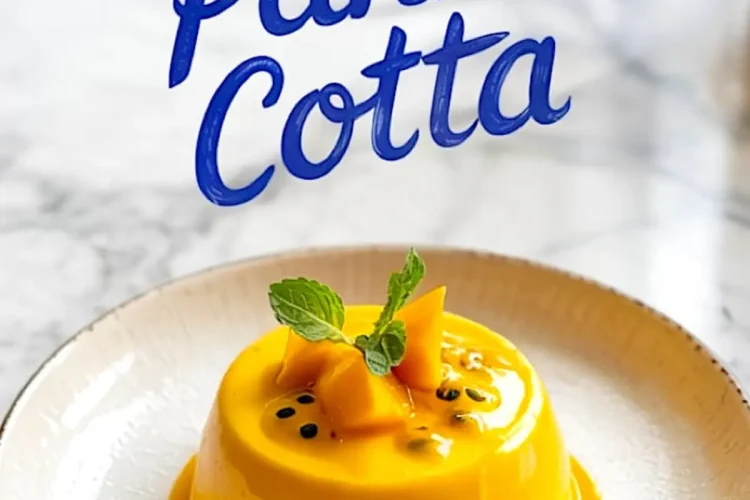
There’s something undeniably rewarding about a dessert that sets while you sleep. This Mango Panna Cotta layers fresh mango puree over silky vanilla cream and sets quietly in the fridge until you’re ready to serve it cold. No last-minute stress. No oven heat. Just a clean, elegant finish that earns a pause before the first spoonful.
You’ll learn how to make both layers from scratch. I’ll walk you through bloom timing, temperature control, and the best pans or glasses to use depending on your plans. If you’ve wanted to master a no-bake mango dessert that delivers both flavor and design, start here.
This is more than a mango mousse recipe. It’s structured, smooth, and visually defined.
Following a special diet?
Every recipe on this site can be converted to gluten-free, vegan, dairy-free, keto, nut-free or egg-free with adjusted ratios so nothing falls flat.
Try the Recipe Converter →What Makes This Mango Dessert Stand Out
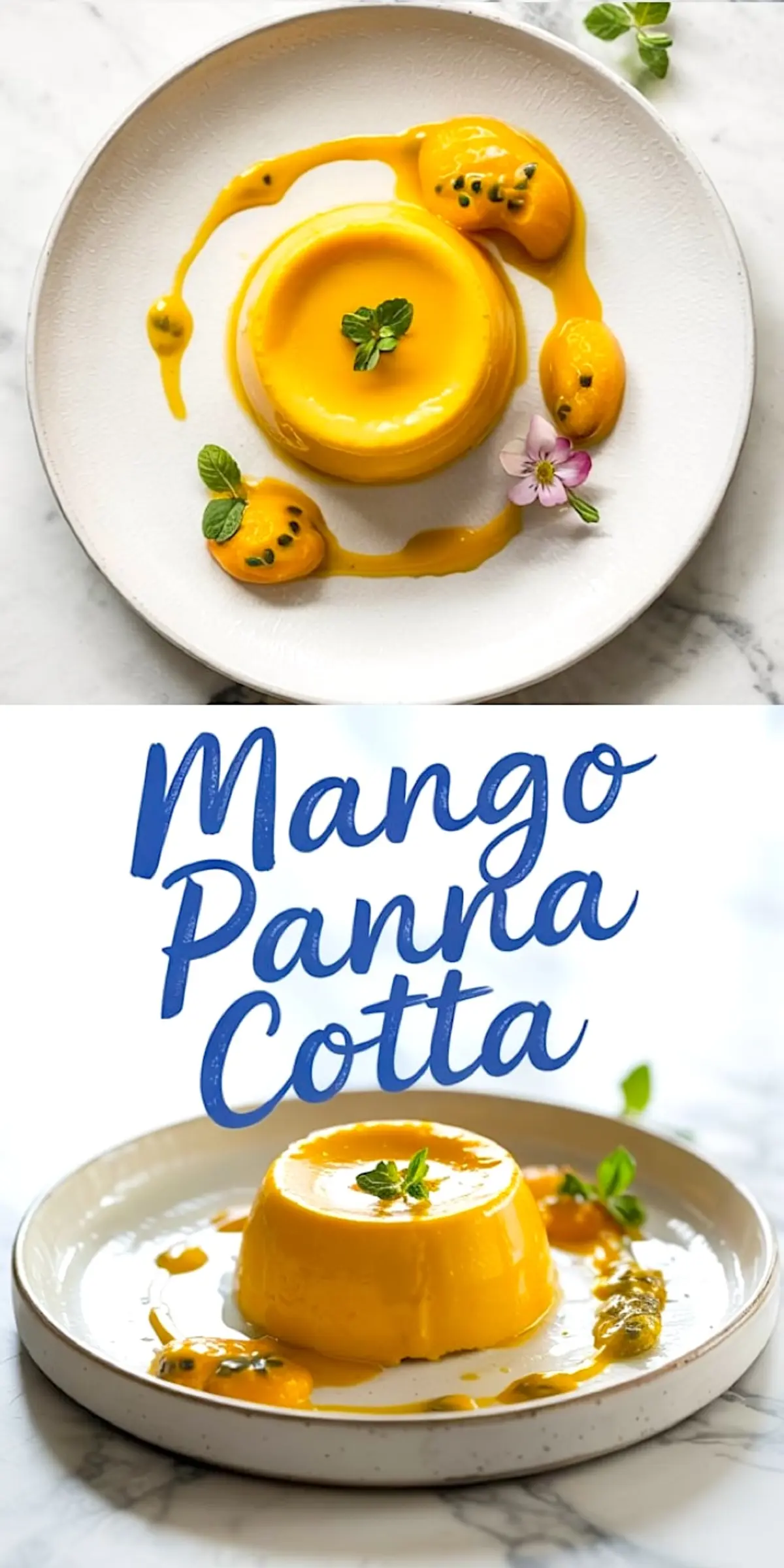
Most mango mousse desserts lean soft and sweet, but they lack visual clarity. This panna cotta holds its shape, with two clean layers — bright fruit on top, pale vanilla cream underneath. It’s the kind of plated dessert that feels like a quiet luxury.
You’re not guessing about sweetness here. The mango puree brings sharp fruit tone, and the lemon juice pulls it forward just enough. Set that against the calm backdrop of lightly sweetened cream and you get balance. Not just sweetness.
I’ve tested similar options — including caramel pudding and malva pudding — for summer menus. Both are rich and warming. But when the weather turns sticky, panna cotta always wins the vote at my table. Especially this one.
Ingredients for the Mango Layer
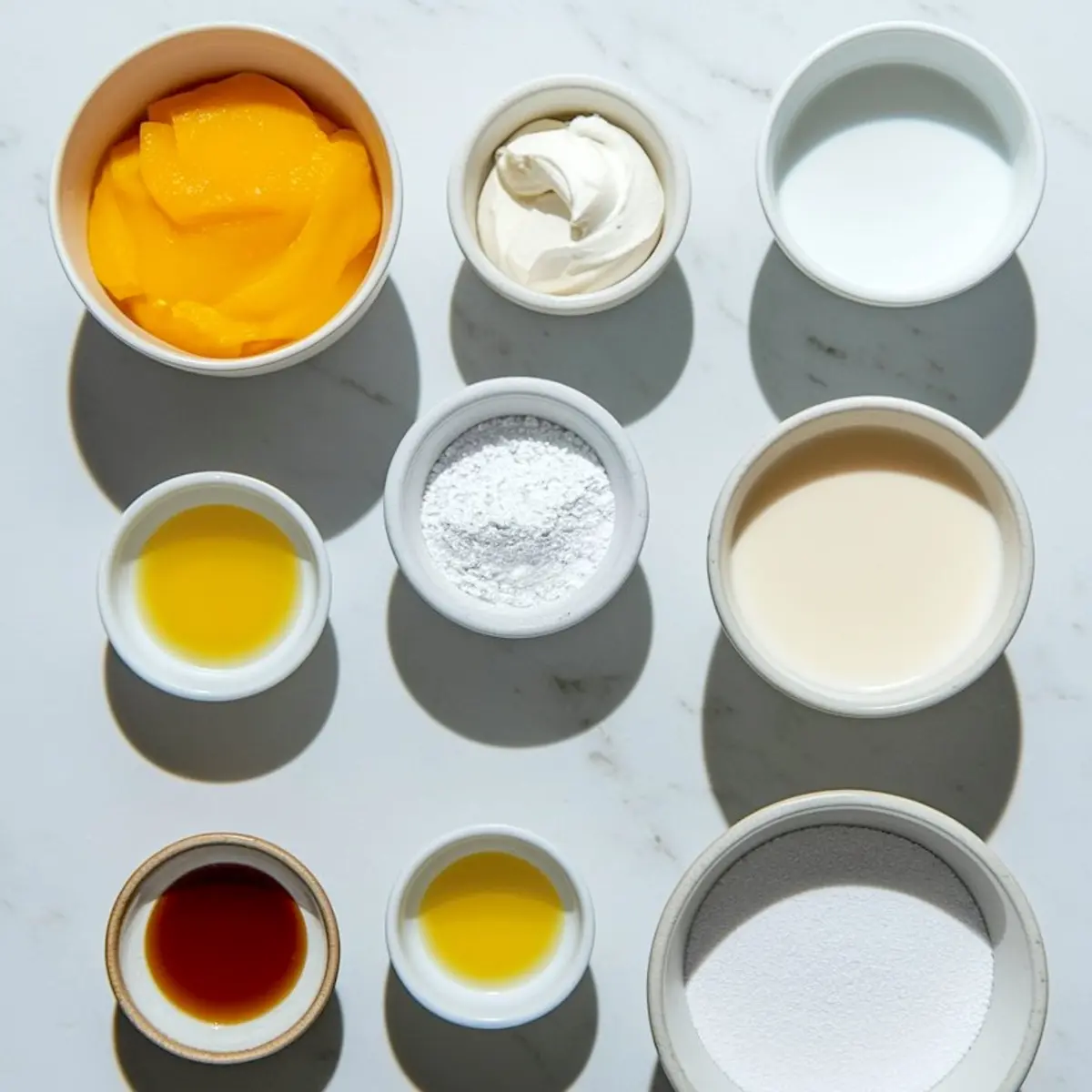
The fruit layer starts with mango puree. You can use fresh if you have ripe Ataulfo or Alphonso mangos on hand. If not, canned puree works — just make sure it’s unsweetened. Sweetened puree throws the whole balance off.
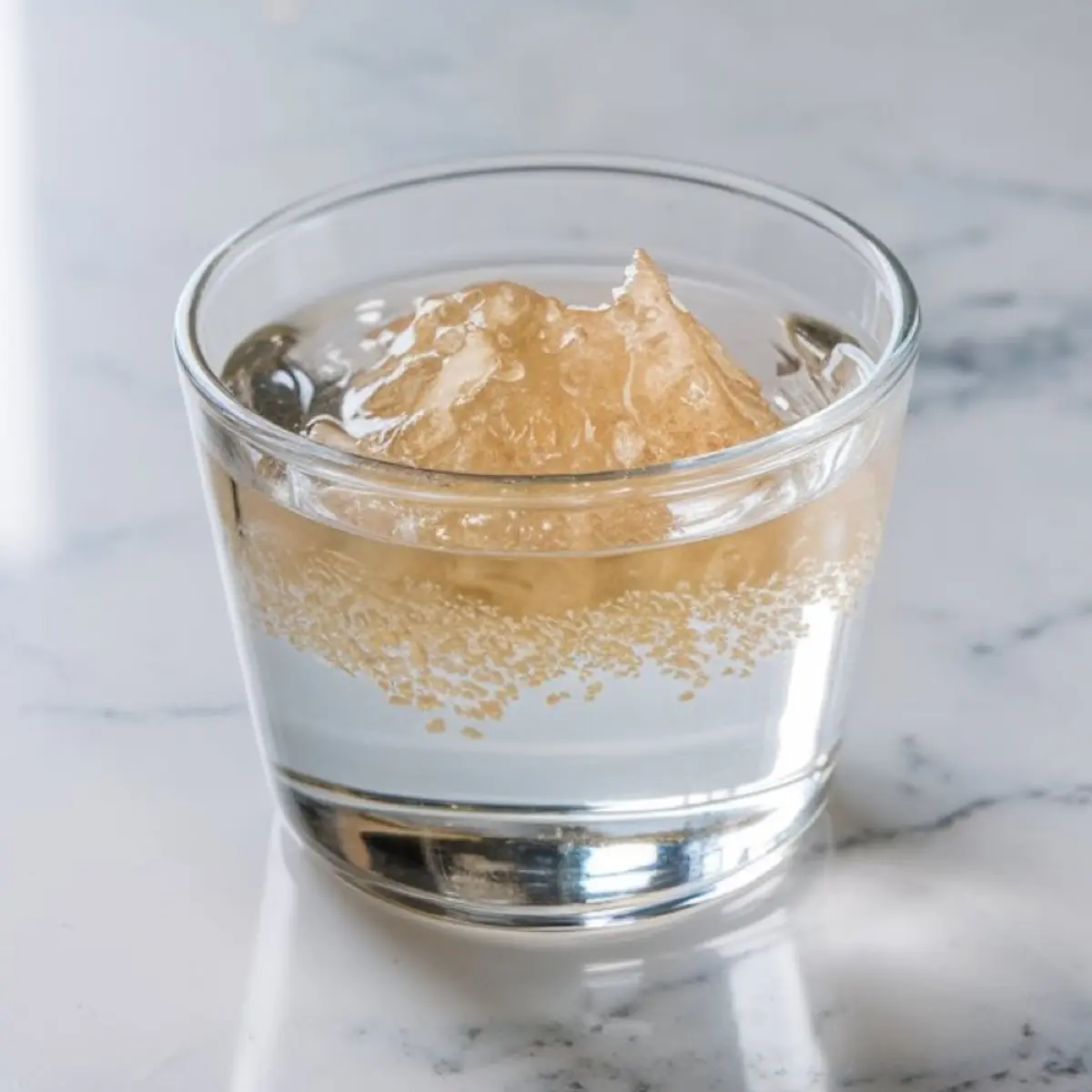
You’ll dissolve gelatin into cold water first, then warm it gently into the mango-lemon mixture. That step matters. You’re not cooking it, just bringing enough heat to melt the gelatin and blend it through. Too hot, and you dull the fruit.
Once smooth, pour the mango base halfway up your molds or glass cups. Chill until softly set. The timing will depend on how cold your fridge runs, but aim for at least an hour.
Tip: If you’re going for panna cotta aesthetic for a party or shoot, use small silicone molds. For ease or travel, glasses or jars do just fine.
Ingredients for the Cream Layer
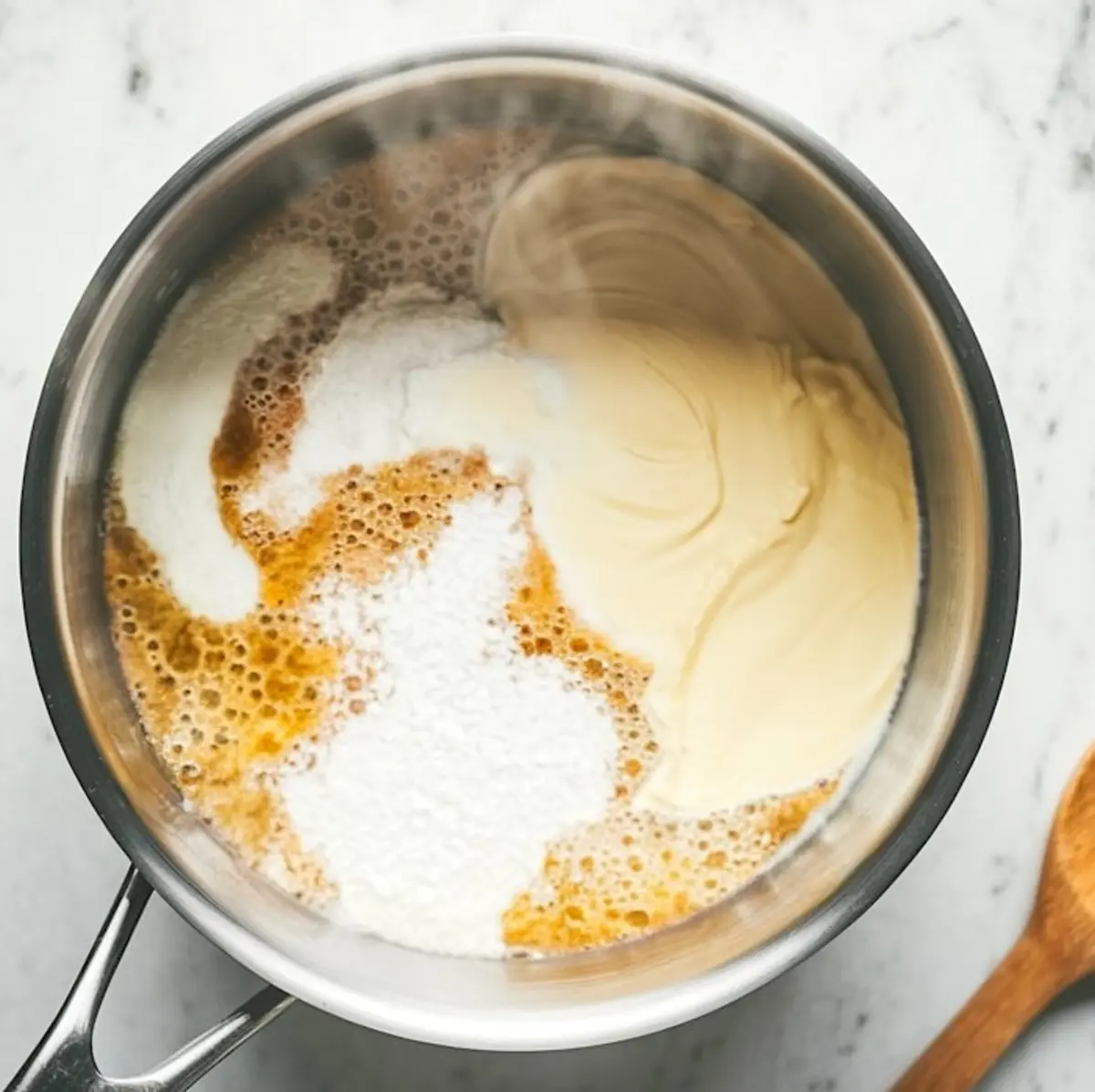
This part reminds me of making crème anglaise, but easier. You’re using cream and whole milk for structure, gently sweetened with sugar and softened with vanilla. Heat it until warm — not boiling — just enough to dissolve the sugar.
Then bloom your gelatin separately and stir it in off-heat. I always cool it before pouring over the mango base. If the cream is too warm, it will sink into the fruit layer and blur the lines. That doesn’t ruin it, but it does change the look.
In my notes, I’ve found full-fat dairy creates a firmer set and a smoother mouthfeel. I’ve tried with half-and-half, but it lacked the satisfying silk I expect from a true panna cotta.
How to Assemble and Set It Right
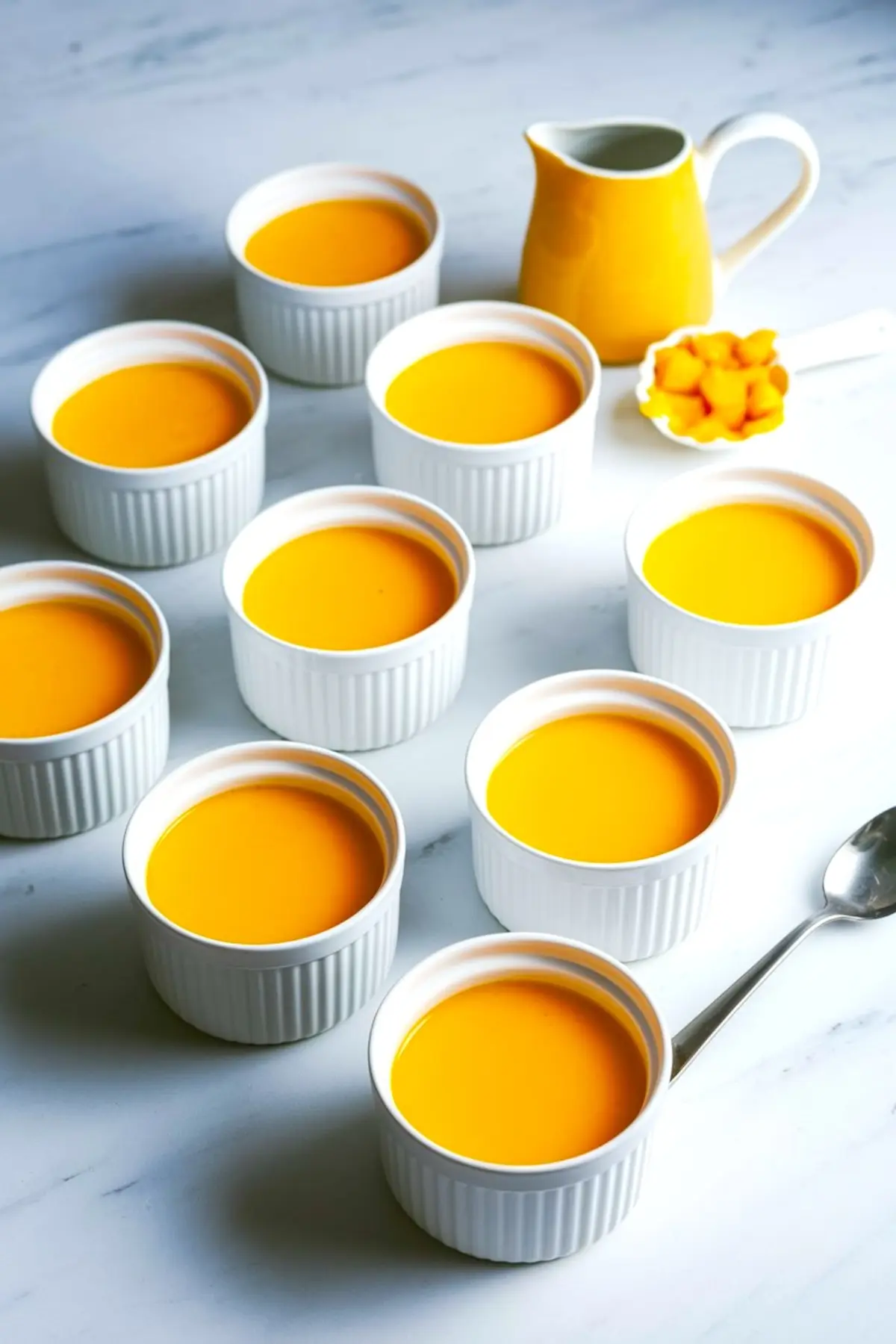
Once your mango layer holds firm and your cream layer cools to room temperature, pour it gently over the top. If you’re using glasses, tilt them slightly while pouring for diagonal layers. If you’re going classic, pour straight and fill evenly.
Then return them to the fridge. Let them sit undisturbed for at least 4 hours, preferably overnight. The waiting is the hardest part, but it makes all the difference. A rushed panna cotta doesn’t unmold well. It breaks or slumps.
To release, run a knife around the edge or dip the mold briefly in warm water. You’ll feel it loosen. Invert gently. If it resists, dip again and try once more. Don’t force it.
Emma’s Tip: For summer gatherings, serve directly in glass jars. They travel better and don’t require unmolding at all.
Serving Ideas and Panna Cotta Plating Tips
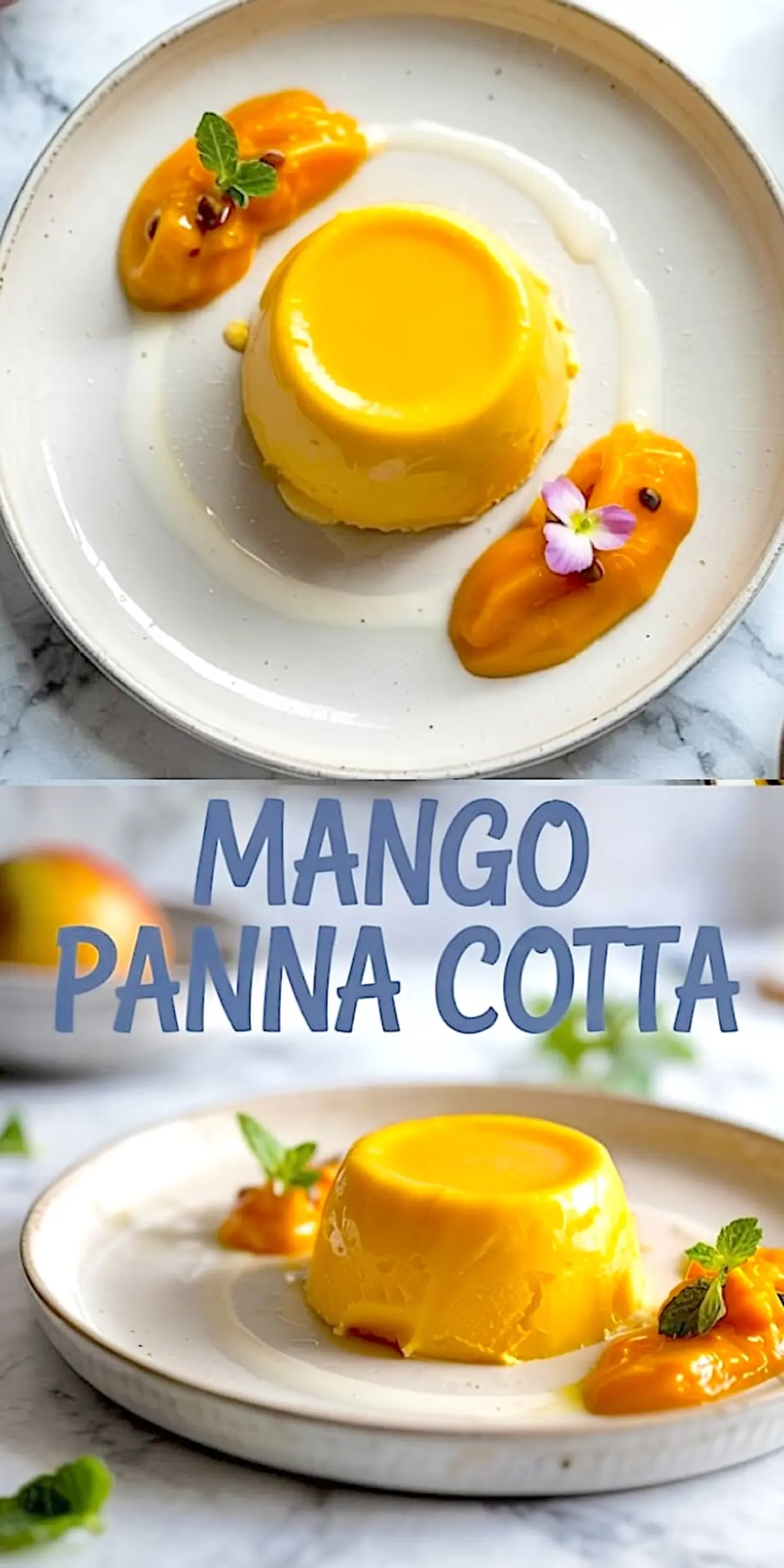
This mango panna cotta already brings color contrast. You don’t need much. A thin slice of fresh mango, a mint leaf, or a spoonful of passionfruit pulp adds just enough drama without distraction.
If you’re plating for an event, stagger the serving times. These hold well in the fridge, even on a hot day. I’ve served them at baby showers, outdoor dinners, and end-of-summer luncheons. Never once regretted making them ahead.
Want more fruit-forward desserts like this? You might like this panna cotta recipe with blueberry crown, or the strawberry panna cotta version I wrote about earlier this spring. For something icier, try the cherry rose sorbet — it’s bold, floral, and vegan-friendly.
Comparing Molds vs. Glasses for Panna Cotta
I’ve worked with both, and here’s where I land: Use molds if you want dramatic plating. You get the clean silhouette, the full visual impact, and a little surprise at the table. But use glasses if you value reliability. No stress, no sticking.
Glass also makes it easier to see your layers before serving. For Instagram or Pinterest shots, that transparency helps. It leans into the panna cotta aesthetic — a modern dessert shown clearly in cross-section.
For a party, I often mix both styles. A few plated unmolded ones for the center table, and the rest in glasses for guests to grab and go.
Key Takeaways:
• Use unsweetened mango puree for a cleaner fruit profile
• Bloom gelatin properly — both times — and never rush chilling
• Choose full-fat cream for the best set and mouthfeel
• Molds offer presentation value, but glasses offer convenience
• Pair with other no-bake mango dessert recipes in summer
If you make this mango panna cotta, I’d love to hear how it turned out. Drop a comment with your tips, or let me know if you made any tweaks.
Pin this recipe to save it for your next summer dinner party or midday craving.
Mango Panna Cotta Recipe
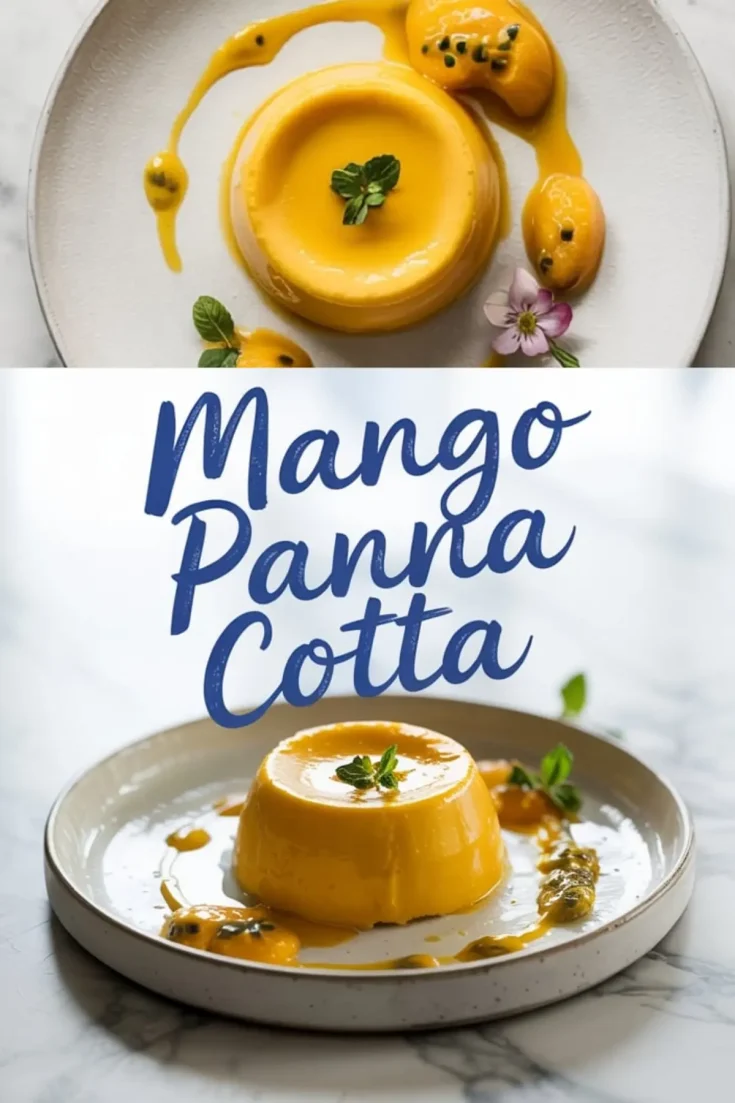
Mango panna cotta combines a smooth, creamy vanilla base with a bright mango layer for a light dessert that’s easy to prepare and visually striking. This chilled, two-layered treat is made with simple ingredients and relies on fresh or canned mango puree for flavor. Serve it unmolded for an elegant presentation or in glasses for ease.
Ingredients
- FOR THE MANGO LAYER
- 1 ½ cups mango puree (fresh or canned)
- 1 tablespoon lemon juice
- 2 teaspoons unflavored powdered gelatin
- 2 tablespoons cold water
- FOR THE CREAM LAYER
- 1 ½ cups heavy cream
- ½ cup whole milk
- ⅓ cup granulated sugar
- 1 teaspoon vanilla extract
- 2 teaspoons unflavored powdered gelatin
- 2 tablespoons cold water
Instructions
- PREPARE THE MANGO LAYER: In a small bowl, sprinkle 2 teaspoons of gelatin over 2 tablespoons of cold water and let it sit for 5–10 minutes to bloom.
- HEAT THE MANGO MIXTURE: In a small saucepan over low heat, warm the mango puree and lemon juice until steaming but not boiling. Remove from heat and stir in the bloomed gelatin until fully dissolved.
- FILL MOLDS: Pour the mango mixture evenly into ramekins or silicone molds, filling each about halfway. Chill in the refrigerator for 1 to 2 hours, or until the layer is set.
- PREPARE THE CREAM LAYER: In a clean small bowl, sprinkle the remaining 2 teaspoons of gelatin over 2 tablespoons of cold water. Let bloom for 5–10 minutes.
- HEAT THE CREAM BASE: In a separate saucepan, combine the heavy cream, whole milk, sugar, and vanilla extract. Heat over medium-low, stirring occasionally, just until the sugar dissolves and the mixture is warm. Do not boil.
- ADD GELATIN TO CREAM: Remove the pan from the heat and stir in the bloomed gelatin until completely dissolved. Allow the mixture to cool to room temperature, but do not let it set.
- ASSEMBLE THE PANNA COTTA: Gently pour the cooled cream layer over the set mango layer in each mold. Refrigerate again for 3–4 hours or overnight until fully firm.
- UNMOLD AND SERVE: To unmold, dip the ramekins briefly in warm water for 5–10 seconds, then invert onto serving plates. Garnish with fresh mango slices, mint leaves, passionfruit pulp, or edible flowers if desired.
Notes
If using canned mango puree, ensure it is unsweetened to avoid overpowering the dessert's balance. For best texture, use full-fat dairy options. Glass cups can be used instead of molds for a no-flip presentation.
Nutrition Information
Yield
6Serving Size
1Amount Per Serving Calories 340Total Fat 24gSaturated Fat 15gTrans Fat 1gUnsaturated Fat 7gCholesterol 75mgSodium 31mgCarbohydrates 29gFiber 2gSugar 27gProtein 5g
