

These Italian zeppole are small fried doughnuts made from a cooked choux dough: water, butter, sugar, salt, flour, 3 eggs, and a little vanilla. There is no yeast and no rising time. The recipe makes 22 small zeppole in about 30 minutes, fried at 350°F (175°C) and dusted with powdered sugar while warm.
What makes them puff is the stovetop step. The dough cooks in the pan before any eggs go in, which dries it out enough to trap steam in the hot oil. That steam blows each zeppola up into a crisp shell with a soft, hollow, almost custardy middle.

Following a special diet?
Every recipe on this site can be converted to gluten-free, vegan, dairy-free, keto, nut-free or egg-free with adjusted ratios so nothing falls flat.
Try the Recipe Converter →Which Zeppole Is This? Choux, Yeasted and St. Joseph’s Day
Zeppole is a broad Italian name for fried dough, and families disagree about the real one. In Naples, zeppole di San Giuseppe for St. Joseph’s Day on March 19 use this same choux dough, piped into rings, fried or baked, then topped with pastry cream and a cherry. Christmas zeppole in southern Italy are often a soft yeasted dough, sometimes with potato. The ones sold at Italian American street feasts are usually yeasted too, or made with ricotta.
This recipe is the choux version: rounds dropped from a spoon, fried, and sugared. It’s the quickest at home, because the dough is ready the moment the last egg is in. For a yeasted, filled Italian doughnut, make my Nutella bomboloni. For the tiny honey-coated fried dough of Neapolitan Christmas, see struffoli.
Zeppole Ingredients and What Each One Does
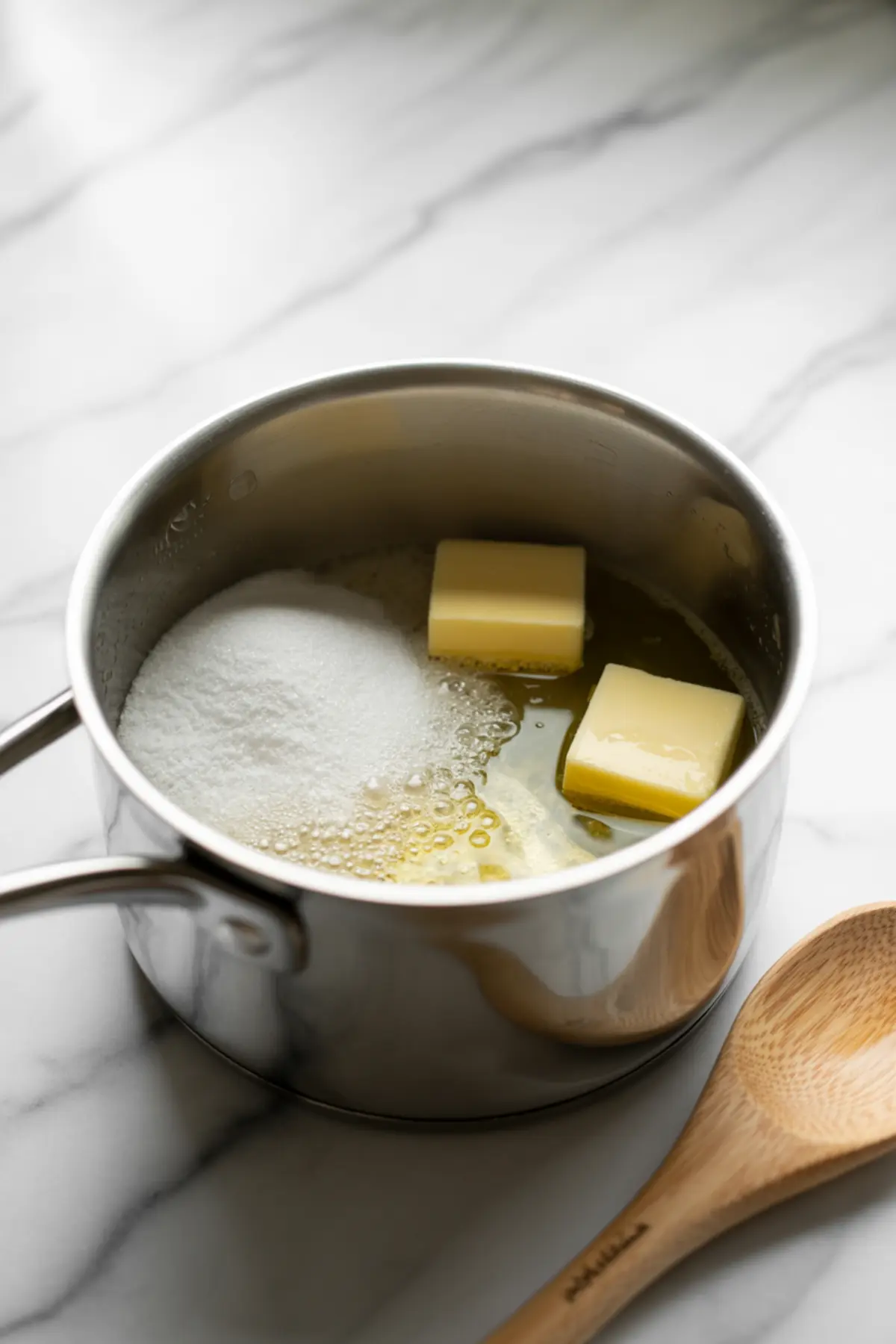
- 1 cup (240 ml) water
- 1/4 cup (57 g) unsalted butter
- 2 tablespoons (25 g) granulated sugar
- 1/2 teaspoon salt
- 1 cup (120 g) all-purpose flour
- 3 large eggs, at room temperature
- 1 teaspoon vanilla extract
- Vegetable oil for frying, about 2 inches deep in the pot
- Powdered sugar for dusting
All-purpose flour is the right strength. Bread flour makes zeppole chewy, and cake flour is too weak to hold the puff. Weigh it if you can. A cup scooped straight from the bag can land well over 120 g, and that extra flour gives a stiff dough that fries up dense and flat.
Butter gives the dough its tenderness and flavor, so use the full 1/4 cup. Eggs should be at room temperature; cold ones cool the dough and blend in lumpy. Forgot to take them out? Set them in a bowl of warm water for 5 minutes. Vanilla is optional, but it makes the inside taste like more than fried flour.
Cooking the Zeppole Dough on the Stove
Bring the water, butter, sugar, and salt to a boil in a medium saucepan over medium heat, stirring until the butter melts. Turn the heat to low and tip in the flour all at once. Stir hard with a wooden spoon. Within a minute it pulls away from the sides into a smooth ball.
Keep stirring for 1 to 2 minutes more. A thin film forms on the bottom of the pan, and the dough smells faintly of toast. That’s the moisture cooking off. Move it to a bowl and let it cool for 5 minutes so it won’t scramble the eggs.
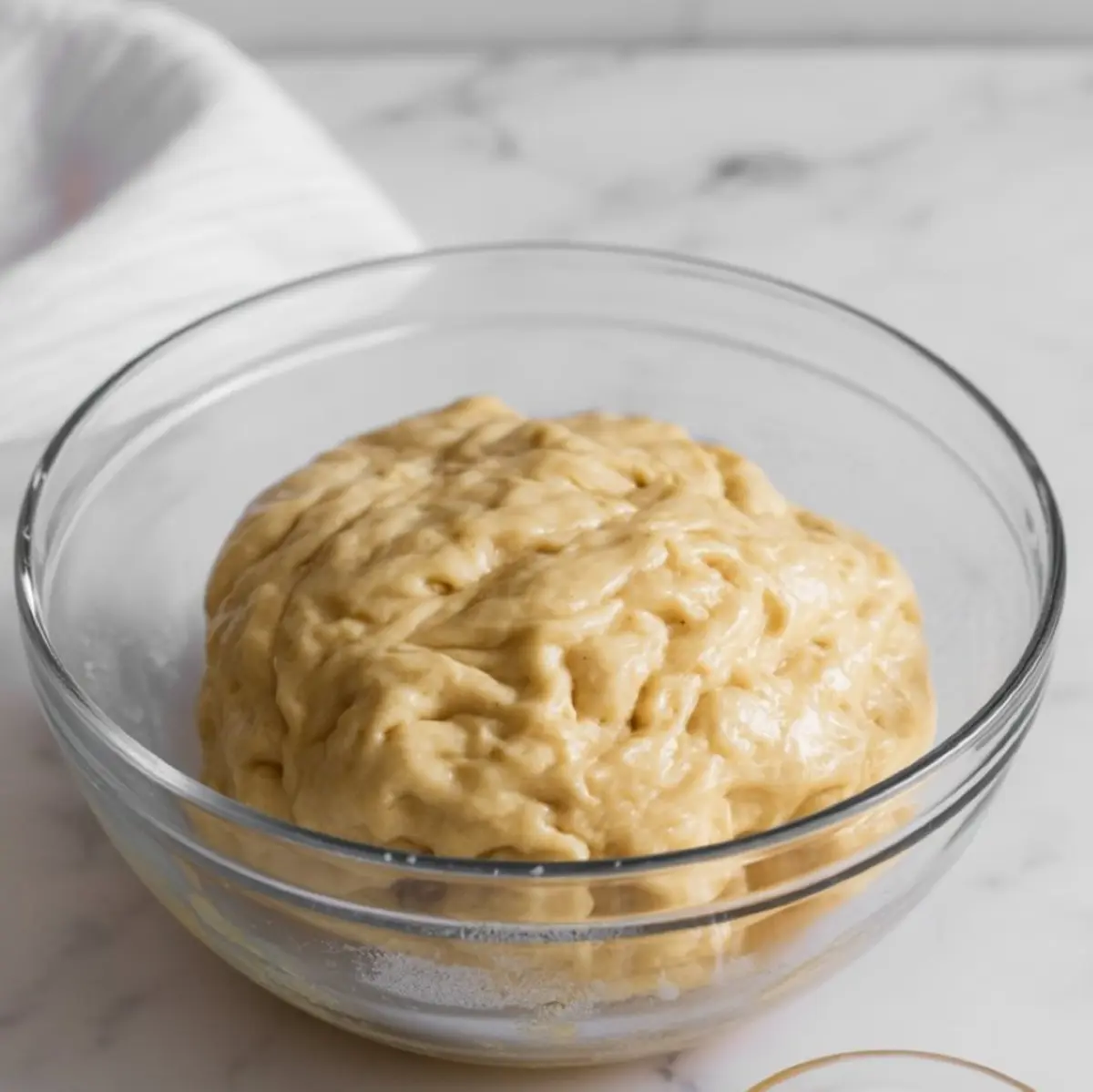
Beat in the eggs one at a time. Each egg makes the dough look broken and slippery at first. Keep going and it pulls back together; only then add the next one. All three matter: stop at two and the dough is too stiff to puff. After the last egg and the vanilla, it should be thick, glossy, and slightly sticky, and it should drop from the spoon in a heavy V shaped ribbon rather than run off it.
Frying Zeppole at 350°F for Crisp, Hollow Centers
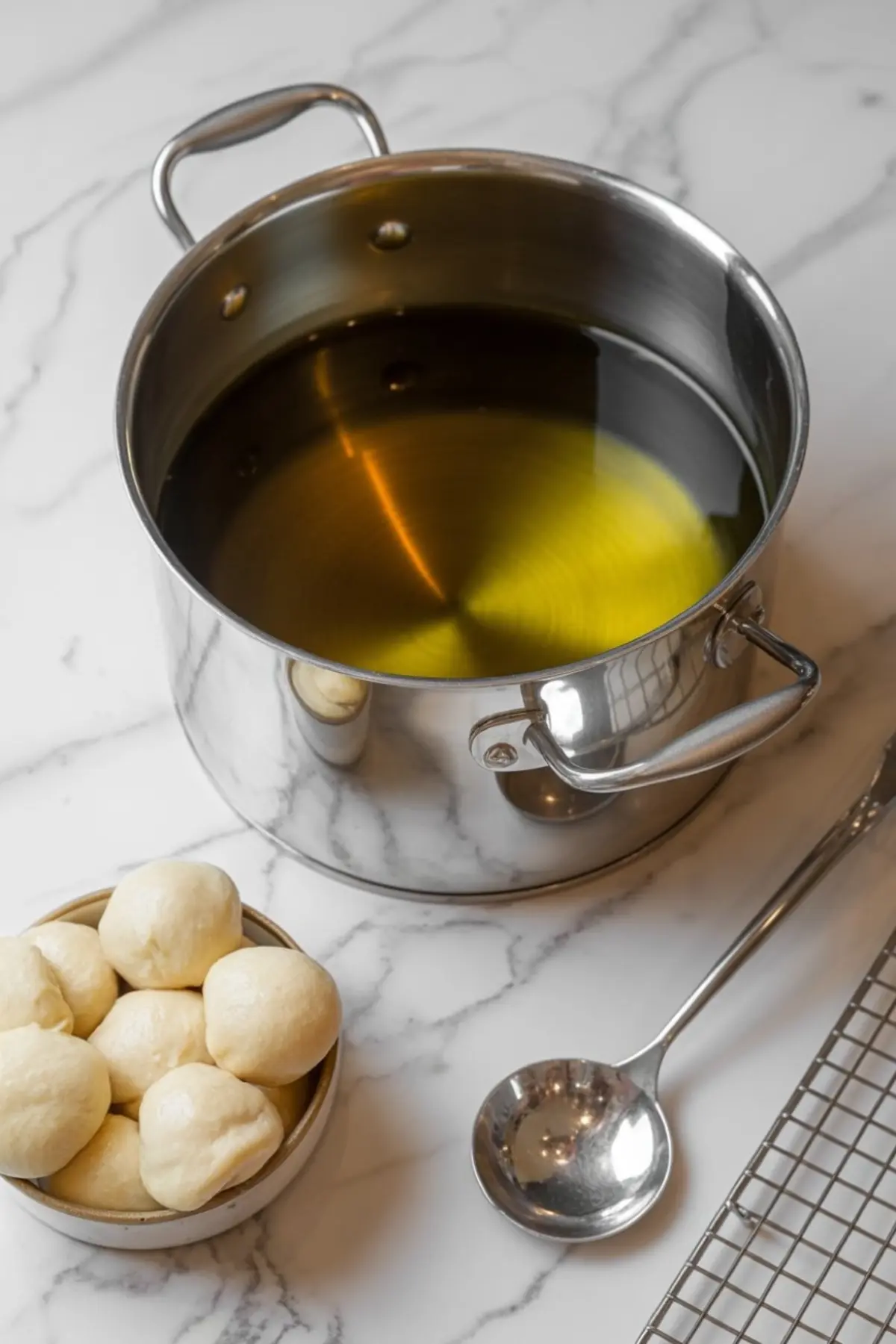
Heat about 2 inches of vegetable oil in a heavy pot to 350°F (175°C). A heavy pot holds its heat when cold dough goes in, and a thermometer beats guessing.
Scoop tablespoon portions with a small cookie scoop or two spoons. Fry one test zeppola first. It should sizzle right away and float within a few seconds. Then fry 4 to 6 at a time, depending on your pot, for 3 to 4 minutes per side, turning occasionally, until puffed and deep golden. Many roll over by themselves as they swell. Help the stubborn ones with a slotted spoon.
Let the oil climb back to 350°F between batches. Drain on paper towels and dust with powdered sugar while they are still warm, so it clings instead of sliding off. The card says about 30 minutes in total; in a small pot that only takes 4 at a time, the frying runs a little longer.
Why Zeppole Turn Soggy, Greasy or Raw Inside
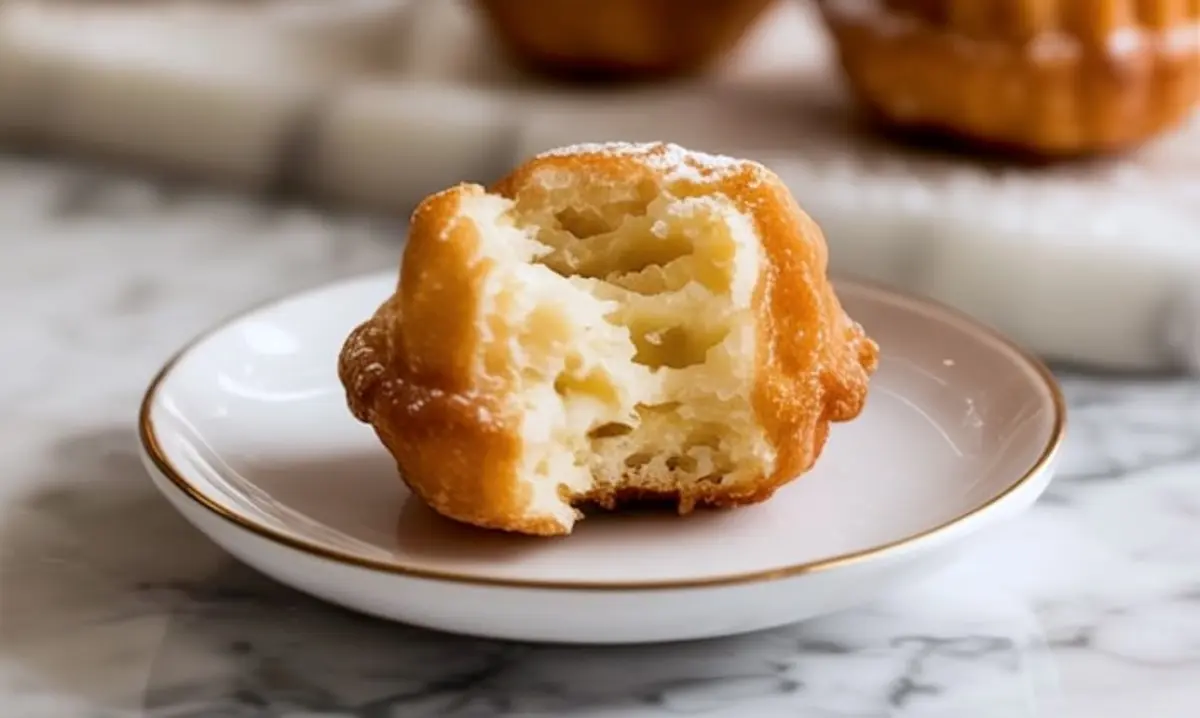
A good zeppola feels light for its size and sounds a little hollow when you tap it. Break one open. The inside should look airy, with open pockets like the one above, never wet or doughy.
- Greasy or soggy: the oil dropped below 350°F, usually from crowding. Fry fewer and wait for the temperature to recover.
- Dark outside, raw middle: the oil is too hot or the portions are too big. Keep to a tablespoon and lower the heat slightly.
- Flat and dense: too much flour or too little egg made the dough stiff, so the steam had nothing to stretch.
- Cracked or burst open: large spoonfuls in very hot oil set a hard shell before the center puffs, and the steam tears through it.
- Eggy taste or scrambled bits: the dough was too hot when the eggs went in. Give it the full 5 minutes.
- Soft by the next morning: sealed containers trap moisture. Store them loosely covered and recrisp in the oven.
Filled, Lemon and Cinnamon Sugar Zeppole
For lemon zeppole, add 1 tablespoon of lemon zest and skip the vanilla. For cinnamon sugar, mix 1/4 cup granulated sugar with 1/2 teaspoon cinnamon and toss the warm zeppole in it. For a chocolate coat, dip cooled zeppole in melted semisweet chocolate and let them set on parchment. Mini zeppole are portioned with a teaspoon and fry faster.
To fill them, let them cool completely, poke a hole in the side with a small piping tip, and pipe in vanilla pastry cream or jam. That gets you close to the St. Joseph’s Day version. For a dessert board, set out a bowl of chocolate chip cannoli dip next to them, or fry a batch of chocolate dipped churros, which start from a similar cooked dough.
Keeping Zeppole Crisp After Frying
Zeppole are best within an hour. Leftovers keep for 1 day at room temperature in a container lined with paper towel, or 2 days in the fridge. Rewarm them in a 300°F (150°C) oven for 5 to 7 minutes. To freeze, set them on a tray until firm, then bag them for up to 1 month and reheat from frozen at 325°F (165°C) for 8 to 10 minutes.
Skip the microwave, which turns the crust soft and chewy. Stored zeppole soak up their powdered sugar, so dust them again after reheating.
Zeppole Questions Readers Ask
Do zeppole have yeast?
This choux style recipe has none. Eggs and steam make them puff. Some regional versions, like Christmas zeppole from southern Italy, are yeasted.
Can you bake zeppole instead of frying them?
Baked choux dough becomes a cream puff with a dry, crisp shell, not a fried zeppola. If that is what you want, follow a baked recipe such as my Christmas tree cream puffs.
Can I make zeppole dough ahead?
Yes, for a few hours or up to a day. Press plastic wrap onto the surface, refrigerate, and let it sit out for 30 minutes before frying. Freshly made dough puffs a little higher.
What oil is best for frying zeppole?
Vegetable oil, or another neutral oil that handles high heat, such as canola or peanut.

Serve them warm with coffee, or put them on an Italian dessert table next to a panna cotta.
Zeppole Recipe

This zeppole recipe makes light Italian doughnuts from a cooked choux dough of water, butter, sugar, flour, eggs, and vanilla, fried and dusted with powdered sugar. It makes 22 small zeppole in about 30 minutes with no yeast and no rising, each one crisp outside with a soft, hollow center. The dough is stirred on the stove until it dries and films the pan, then the eggs go in one at a time, so the steam can puff the Italian zeppole in 350°F oil. Serve them warm with coffee, fill them with pastry cream or jam like St. Joseph's Day zeppole, or toss them in cinnamon sugar for a holiday dessert table. They are best fresh but keep 1 day at room temperature and recrisp in the oven.
Ingredients
- 1 cup (240 ml) water
- 1/4 cup (57 g) unsalted butter
- 2 tablespoons (25 g) granulated sugar
- 1/2 teaspoon salt
- 1 cup (120 g) all-purpose flour
- 3 large eggs, room temperature
- 1 teaspoon vanilla extract
- Vegetable oil, for frying
- Powdered sugar, for dusting
Instructions
- MAKE THE DOUGH: In a medium saucepan over medium heat, combine the water, butter, sugar, and salt. Bring to a boil, stirring until the butter has fully melted. Once boiling, reduce the heat to low and add the flour all at once. Stir vigorously with a wooden spoon until the dough pulls away from the sides of the pan and forms a ball. Continue cooking and stirring constantly for 1–2 minutes to slightly dry out the dough. Remove from heat and allow the dough to cool for 5 minutes.
- ADD THE EGGS: Once the dough has cooled slightly, add the eggs one at a time, beating well after each addition. The mixture will appear lumpy at first but will become smooth as you continue stirring. Wait until the dough is fully combined before adding the next egg. Stir in the vanilla extract. The final dough should be smooth, thick, and slightly sticky.
- FRY THE ZEPPOLE: In a heavy-bottomed pot or deep fryer, heat about 2 inches of vegetable oil to 350°F (175°C). Use a small cookie scoop or two spoons to carefully drop tablespoon-sized portions of dough into the hot oil, working in batches to avoid overcrowding. Fry for 3–4 minutes per side, turning occasionally, until the zeppole are puffed and deep golden brown. Use a slotted spoon to transfer them to a paper towel-lined plate to drain.
- DUST AND SERVE: While the zeppole are still warm, dust generously with powdered sugar. Serve immediately while they are crisp on the outside and tender inside.
Notes
Weigh the flour (120 g); too much flour makes a stiff dough that fries dense. Cool the cooked dough for 5 minutes before adding the eggs, and beat each egg in fully before the next. Keep the oil at 350°F (175°C) and fry only 4 to 6 at a time; cooler oil makes greasy, soggy zeppole. Dust with powdered sugar while warm. Best eaten within an hour. Store leftovers loosely covered at room temperature for 1 day or in the fridge for 2 days, and reheat in a 300°F (150°C) oven for 5 to 7 minutes. Avoid the microwave, which softens the crust.
