
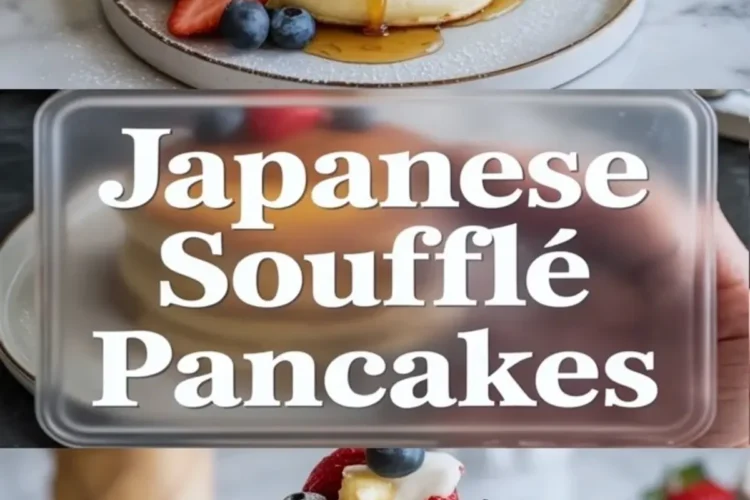
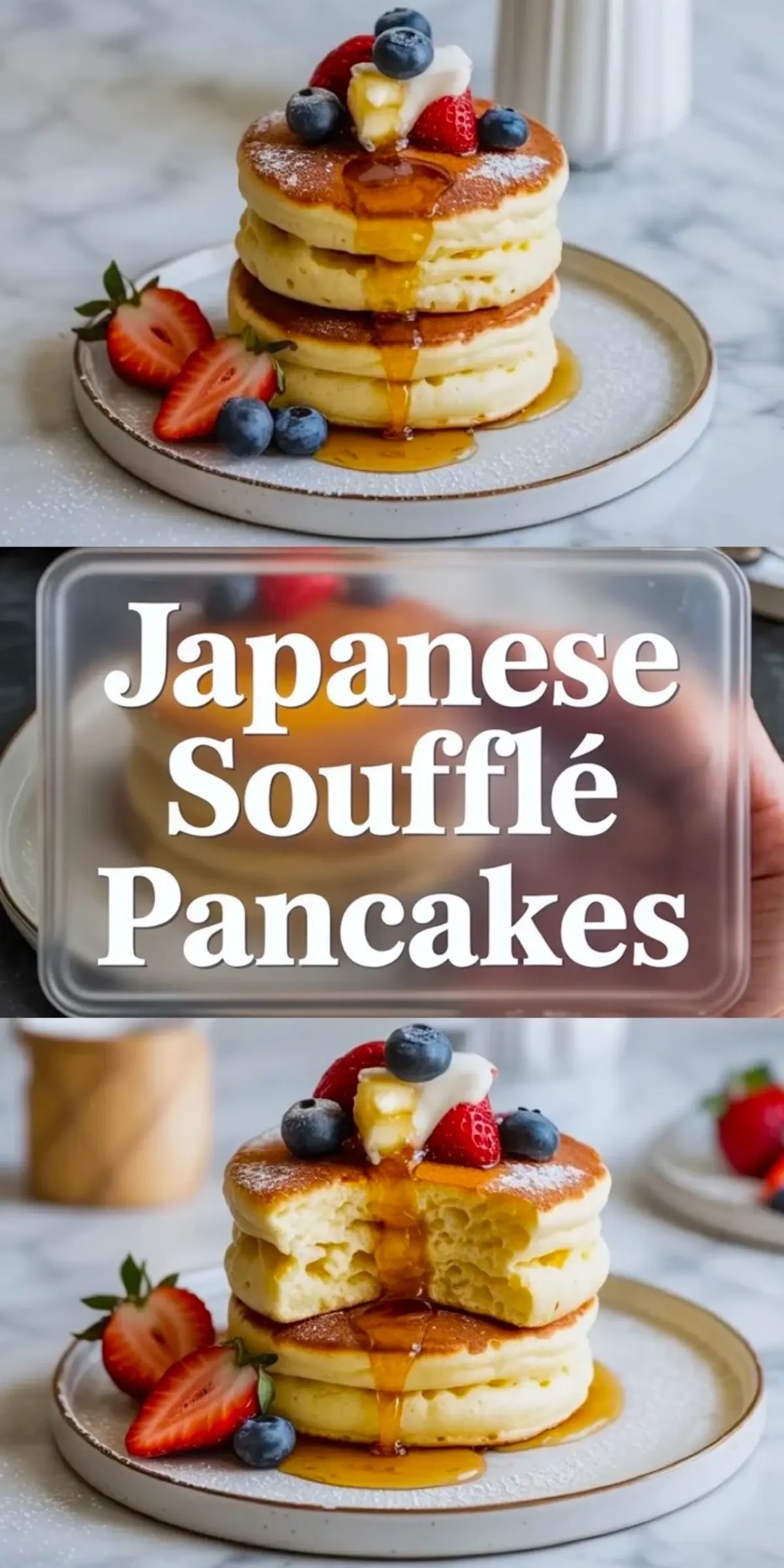
Japanese souffle pancakes are tall, wobbly pancakes made by folding a stiff meringue into a small yolk batter and cooking it covered over very low heat. This recipe uses 2 eggs, 2 tablespoons milk and only ¼ cup (30 g) flour, takes about 35 minutes, and makes 2 servings of about 3 thick pancakes.
The height comes from three things working together: egg whites whipped until they stand upright, a lid that traps steam, and heat low enough that the middle cooks before the bottom burns. Miss one and they spread.
Following a special diet?
Every recipe on this site can be converted to gluten-free, vegan, dairy-free, keto, nut-free or egg-free with adjusted ratios so nothing falls flat.
Try the Recipe Converter →If you searched “Japanese pancakes” and meant the savory one with cabbage, that is okonomiyaki, and my Japanese cabbage pancake is the recipe you want. These are the sweet ones, sometimes sold in cafes as fluffy Japanese hotcakes.
How Souffle Pancakes Differ From Regular Pancakes
- Lift: whipped egg whites do the work. Regular pancakes rely on baking powder and a pourable batter; here there is just ¼ teaspoon baking powder for support.
- Flour: 30 g for 2 eggs, a fraction of a normal batter, which is why the inside is closer to a souffle than a cake.
- Cooking: about 7 to 8 minutes covered, flip, then 5 to 7 minutes more, instead of 2 to 3 minutes a side.
- Texture: tall, soft and slightly jiggly, with a thin golden crust and a custardy middle.
For a regular stack with a tender crumb, my sour cream pancakes are the everyday version.
Eggs, Flour and Sugar: Small Amounts That Matter
Room temperature eggs whip faster and fuller, so take them out 30 minutes ahead. Separate them cleanly. A speck of yolk or a greasy bowl keeps the whites from ever reaching stiff peaks, so use a glass or metal bowl wiped dry.
Milk and ½ teaspoon vanilla loosen the yolks into a thick batter. The flour and baking powder are sifted in so there are no lumps to chase later, when stirring would knock out the air. All 2 tablespoons of sugar go into the whites in two additions, and ¼ teaspoon of lemon juice or white vinegar helps the foam hold.
Whipping a Meringue That Holds the Height
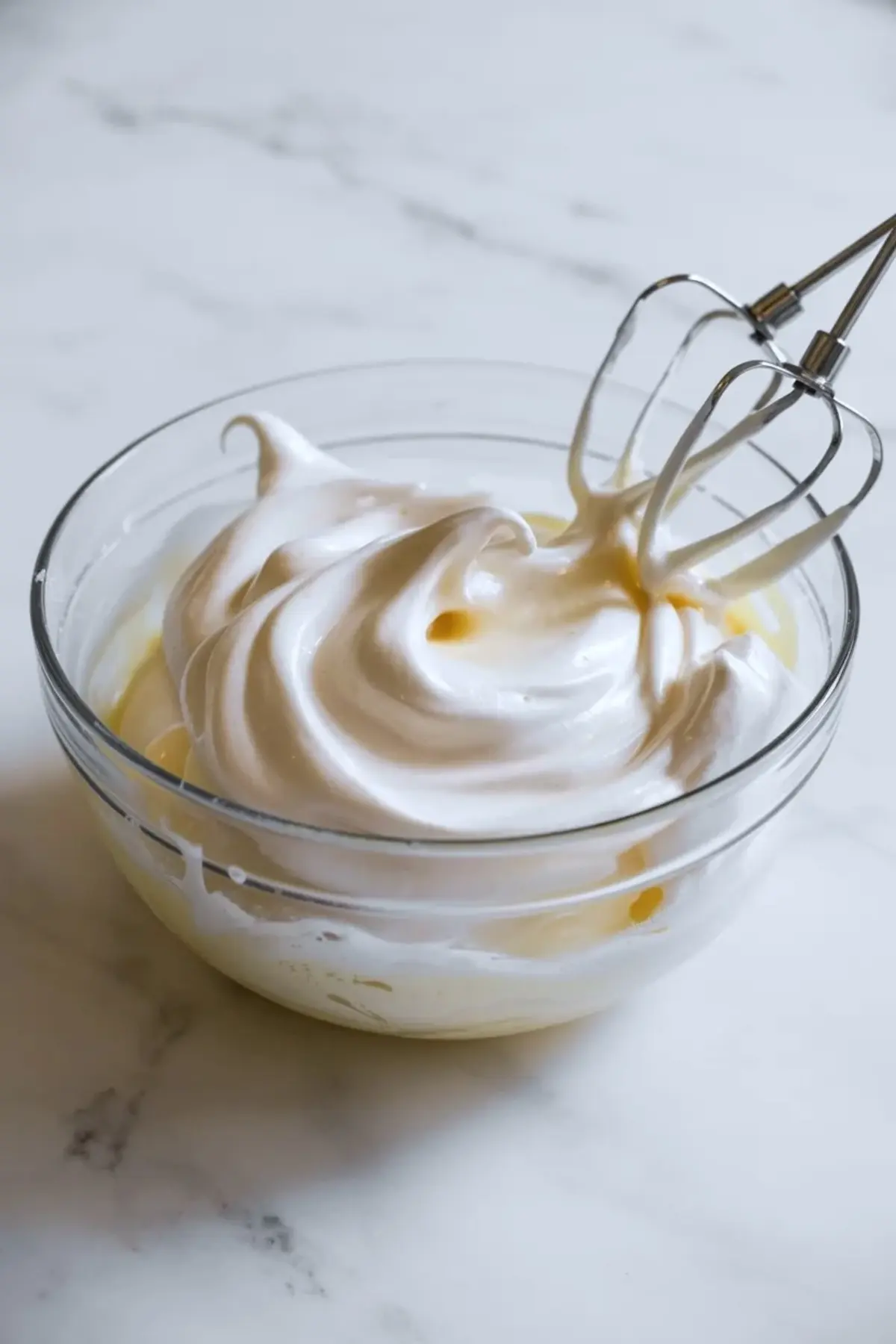
Beat the whites with the lemon juice on medium speed until foamy, like soap bubbles. Add half the sugar and beat. Then add the rest and turn the mixer up to medium high. Keep going until the meringue is thick and glossy and a peak stands straight up when you lift the beaters.
Stop there. Whites beaten past that point turn cottony and dull and break into clumps that leave white lumps in the pancakes. Under-whipped whites look shiny but slump. Those pancakes spread flat.
Folding and Scooping Before the Air Escapes
Before you fold, put a large nonstick skillet with a lid (10 to 12 inches holds three) on very low heat. Grease it lightly, then wipe out the extra so the surface looks dry with only a thin film.
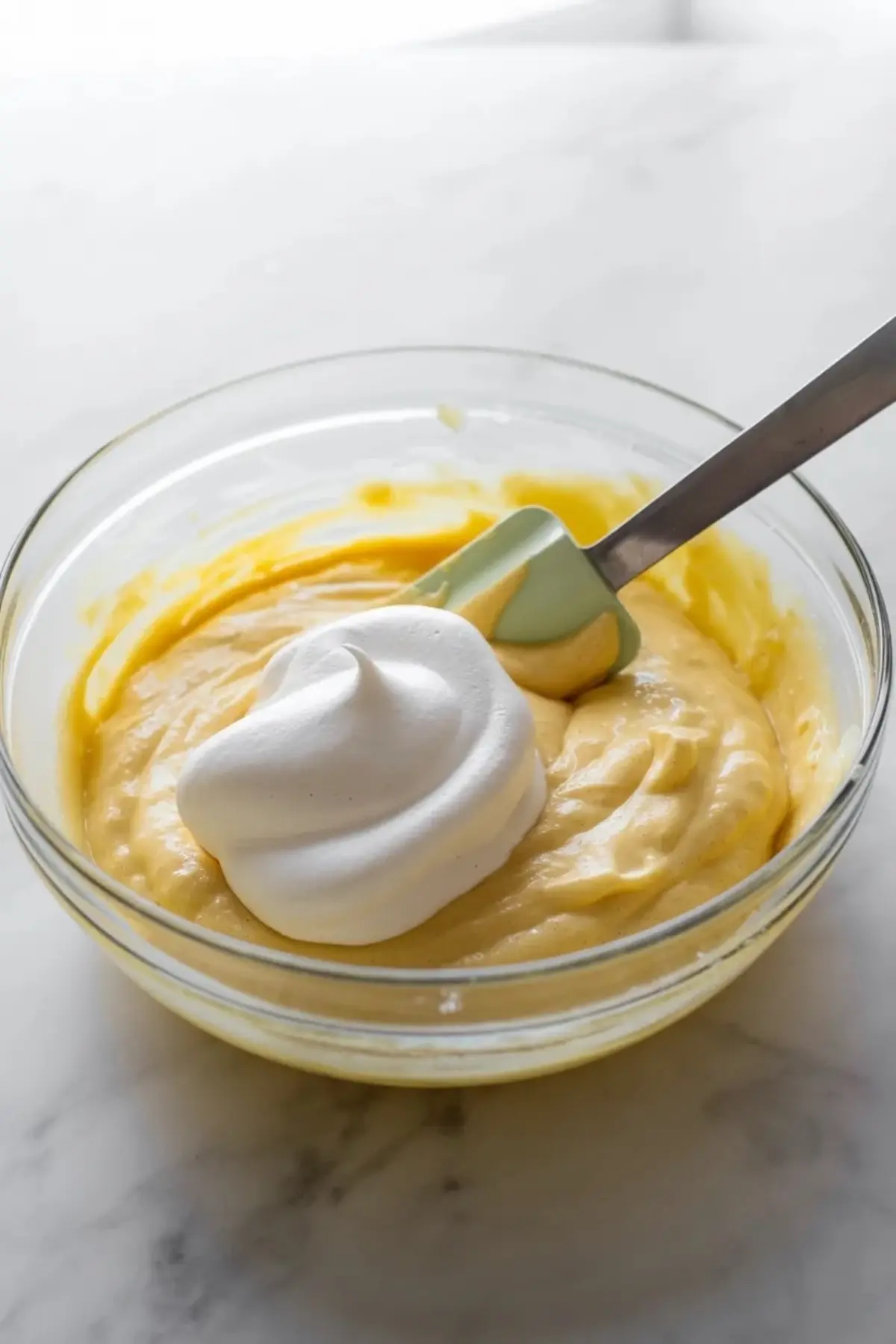
Whisk the yolks, milk and vanilla until smooth and pale, then sift in the flour and baking powder and whisk until no dry streaks remain. Stir a third of the meringue into this batter to loosen it. Fold in the rest in two additions with a spatula, scooping up from the bottom and turning the bowl. Stop when you see no thick streaks of white. The batter should look like a light mousse and hold a soft mound on the spatula.
Work fast now. Scoop all three pancakes straight away with a large spoon or ice cream scoop, piling the batter into tall mounds and adding more on top as they settle. Meringue starts losing air within a few minutes, so the last pancake should not have to wait. Doubling the recipe? Use two pans rather than cooking in batches.
Low Heat, a Lid and a Teaspoon of Water
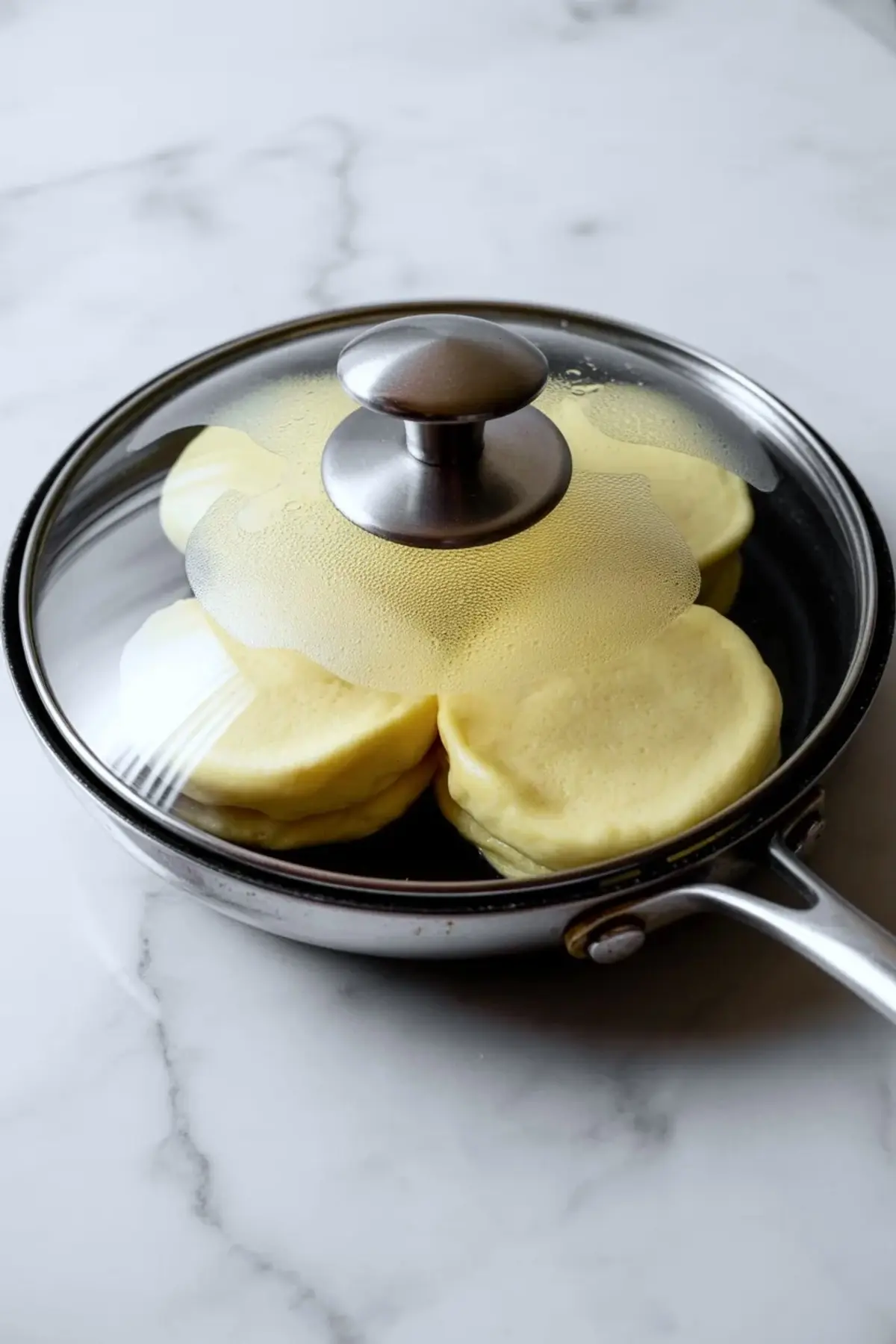
Cover the pan and cook for 7 to 8 minutes, while the bottoms brown slowly to golden and the mounds puff and rise under the lid. Be patient here. Use the clock to judge your stove: if the bottoms are golden after 3 or 4 minutes, the heat is too high and the centers will still be raw when you flip. If the tops look dry, add a teaspoon of water to an empty part of the pan and cover again quickly. Steam keeps the tops moist. It also helps the middle cook through.
To flip, slide a wide spatula all the way under one pancake, steady the top with a second spatula or your fingertips, and roll it over in one quick motion. Cover again and cook another 5 to 7 minutes. They are done when the sides look set, not wet, and the top springs back when pressed gently.
Why Souffle Pancakes Collapse and How to Stop It
A little shrinking on the plate is normal as the steam inside escapes. They should still stand well above a regular pancake.
- They sink right after cooking: the center was underdone. Lower the heat. Give them the full time on each side.
- They never rose: the whites were not whipped to stiff peaks, or there was yolk or grease in the bowl.
- Dense and eggy inside: the batter was overfolded until it turned runny.
- Dark bottom, raw middle: the pan was too hot. Very low means very low.
- Tore when flipped: flipped too early. The underside needs those 7 to 8 minutes to firm up.
Toppings, Matcha and Lemon Versions
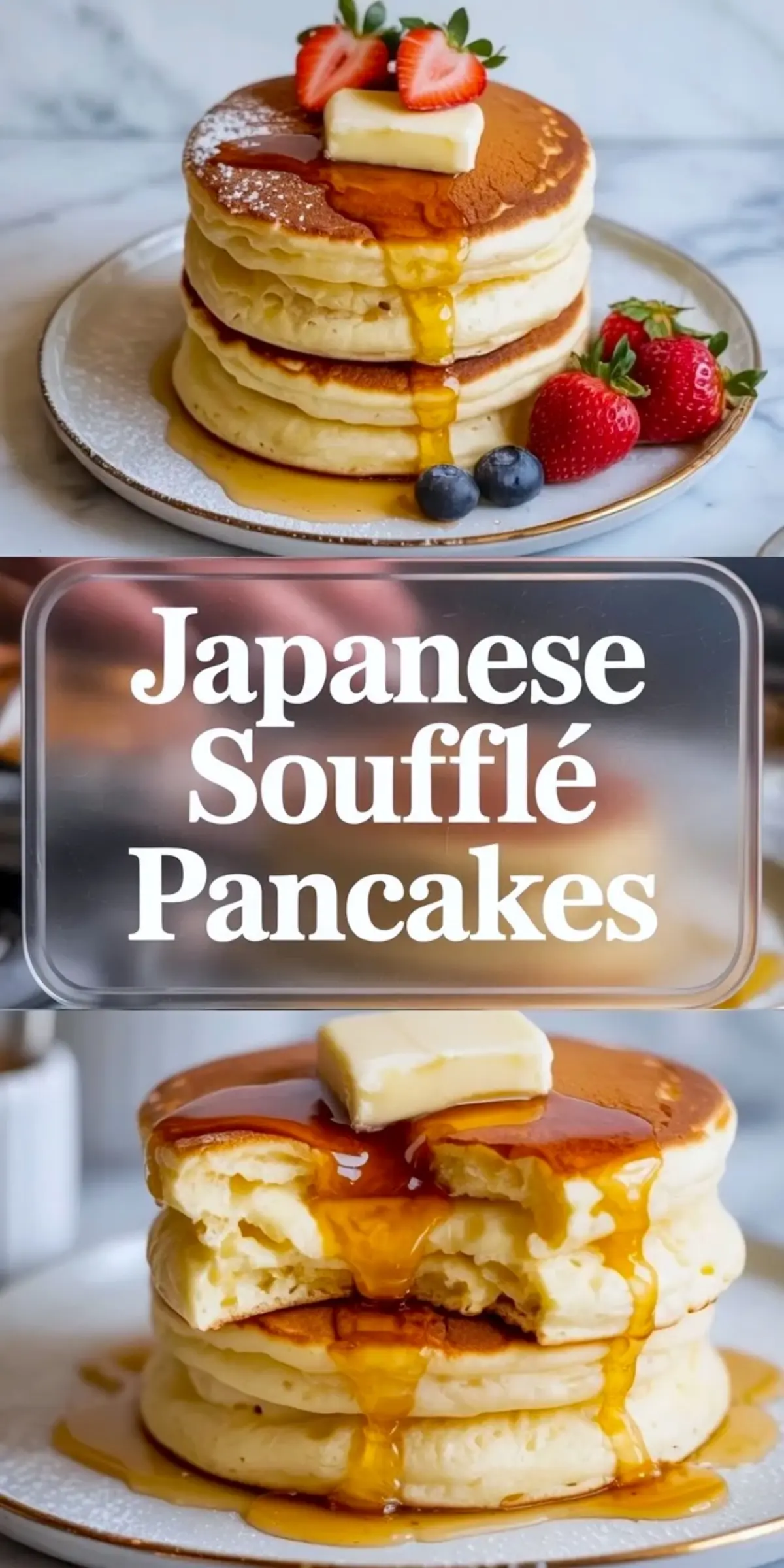
Serve them within a few minutes with a pat of butter, a dusting of powdered sugar, fresh strawberries and blueberries and a pour of maple syrup. A spoonful of whipped cream on top is a good extra.
For matcha souffle pancakes, whisk 1 teaspoon matcha into the yolk batter and take out 1 teaspoon of the flour. For a citrus version, my lemon souffle pancakes build on the same meringue method. If you like the green tea flavor, the matcha pound cake is worth a weekend bake too.
Can You Make Souffle Pancakes Ahead?
Not really. They are at their tallest in the first few minutes. Leftovers keep in an airtight container in the fridge for up to 2 days, or between sheets of parchment in the freezer for up to 1 month, but they come back shorter and denser. Reheat them covered in a pan over low heat until warm.
For a make-ahead brunch, cottage cheese pancakes or cinnamon roll pancakes hold up much better.
Souffle Pancake Questions
Do I need ring molds for Japanese souffle pancakes?
No. This recipe piles the batter into tall mounds with a spoon or scoop, and the lid and low heat keep them from spreading.
Why are my souffle pancakes wet in the middle?
The heat was too high, so the outside browned before the center cooked. Cook on very low for the full 7 to 8 minutes, flip, then 5 to 7 more.
Save this to your brunch board, and tell me in the comments how tall yours stood.
Japanese Soufflé Pancakes Recipe
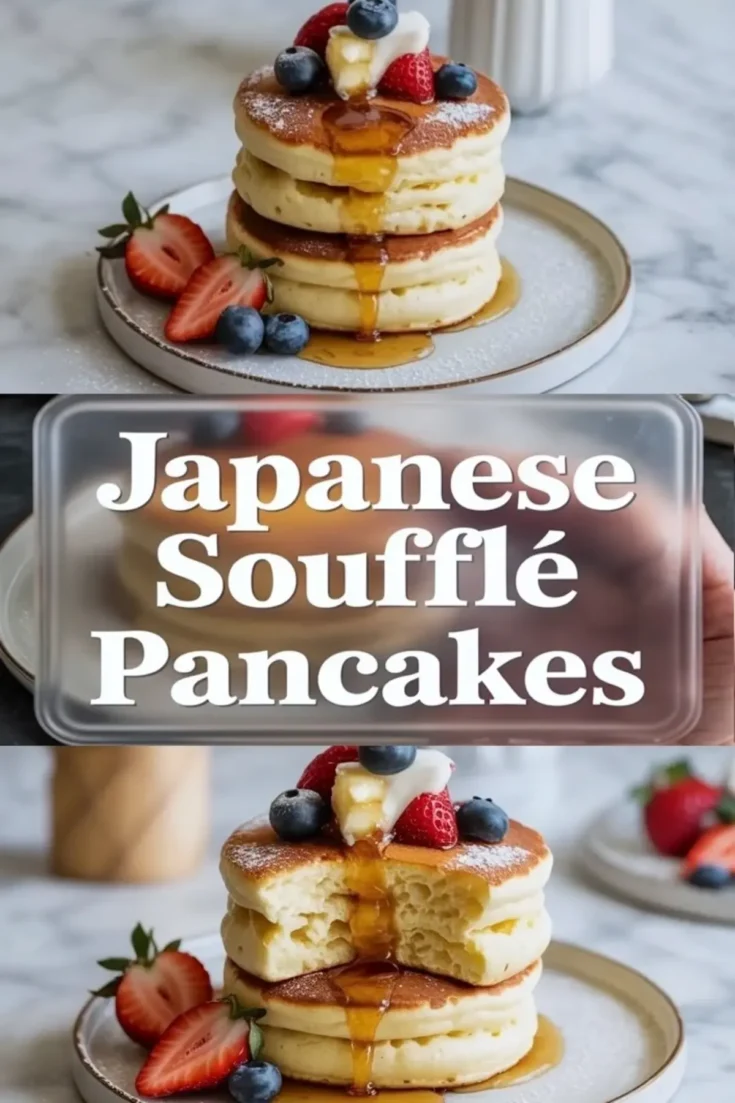
These Japanese souffle pancakes are tall, jiggly pancakes made by folding a stiff meringue into a light yolk batter of milk, vanilla, flour and a little baking powder. The recipe takes about 35 minutes and makes 2 servings, about 3 thick pancakes, with a soft, airy inside and a thin golden crust. The egg whites are whipped with sugar and lemon juice until they stand upright, then the pancakes cook covered over very low heat for 7 to 8 minutes, then 5 to 7 more after flipping, with a teaspoon of water for steam. Serve these fluffy Japanese pancakes for brunch with butter, powdered sugar, strawberries, blueberries and maple syrup. For matcha, add 1 teaspoon to the batter. Eat them fresh.
Ingredients
- 2 large eggs, separated and at room temperature
- 2 tablespoons milk
- 1/2 teaspoon vanilla extract
- 1/4 cup (30 g) all-purpose flour
- 1/4 teaspoon baking powder
- 2 tablespoons granulated sugar, divided
- 1/4 teaspoon lemon juice or white vinegar
- Oil or butter, for greasing the pan
- FOR SERVING
- Maple syrup
- Powdered sugar
- Fresh strawberries
- Fresh blueberries
- Butter
Instructions
STEP 1: PREPARE THE BATTER BASE: Place the egg yolks in a medium bowl. Add the milk and vanilla extract. Whisk until smooth and slightly pale. Sift in the flour and baking powder. Whisk gently until no dry streaks remain and the batter looks smooth and thick.
STEP 2: MAKE THE MERINGUE: Place the egg whites in a clean, dry mixing bowl. Add the lemon juice or vinegar. Beat with an electric mixer on medium speed until foamy. Gradually add the sugar in two additions while continuing to beat. Increase the speed to medium-high and beat until stiff, glossy peaks form. The meringue should stand upright when you lift the beaters.
STEP 3: FOLD THE MERINGUE: Add one-third of the meringue to the yolk mixture. Fold gently with a spatula to loosen the batter. Add the remaining meringue in two additions. Fold carefully using upward strokes to keep as much air in the mixture as possible. Stop folding once the batter looks combined and airy.
STEP 4: PREHEAT THE PAN: Heat a nonstick skillet over very low heat. Lightly grease the surface with oil or butter. Wipe away excess grease so the surface is lightly coated but not oily.
STEP 5: SHAPE THE PANCAKES: Scoop the batter into tall mounds using a large spoon or ice cream scoop. Stack additional batter on top of each mound to create height. Cover the pan with a lid to trap heat and moisture.
STEP 6: COOK THE FIRST SIDE: Cook on very low heat for about 7 to 8 minutes. The bottoms should turn golden brown while the pancakes slowly rise. If the tops look dry, add a teaspoon of water to the pan and quickly cover to create gentle steam.
STEP 7: FLIP AND FINISH COOKING: Carefully flip each pancake using a wide spatula. Cover again and cook for another 5 to 7 minutes on low heat. The pancakes should feel set and spring back lightly when touched.
STEP 8: SERVE: Transfer the pancakes to a plate immediately. Dust with powdered sugar. Add butter, fresh strawberries, fresh blueberries, and drizzle with maple syrup. Serve warm for the best texture.
Notes
Use room temperature eggs and a clean, grease free bowl so the meringue whips to stiff, glossy peaks. Put the pan on very low heat before folding, and scoop all the pancakes at once; the meringue loses air if the batter waits. If the bottoms turn golden in 3 to 4 minutes, the heat is too high and the centers will be raw. If the tops look dry, add a teaspoon of water to the pan and cover quickly. Fold gently and stop once no thick white streaks remain. Some shrinking after cooking is normal; a big collapse means the center was undercooked. Best eaten right away; leftovers keep 2 days in the fridge and reheat covered on low.
Nutrition Information
Yield
2Serving Size
1Amount Per Serving Calories 251Total Fat 5gSaturated Fat 2gUnsaturated Fat 4gCholesterol 189mgSodium 153mgCarbohydrates 40gFiber 1gSugar 15gProtein 10g
