
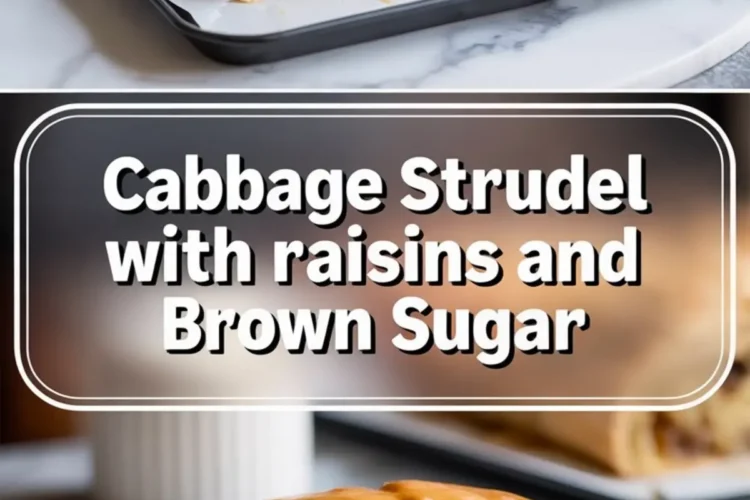
This traditional German strudel combines caramelized green cabbage, golden raisins, and brown sugar, all wrapped in layers of buttery phyllo pastry. The filling is soft, sweet, and fragrant with cinnamon, while the pastry bakes up golden and crisp. It’s a nostalgic breakfast dessert, often overlooked, but it belongs right alongside German chocolate cupcakes or Purple Cabbage Panna Cotta if you’re building a menu of distinctive heritage treats.
The texture of this strudel depends on properly cooked cabbage and a dry, sticky filling. You want the moisture to reduce before rolling. That way, the phyllo stays crisp and flaky rather than soggy.
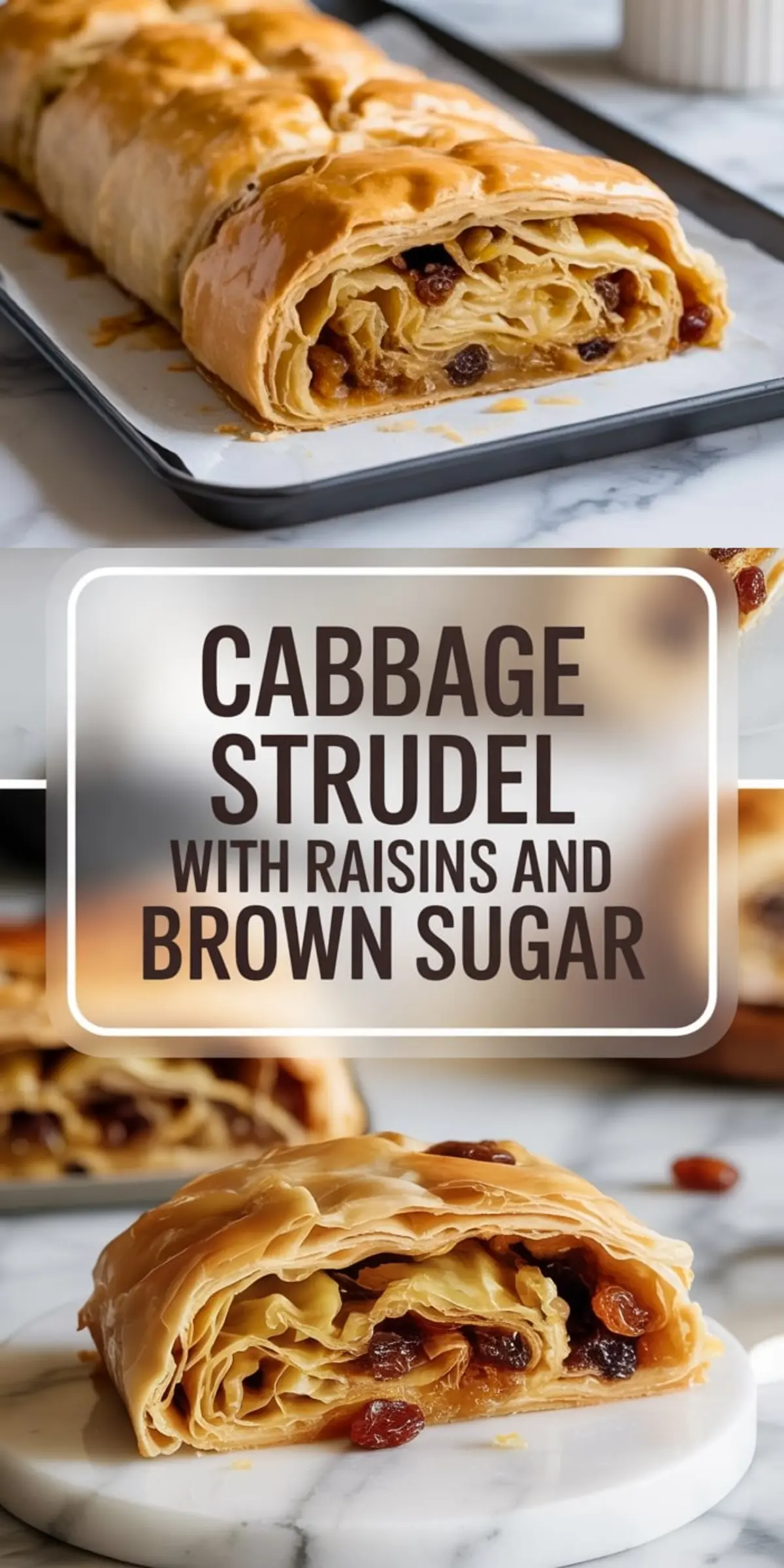
A slow sauté is key here. About 10 to 12 minutes to soften the cabbage, and another 8 to 10 to pull out the sugars and reduce the juices. Stir often. Don’t rush the caramelization. This step lays the foundation for that rich, jammy texture you want.
Keeping the phyllo crisp starts before you even unwrap it. Let it thaw overnight in the fridge and use a damp towel while you work. Every detail counts when you’re layering six sheets of paper-thin pastry.
Pair it with German Chocolate Cupcakes for a dessert spread.
What You Need and Why It Matters
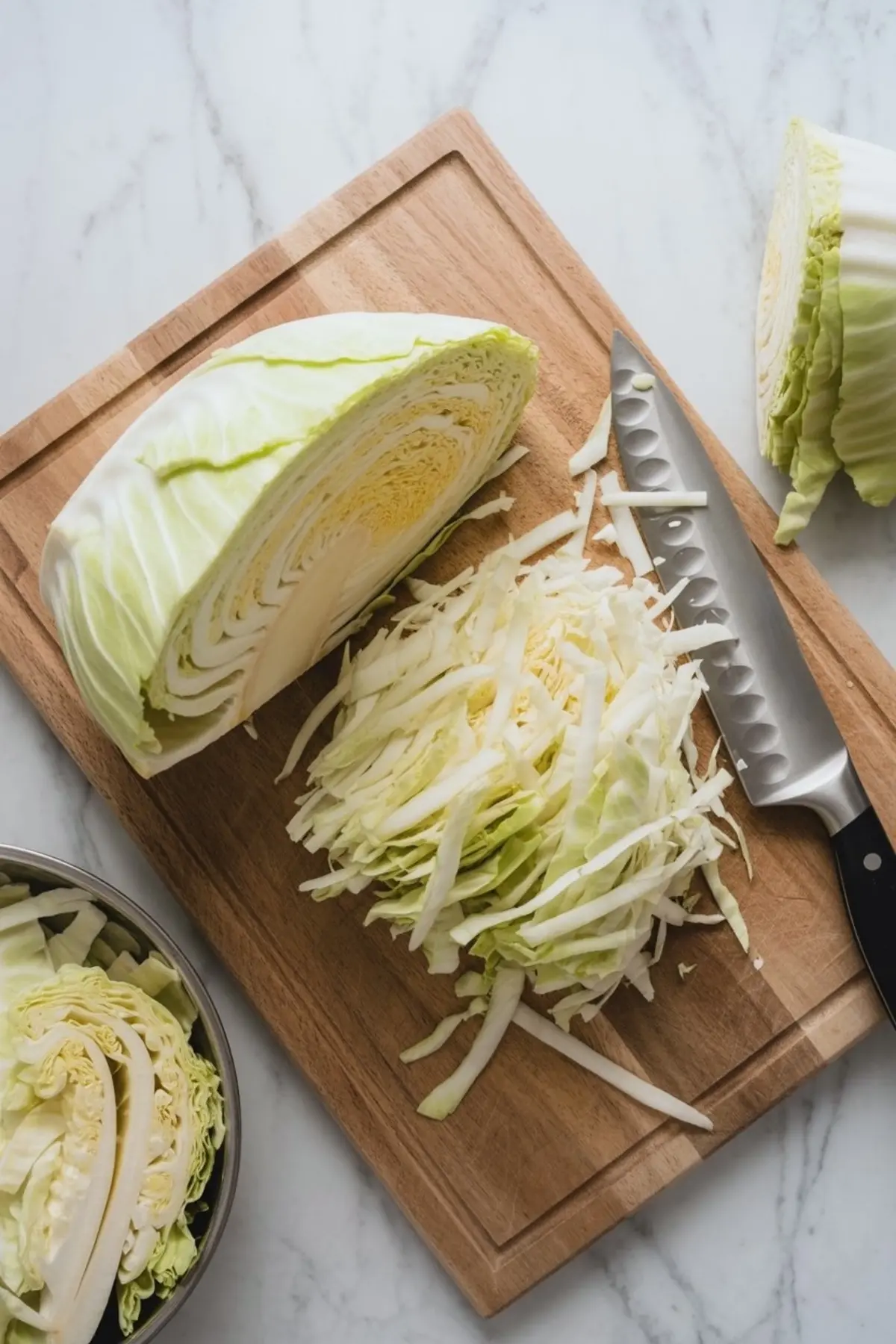
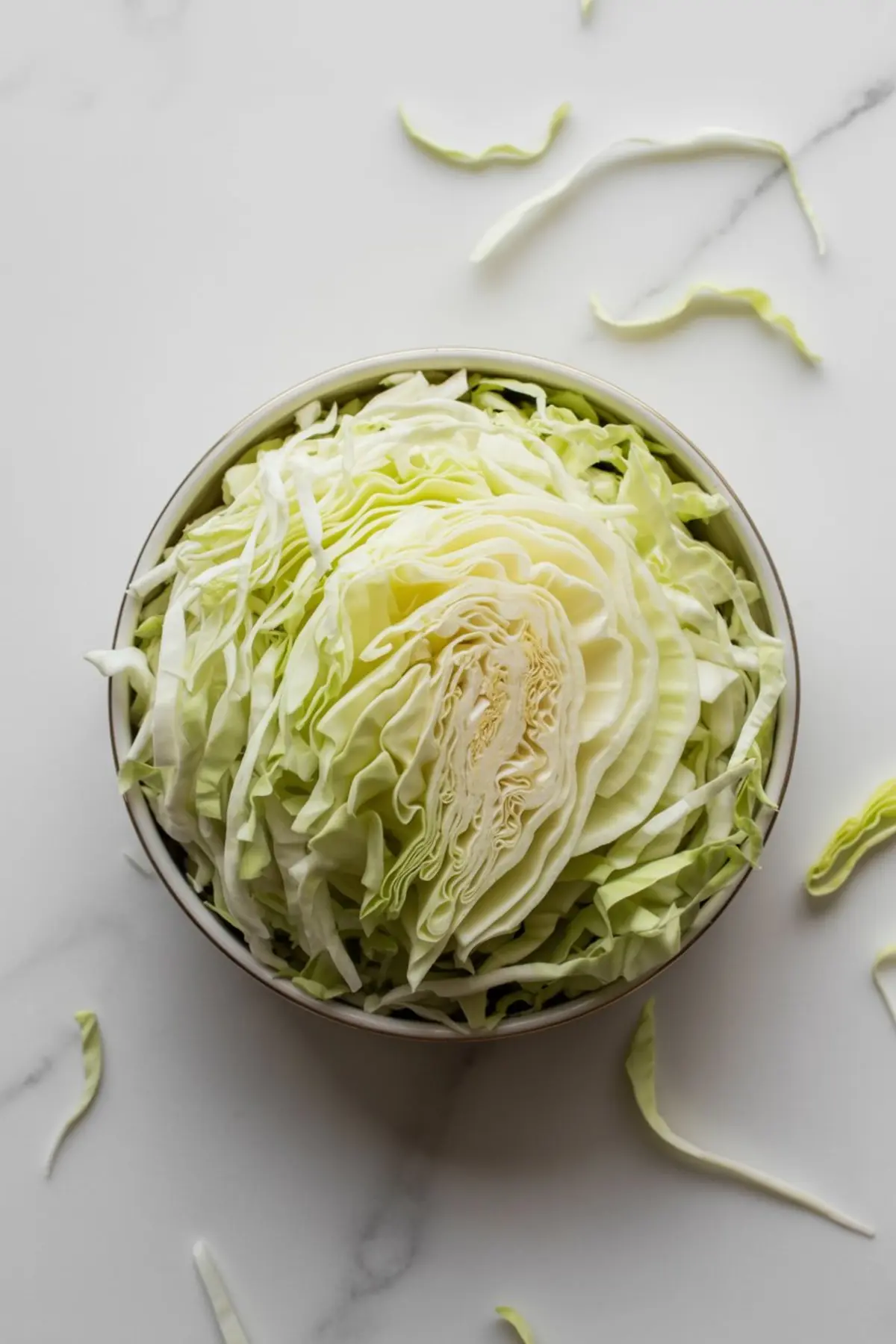
The cabbage makes up most of the filling, so freshness is non-negotiable. Choose a firm, tight head of green cabbage. Shred it fine. Large chunks won’t cook evenly, and you’ll lose that delicate texture inside the strudel.
I use brown sugar for depth, either light or dark works. Dark will bring more molasses warmth. Cinnamon adds familiarity. Vanilla rounds it all out.
As for raisins, golden or regular both work, but soak them first if yours feel dry. The plumper they are, the better the contrast with the cabbage.
Phyllo dough gives this dessert its signature crisp shell. Butter is what holds it all together. Don’t skimp on brushing between layers. That’s how you get the flaky lift.
Set it out during holidays as a quiet nod to German Chocolate Frosting heritage bakes.
Focus on the Cabbage Filling
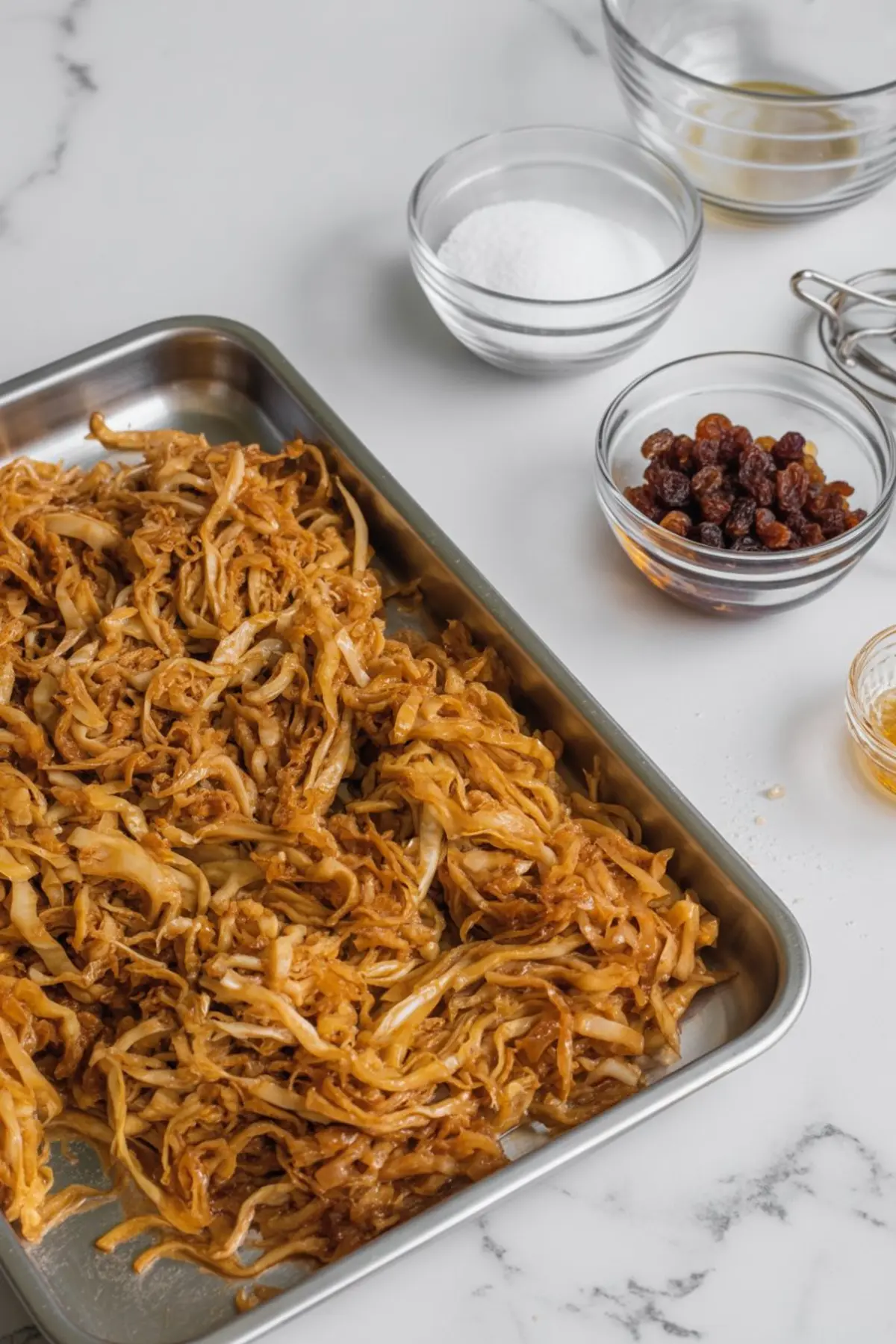
This filling surprises people. They expect it to be overly savory or watery, but that’s never the case if you reduce it properly.
Let the cabbage start to color. Don’t just steam it. That browning deepens the flavor. When the brown sugar hits the pan, you’ll see the moisture thicken into a syrupy glaze.
That’s the moment to pull it off the heat. It should look sticky, not wet. Spread it out on a tray to cool faster. Rolling warm filling into phyllo is the easiest way to ruin the texture.
Step-by-Step: Assembling the Strudel
Start by brushing each phyllo sheet with melted butter. Stack 6 layers. You don’t need more. Place your cooled filling along the edge in a tight log. Keep at least an inch border.
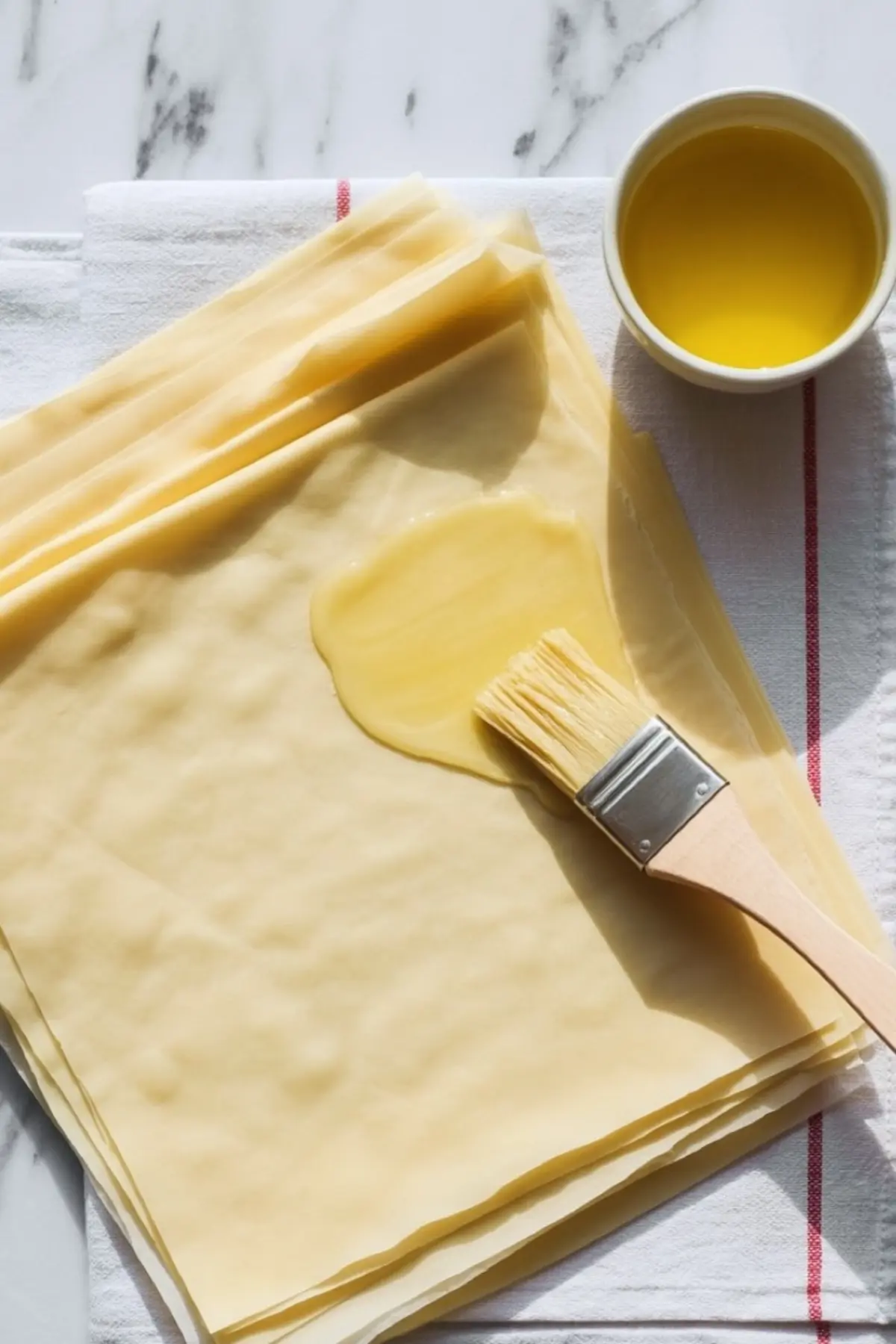
Use your towel to help roll it up, tucking the sides as you go. Don’t press too hard. Just enough to keep the shape.
Once it’s rolled, place it seam-side down on parchment and brush the outside again. This is what creates the golden crust.
How to Know It’s Baked Properly
The top should be golden and flaky. You’ll hear the crispness as you slice into it.
If it looks pale after 30 minutes, give it another 5. Underdone strudel feels rubbery and the filling won’t hold together cleanly.
If it turns too dark, your oven may run hot. Next time, lower the rack or reduce to 350°F.
If Something Goes Wrong
Cabbage leaking through? The filling was too wet. Cook it longer next time.
Pastry tearing? Dry phyllo. Work faster and keep unused sheets covered.
Filling bland? Add more cinnamon or use dark brown sugar for extra flavor depth.
Strudel soggy on bottom? Filling was too warm. Let it cool fully before rolling.
Variations to Try
Use red cabbage for a deeper color and a hint of bitterness. Replace raisins with chopped dates or dried apricots.
Add ¼ teaspoon of ground cloves for a warmer spice. Or stir in ½ cup chopped walnuts for texture and earthiness.
Dust with powdered sugar or drizzle with a thin vanilla glaze if you want it more dessert-like.
Storage Tips That Actually Work
This strudel keeps well at room temperature for 1 day, loosely covered. In the fridge, up to 4 days in an airtight container.
Reheat slices at 300°F for 8 to 10 minutes to crisp them again. Freeze the whole strudel (baked and cooled) tightly wrapped. Reheat directly from frozen at 325°F until warmed through.
What I Learned From Testing
Don’t crowd the pan. Bake one strudel per sheet so air can circulate.
Use a silicone brush, not bristles, for buttering the phyllo. It’s faster and gentler.
Let the strudel cool at least 15 minutes before slicing or it may fall apart.
Serve it the day you bake it. That’s when the texture is at its peak.
How to Serve Sweet Cabbage Strudel
Slice and dust with powdered sugar. Pair with whipped cream and berries.
Serve alongside hot tea or mulled wi ne. Use it as a side to a savory brunch spread. Or let it be the star of your German baking night.
Save This Recipe and Share What You Made
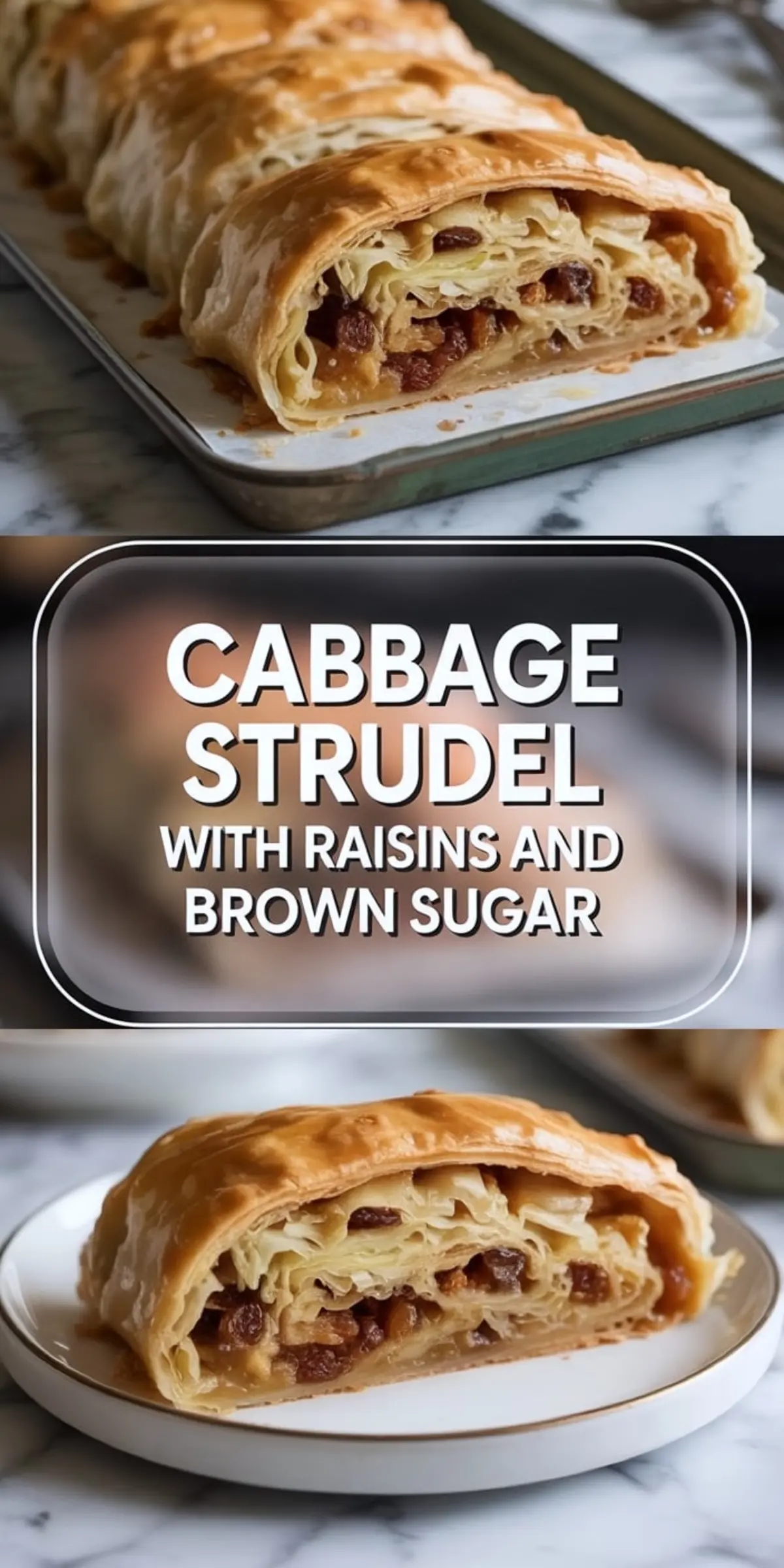
Pin this Sweet Cabbage Strudel recipe to your board so you don’t lose it. Try a variation and tell me what worked for you.
Have questions while you bake? Leave a comment below. I always check back.
Sweet Cabbage Strudel with Raisins and Brown Sugar
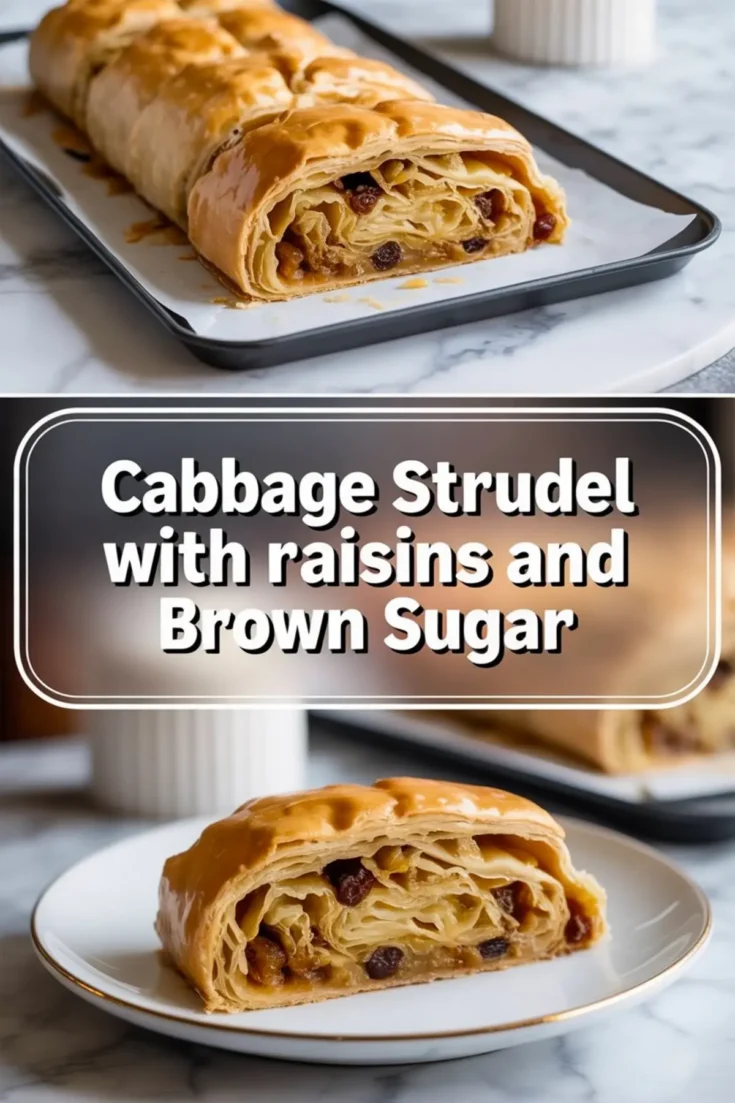
This sweet cabbage strudel combines tender sautéed cabbage with plump raisins and rich brown sugar, wrapped in crisp, golden pastry. A nostalgic dish rooted in traditional German food, it’s perfect if you’re exploring authentic German strudels or unique cabbage recipes. This easy strudel recipe brings sweet and savory together in every slice. Learn how to make cabbage strudel from scratch using simple ingredients and techniques passed down through generations.
Ingredients
- For the Filling:
- 3 tablespoons unsalted butter
- 1 medium green cabbage, finely shredded (about 5 cups)
- ½ teaspoon salt
- ½ teaspoon cinnamon
- ½ cup brown sugar (light or dark)
- ¾ cup raisins
- 1 teaspoon vanilla extract
- For the Dough and Assembly:
- 1 package phyllo dough (thawed in fridge overnight)
- ½ cup unsalted butter, melted (for brushing the dough)
- Powdered sugar (optional, for dusting)
Instructions
- COOK THE CABBAGE FILLING: In a large skillet over medium heat, melt the butter. Add the shredded cabbage and salt. Cook for 10 to 12 minutes, stirring often, until the cabbage softens and begins to caramelize slightly. Stir in the cinnamon, brown sugar, and raisins. Continue to cook for another 8 to 10 minutes, stirring regularly, until the cabbage is soft and the mixture becomes sticky but not wet. Remove from the heat, stir in the vanilla extract, and let the filling cool completely. To speed cooling, spread the filling on a tray or large plate.
- PREP YOUR WORK AREA: Preheat the oven to 375°F (190°C) and line a baking sheet with parchment paper. Lay a clean, slightly damp kitchen towel on your counter to help manage the phyllo dough during assembly.
- ASSEMBLE THE STRUDEL: Unroll the phyllo dough and carefully remove one sheet, placing it flat on the towel. Brush it lightly with melted butter. Repeat with 5 to 6 additional sheets, stacking them and brushing each one with butter. Spoon the cooled cabbage filling in a log shape along one long edge of the dough stack, leaving about a 1-inch border. Use the towel to gently roll the dough over the filling, tucking in the sides as you go to create a sealed log. Place the rolled strudel seam-side down on the prepared baking sheet and brush the top with more melted butter.
- BAKE: Bake for 30 to 35 minutes, or until the strudel is golden brown and crisp on the outside. Let it cool slightly on the baking sheet before slicing into 1.5 to 2 inch pieces. Dust the top with powdered sugar if using.
Notes
Phyllo dough can dry out quickly—cover unused sheets with a lightly damp towel as you work. Make sure the cabbage filling is completely cool before rolling to prevent the dough from becoming soggy.
Nutrition Information
Yield
10Serving Size
1Amount Per Serving Calories 237Total Fat 14gSaturated Fat 9gUnsaturated Fat 5gCholesterol 36mgSodium 131mgCarbohydrates 29gFiber 1gSugar 24gProtein 1g
