
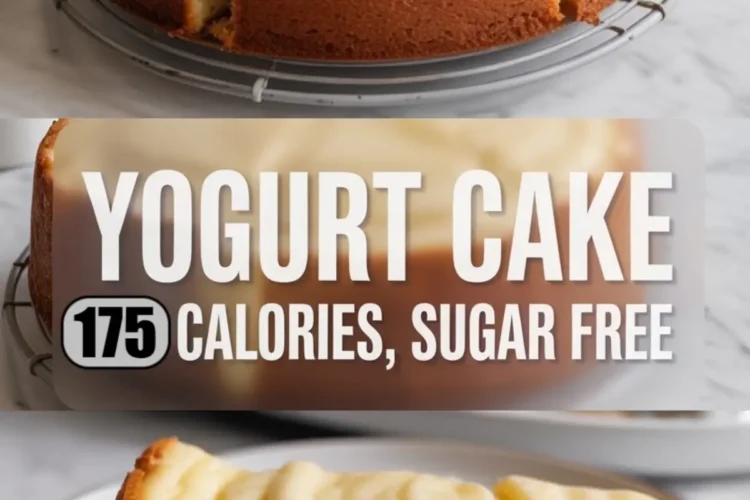
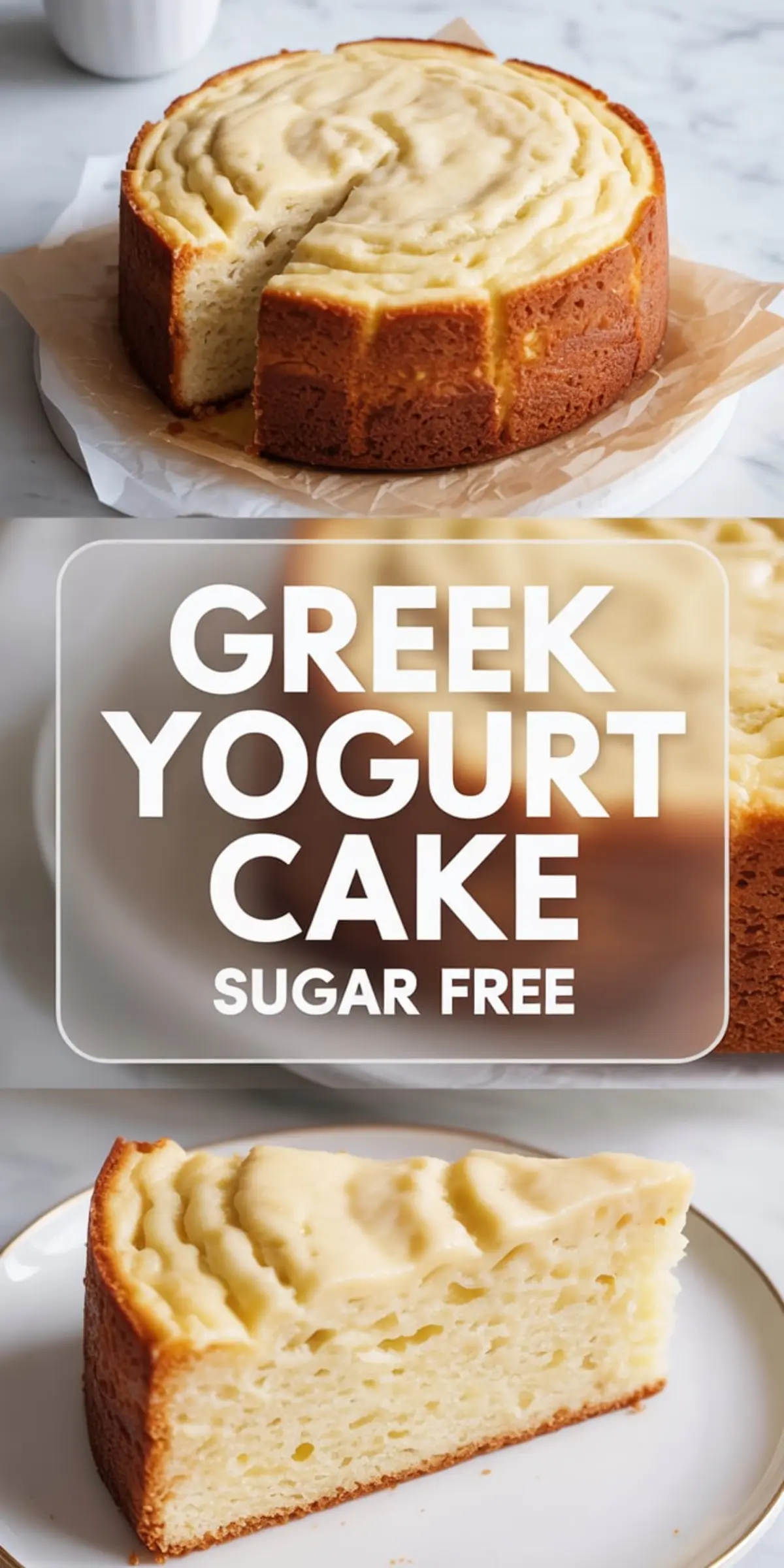
This low calorie Greek yogurt cake is a soft, lightly sweet 9 inch cake made with 1½ cups of Greek yogurt, 3 eggs, ¼ cup of olive oil and erythritol in place of sugar. It bakes at 350°F (175°C) for 40 to 45 minutes and cuts into 16 slices of about 175 calories each, going by the recipe card’s nutrition estimate.
The yogurt does the job butter and most of the sugar usually do. It keeps the crumb moist and gives the middle a gently tangy, almost custardy feel. Fold the flour in by hand and stop the moment the streaks disappear. That is what keeps it tender.
Following a special diet?
Every recipe on this site can be converted to gluten-free, vegan, dairy-free, keto, nut-free or egg-free with adjusted ratios so nothing falls flat.
Try the Recipe Converter →Calories, Protein and Sugar per Slice
- Slices: 16 from one 9 inch round cake
- Per slice (card estimate): 175 calories, 6 g protein, 5 g fat, 26 g carbohydrates, 1 g sugar
- Time: 10 minutes to mix, 40 to 45 minutes in the oven, about 55 minutes total plus cooling
- Oven and pan: 350°F (175°C), 9 inch round pan with a parchment lined base
- Sweetener: ¾ cup (150 g) erythritol; regular sugar works 1:1 but adds roughly 35 calories per slice
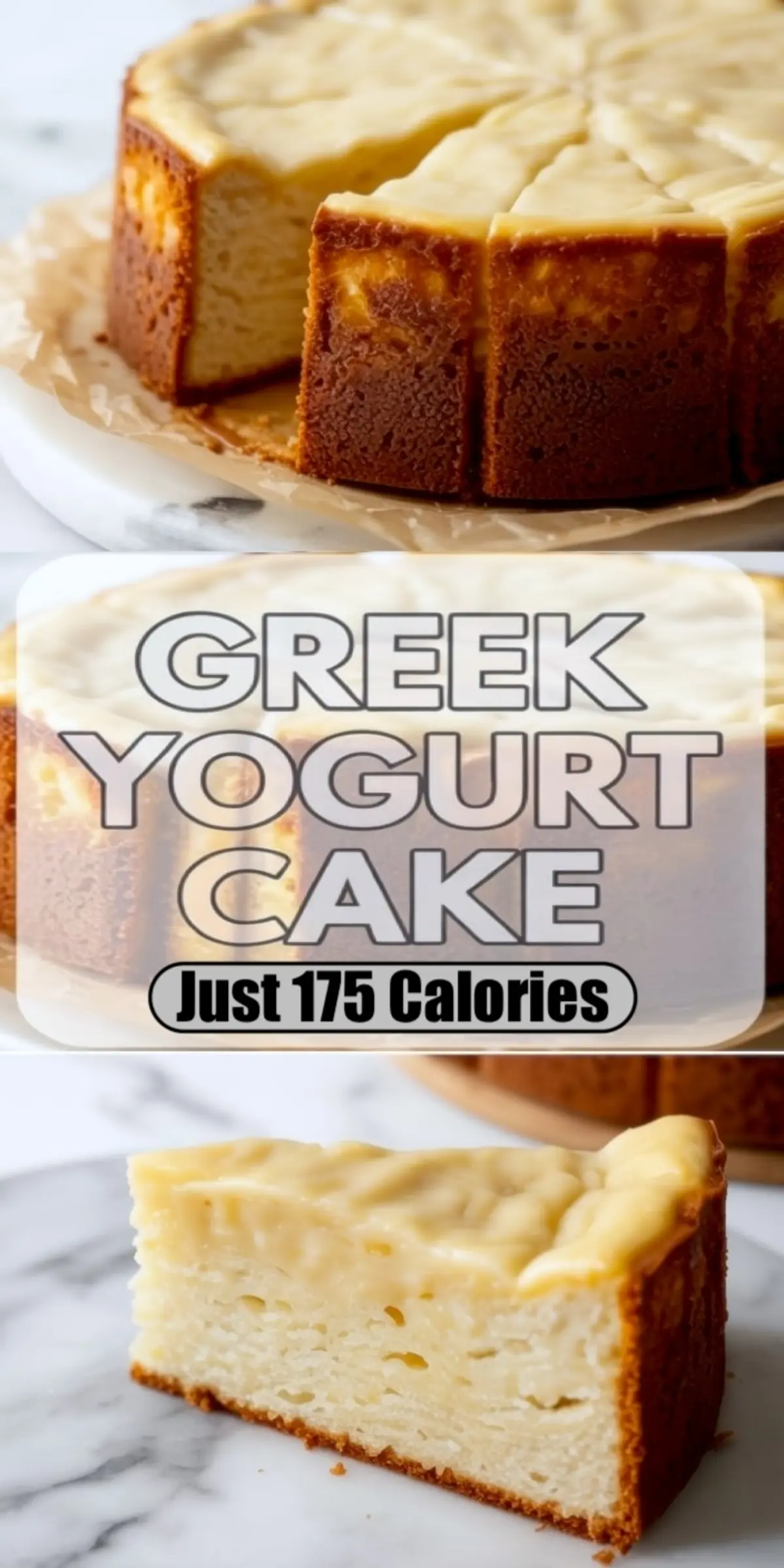
Most of the calories come from the flour and olive oil, not the yogurt. Full fat yogurt adds only about 9 calories per slice compared with nonfat, and it gives a noticeably softer crumb, so it is the one I reach for.
Picking the Yogurt: Plain, Vanilla, Full Fat or Nonfat
The card calls for plain Greek yogurt. Vanilla Greek yogurt works and adds a little flavor, but most brands are sweetened, so the slice ends up with more sugar than the numbers above.
Full fat gives the softest, creamiest crumb. Low fat or nonfat yogurt still works for a low fat yogurt cake, but the cake sets firmer and a little drier. Whatever you use, it has to be thick. Thin yogurt makes a runny batter and a gummy middle. If all you have is regular yogurt, strain it in a sieve lined with a paper towel or cheesecloth for 15 to 20 minutes.
A thick plant based yogurt also works for a dairy free cake, as long as it is as thick as Greek yogurt. If you like this kind of baking, my Greek yogurt lemon bars and protein brownie bites with Greek yogurt use the same idea.
Erythritol and Other Sugar Free Sweeteners
Erythritol bakes well and adds almost no calories, but it behaves differently from sugar in three ways. Whisk it into the yogurt and eggs until you cannot see or feel any grains, or the crumb can feel sandy. It does not caramelize, so the top stays paler than a sugar cake. And it can recrystallize in the fridge, which gives cold slices a slightly crunchy, cooling taste.
Any 1:1 sugar free sweetener can replace it, including monk fruit and allulose blends. Allulose browns faster than sugar, so lay a sheet of foil loosely over the pan after about 30 minutes. Plain granulated sugar works too if calories matter less than flavor that day.
What the Yogurt Batter Should Look Like
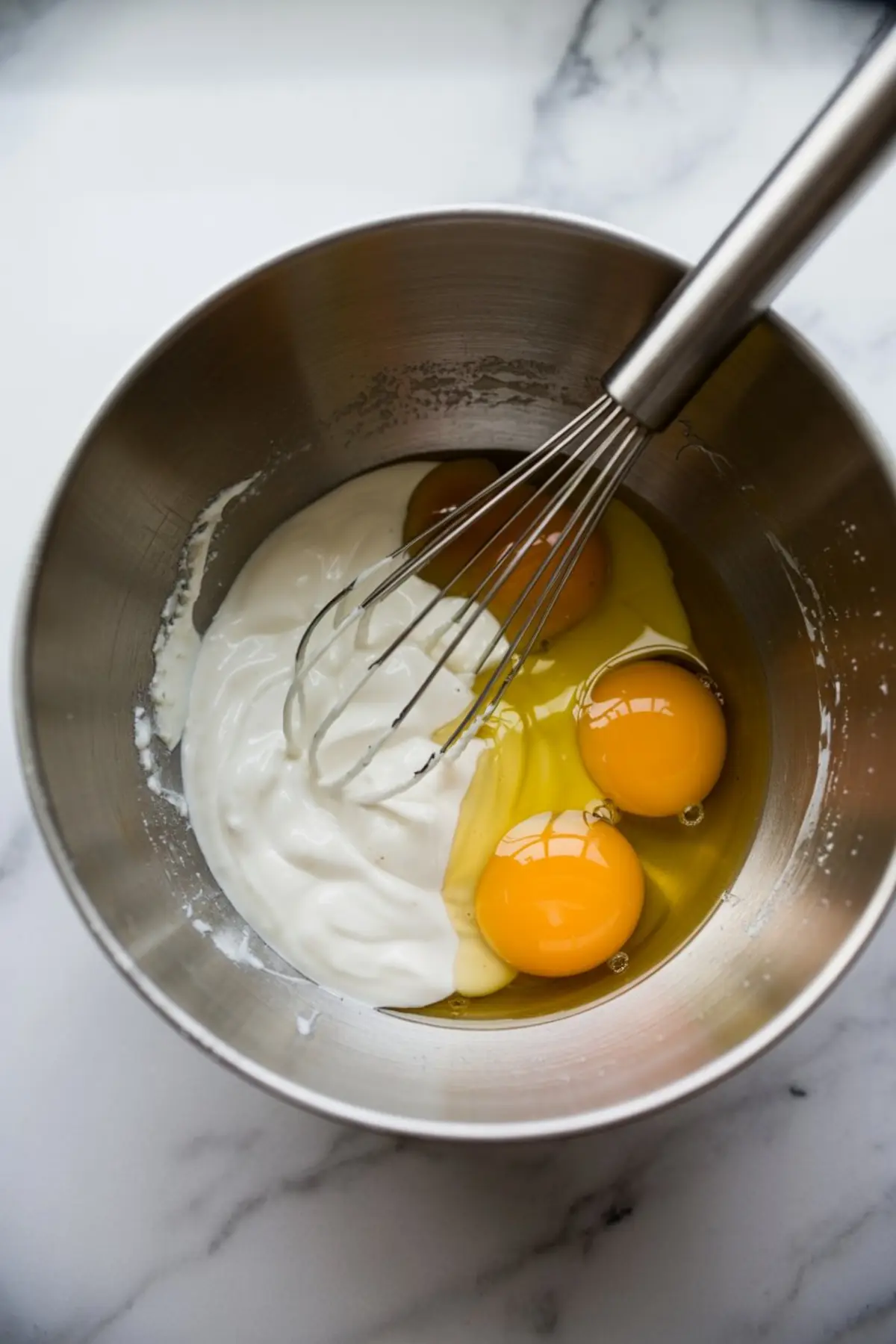
Whisk the yogurt, eggs, olive oil, vanilla and erythritol until smooth and silky. In a second bowl, whisk the flour, baking powder, salt and lemon zest if you are using it.
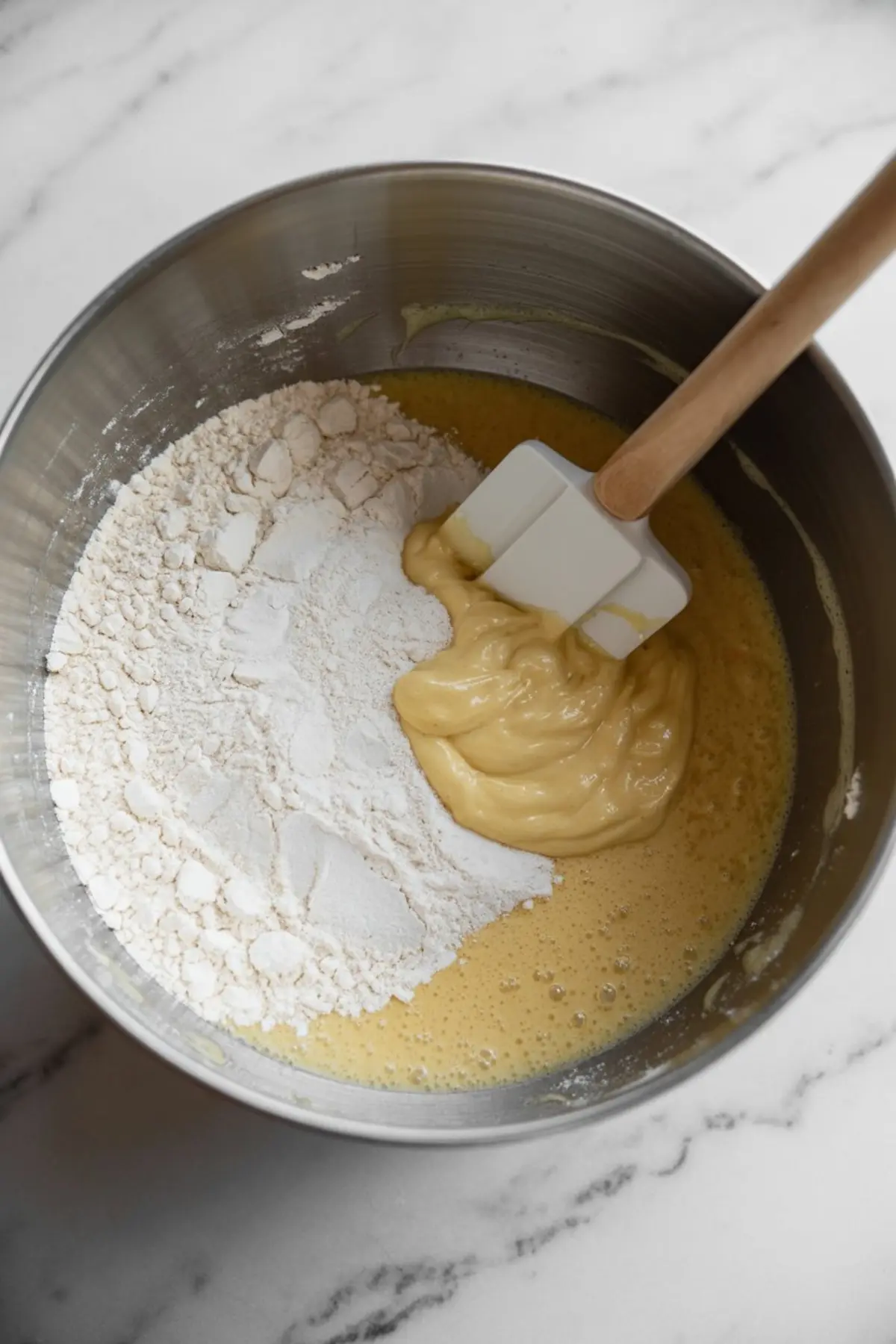
Fold the dry ingredients into the wet with a spatula, just until no flour streaks remain. The batter should be thick but still fall from the spatula in soft ribbons.
A batter that stands up stiff usually means the flour was scooped and packed, or the yogurt was strained very hard. Weigh the flour if you can: 150 g is right. Overmixing shows up later, as a tough crumb with long tunnels in it.
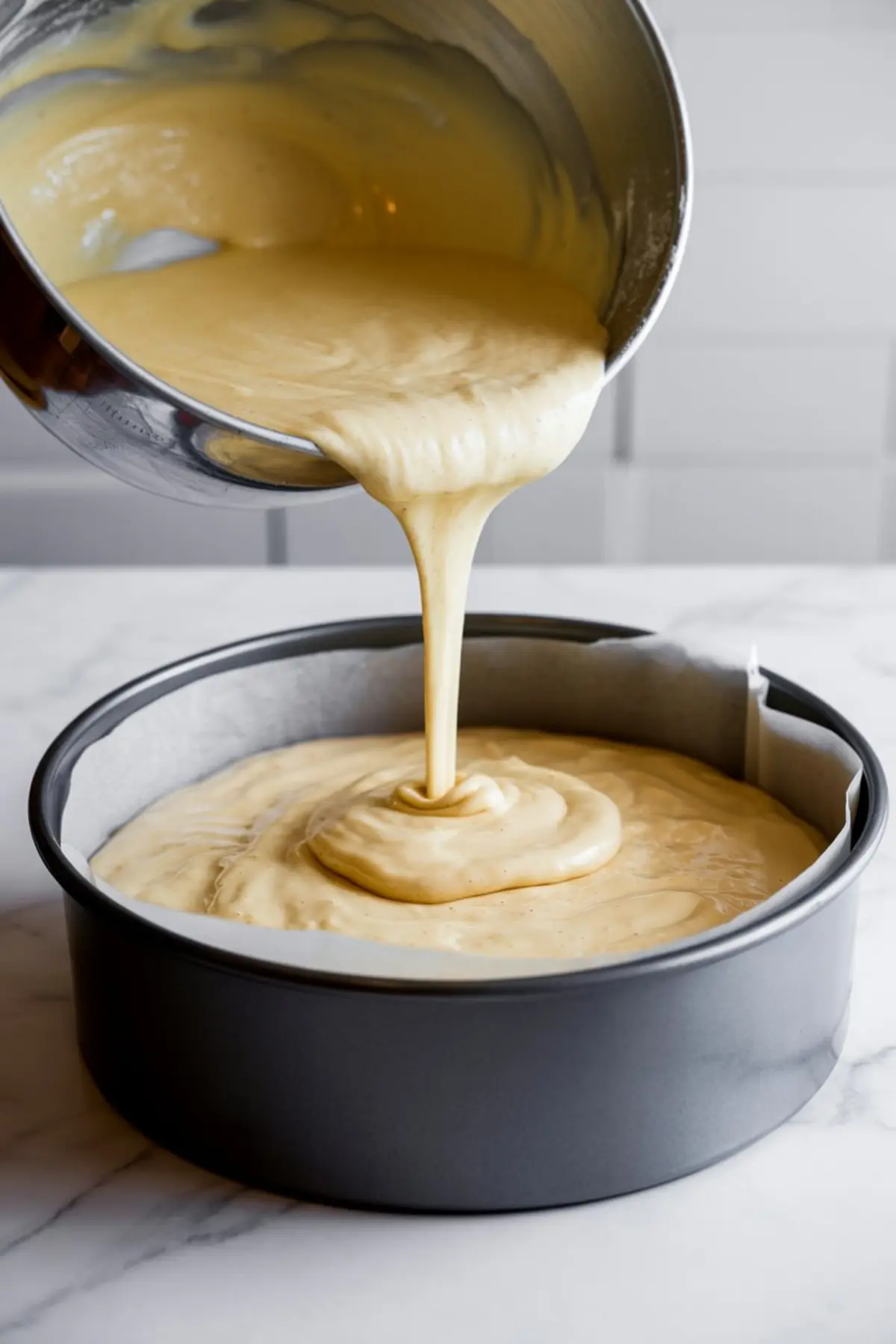
Grease the sides of the pan and line the base with parchment. A springform pan makes the release even easier. Pour in the batter and smooth the top.
Baking Until the Center Springs Back
Bake at 350°F (175°C) for 40 to 45 minutes and start checking at 40. Because erythritol does not brown much, do not wait for a deep golden top. The cake is done when a toothpick from the center comes out clean, the top springs back when pressed, and the edges have pulled slightly away from the pan.
Pulled too early, the middle sinks as it cools and stays damp. Too long and the low fat crumb dries out quickly, so those last 5 minutes matter.
Cool it in the pan for 10 minutes so the crumb firms up, then move it to a rack to cool completely before slicing. In a loaf pan it takes longer; start checking at 50 minutes.
Blueberry, Lemon and Chocolate Chip Versions
- Blueberry: fold in about 1 cup of fresh blueberries tossed in a spoonful of the flour so they do not sink.
- Lemon: add the zest of 1 lemon to the dry ingredients. It is optional on the card and brightens the tang of the yogurt.
- Chocolate chip: a handful of mini chocolate chips, keeping in mind they add calories and sugar.
- Almond or jam: swap half the vanilla for almond extract, or swirl a few spoonfuls of berry jam over the top before baking.
For other lighter bakes, try the high protein lemon mug cake for a single serving, or the keto carrot cake when you need a sugar free layer cake. The blueberry olive oil snack cake is the full sugar cousin of this one.
Keeping Slices Soft for the Week
Keep the cake in an airtight container on the counter for up to 2 days, then in the fridge for up to 5 days. Chilled slices feel firmer, and the erythritol can taste cool, so warm a slice in the microwave for about 10 seconds.
To freeze, wrap single slices in parchment, pack them in a freezer bag and keep them for up to 2 months. Thaw at room temperature or warm them straight from frozen. A spoonful of yogurt and fresh fruit on top makes a quick breakfast slice.
Baking With Greek Yogurt: Short Answers
Can you bake with Greek yogurt?
Yes. It adds moisture, tang and some protein, and its thickness gives the batter body without butter. In this recipe it replaces butter and most of the liquid.
Can I add Greek yogurt to a cake mix?
Yes. A common swap is the same amount of Greek yogurt in place of the oil a boxed mix asks for, which gives a denser, tangier cake. It is a different cake from this one, which is made from scratch with far less sugar.
Is this Greek yogurt cake sugar free?
It has no added sugar. The yogurt and flour bring natural carbohydrates, and the card estimate is 1 g of sugar per slice.
Why did my yogurt cake turn out rubbery?
Usually the batter was mixed too long after the flour went in, or the cake was overbaked. Fold only until the flour disappears and check at 40 minutes.
Yogurt Cake Recipe
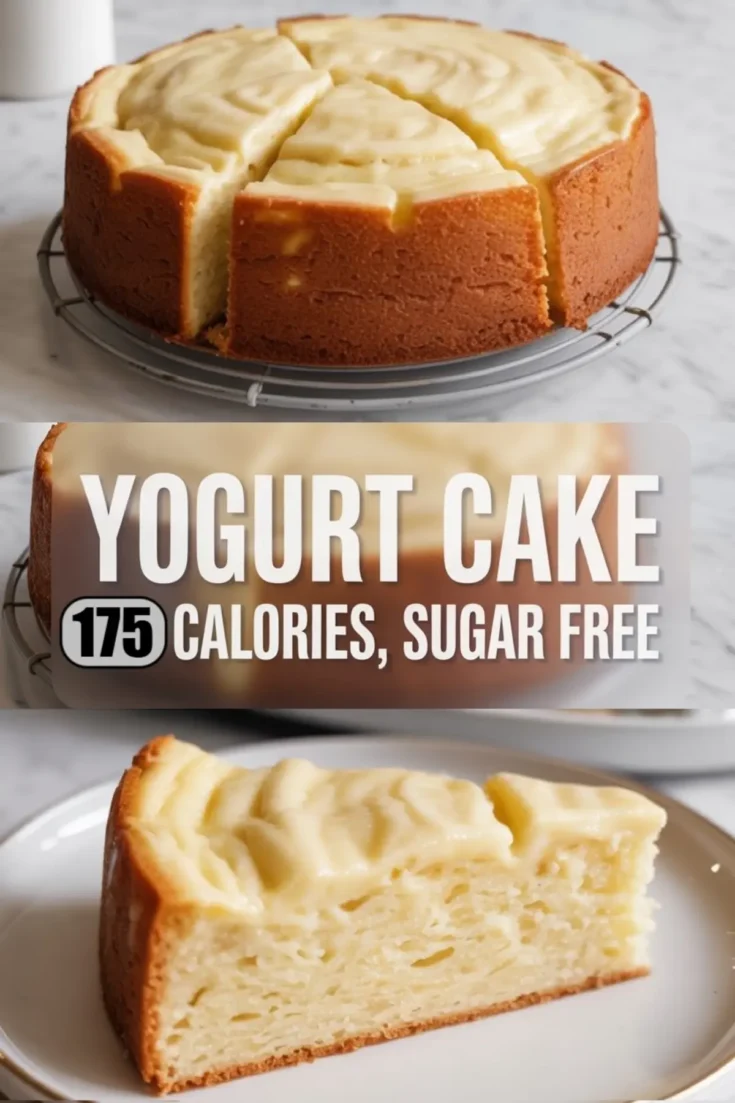
This low calorie Greek yogurt cake is a soft, lightly sweet 9 inch cake made with Greek yogurt, eggs, olive oil, flour and erythritol instead of sugar. It bakes at 350°F for 40 to 45 minutes and cuts into 16 slices of about 175 calories each, with a moist, tender crumb and a gently tangy, custardy middle. The yogurt replaces butter and most of the liquid, so fold the flour in only until the streaks disappear to keep this Greek yogurt cake light rather than rubbery. Serve it plain as a healthy snack cake, with fruit and a spoonful of yogurt for breakfast, or as a sugar free dessert. Add lemon zest or blueberries, and keep it 2 days on the counter, 5 in the fridge or 2 months frozen.
Ingredients
- 1½ cups (375g) Greek yogurt
- 3 medium eggs
- ¼ cup (60ml) olive oil
- 1 tsp vanilla extract
- ¾ cup (150g) erythritol
- 1¼ cups (150g) all-purpose flour
- 2 tsp baking powder
- ¼ tsp salt
- Zest of 1 lemon (optional)
Instructions
- PREHEAT AND PREP: Preheat the oven to 350°F (175°C). Line the bottom of a 9-inch round cake pan with parchment paper and lightly grease the sides.
- MIX WET INGREDIENTS: In a large mixing bowl, whisk together the Greek yogurt, eggs, olive oil, vanilla extract, and erythritol until smooth and creamy. The mixture should look silky and well combined.
- COMBINE DRY INGREDIENTS: In a separate bowl, sift or whisk together the flour, baking powder, salt, and lemon zest (if using) to ensure everything is evenly distributed.
- FOLD BATTER TOGETHER: Gradually fold the dry ingredients into the wet ingredients using a spatula or wooden spoon. Mix gently just until no streaks of flour remain. Avoid overmixing for the best texture.
- TRANSFER TO PAN: Pour the batter into the prepared cake pan and smooth the top with a spatula for an even surface.
- BAKE: Bake for 40–45 minutes or until the top is golden and a toothpick inserted in the center comes out clean. The cake will rise slightly and form a light crust on top.
- COOL AND SERVE: Let the cake cool in the pan for 10 minutes, then carefully transfer it to a wire rack to cool completely. Slice and serve plain or with your choice of toppings.
Notes
Full fat Greek yogurt gives the softest crumb; low fat or nonfat works but the cake sets firmer. The yogurt must be thick, so strain regular yogurt for 15 to 20 minutes first.
Erythritol can be replaced with any 1:1 sugar free sweetener or regular sugar. Whisk it into the wet ingredients until no grains remain. If you use allulose, cover the cake loosely with foil after about 30 minutes because it browns faster.
Erythritol keeps the top pale, so check doneness with a toothpick and a top that springs back, starting at 40 minutes.
Store airtight on the counter for 2 days, in the fridge for 5 days, or freeze wrapped slices for up to 2 months. Warm chilled slices for about 10 seconds.
Nutrition Information
Yield
16Serving Size
1Amount Per Serving Calories 175Total Fat 5gSaturated Fat 1gUnsaturated Fat 4gCholesterol 36mgSodium 200mgCarbohydrates 26gFiber 1gSugar 1gProtein 6g

Just wanted to let you know the Greek yogurt cake was a success! I changed it up a bit with sugar free butterscotch caramel syrup as the hubby likes those flavors and I made it for him. It’s been difficult to find a good sugar free cake recipe, this one is a keeper!!
I was really hoping you’d try it after our email chat, Lois. And hearing how it turned out made my day 😊 Your butterscotch caramel twist sounds like a perfect way to make it personal, especially for your husband. You’ve got such a good sense for flavor pairings, and I appreciate how you make each recipe your own. Grateful as always to have you baking along with me.