
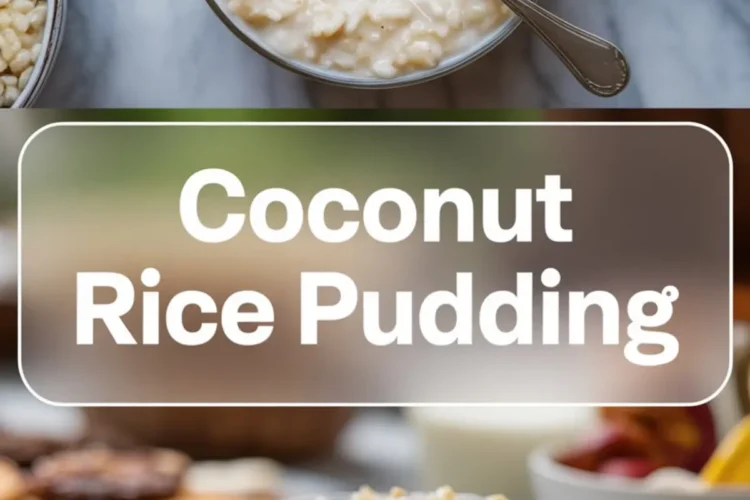
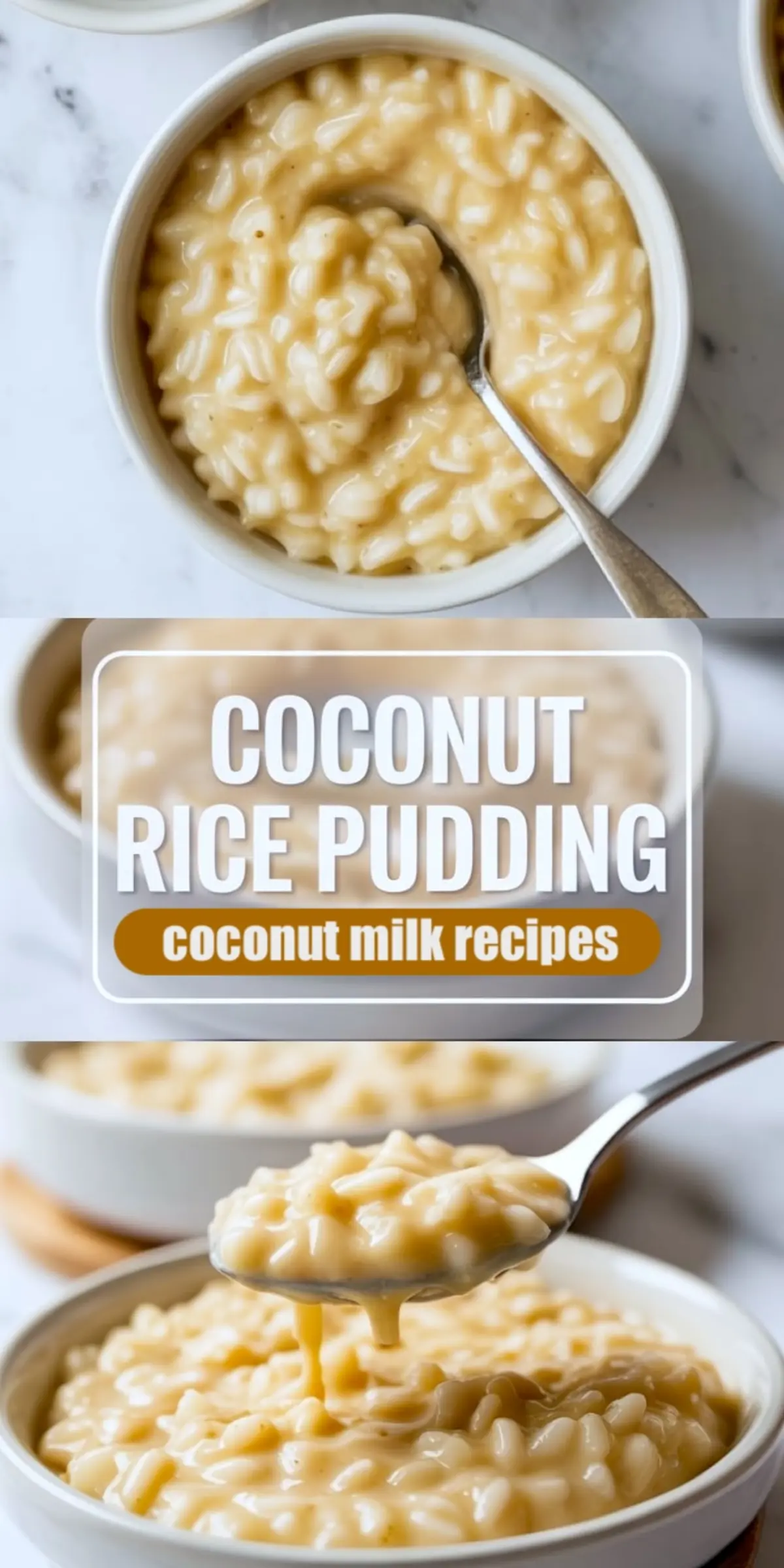
This coconut rice pudding is cooked white rice simmered in 1½ cups of full-fat coconut milk and ½ cup of whole milk with sugar, salt and vanilla. It takes about 25 minutes on the stove and makes 4 servings. No eggs, no cream, and it turns fully dairy free with oat or almond milk.
The key is a gentle simmer. Low heat. Coconut milk thickens beautifully around the rice starch when it barely bubbles, and splits into an oily film when it boils hard.
Following a special diet?
Every recipe on this site can be converted to gluten-free, vegan, dairy-free, keto, nut-free or egg-free with adjusted ratios so nothing falls flat.
Try the Recipe Converter →The Ratio: 2 Cups Liquid to 1 Cup Cooked Rice
For rice pudding with coconut milk made from cooked rice, use 2 cups of liquid for every 1 cup of rice: here that is 1½ cups coconut milk plus ½ cup milk. The rice is already soft, so the simmer is not about cooking it. It is about letting the grains release starch and drink up the coconut milk until the two turn into one creamy pudding.
If you are cooking rice fresh for this, about ⅓ cup of uncooked rice gives the 1 cup cooked you need. Cold leftover rice from the fridge works well. Break it up with a fork first, or the clumps stay firm in the middle.
Which Rice and Which Coconut Milk to Buy
Short grain rice gives the creamiest, thickest pudding because it releases the most starch. Jasmine rice is a close second and adds a light floral smell that suits coconut. Long grain rice like basmati stays more separate, so the pudding looks thinner. Avoid rice that was cooked very dry or crisp at the bottom of the pot.
Buy full-fat, canned. The carton kind sold for drinking is mostly water and gives a runny, pale pudding. Light canned coconut milk works but sets softer and tastes less of coconut. When you open the can, the thick cream will have risen to the top. Stir or shake it back together. In a cold kitchen it can be nearly solid, so stand the closed can in a bowl of hot water for a few minutes first.
Coconut Milk vs Dairy Milk in Rice Pudding
- Richness: canned coconut milk carries its own fat, so this pudding is rich without the egg yolks or cream many dairy versions use.
- Flavor: coconut is sweet and nutty on its own; cinnamon and nutmeg round it out rather than cover it.
- Texture: coconut milk sets thicker as it cools, so stop cooking earlier than you would with cow milk.
- Heat: dairy milk can boil over; coconut milk tends to split. Both want a low, steady simmer.
For the traditional style with whole milk and an egg yolk, see my creamy rice pudding recipe. For a fruity breakfast version, this pear rice pudding is lovely in autumn.
How to Make Rice Pudding With Coconut Milk

Pour the coconut milk, whole milk, sugar and salt into a medium saucepan. Stir over medium heat for 2 to 3 minutes, just until the surface starts to steam. The sugar dissolves and the coconut fat blends back into the milk before the rice goes in.
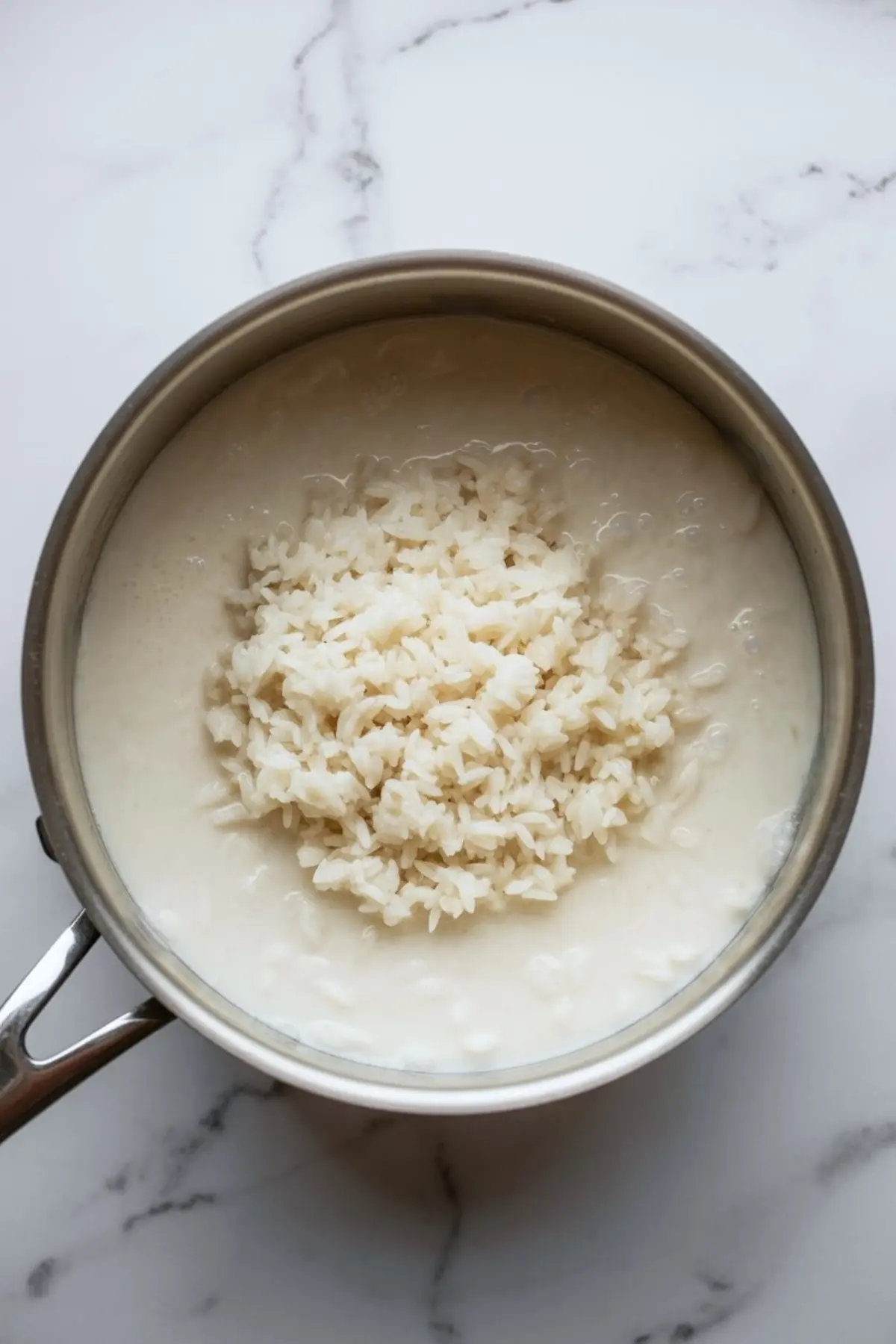
Add the cooked rice and break up any clumps with a spatula, then turn the heat down so the pudding only bubbles gently at the edges and let it simmer for 15 to 20 minutes. Stir often. Scrape the bottom and the corners of the pan as you go, because sugar and coconut milk both catch there first.
Once it is as thick as you like, stir in the vanilla, cinnamon and nutmeg, if using, and simmer 2 minutes more. Take the pan off the heat and let it rest for 5 minutes.
How Thick Should It Be Before You Turn Off the Heat?
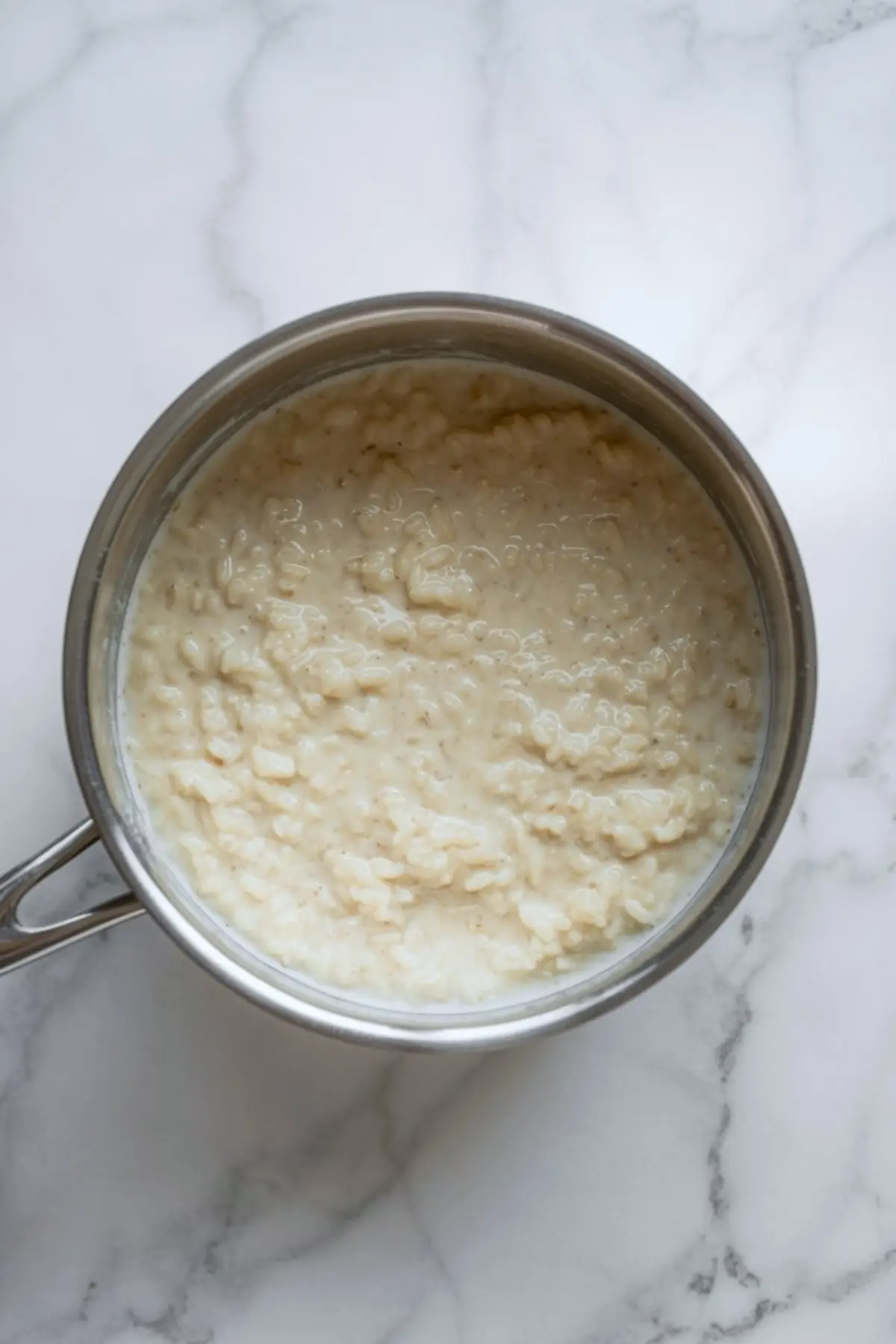
Looser than you think. When it is ready, the pudding looks like loose oatmeal, and a line drawn with the spatula across the bottom of the pan closes slowly. It keeps thickening during the rest and sets much thicker in the fridge. If it already holds a stiff mound in the pot, it will be close to paste once cold.
Fixing Pudding That Is Oily, Stiff or Runny
- Oily film on top: it boiled too hard and the coconut fat separated. Take it off the heat and whisk briskly with a splash of warm milk until it comes back together.
- Too stiff: stir in milk or coconut milk 1 tablespoon at a time over low heat.
- Still runny after 20 minutes: the rice was dry or long grain. Simmer 5 minutes more, then remember it thickens as it rests.
- Scorched taste: the bottom caught. Pour the pudding into a clean pan without scraping the burnt layer.
Making It Fully Dairy Free
Swap the ½ cup of whole milk for oat or almond milk. Everything else in the recipe is already dairy free, and there are no eggs. Oat milk is the creamiest swap. A can of coconut milk holds a little over 1½ cups, so you will have about 3 tablespoons left over: stir them in when you reheat, or use the rest of a second can in these coconut vanilla protein bars.
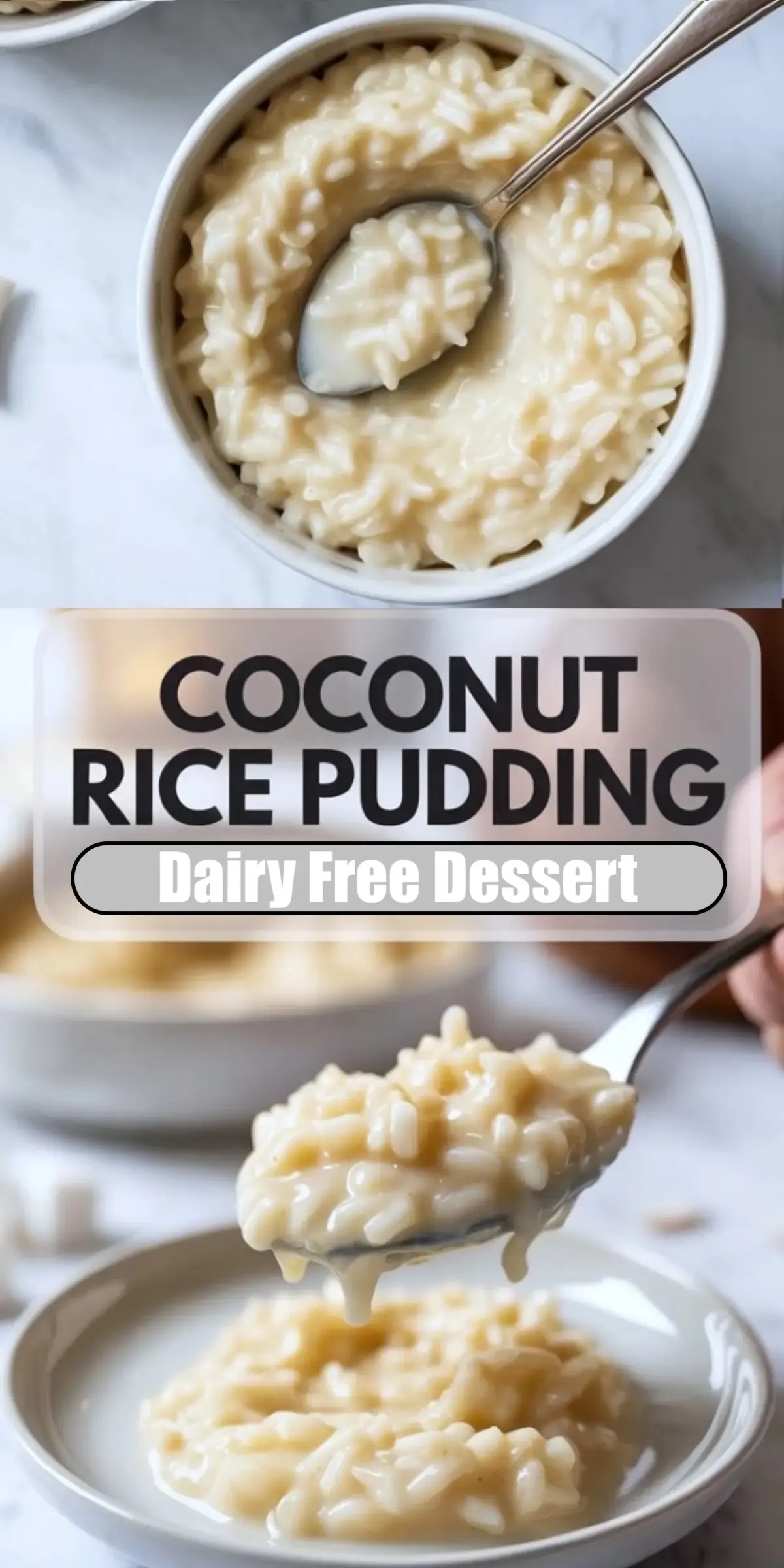
Toppings, Serving Warm or Cold, and Leftovers
Serve it warm and soft, or chill it until thick and spoonable. Chopped mango and toasted coconut flakes are the obvious pair. Sliced banana, crushed pistachios or a thin drizzle of maple syrup work too; cut the sugar a little if you plan a sweet topping. A spoon of coconut whipped cream on top keeps it dairy free.
Keep leftovers covered in the fridge for up to 4 days. Reheat gently with a splash of milk to loosen it. I do not freeze it, because the rice turns grainy and the coconut milk separates when thawed.
More coconut bakes: coconut cloud cake, coconut jelly and coconut cream pie.
Short Answers on Coconut Milk Rice Pudding
Can I use coconut cream instead of coconut milk?
Yes. Coconut cream is thicker and richer, so use 1 cup of it plus 1 cup of milk to keep the 2 cups of liquid.
Can I use cream of coconut?
Only with less sugar. Cream of coconut is already heavily sweetened, so leave out the ¼ cup sugar and taste at the end.
Does brown rice work?
Cooked brown rice works but stays chewier and makes a less creamy pudding. Expect to simmer toward the full 20 minutes.
Can I start with uncooked rice?
Not with these amounts. This recipe is written for cooked rice; raw rice needs far more liquid and a much longer simmer.
Coconut Rice Pudding Recipe
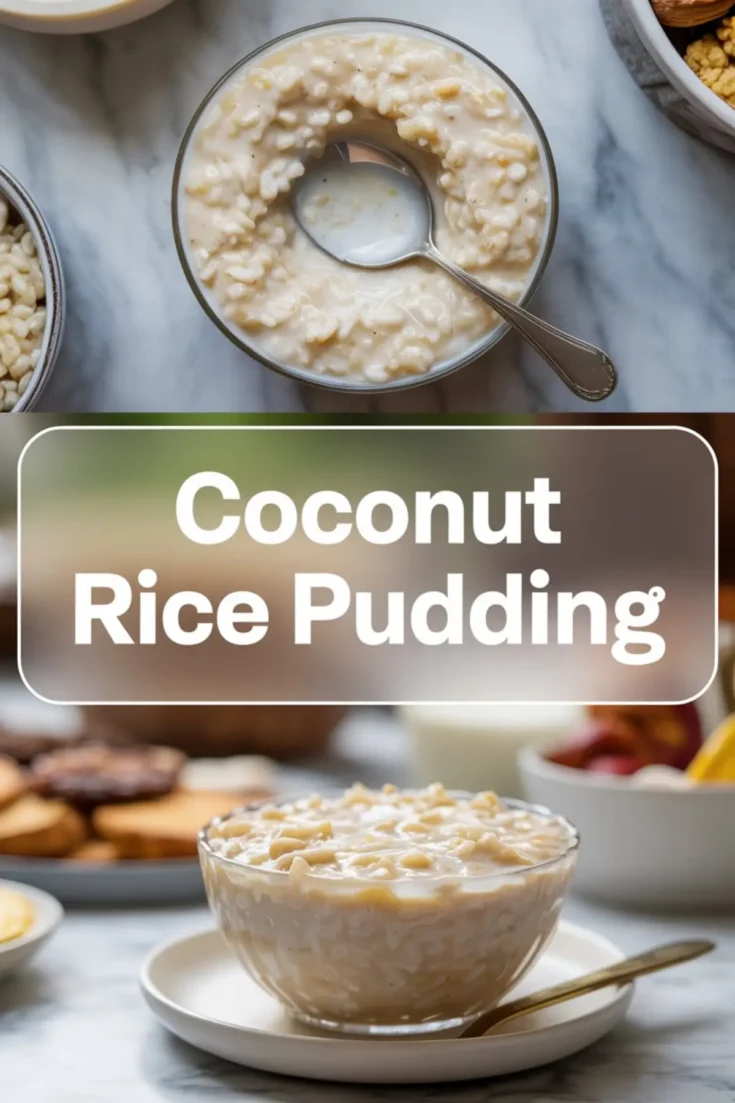
This coconut rice pudding is a creamy stovetop rice pudding with coconut milk, made from cooked white rice, full-fat canned coconut milk, a little whole milk, sugar, salt and vanilla. It is ready in about 25 minutes and makes 4 servings of soft, spoonable pudding. The cooked rice simmers gently in 2 cups of liquid for 15 to 20 minutes, so its starch thickens the coconut milk without eggs or cream. Serve this coconut milk rice pudding warm as a comforting dessert, or chilled with chopped mango, toasted coconut, banana or pistachios. Use oat or almond milk for a dairy free version; it keeps 4 days in the fridge, and a splash of milk loosens it when reheating.
Ingredients
- 1 cup cooked white rice (short grain or jasmine works best)
- 1 ½ cups coconut milk (full-fat for richness)
- ½ cup whole milk (or plant-based milk like almond or oat for a dairy-free version)
- ¼ cup sugar (adjust to taste)
- ¼ tsp salt
- ½ tsp vanilla extract
- ¼ tsp ground cinnamon (optional but highly recommended)
- Pinch of nutmeg (optional, for a warm note)
- Optional toppings: Toasted coconut flakes, chopped mango, sliced banana, crushed pistachios, or a drizzle of maple syrup
Instructions
- COMBINE MILKS AND SWEETENER: In a medium saucepan, combine the coconut milk, whole milk, sugar, and salt. Stir over medium heat until the mixture begins to steam, about 2 to 3 minutes.
- ADD RICE: Stir in the cooked rice, breaking up any clumps gently with a spoon or spatula.
- SIMMER UNTIL THICKENED: Keep the mixture at a gentle simmer for 15 to 20 minutes, stirring often to prevent the rice from sticking. The pudding will gradually thicken as the rice absorbs the liquid.
- STIR IN FLAVORINGS: Once the pudding reaches your desired thickness, add the vanilla extract, cinnamon, and nutmeg (if using). Stir well and simmer for an additional 2 minutes to blend the flavors.
- LET IT REST: Remove the pan from heat and allow the pudding to sit for 5 minutes. It will continue to thicken slightly as it cools.
- SERVE: Spoon the warm pudding into bowls and top with your favorite toppings like toasted coconut, fresh fruit, or a drizzle of syrup. Alternatively, chill in the refrigerator and serve cold.
Notes
Use short grain or jasmine rice for the creamiest texture. If using leftover rice, break up the clumps first and make sure it is not too firm or dry. Keep the pudding at a gentle simmer; a hard boil can make the coconut milk separate. Stop cooking when it looks like loose oatmeal, because the pudding thickens as it rests and cools. For extra sweetness, adjust the sugar to taste, and use less if adding fruit or syrup on top. Store covered in the fridge for up to 4 days and add a splash of milk when reheating. Freezing is not recommended.
Nutrition Information
Yield
4Serving Size
1Amount Per Serving Calories 274Total Fat 13gSaturated Fat 11gUnsaturated Fat 2gCholesterol 3mgSodium 158mgCarbohydrates 37gFiber 0gSugar 17gProtein 4g
