

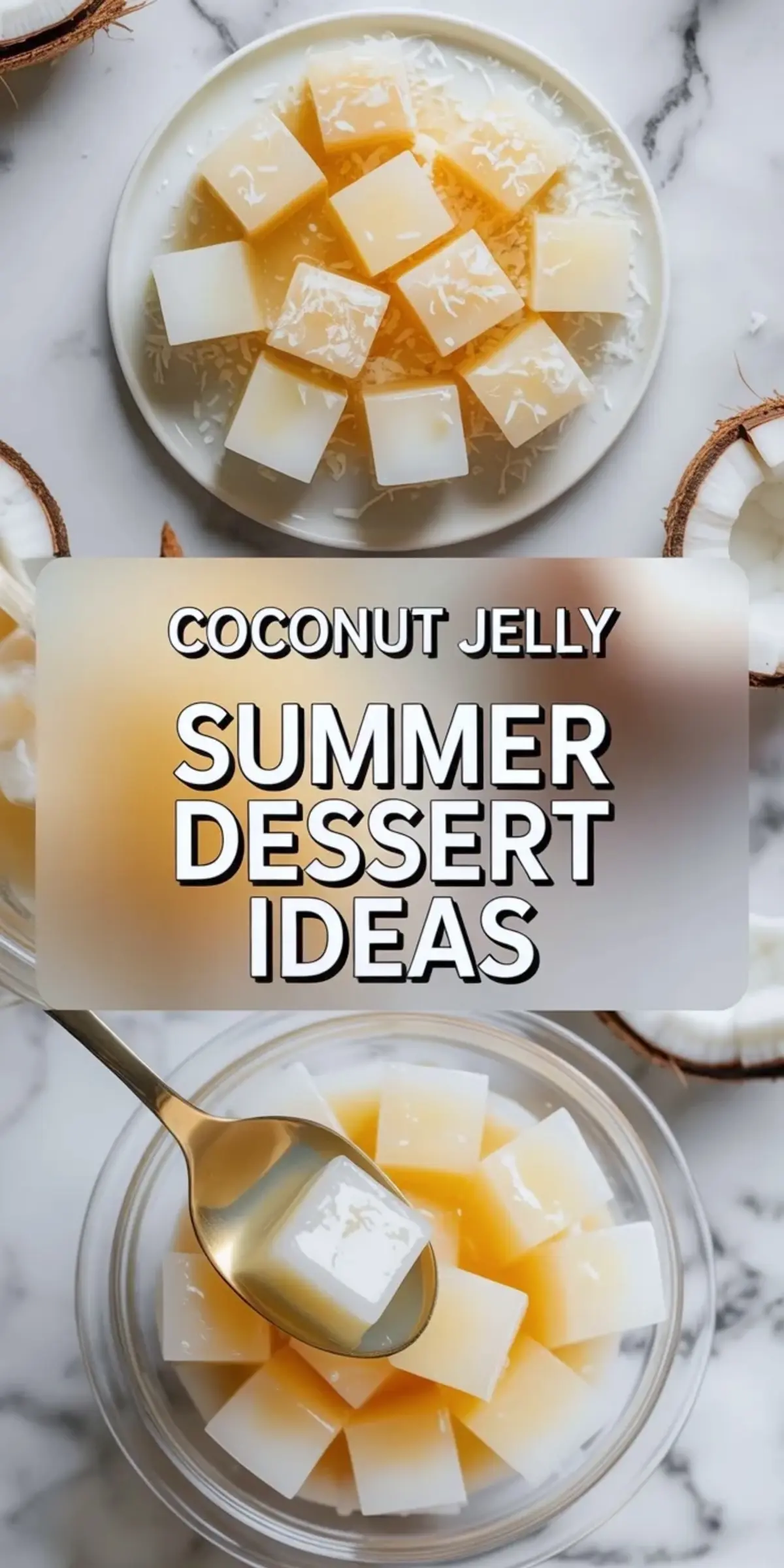
If you want a dessert that feels cool, light, and easy to serve, this coconut jelly recipe is a smart one to keep nearby. Coconut milk, water, sugar, and agar come together into a soft set coconut jelly dessert that slices neatly and tastes clean rather than heavy. The flavor is gentle, the texture is smooth with a light bounce, and the whole thing works especially well when you want something chilled after a richer meal.
What makes this coconut milk jelly especially useful is how little effort it asks for once the mixture is cooked. You stir, heat, pour, and chill, then finish it with fruit, syrup, or coconut flakes right before serving. If you already like cool coconut desserts that stay simple and refreshing, coconut cream chia seed pudding gives you a similar easy make-ahead rhythm in breakfast form.
Following a special diet?
Every recipe on this site can be converted to gluten-free, vegan, dairy-free, keto, nut-free or egg-free with adjusted ratios so nothing falls flat.
Try the Recipe Converter →What Gives Coconut Jelly Its Texture
The real strength of this recipe is the balance between richness and lightness. Full-fat coconut milk gives the jelly its creamy side, but the added water keeps it from turning dense or pudding-like. Sugar sweetens the base without pushing it too far, and the setting agent does the structural work that lets the dessert hold a clean shape once chilled. That is why coconut jelly feels different from custard, panna cotta, or mousse. It holds its form, but it still lands softly on the spoon.
The Ingredients That Matter Most
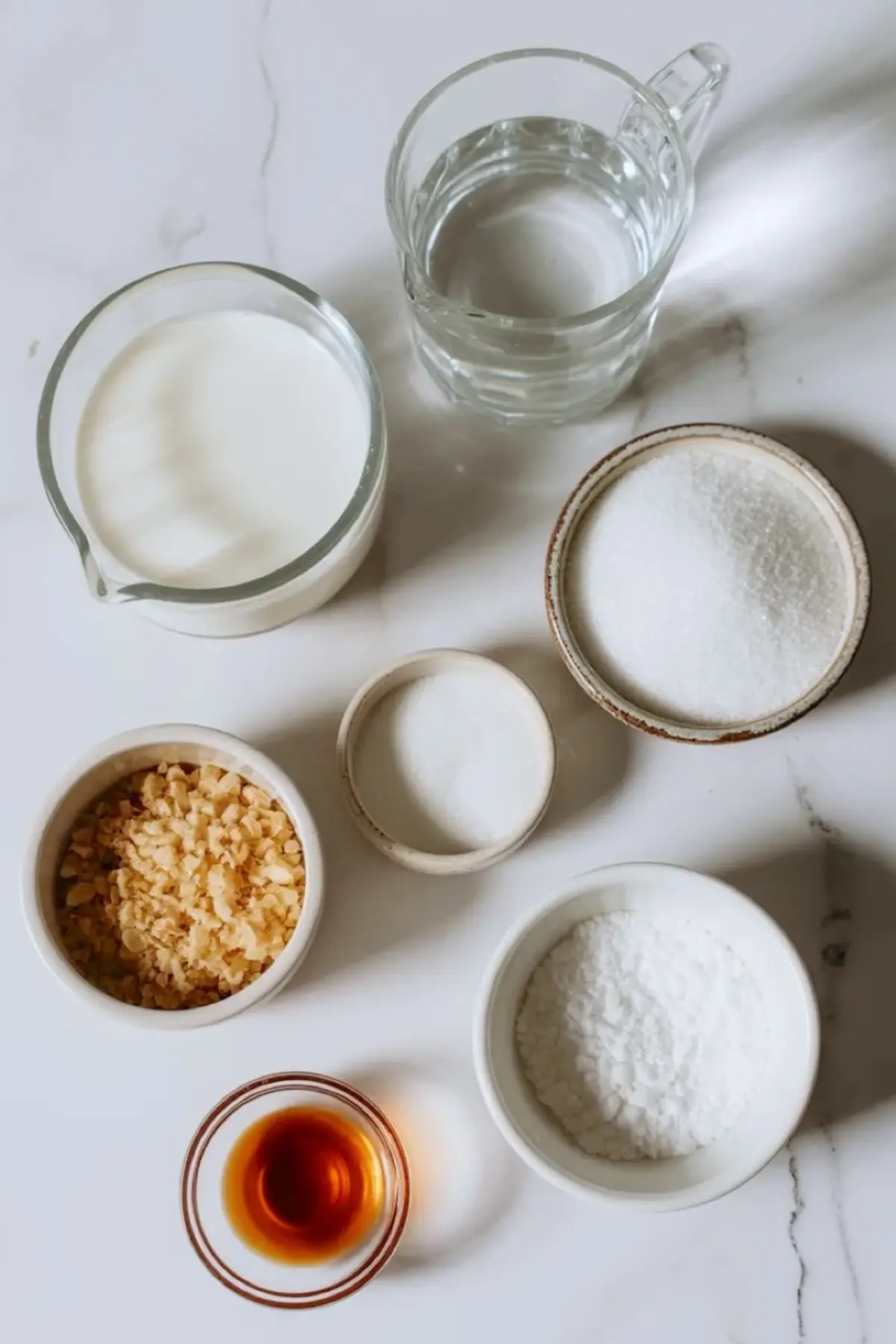
Use full-fat coconut milk if you want the flavor to come through clearly. Lighter coconut milk can still set, but the result tends to taste thinner and less rounded. The pinch of salt matters too, because it keeps the sweetness from flattening the coconut and helps the whole mixture taste more finished. Vanilla is optional, and that is useful here because the coconut should stay at the center instead of getting buried under extra flavoring.
Agar Agar Versus Gelatin
If you are deciding how to make coconut jelly for the texture you want, this is the choice that matters most. Agar needs to come to a proper simmer or light boil so it fully dissolves and sets correctly later. Once it cools, it firms up more decisively than gelatin and gives you the neat slices that work well for cubes, bars, or molded shapes.
Gelatin is more forgiving in some ways, but it creates a softer dessert. That can be pleasant if you want something closer to coconut jello, though it will not cut quite as sharply. Neither option is wrong. It just depends on whether you want a cleaner jelly cube or a looser, more tender finish.
How To Make Coconut Jelly Without Guessing
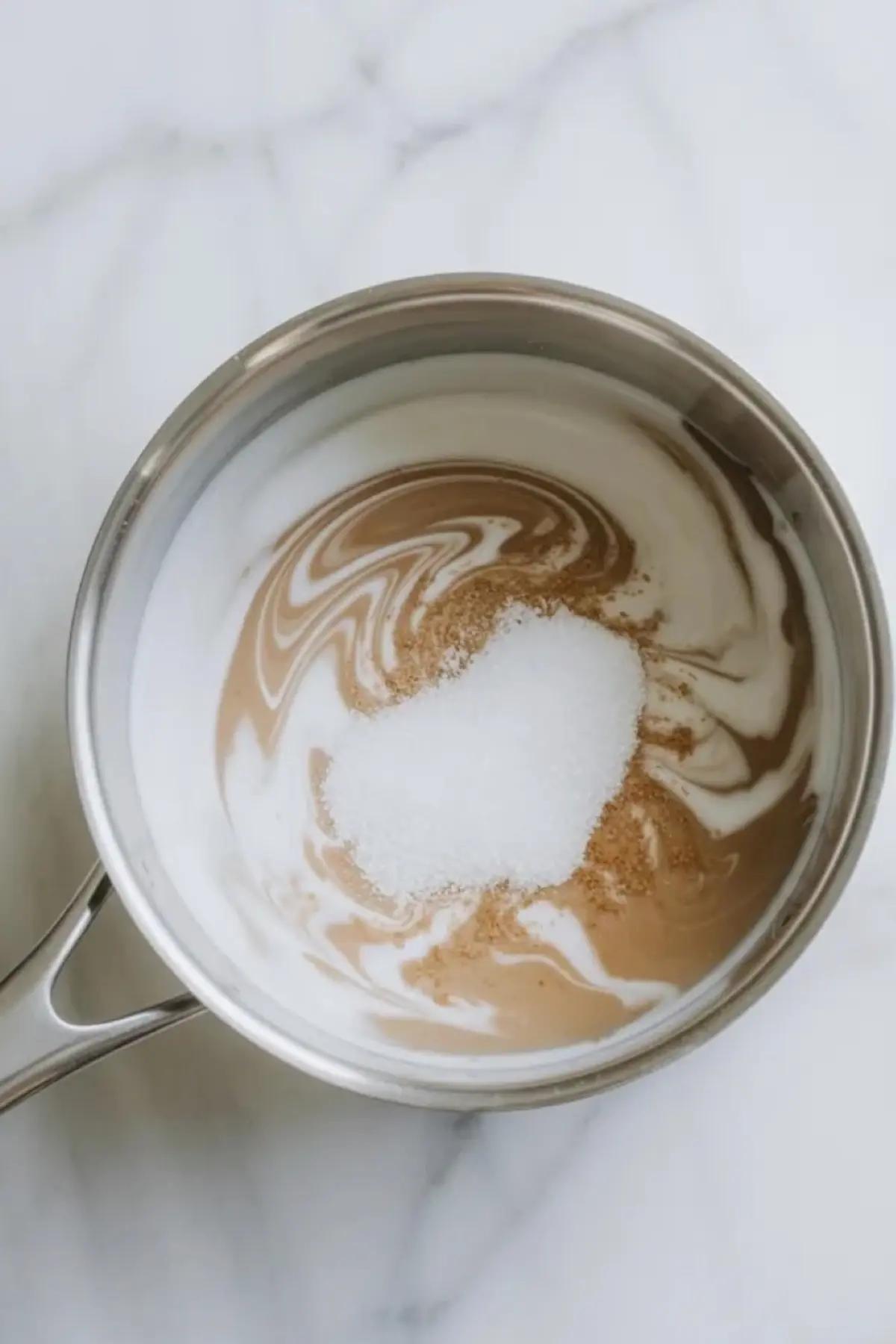
Start by mixing the coconut milk, water, sugar, and salt before the pan goes over heat so the sugar begins dissolving evenly. Once the agar goes in, keep stirring. That steady movement is what helps prevent small clumps and gives you a smoother final set. When the mixture reaches a gentle boil, give it those extra few minutes the recipe card calls for so the agar fully activates.
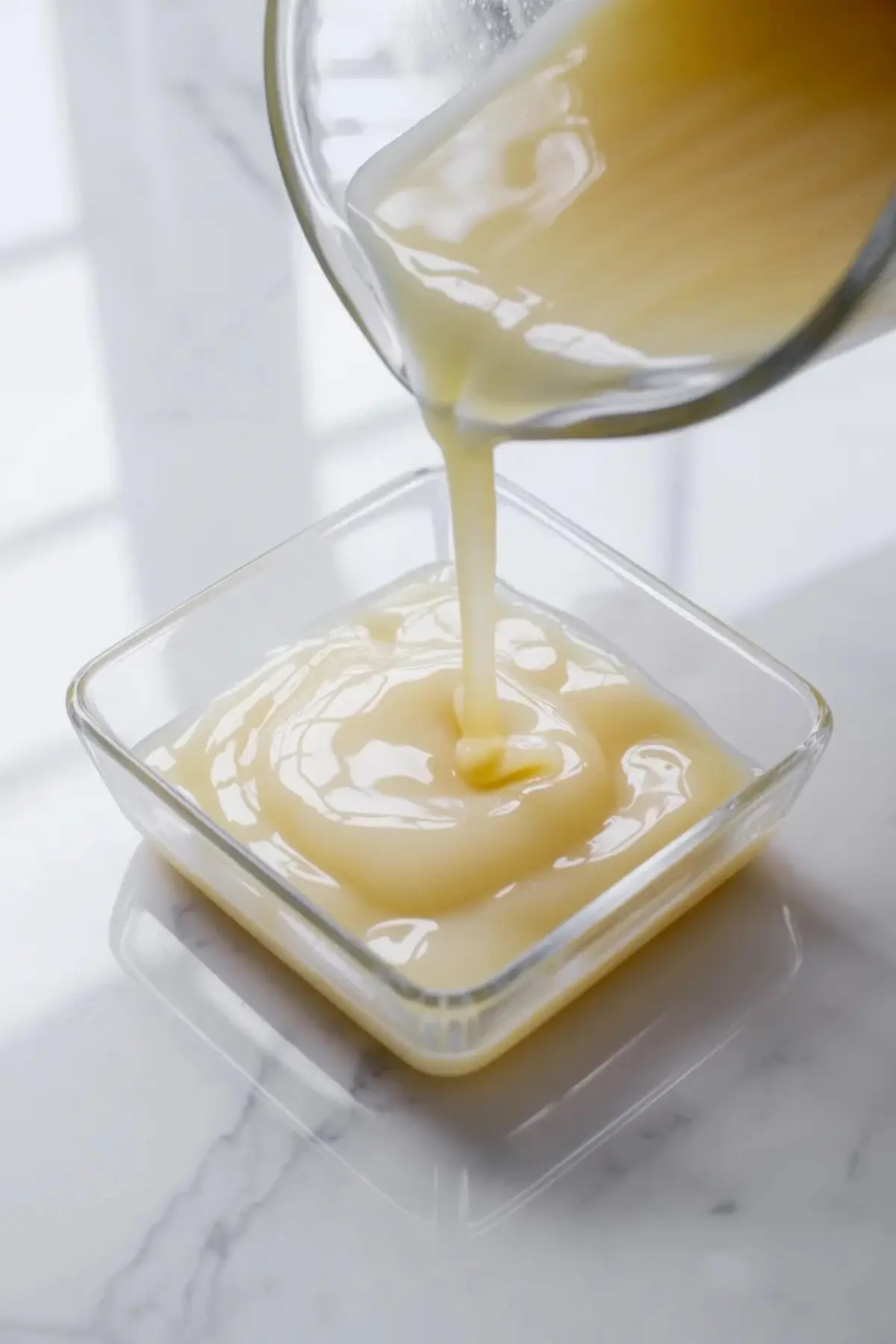
After that, the goal is not to keep cooking. Remove the pan, stir in the vanilla if you are using it, and pour while the mixture is still fully fluid. A shallow dish makes it easier to cool evenly and cut into neat pieces later. If you enjoy other chilled fruit-topped desserts for warm weather, mango mousse is another good one to keep nearby for the same kind of make-ahead payoff.
How To Tell When It Is Ready
Before chilling, the mixture should look fully smooth with no visible grains of agar or streaks of coconut fat floating on top. After the room-temperature rest, it should look lightly set around the edges and no longer slosh like plain liquid when the dish is moved gently. Once refrigerated, the surface should feel firm to the touch and the center should hold when sliced. If it stays loose, the usual cause is under-boiling the agar mixture. If it turns firmer than you want, the setting agent likely ran a little too strong for your preferred texture.
Easy Toppings And Flavor Changes
Fresh mango is an easy match because it brings sweetness and color without fighting the coconut. Berries work too if you want a little tartness on top, and coconut flakes add texture without making the dessert feel busy. A light syrup or a drizzle of honey is enough if you want the finish a bit sweeter, but it is better to keep the toppings restrained so the jelly still tastes clean.
You can also cut the jelly into smaller cubes and serve it in bowls for a more casual presentation, or use a mold when you want something neater for guests. If soft chilled Asian-style desserts are already your thing, taho Filipino dessert sits in a nearby comfort-dessert lane, while coconut ice cream gives you a richer frozen version of the same flavor direction.
Storage Tips For The Best Texture
Coconut jelly is best kept chilled and served cold straight from the fridge. Cover the dish or store the cut pieces in an airtight container so the surface does not dry out or pick up fridge flavor. It usually holds well for a few days, though the texture is at its nicest on the first and second day. Avoid freezing it, and use a sharp knife for the cleanest slices when serving.
Save This Recipe
Save this coconut jelly recipe for the days when you want a chilled dessert that feels easy, tidy, and refreshing instead of rich and heavy. It gives you a smooth coconut milk jelly, a clean sliceable set, and enough flexibility to serve it plain or with fruit depending on the occasion. Save it to Pinterest, keep it in your warm-weather dessert rotation, and come back to share how you topped it.
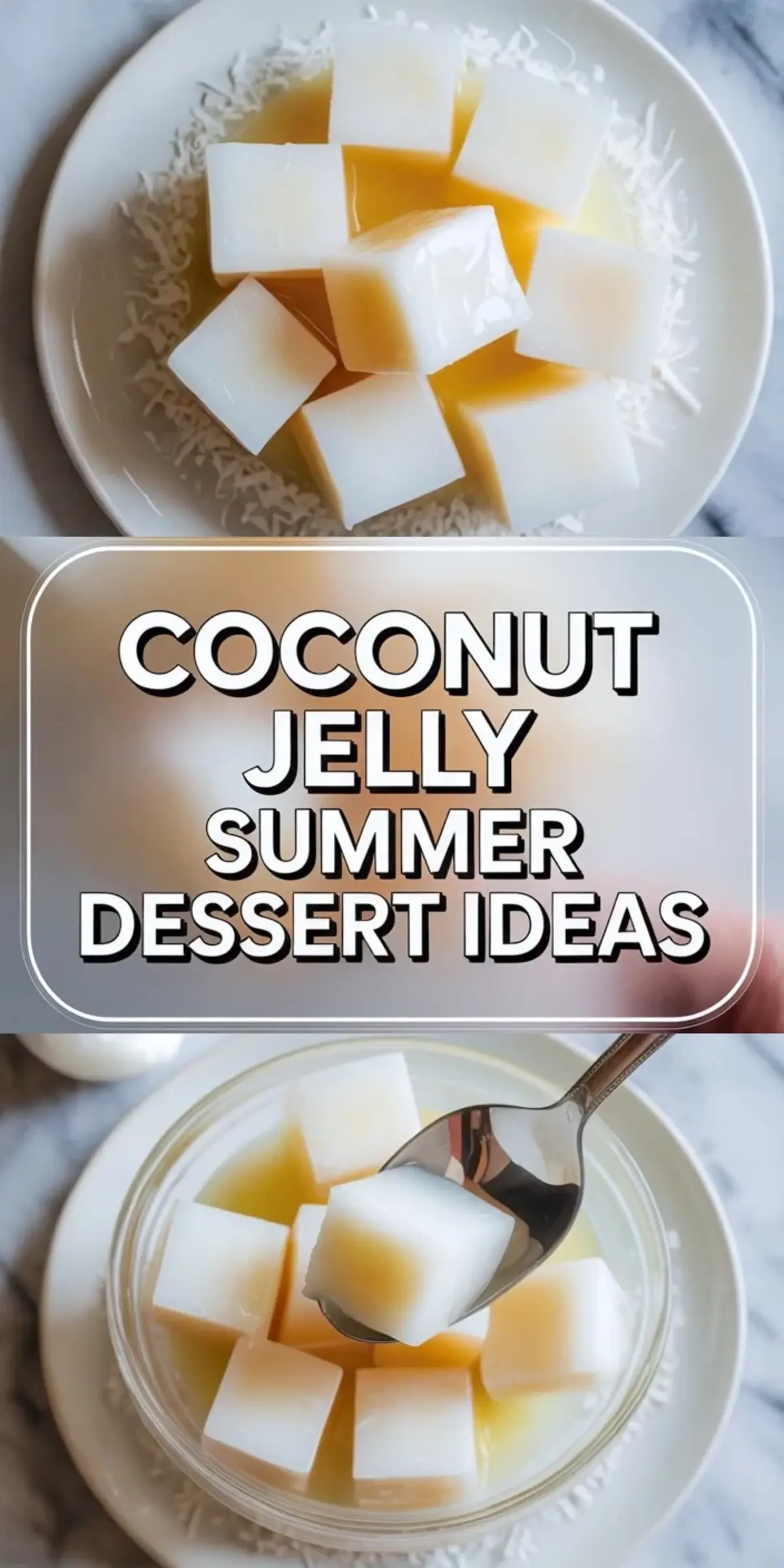
Coconut Jelly Recipe

Save this coconut jelly recipe when you want a chilled dessert that feels light, clean, and easy to make from a short ingredient list. This coconut milk jelly dessert combines coconut milk, water, sugar, and agar-agar for a smooth set and a softly bouncy texture that slices neatly once chilled. The flavor stays gentle and fresh rather than heavy, which makes it a very useful coconut jelly dessert for warm days, dinner parties, and make-ahead treats. Serve it plain or top it with mango, berries, coconut flakes, or a little syrup for extra color and contrast. If you prefer a softer finish, the recipe also works with gelatin, so you can shift the texture without changing the simple method.
Ingredients
- 2 cups coconut milk (full-fat)
- 1 cup water
- 1/2 cup sugar
- 2 teaspoons agar-agar powder (or 1 tablespoon gelatin)
- 1 teaspoon vanilla extract (optional)
- Pinch of salt
- Optional toppings
- Coconut flakes
- Light syrup or honey
- Fresh mango or berries
Instructions
PREPARE INGREDIENTS: Measure all ingredients and set them within reach to keep the process smooth and organized.
MIX LIQUID BASE: Combine coconut milk, water, sugar, and salt in a saucepan and stir until the sugar begins to dissolve evenly.
ADD AGAR AGAR: Sprinkle agar-agar powder evenly over the liquid and stir thoroughly to prevent clumps from forming.
HEAT MIXTURE: Place the saucepan over medium heat and stir continuously so the agar dissolves completely and the mixture heats evenly.
BRING TO BOIL: Allow the mixture to reach a gentle boil and cook for 2 to 3 minutes until slightly thickened and fully combined.
ADD VANILLA: Remove from heat and stir in vanilla extract if using for a mild aroma.
POUR INTO MOLD: Carefully pour the mixture into a shallow dish or mold, spreading it evenly for consistent thickness.
COOL AT ROOM TEMPERATURE: Let the mixture sit undisturbed for 20 to 30 minutes until it begins to set.
CHILL UNTIL FIRM: Transfer the dish to the refrigerator and chill for at least 2 hours until fully set and firm to the touch.
CUT AND SERVE: Slice into cubes or desired shapes and serve chilled with coconut flakes, syrup, or fresh fruit.
Notes
Use full-fat coconut milk for a richer texture and more pronounced flavor.
Stir constantly during heating to ensure agar dissolves fully and sets properly.
Adjust sugar slightly based on personal preference or sweetness of toppings.
Agar sets firmer than gelatin, so choose based on preferred texture.
