
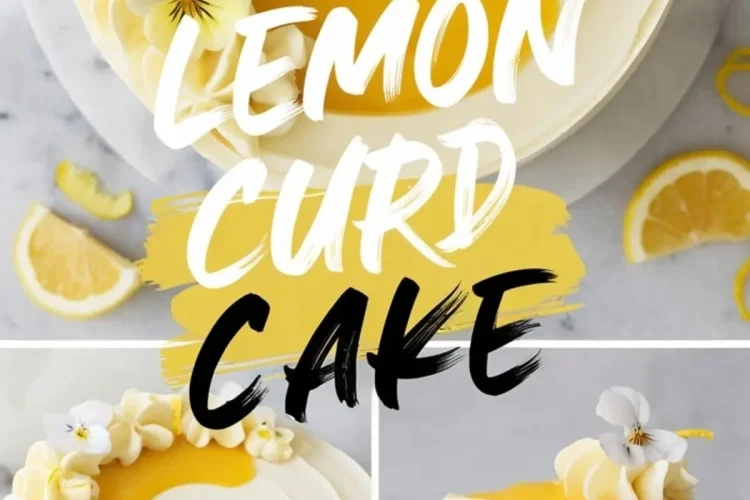
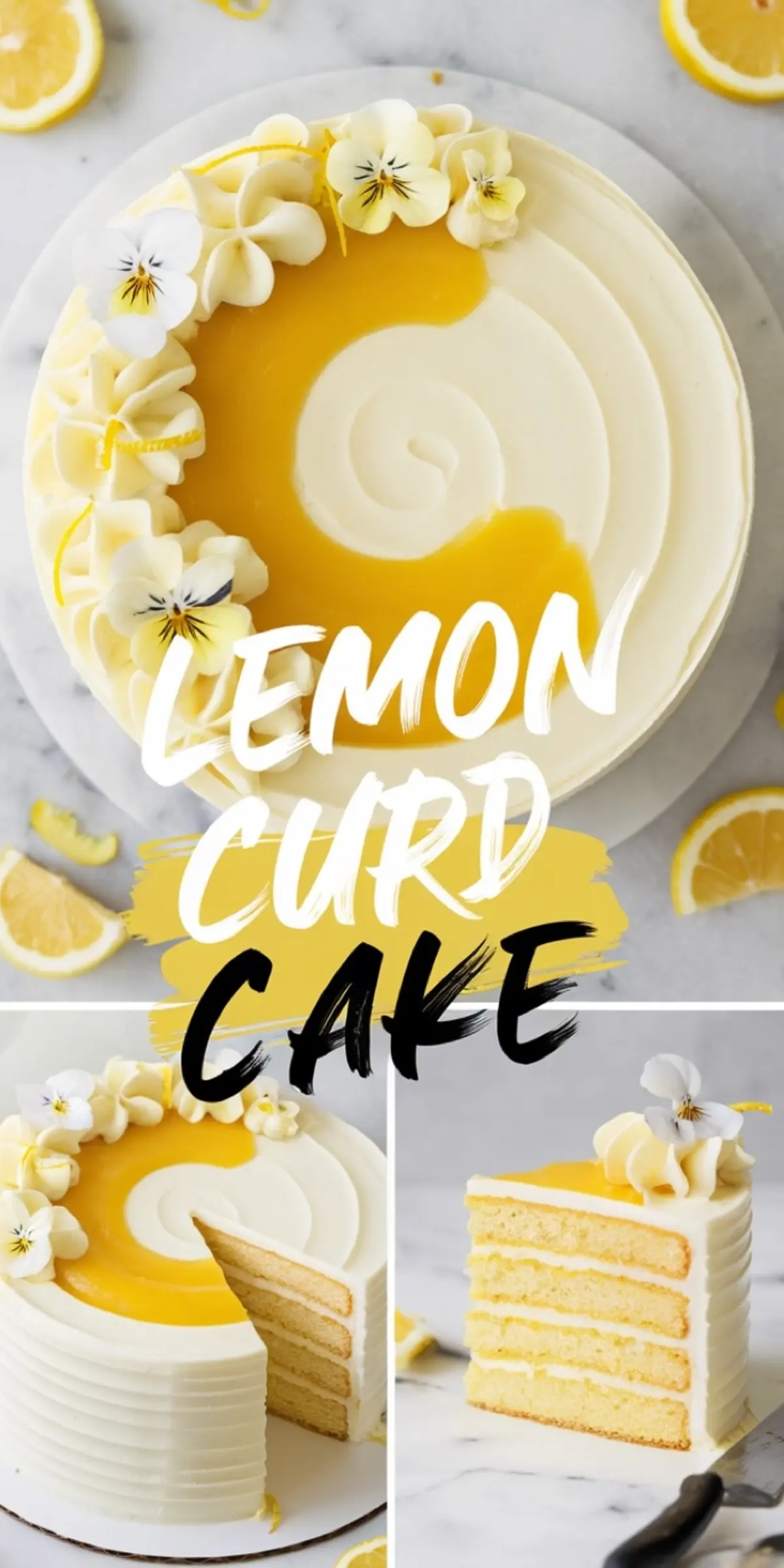
If you’re here, you’re probably craving something bright. Something that cuts through the gray and settles sweetly. I always reach for lemon curd cake when I need a dessert that feels like late spring in one bite. This isn’t just a soft vanilla cake with lemon—it’s a well-balanced piece of work that stands on its own.
This post will show you how to bake a cake that makes the most of lemon’s sharp brightness and buttercream’s soft edges. You’ll understand the layering, the flavor contrast, and what each ingredient really does. No fluff. Just everything you need to confidently bake and serve it.
Following a special diet?
Every recipe on this site can be converted to gluten-free, vegan, dairy-free, keto, nut-free or egg-free with adjusted ratios so nothing falls flat.
Try the Recipe Converter →Lemon Curd Cake Isn’t Just Another Lemon Dessert
Lemon desserts are everywhere. But most either lean too sugary or end up tasting like air freshener. I’ve tested this cake to keep the lemon as the star without overpowering the rest. The lemon curd here isn’t decoration—it’s the point.
Every layer brings something. The sponge is light, but it doesn’t disappear. The curd stays thick and sharp. And the buttercream gives your palate a break, just when it needs it.
I’ve made it for birthdays, showers, even a Tuesday. It’s reliable and memorable, all at once.
The Sponge Cake Layer Gives It Structure and Flavor
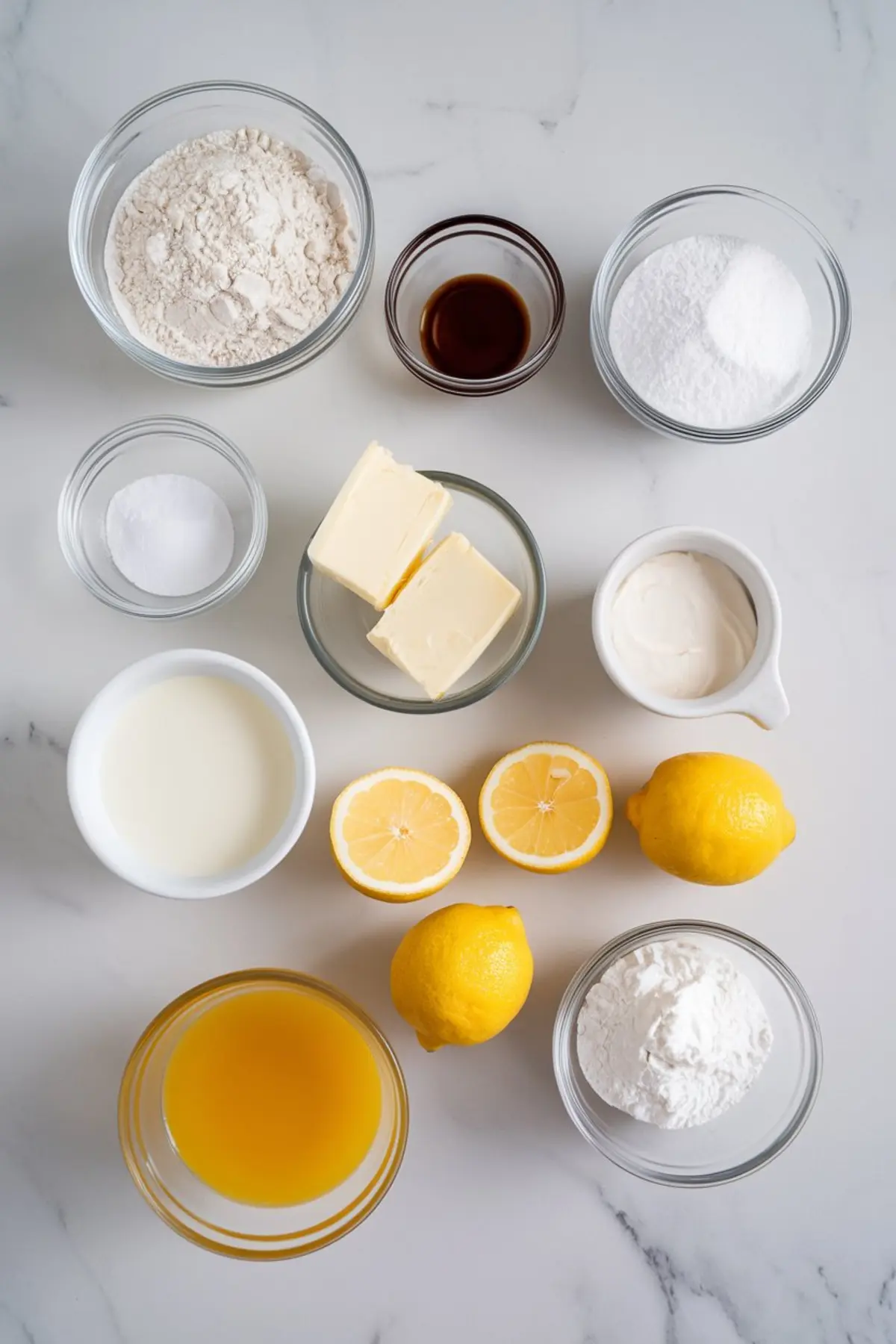
I start with a vanilla sponge that holds its shape. The cake flour gives it lightness, but sour cream adds moisture and keeps it from crumbling. You’ll notice a gentle sweetness that lets the lemon curd shine without competition.
Five egg whites go in—no yolks. I’ve found this makes the texture tighter and finer, which helps the layers stay even after filling and frosting. The lemon zest is mixed right into the batter for a clean flavor that doesn’t taste baked out.
Whole milk works better than any substitute. I’ve tested almond and oat milk out of curiosity. Neither gave the same crumb. The fat in whole milk really does matter here.
Homemade Lemon Curd Is Non-Negotiable
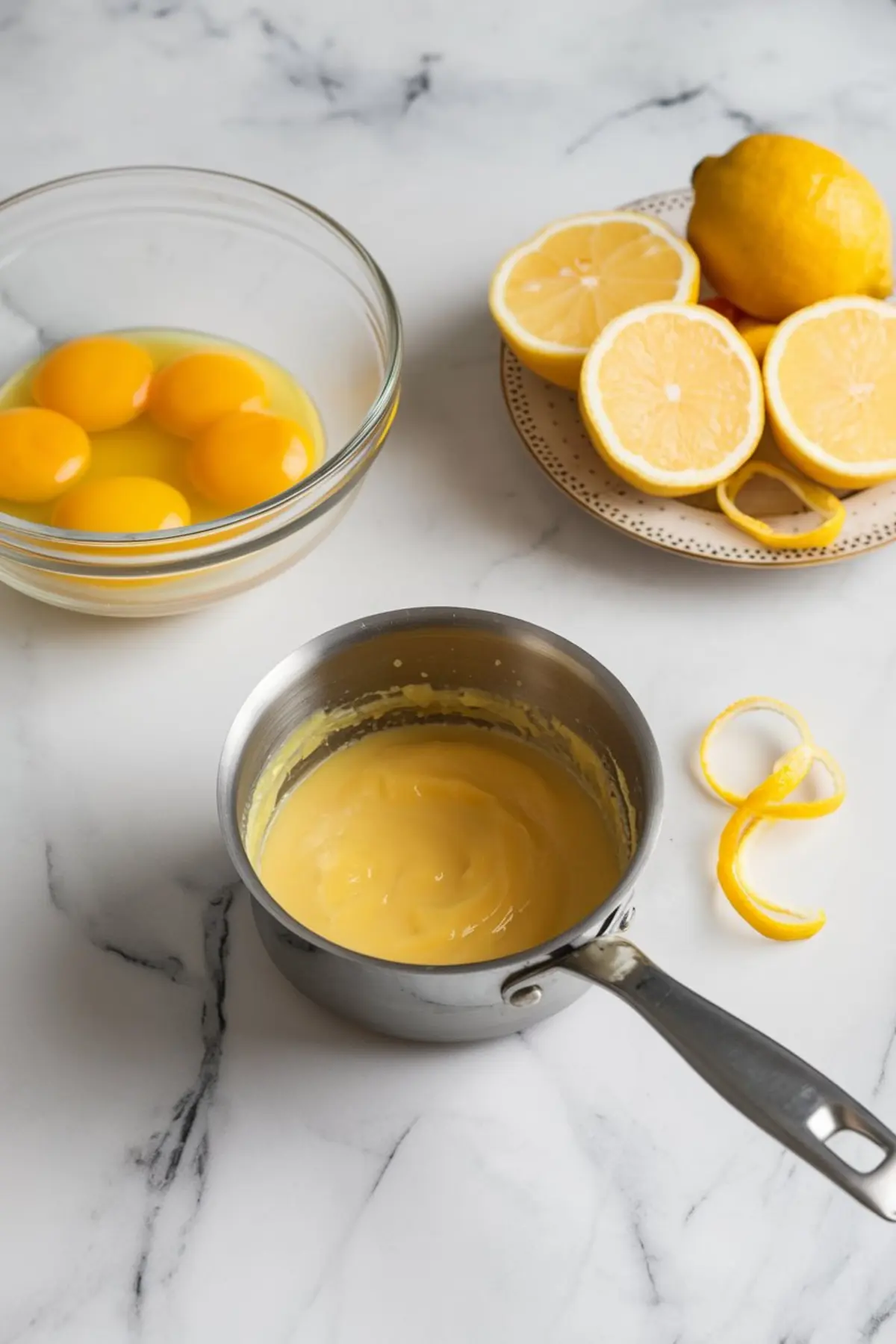
You could buy lemon curd. But it won’t have the same punch. I always make mine fresh. It takes ten minutes, and it sets up thick, never runny.
The fresh lemon juice and zest are cooked with yolks and sugar. Stir gently. The moment you see it coat the back of your spoon, pull it off. Add the butter then, off heat, so the curd stays smooth. Strain it. Don’t skip that.
Make it the night before, if you can. The flavor develops in the fridge. I use it between layers and on top for a swirl finish.
How the Buttercream Balances the Tartness
The buttercream here isn’t just frosting. It’s the contrast.
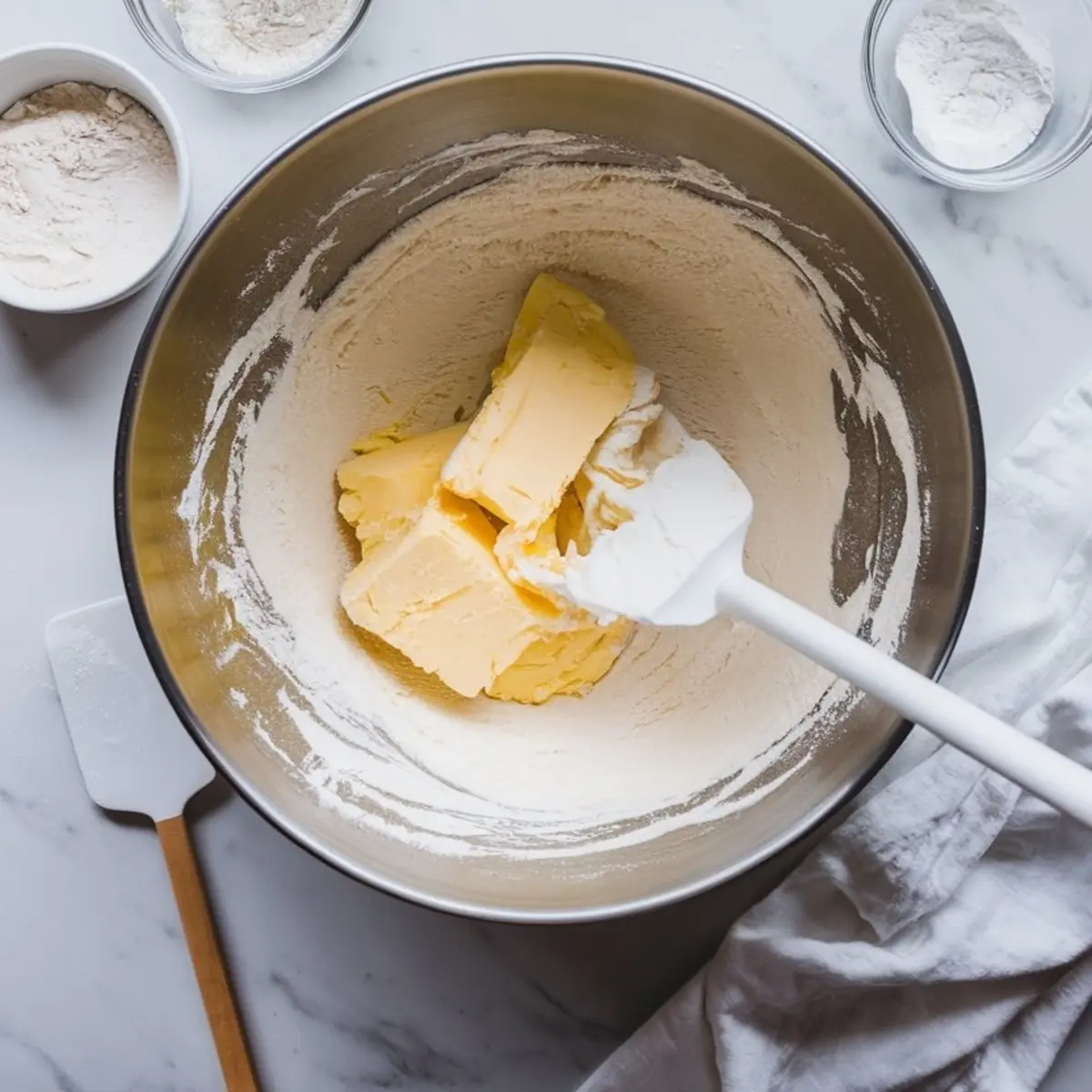
I whip the butter alone first until it’s pale. Then add powdered sugar, gradually, and just enough cream or milk to make it soft but not loose. Vanilla adds a round note. I always go for salted butter or add a pinch of salt—it cuts the sweetness in the best way.
I use this frosting to pipe a dam between cake layers to hold in the lemon curd. That layer of sweet butter holds back the tang until you bite. It’s not just pretty. It’s practical.
Butter vs. Oil in the Sponge—What I’ve Learned
I’ve tried this cake with oil instead of butter. It does make the crumb softer, almost bouncy. But it loses that buttery flavor that stands up to lemon.
Butter, especially at room temperature and creamed well with sugar, gives the cake both structure and taste. The cake doesn’t need to be spongy. It needs to hold the curd and frosting without slipping.
My notes always bring me back to butter for this recipe. No regrets.
How to Assemble Without Making a Mess
I always chill the cake layers before stacking. Even 15 minutes in the fridge helps. Cold layers don’t tear. They sit flat.
Add a ring of buttercream first. Spoon the lemon curd into the center. Spread it gently without pushing it out. Stack carefully. Repeat.
Use a crumb coat of frosting all around and chill again before the final layer. You’ll get cleaner edges, and the buttercream won’t slide. A swirl of lemon curd on top seals the look.
Serving Notes and How I Store It
This cake needs time to breathe. I serve it at room temperature so the curd softens and the buttercream loses its chill.
I decorate with edible flowers and lemon curls. I’ve used violas, pansies, even chamomile when I’m feeling nostalgic.
Store it covered in the fridge, but bring it out at least 30 minutes before slicing. The flavors show up better that way.
Final Thoughts—And One Small Tip
Use a metal pan. I’ve baked this sponge in both glass and metal. Metal heats more evenly. The cake rises better. The edges stay soft. That matters here.
So if you’re baking this, and wondering why your sponge turned dense—it might be the pan.
Save and Share—Let’s Bake Together Again
If this lemon curd cake makes its way into your kitchen, I’d love to hear how it went. Leave a comment below. Did you make your curd a day ahead? Did you decorate with something unexpected?
Pin this recipe to your Lemon Cakes or Spring Desserts board so you can bake it again. Or share it with someone who needs a little sunshine this week.
More lemon recipes I think you’ll like:
- Oatmeal Lemon Crumble Bars
- Lemon Poppyseed Mini Bundt Cakes
- Lavender Lemon Bars
- Meyer Lemon Pudding Cake
- Lemon Cookie Cups
Lemon Curd Cake Recipe
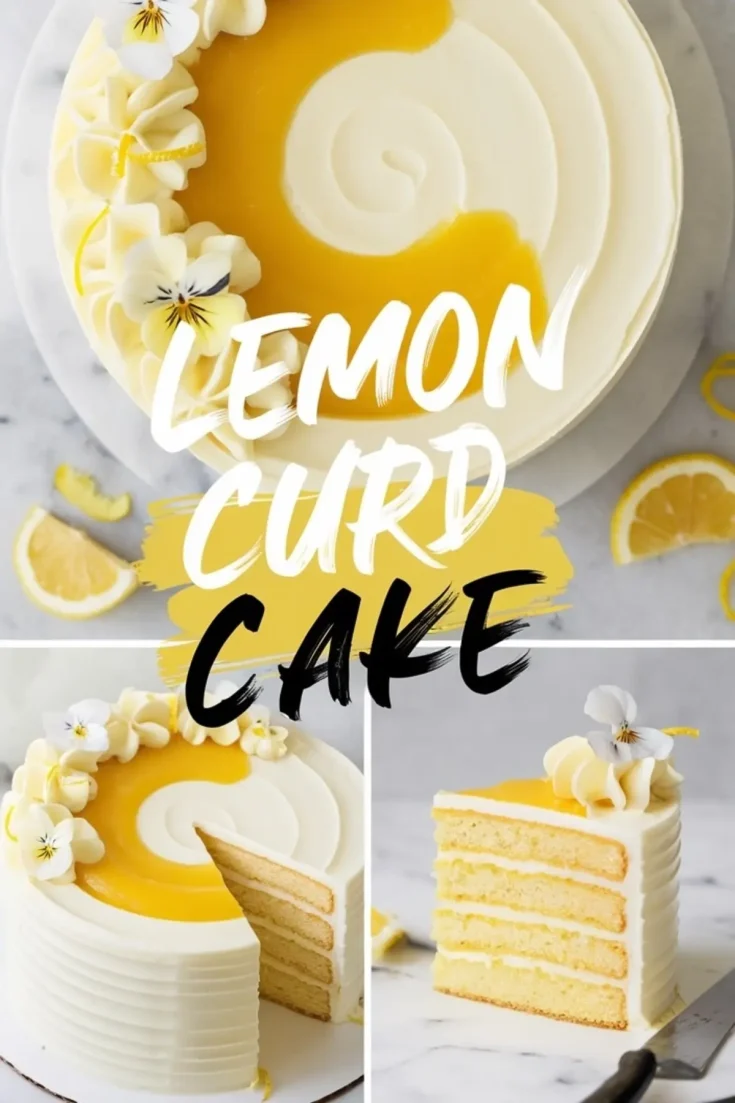
Lemon Curd Cake combines layers of soft vanilla sponge with tangy homemade lemon curd and a silky white buttercream. The contrast of sweet and tart flavors with a light, fluffy texture makes this cake a refreshing dessert. Finished with a swirl of curd, buttercream rosettes, and edible flowers, it looks as good as it tastes.
Ingredients
- FOR THE CAKE LAYERS
- 2¾ cups (345g) cake flour, sifted
- 1 tbsp baking powder
- ½ tsp baking soda
- ½ tsp salt
- 1 cup (226g) unsalted butter, room temperature
- 1¾ cups (350g) granulated sugar
- 5 large egg whites, room temperature
- 2 tsp vanilla extract
- 1 cup (240ml) whole milk, room temperature
- ¼ cup (60ml) sour cream
- Zest of 2 lemons
- FOR THE LEMON CURD
- ¾ cup (180ml) fresh lemon juice
- Zest of 2 lemons
- ¾ cup (150g) granulated sugar
- 4 large egg yolks
- 6 tbsp (85g) unsalted butter, cut into cubes
- FOR THE BUTTERCREAM
- 1½ cups (340g) unsalted butter, room temperature
- 5 cups (600g) powdered sugar, sifted
- 2–3 tbsp heavy cream or milk
- 1 tsp vanilla extract
- Pinch of salt
- TOPPING
- About ½ cup lemon curd (from above)
- Buttercream rosettes (use remaining frosting)
- Edible flowers (like pansies or violas)
- Lemon zest curls (optional, for garnish)
Instructions
- PREPARE THE CAKE PANS: Preheat the oven to 350°F (175°C). Grease and line four 8-inch cake pans with parchment paper and set aside.
- MIX THE DRY INGREDIENTS: In a medium bowl, whisk together the cake flour, baking powder, baking soda, and salt until well combined.
- CREAM BUTTER AND SUGAR: In a large mixing bowl, beat the butter and sugar on medium-high speed until pale and fluffy, about 3 to 4 minutes.
- ADD EGG WHITES AND FLAVORINGS: Add the egg whites one at a time, mixing well after each addition. Mix in the vanilla extract and lemon zest until incorporated.
- COMBINE WET INGREDIENTS: In a small bowl, whisk together the milk and sour cream until smooth.
- COMBINE ALL INGREDIENTS: Add the dry ingredients and milk mixture to the butter mixture in three additions, beginning and ending with the dry. Mix on low speed until just combined, being careful not to overmix.
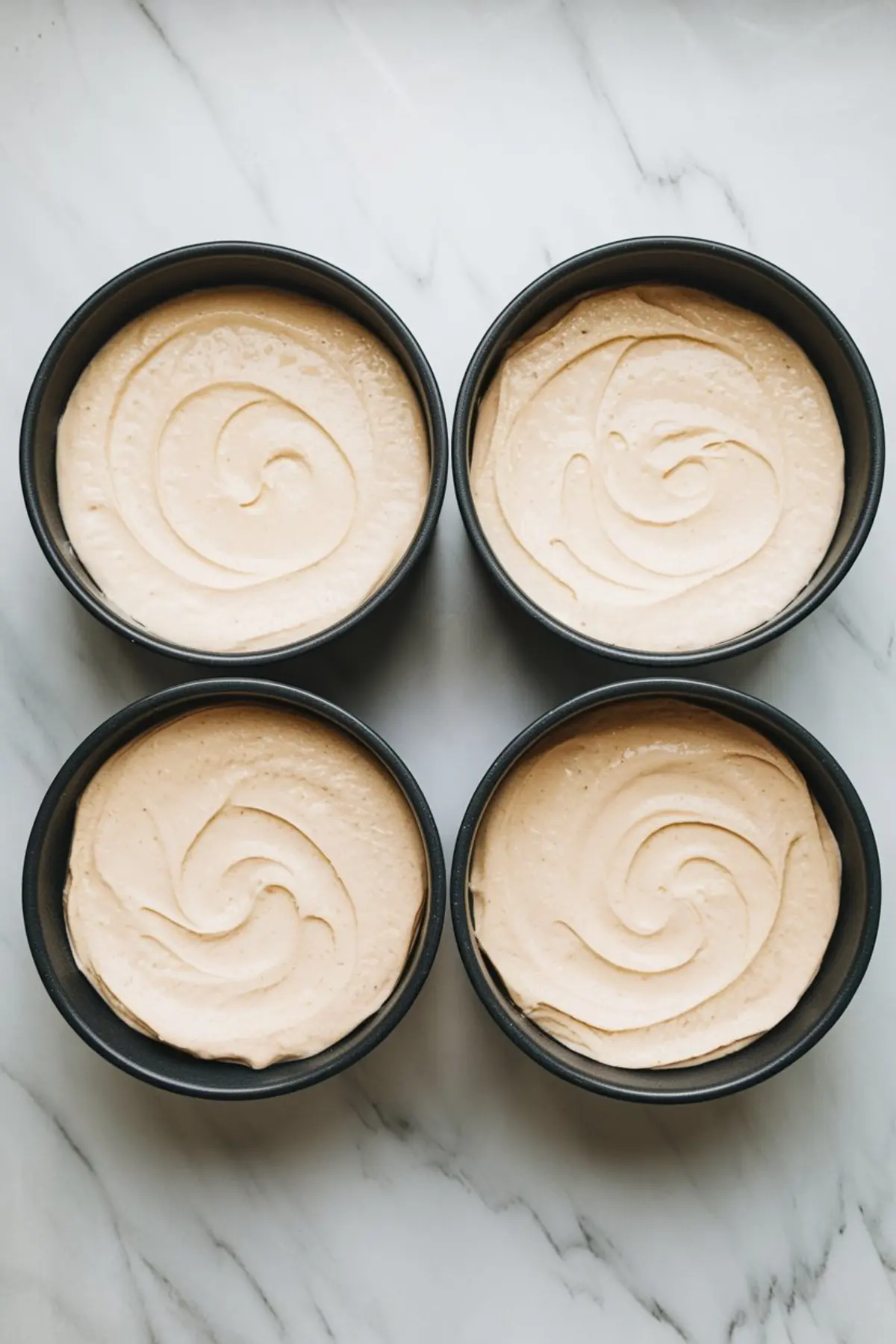
- DIVIDE AND BAKE: Evenly divide the batter among the prepared pans and smooth the tops. Bake for 22 to 25 minutes, or until a toothpick inserted into the center comes out clean.
- COOL THE LAYERS: Let the cakes cool in the pans for 10 minutes, then turn them out onto wire racks to cool completely.
- MAKE THE LEMON CURD: In a small saucepan, whisk together the lemon juice, lemon zest, sugar, and egg yolks. Cook over medium heat, stirring constantly, until the mixture thickens and coats the back of a spoon, about 6 to 8 minutes.
- FINISH THE CURD: Remove from heat and stir in the butter cubes until smooth. Strain the lemon curd through a fine mesh sieve for a silky texture. Let cool completely, then refrigerate for at least 1 hour to thicken.
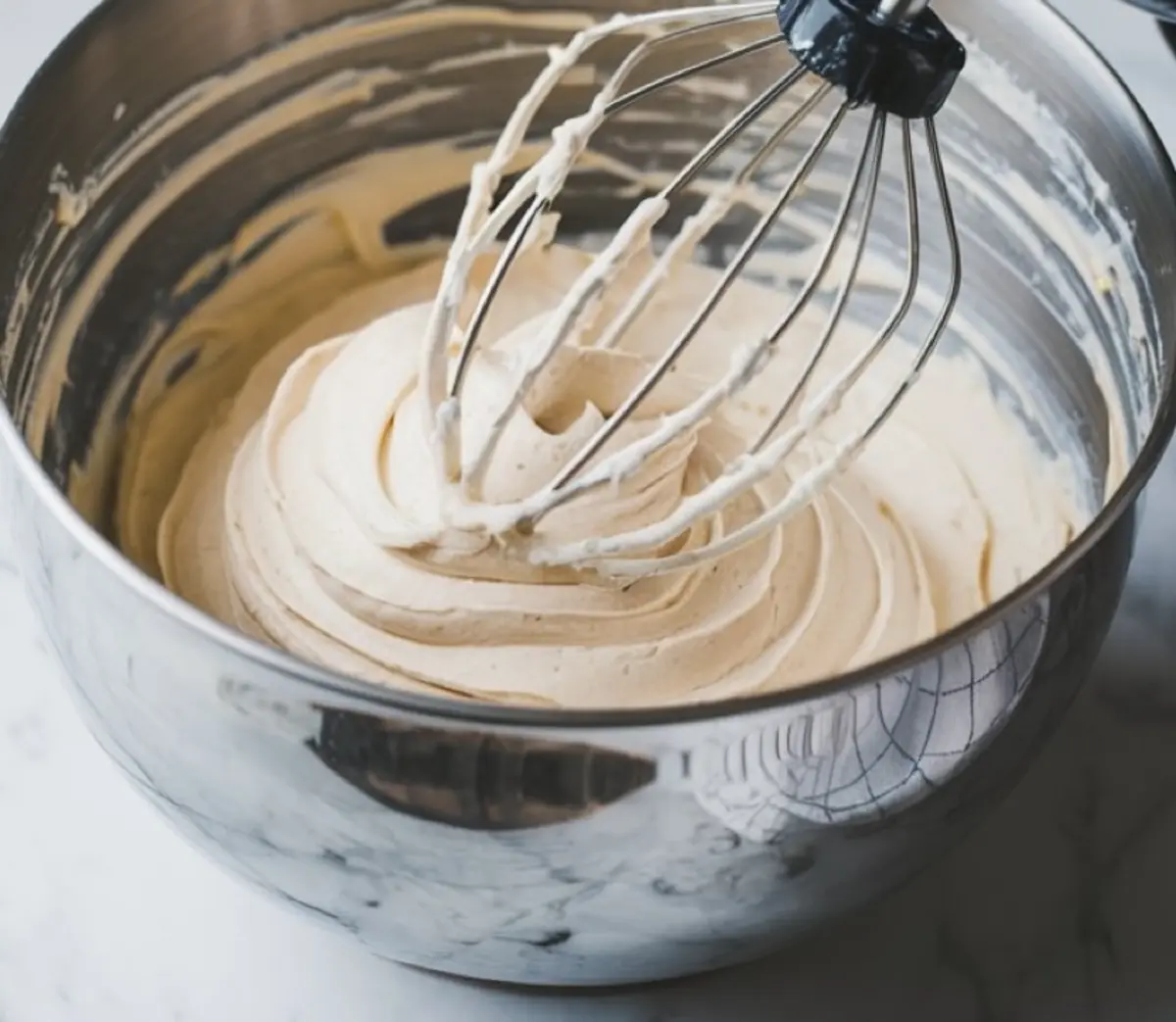
- PREPARE THE BUTTERCREAM: In a large bowl, beat the butter on medium-high speed until pale and fluffy, about 3 minutes. Gradually add the powdered sugar, one cup at a time, beating well between additions.
- ADJUST CONSISTENCY: Add the vanilla extract, salt, and 2 to 3 tablespoons of cream or milk. Continue beating for 2 to 3 minutes until the buttercream is smooth and spreadable.
- ASSEMBLE THE CAKE: If necessary, level the cooled cake layers. Place one layer on a cake stand or serving plate. Pipe or spread a ring of buttercream around the edge to form a dam. Spoon 2 to 3 tablespoons of lemon curd into the center and spread gently.
- REPEAT LAYERS: Add the next cake layer and repeat the process until all layers are stacked. Apply a thin crumb coat of buttercream to the entire cake and chill for 20 minutes to set.
- FROST AND FINISH: Apply a final layer of buttercream and smooth it using a cake scraper. Create a swirl pattern on top with the back of a spoon.
- DECORATE: Spoon a swirl of lemon curd over the top and spread gently. Pipe rosettes or swirls of buttercream along one side. Add edible flowers and lemon zest curls for garnish.
Notes
Make the lemon curd a day ahead for best texture. Store the cake covered in the refrigerator and bring to room temperature before serving. Use gel food coloring for buttercream if a pastel tint is desired.
Nutrition Information
Yield
8Serving Size
1Amount Per Serving Calories 743Total Fat 43gSaturated Fat 25gTrans Fat 1gUnsaturated Fat 15gCholesterol 276mgSodium 741mgCarbohydrates 75gFiber 3gSugar 37gProtein 16g

Thank you, Emma, for the most well written recipe I’ve ever seen. It consistently delivers with excellent instructions. I’ve moved this to the front of my Pinterest page so I can try it soon.
Hi Dianne,
You have no idea how much that means. I put a lot of care into making sure each recipe feels doable and clear, so hearing that it stood out to you really encourages me to keep that focus. I’m glad it earned a top spot on your Pinterest. Hope it brings something extra special to your kitchen soon 😊 Let me know how it turns out when you give it a go.