
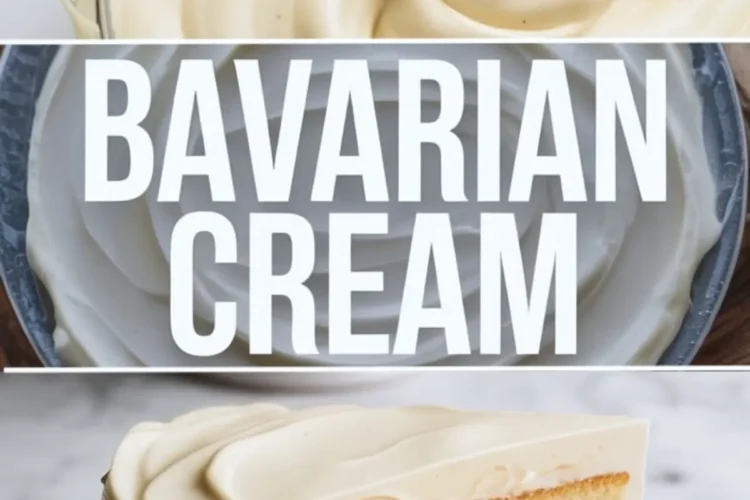
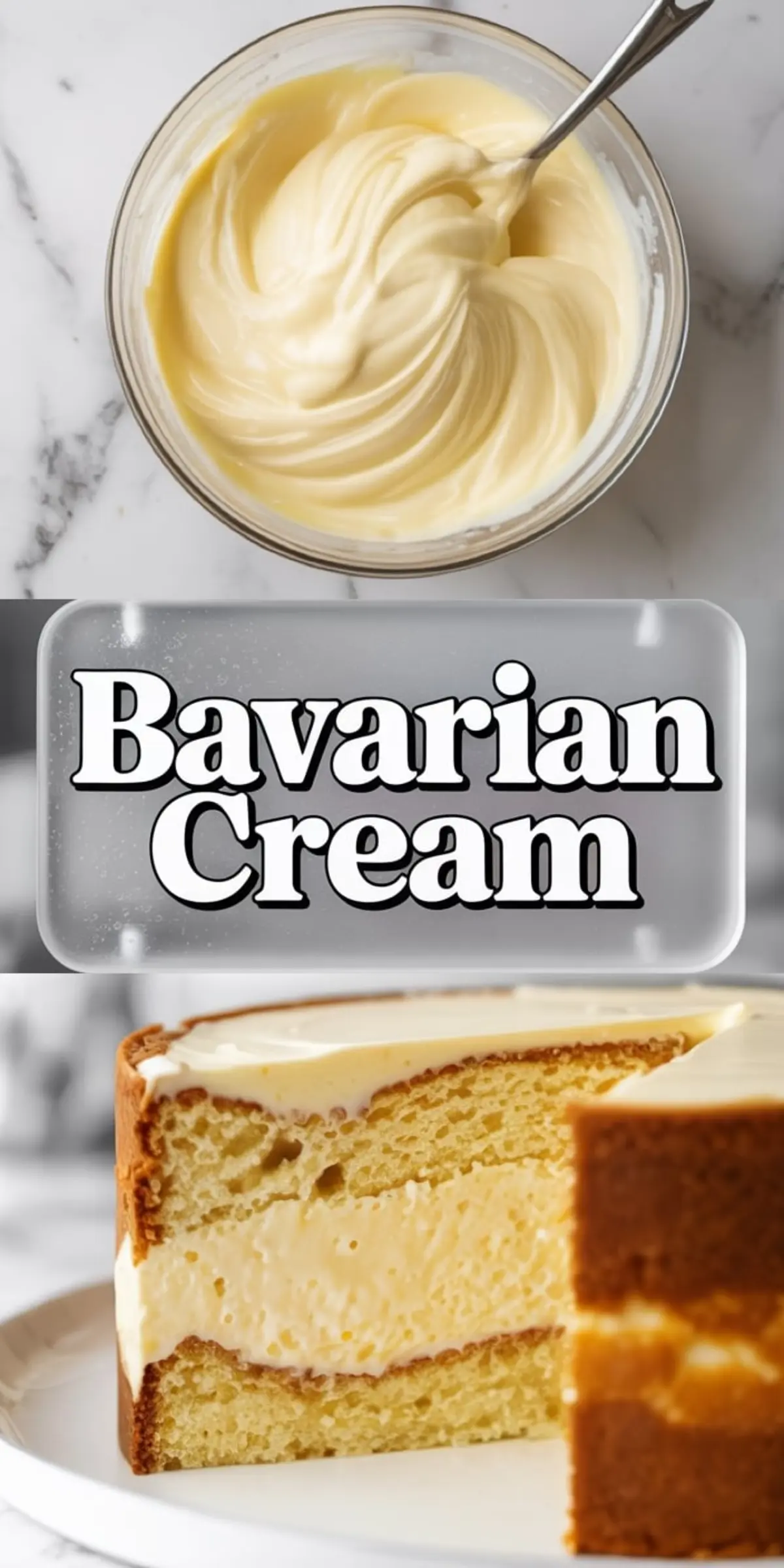
Bavarian cream is a vanilla custard set with gelatin and lightened with whipped cream. You cook 2 cups of whole milk, 4 egg yolks and ½ cup sugar into a thin custard, stir in 1 packet of gelatin, then fold in 1 cup of heavy cream whipped to soft peaks. It takes about 35 minutes of work plus at least 4 hours in the fridge and makes about 3 cups.
The one thing to get right is the moment you fold. The custard has to be cool enough not to melt the cream, but still pourable. Get that right and the set is soft, smooth and firm enough to slice inside a cake.
Following a special diet?
Every recipe on this site can be converted to gluten-free, vegan, dairy-free, keto, nut-free or egg-free with adjusted ratios so nothing falls flat.
Try the Recipe Converter →Gelatin, Yolks and Cream: The Ratios
- Yield: about 3 cups, enough to fill one 9 inch two layer cake generously or 6 dessert cups of ½ cup each
- Time: 25 minutes prep, 10 minutes on the stove, 4 hours or more to set
- Gelatin: 1 packet (2½ teaspoons) bloomed in 3 tablespoons cold water sets 2 cups milk plus 1 cup cream
- Custard is done at: about 170 to 180°F, when it coats a spoon and a finger line holds
- Keeps: up to 3 days in the fridge, covered. It does not freeze well; it turns watery and spongy after thawing.
What Goes Into Bavarian Cream and Why
Whole milk gives the custard its body. Low fat milk sets thinner and tastes flat next to the cream. The ½ cup of sugar is split in two: half warms with the milk, half is whisked into the yolks until pale, which keeps the yolks from clumping when the hot milk goes in.
A split vanilla bean steeps in the milk and leaves those tiny dark specks. With 2 teaspoons of vanilla extract instead, add it after straining, just before the cream goes in, so the heat does not dull it.
Four yolks thicken the custard and give it richness. The gelatin does the real holding. One packet is a soft set: it holds a clean slice inside a cake or a glass, but it is not a stiff, rubbery jelly. Heavy cream whipped only to soft peaks adds the air. Stiff cream sounds safer, yet it folds in unevenly and leaves white streaks.
How to Make Bavarian Cream, Step by Step
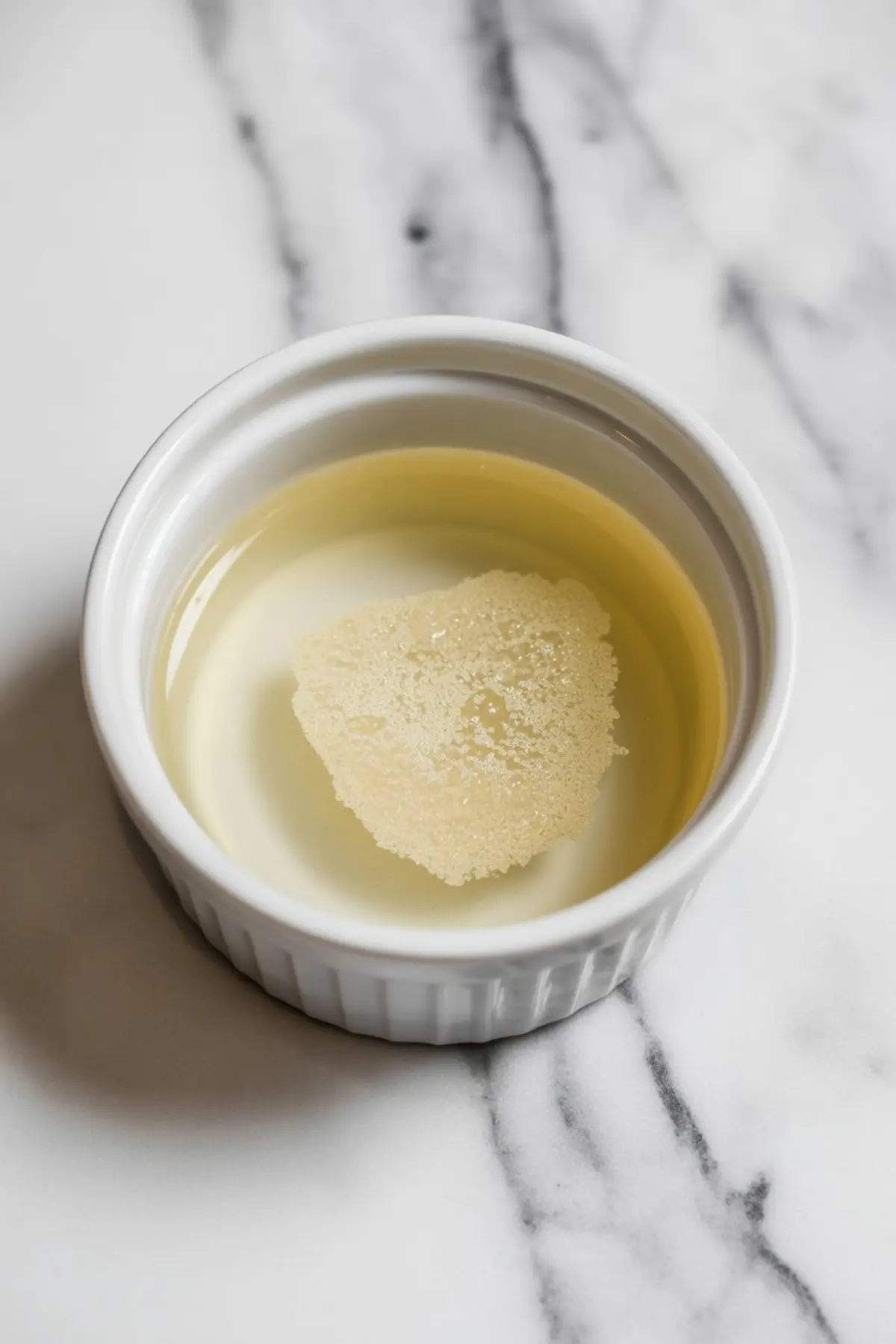
Start with the gelatin. Sprinkle it over 3 tablespoons of cold water and leave it for 5 to 10 minutes. It swells into a firm, spongy layer. Pouring water on top of the powder leaves dry pockets, so sprinkle the gelatin onto the water.
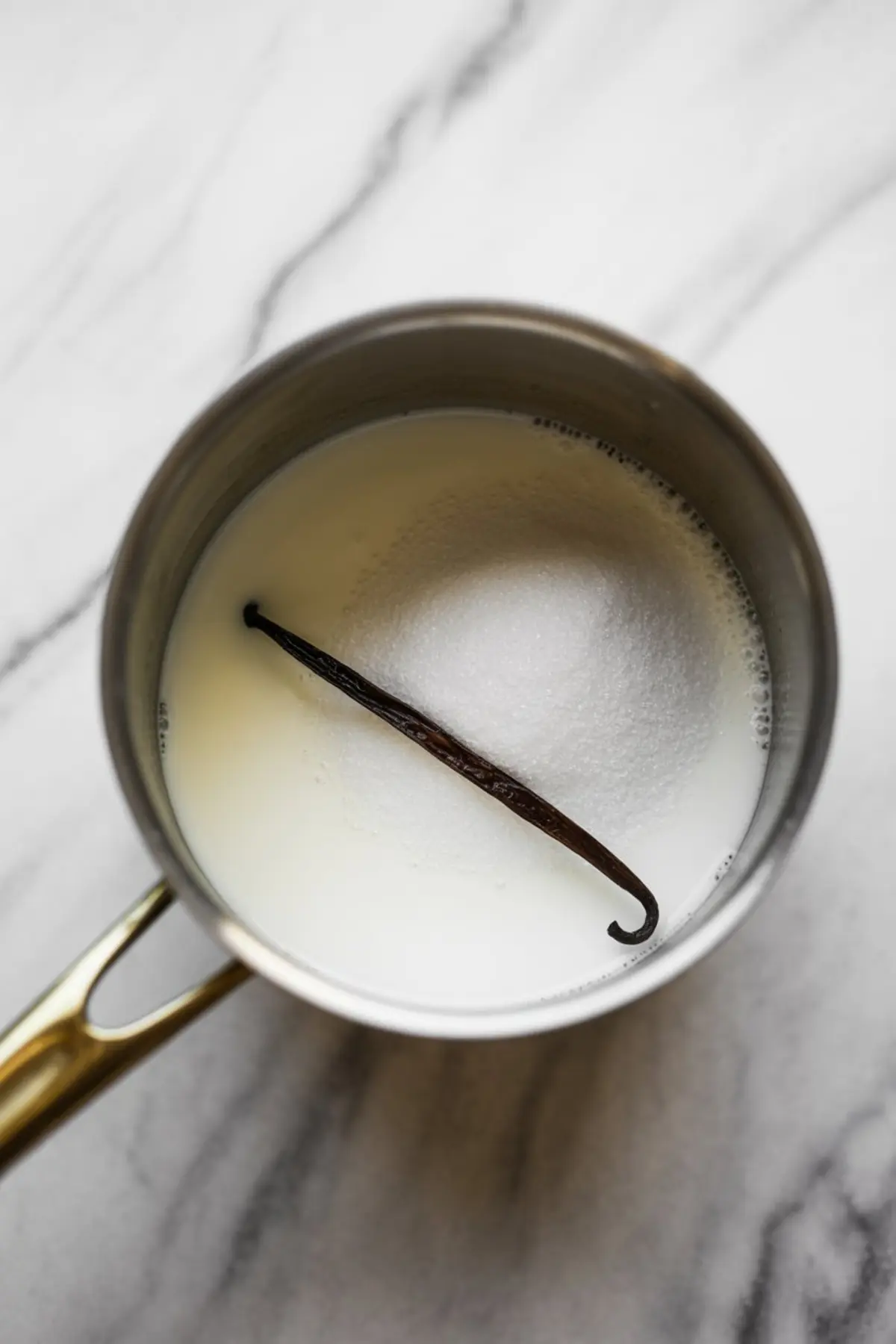
Warm the milk with ¼ cup sugar and the vanilla bean seeds and pod over medium heat until it steams. Do not let it boil. Meanwhile, whisk the yolks with the other ¼ cup sugar until pale and slightly thick.
Pour about half of the hot milk into the yolks in a thin stream, whisking the whole time. This is tempering: it warms the yolks gently so they do not scramble. Pour everything back into the saucepan.
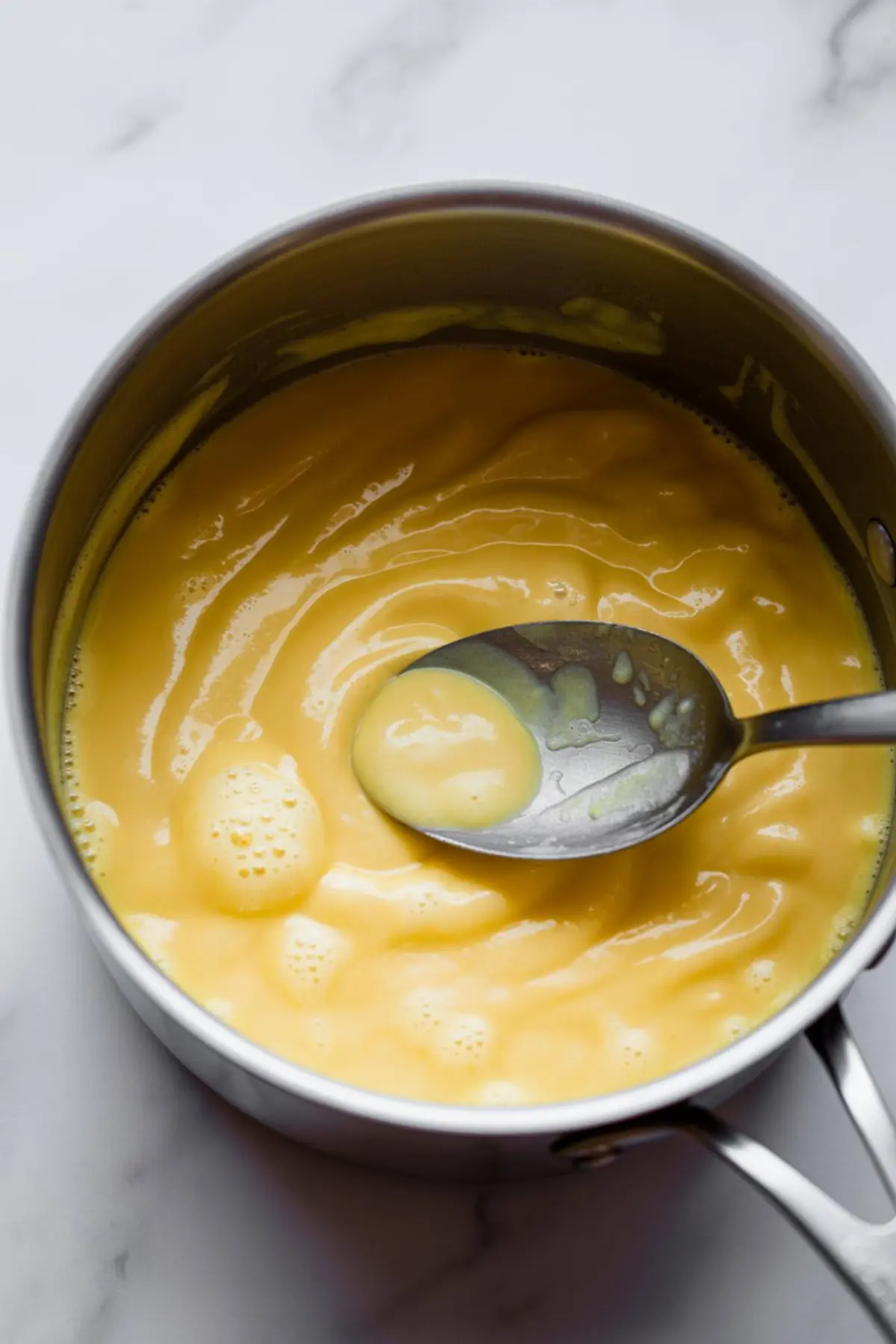
Cook over medium low heat, stirring constantly with a wooden spoon or heatproof spatula, for 4 to 5 minutes. Watch the foam on top disappear and the custard turn from watery to the thickness of heavy cream. Lift the spoon and draw a finger across the back. A line that stays clean means it is ready, and a thermometer will read about 170 to 180°F. Stop there, because at a boil the yolks curdle.
Strain the custard through a fine sieve into a clean bowl right away. That catches the vanilla pod and any cooked bits of egg. Add the bloomed gelatin while the custard is hot and stir until no glassy specks remain.
Cooling the Custard Before You Fold
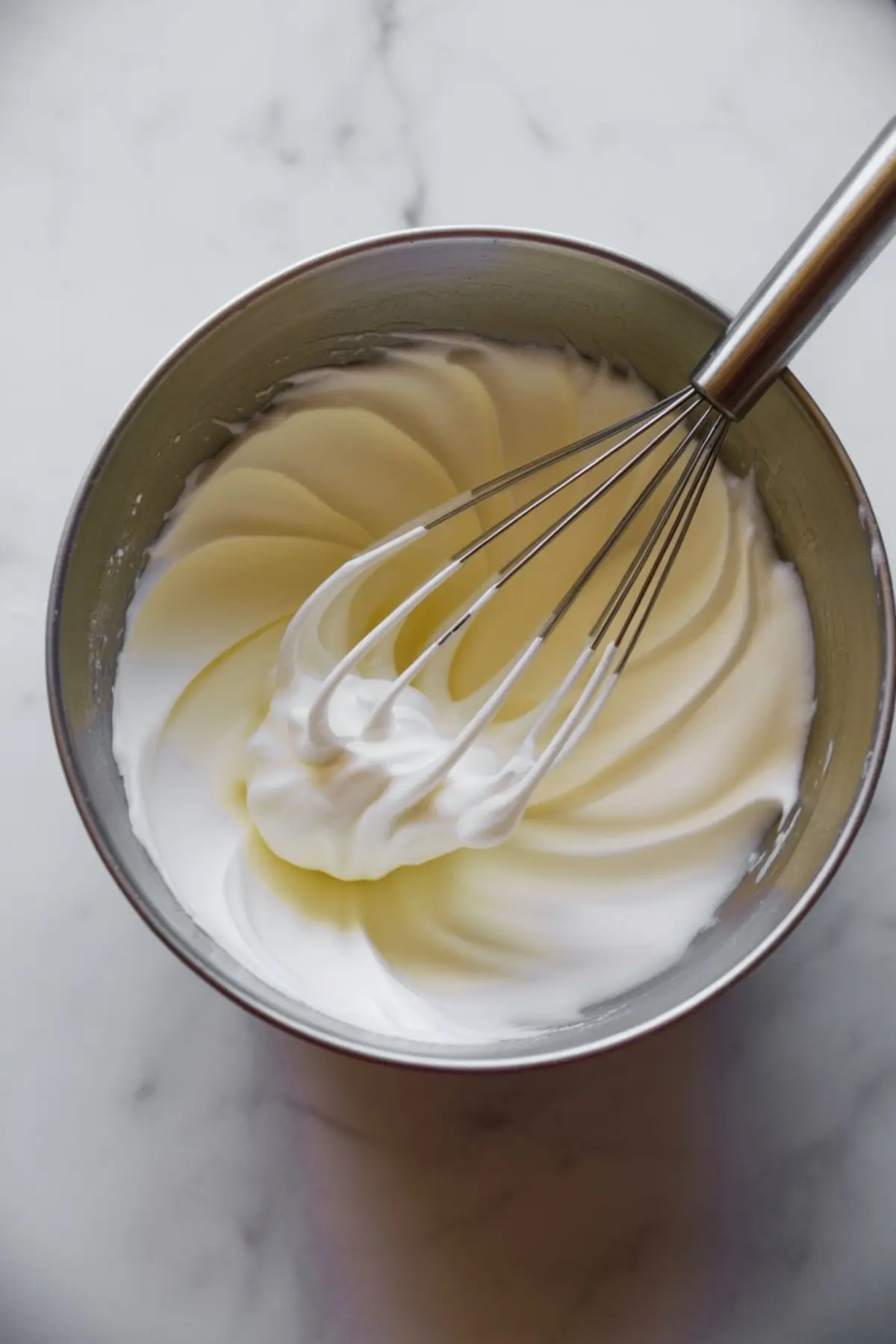
Let the custard cool to room temperature, stirring now and then so no skin forms. It is ready when it feels cool on the inside of your wrist and still pours like heavy cream. In a hurry? Set the bowl in a larger bowl of ice water and stir constantly. Gelatin sets fast at the cold edges, so stirring is not optional here.
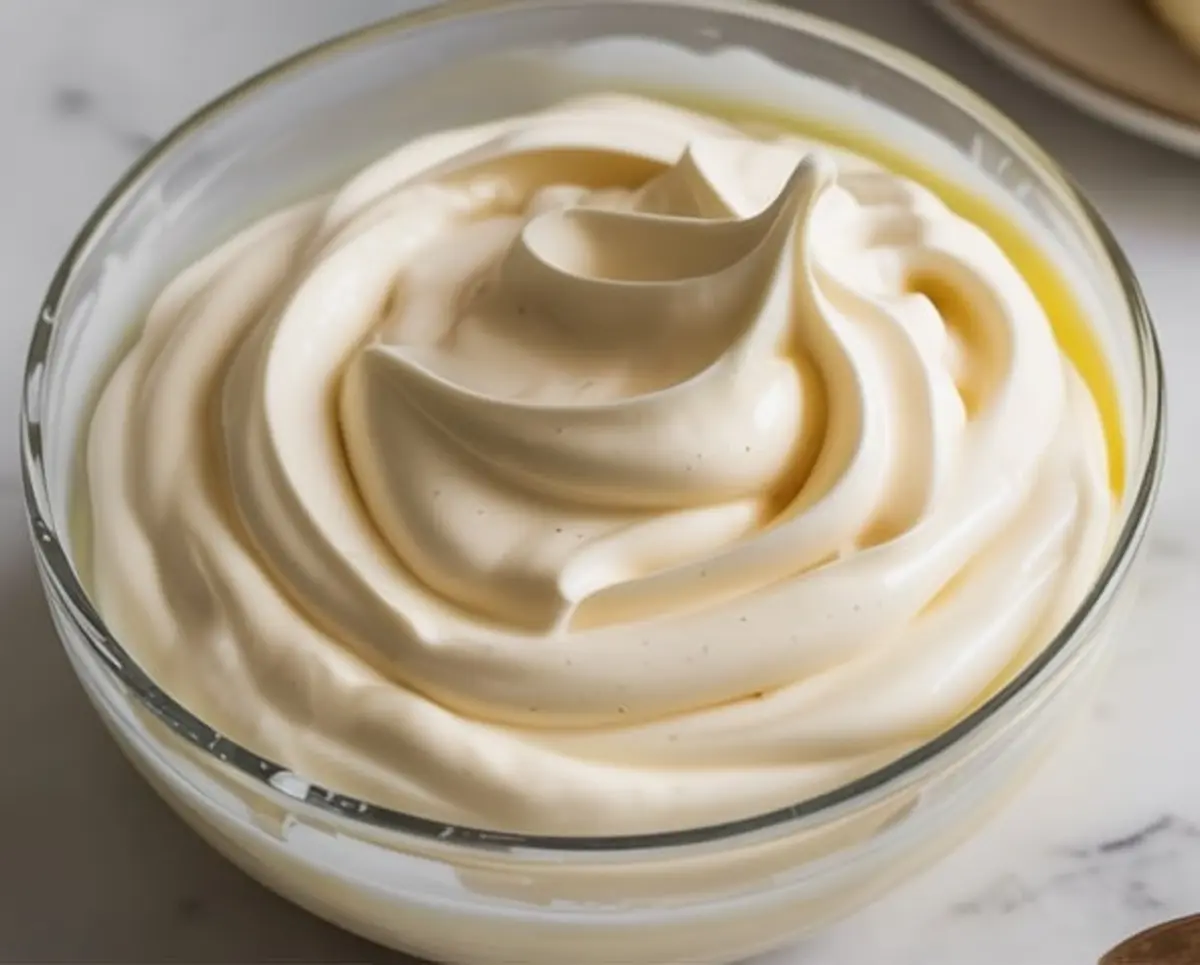
Whip the cream to soft peaks: the tips flop over when you lift the whisk. Fold it into the custard in two additions with a large spatula, cutting down through the middle and turning the bowl. Stop as soon as no white streaks show. The finished cream should look smooth, pale and loose, like melted ice cream that holds a soft ribbon.
Custard that has already started to set and looks lumpy can be saved. Set the bowl over a pan of warm water for a few seconds and whisk until smooth, let it cool a little, then fold. A thin, runny mix after folding means the custard was still warm and melted the cream. It will still set, just denser.
Filling a Cake, Cream Puffs or Dessert Cups
Work within 10 to 15 minutes of folding, while the cream is still soft. Once the gelatin sets, it tears in a piping bag instead of flowing out in a smooth line. For a layer cake, put the bottom layer of a vanilla sponge cake inside a cake ring or a strip of acetate, pour in the cream, top with the second layer and chill for 4 hours before slicing. The ring keeps the soft filling from bulging out of the sides.
For cream puffs or chocolate eclairs, spoon it into a piping bag right after folding, fill the shells, then chill. For cups, pour it into glasses and add berries once set. In a trifle it sits nicely between sponge and fruit, the way the layers do in this Christmas trifle. To turn it out of a mold, chill it overnight and dip the mold in warm water for 5 to 10 seconds; with this soft set, a shallow mold works better than a tall one.
Bavarian Cream vs Pastry Cream vs Diplomat Cream
These three get mixed up all the time, and bakeries add to it by calling almost any yellow donut filling “Bavarian cream.”
- Bavarian cream is a custard with no flour or starch, set with gelatin and lightened with whipped cream. It sets firm enough to slice and tastes light. Without the gelatin it never sets.
- Pastry cream is milk, yolks and sugar thickened with cornstarch or flour and boiled. It is thick and spoonable without gelatin. Try my vanilla pastry cream.
- Diplomat cream is pastry cream with whipped cream folded in, sometimes with a little gelatin. It sits between the two. Here is my diplomat cream recipe.
The donut, king cake and Boston cream filling sold as “Bavarian cream” is usually closer to pastry cream. For a filling that pipes straight from the fridge, pastry cream is the better pick. For something that sets inside a cake or a mold and slices cleanly, make Bavarian cream. A Boston cream pie works with either.
Grainy, Runny or Rubbery: What Went Wrong
- Grainy or lumpy: the yolks got too hot. Straining catches most of it. Next time keep the heat at medium low and pull the pan at the finger line test.
- Never set, or set very soft: the gelatin did not fully dissolve, or the cream was folded so long it lost its air. Stir the gelatin into hot custard until no specks remain.
- Stiff and bouncy: the gelatin was heaped. Level the 2½ teaspoons, or use exactly 1 packet.
- White streaks: the cream was whipped too stiff or not folded enough.
- Dry, cracked top: it sat uncovered in the fridge. Press plastic wrap onto the surface or cover the container well.
Coffee, Raspberry, Chocolate and Almond Bavarian Cream
Add 1 tablespoon of espresso to the warm milk for a coffee version. Stir 2 tablespoons of raspberry puree into the cooled custard before folding for a fruity one. Swap the vanilla for ½ teaspoon almond extract for a marzipan note. For chocolate, stir 2 ounces of finely chopped dark chocolate into the hot strained custard until melted.
Keep the gelatin and cream amounts the same. Avoid fresh pineapple, kiwi and papaya: they contain enzymes that stop gelatin from setting, so use cooked or canned fruit. For a sharper fruit filling, my raspberry mousse filling is built for that, and the Baileys cake filling is the grown up option.
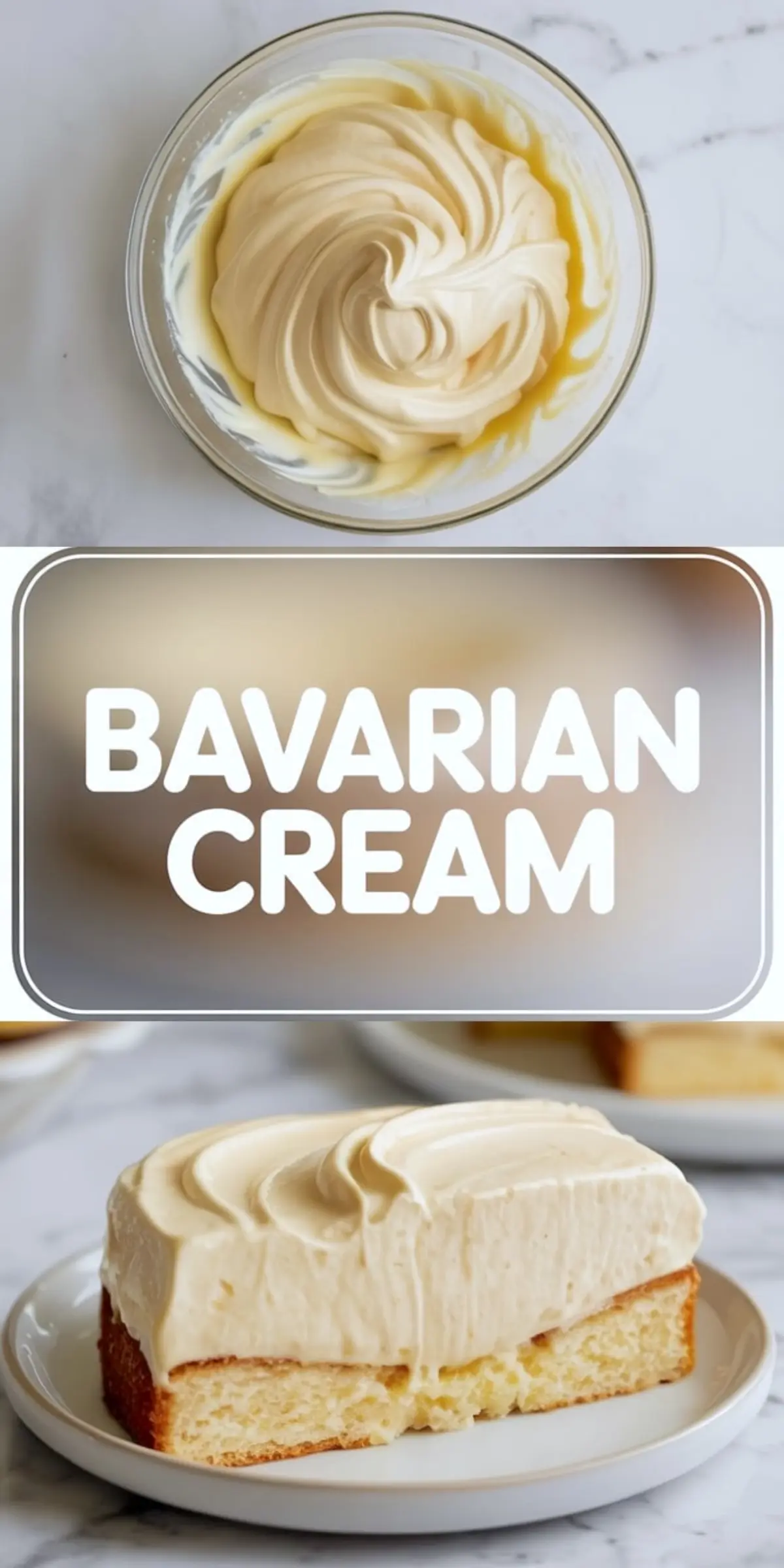
Pin this Bavarian cream to your cake fillings board so it is there the next time you fill a layer cake or a tray of cream puffs. Tried one of the flavor variations? Tell me in the comments which one.
Homemade Bavarian Cream Recipe
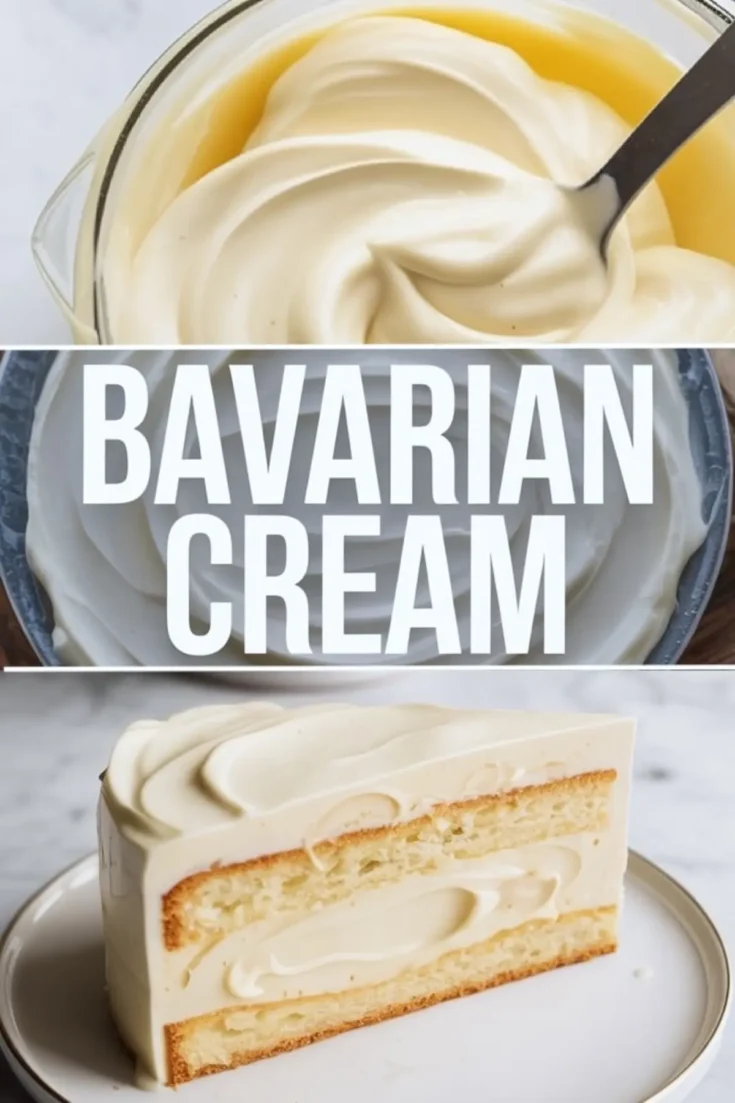
This Bavarian cream is a vanilla custard set with gelatin and lightened with whipped cream, made with whole milk, egg yolks, sugar, a vanilla bean and heavy cream. It takes about 35 minutes of work plus 4 hours in the fridge and makes about 3 cups of smooth, sliceable filling. The custard is cooked only until it coats a spoon, then cooled until it still pours before the soft whipped cream is folded in. Use it as a Bavarian cream filling for cakes, cream puffs, eclairs, trifles and tarts, or set it in dessert cups. For a coffee or raspberry version, add espresso or puree. Keep it covered in the fridge for up to 3 days; it does not freeze well.
Ingredients
- 2 cups (480 ml) whole milk
- 1/2 cup (100 g) granulated sugar, divided
- 1 vanilla bean, split (or 2 teaspoons vanilla extract)
- 4 large egg yolks
- 2 1/2 teaspoons (1 packet) unflavored gelatin
- 3 tablespoons (45 ml) cold water
- 1 cup (240 ml) heavy whipping cream
Instructions
- BLOOM THE GELATIN: Sprinkle the unflavored gelatin over the cold water in a small bowl and let it sit for 5 to 10 minutes to fully hydrate. The mixture should swell and become slightly firm.
- HEAT THE MILK: In a medium saucepan, combine the whole milk with half of the granulated sugar (1/4 cup). Scrape the seeds from the split vanilla bean and add both seeds and pod to the milk. Heat the mixture over medium heat until steaming but not boiling.
- TEMPER THE EGG YOLKS: In a separate bowl, whisk the egg yolks with the remaining 1/4 cup of sugar until the mixture becomes pale and slightly thickened. Gradually pour about half of the hot milk into the yolks while whisking constantly to temper them, then return the tempered yolks to the saucepan with the remaining milk.
- COOK THE CUSTARD: Return the saucepan to medium-low heat and cook the mixture while stirring constantly with a wooden spoon or heatproof spatula. Cook until the custard thickens slightly and coats the back of the spoon, about 4 to 5 minutes. Do not allow it to boil.
- ADD GELATIN: Remove the custard from the heat and pour it through a fine mesh sieve into a clean bowl to remove any solids and the vanilla pod. Immediately add the bloomed gelatin and stir until completely dissolved in the warm custard.
- COOL THE CUSTARD: Let the custard mixture cool to room temperature, stirring occasionally to prevent a skin from forming. It should be cool enough to avoid melting the whipped cream, but not yet set.
- WHIP THE CREAM: In a separate bowl, whip the heavy cream to soft peaks using a whisk or mixer. Gently fold the whipped cream into the cooled custard in two additions, using a spatula and light folding motions to preserve the volume.
- CHILL AND SET: Transfer the finished Bavarian cream to a mold, cake, or serving dish. Refrigerate for at least 4 hours, or until fully set and firm to the touch.
Notes
Fold the whipped cream in when the custard feels cool on your wrist but still pours. If it has started to set in lumps, warm the bowl over warm water for a few seconds and whisk smooth before folding. Whip the cream only to soft peaks. Pipe or spread the cream within 10 to 15 minutes of folding; once set, it will not pipe smoothly. For a layer cake, use a cake ring or acetate collar and chill 4 hours before slicing. If using vanilla extract instead of a bean, add it after straining, just before folding in the cream. Fresh pineapple, kiwi and papaya stop gelatin from setting. Store covered in the fridge for up to 3 days; do not freeze.
Nutrition Information
Yield
24Serving Size
1Amount Per Serving Calories 84Total Fat 5.2gSaturated Fat 3.0gUnsaturated Fat 2.1gCholesterol 45mgSodium 25mgCarbohydrates 6.5gSugar 6.6gProtein 2.5g

you should add a picture and time of the cooking process
what the egg and milk mixture looks like when it goes in the pot and halfway through cooking. rather than just the end. it would be helpful to know how long it takes to thicken.
Fair point, and that would be helpful. For this recipe, the custard stage usually takes about 4 to 5 minutes over medium-low heat, and it should be thick enough to coat the back of a spoon before you take it off the heat.