
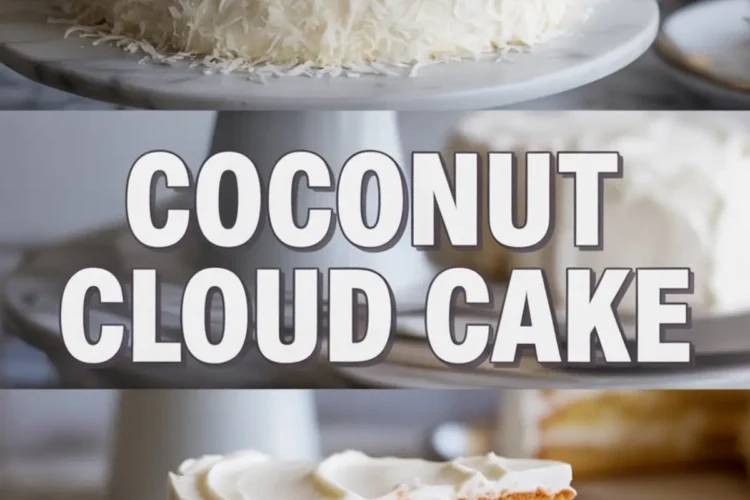
This Coconut Cloud Cake is a light and tender coconut cake recipe made with whipped coconut cream filling, buttery coconut frosting, and layers of moist buttermilk cake. It’s one of those tropical desserts that works for Sunday dinner, special celebrations, or anytime you want a chilled coconut dessert that’s easy to slice and easy to enjoy. If you’ve been searching how to make coconut cake that feels soft but structured, this recipe brings both.
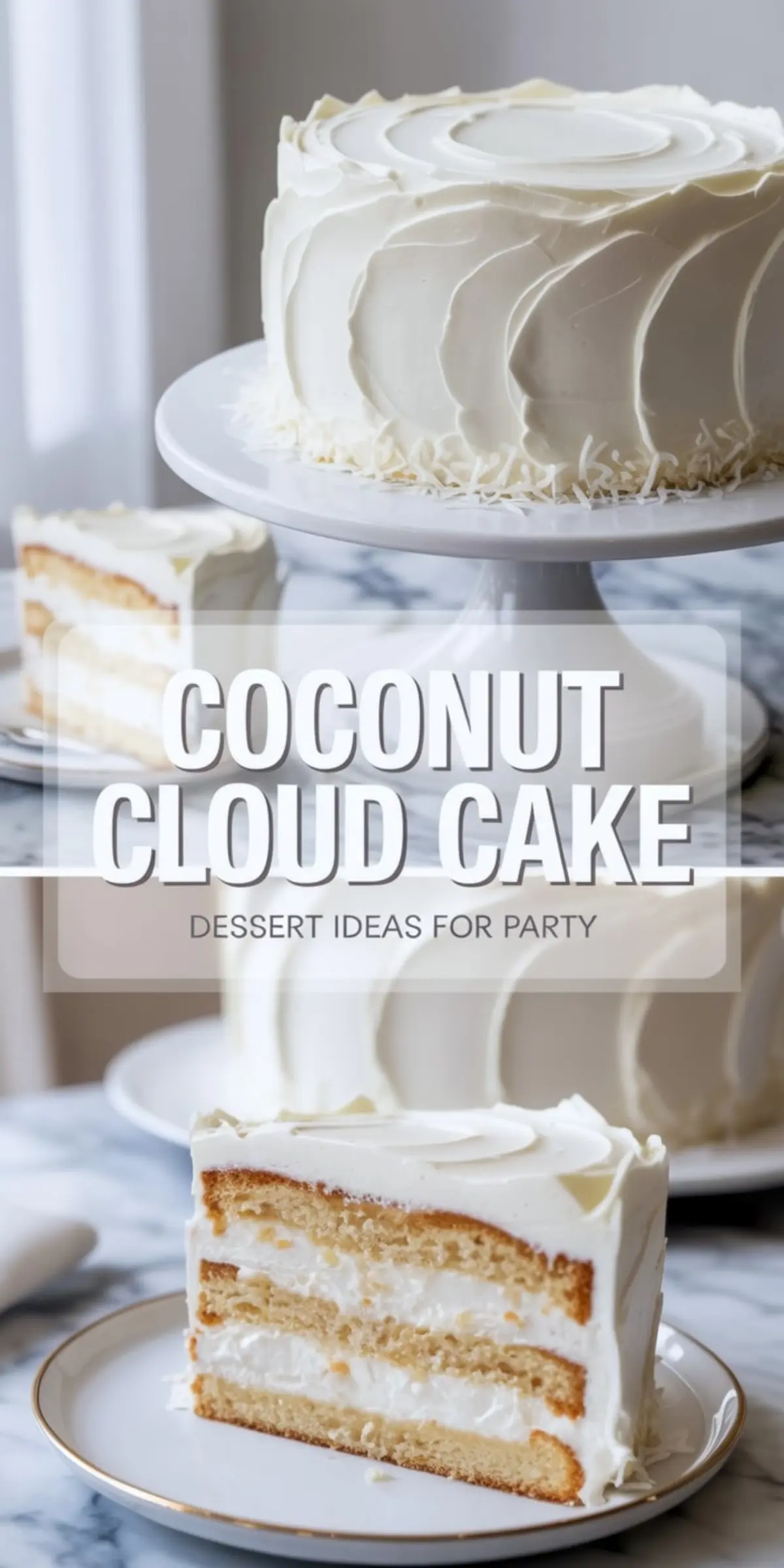
This cake follows a simple method that keeps the crumb delicate without falling apart. The ratio of cake flour to fat is the key here. Using 2½ cups of sifted cake flour gives a finer texture than all-purpose, while the combination of coconut milk and buttermilk keeps each layer moist but not soggy.
The use of egg whites instead of whole eggs makes a difference too. It helps the cake rise with a light, airy finish, without adding heaviness from extra yolks. I’ve tested this with whole eggs, but the result always leans too dense.
The other detail I never skip is the crumb coat. Letting the frosted cake chill between steps gives the frosting time to firm up. It’s a small step, but it changes how the final finish looks and holds.
How Each Ingredient Matters
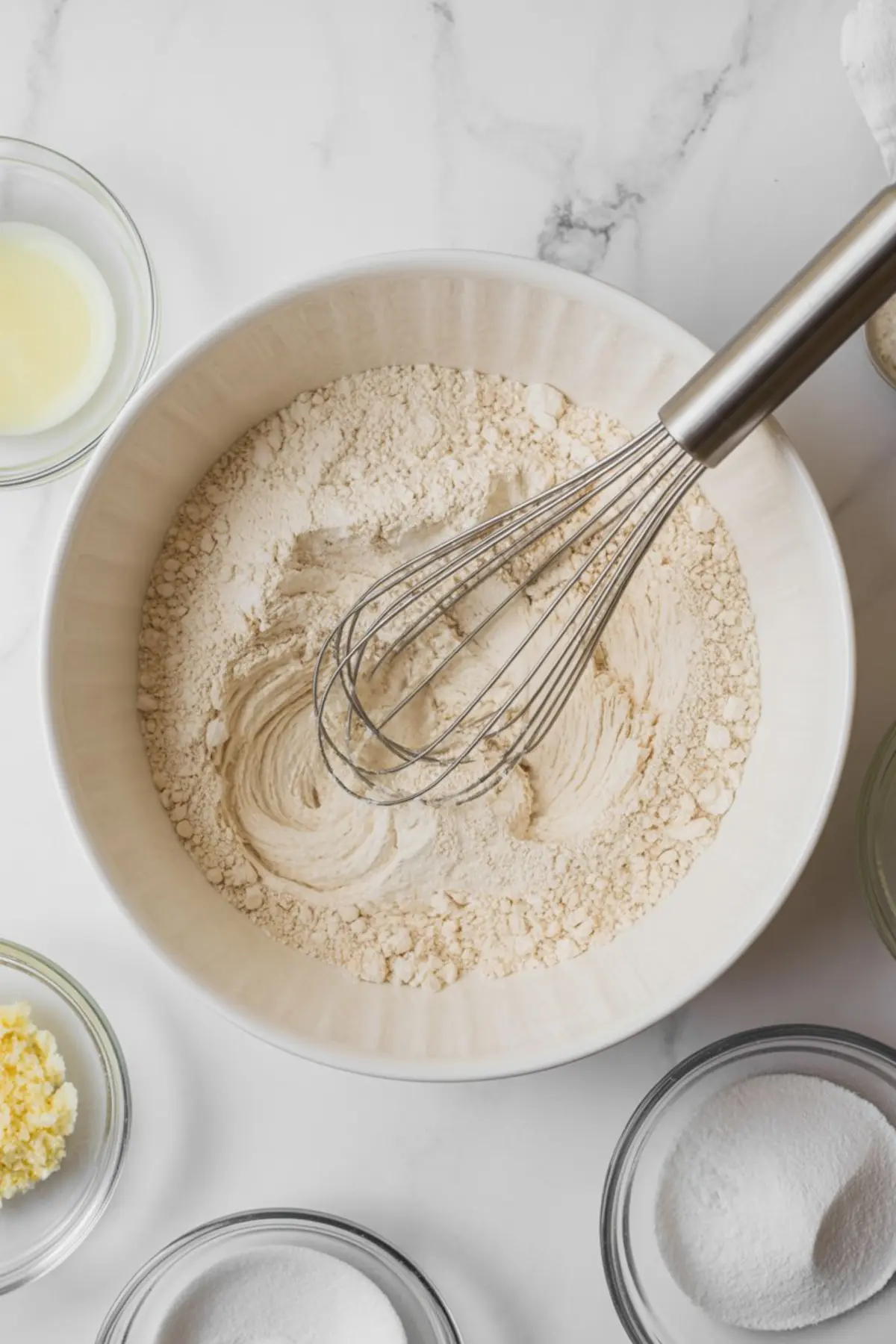
Cake flour was the only choice for this. I tested all-purpose, but the crumb ended up too coarse. Cake flour holds structure without weighing it down. The result is soft, but still easy to stack and slice.
I kept both coconut milk and buttermilk in the mix. Coconut milk brings that creamy tropical base. Buttermilk gives it a slight tang and activates the baking soda. That small acidity boost matters here. You can use full-fat canned coconut milk, shaken before measuring. Anything watery won’t give the same softness.
Sweetened shredded coconut appears twice, once in the filling and once as an optional garnish. I prefer it sweetened for this cake. It’s softer and blends better into both cream and frosting than the unsweetened kind, which can be too dry.
If you’re interested in more ways to use sweetened coconut in a soft-textured bar, I’d also suggest trying my Coconut Dream Bars the crust holds together beautifully.
Why I Chose a Coconut Cream Filling
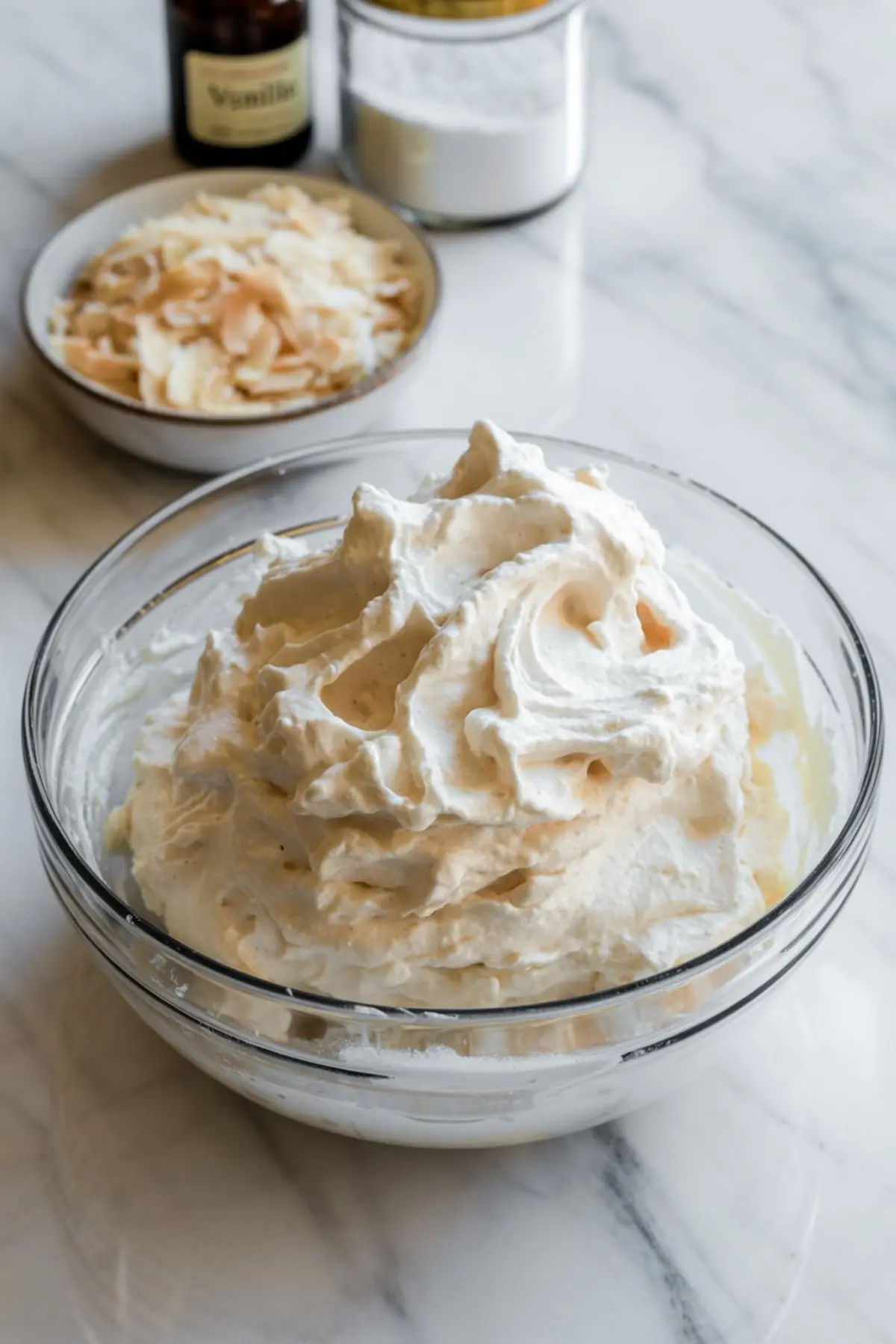
I could’ve used a standard buttercream between the layers, but I wanted contrast. The whipped cream-based filling brings a cold, creamy texture that feels refreshing between two soft cakes.
There’s no gelatin or stabilizer here, which means it needs to be chilled before using. Fold the shredded coconut in gently so you don’t collapse the air. You’ll notice the texture feels mousse-like but spreads easily. That’s exactly what you want.
For other recipes that use coconut in a creamy chilled base, you might enjoy my Coconut Cream Overnight Oats as a make-ahead breakfast version.
How To Make This Cake Smooth and Fluffy
The butter must be softened, not melted. You’ll cream it with the sugar for 3 to 4 minutes, until it looks pale and fluffy. This step builds structure. Don’t rush it. If the sugar still feels grainy, keep going.
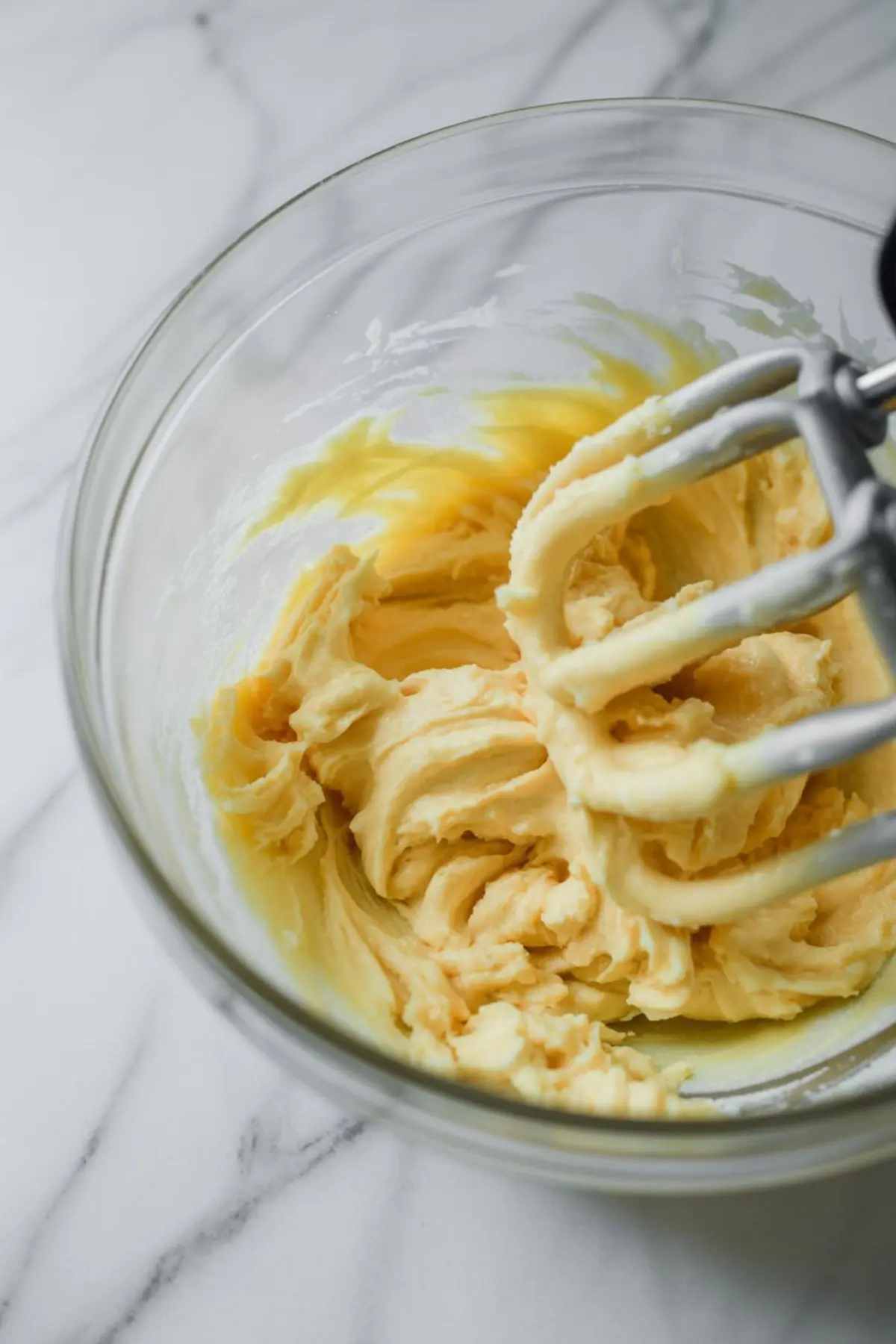
When alternating the dry and wet ingredients, begin and end with the flour mixture. Use low speed and stop as soon as the flour disappears. Overmixing will make the cake chewy. It’s happened. You’ll notice the batter should be smooth but not stretchy.
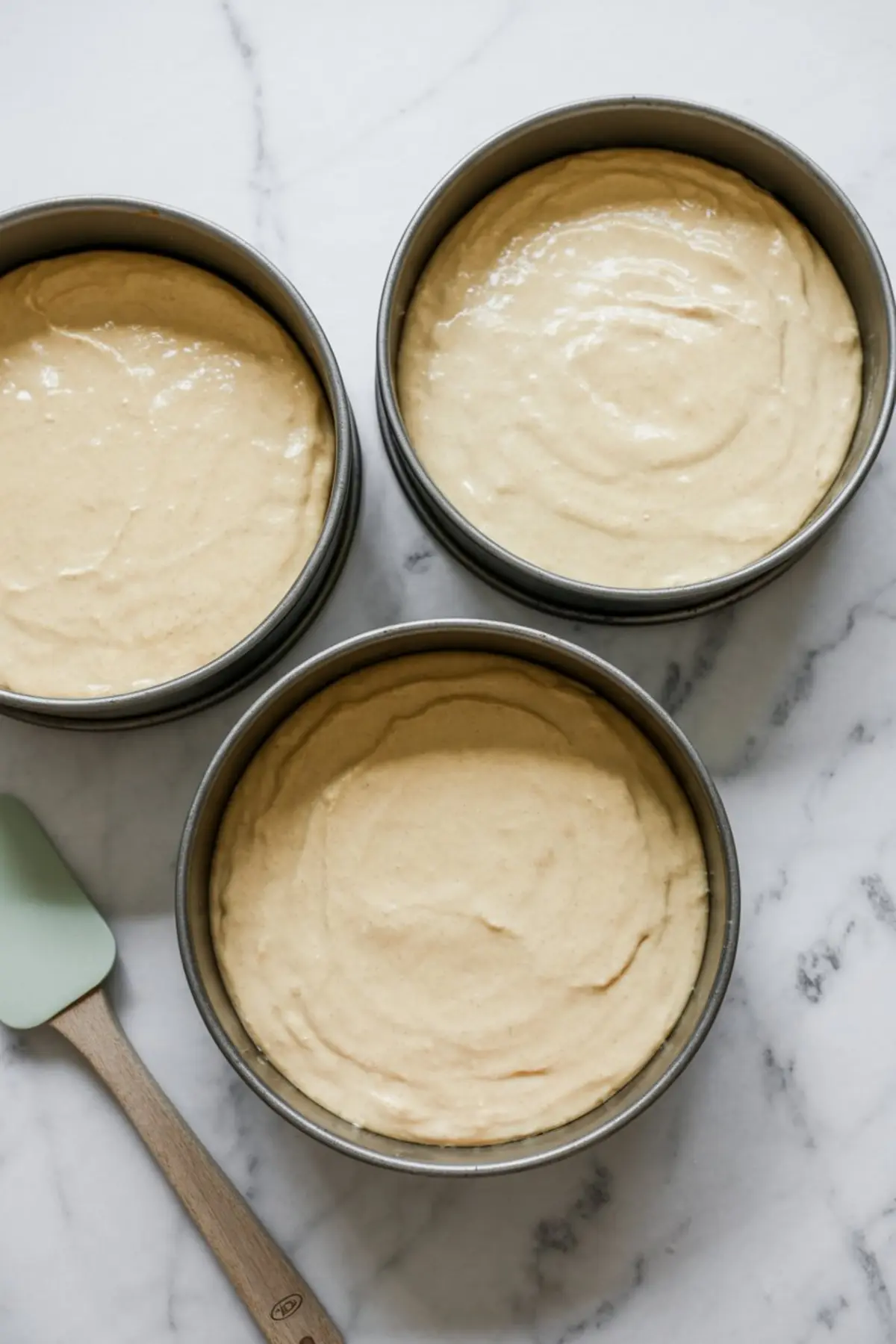
Once baked, the layers will rise slightly above the pan edge and spring back when pressed. Let them cool in the pan for 10 minutes, then turn out and cool fully before frosting. If you’re short on counter space, stack them with parchment in between.
How To Tell It’s Done
Insert a toothpick in the center. It should come out clean or with one or two moist crumbs. If it comes out with batter, give it another 2 minutes and test again.
The top of the cake should feel springy and slightly golden. Overbaking makes it crumbly, so stay near the oven around the 23-minute mark.
If the cake sinks in the center or feels wet inside, it wasn’t fully set. Check oven temp next time. I always recommend using an oven thermometer if you’re unsure.
Common Problems and Quick Fixes
Cake is dry: Usually from overmixing or baking too long. Try lowering the baking time by 3 minutes next time.
Frosting is too thin: Add powdered sugar 1 tablespoon at a time until it thickens. Chill it briefly if your kitchen is warm.
Filling runs out the sides: The cake wasn’t cooled enough before assembly. Chill all layers and filling before stacking.
Cake sticks to the pan: Always line the bottom with parchment, even if the pan is greased. That one step saves frustration.
Variations To Try
For a lemon-coconut twist, swap the buttermilk with lemon juice and milk (1 tablespoon lemon juice per cup).
For a deeper coconut flavor, toast the shredded coconut garnish in a dry pan until golden, then press it gently onto the sides.
If you want a denser texture, try swapping half the cake flour with all-purpose and see which texture you prefer.
Need a chocolate version? I’d point you toward my Fudgy Vegan Coconut Brownies. They pair beautifully with whipped cream.
Storing and Serving This Cake
Keep it in the fridge, lightly covered. It holds well for up to 4 days. The filling stays soft, but not runny. I don’t recommend freezing once assembled.
If you need to freeze the layers, wrap tightly in plastic and store flat. Thaw overnight in the fridge before frosting.
The frosting firms up in the fridge, so let the cake sit out 15 minutes before serving to soften slightly.
The texture improves after chilling for a few hours. I prefer serving it cold, especially in warmer months.
What I Learned Testing This
Use a long offset spatula for frosting. It makes a smoother finish with less effort.
Cake flour gives the most consistent rise. I tried three brands King Arthur’s worked best here.
The coconut extract varies a lot. Start with a teaspoon, taste the frosting, and only add more if needed.
Avoid over-whipping the cream filling. Soft peaks are enough. Stiff peaks make it harder to spread.
Save This Recipe and Share Your Ideas
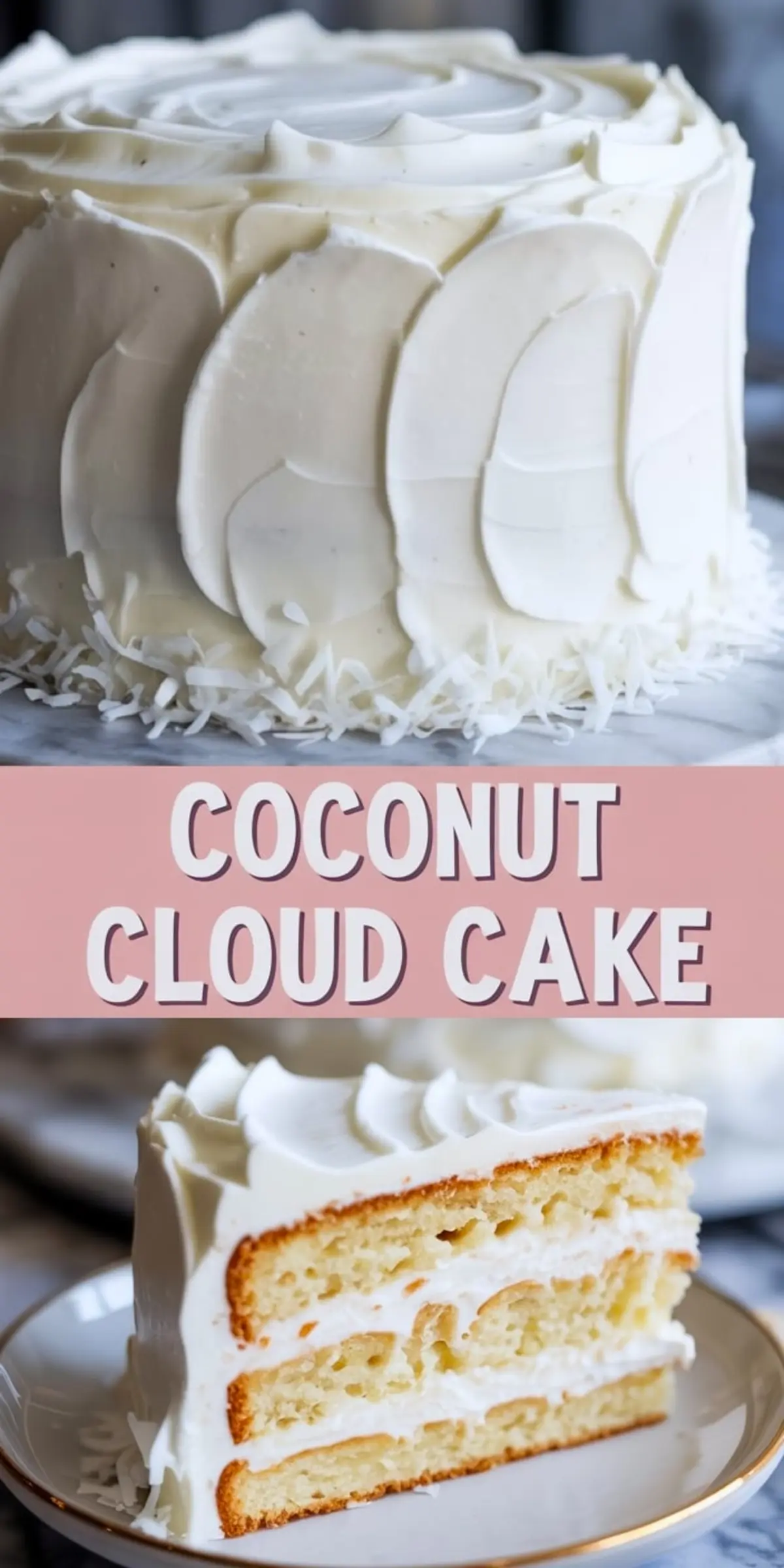
Pin this Coconut Cloud Cake recipe to your coconut desserts board to keep it close. If you try a twist—lemon, mango, or toasted coconut—drop a comment.
I’d love to hear how you served it or how your family liked it. Let’s swap notes in the comments.
Coconut Cloud Cake
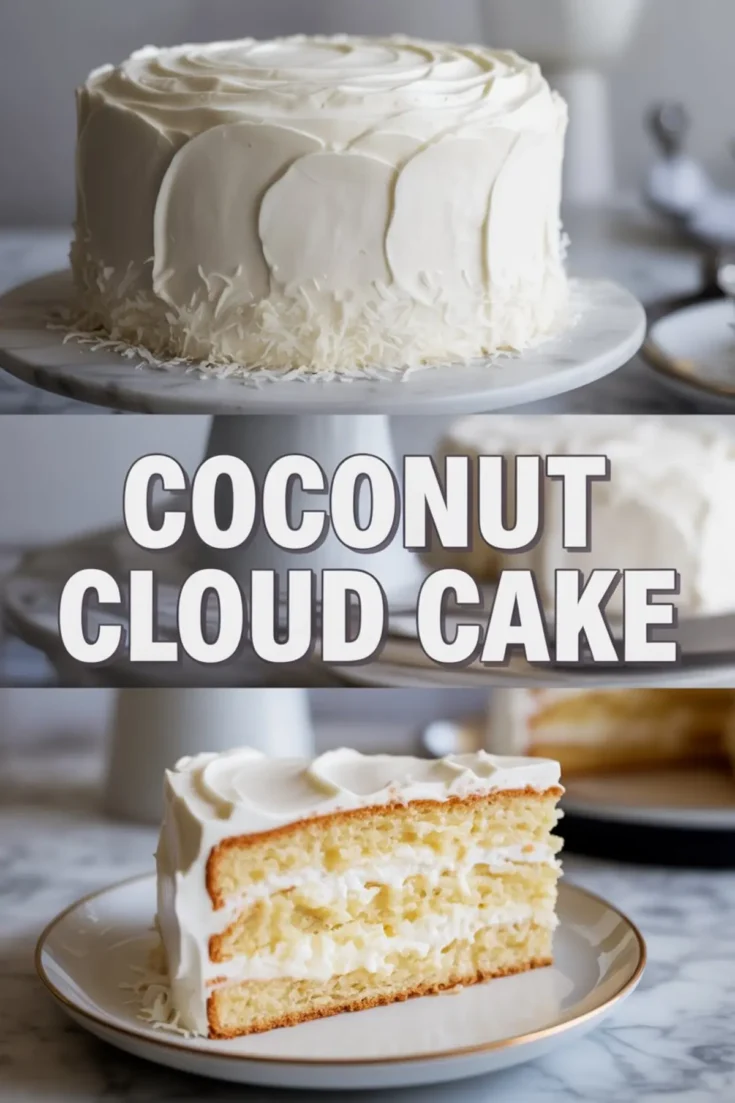
This Coconut Cloud Cake is everything you want in a light and fluffy coconut dessert. Made with rich cream, tender layers, and sweetened shredded coconut, this dreamy cake brings tropical flavor to your table. If you love coconut cake recipes, this soft and airy cloud cake is a must-try. Topped with smooth coconut frosting and perfect for your next Sunday dinner, it’s a standout in your list of baked coconut dishes. Serve it chilled for a refreshing treat or as part of your tropical desserts spread. This is the cake coconut fans keep coming back to.
Ingredients
- FOR THE COCONUT CAKE LAYERS
- 2 ½ cups cake flour (sifted)
- 2 ½ teaspoons baking powder
- ½ teaspoon baking soda
- ½ teaspoon salt
- ¾ cup unsalted butter, softened
- 1 ¾ cups granulated sugar
- 4 large egg whites
- 1 teaspoon pure vanilla extract
- 1 teaspoon coconut extract
- 1 cup canned coconut milk (full-fat)
- ½ cup buttermilk
- FOR THE COCONUT CREAM FILLING
- 1 cup heavy whipping cream (cold)
- ½ cup sweetened shredded coconut
- ¼ cup powdered sugar
- ½ teaspoon vanilla extract
- FOR THE COCONUT FROSTING
- 1 cup unsalted butter, softened
- 3 ½ cups powdered sugar
- 2 to 3 tablespoons coconut milk (or regular milk)
- 1 teaspoon coconut extract
- Pinch of salt
- GARNISH
- ½ cup sweetened shredded coconut (optional, for the sides and base)
Instructions
- PREPARE THE CAKE PANS: Preheat the oven to 350°F (175°C). Grease and flour three 8-inch round cake pans and line the bottoms with parchment paper.
- MIX THE DRY INGREDIENTS: In a medium bowl, whisk together the cake flour, baking powder, baking soda, and salt until well combined.
- CREAM BUTTER AND SUGAR: In a large mixing bowl, beat the softened butter and granulated sugar on medium speed for 3 to 4 minutes until the mixture is light and fluffy.
- ADD EGG WHITES AND FLAVORINGS: Add the egg whites one at a time, beating well after each addition. Mix in the vanilla extract and coconut extract until fully incorporated.
- ALTERNATE WET AND DRY: Add the dry ingredients in three additions, alternating with the coconut milk and buttermilk, beginning and ending with the dry ingredients. Mix on low speed just until combined, being careful not to overmix the batter.
- BAKE THE CAKE LAYERS: Divide the batter evenly among the prepared pans and smooth the tops. Bake for 23 to 26 minutes, or until a toothpick inserted into the center comes out clean.
- COOL THE CAKES: Let the cakes cool in the pans for 10 minutes, then carefully turn them out onto a wire rack to cool completely before assembling.
- MAKE THE COCONUT CREAM FILLING: In a chilled mixing bowl, whip the heavy cream, powdered sugar, and vanilla extract on medium-high speed until soft peaks form. Gently fold in the shredded coconut. Refrigerate the filling until ready to use.
- PREPARE THE FROSTING: In a large bowl, beat the softened butter until smooth and creamy. Gradually add the powdered sugar, beating on low to start, then increasing speed to medium until fluffy. Mix in the coconut extract and salt. Add coconut milk one tablespoon at a time until the frosting reaches a smooth, spreadable consistency.
- ASSEMBLE THE CAKE: Place one cooled cake layer on a serving plate or cake stand. Spread half of the coconut cream filling evenly over the top.
- ADD SECOND LAYER: Place the second cake layer on top and spread the remaining coconut cream filling evenly to the edges.
- TOP AND CRUMB COAT: Add the final cake layer and apply a thin layer of frosting all over the cake to seal in crumbs. Refrigerate the crumb-coated cake for 20 minutes.
- FROST AND GARNISH: Use the remaining coconut frosting to frost the entire cake, smoothing or swirling with an offset spatula. Press shredded coconut along the bottom edge or all over the cake for added texture and visual appeal, if using.
Notes
For best texture, make sure ingredients like butter, eggs, and buttermilk are at room temperature before mixing. The whipped coconut cream filling is best used immediately or within a few hours; store the assembled cake in the refrigerator if not serving right away.
Nutrition Information
Yield
12Serving Size
1Amount Per Serving Calories 787Total Fat 56gSaturated Fat 40gUnsaturated Fat 16gCholesterol 102mgSodium 357mgCarbohydrates 67gFiber 3gSugar 44gProtein 6g
