

This cream cheese filling is a smooth, lightly sweet filling made with 8 ounces of full-fat brick cream cheese, ½ cup unsalted butter, 1½ cups sifted powdered sugar, 1 teaspoon vanilla, and a pinch of salt. It takes about 30 minutes including a short chill, makes about 2 cups, and fills one 8 inch layer cake or 8 to 10 pastries.
The one thing that matters most is beating the cream cheese and butter until glossy before any sugar goes in. That keeps the filling thick enough to pipe, and it does not melt out or collapse when chilled. I have used this in danishes, mini tartlets, and even lemon-filled cupcakes.

Following a special diet?
Every recipe on this site can be converted to gluten-free, vegan, dairy-free, keto, nut-free or egg-free with adjusted ratios so nothing falls flat.
Try the Recipe Converter →What You Get From One Batch
- Yield: about 2 cups, enough for one 8 inch layer cake or 8 to 10 pastries
- Time: 10 minutes prep, about 20 minutes of mixing and chilling
- Ratio: 226 g cream cheese to 115 g butter, about 2 to 1 by weight, with 180 g powdered sugar
- Optional cream: 1 to 2 tablespoons heavy cream for a fluffier cake layer
- Chill: 15 to 20 minutes if you need it firmer for piping
- Storage: 2 hours at room temperature, 4 days in the fridge, 1 month in the freezer
Why This Cream Cheese Mixture Holds Its Shape
The base is roughly two parts cream cheese to one part butter by weight. The cream cheese gives the tang and the body, and the butter rounds it out and helps it whip up light. That balance stays smooth and does not split or weep once cooled.
Adding the powdered sugar after the base is beaten locks in air without making the filling dense. Sifting matters more than it seems. Unsifted sugar clumps fast in this mixture because of the butter, and you feel it in every bite.
I always start with full-fat brick cream cheese. Nothing whipped, nothing low-fat, and no tub spreads. The extra water in soft cream cheese makes the texture collapse. I use Philadelphia most often, but others work if the label shows no added liquids. If you want the same flavor in a brighter, citrus version, my lemon cream cheese cake filling is built on the same idea.
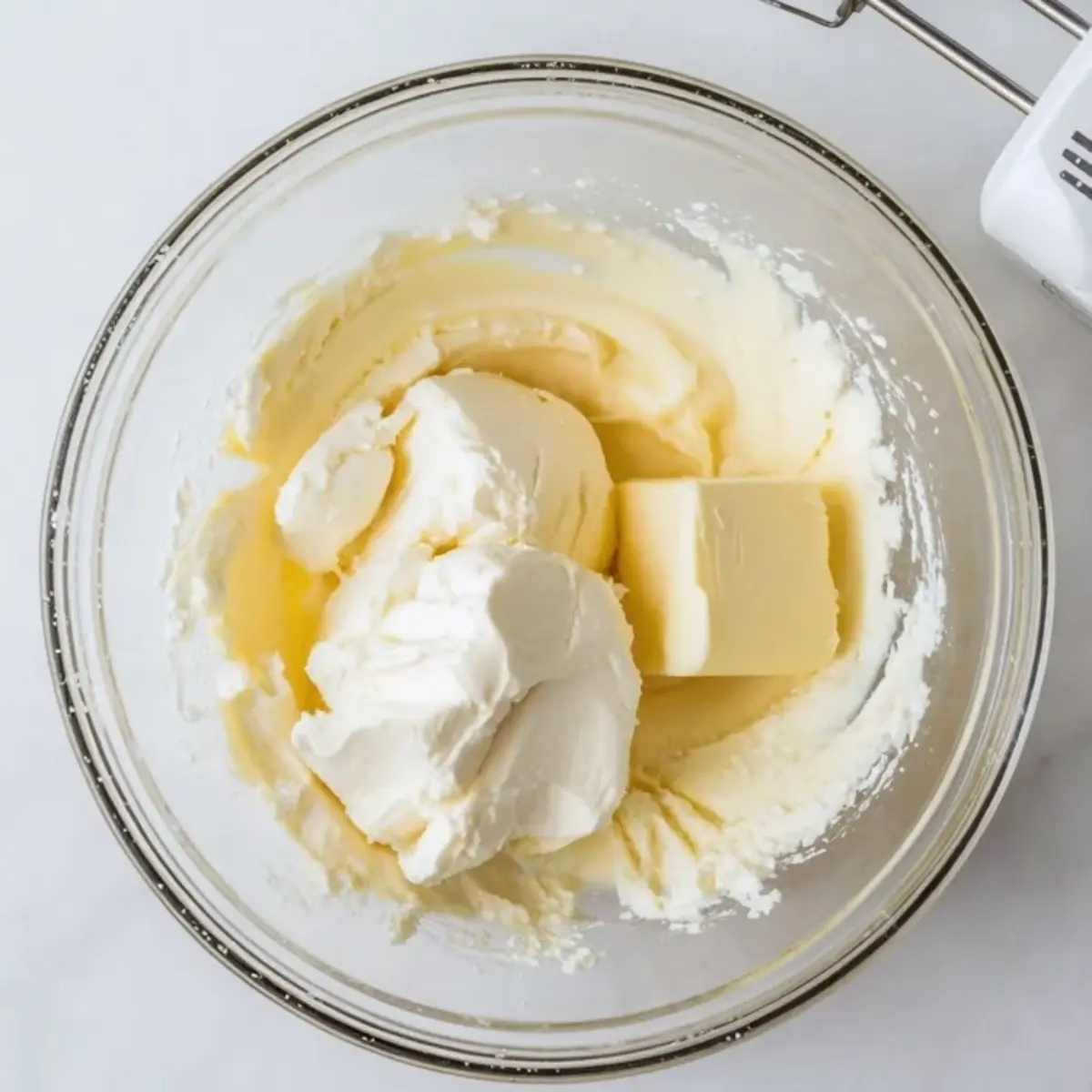
How to Make Cream Cheese Filling Smooth, Step by Step
Beat the room temperature cream cheese and butter on medium speed for 2 to 3 minutes, until the mixture looks glossy and completely uniform. If the cream cheese is still cold, you will see small lumps no matter how long you beat it. When I forget to soften it, I cube it and microwave it at 30% power for 10 seconds at a time.
Sift the powdered sugar straight into the bowl in small batches with the mixer on low, or you end up with a sugar cloud in the kitchen. Once it is all in, turn the speed up to medium high and beat for about 2 minutes, until light and slightly whipped.
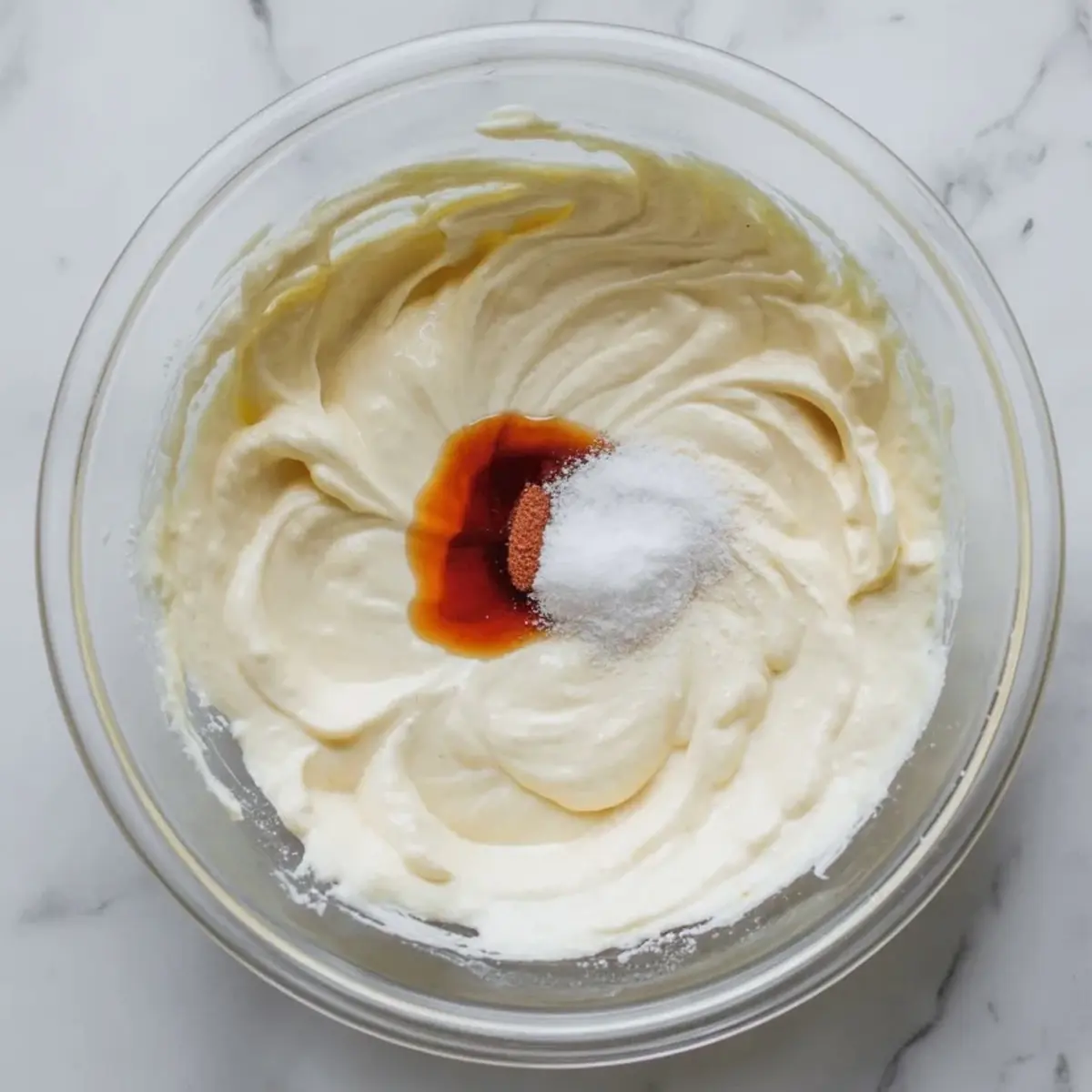
Mix in the vanilla and salt. For a fluffy cake layer or something soft like this lemon cream chia pudding, beat in 1 to 2 tablespoons of heavy cream. For piping or pastry shells, chill the finished filling for 15 to 20 minutes.
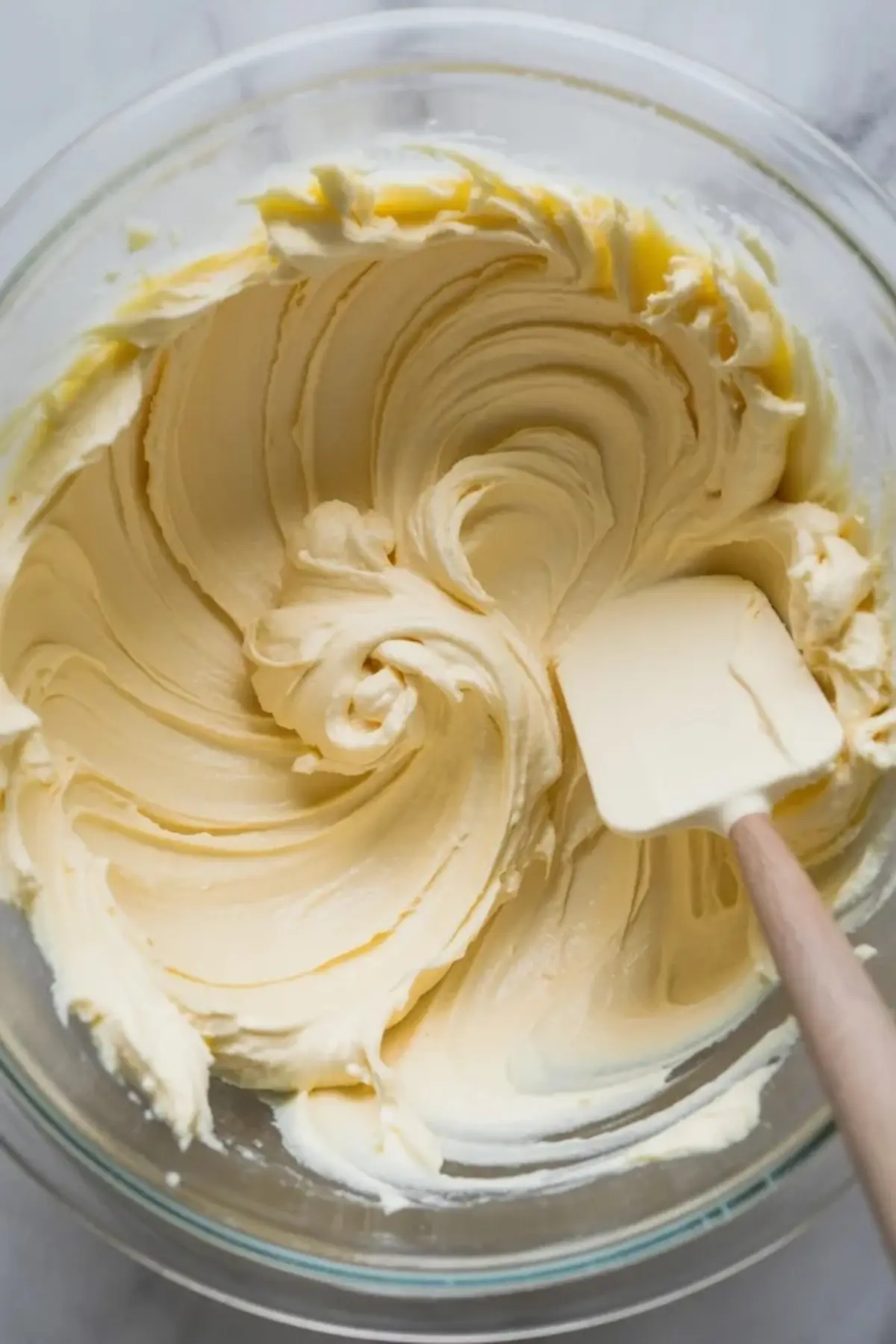
It is done when it holds soft peaks, feels smooth rather than grainy, and pulls away cleanly from the sides of the bowl. You want a middle texture: fluffy, but with weight.
Cream Cheese Filling for Cakes (Between Layers, With a Buttercream Dam)
As a cream cheese filling for cakes, one batch is right for one 8 inch cake with two layers. Cool the layers completely, level them, and place the bottom layer on your board. Pipe a ring of stiff buttercream about ½ inch high around the top edge. A plain American buttercream works well for this dam because it is firmer than the filling.
Spread the cream cheese filling inside the ring, keeping it level with the top of the dam, then set the second layer on top and press gently. Chill the cake for 15 to 20 minutes before you frost the outside. The dam keeps the soft filling from squeezing out the sides and stops it from showing through your frosting.
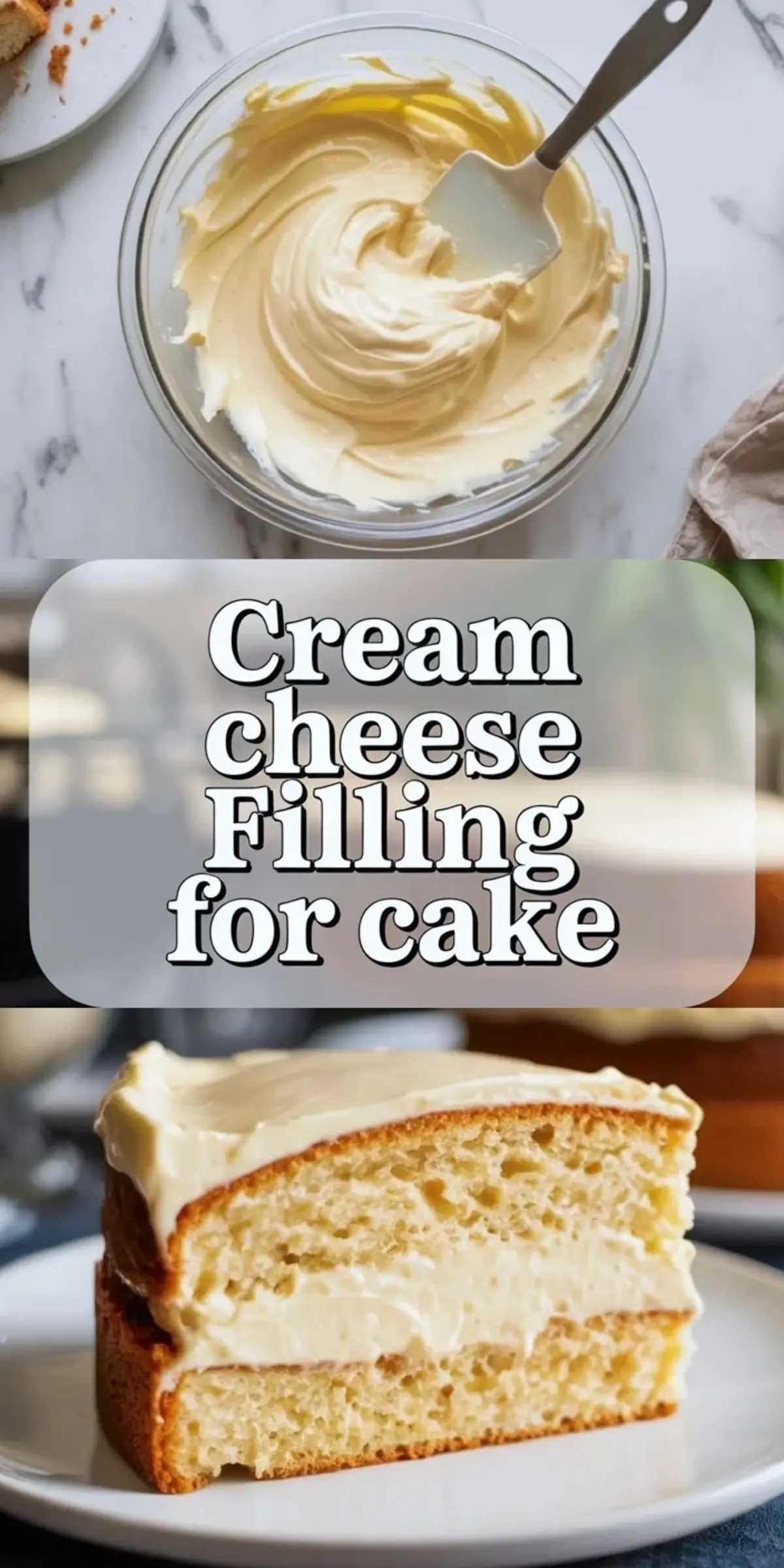
I like it between the layers of a simple moist vanilla cake or a classic red velvet cake. For a fruity cake, spread a thin layer of strawberry cake filling over the cream cheese before adding the next layer. It also works as a cupcake filling if you core the cupcakes and pipe it in.
Cream Cheese Filling for Pastries, Danish and Puff Pastry (Bake-Stable Version)
The recipe as written is a no-bake filling. It is at its best piped into pastries after baking, like cream puffs, baked tart shells, or split puff pastry. If you bake it inside the dough, the butter softens in the oven and the filling can spread or leak.
When I want a cream cheese pastry filling that goes into the oven, I skip the heavy cream for a firmer texture that will not spill. For a bake-stable version, you can also beat 1 egg yolk and 1 tablespoon all-purpose flour into one batch after the sugar. The yolk sets the filling like a thin cheesecake layer and the flour holds any moisture, so it stays in the center of the danish instead of running onto the tray.
- Chill before filling: 15 to 20 minutes, so it holds its shape on the dough.
- Leave a border: keep the filling away from the edges so the pastry seals.
- Bake: at the temperature your pastry recipe calls for, until the pastry is golden and the filling looks set with no wet shine.
This is the version I would use for a peach danish or raspberry heart danishes. For choux, keep the no-bake version and pipe it into cooled shells, as with these lemon cream puffs.
Filling vs Frosting: What Is the Difference?
This filling and a cream cheese frosting share the same ingredients, but the job is different. A filling needs to stay thick under the weight of a cake layer or inside pastry, so it uses more cream cheese and a moderate amount of sugar, and cream only when you want it fluffier. A frosting is made to spread and pipe on the outside. If you want something to cover the cake, a cream cheese buttercream frosting is made for that job, and for a thick drizzle over rolls, use cream cheese frosting for cinnamon rolls.
If Your Cream Cheese Filling Goes Wrong
- Runny filling: low-fat or whipped cream cheese cannot hold structure. Switch to full-fat brick cream cheese, and chill the filling before using it.
- Grainy texture: the sugar was not sifted or the butter was too cold. Let it warm slightly and beat again.
- Lumps: the cream cheese was not fully softened. Soften it before you start next time.
- Split or greasy: usually from overmixing or ingredients that were too warm. Chill it, then beat again briefly.
- Too buttery: add a touch of lemon juice now, or use slightly more cream cheese next time.
- Too stiff to spread: it was chilled too long or has too much sugar. Leave it on the counter 5 to 10 minutes, then stir.
Four Easy Flavor Twists
For a lemon cream cheese pastry filling, add 1 tablespoon fresh lemon juice and zest; it is great for fruit tarts. For a spiced version, add ¼ teaspoon ground cinnamon and a pinch of nutmeg, which suits fall bakes. For a berry swirl, fold in 1 to 2 tablespoons of thick raspberry jam at the end, or pair it with a raspberry cake filling. For chocolate, sift 2 tablespoons cocoa powder in with the sugar.
Storing the Filling and Making It Ahead
The filling is fine at room temperature for up to 2 hours. Covered in the fridge, it keeps up to 4 days. To freeze, portion it into airtight containers for up to 1 month, then thaw overnight in the fridge and rewhip until smooth. The texture holds, but the flavor softens a little over time, so I usually use it within the week.
Questions Bakers Ask
How much cream cheese filling do I need for a cake?
One batch, about 2 cups, fills one 8 inch cake with two layers. Make 1½ batches for a three layer cake.
Will cream cheese filling hold in the oven?
The basic no-bake version softens and can leak when baked. Skip the cream and beat in 1 egg yolk and 1 tablespoon flour, and it sets inside danish and puff pastry.
Can I use this cream cheese filling for puff pastry?
Yes. Pipe the no-bake version into puff pastry after baking, or use the egg yolk and flour version if it bakes inside the pastry.
Why is my cream cheese filling runny?
Usually the cream cheese was low-fat, whipped, or from a tub, or too much cream was added. Use full-fat brick cream cheese and chill the filling for 15 to 20 minutes.
Does a cake with cream cheese filling need to be refrigerated?
Yes. It can sit out for up to 2 hours for serving, then store the cake covered in the fridge for up to 4 days.
Save This Recipe
Pin this cream cheese filling to your dessert board so it is ready for your next layer cake or batch of danishes. Let me know in the comments how you used it or what twist you added. I would love to hear how it turned out.
Cream Cheese Filling for Cakes and Pastries

This cream cheese filling for cakes and pastries is a smooth, lightly sweet filling made with full-fat brick cream cheese, unsalted butter, sifted powdered sugar, vanilla, and a pinch of salt. It is ready in about 30 minutes and makes about 2 cups, enough to fill one 8 inch layer cake or 8 to 10 pastries, with a thick, pipeable texture. The cream cheese and butter are beaten glossy before the sugar goes in, and 1 to 2 tablespoons of heavy cream make it fluffier for cake layers. Use it as a cream cheese filling for cakes between layers, or in cupcakes, cream puffs, danishes, and puff pastry. Add lemon zest or cocoa for a twist, and keep it 4 days in the fridge or 1 month frozen.
Ingredients
- 8 oz (226g) cream cheese, full-fat, room temperature
- 1/2 cup (115g) unsalted butter, room temperature
- 1 1/2 cups (180g) powdered sugar, sifted
- 1 tsp pure vanilla extract
- Pinch of salt
- 1–2 tbsp heavy cream (optional, for lighter texture)
Instructions
- BEAT THE CREAM CHEESE AND BUTTER: In a large mixing bowl, beat the cream cheese and butter together using a hand or stand mixer until the mixture is completely smooth and creamy, about 2 to 3 minutes.
- ADD THE POWDERED SUGAR: Gradually add the sifted powdered sugar while mixing on low speed to prevent it from dispersing into the air. Once incorporated, increase to medium-high speed and continue beating until light and fluffy, about 2 minutes.
- ADD VANILLA AND SALT: Mix in the vanilla extract and a pinch of salt until evenly distributed throughout the filling.
- ADJUST CONSISTENCY (OPTIONAL): For a fluffier texture suitable for cake layers, add 1 to 2 tablespoons of heavy cream and beat again until the mixture is smooth and slightly aerated.
- CHILL IF NEEDED: If a firmer consistency is preferred, place the finished filling in the refrigerator for 15 to 20 minutes before using.
Notes
Use only full-fat cream cheese in brick form. Cream cheese spreads or low-fat versions can create a thinner, unstable filling. Sifting the powdered sugar ensures a smooth texture with no lumps. For cake layers, pipe a ring of stiff buttercream around the edge of each layer and spread the filling inside it so it does not squeeze out. For pastries, skip the heavy cream and chill the filling for 15 to 20 minutes before using. Keep at room temperature no longer than 2 hours. Store covered in the refrigerator for up to 4 days, or freeze for up to 1 month, then thaw overnight in the fridge and rewhip.
Nutrition Information
Yield
12Serving Size
1Amount Per Serving Calories 264Total Fat 15gSaturated Fat 9.1gUnsaturated Fat 5.8gCholesterol 41mgSodium 60mgCarbohydrates 32gSugar 31gProtein 1.2g
