

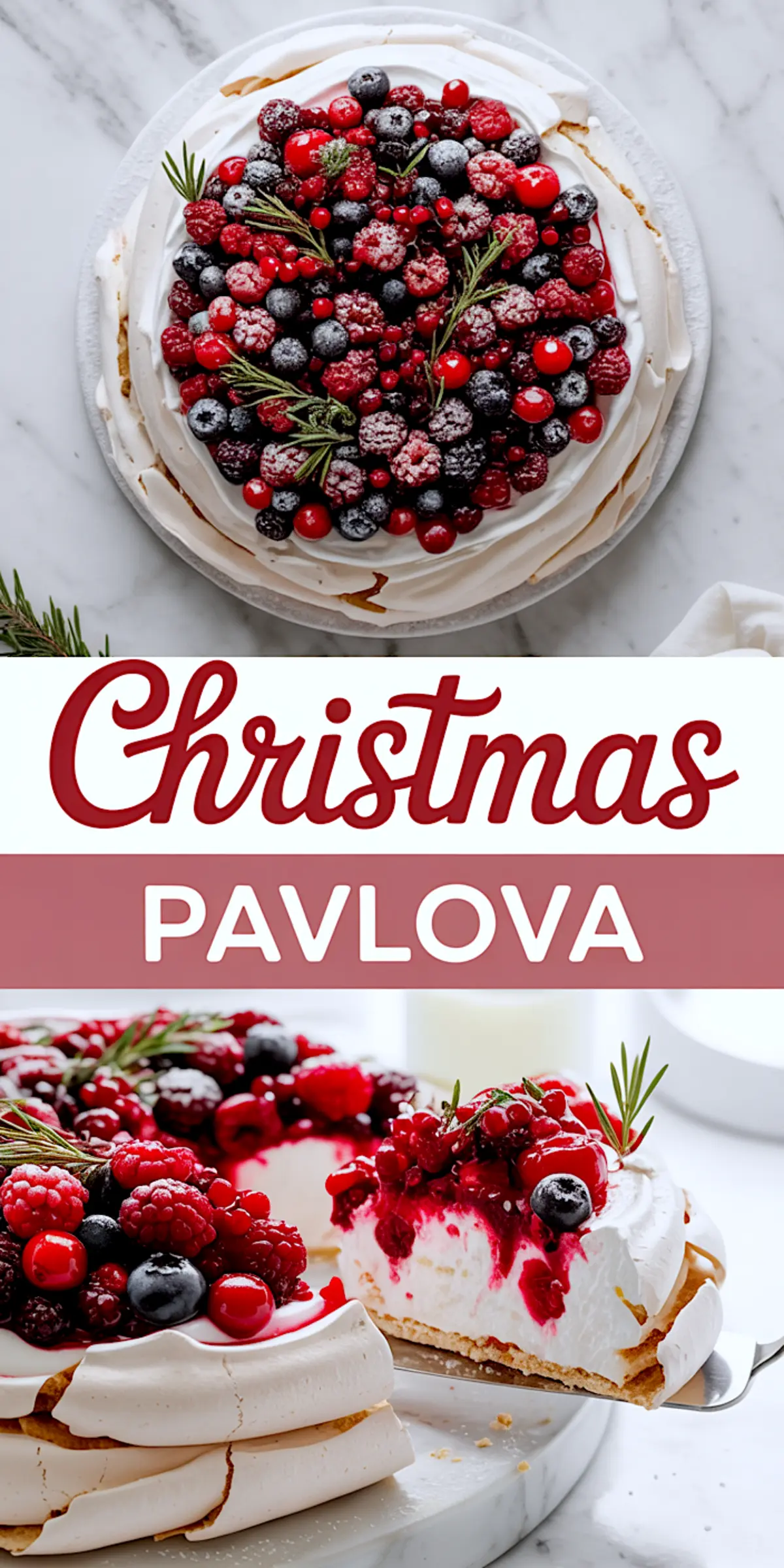
This Christmas pavlova is a crisp meringue shell with a soft, marshmallow center, topped with lightly sweetened whipped cream, raspberries, blueberries and cranberries. It takes 4 egg whites and 1 cup of caster sugar, bakes as one 8 inch base, and serves 8. Plan on about 1 hour 40 minutes of prep and baking, then a slow cool in the switched-off oven.
Two things make it work: the sugar goes in one tablespoon at a time, and the oven drops to 250°F the moment the tray goes in. That low heat dries the outside without coloring it, so the middle stays soft.
Following a special diet?
Every recipe on this site can be converted to gluten-free, vegan, dairy-free, keto, nut-free or egg-free with adjusted ratios so nothing falls flat.
Try the Recipe Converter →Pavlova is a Christmas Day staple in Australia and New Zealand, where December falls in summer and a cold, fruit topped dessert suits the heat. Up north it earns its place for a different reason. After roast, stuffing and pie, a slice of cream, tart berries and meringue feels light.
What Goes Into the Meringue Base
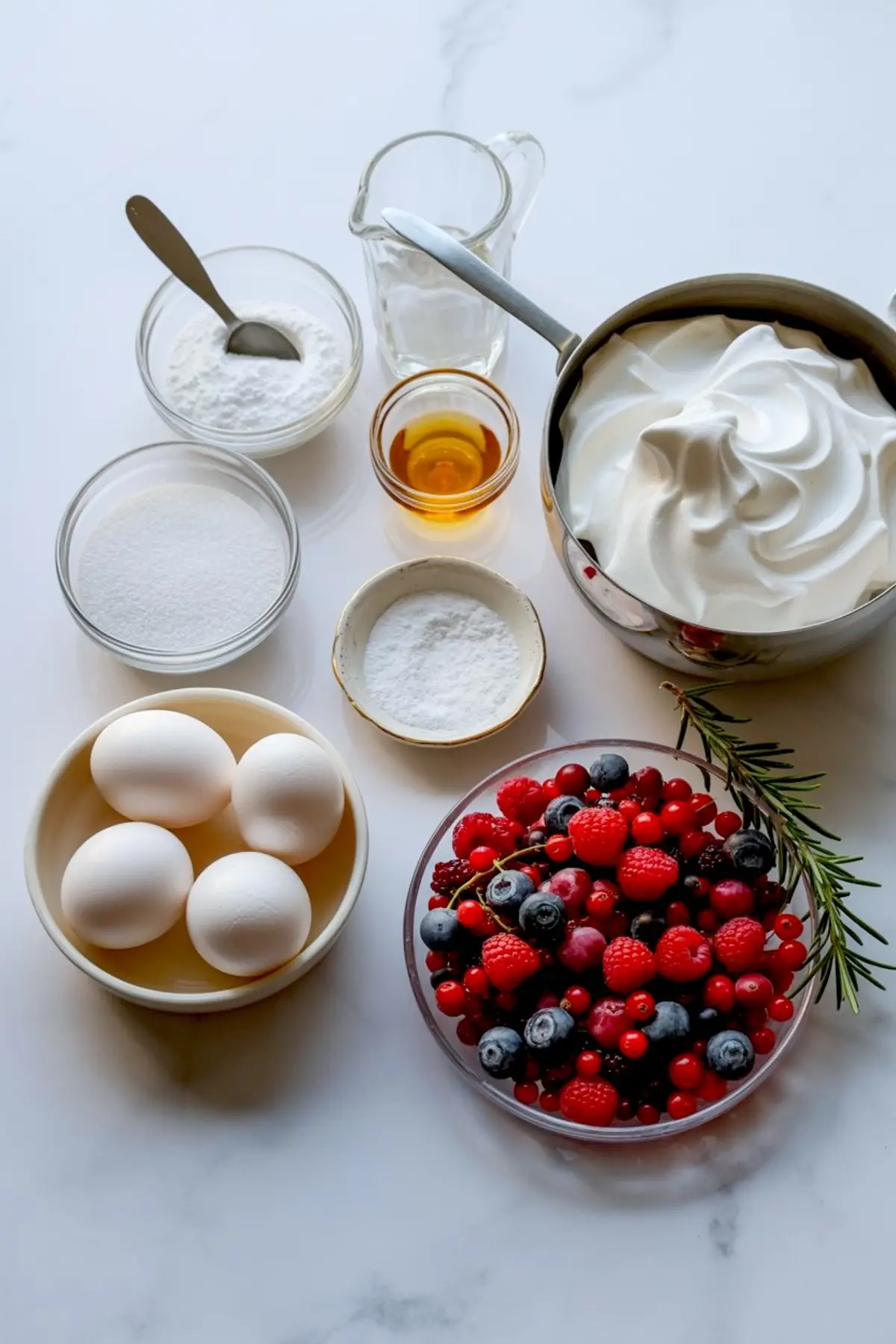
- Meringue: 4 large egg whites at room temperature, 1 cup (200 g) caster sugar, 1 tsp white vinegar, 1 tsp cornstarch, 1 tsp vanilla extract
- Cream: 1 cup cold heavy whipping cream, 2 tbsp powdered sugar, ½ tsp vanilla extract
- Berries: ½ cup each of raspberries, blueberries and cranberries (or red currants), plus 2 tbsp granulated sugar if you want frosted berries
- To finish: fresh rosemary sprigs, and pomegranate seeds if you like
- Ratio to remember: 50 g (¼ cup) caster sugar for every egg white
Room temperature whites whip higher and faster than cold ones. Separate the eggs while they are cold, when the yolks are firmer, then let the whites sit for 30 minutes. Not a speck of yolk can get in. Wipe the bowl and beaters with a paper towel dipped in a little vinegar first, because any trace of fat keeps the whites from reaching stiff peaks.
Caster Sugar vs Granulated Sugar in Pavlova
Caster sugar is the better choice. Its fine crystals dissolve into the whites quickly, which gives a smooth, glossy meringue. Granulated sugar works too, but it takes longer to dissolve and can leave the meringue gritty.
If granulated is all you have, pulse it in a food processor for 30 seconds and it behaves much like caster sugar. Either way, the speed you add it matters more than the type. Dump it in all at once and the foam deflates under the weight.
Whipping the Whites to Stiff, Glossy Peaks
Beat the whites on medium speed until they hold soft peaks that flop over at the tip. Then add the caster sugar 1 tablespoon at a time, letting each spoonful disappear before the next. Once it is all in, turn the mixer to high and keep going for 7 to 10 minutes.
You are looking for a thick, shiny meringue that stands in stiff peaks and stays put when you tilt the bowl. Then do the finger test. Rub a little between your thumb and finger. Smooth means the sugar has dissolved; gritty means keep beating, because undissolved sugar leaks out in the oven as sticky amber beads.
Why Cornstarch and Vinegar Go In Last
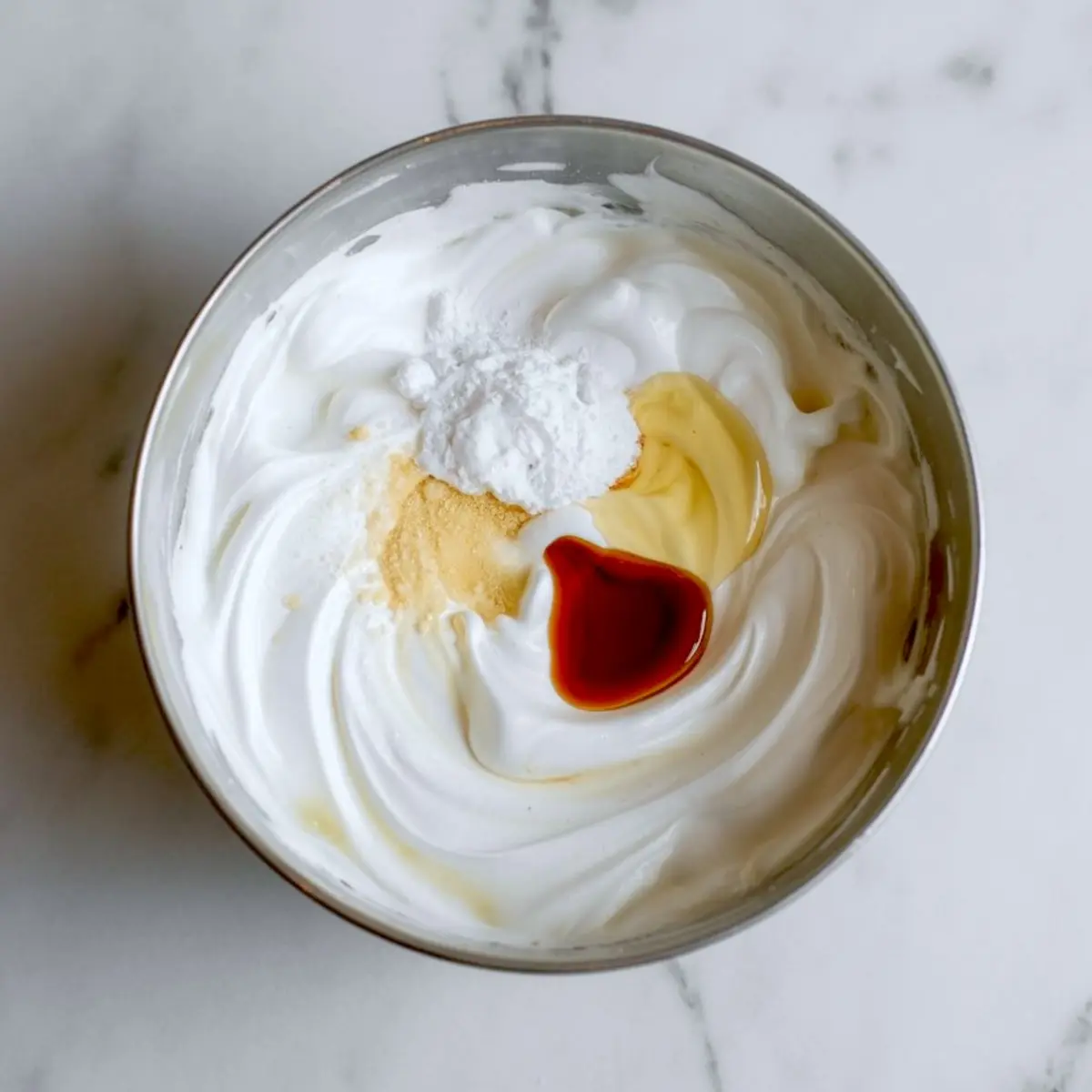
Sprinkle the cornstarch over the meringue, add the vinegar and vanilla, and fold them in with a spatula until you see no streaks. No more beating. The acid in the vinegar steadies the foam, and the cornstarch is what turns the inside soft and marshmallowy instead of dry all the way through. Together they are the difference between a pavlova and a plain crisp meringue. The vanilla is there for flavor only.
Shaping and Baking the Pavlova Base
Heat the oven to 275°F (135°C). Trace an 8 inch circle on parchment, flip it pencil side down onto a baking tray, and spoon the meringue inside the line. Smooth the sides and push a shallow well into the middle to hold the cream.
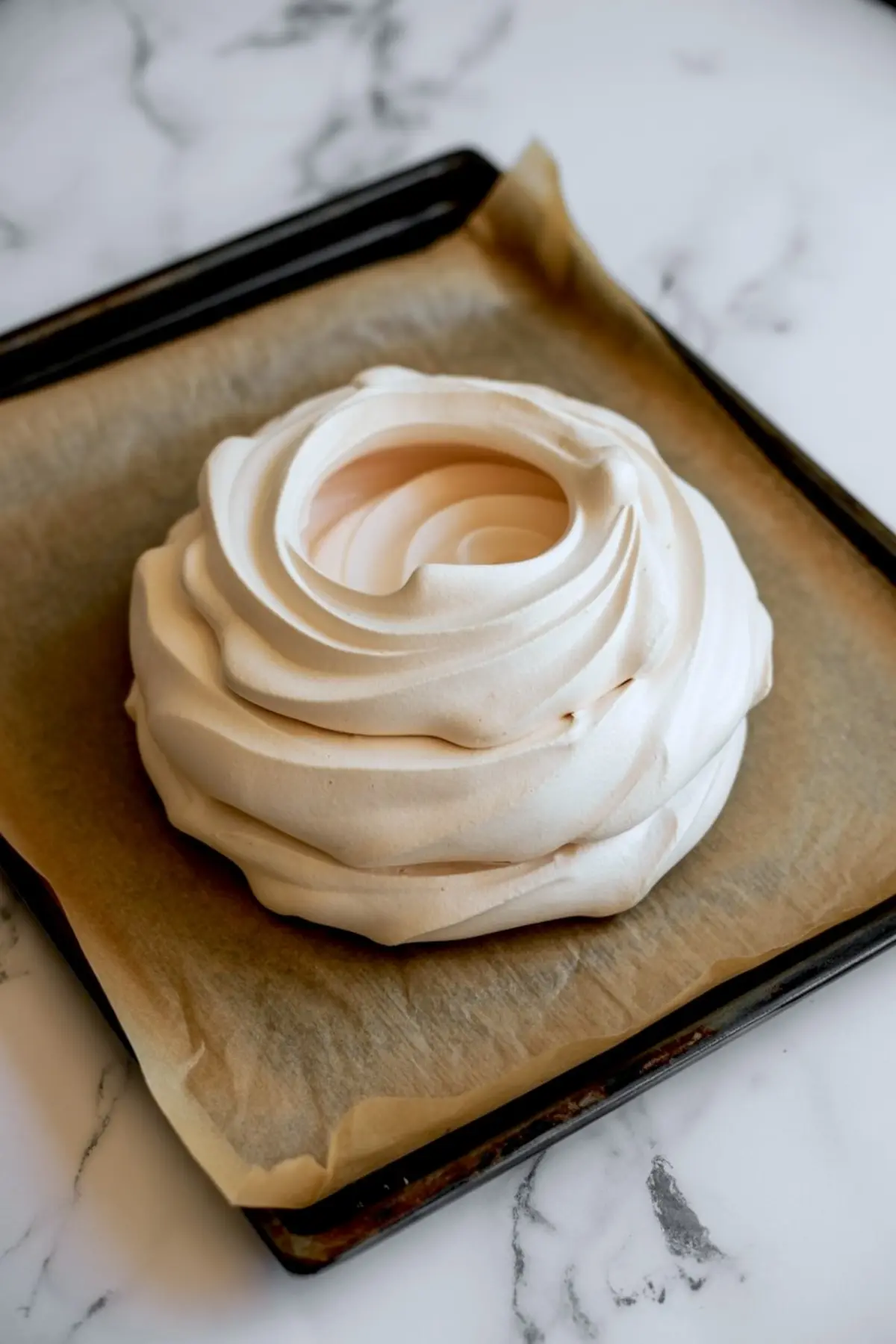
Put the tray in and turn the oven straight down to 250°F (120°C). Bake for 1 hour and 15 minutes without opening the door. The shell should feel dry to the touch, stay a pale cream color and lift off the paper cleanly. Turn the oven off, prop the door slightly open, and leave the pavlova inside until completely cool. This takes a couple of hours, and overnight is fine. Cooling slowly is what keeps the shell from cracking badly.
Winter Pavlova Toppings and Christmas Ideas
Whip the cold cream with the powdered sugar and vanilla only to soft, billowy peaks. Stiff cream sits heavy on the shell and can crack it. Spoon it into the well, then pile on the berries. Raspberries bring sweetness, blueberries are mild, and cranberries add a sharp, sour bite. Raw cranberries are hard and very tart, so red currants are a softer swap.
For a frosted look, rinse the berries, shake off the extra water and toss them in the 2 tablespoons of granulated sugar while still damp. A few rosemary sprigs tucked around the edge make the whole thing look like a wreath and smell faintly of pine. Other ideas for the holiday table:
- Pomegranate and orange: pomegranate seeds with thin orange segments and a little zest over the cream
- Lemon: a thin layer of lemon curd under the cream to cut the sweetness
- Chocolate and peppermint: shaved dark chocolate and crushed candy canes, or go all the way with this chocolate peppermint Christmas pavlova
- Red and green wreath: sliced strawberries and kiwi arranged in a ring around the edge
For the same meringue in bite size pieces, try these Christmas meringues. On a buffet, a stabilized whipped cream frosting holds longer than plain cream.
When the Pavlova Cracks, Weeps or Sinks
- Cracks on top: normal, especially as it cools. The cream and berries hide them, so do not worry about small ones.
- Sticky amber beads or a puddle underneath: the sugar did not fully dissolve, or the oven ran hot. Beat longer next time and check the finger test.
- Brown or beige shell: the oven is too hot. An oven thermometer helps; pavlova should stay pale.
- Center collapsed or very sticky: underbaked, or the door was opened early. Keep it in the cooling oven longer.
- Soft, chewy shell: humidity. Bake on a dry day if you can, and leave the base in the closed oven until assembly. If it breaks apart completely, crumble it into glasses with the cream and berries and call it an Eton mess.
A Make-Ahead Plan for Christmas Day
The base is the part to do early. Bake it on Christmas Eve and leave it in the oven overnight, or store it in an airtight container at room temperature for up to 2 days. Keep it out of the fridge until it is topped, because the damp air there softens meringue fast.
On the day, wash the berries and sugar them a few hours ahead. Whip the cream and assemble no more than 30 minutes before serving, so the shell is still crisp when you cut it. Slide the base onto a flat plate with a wide spatula and slice with a serrated knife, using a gentle sawing motion.
Leftovers keep in the fridge for about a day. The shell softens, but it still tastes good. Do not freeze an assembled pavlova; the cream weeps and the meringue goes soggy when it thaws.
More Christmas Desserts for the Table
Next to the pavlova, a Christmas pie or Christmas trifle covers guests who want a heavier slice, and peppermint Christmas fudge and a gingerbread wreath fill the cookie plate.
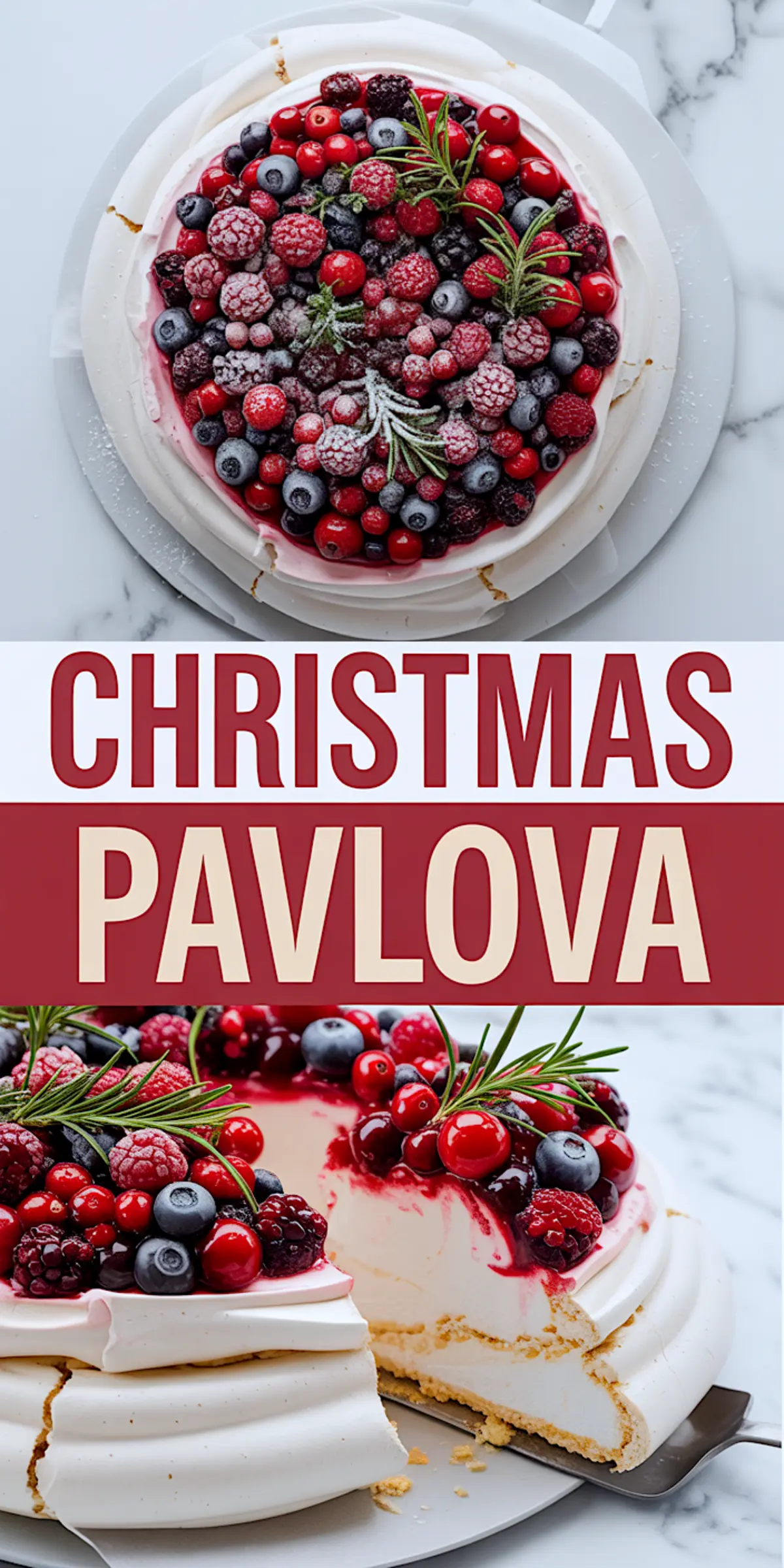
Pin this Christmas pavlova to your holiday board so the day-ahead plan is there when you need it. If you try a new topping, tell me in the comments which fruit you used.
Christmas Pavlova Recipe
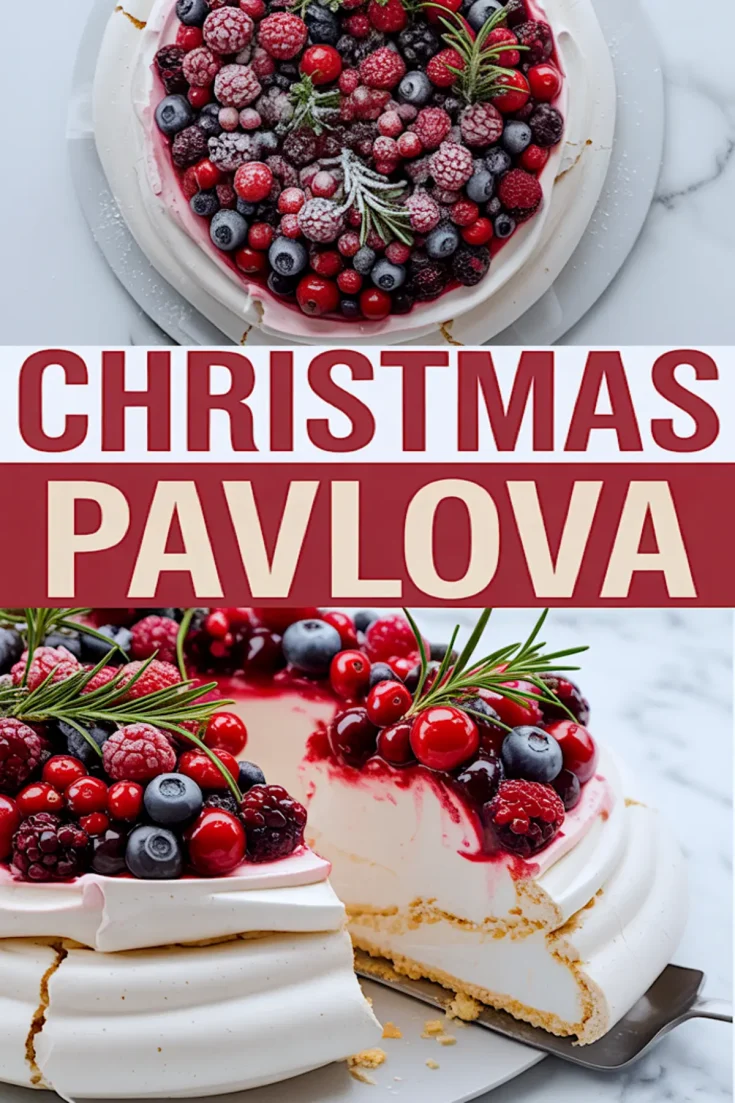
This Christmas pavlova is a crisp meringue shell with a soft, marshmallow center, topped with whipped cream, raspberries, blueberries and cranberries. It uses 4 egg whites and 1 cup of caster sugar, bakes as one 8 inch base at 250°F for 1 hour 15 minutes, and serves 8. The sugar goes in one tablespoon at a time and a little cornstarch and vinegar are folded in at the end, which gives the chewy middle. Use it as a light Christmas dessert after a heavy meal, a holiday pavlova with sugared cranberries and rosemary, or a winter pavlova with pomegranate and orange. Bake the base a day ahead, keep it airtight at room temperature, and assemble it just before serving.
Ingredients
- FOR THE MERINGUE BASE:
- 4 large egg whites (room temperature)
- 1 cup (200g) caster sugar
- 1 tsp white vinegar
- 1 tsp cornstarch
- 1 tsp vanilla extract
- FOR THE TOPPINGS:
- 1 cup heavy whipping cream (cold)
- 2 tbsp powdered sugar
- 1/2 tsp vanilla extract
- FOR THE BERRY TOPPING:
- 1/2 cup fresh raspberries
- 1/2 cup fresh blueberries
- 1/2 cup fresh cranberries (or red currants)
- 2 tbsp granulated sugar (for optional frosted berry effect)
- Fresh rosemary sprigs (for garnish)
- Optional: pomegranate seeds for sparkle
Instructions
- PREHEAT AND PREP: Preheat your oven to 275°F (135°C). Line a baking tray with parchment paper. Trace an 8-inch circle on the parchment using a bowl or plate, then flip the parchment so the pencil side faces down.
- MAKE THE MERINGUE: In a clean, dry mixing bowl, beat the egg whites on medium speed using an electric mixer until soft peaks form. Gradually add the caster sugar, 1 tablespoon at a time, while continuing to beat. Once all the sugar is added, increase to high speed and beat until the meringue is glossy and holds stiff peaks, about 7–10 minutes. Sprinkle in the cornstarch, vinegar, and vanilla extract, then gently fold them in with a spatula until fully incorporated.
- SHAPE AND BAKE: Spoon the meringue onto the prepared parchment, using the traced circle as a guide. Smooth the edges and create a shallow dip in the center for the cream. Place the tray in the oven and immediately reduce the temperature to 250°F (120°C). Bake for 1 hour and 15 minutes. When the baking time is up, turn off the oven and let the meringue cool completely inside the oven with the door slightly ajar to prevent cracking.
- WHIP THE CREAM: In a chilled mixing bowl, whip the cold cream with powdered sugar and vanilla extract until soft peaks form. Stop whipping once the cream is billowy; it should not be stiff.
- ASSEMBLE THE PAVLOVA: Once the meringue is fully cooled, carefully transfer it to a serving plate. Spoon the whipped cream into the center of the pavlova. Gently top with raspberries, blueberries, cranberries (or red currants), and optional pomegranate seeds. For a frosted berry effect, toss berries in granulated sugar before placing them on top. Garnish with fresh rosemary sprigs for a festive presentation.
Notes
Make sure the bowl and beaters are completely clean and free of grease; wiping them with a little vinegar helps. Add the sugar slowly and beat until a little meringue rubbed between your fingers feels smooth, not gritty. Do not open the oven during baking or cooling. The baked base keeps in an airtight container at room temperature for up to 2 days; do not refrigerate it before topping. Whip the cream only to soft peaks and assemble no more than 30 minutes before serving. Leftovers keep in the fridge for about 1 day; do not freeze.
Nutrition Information
Yield
8Serving Size
1Amount Per Serving Calories 186Total Fat 11gSaturated Fat 7gTrans Fat 0gUnsaturated Fat 3gCholesterol 34mgSodium 38mgCarbohydrates 19gFiber 3gSugar 15gProtein 4g
