

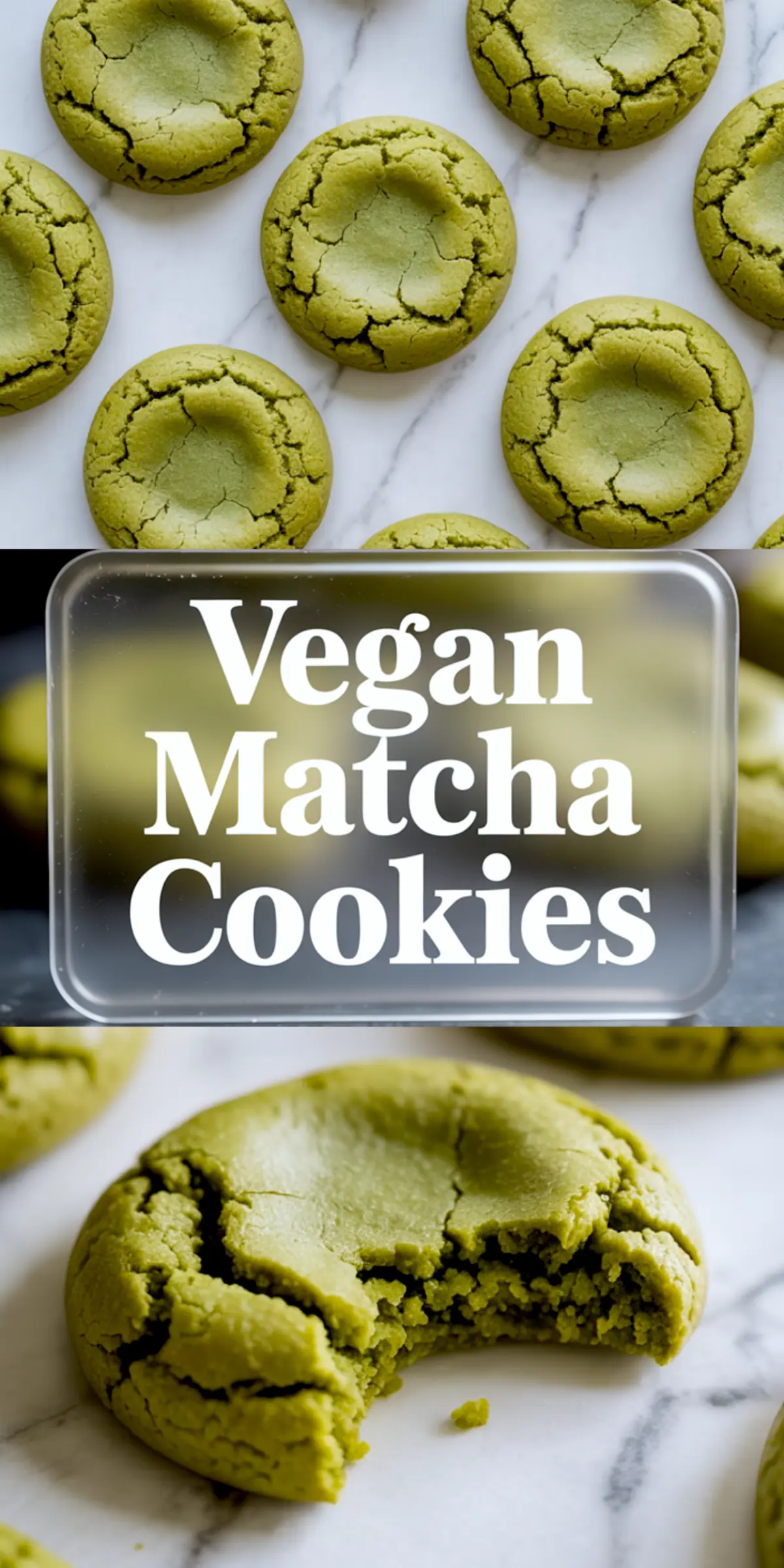
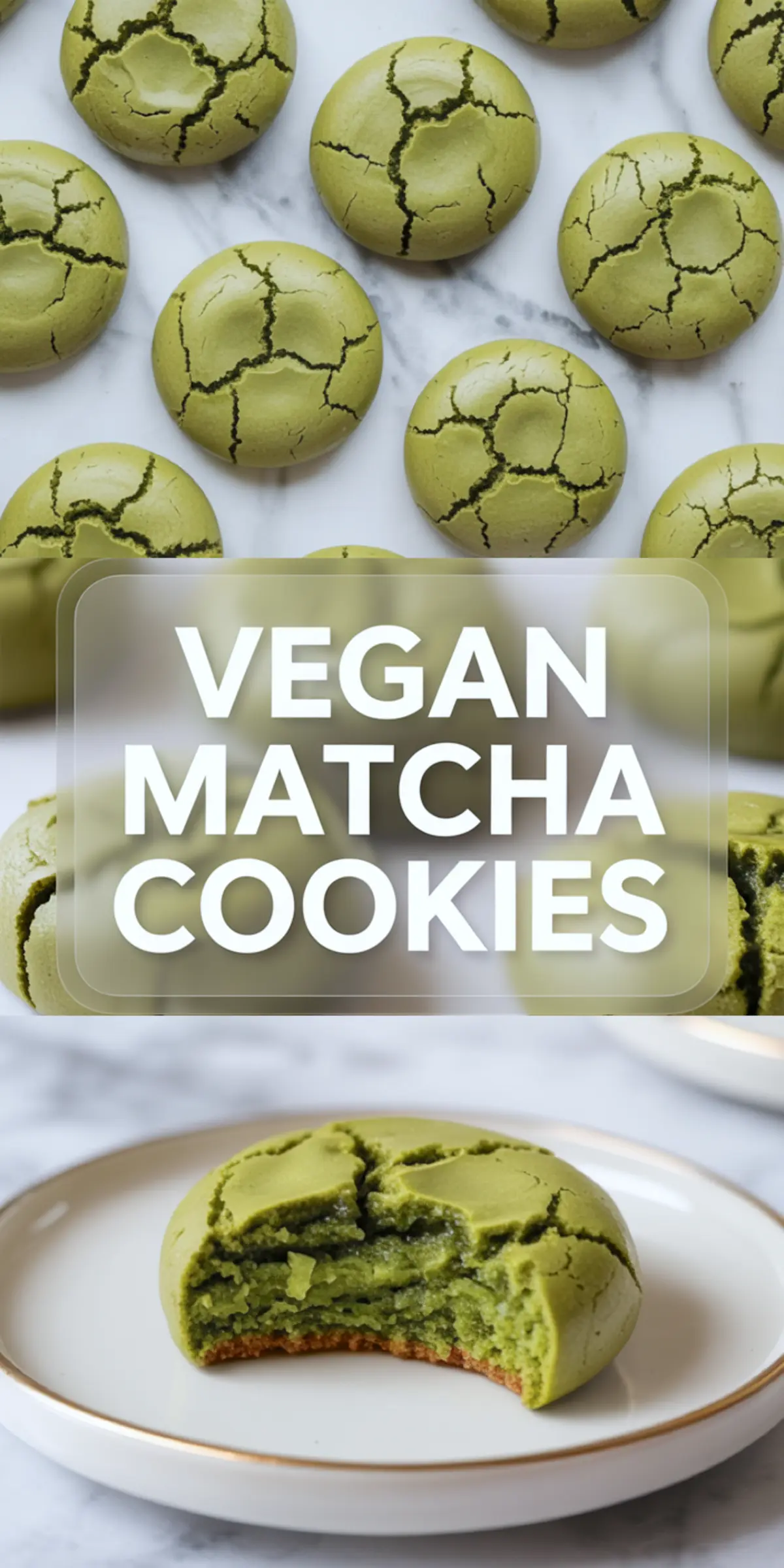
These vegan matcha cookies are soft, chewy green tea cookies made with melted coconut oil and plant milk instead of butter and eggs. One bowl gives you 16 cookies in about 25 minutes: 1 tablespoon of matcha to 1½ cups of flour, 1½ tablespoon balls, 10 to 12 minutes at 350°F.
No mixer and no long chill. Pull them while the middles still look soft, and they settle into crinkled tops with crisp edges and a clear green inside.
Following a special diet?
Every recipe on this site can be converted to gluten-free, vegan, dairy-free, keto, nut-free or egg-free with adjusted ratios so nothing falls flat.
Try the Recipe Converter →One Bowl of Green Tea Dough, by the Numbers
- Makes: 16 cookies from 1½ tablespoon portions
- Time: 15 minutes to mix and shape, 10 to 12 minutes in the oven
- Oven: 350°F (175°C), two parchment lined trays, balls 2 inches apart
- Matcha ratio: 1 tablespoon matcha to 1½ cups (180 g) all-purpose flour
- Fat and liquid: ½ cup (120 ml) melted refined coconut oil and ¼ cup (60 ml) unsweetened plant milk
- Keeps: 4 days airtight at room temperature; unbaked dough balls freeze
Which Matcha Keeps an Eggless Cookie Bright
I tested this dough with both culinary and ceremonial grade matcha. The ceremonial powder gave a smoother, brighter flavor with no bitter edge, and the green came through the oven better. Culinary matcha works too and costs far less, but it tastes more astringent and bakes a little duller.
Whatever you buy, look for a powder that is a fresh, vivid green. A yellowish or brownish powder is old and gives you khaki cookies. Sift the matcha into the flour, because a lump that stays whole bakes into a dark, bitter speck.
What Holds the Dough Together Without Eggs or Butter

In a butter dough, eggs bind and butter carries the air. Here melted coconut oil coats the flour so the cookies stay tender, the sugars dissolve into the warm oil to make the chew, and the plant milk brings the dough together. Oat milk gives a slightly richer bite, almond or soy are fine.
Baking soda gives the lift, and the light brown sugar has just enough acidity to wake it up. Cane sugar keeps the flavor clean so the tea comes forward, and ¼ teaspoon salt keeps it from tasting flat.
Weigh the flour if you can. 180 g is right; scooped and packed cups can add 30 g or more, and a dry dough bakes up cakey and will not crack. If you have no plant milk in the fridge, this homemade oat milk works well here.
Coconut Oil, Neutral Oil or Vegan Butter?
Refined coconut oil is my first choice. It has no coconut taste, sets firm at room temperature, and gives the crispest edge with a chewy middle. Unrefined coconut oil works but you will taste the coconut next to the tea.
Neutral oil such as sunflower or canola, the swap on the recipe card, stays liquid. The dough is looser and the cookies spread a little wider and feel softer, so give that version the 10 minute chill. I have also made it with vegan butter: it adds richness but mutes the matcha, much like the buttery swirl softens the tea in these strawberry matcha marble cookies.
Mixing by Hand So the Coconut Oil Stays Liquid
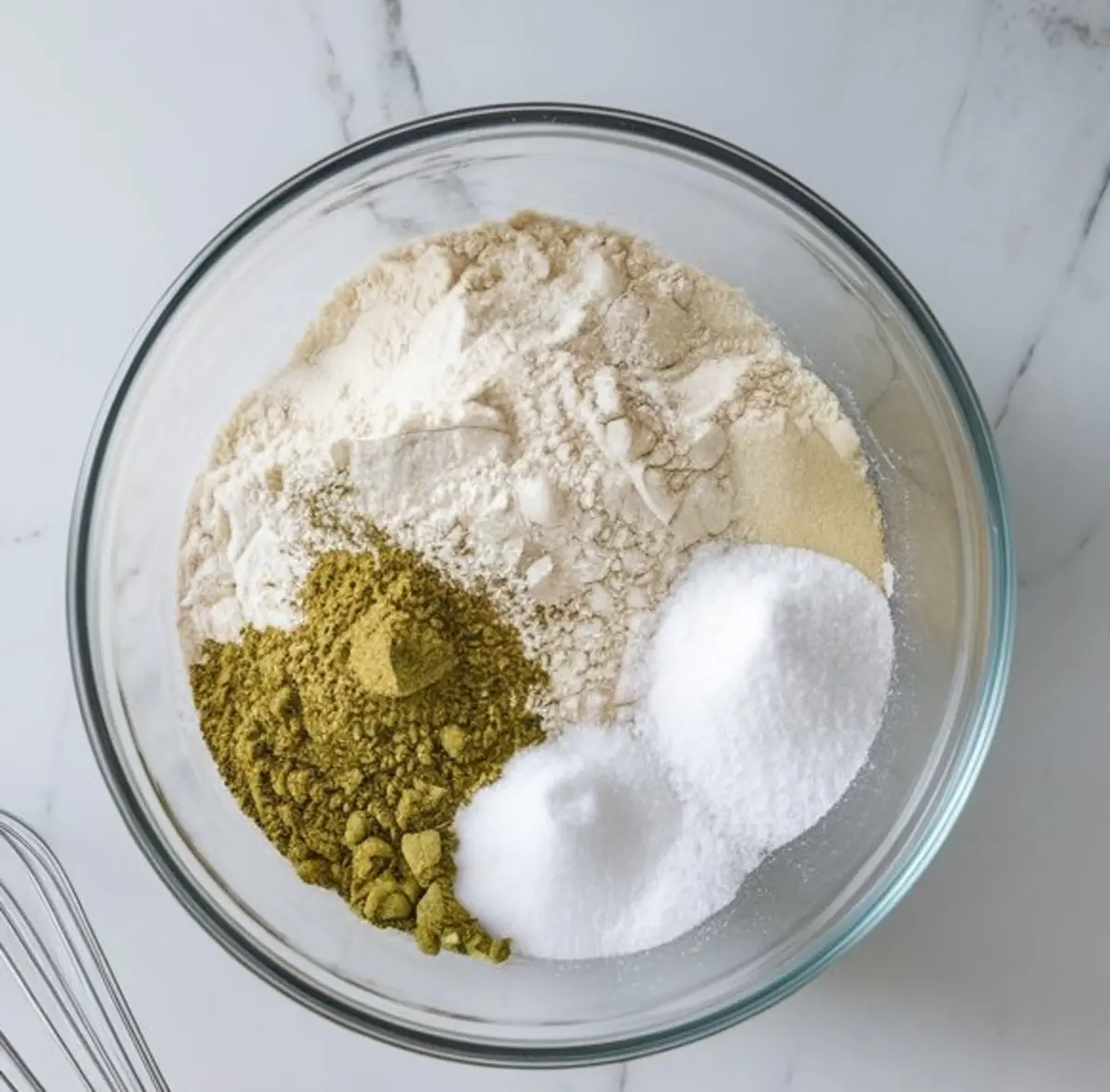
Whisk the flour, matcha, baking soda and salt in a medium bowl. In a large bowl, whisk the melted coconut oil with the cane sugar and brown sugar until smooth, then add the plant milk and vanilla.
Use milk at room temperature. Cold milk straight from the fridge makes the warm oil firm up into small white flecks, and the cookies bake greasy in spots. If that happens, set the bowl over a pan of warm water for a minute and whisk until it is smooth again.
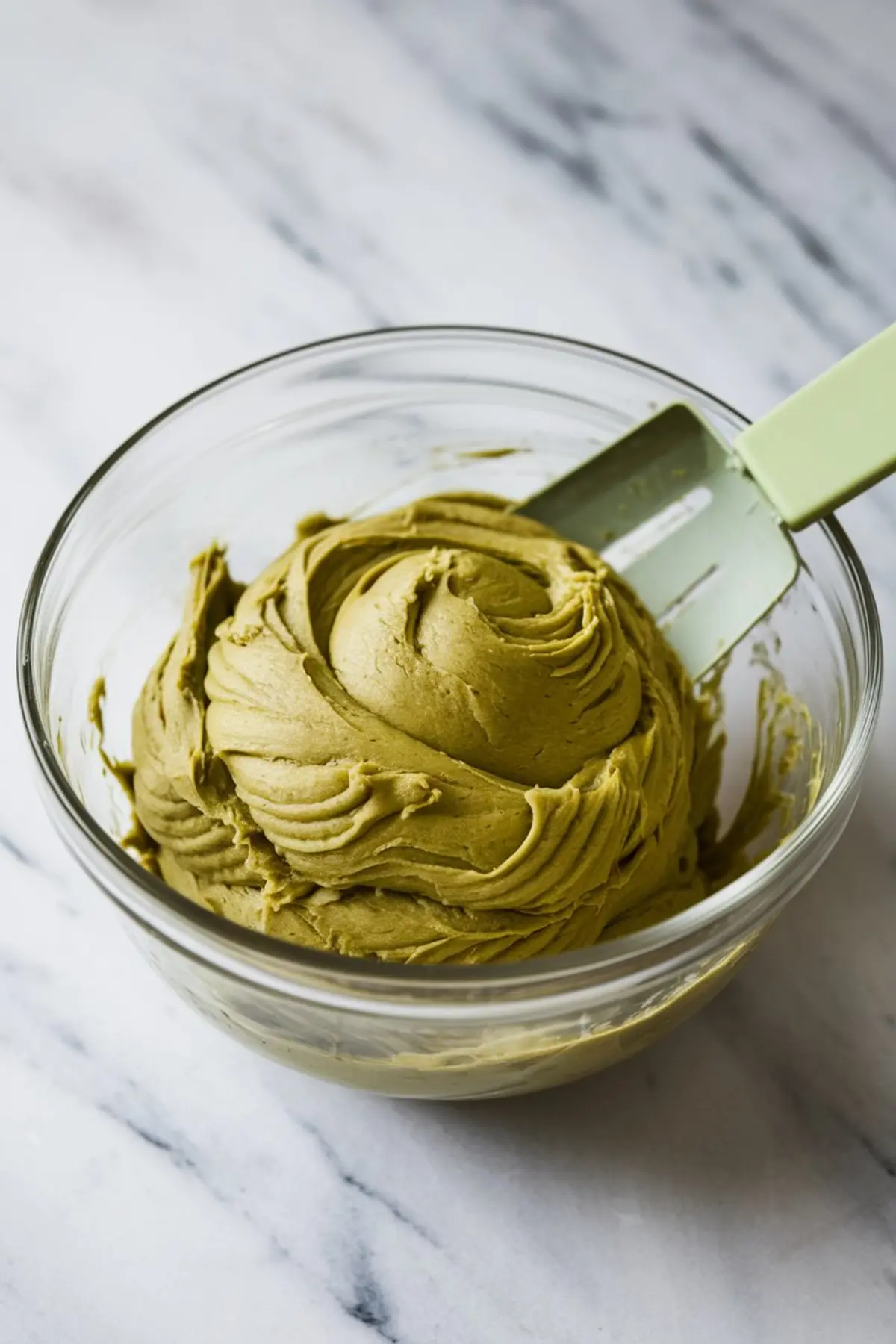
Stir the dry ingredients in with a spatula just until no dry streaks remain. The dough should feel soft but not sticky. Only if it seems loose, chill it for 10 minutes.
Shaping 1½ Tablespoon Balls and Baking at 350°F
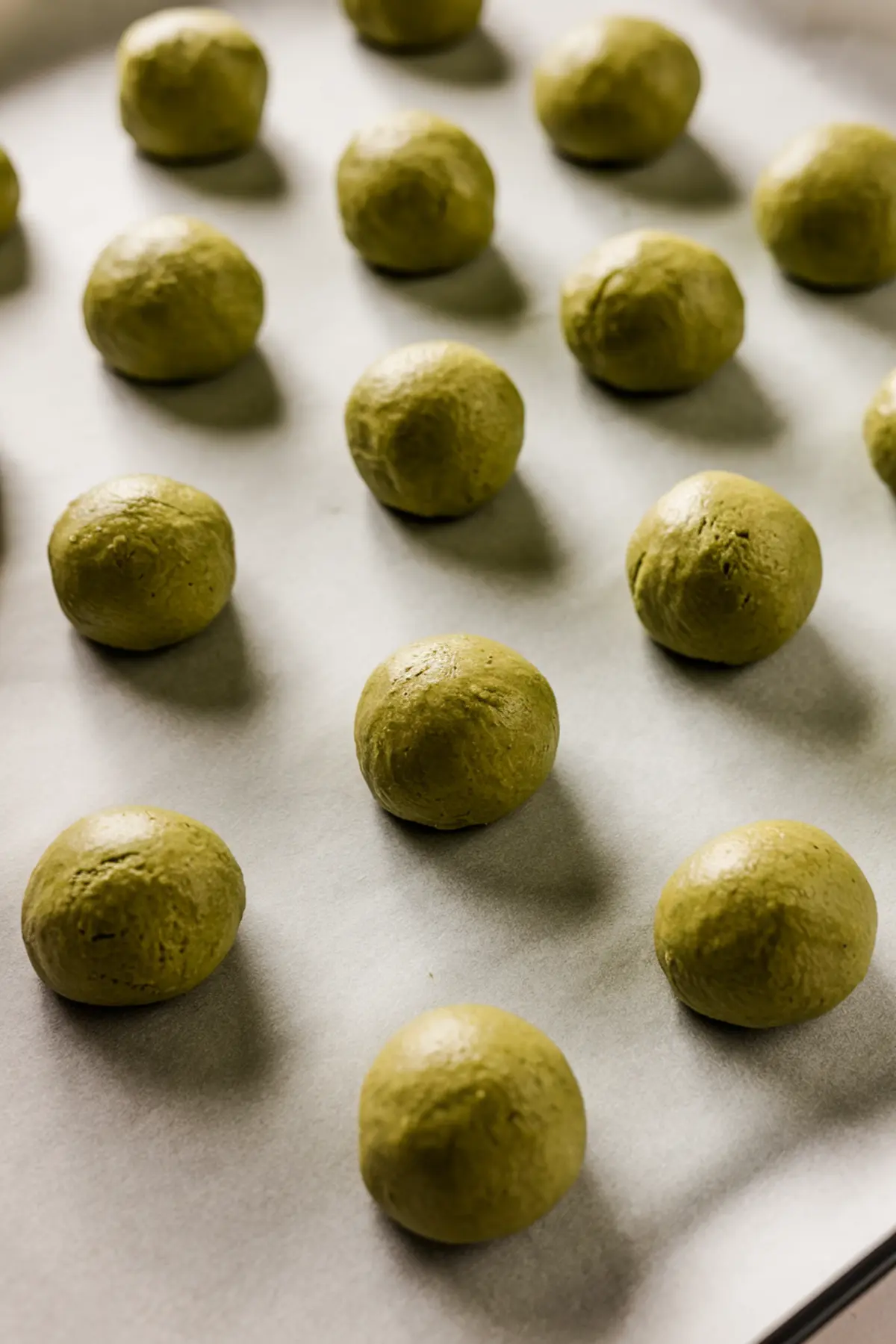
Scoop 1½ tablespoon portions, roll them smooth between your palms, and set them 2 inches apart on the lined trays. Press each top lightly. These cookies have no egg to puff and crack them, so that gentle press is what starts the crinkle.
Sprinkle with raw or turbinado sugar if you like a little crunch, then bake for 10 to 12 minutes. They are ready when the edges are just set and the centers have puffed but still look soft. Let them sit on the tray for 5 minutes; the middles sink and the tops crackle. Move them to a wire rack so the bottoms stop cooking, and dust a pinch of matcha over the cooled cookies through a small sieve.
Olive Color, Greasy Spots or Cakey Centers
- Olive or brownish: baked past 12 minutes, a dark tray, or old matcha. Pull them at 10 minutes and use a light colored sheet.
- Greasy patches or white flecks: the coconut oil set when cold milk went in. Warm the bowl and whisk smooth before adding the flour.
- Spread thin and flat: the dough was warm and loose, often with liquid oil. Chill it for 10 minutes.
- Dry and cakey, no cracks: too much flour. Weigh it at 180 g and stop stirring once the streaks are gone.
- Bitter dark specks: matcha clumps. Sift it with the flour.
Keeping and Freezing the Green Tea Cookies
Store the cookies in an airtight container at room temperature for up to 4 days, with parchment between layers. Keep the tin out of bright light, which fades the green.
To get ahead, shape the dough balls, freeze them on a tray, then pack them in a zip bag. Bake straight from frozen and add 1 to 2 minutes. They go well with unsweetened tea or black coffee, or next to something sharp like lemon bars.
Questions From Plant-Based Bakers
Are these matcha cookies egg free and butter free?
Yes. The dough has no eggs, butter or dairy: coconut oil and plant milk do that work, so the recipe is vegan as written.
Are vegan matcha cookies healthy?
They are still cookies. The ½ cup cane sugar and ¼ cup brown sugar work out to about 9 g of sugar per cookie across 16, with about 7 g of fat from the coconut oil.
Can I use less sugar?
You can drop the cane sugar by about 2 tablespoons. Expect a less tender cookie that spreads less, because the sugar is part of what makes the chew.
How are these different from matcha latte cookies?
These are an oil based, eggless dough with a plain green tea taste. The matcha latte cookies use butter and an egg, with the matcha swirled through a plain dough, and the matcha crinkle cookies are rolled in powdered sugar for white cracked tops.
More matcha bakes: mango matcha marble cookies, strawberry matcha cupcakes, a matcha chia pudding for breakfast, and vegan coconut brownies if you want another bake with no eggs or butter.
Vegan Matcha Cookies Recipe
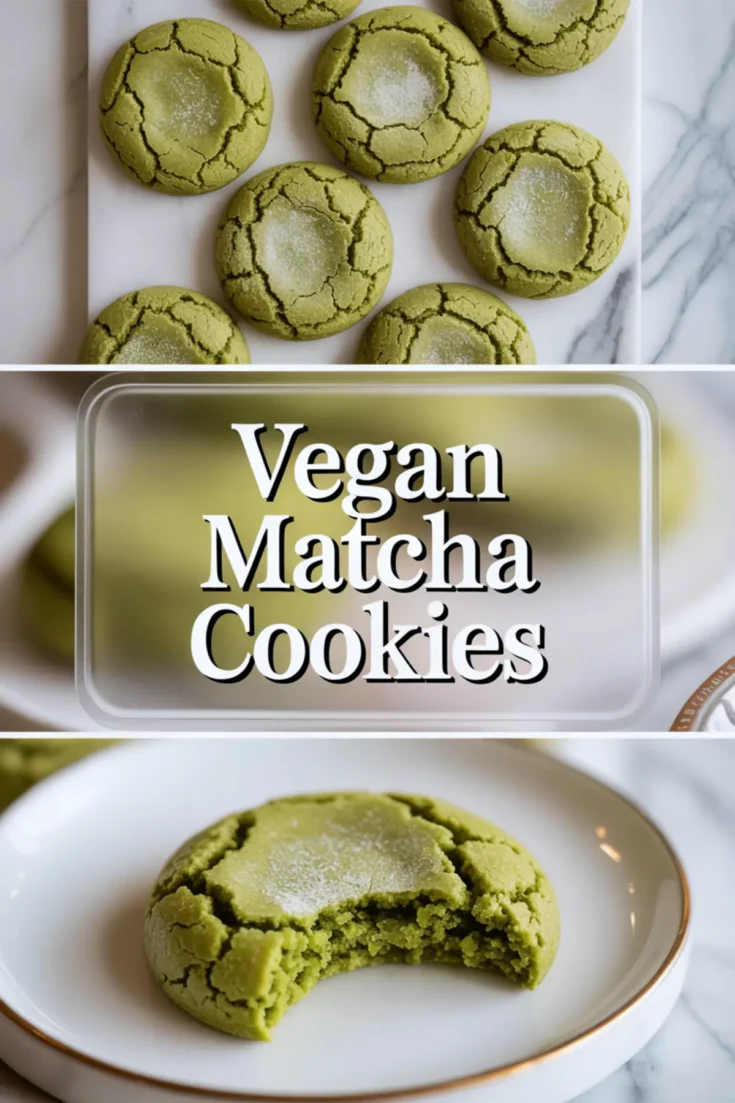
These vegan matcha cookies are soft, chewy green tea cookies made with all-purpose flour, matcha powder, cane sugar, brown sugar, melted coconut oil and plant-based milk, with no eggs and no butter. The recipe makes 16 cookies in about 25 minutes: 1½ tablespoon balls baked at 350°F for 10 to 12 minutes until the edges set and the centers still look soft. Resting them on the tray for 5 minutes gives the crinkled tops and crisp edges. Bake them as eggless matcha cookies for a tea plate, a dairy-free cookie box or a plant-based dessert table. Use neutral oil instead of coconut oil if needed, and keep them airtight for 4 days or freeze the unbaked dough balls.
Ingredients
- DRY INGREDIENTS:
- 1 ½ cups (180g) all-purpose flour
- 1 tbsp high-quality matcha powder
- ½ tsp baking soda
- ¼ tsp salt
- WET INGREDIENTS:
- ½ cup (100g) organic cane sugar
- ¼ cup (50g) light brown sugar, packed
- ½ cup (120ml) refined coconut oil, melted (or any neutral oil)
- ¼ cup (60ml) unsweetened plant-based milk (almond, oat, or soy)
- 1 tsp vanilla extract
- OPTIONAL FOR GARNISH:
- Raw sugar or turbinado sugar for sprinkling
- Extra pinch of matcha
Instructions
- PREHEAT AND PREPARE: Preheat the oven to 350°F (175°C) and line two baking trays with parchment paper to prevent sticking.
- MIX THE DRY INGREDIENTS: In a medium bowl, whisk together the flour, matcha powder, baking soda, and salt until evenly combined.
- COMBINE THE WET INGREDIENTS: In a large mixing bowl, whisk the melted coconut oil, cane sugar, and brown sugar until smooth and fully incorporated. Add the plant-based milk and vanilla extract, then whisk again until uniform.
- COMBINE AND CHILL: Gradually stir the dry ingredients into the wet mixture using a spatula or spoon. Mix just until no dry streaks remain. The dough should feel soft but not sticky. If it seems too loose, chill it in the refrigerator for 10 minutes to firm up slightly.
- SHAPE AND PLACE: Scoop 1½ tablespoon portions of dough and roll them into smooth balls. Arrange them on the prepared baking trays, spacing them at least 2 inches apart. Lightly press the tops to encourage crinkling during baking.
- BAKE: Bake the cookies for 10 to 12 minutes, or until the edges are just set and the centers have slightly puffed. The middles will appear soft, which is expected.
- REST AND CRACKLE: Let the cookies cool on the trays for 5 minutes. As they rest, the centers will naturally deflate, forming the desired crinkled appearance. Transfer to a wire rack to cool completely before serving.
Notes
Use room temperature plant milk: cold milk makes the melted coconut oil set into white flecks. If it does, warm the bowl over warm water for a minute and whisk smooth. Weigh the flour (180 g); too much flour gives dry, cakey cookies that do not crack. Pull the cookies at 10 minutes when the edges are set; overbaking turns matcha olive. With neutral oil instead of coconut oil the dough is looser, so chill it 10 minutes. Ceremonial grade matcha gives a brighter color and smoother taste; culinary grade is cheaper and slightly more bitter. Store airtight at room temperature for up to 4 days. Freeze unbaked dough balls and bake from frozen, adding 1 to 2 minutes.
Nutrition Information
Yield
16Serving Size
1Amount Per Serving Calories 64Total Fat 1gSaturated Fat 1gTrans Fat 0gUnsaturated Fat 0gCholesterol 1mgSodium 84mgCarbohydrates 12gFiber 0gSugar 3gProtein 2g
