

These low carb almond flour cookies are soft, lightly sweet cookies made with 2 cups of fine almond flour, melted butter, erythritol or monk fruit sweetener, one egg, and vanilla. There is no wheat flour and no sugar in the dough. One bowl makes 14 cookies in about 22 minutes, with crisp edges and a tender middle.
The one thing to know before you start: this dough barely spreads. Press each ball flat before it goes in the oven, and pull the tray while the centers still look soft.

Following a special diet?
Every recipe on this site can be converted to gluten-free, vegan, dairy-free, keto, nut-free or egg-free with adjusted ratios so nothing falls flat.
Try the Recipe Converter →One Batch of Low Carb Almond Flour Cookies, by Measure
- Makes: 14 cookies, about 2 tablespoons of dough each
- Time: 10 minutes to mix and shape, 10 to 12 minutes at 350°F (175°C), 10 minutes to set on the tray
- Flour: 2 cups fine blanched almond flour, spooned and leveled (about 224 g)
- Sweetener: ⅓ cup erythritol or monk fruit sweetener
- Fat and binder: ¼ cup melted unsalted butter or coconut oil, plus 1 large egg
- Leavening: ¼ teaspoon baking soda and a pinch of salt
- Keeps: 4 days airtight on the counter, a week in the fridge, 2 months frozen
Blanched Almond Flour, Almond Meal or Coconut Flour?
Use fine blanched almond flour. It is made from skinned almonds ground very fine, and it should feel soft between your fingers, close to sifted cake flour. That fine grind is what gives these cookies a smooth, tender bite.
Almond meal is ground with the skins on and is coarser. It works in a pinch, but the cookies come out darker, more crumbly, and a little gritty. Coconut flour is a different thing altogether. It soaks up several times more liquid than almond flour, so it cannot be swapped cup for cup; you would need a fraction of the amount and more eggs, which means a different recipe.
How you measure matters as much as which flour you buy. Spoon the almond flour into the cup and level it off, or weigh 224 g. Packed almond flour is the most common reason a dough like this turns dry and the cookies fall apart once cool. The same flour makes a tender loaf of almond flour banana bread if you have some left in the bag.
Erythritol or Monk Fruit: Picking a Sugar Free Sweetener
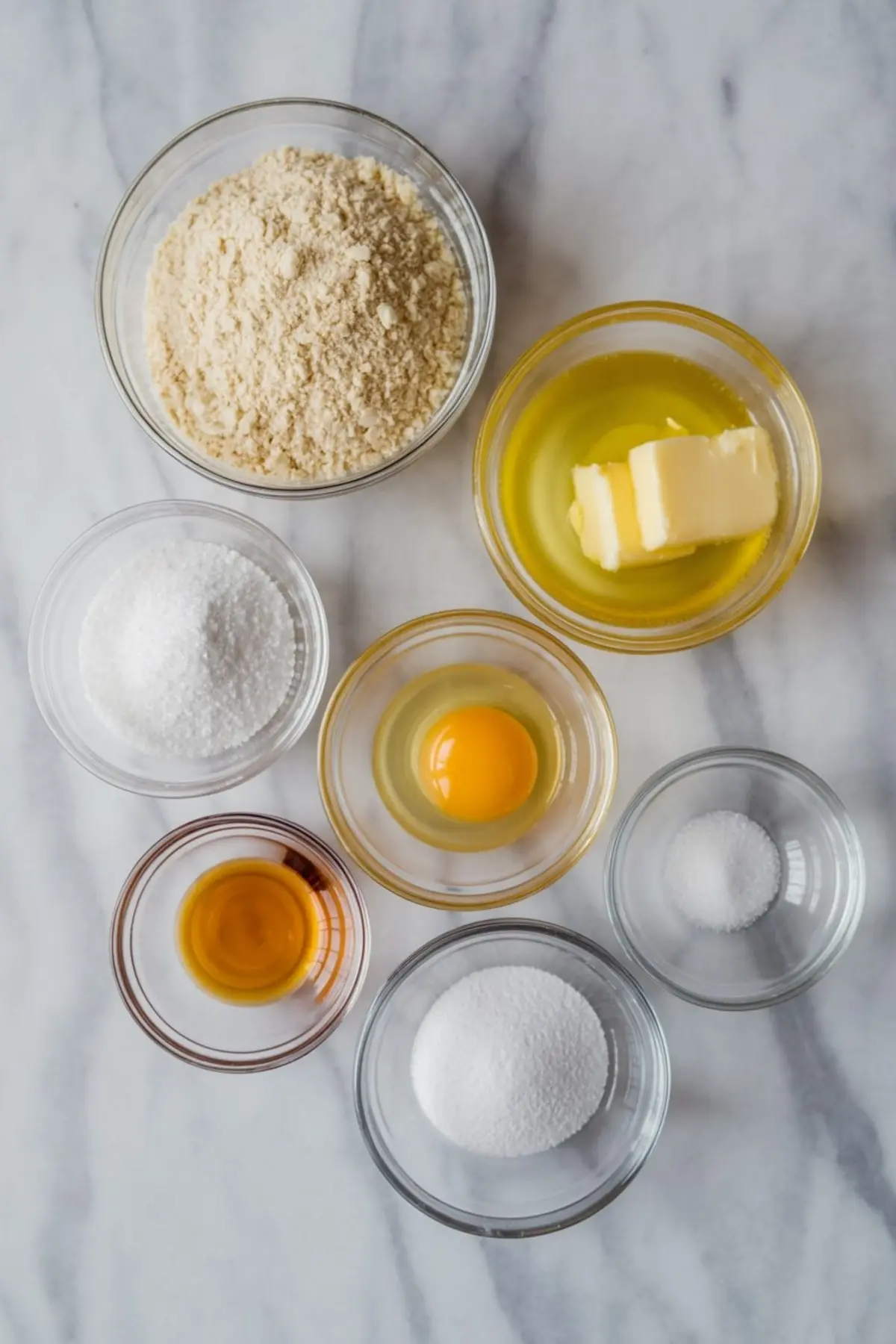
The card calls for ⅓ cup erythritol or monk fruit sweetener, and both keep these cookies sugar free. Most monk fruit sweeteners sold for baking are blended with erythritol, so they measure the same way.
Texture is where they differ. Coarse granular erythritol does not fully dissolve in so little butter, so the cookies can feel faintly crunchy, and it tends to recrystallize by the second day. A powdered sweetener, or granular blitzed in a blender for 30 seconds, gives a smoother cookie. Erythritol also leaves a cool, minty feeling on the tongue for some people. A monk fruit blend softens it, and so does the vanilla.
Taste a pinch of dough after mixing. If it seems flat, add 1 tablespoon more sweetener; brands vary in strength.
Mixing a Dough That Holds Together
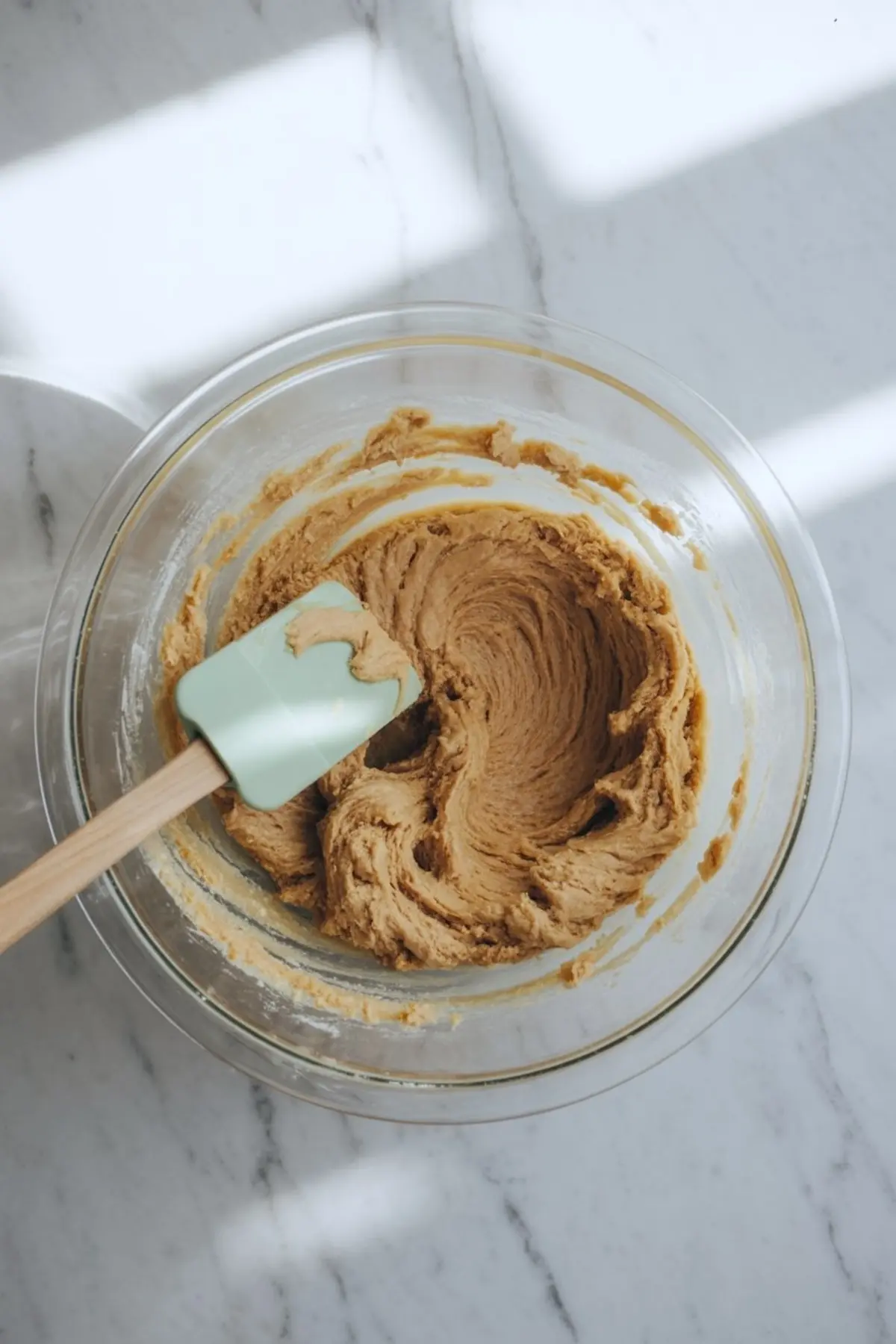
Let the melted butter cool for a few minutes, then whisk it with the sweetener, egg, and vanilla until smooth and a little glossy. Use a room temperature egg. A cold one firms the butter into small lumps.
Stir in the almond flour, baking soda, and salt. It looks loose for a few seconds, then thickens as the almond flour drinks up the liquid. Give it 5 minutes on the counter before you scoop. The dough firms up and rolls without sticking to your hands.
If you are adding chocolate chips or almond extract, fold them in now, once the dough has come together.
Scooping and Pressing 14 Even Cookies

Line a baking sheet with parchment. Roll the dough into 14 balls of about 2 tablespoons each and set them 2 inches apart.
Then press each ball to about ½ inch thick with your palm or the bottom of a glass. There is no gluten here and very little spread, so the shape you press is close to the shape you bake. Skip this and you get domed cookies with pale, underbaked middles.
Reading the Tray: Golden Edges, Soft Centers

Bake for 10 to 12 minutes. The edges should be light golden and the tops matte and set, while the centers still look a little soft. Almond flour browns faster than wheat flour, so start checking at 10 minutes. Cookies that are golden all over will be dry once they cool.
Leave them on the hot tray for at least 10 minutes. Warm almond flour cookies are fragile and break if you lift them too soon; they firm up as they cool. The same patience applies to fudgy bakes like protein cottage cheese brownies: judge them cold, not hot.
Crumbly, Flat or Gritty Almond Flour Cookies
- Crumbly after cooling: the flour was packed, the egg was small, or almond meal was used. Spoon and level, use a large egg, and choose fine blanched flour.
- Spread thin: the butter went in hot or the dough was pressed too thin. Cool the butter first, or chill the shaped dough for 15 minutes.
- Dry and dark: one or two minutes too long. Pull them when the edges are golden and the middles still look soft.
- Gritty or crunchy: coarse granular sweetener. Grind it fine or switch to a powdered one.
- Cool aftertaste: that is erythritol. A monk fruit blend or ¼ teaspoon almond extract helps.
Chocolate Chip, Cinnamon and Coconut Twists
For sugar free chocolate cookies with almond flour, fold in ¼ cup sugar free chocolate chips or chopped dark chocolate. If you like a chewier, chip heavy cookie, my almond flour chocolate chip cookies are built around them, and the sugar free chocolate cookies are the cocoa version.
For a spiced batch, add 1 teaspoon cinnamon and a pinch of nutmeg with the flour. For crunch, use the ¼ teaspoon almond extract and stir in ¼ cup chopped almonds, or press a whole almond into the center of each cookie before baking. Two tablespoons of unsweetened shredded coconut makes them a little chewier.
Keeping the Cookies Soft for a Week
Store them airtight at room temperature for up to 4 days, with parchment between the layers so they do not stick. In the fridge they keep a full week and stay soft if the container is well sealed.
To freeze, set the cooled cookies on a tray until firm, then move them to a freezer bag for up to 2 months. Thaw at room temperature for about 30 minutes. Skip the microwave, which turns almond flour cookies tough; a few minutes in a warm toaster oven is better if you want one warm.
Questions About These Low Carb Cookies
Are almond flour cookies keto?
They are keto friendly when you use erythritol or monk fruit sweetener and sugar free chocolate, since there is no sugar or wheat flour in the dough. For more low carb baking, try my keto peanut butter cookies or keto brownies.
Can I make them dairy free?
Yes. Use ¼ cup melted coconut oil instead of the butter. The edges brown a little less, and the cookies taste faintly of coconut unless you use refined coconut oil.
Can I make them without the egg?
The egg is the only binder holding the almond flour together, so this recipe is not written for an egg swap. Without it the cookies crumble.
Are these the same as classic almond cookies?
No. These are gluten free and sugar free. If you want buttery almond cookies made with regular flour and sugar, bake my almond cookies recipe instead.
Low Carb Almond Flour Cookies

These low carb almond flour cookies are soft, lightly sweet cookies made with fine blanched almond flour, melted butter, erythritol or monk fruit sweetener, one egg, and vanilla, with no wheat flour and no sugar. One bowl makes 14 cookies in about 22 minutes, with crisp golden edges and tender centers. The dough barely spreads, so each ball is pressed to about ½ inch before baking, and the cookies set on the tray for 10 minutes so they hold together. Bake them as healthy almond flour cookies for lunch boxes, a gluten free cookie tray, or a keto friendly snack, or fold in sugar free chocolate chips. Use coconut oil for a dairy free batch. They keep 4 days airtight, a week in the fridge, and 2 months frozen.
Ingredients
- 2 cups fine almond flour
- 1/4 cup melted unsalted butter (or coconut oil for dairy-free)
- 1/3 cup erythritol or monk fruit sweetener
- 1 large egg
- 1 tsp vanilla extract
- 1/4 tsp baking soda
- Pinch of salt
- Optional:
- 1/4 tsp almond extract
- 1/4 cup sugar-free chocolate chips or chopped dark chocolate
Instructions
- PREHEAT THE OVEN: Set the oven to 350°F (175°C) and line a baking sheet with parchment paper to prevent sticking.
- WHISK WET INGREDIENTS: In a medium bowl, whisk together the melted butter, sweetener, egg, and vanilla extract until the mixture is smooth and fully combined.
- ADD DRY INGREDIENTS: Stir in the almond flour, baking soda, and a pinch of salt. Mix until a soft dough forms. If using almond extract or chocolate chips, fold them in at this stage.
- PORTION THE DOUGH: Use a tablespoon or cookie scoop to form dough balls and place them on the prepared baking sheet. Lightly press each ball to flatten slightly for even baking.
- BAKE THE COOKIES: Place the baking sheet in the oven and bake for 10–12 minutes, or until the edges are golden and the centers are just set. Watch closely, as almond flour can brown quickly.
- COOL AND SERVE: Let the cookies cool on the baking sheet for at least 10 minutes before transferring to a wire rack. They will firm up as they cool and are best served once fully set.
Notes
Spoon and level the almond flour (about 224 g); packed flour makes crumbly cookies. Use fine blanched almond flour, not almond meal or coconut flour. A powdered sweetener, or granular blitzed fine, gives the smoothest texture. Let the dough rest 5 minutes before scooping, and press each ball to about ½ inch thick because the dough does not spread much. Pull the cookies when the edges are light golden and the centers still look soft, and let them cool on the tray for 10 minutes. For crispier edges, bake 1 to 2 minutes longer. Store airtight at room temperature for up to 4 days, refrigerate for up to a week, or freeze for up to 2 months.
Nutrition Information
Yield
14Serving Size
1Amount Per Serving Calories 196Total Fat 6gSaturated Fat 3gUnsaturated Fat 2gCholesterol 24mgSodium 66mgCarbohydrates 31gFiber 1gSugar 3gProtein 5g
