

These sour cream scones are tender breakfast scones made with 2 cups of flour, 1 cup of full fat sour cream, one egg, and cold butter. You get 8 wedges in about 35 minutes, baked at 400°F until the tops are golden and sparkly with coarse sugar.
The trick is a light hand. Cut the butter in until you still see small pieces, stir the sour cream in only until the dough holds together, and pat it out instead of kneading it. That is what keeps the crumb soft rather than bready.

Following a special diet?
Every recipe on this site can be converted to gluten-free, vegan, dairy-free, keto, nut-free or egg-free with adjusted ratios so nothing falls flat.
Try the Recipe Converter →One Batch of Sour Cream Scones in Numbers
- Makes: 8 scones, cut from one 1 inch thick round
- Time: 15 minutes prep, 16 to 20 minutes in the oven, about 35 minutes total
- Oven: 400°F (200°C), baking sheet lined with parchment
- The ratio: 2 cups (250 g) flour to 1 cup (240 g) sour cream, 1/2 cup (113 g) butter and 1 large egg
- Sweetness: 1/3 cup (65 g) sugar in the dough, 2 tablespoons coarse sugar on top
- Keeps: 2 days at room temperature, 4 days in the fridge, 2 months frozen
Why Sour Cream Makes a Softer Scone
Sour cream brings fat, moisture, and acidity in one spoonful. The fat coats the flour so less gluten forms, and the acid tenderizes what does form. The result is a scone with a fine, soft crumb and a gentle tang, and it stays soft the next day instead of going stale and dry by breakfast.
Use thick, full fat sour cream that holds its shape on a spoon. Light sour cream is wetter and makes a stickier dough with less richness. Plain full fat Greek yogurt works in the same amount, though the scones come out a little firmer.
Sour Cream, Heavy Cream, or Buttermilk in Scones?
All three make good scones, and they each give a different one. Heavy cream scones are rich and plain, with a close, cakey crumb. Buttermilk scones are lighter and taller with a clear tang, like the buttermilk rhubarb scones. Sour cream scones sit in the middle: softer and moister than either, with a mild tang you notice more in the aftertaste than the first bite.
Because sour cream is so thick, it also gives you a dough that is easy to shape. The same cold butter and gentle mixing method carries over to sour cream biscuits, which are the savory cousin of this recipe.
How to Make Sour Cream Scones Without Overworking the Dough
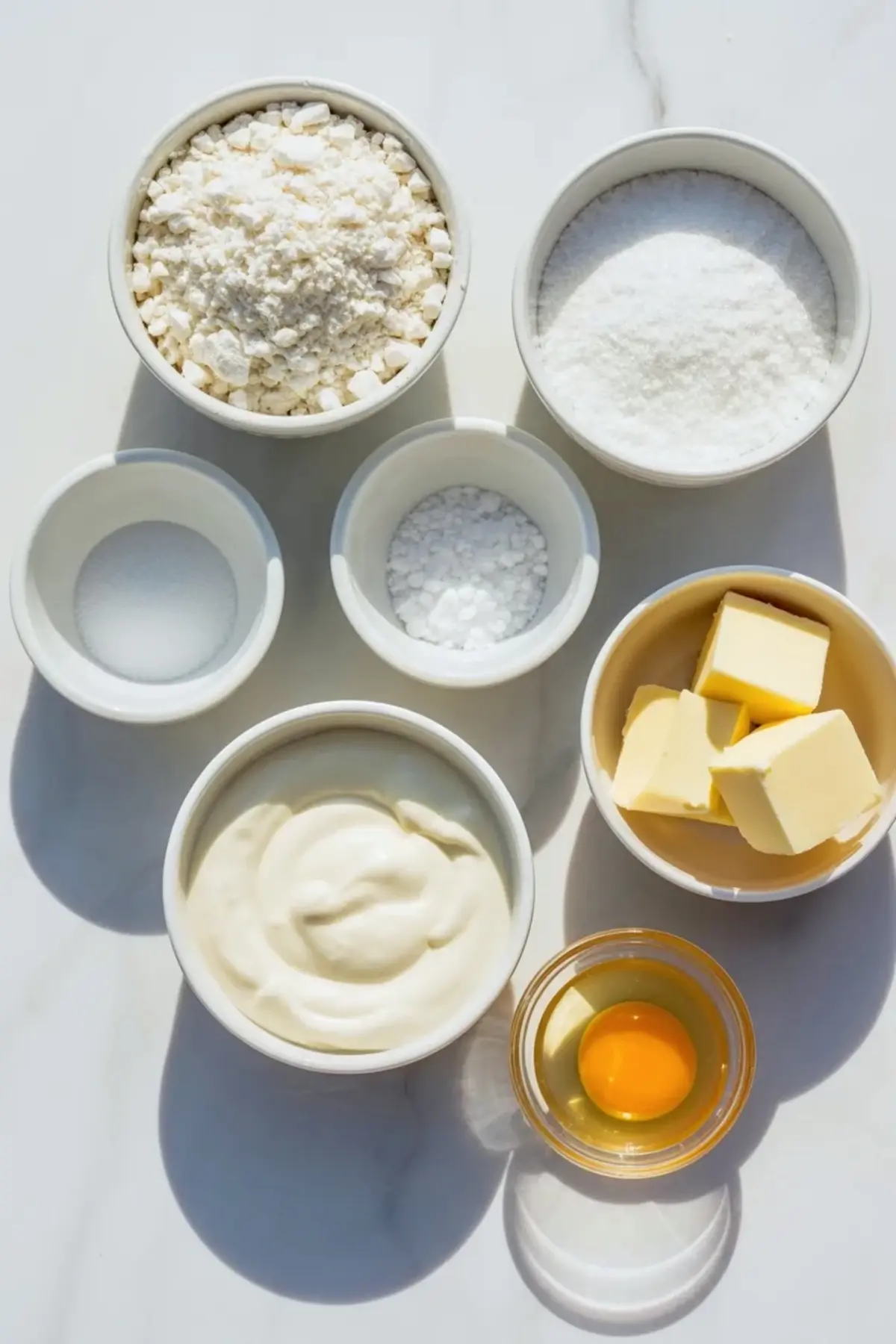
Heat the oven to 400°F and line a baking sheet with parchment. Whisk the flour, sugar, baking powder, and salt in a large bowl. If your baking powder has been open for more than a few months, check it: a spoonful in hot water should fizz right away.
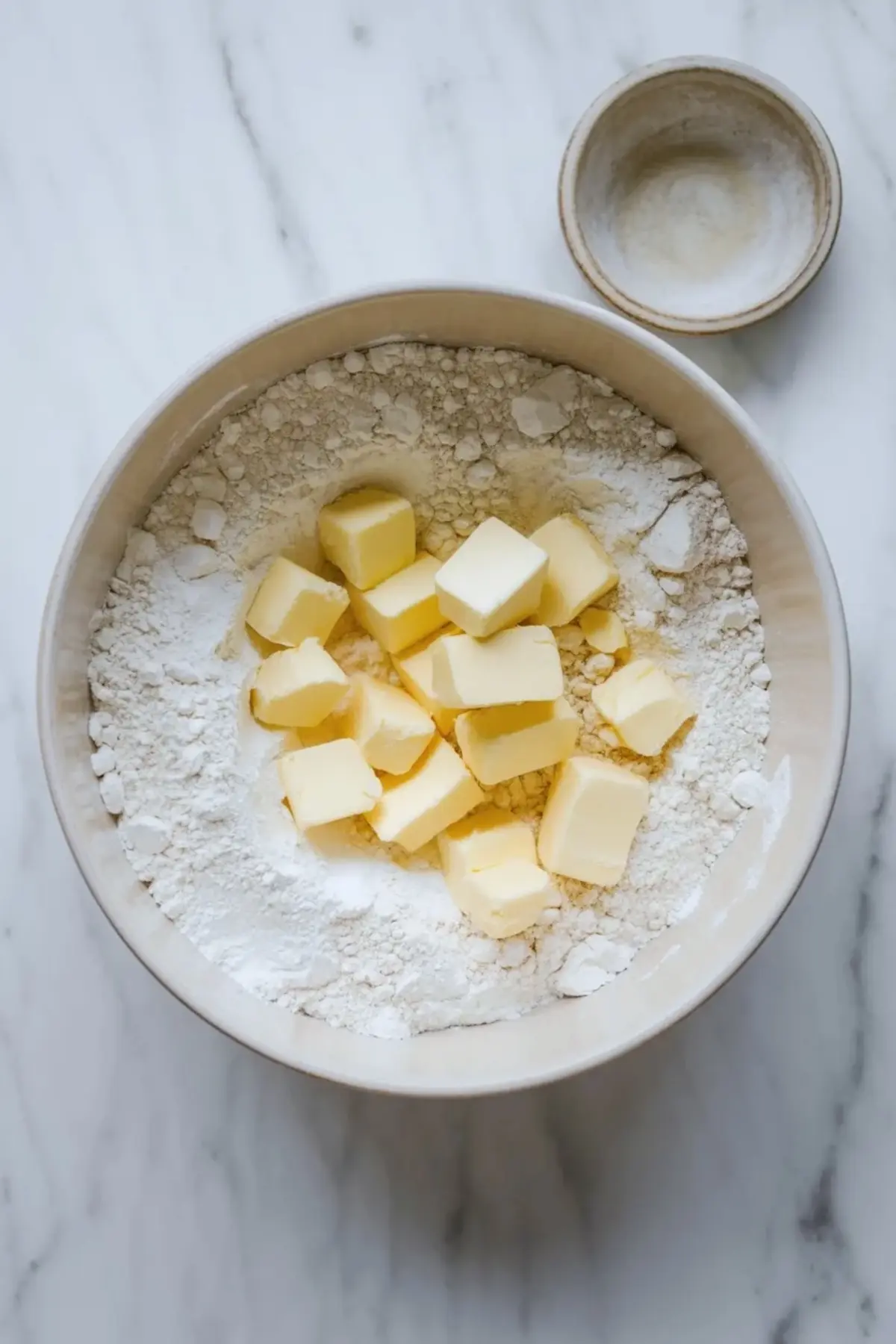
Add the cold, cubed butter and work it in with a pastry cutter or your fingertips. Stop when the mix looks like coarse crumbs with some pieces the size of small peas. Those pieces melt in the oven, release steam, and lift the dough into flaky layers. Work fast so your warm hands do not soften them.

In a separate bowl, whisk the sour cream, egg, and vanilla until smooth. Pour it over the flour and fold with a spatula just until there are no big dry pockets left. A few floury streaks are fine. The dough should look shaggy and feel slightly sticky, not smooth.
Cutting Eight Wedges and Baking at 400°F
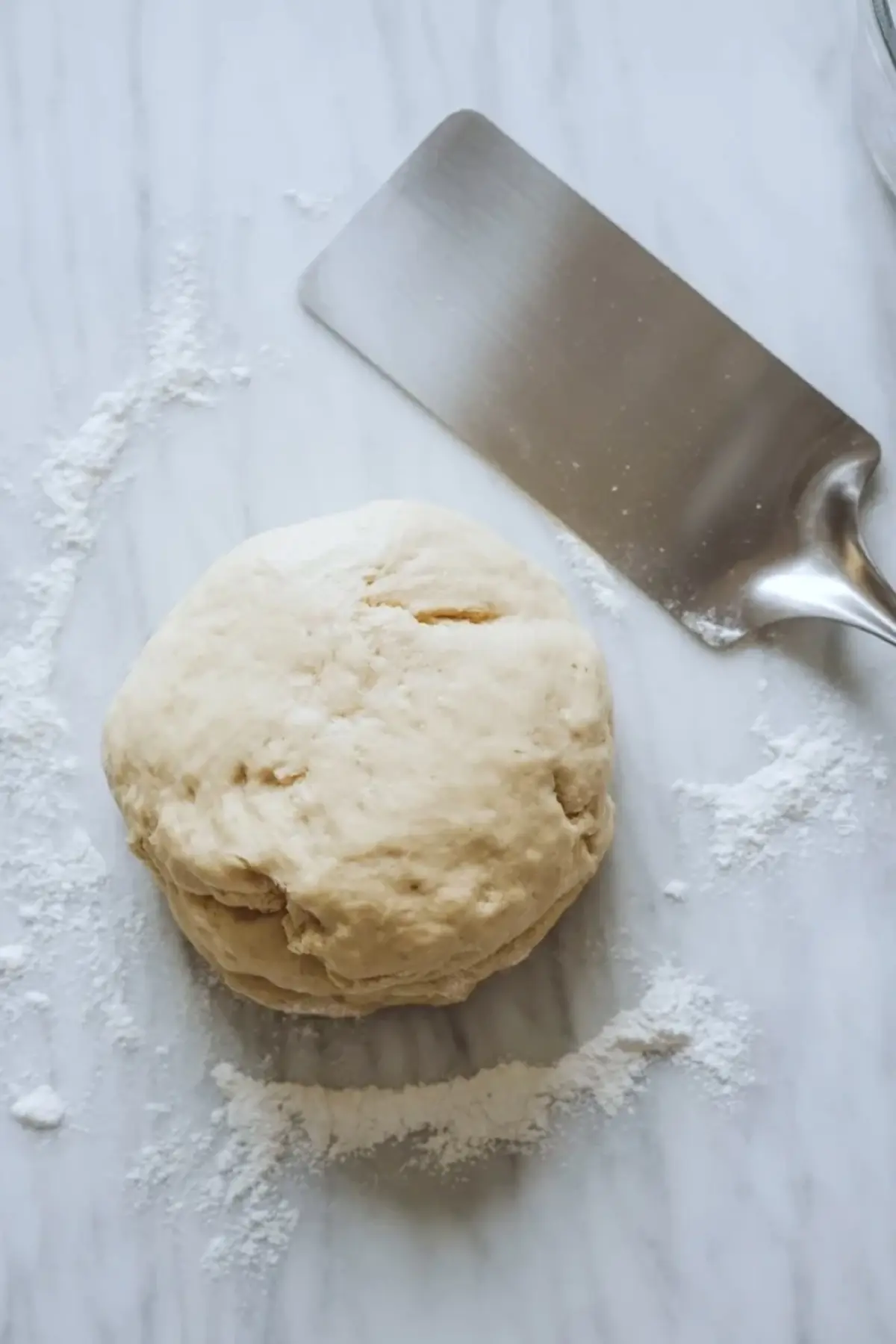
Turn the dough onto a lightly floured counter and pat it into a round about 1 inch thick. Do not knead. Pressing it together is enough, and the last dry bits disappear as you shape it.
Cut the round into 8 equal triangles with a sharp knife. Press straight down instead of sawing, so the edges are not squashed shut and each wedge can rise. Set them on the baking sheet with space between them, because scones that touch steam each other and stay pale on the sides.
Brush the tops with the tablespoon of milk, using a light touch so it does not pool around the base, then sprinkle with the coarse sugar. Bake for 16 to 20 minutes.
They are done when the tops are golden, the edges look lightly crisp, and the middle feels set when you press it gently. Lift one with a spatula: the bottom should be light golden and the cut side dry, not shiny. Pale and soft inside means a few more minutes. Very dark bottoms usually mean your oven runs hot, so move the pan up a rack next time. Let them cool on the sheet for a few minutes before moving them to a rack.
When Scones Spread, Bake Dense, or Turn Dry
- They spread flat: the butter was too soft. In a warm kitchen, put the cut wedges on the tray in the freezer for 15 minutes before baking.
- They are dense and bready: the dough was stirred or kneaded too much. Stop mixing as soon as it clumps together.
- They taste dry: too much flour. Spoon it into the cup and level it, or weigh 250 g. Overbaking by a few minutes does the same thing.
- The dough is too sticky to shape: the sour cream was thin or light. Flour your hands and the counter instead of adding flour to the dough.
- Pale sides and a doughy middle: the wedges were too close together. Give them room so hot air reaches every side.
Add Ins and What to Serve With Them
Fold in 1/2 cup of dried fruit, a spoonful of lemon or orange zest, or mini chocolate chips with the wet ingredients. Toss fruit and chips in a little of the flour mix first so they do not sink. For a citrus and berry version, the cranberry orange scones are a good next bake, and in autumn the pumpkin scones with cinnamon glaze use the same cut-in butter step.
Serve them warm with butter, honey, or whipped cream and berries. Since these are already sweet, a sharp spread balances them well: homemade lemon curd, strawberry jam, or blueberry jam. If you plan to pile on jam, you can cut the sugar in the dough down a little.
Freezing Unbaked Scones for Fresh Mornings
Shape and cut the dough, freeze the wedges on a tray until hard, then pack them into a freezer bag for up to 2 months. Bake straight from frozen at 400°F, brushing with milk and sprinkling with sugar first, and add a few minutes to the bake time. Watch for the same golden tops and dry cut sides.
Baked scones keep for 2 days at room temperature in an airtight container, 4 days in the fridge, or 2 months in the freezer, tightly wrapped. Warm them in a 300°F oven for 5 to 8 minutes and the edges crisp up again while the middle softens. If you have sour cream left after this, it also goes into these soft sour cream muffins.
Short Answers for Scone Bakers
Can I make sour cream scones in the UK with soured cream?
Yes. Soured cream is the same thing. Use 250 g plain flour, 65 g caster or granulated sugar, 113 g cold butter, 240 g soured cream, and bake at 200°C (180°C fan).
Can you make sour cream scones without butter?
Some recipes skip the butter and rely on the sour cream for fat, but those scones are softer and more cake-like, with no flaky layers. This recipe keeps 1/2 cup of cold butter for lift and flake.
Can I use buttermilk or sour milk instead of sour cream?
Not cup for cup. Both are much thinner, so 1 cup would make a wet, sticky dough. Use a recipe written for buttermilk instead, such as the rhubarb scones linked above.
Why are my sour cream scones dense?
Usually the dough was mixed or kneaded too long, or the butter was warm. Stir only until it comes together and keep the butter cold until the scones go into the oven.
Sour Cream Scones Recipe

These sour cream scones are soft, tender breakfast scones made with flour, full fat sour cream, cold butter, one egg, and a little vanilla. The recipe makes 8 wedge scones in about 35 minutes, baked at 400°F until the tops are golden and crunchy with coarse sugar. Sour cream adds fat and acidity, so this scone recipe with sour cream gives a moister, softer crumb than cream or buttermilk scones, and it stays soft into the next day. Serve them warm with butter and jam, lemon curd, or whipped cream and berries, or fold in dried fruit, citrus zest, or chocolate chips. Greek yogurt works instead of sour cream. Baked scones keep 2 days at room temperature and freeze for 2 months.
Ingredients
- FOR THE SCONES
- 2 cups (250g) all-purpose flour
- 1/3 cup (65g) granulated sugar
- 1 tablespoon baking powder
- 1/2 teaspoon salt
- 1/2 cup (113g) cold unsalted butter, cubed
- 1 cup (240g) full-fat sour cream
- 1 large egg
- 1 teaspoon vanilla extract
- FOR THE TOPPING
- 1 tablespoon milk (for brushing)
- 2 tablespoons coarse sugar
Instructions
PREPARE THE OVEN: Preheat the oven to 400°F (200°C) and line a baking sheet with parchment paper to prevent sticking and promote even browning.
MIX THE DRY INGREDIENTS: Whisk together the flour, sugar, baking powder, and salt in a large bowl until evenly combined and free of lumps.
CUT IN THE BUTTER: Add the cold cubed butter to the flour mixture and work it in using a pastry cutter or your fingertips until the mixture resembles coarse crumbs with small visible pieces of butter remaining for flaky layers.
MIX THE WET INGREDIENTS: Whisk the sour cream, egg, and vanilla extract in a separate bowl until smooth and fully blended.
COMBINE THE DOUGH: Pour the wet mixture into the dry ingredients and gently stir with a spatula just until the dough comes together; keep the texture slightly shaggy and avoid overmixing to maintain tenderness.
SHAPE THE DOUGH: Turn the dough onto a lightly floured surface and gently press it into a round disc about 1 inch thick without kneading, using light pressure to preserve the butter pieces.
CUT THE SCONES: Use a sharp knife to cut the disc into 8 equal triangles and place them slightly apart on the prepared baking sheet to allow proper airflow.
BRUSH AND BAKE: Brush the tops lightly with milk, sprinkle with coarse sugar if using, and bake for 16–20 minutes until the tops are golden brown and the centers are set.
COOL AND SERVE: Allow the scones to cool on the baking sheet for several minutes before transferring to a rack, then serve warm or at room temperature.
Notes
Keep the butter cold until the scones go into the oven; small pieces of butter create the steam that lifts the dough. Stir the dough only until it comes together and pat it out without kneading, or the scones turn dense. Press the knife straight down when cutting the wedges and leave space between them on the sheet. In a warm kitchen, freeze the cut wedges for 15 minutes before baking. To make ahead, freeze unbaked wedges for up to 2 months and bake from frozen, adding a few minutes. Plain full fat Greek yogurt can replace the sour cream in the same amount. Store baked scones airtight at room temperature for up to 2 days, in the fridge for 4 days, or frozen for 2 months; reheat at 300°F for 5 to 8 minutes.
