
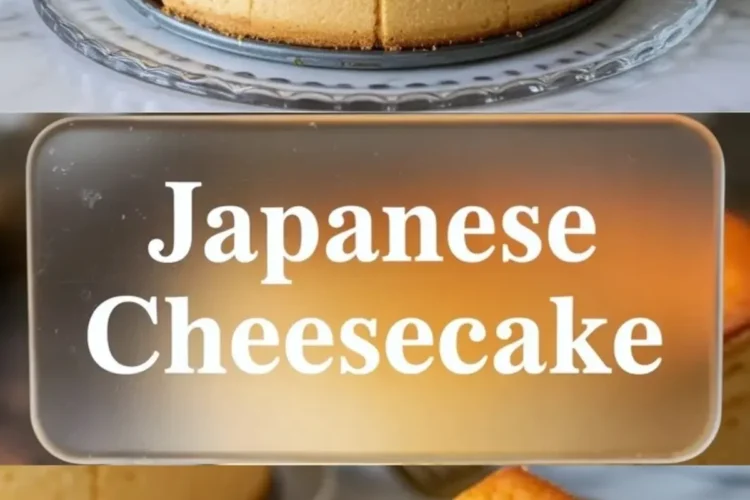
This japanese cheesecake recipe creates a tall, airy Japanese cotton cheesecake with a soft bounce and gentle sweetness. Many readers search for japanese cheesecake recipes, how to make japanese cheesecake, or light cheesecake recipes, and this easy method delivers a fluffy cheese cake that feels like a true japanese fluffy cake and classic japanese food dessert.
The key lies in a stable meringue folded into a smooth cream cheese base, which gives that signature jiggle you see in different kinds of cheesecake from Japan. The result tastes light, slightly tangy, and tender, closer to a Japanese fluffy cheese cake than a dense New York style slice.
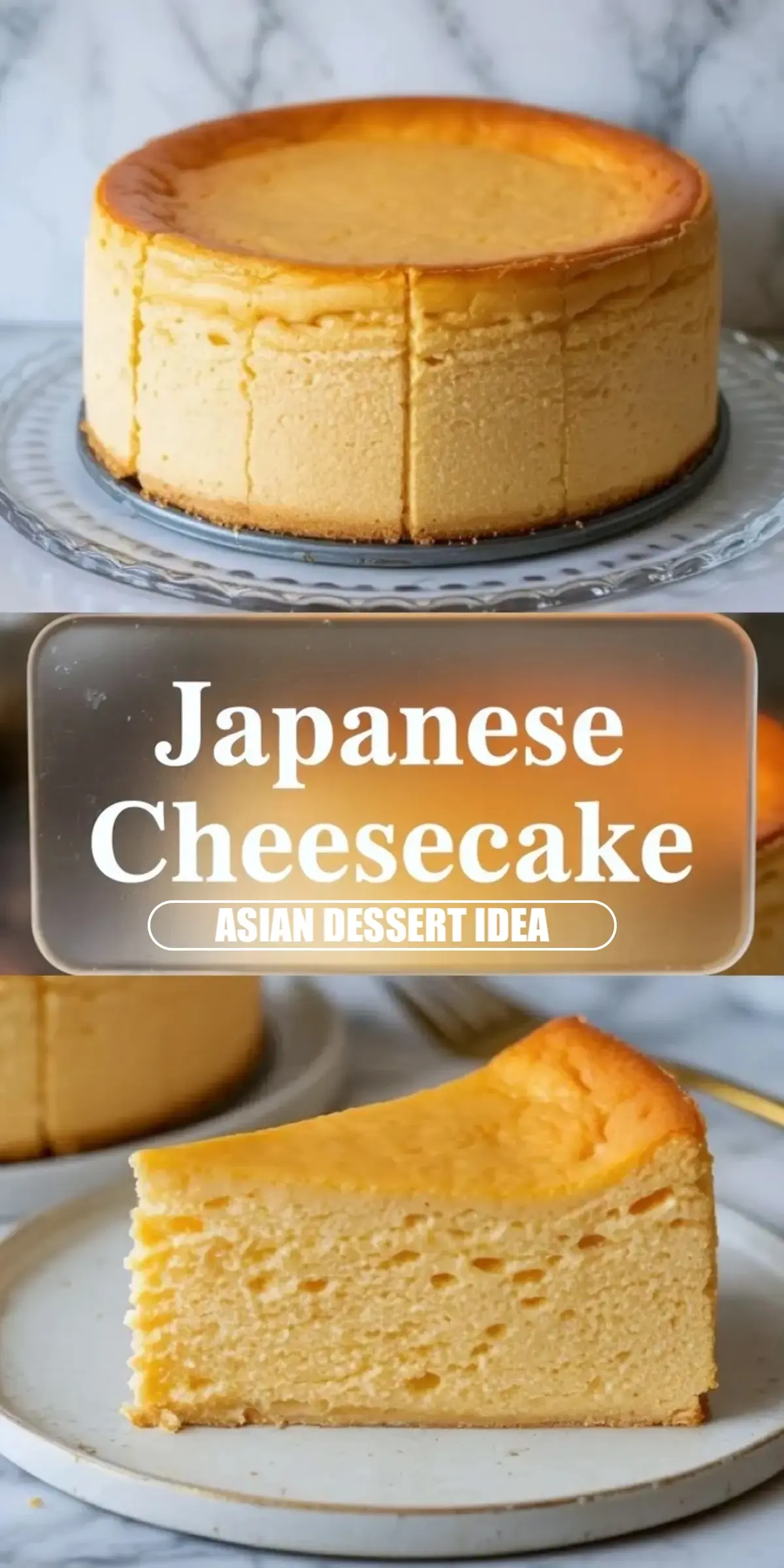
This cake works because of the ratio between cream cheese, eggs, and sugar, plus the way you build air into the batter. Six eggs for eight ounces of cream cheese may sound bold, but that structure gives lift and keeps the crumb soft.
A gentle water bath at 320°F keeps the texture even and prevents harsh browning. I learned that steady heat matters more than high heat, especially if you want that smooth top you see in a zojirushi cheesecake.
Ingredients You Need
Cream cheese forms the base and provides mild tang, so choose full fat and let it reach room temperature for a smooth blend. Butter adds richness and helps the crumb stay tender, much like the balance I use in my Chocolate Chip Cookie Dough Cheesecake Recipe when I want structure with softness.
Whole milk loosens the batter and keeps the cake light instead of heavy. Cake flour creates a fine crumb, and a spoon of cornstarch stabilizes the structure without turning the cake dense.
Egg yolks enrich the base, and egg whites create lift, so separation must stay clean. Sugar sweetens and stabilizes the meringue, and a small pinch of cream of tartar supports soft peaks.
Technique Spotlight: The Meringue
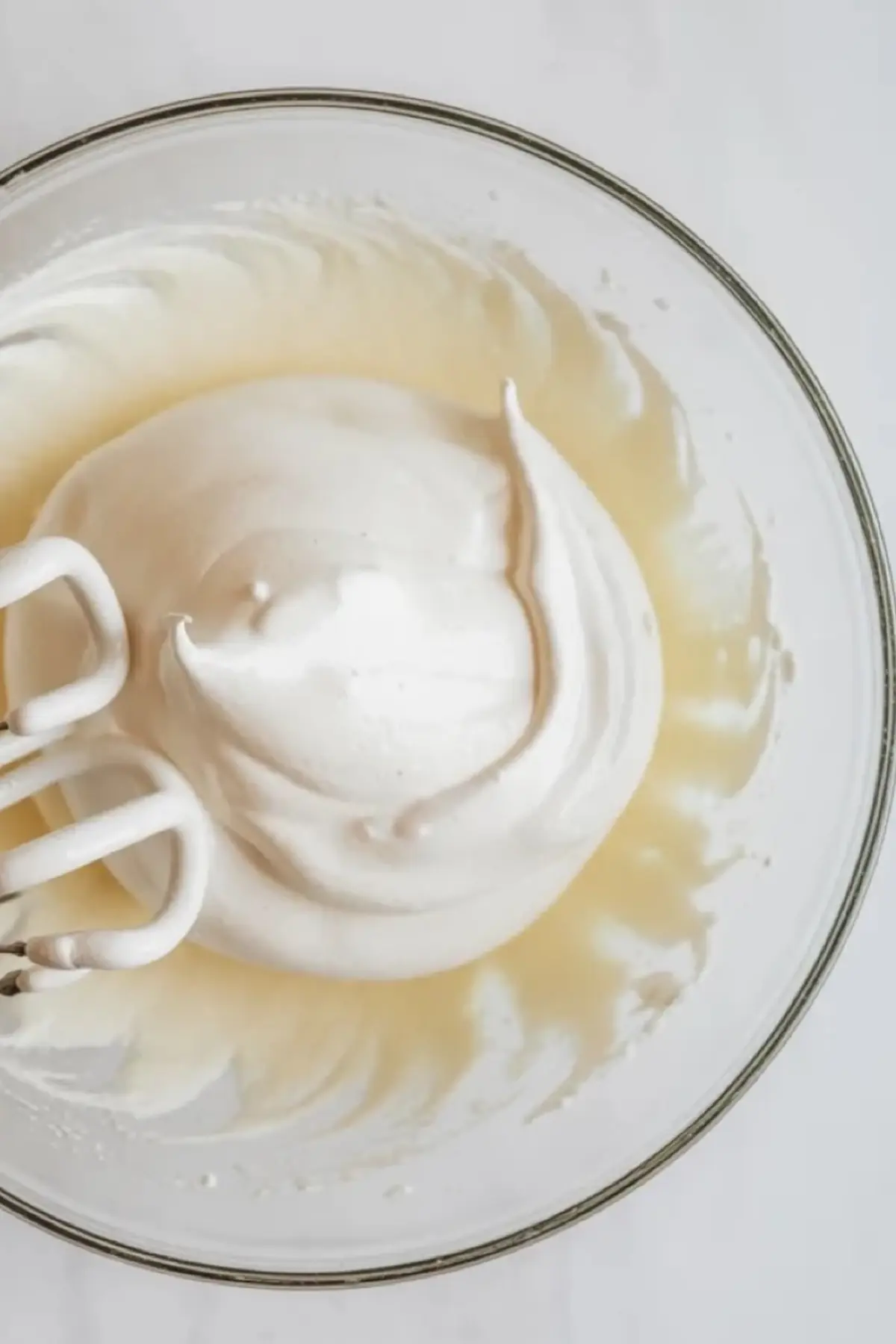
The meringue determines the final height and texture of this Japanese dessert. You want glossy soft peaks that hold a gentle curl, not stiff peaks that stand sharp and dry.
If the peaks look dull or grainy, you have gone too far, and the cake may crack. I stop mixing once the whisk leaves lines in the foam and the tip bends softly, which reminds me of the airy texture in my Japanese Souffle Pancakes.
How To Make Japanese Cheesecake
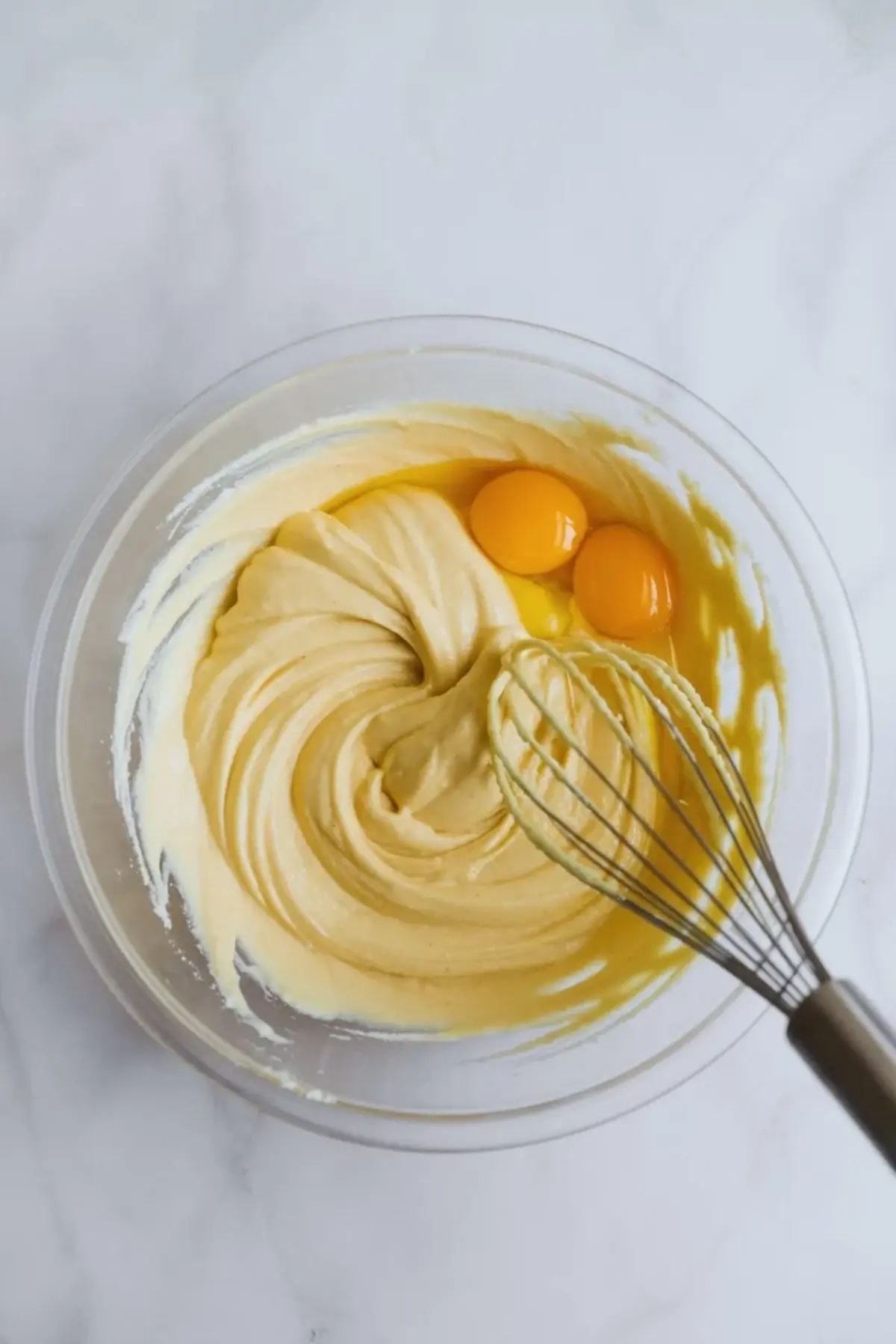
You melt cream cheese, butter, and milk over gentle steam, then cool the mixture slightly before adding yolks one by one. The batter should look smooth and silky before you sift in flour and cornstarch.
You fold one third of the meringue first to lighten the base, then add the rest in two slow additions. Use broad strokes and rotate the bowl, and pause if you feel rushed, because air gives you that fluffy cheese cake crumb.
You pour the batter into a lined pan, tap it lightly, and bake it in a water bath for about 75 minutes. The top turns light golden, and the center jiggles gently when you shake the pan.
How To Tell It Is Done
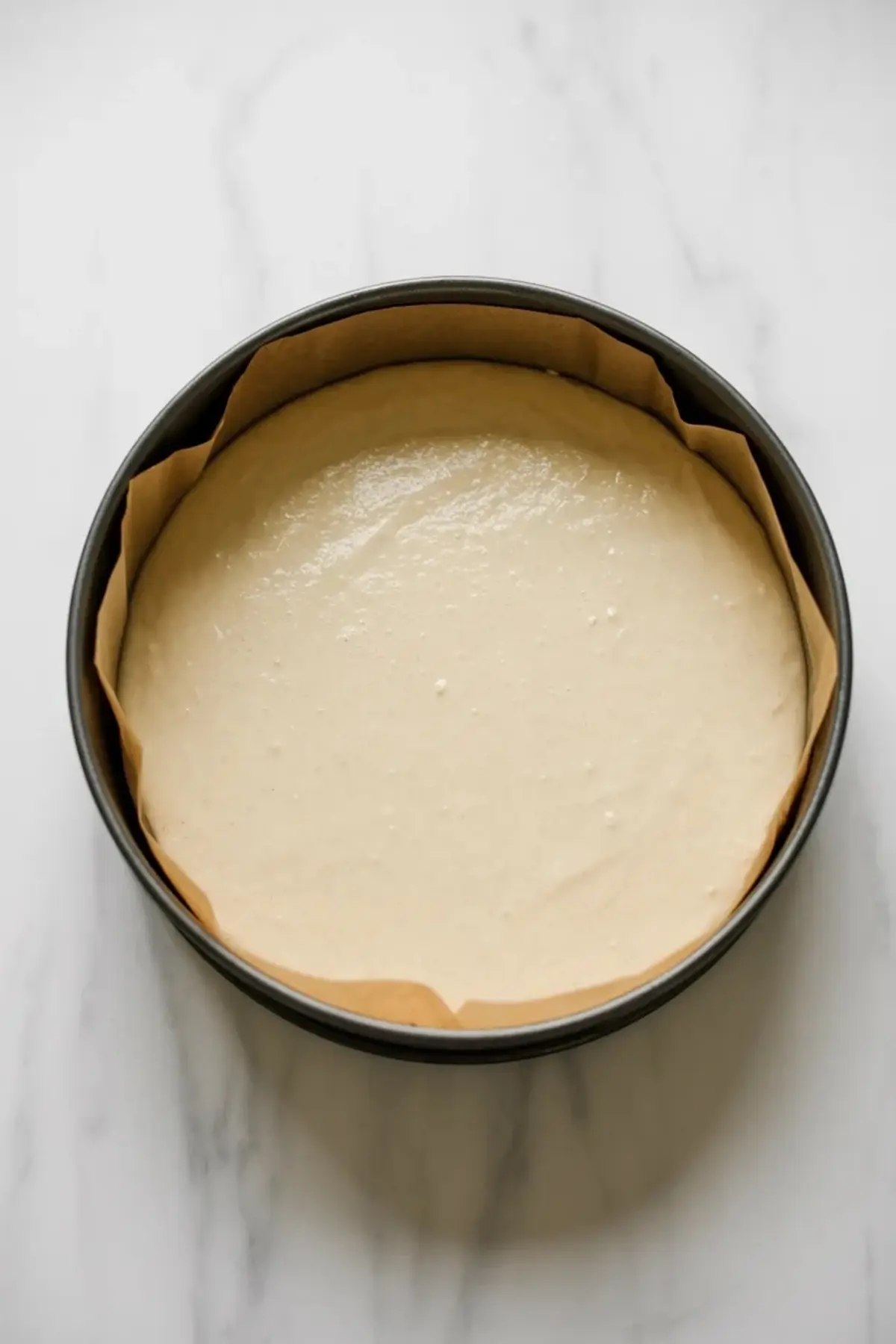
The surface should feel set and spring back lightly when touched. The center should wobble as one piece, not ripple like liquid.
If the cake rises high and then sinks sharply, the meringue likely overwhipped or cooled too fast. Gradual cooling inside the oven keeps the structure steady, similar to how I cool my Almond Amaretto Cheesecake for a smooth finish.
Troubleshooting
If the cake cracks, check your meringue and oven temperature. Too much air or too much heat causes splitting at the top.
If the texture feels dense, you may have folded too firmly and lost volume. Gentle folding and a clean bowl for the whites prevent that issue.
Ways To Change It
You can add lemon zest to brighten the flavor and shift it into a citrus japanese fluffy cake. A tablespoon of matcha in the flour creates a green tea version that feels classic and fresh.
A mango topping pairs beautifully with this soft base, and my Homemade Mango Mochi shows how well tropical fruit complements light sponge style desserts.
Practical Tips
You can keep the cake at room temperature for one day under a dome. Refrigeration keeps it fresh for up to four days and firms the crumb slightly.
You can freeze slices tightly wrapped for one month, then thaw overnight in the fridge. The texture stays soft, though slightly less jiggly after freezing.
Room temperature ingredients blend smoothly and prevent lumps in the base. A double sift of flour keeps the crumb delicate and fine.
A well wrapped pan prevents water leaks in the bath, and a stable oven temperature keeps the top even. I check my oven with a thermometer, because small shifts change this cake more than you expect.
How To Serve It
You can dust the top with powdered sugar for a simple finish. Fresh berries add color and contrast without overpowering the gentle flavor.
I often serve it plain with tea, because the texture speaks for itself. That soft bounce always draws a smile.
Save This Recipe
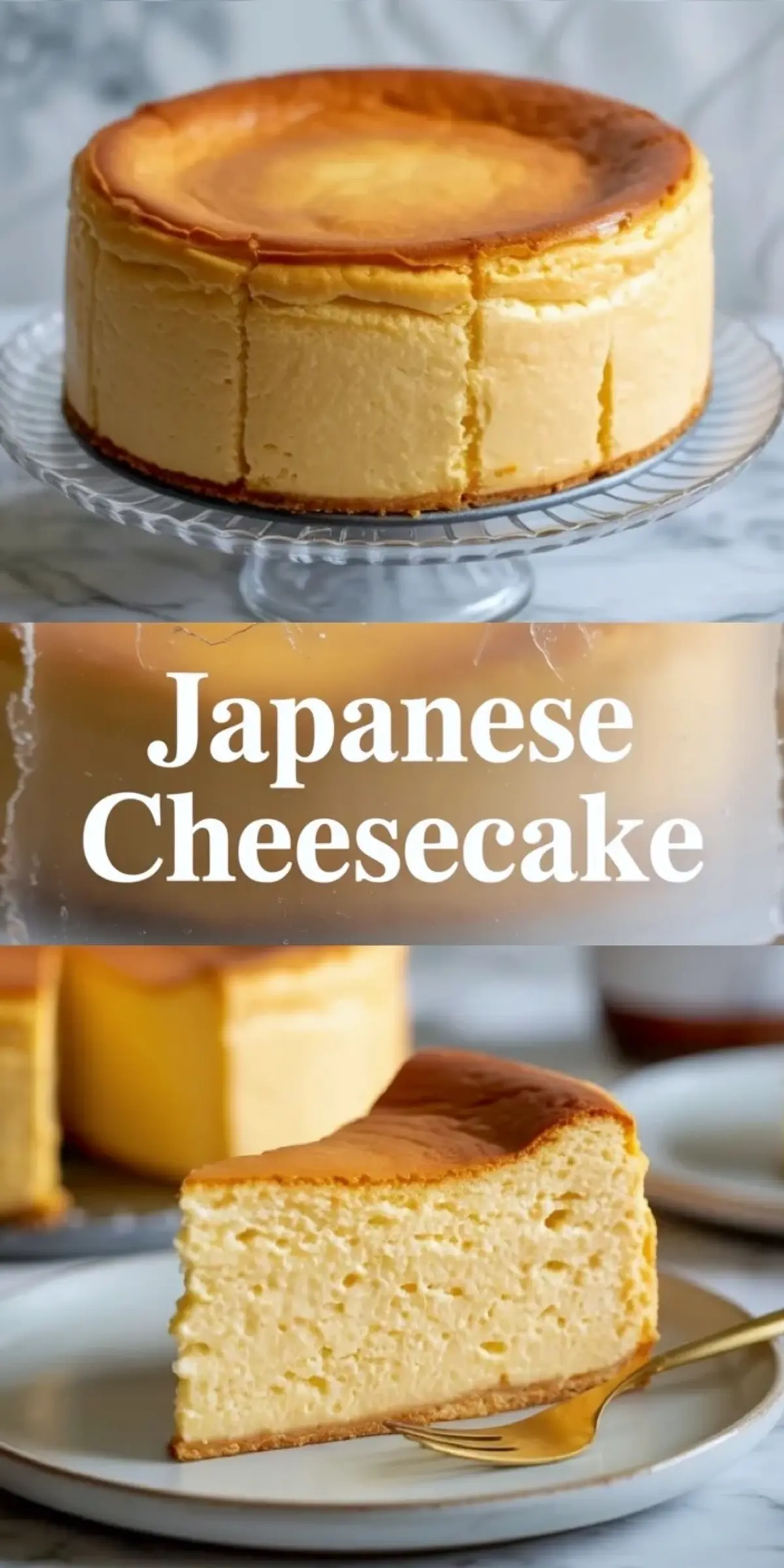
If you love light cheesecake recipes and want to master how to make japanese cheesecake at home, save this to your dessert board for later. Pin it now so you can return to it when you crave a true japanese cotton cheesecake.
I would love to hear how your japanese fluffy cheese cake turns out, so share your results or questions in the comments. Your notes help other readers and build our baking community.
Japanese Cheesecake Recipe
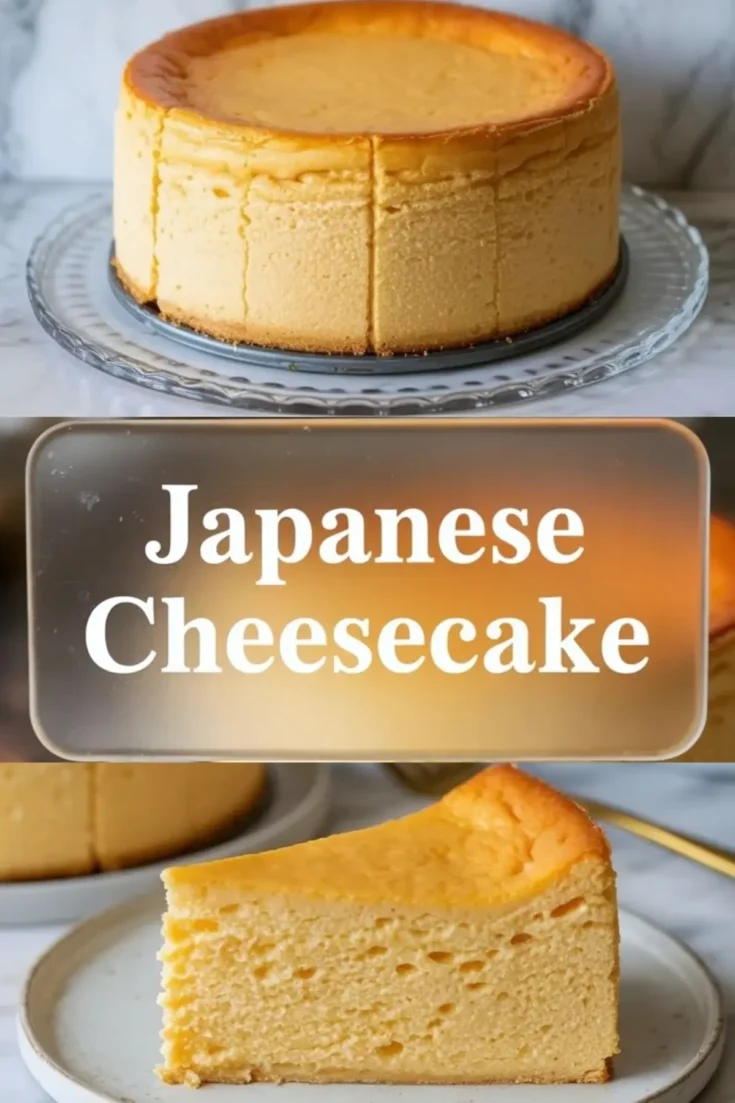
This Japanese Cheesecake Recipe creates a tall, airy Japanese Cotton Cheesecake with a delicate texture and subtle sweetness. Known as Japanese Fluffy Cheese Cake, this light dessert combines the richness of cheesecake with the bounce of a sponge, giving you a true fluffy cheese cake experience. Learn how to make Japanese cheesecake step by step for a soft, jiggly Japanese fluffy cake that stands out from other different kinds of cheesecake. The method is simple enough for an easy baking project, yet impressive enough for guests. Inspired by classic Japanese food dessert traditions and even the popular Zojirushi cheesecake, this elegant Japanese dessert is one of the best light cheesecake recipes to add to your baking list.
Ingredients
- 8 oz (225 g) cream cheese, softened
- 4 tablespoons (60 g) unsalted butter
- 1/2 cup (120 ml) whole milk
- 6 large eggs, separated
- 3/4 cup (150 g) granulated sugar, divided
- 1 cup (120 g) cake flour or all-purpose flour sifted twice
- 1 tablespoon cornstarch
- 1 teaspoon vanilla extract
- 1/4 teaspoon salt
- 1/4 teaspoon cream of tartar (optional)
- Powdered sugar for dusting (optional)
Instructions
PREPARE THE PAN:
Preheat the oven to 320°F (160°C). Line the bottom of an 8-inch round springform pan with parchment paper. Lightly grease the sides and line them with parchment paper to support the rise. Wrap the outside of the pan tightly with aluminum foil to prevent water from entering during baking.
MAKE THE CREAM CHEESE BASE:
Place cream cheese, butter, and milk in a heatproof bowl. Set the bowl over a pot of simmering water and stir until the mixture becomes smooth and fully melted. Remove from heat and cool slightly. Add egg yolks one at a time and mix well after each addition. Stir in vanilla extract and salt. Sift in cake flour and cornstarch, then mix gently until smooth and lump-free. Avoid overmixing to keep the batter light.
PREPARE THE MERINGUE:
Add egg whites and cream of tartar to a clean mixing bowl. Beat on medium speed until foamy. Gradually add the sugar in three additions while continuing to beat. Stop when soft peaks form. The meringue should look glossy and hold a gentle curl at the tip. Overbeating can create cracks during baking.
FOLD THE BATTER:
Add one-third of the meringue to the cream cheese mixture and gently mix to lighten the batter. Fold in the remaining meringue in two additions using a spatula. Use slow, sweeping motions and rotate the bowl as you fold. Maintain as much air as possible to keep the texture fluffy.
PREPARE THE WATER BATH:
Pour the batter into the prepared pan. Tap the pan lightly on the counter to release large air bubbles. Place the pan inside a larger baking dish. Pour hot water into the outer dish until it reaches halfway up the sides of the cake pan.
BAKE THE CHEESECAKE:
Transfer the water bath carefully into the oven. Bake for 70 to 80 minutes. The top should turn golden brown and the center should jiggle slightly when gently shaken.
COOL GRADUALLY:
Turn off the oven and leave the door slightly open. Allow the cake to cool inside the oven for 20 minutes. Remove the cake and let it cool completely at room temperature before removing it from the pan. Gradual cooling helps prevent collapse and shrinking.
Notes
Room temperature ingredients blend more smoothly and create a uniform batter.
Use a clean, grease-free bowl for whipping egg whites to ensure stable peaks.
Avoid opening the oven door during baking to maintain even heat.
Chill the cake for 1–2 hours before serving for a slightly firmer texture.
Dust with powdered sugar just before serving for a simple finish.
Nutrition Information
Yield
10Serving Size
1Amount Per Serving Calories 340Total Fat 16gSaturated Fat 9gUnsaturated Fat 7gCholesterol 149mgSodium 174mgCarbohydrates 42gFiber 0gSugar 20gProtein 8g
