
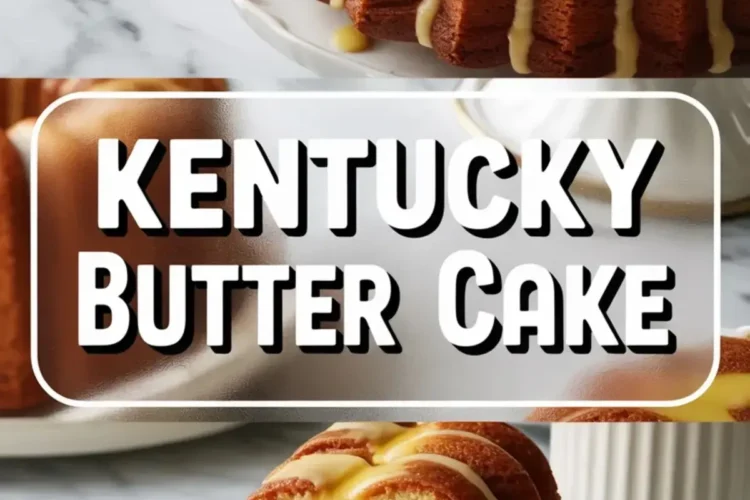
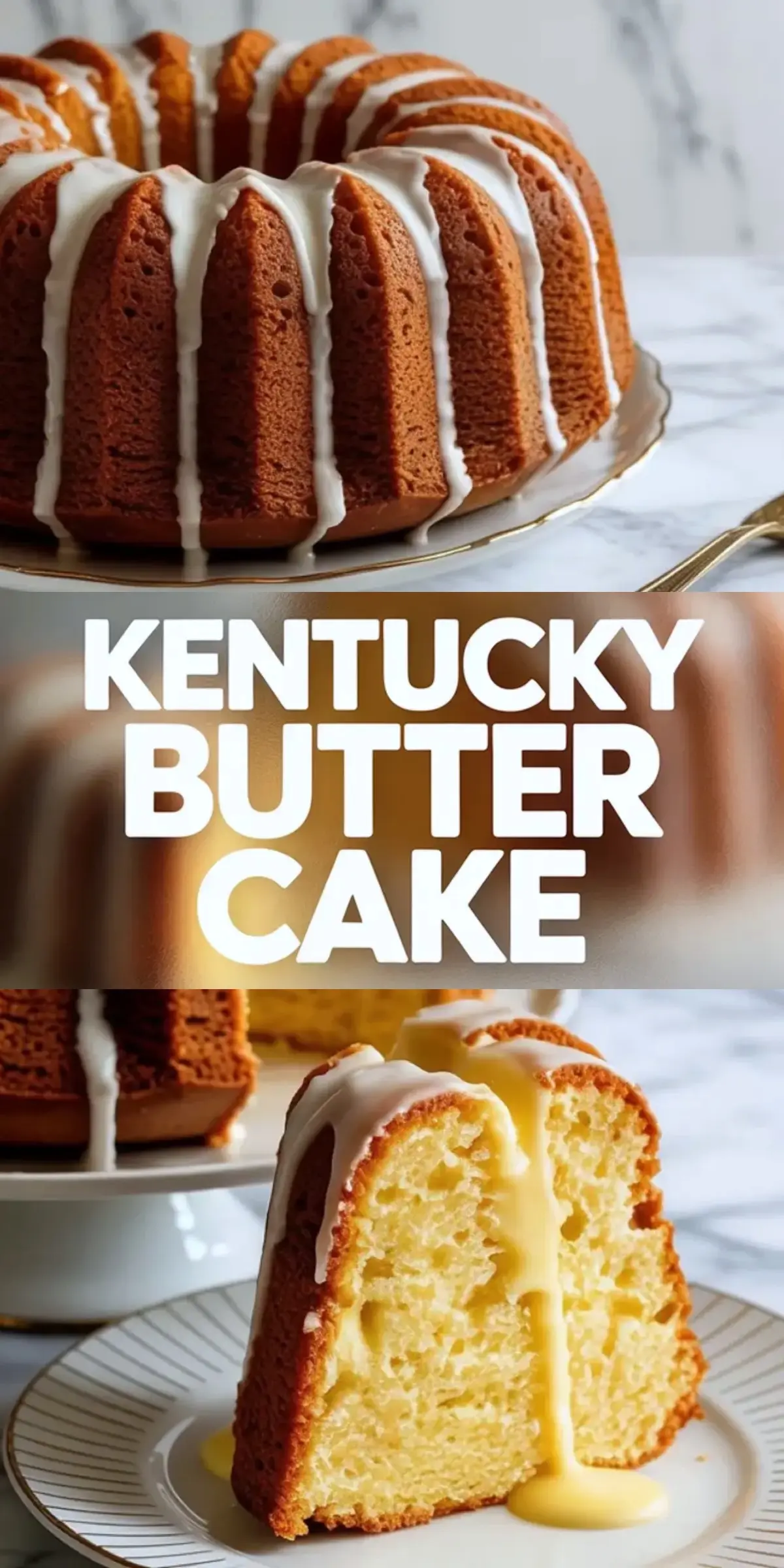
This Kentucky butter cake recipe makes a dense, moist buttermilk Bundt cake that is soaked, while still warm in the pan, with a glaze of butter, sugar, water and vanilla. It bakes at 325°F for 60 to 70 minutes in a 12 cup Bundt pan and gives 12 to 16 slices.
The trick is the poke and pour. You stab holes all over the hot cake and pour the glaze in slowly, so it sinks into the crumb instead of sitting on top. Plan on about 3 hours and 20 minutes from start to slicing, most of it cooling time.
Following a special diet?
Every recipe on this site can be converted to gluten-free, vegan, dairy-free, keto, nut-free or egg-free with adjusted ratios so nothing falls flat.
Try the Recipe Converter →- Pan: one 12 cup Bundt pan, greased and floured in every ridge
- Oven: 325°F (165°C), 60 to 70 minutes
- Cake: 3 cups flour, 2 cups sugar, 1 cup butter, 4 eggs, 1 cup buttermilk
- Glaze: ¾ cup sugar, ⅓ cup butter, 3 tablespoons water, 2 teaspoons vanilla
- Cooling: about 2 hours in the pan before you turn it out
- Keeps: 4 days covered at room temperature, 1 week in the fridge, 2 months frozen
Kentucky Butter Cake vs Pound Cake
People often call this a Kentucky butter pound cake, and the slice does look like one. The method is different, though. A traditional pound cake creams butter and sugar for a long time, adds eggs one by one, and often uses no baking powder at all.
Kentucky butter cake is a one-bowl cake. The dry ingredients go in first, then the soft butter, eggs, buttermilk and vanilla all at once, and the mixer does the work in 3 minutes. Buttermilk with baking powder and baking soda gives a little lift and a soft tang. Then comes the part a pound cake never gets: a hot butter glaze that soaks right through. The recipe most bakers know goes back to a 1963 Pillsbury Bake-Off entry, which is why so many versions share the same glaze.
For a creamed, coconut-scented loaf instead, my coconut pound cake uses the classic pound cake method. For the same flavor in a cookie, try these Kentucky butter cake cookies.
What Goes Into the Batter
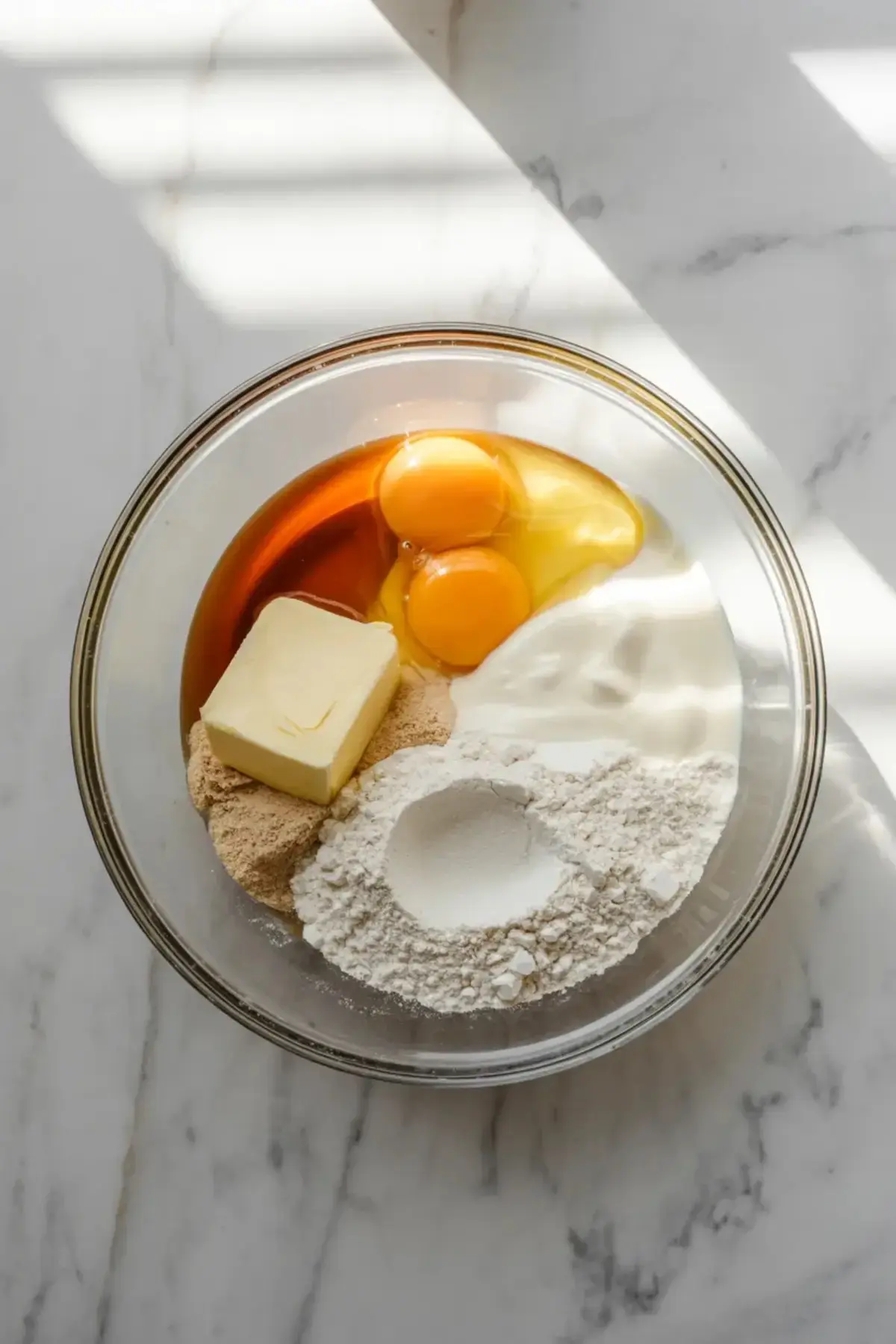
All-purpose flour gives a slice that holds firm under a wet glaze. Cake flour would make a softer cake that can turn soggy once it is soaked. Granulated sugar sweetens and helps trap air during the long beat.
Use unsalted butter so the salt stays in your hands. It needs to be properly soft, so a finger leaves an easy dent. Firm butter will not blend in a one-bowl batter, and you end up with greasy streaks and a dense band in the cake. Four large eggs give the tight, rich crumb.
The buttermilk should be at room temperature. Cold buttermilk hits the soft butter and the batter looks curdled and lumpy. Its acid also feeds the baking soda and keeps the crumb tender. Leftover buttermilk goes straight into a buttermilk pie.
Mixing and Baking the Cake
Heat the oven to 325°F. Grease and flour the Bundt pan, every curve and the center tube. A baking spray that contains flour is the most reliable way to reach into the ridges.
Whisk the flour, sugar, baking powder, baking soda and salt in a large bowl. Add the butter, eggs, buttermilk and vanilla. Mix on low until the flour disappears, then beat on medium for a full 3 minutes.
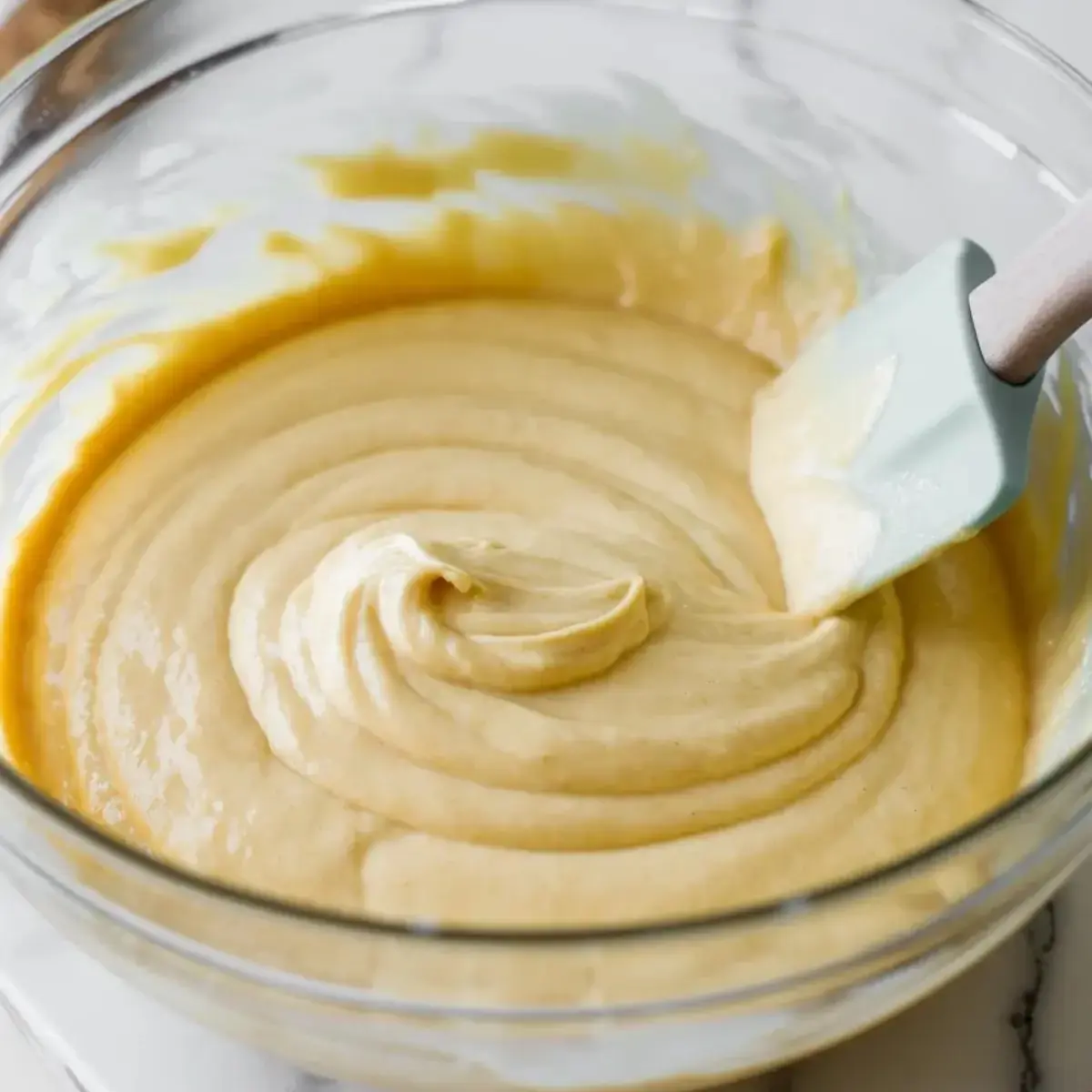
Those 3 minutes matter. The batter turns from heavy and slightly grainy to smooth, pale and thick, like soft frosting. That beat is what gives a fine, even crumb instead of a coarse one.
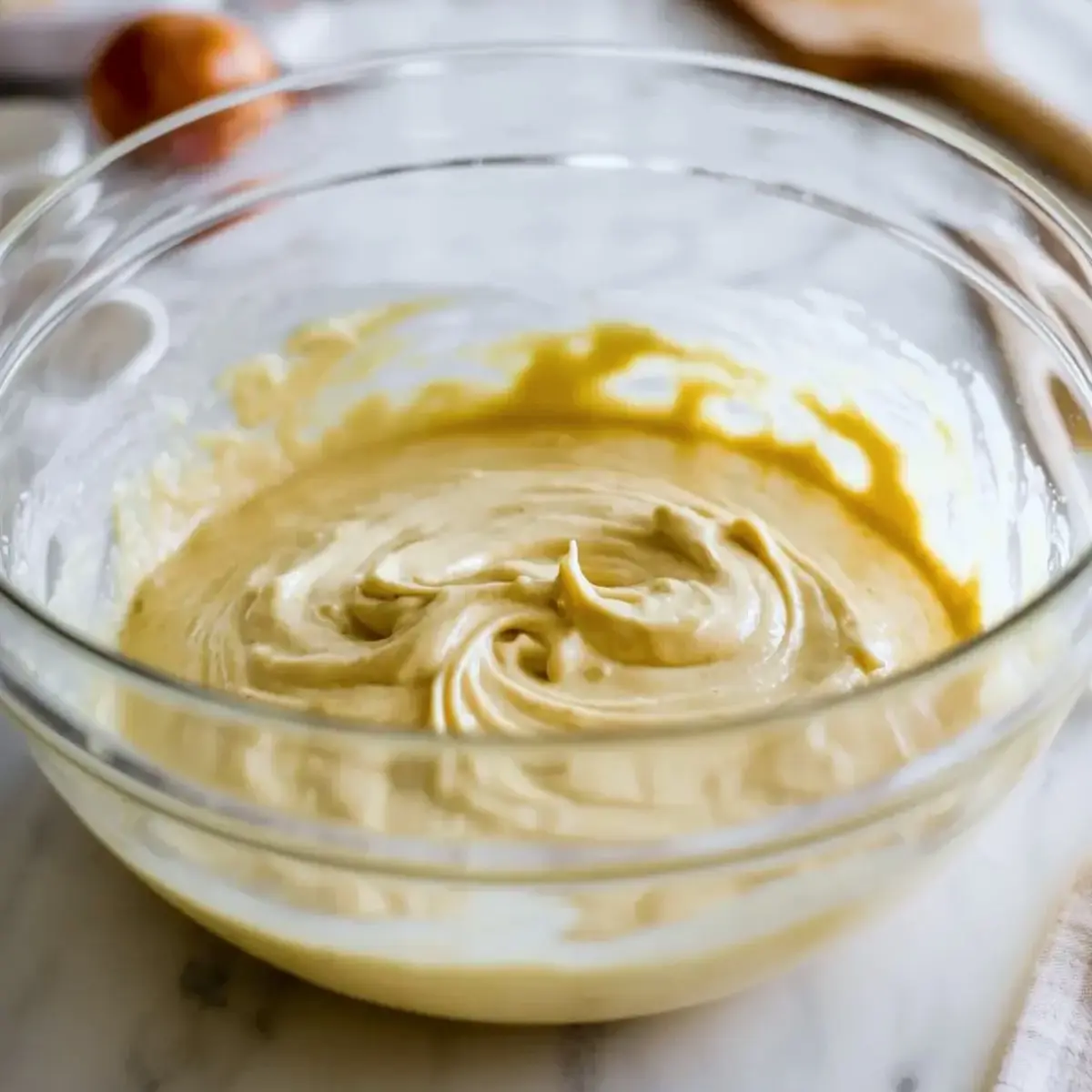
Scrape the batter into the pan and smooth the top. It will look like a lot. That is why the recipe needs the full 12 cup pan, since a 10 cup Bundt can overflow.
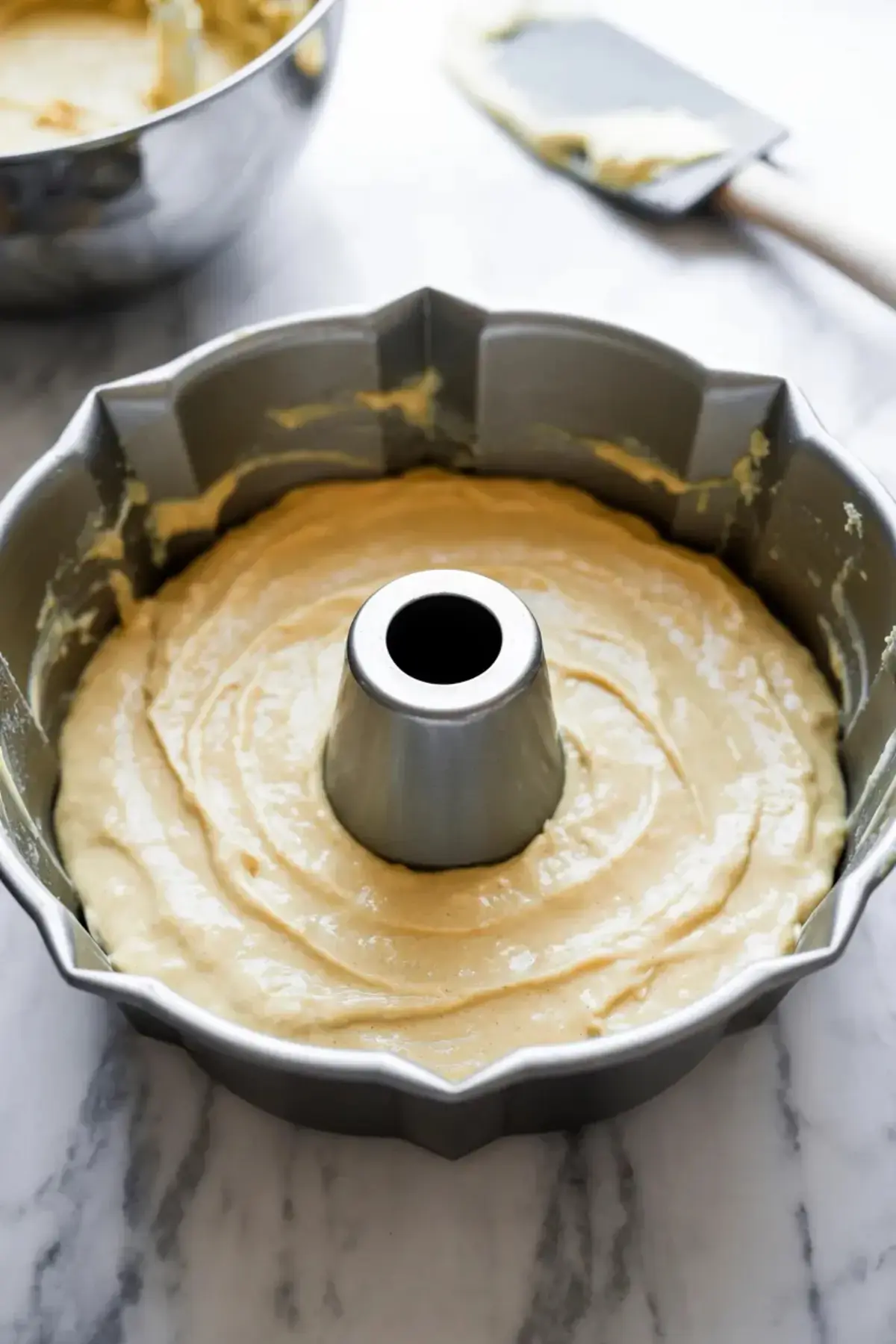
Bake for 60 to 70 minutes. The low oven lets this heavy batter bake through to the center before the outside gets too dark.
How to Tell the Cake Is Baked Through
Start checking at 60 minutes. A skewer pushed into the thickest part should come out clean or with a few moist crumbs, never wet batter. The top will have a crack that looks dry inside, and the edges will just start to pull away from the pan.
With a thermometer, a dense butter cake like this one is done at about 205 to 210°F in the middle. Color alone can fool you here, because the top browns well before the center sets.
The Butter Glaze and How to Soak It In
Make the glaze while the cake bakes. Put the sugar, butter and water in a small saucepan over medium heat and stir until the sugar dissolves and the mixture reaches a gentle simmer. Take it off the heat, stir in the vanilla, and do not let it boil. A boiled glaze gets thick and syrupy and stays on the surface.
Leave the hot cake in the pan and set it on a rack. Poke holes all over with a skewer, about 1 inch apart and almost to the bottom. Run a thin knife between the cake and the pan, around the outside and the center tube.
Pour the warm glaze in 3 or 4 rounds and wait for each one to sink before adding more. Send some down the gaps along the sides and around the tube. The side facing up in the pan becomes the base once the cake is turned out, so this is how the fluted top and sides get their buttery, sticky outside too.
Getting a Glazed Bundt Out of the Pan
Let the cake cool completely in the pan, about 2 hours. It is soft and wet with glaze while warm and can break if you rush it. Then put a plate on top and flip.
If it will not drop, the sugar has set against the pan. Stand the pan in a few centimetres of hot water for 3 to 5 minutes, or warm it in a low oven for a few minutes, then try again. Most stuck cakes come down from ridges that were missed when greasing, so be generous next time.
Bourbon, Lemon and Almond Versions
For a Kentucky bourbon butter cake, swap the 3 tablespoons of water in the glaze for bourbon. Keeping the total liquid the same keeps the glaze thin enough to soak in. A gentle simmer does not cook the alcohol off, so leave it out for children.
One tablespoon of lemon zest in the batter brightens it, and ½ teaspoon of almond extract with the vanilla adds a bakery note. For more bourbon and butter, my peach bourbon dump cake is a quick fall bake, and a Derby pie sits well next to this cake on a Kentucky Derby table.
Storing, Freezing and Serving
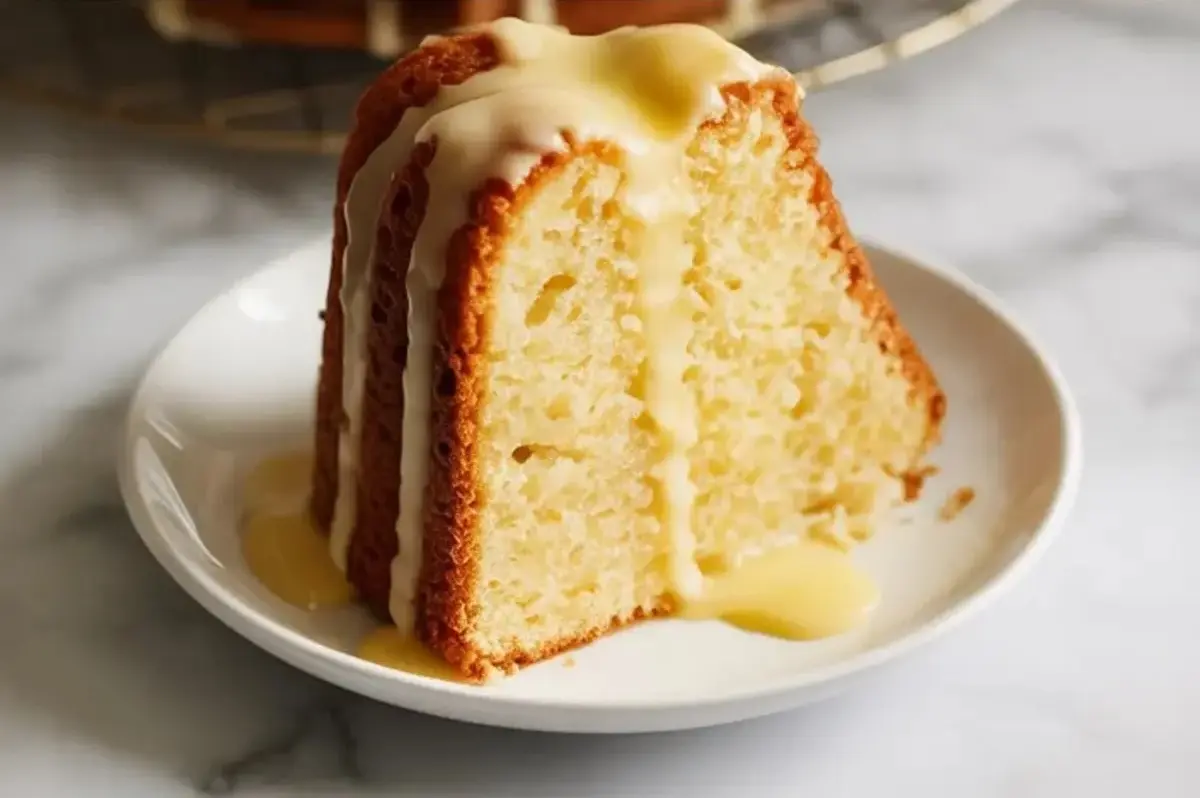
Keep the cake covered at room temperature for up to 4 days. It slices more cleanly and tastes more buttery on day two, so it is a good cake to bake a day ahead. Refrigerate it for up to 1 week, and bring slices back to room temperature before serving.
To freeze, wrap slices tightly and freeze for up to 2 months. Thaw them at room temperature, still wrapped, so the glaze does not get sticky with condensation.
Serve it plain with coffee, or with berries and a spoon of whipped cream. A warm strawberry compote cuts through the sweetness nicely. For another Bundt in the same family, the chocolate orange Bundt cake and matcha pound cake both bake in a dense, tight-crumbed style.
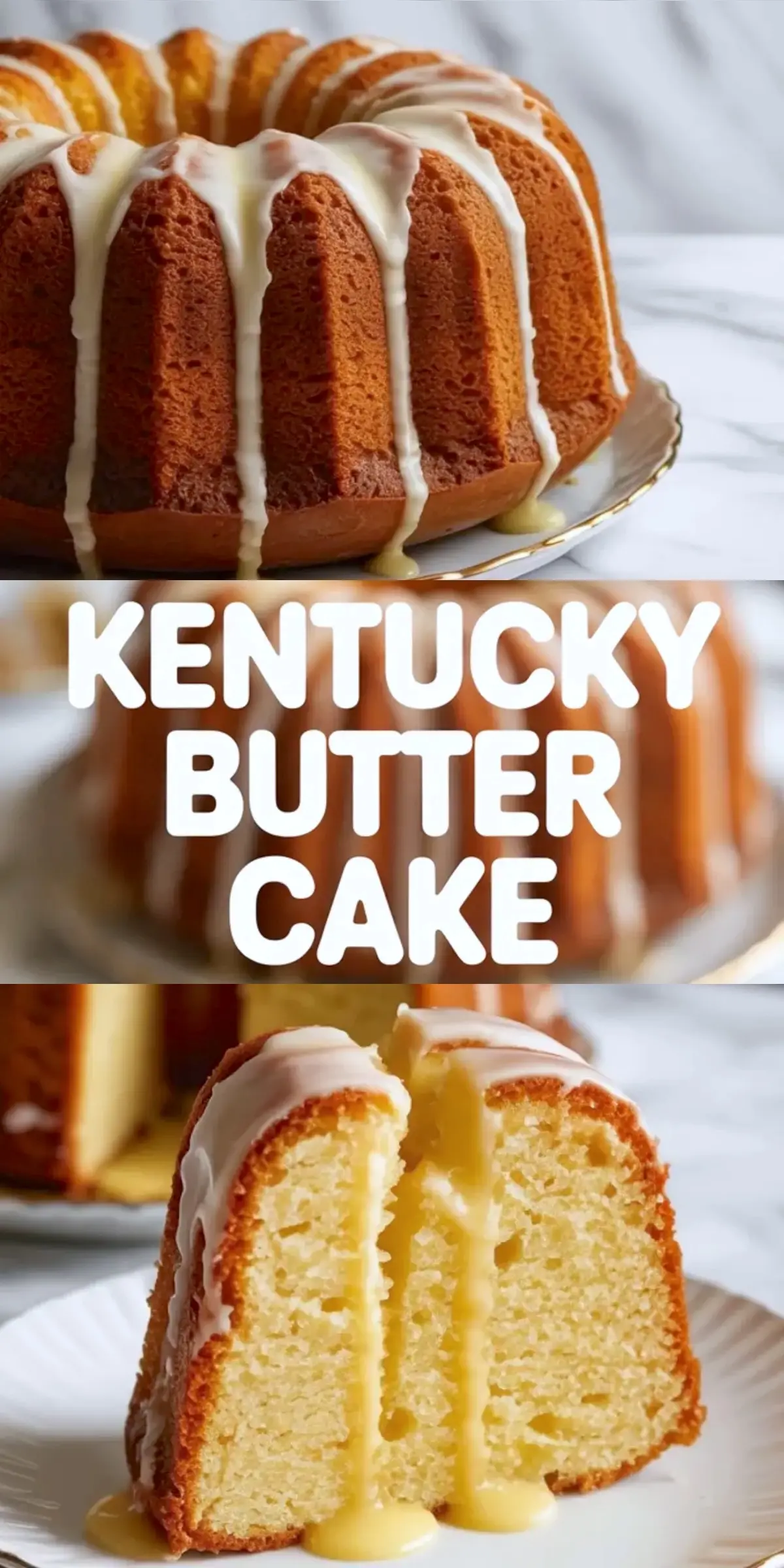
Pin this Kentucky butter cake to your Bundt cake board so it is ready for the next Derby party or holiday table. If you try the bourbon glaze, tell me in the comments how it soaked in.
Kentucky Butter Cake Recipe
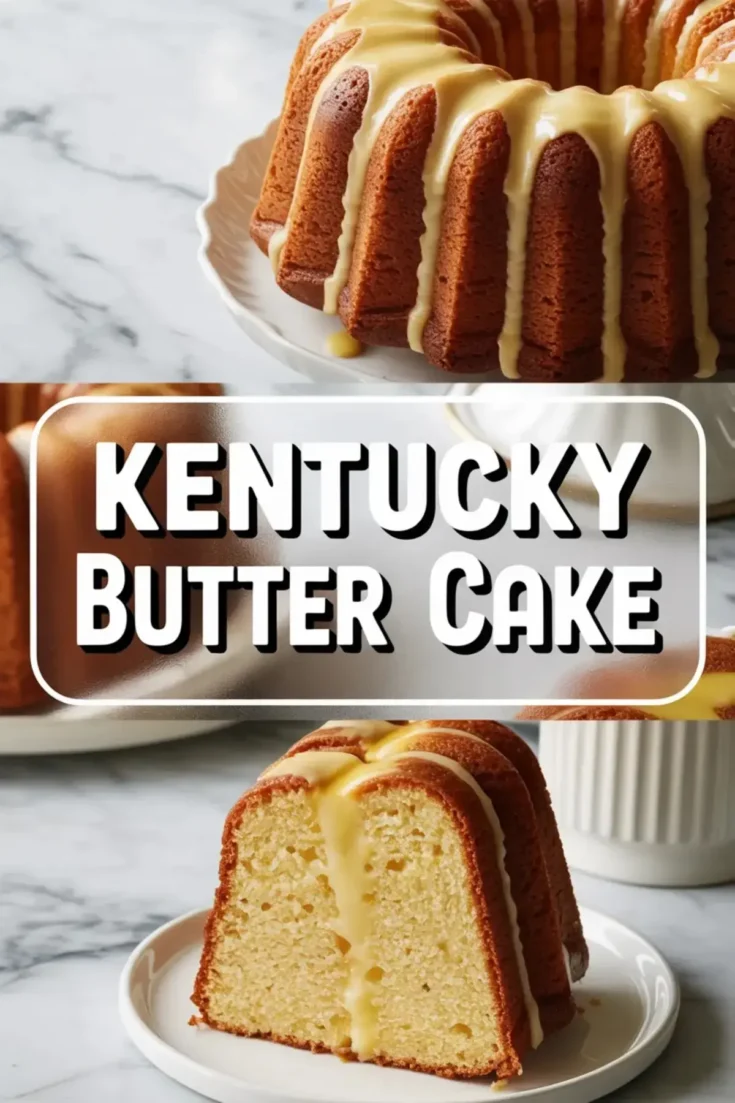
This Kentucky butter cake recipe is a dense, moist Bundt cake made with buttermilk, butter, eggs and sugar, then soaked in a warm butter glaze of sugar, butter, water and vanilla. It bakes at 325°F for 60 to 70 minutes in a 12 cup Bundt pan and gives 12 to 16 slices with a fine, tight crumb. The secret is to poke holes in the hot cake while it is still in the pan and pour the glaze in slowly, so it soaks through instead of sitting on top. Serve this Kentucky butter pound cake with coffee, berries and whipped cream, at a Derby party, or on a holiday dessert table. For a bourbon butter cake, swap the glaze water for bourbon. Keeps 4 days covered or freezes for 2 months.
Ingredients
- FOR THE CAKE
- 3 cups all-purpose flour
- 2 cups granulated sugar
- 1 teaspoon baking powder
- ½ teaspoon baking soda
- 1 teaspoon salt
- 1 cup (2 sticks) unsalted butter, softened
- 4 large eggs
- 1 cup buttermilk, at room temperature
- 2 teaspoons vanilla extract
- FOR THE BUTTER GLAZE
- ¾ cup granulated sugar
- ⅓ cup unsalted butter
- 3 tablespoons water
- 2 teaspoons vanilla extract
Instructions
- PREHEAT AND PREP: Preheat the oven to 325°F (165°C). Grease and flour a 12-cup Bundt pan thoroughly, making sure to coat every crevice. For ease and reliability, use a baking spray that includes flour.
- MIX THE DRY INGREDIENTS: In a large mixing bowl, whisk together the flour, sugar, baking powder, baking soda, and salt until well combined.
- ADD THE WET INGREDIENTS: Add the softened butter, eggs, buttermilk, and vanilla extract to the bowl with the dry ingredients. Mix on low speed using an electric mixer until just combined, then increase to medium speed and beat for 3 minutes until the batter is smooth and fluffy.
- BAKE THE CAKE: Pour the batter evenly into the prepared Bundt pan. Smooth the surface with a spatula and bake for 60–70 minutes, or until a toothpick inserted into the center of the cake comes out clean.
- MAKE THE BUTTER GLAZE: While the cake is baking, prepare the glaze. In a small saucepan over medium heat, combine the sugar, butter, and water. Stir continuously until the sugar is fully dissolved and the mixture reaches a gentle simmer. Remove from heat and stir in the vanilla extract. Do not let the glaze boil.
- GLAZE THE CAKE: When the cake is done, leave it in the pan and place it on a wire rack. While still warm, use a skewer or toothpick to poke holes all over the surface of the cake. Slowly pour the warm glaze over the cake, letting it soak into the holes. Allow the cake to cool completely in the pan, about 2 hours.
- REMOVE AND SERVE: Once fully cooled, carefully invert the cake onto a serving plate or cake stand. Slice and serve as desired. The flavor and texture improve after resting, so consider baking it a day in advance.
Notes
Use butter soft enough to dent easily and room temperature buttermilk, or the one-bowl batter can look curdled. Do not let the glaze boil; a boiled glaze thickens and will not soak in. Run a thin knife around the pan and pour some glaze down the sides and center tube so the outside gets glazed too. Let the cake cool completely in the pan, about 2 hours, before turning it out. If it sticks, stand the pan in hot water for a few minutes, then invert. For a bourbon version, replace the 3 tablespoons of water with bourbon (the alcohol does not cook off). Store covered at room temperature for up to 4 days, refrigerate for up to 1 week, or freeze wrapped slices for up to 2 months. The flavor is best on day two.
Nutrition Information
Yield
16Serving Size
1Amount Per Serving Calories 519Total Fat 19gSaturated Fat 11gUnsaturated Fat 8gCholesterol 92mgSodium 274mgCarbohydrates 80gFiber 1gSugar 44gProtein 7g

I followed this recipe to a T. When the timer went off and I went to take it out of oven, it had fallen in the center. What would cause this to happen?
Sorry it sank. The most common cause with this cake is a center that isn’t fully set. It needs the full 60 to 70 minutes at 325°F, and the toothpick should come out clean from the deepest part. An oven that runs cool, opening the door early, or beating the batter longer than 3 minutes can also make it fall.