
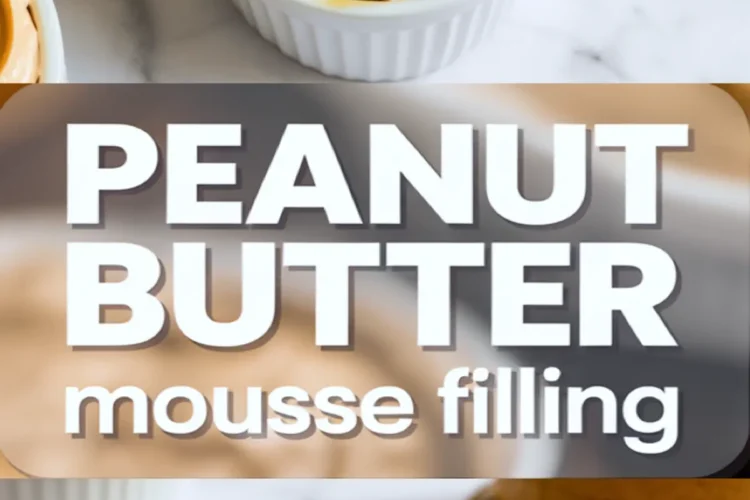
This peanut butter mousse filling is a light peanut butter cake filling made with creamy peanut butter, cream cheese, powdered sugar, vanilla and whipped heavy cream. It takes 15 minutes to make plus 30 minutes in the fridge, and one batch fills a 3 layer 8 inch cake or 24 cupcakes.
Cream cheese is what makes it work between cake layers. It gives the whipped cream enough body to hold without gelatin, so the filling stays soft and spoonable instead of rubbery. Whip the cream to stiff peaks first, beat the peanut butter base smooth, then fold the two together in three additions.
Following a special diet?
Every recipe on this site can be converted to gluten-free, vegan, dairy-free, keto, nut-free or egg-free with adjusted ratios so nothing falls flat.
Try the Recipe Converter →Numbers for One Batch
- Makes: enough to fill one 3 layer 8 inch cake or 24 cupcakes
- Time: 15 minutes, plus 30 minutes in the fridge for the firmest texture
- Ratio: 1 cup peanut butter and 8 oz cream cheese to 1½ cups heavy cream, whipped
- Sweetness: 1 cup sifted powdered sugar and 1 teaspoon vanilla
- Sets with: no gelatin or starch; the cream cheese and a short chill do the work
- Keeps: up to 3 days covered in the fridge; freezing is not recommended
Picking the Peanut Butter and Cream Cheese
Use a regular creamy peanut butter, the shelf-stable kind that does not separate in the jar. Natural peanut butter releases oil as you beat it. That oil coats the whipped cream and leaves the mousse loose and greasy. If your peanut butter is unsalted, add the pinch of salt. It makes the filling taste more of roasted peanuts and less of sweet cream.
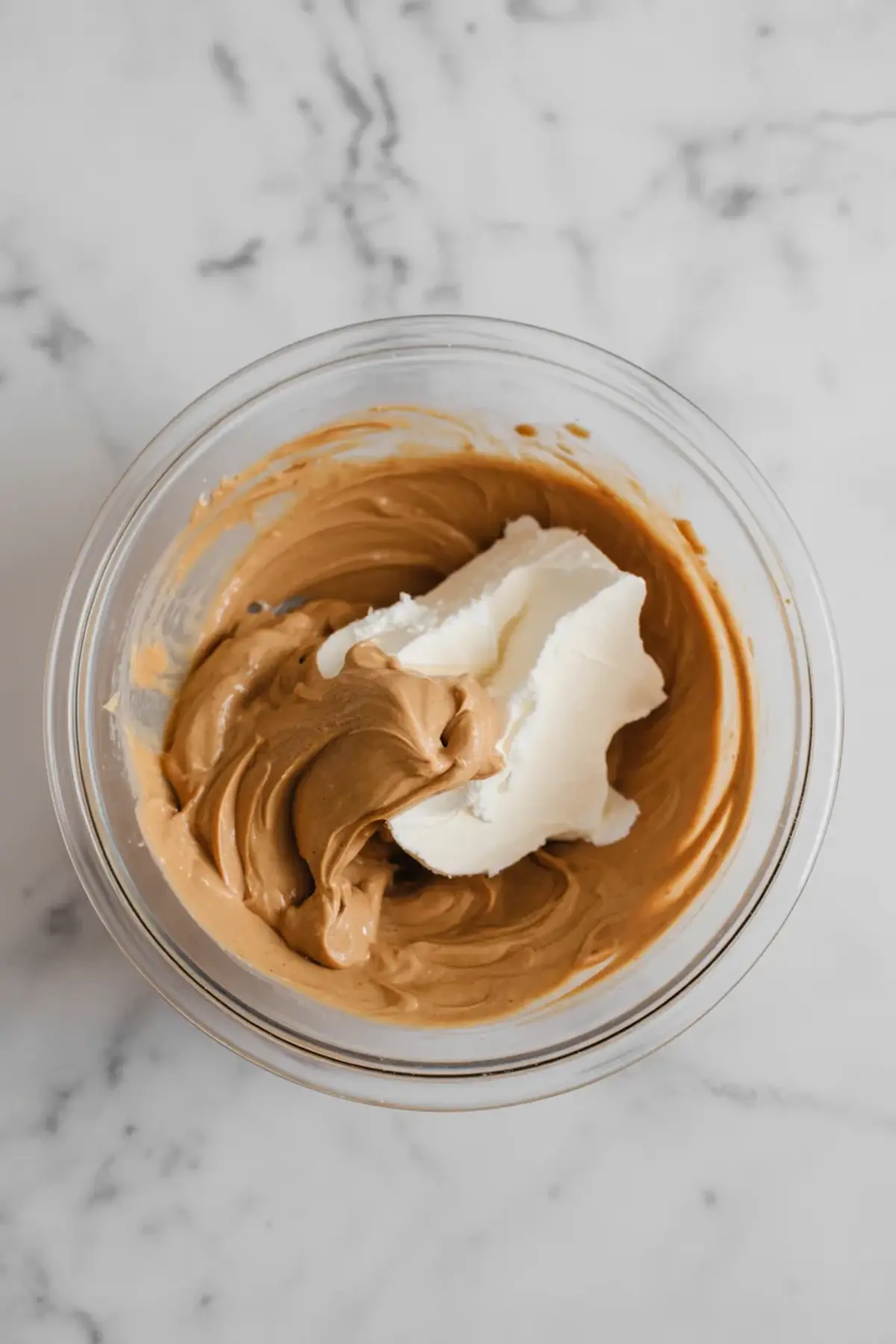
Let the cream cheese soften on the counter for about 30 minutes, until a finger presses in easily. Cold cream cheese leaves small white lumps, and no amount of folding fixes them later. Beat it with the peanut butter for 2 to 3 minutes until completely smooth, then add the vanilla and the sifted powdered sugar and beat again until light.
Whipping and Folding Without Losing the Air
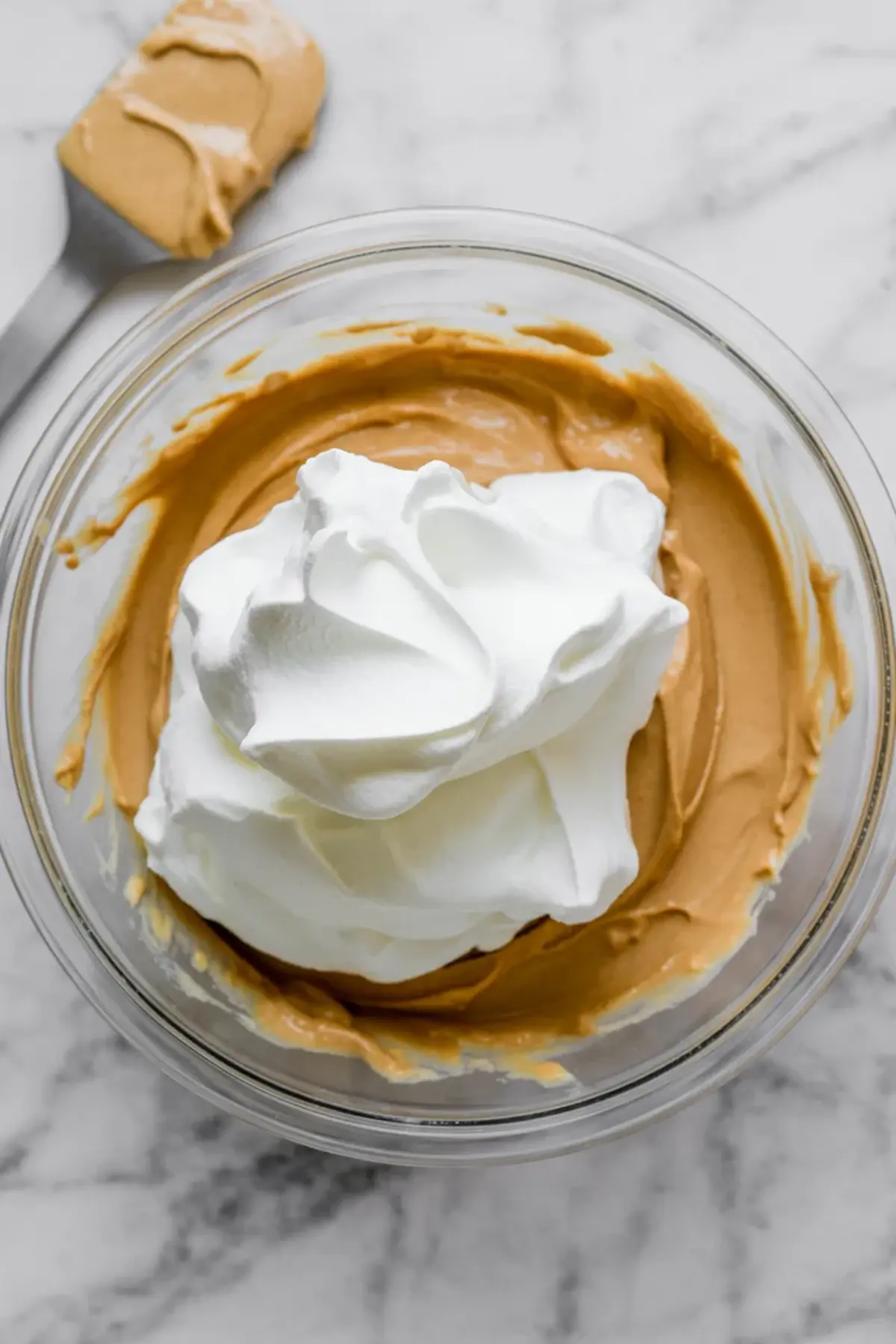
Whip the cold cream in a chilled bowl on medium-high until stiff peaks form. Lift the beater: the peak should stand straight up without curling over. Stop there. A few seconds longer and the cream turns lumpy and dull, then grainy. If that happens, fold in 2 or 3 tablespoons of cold unwhipped cream by hand and it smooths out again.
Keep the whipped cream in the fridge while you make the base. Then stir one third of it into the peanut butter mixture. You can be fairly firm with that first third, because its job is to loosen the heavy base. Fold in the rest in two more additions with a wide spatula, cutting down through the middle and sweeping up the side in a slow figure eight.
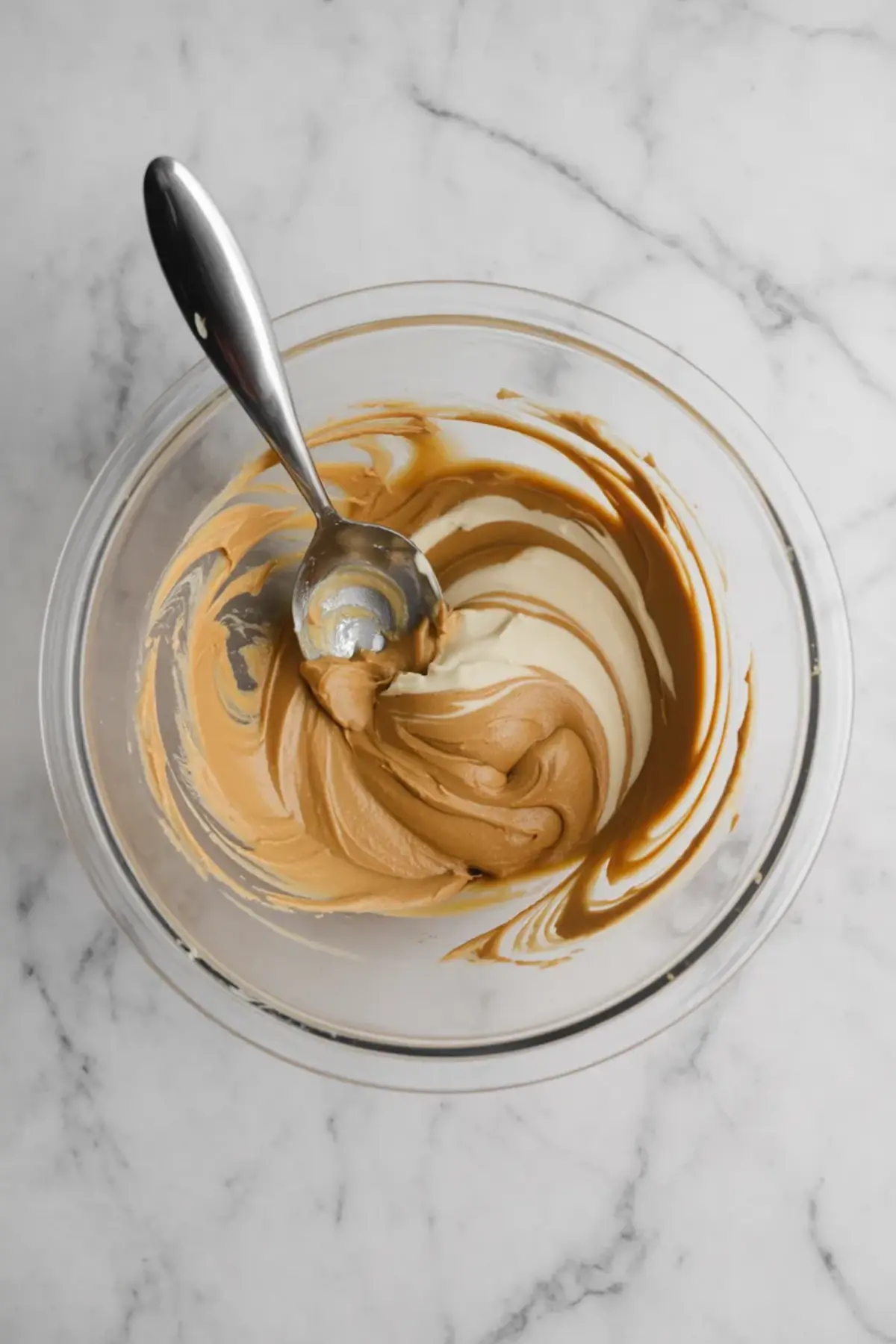
Stop as soon as the last white streaks disappear. The marbled stage in the photo above still needs a few more folds. Finished mousse looks even, pale tan and pillowy.
How Firm It Should Be Before Filling a Cake
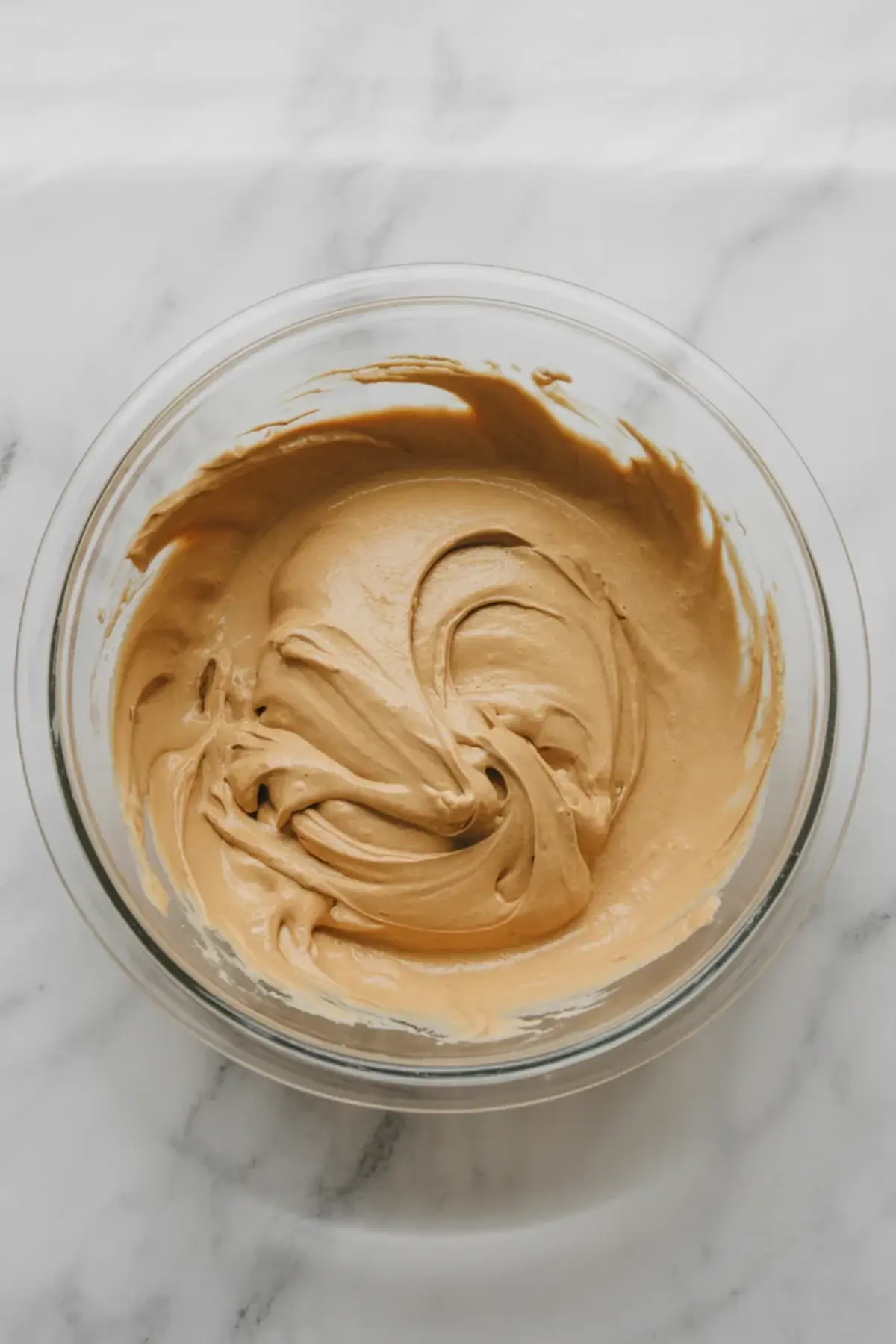
Straight after folding, the mousse is creamy and a little soft, close to soft-serve. Thirty minutes in the fridge firms it enough to pipe and stack while it stays light. To test, drag the back of a spoon through the bowl. If the groove keeps its edges, it is ready. If it slumps back, give it another 15 minutes.
Filling a Chocolate Cake With Peanut Butter Mousse
Chocolate cake with peanut butter filling is what most people make this for. The mousse is softer than buttercream, so pipe a ring of frosting around the edge of each layer first, a dam about ½ inch high, and spread the mousse inside it. The dam stops the filling from squeezing out when the next layer goes on.
Chill the filled cake for at least 30 minutes before you frost the outside, so the layers do not slide. Chocolate ganache frosting works for both the dam and the outer coat. For whole cakes built on this pairing, see my chocolate peanut butter cake and Reese’s peanut butter cake.
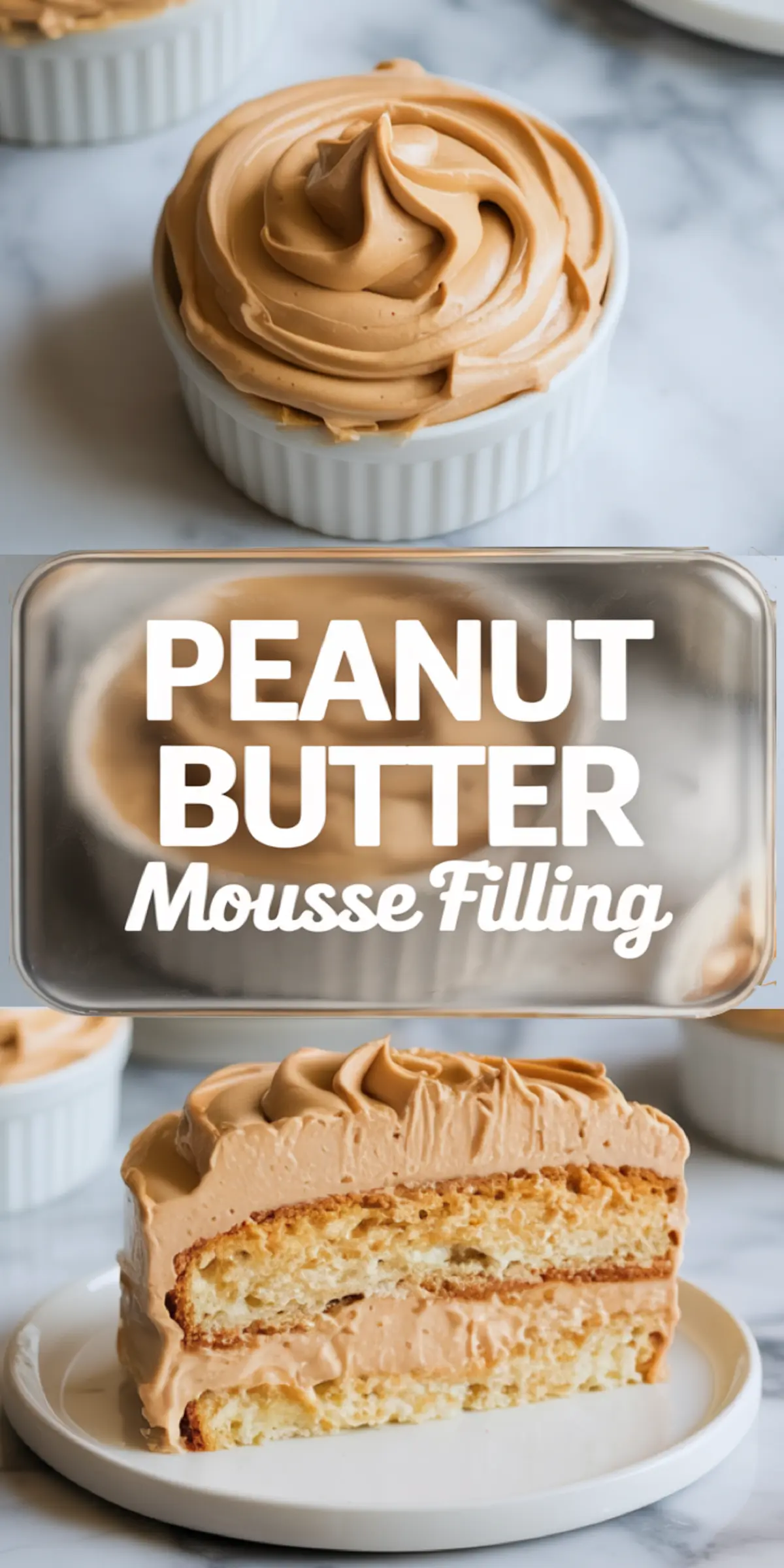
It is just as good in a vanilla layer cake, like the slice above. For cupcakes, cut a small cone out of the center of each cooled cupcake, pipe the chilled mousse into the hole, and frost over the top.
Mousse Filling or Peanut Butter Frosting?
Pick this mousse when the peanut butter goes inside: between cake layers, in cupcake centers, in a pie or tart shell, or spooned into cups. It is light and it needs to stay cold. Pick a peanut butter frosting when you need to cover the outside of a cake or pipe swirls that sit at room temperature, because a butter-based frosting holds its shape out of the fridge and this mousse does not.
Many cakes use both, frosting outside and as the dam, mousse in the middle. If you want a denser filling instead, a cream cheese filling or the chocolate mousse filling for cakes are good alternatives.
Grainy, Runny or Heavy: What Went Wrong
- Grainy or speckled: the cream cheese was cold, or the cream was whipped past stiff peaks. Beat the base fully smooth before any cream goes in.
- Runny: the cream was under-whipped or warm, or the mousse was folded too long and lost its air. Chill it 30 minutes. If it is still loose, use it as a dip rather than a cake filling.
- Oily or separated: natural peanut butter. Switch to a regular creamy one next time.
- Dense and heavy: the cream went in all at once, or it was stirred instead of folded.
- Tastes flat or too sweet: add a pinch of salt and fold once more.
Flavor Changes That Still Set
For a sweeter filling, add 2 extra tablespoons of powdered sugar. For a chocolate peanut butter mousse, replace 2 tablespoons of the peanut butter with 2 tablespoons of cocoa powder, sifted in with the sugar. For an airier version, cut the cream cheese to 6 oz and whip the cream a little longer. Expect a softer set that suits cups better than tall cakes.
Need a firmer set for tart shells? Add 2 more tablespoons of cream cheese and chill overnight before piping, the same idea behind my no-bake peanut butter pie. Spooned into small glasses with chopped peanuts on top, it comes close to my peanut butter mousse with crunchy peanuts.
Making It Ahead and Storing It
Store the mousse in an airtight container in the fridge for up to 3 days. Making it the night before is a good plan, since it settles and tastes creamier after a rest. Before using, stir it gently with a spatula. Beaters at this point knock out the air and can make it grainy. Freezing is not recommended because the texture changes.
A cake filled with it belongs in the fridge, because the filling is cream cheese and cream. Take it out about 20 minutes before serving if you like a softer middle, and do not leave it out for more than 2 hours.
Peanut Butter Cake Filling FAQ
What is a good peanut butter filling for cakes?
For a light filling between layers, a peanut butter mousse made with cream cheese and whipped cream like this one. For a filling that also frosts the outside, use a butter-based peanut butter frosting.
Does peanut butter mousse filling need gelatin?
No. Cream cheese and a 30 minute chill give it enough structure for layer cakes held with a frosting dam, and for cupcakes.
Can I use crunchy peanut butter?
Creamy gives the smoothest texture and pipes cleanly. Crunchy works in cups or a pie, but the bits catch in a piping tip.
Pin this filling so it is there for the next birthday cake. If you try it in cupcakes or a pie, tell me in the comments how it went.
Peanut Butter Mousse Filling Recipe
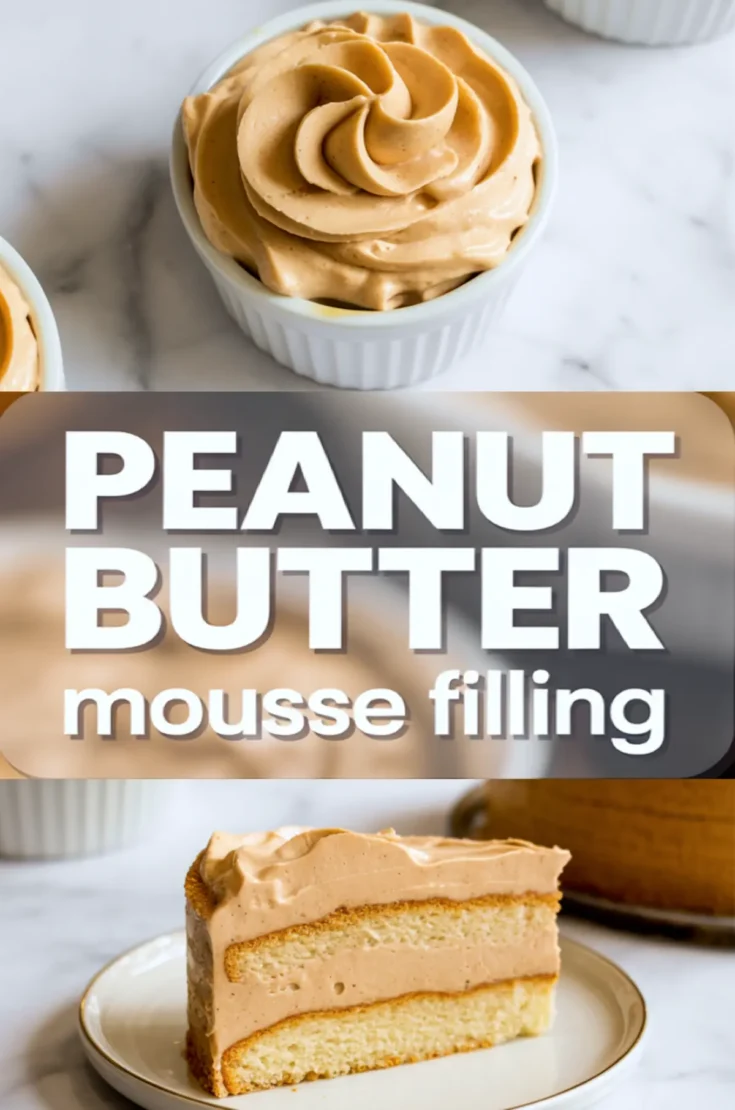
This peanut butter mousse filling is a light, fluffy peanut butter cake filling made with creamy peanut butter, cream cheese, powdered sugar, vanilla and whipped heavy cream. It takes 15 minutes plus a 30 minute chill and makes enough to fill one 3 layer 8 inch cake or 24 cupcakes. The cream cheese gives the whipped cream body, so the mousse holds between cake layers without gelatin and stays soft and spoonable. Use it as a peanut butter filling for chocolate cake, vanilla layer cake, cupcake centers, pie or tart shells, or spoon it into cups as a peanut butter mousse dessert. Keep it in an airtight container in the fridge for up to 3 days; freezing is not recommended.
Ingredients
- 1 cup creamy peanut butter (not natural or oily)
- 8 oz cream cheese, softened
- 1 cup powdered sugar, sifted
- 1 tsp vanilla extract
- 1 ½ cups heavy whipping cream, cold
- Optional: pinch of salt if using unsalted peanut butter
Instructions
- WHIP THE CREAM: In a chilled mixing bowl, whip the heavy cream on medium-high speed until stiff peaks form. Place the whipped cream in the refrigerator while preparing the peanut butter base.
- MAKE THE PEANUT BUTTER BASE: In a separate large bowl, beat the cream cheese and peanut butter together on medium speed until completely smooth and creamy, about 2 to 3 minutes. Add the vanilla extract and sifted powdered sugar, then continue beating until light and fully incorporated.
- FOLD GENTLY: Add one-third of the whipped cream to the peanut butter mixture and fold gently with a spatula to loosen the texture. Fold in the remaining whipped cream in two additions, using slow figure-eight motions to keep the mixture airy. Stop folding once no streaks remain, taking care not to overmix.
- CHILL (OPTIONAL): For best texture, refrigerate the mousse for 30 minutes before using. It will firm slightly while staying light and mousse-like.
Notes
Use regular creamy peanut butter, not natural; its oil makes the mousse loose and greasy. Soften the cream cheese for about 30 minutes so the base beats smooth with no lumps. Whip the cream just to stiff peaks; if it turns grainy, fold in 2 to 3 tablespoons of cold unwhipped cream. Chill the mousse 30 minutes before piping or layering, and pipe a ring of frosting around each cake layer to hold the filling in. Store covered in the fridge for up to 3 days and stir gently by hand before using; freezing is not recommended.
Nutrition Information
Yield
24Serving Size
1Amount Per Serving Calories 138Total Fat 8.8gSaturated Fat 3.2gUnsaturated Fat 5.6gCholesterol 11mgSodium 79mgCarbohydrates 13gFiber 0.6gSugar 11gProtein 2.9g

can this be stored for a day or so before using in layer cake? i thought i read that but now i can’t find it
Yes, you can. It should be fine refrigerated for a day or two before you use it in a layer cake. I would keep it in an airtight container, then give it a gentle stir with a spatula before filling the cake if it has firmed up a bit.