
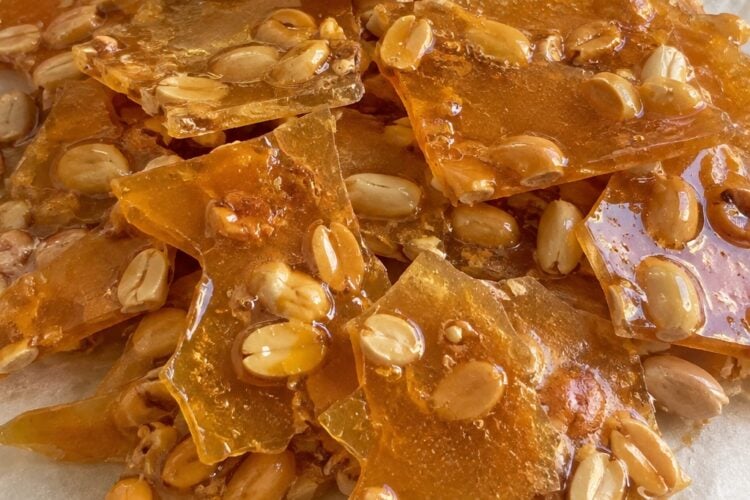
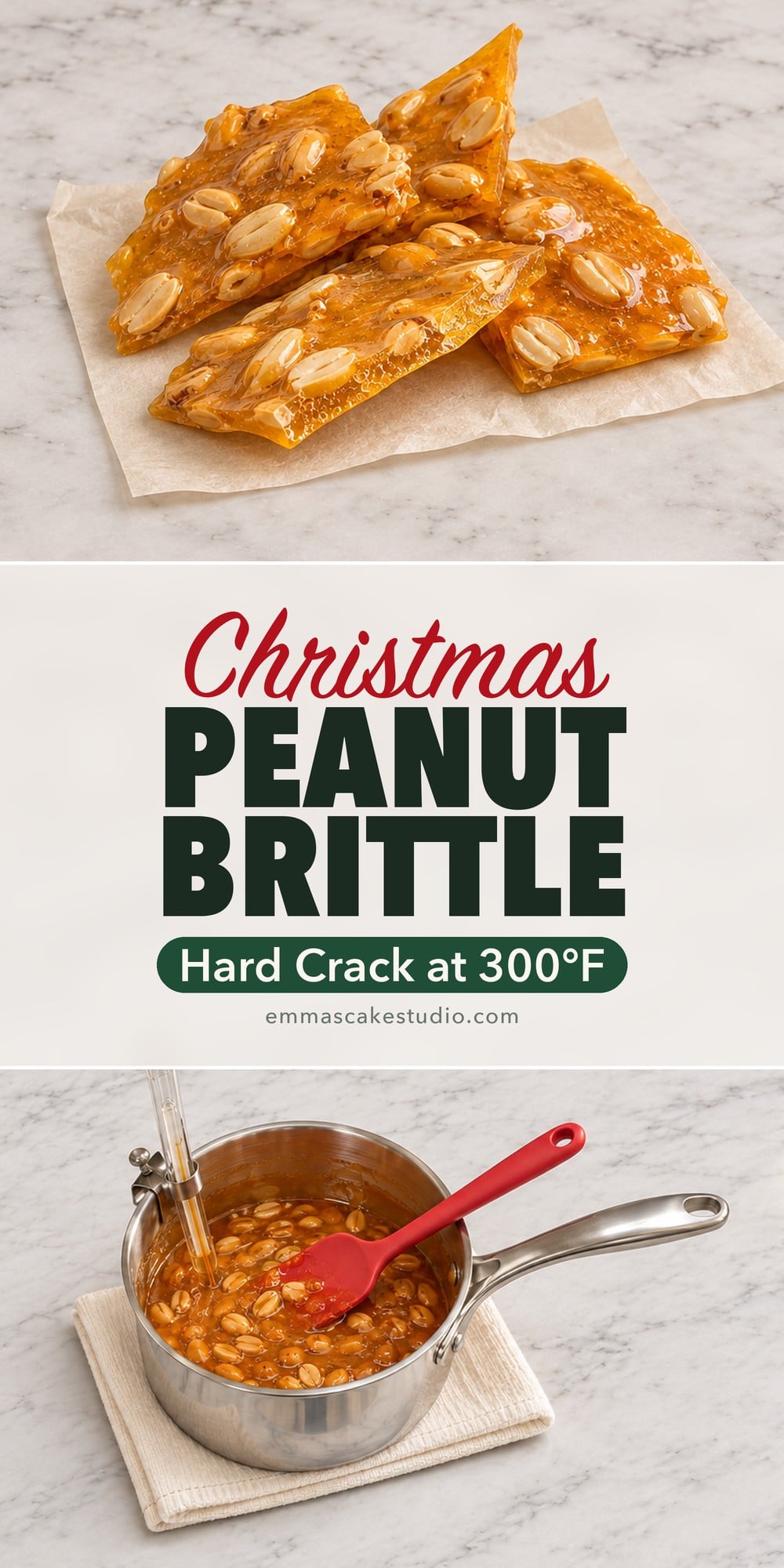
Why does homemade peanut brittle snap clean in one batch and bend like taffy in the next? Almost always it is the temperature. This stovetop version cooks sugar, corn syrup and raw peanuts to 300°F, the hard crack stage, then gets a teaspoon of baking soda that foams it full of tiny bubbles. It takes about 35 minutes at the stove plus an hour to cool, and one batch makes about 1 1/4 pounds of thin, glassy shards.
Brittle is the candy I make first in December, because it keeps for 3 weeks in a closed tin and travels without melting. No mixer. No chocolate to temper. You need a heavy saucepan, a candy thermometer and a rimmed baking sheet, and a double batch fills four small gift tins.
Raw Peanuts, Corn Syrup and a Heavy Pan
Use raw peanuts, not roasted. They go into the syrup at 240°F and cook with it for 8 to 10 minutes, so they come out toasted all the way through. Roasted peanuts added that early turn dark and bitter by the time the syrup reaches 300°F. If roasted salted peanuts are all you have, stir them in at 290°F instead and leave out the salt.
Light corn syrup keeps the sugar from crystallizing, so the candy sets clear instead of sandy. Pick a heavy 3 quart saucepan. The syrup doubles when the soda goes in, and a thin pan scorches.
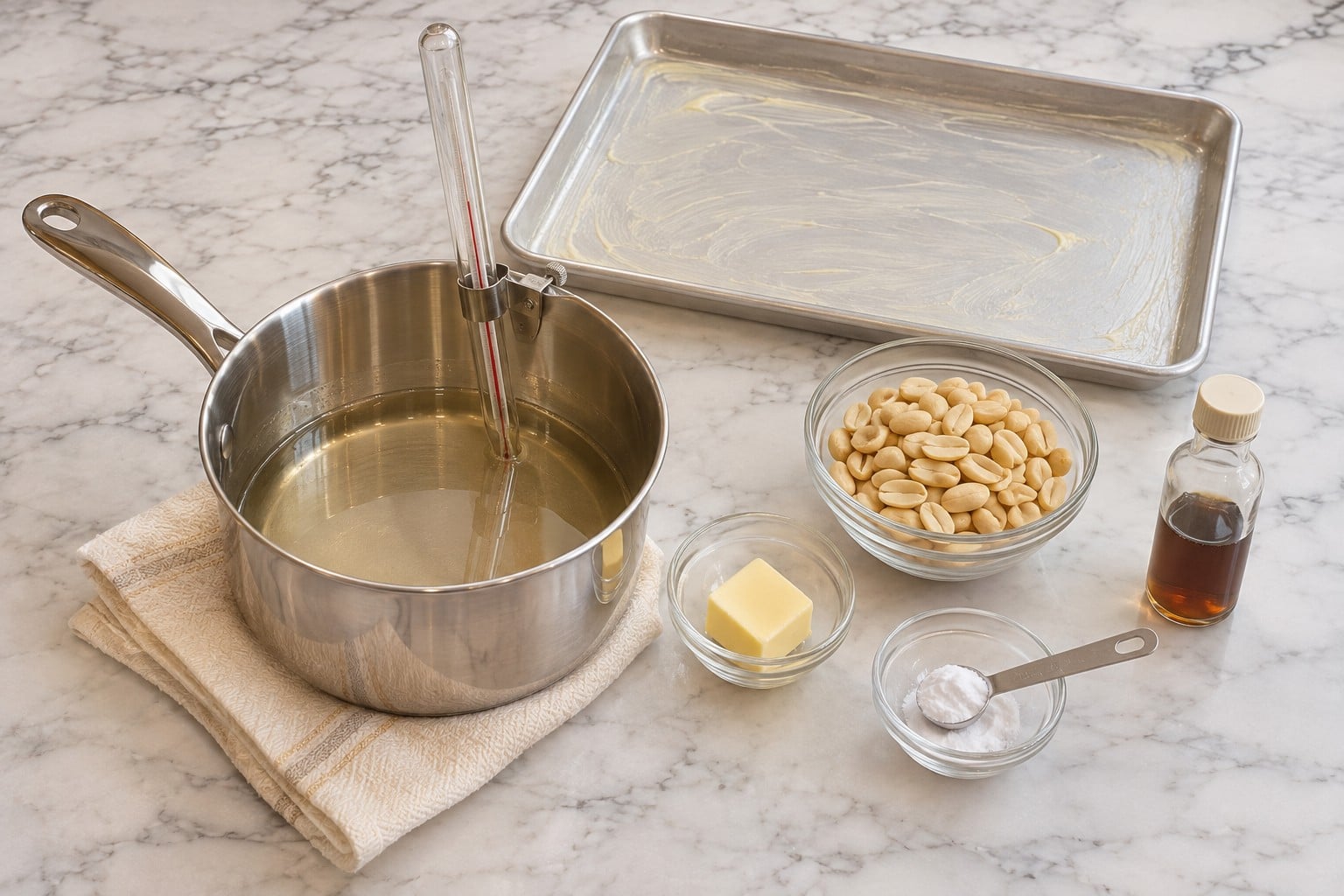
Before the burner goes on, butter a 13×18 inch half sheet pan and an offset spatula, and set the butter, vanilla and baking soda in small bowls next to the stove. The last step takes 20 seconds.
From 240°F to 300°F on the Thermometer
Stir the sugar, corn syrup, water and salt over medium heat until the sugar dissolves and the syrup looks clear, about 5 minutes. Then stop stirring, clip on the thermometer with the tip in the syrup but off the bottom of the pan, and let it boil to 240°F. That takes 8 to 10 minutes.
Add the peanuts at 240°F, and from here stir constantly and gently, scraping the bottom. Between 280°F and 300°F the syrup turns from pale straw to light amber and the peanuts smell toasted. Pull the pan off the heat at 300°F, the start of the hard crack stage (300 to 310°F). Lower than that and the candy stays chewy. Much past 310°F it tastes burnt.
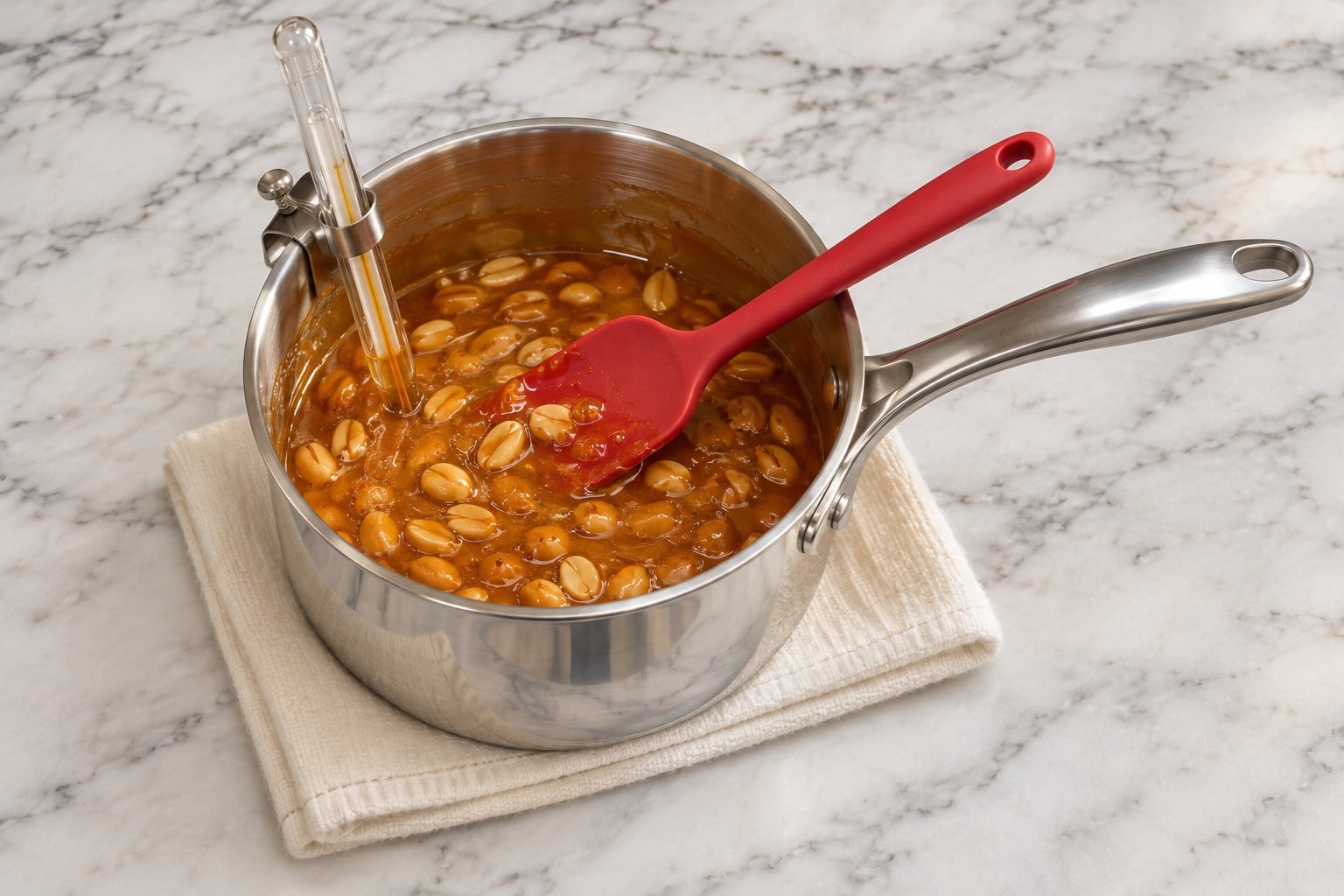
Test the thermometer in boiling water first. At sea level it should read 212°F. If yours reads 208°F, cook the candy to 296°F.
Butter, Vanilla, Then the Baking Soda
Off the heat, stir in the butter and vanilla until the butter disappears, about 10 seconds. Then add the baking soda and stir only until no white streaks remain. The syrup foams up pale and thick right away. Those bubbles make the candy light enough to bite. Keep stirring and you knock the air back out, so the slab sets dense and hard.
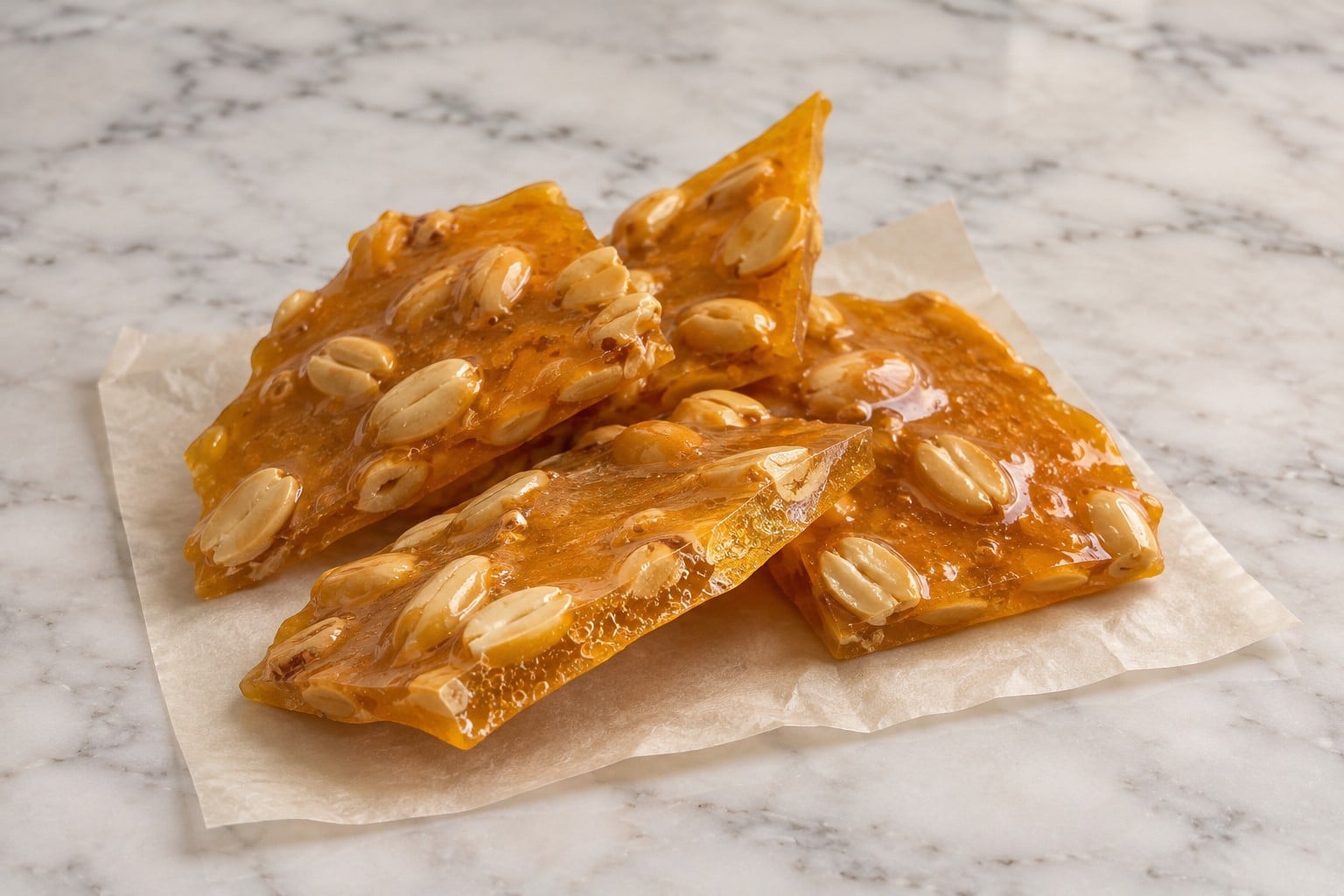
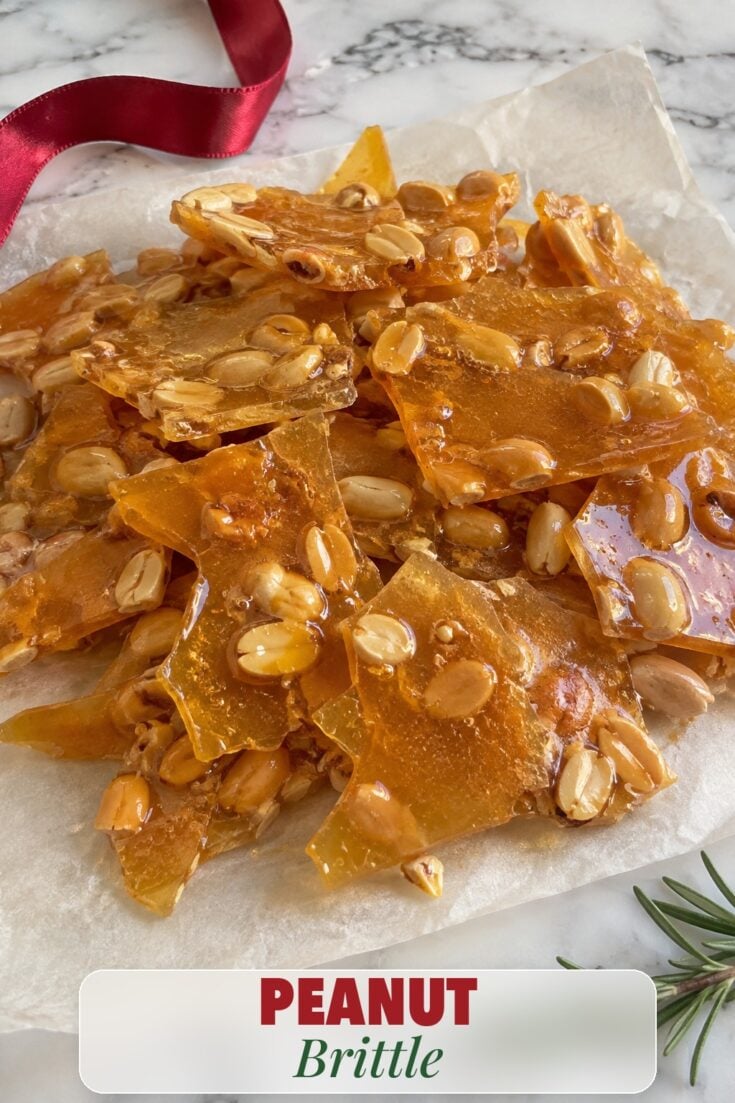
Snap a cooled piece and you can see them: hundreds of pinhole bubbles along the broken edge.
Spreading It Thin Before It Sets
Pour the whole pan onto the buttered sheet at once and push it outward with the buttered spatula. You have about a minute. Do not scrape the saucepan. Once the edges firm up enough to touch, after 2 or 3 minutes, pull them outward with two buttered forks to stretch the candy to 1/4 inch or thinner. Thin brittle breaks clean.
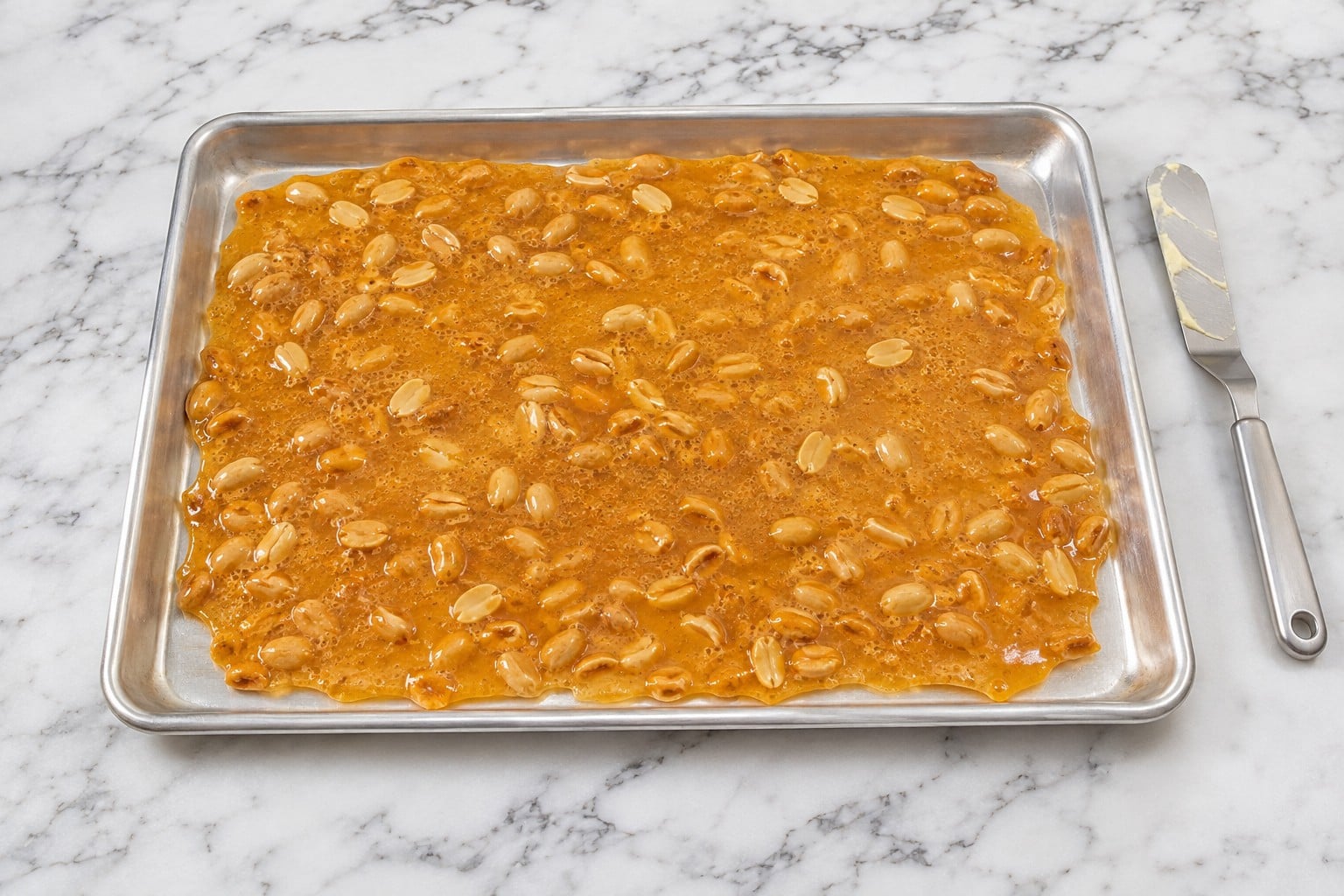
Leave the pan on the counter for 45 minutes to an hour, until it is cool all the way through. Skip the fridge; its damp air makes the surface tacky.
When Peanut Brittle Goes Wrong
Chewy or Bending
The syrup stopped short of 300°F, or the thermometer reads high. Weather does it too: sugar pulls water out of the air, so on a rainy day a good batch turns sticky within hours. Make candy on a dry day.
Grainy or Cloudy
Sugar crystals got back into the syrup. Brush the inside of the pan with a wet pastry brush once the sugar dissolves, do not stir again until the peanuts go in, and never scrape the pan when you pour.
Dark and Bitter
It went past 310°F, or high heat scorched the bottom. Keep the burner at medium. The climb from 240°F to 300°F should take 8 to 10 minutes, not 3.
No Thermometer? Cold Water and the Microwave
The Cold Water Test
Drop a little syrup from a spoon into a glass of ice water. At hard crack it forms threads that snap when you bend them. If they bend, keep cooking.
The Microwave Method
In a 2 quart glass bowl, stir the sugar and corn syrup together, with no water, and microwave on high for 4 minutes. Stir in the peanuts and salt and cook 3 to 4 minutes more, until light golden. Stir in the butter and vanilla, cook 1 to 2 minutes, then stir in the baking soda and pour. The times are for a 1,000 watt microwave. Use oven mitts.
Breaking, Storing and Filling Gift Tins
Snap the cooled slab into pieces over the pan, or tap it with the back of a spoon. One batch gives about 32 shards.
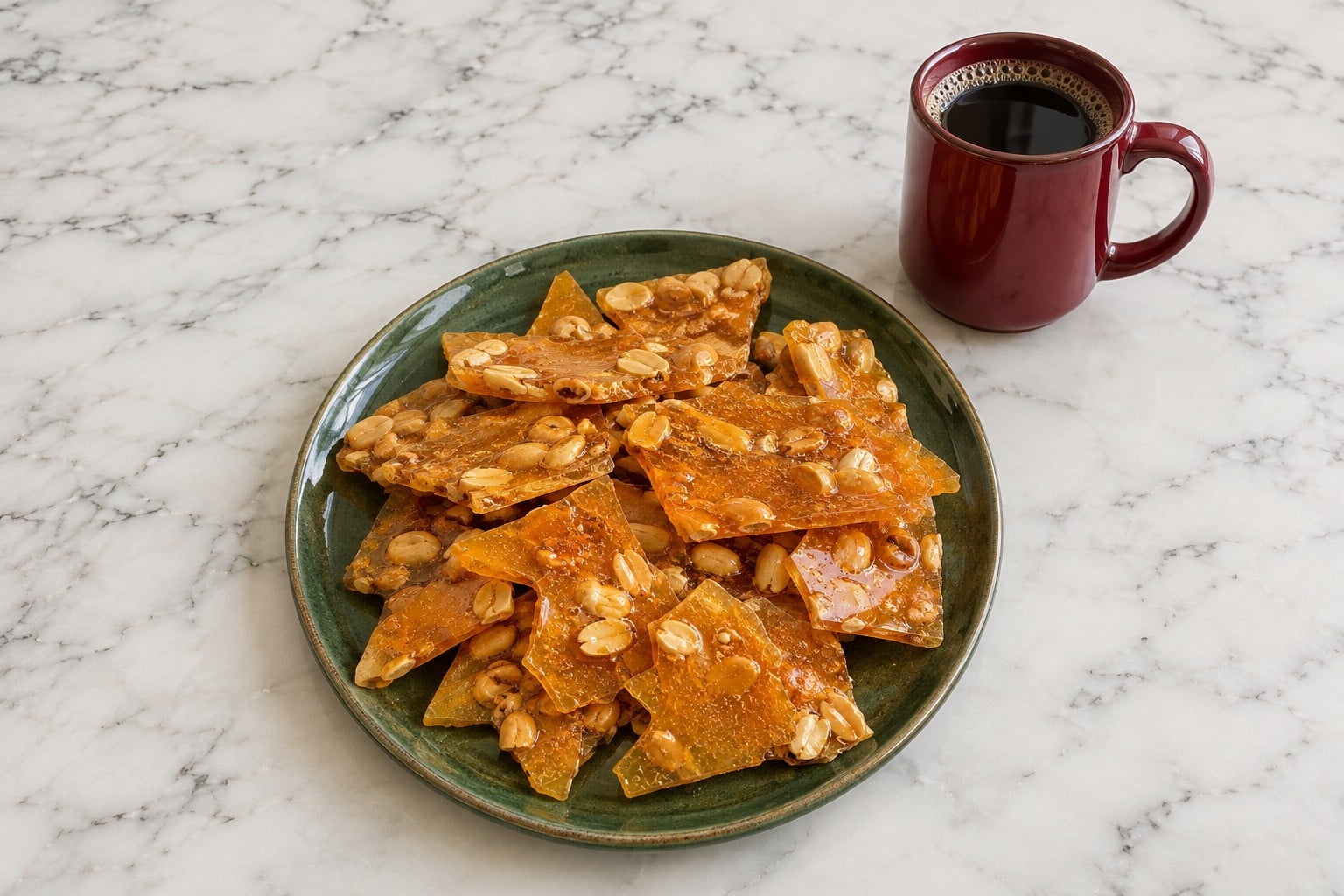
Store it in an airtight tin or jar at room temperature with parchment between the layers, for up to 3 weeks. An open tin goes sticky in a day.
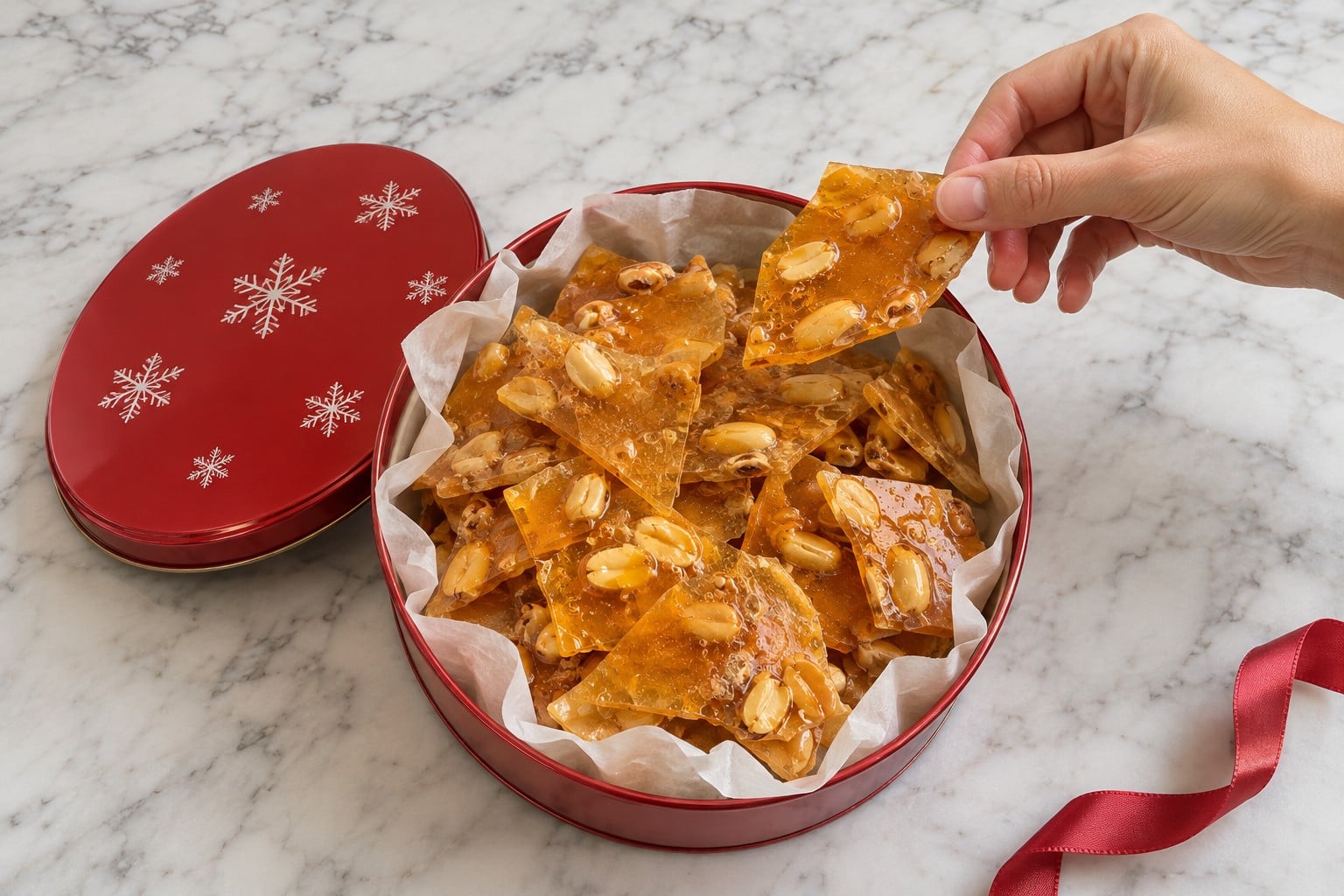
For gifts, fill the tins the day the candy cools and seal them right away.
Filling Out a Christmas Candy Tray
On a candy tray it sits well next to Christmas cracker toffee, homemade salted caramels and Rolo pretzel bites, plus magic cookie bars for something soft. For a nut gift that needs no thermometer, make candied walnuts. Boxes, bags and tins are covered in these Christmas cookie packaging ideas.
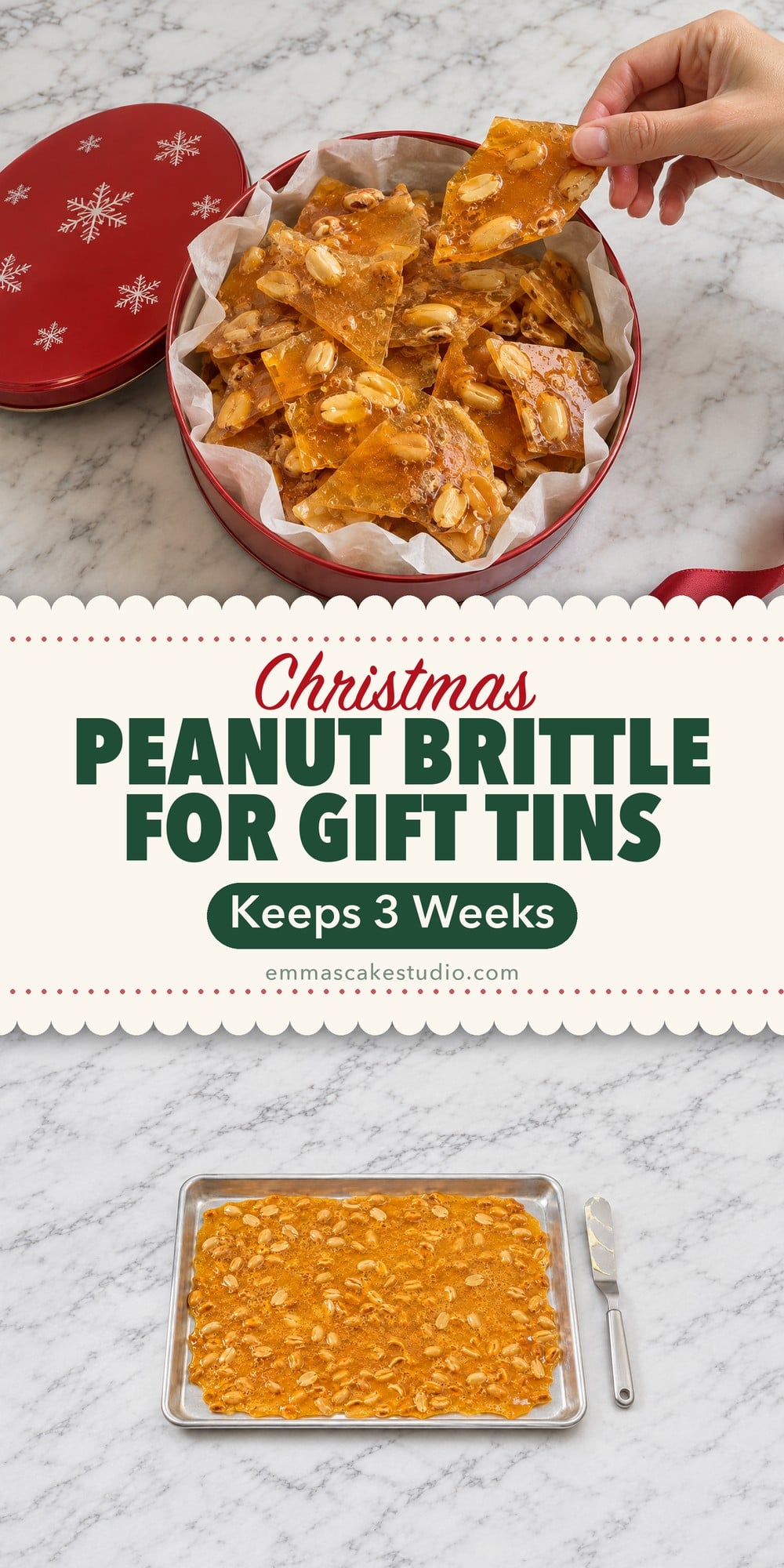
A closed tin keeps the shards crisp for 3 weeks, so a batch made on 5 December still snaps on Christmas Eve.
Old Fashioned Peanut Brittle
Made it? Tap the stars to rate it.
Peanut brittle is an old fashioned hard candy made by cooking sugar, light corn syrup, water and salt with raw peanuts to the 300°F hard crack stage, then stirring in butter, vanilla and baking soda so the candy foams. The baking soda fills it with tiny air bubbles, which is why it snaps cleanly instead of sticking to your teeth. Spread thin on a buttered half sheet pan and pulled out with forks, one batch makes about 1 1/4 pounds, or 32 pieces, and sets hard in under an hour. It fills Christmas gift tins, candy trays, teacher gifts and cookie boxes. Swap raw cashews or pecans for the peanuts, and keep it airtight at room temperature for up to 3 weeks.
Ingredients
- 1 cup (200 g) granulated sugar
- 1/2 cup (160 g) light corn syrup
- 1/4 cup (60 ml) water
- 1/2 teaspoon fine salt
- 1 1/2 cups (220 g) raw blanched peanuts
- 2 tablespoons (28 g) unsalted butter, plus more for the pan
- 1 teaspoon vanilla extract
- 1 teaspoon baking soda
Instructions
- Get ready: Butter a 13x18 inch rimmed half sheet pan and an offset spatula. Set the butter, vanilla and baking soda in small bowls next to the stove.
- Dissolve the sugar: In a heavy 3 quart saucepan, stir the sugar, corn syrup, water and salt over medium heat until the sugar dissolves and the syrup looks clear, about 5 minutes. Brush the inside of the pan with a wet pastry brush.
- Boil to 240°F: Clip on a candy thermometer and boil without stirring until it reads 240°F (soft ball stage), 8 to 10 minutes.
- Cook the peanuts: Stir in the peanuts. Stir constantly, scraping the bottom, until the syrup turns light amber and reaches 300°F (hard crack stage), 8 to 10 minutes more.
- Foam: Take the pan off the heat. Stir in the butter and vanilla, then the baking soda, and stir only until no white streaks remain. It will foam up.
- Spread: Pour it all onto the buttered pan at once and push it out thin with the buttered spatula. After 2 to 3 minutes, pull the edges thinner with two buttered forks.
- Cool and break: Leave it at room temperature for 45 to 60 minutes until hard all the way through, then snap it into pieces about 2 inches across.
Notes
The one mistake to avoid: pulling the syrup before 300°F. Under hard crack the candy sets chewy and sticky.
Test your thermometer in boiling water first (212°F at sea level) and adjust the target by the difference.
Have the butter, vanilla and baking soda measured before you start; the last step takes 20 seconds.
Stir only briefly after the baking soda goes in, or the bubbles collapse.
Make candy on a dry day; humidity turns brittle sticky.
Using roasted peanuts: add them at 290°F and leave out the salt.
Storage: airtight at room temperature with parchment between the layers for up to 3 weeks. Do not refrigerate.
Nutrition Information
Yield
16Serving Size
2 piecesAmount Per Serving Calories 169Total Fat 8gSaturated Fat 2gCholesterol 4mgSodium 160mgCarbohydrates 22gFiber 1gSugar 16gProtein 4g

Made it? Tap the stars to rate it