

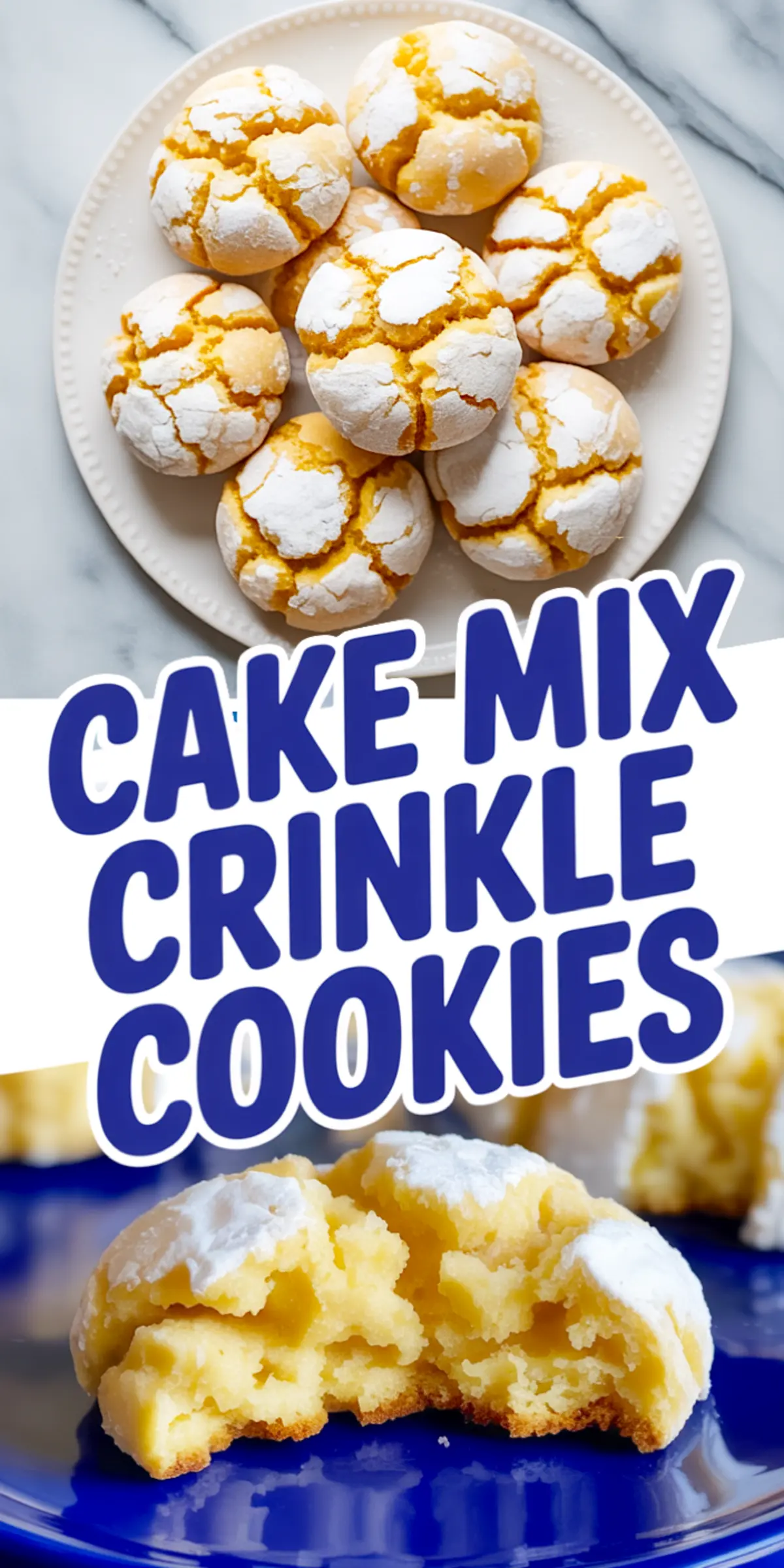
These cake mix crinkle cookies are soft, chewy cookies made from one 15.25 ounce box of cake mix, 2 eggs, and ⅓ cup of oil or melted butter, rolled in powdered sugar for the classic crackled top. Mix the dough by hand in one bowl, bake at 350°F for 9 to 11 minutes, and you have 20 to 24 cookies.
Any flavor of cake mix works. A teaspoon of vanilla is optional, so at heart this is a 3 ingredient crinkle cookie with cake mix plus the sugar coating. The crinkles come from a thick coat of powdered sugar and pulling the cookies while the centers still look soft.
Following a special diet?
Every recipe on this site can be converted to gluten-free, vegan, dairy-free, keto, nut-free or egg-free with adjusted ratios so nothing falls flat.
Try the Recipe Converter →The Short List
- Ingredients: 1 box (15.25 oz) cake mix, 2 large eggs, ⅓ cup oil or melted butter, optional 1 teaspoon vanilla
- Coating: ½ cup powdered sugar for rolling
- Bake: 350°F (175°C) for 9 to 11 minutes
- Yield: 20 to 24 cookies from tablespoon sized balls
- Mixer: not needed, a spoon or spatula is enough
- Keeps: 3 to 4 days airtight; dough balls freeze well
Chocolate (Fudge) Cake Mix Crinkle Cookies
The most popular version is chocolate, and it is the one that looks most like classic chocolate crinkle cookies: a dark, fudgy cookie under bright white cracks. Use a devil’s food or chocolate fudge cake mix with the same 2 eggs and ⅓ cup of oil. Chocolate cake mix is the most forgiving flavor I have used here, and it gives the strongest contrast with the powdered sugar.
Chocolate dough tends to be wetter and stickier than yellow or white, so chill it for 15 to 20 minutes before rolling. Oil gives the fudgiest, chewiest result. Pull them at 9 minutes for a soft, almost brownie like middle. For a deeper chocolate flavor, stir in a handful of chocolate chips.
If you want a from scratch version, my chocolate crinkle cookies and brownie crinkle cookies use the same powdered sugar trick.
Oil or Butter?
I have made this exact recipe both ways many times. Oil gives a chewier cookie with a slightly glossier finish and less spread. Melted butter tastes richer but spreads a little more. For cookie tins, gifting, and stacking I use oil, because the cookies hold their shape. When I serve them fresh the same day, I sometimes use butter for the flavor.
The vanilla is optional, but I add a teaspoon whenever I use yellow or white cake mix. It lifts the flavor and takes away the boxed taste. Chocolate and red velvet mixes do not really need it. The reason this shortcut works at all is that the mix already has the flour, sugar, and leavening balanced for you. The eggs and fat only have to bind it into a dough, which is why it comes out consistent every time and is my go to when I am baking for a crowd during the holiday rush.
Mixing the Dough by Hand
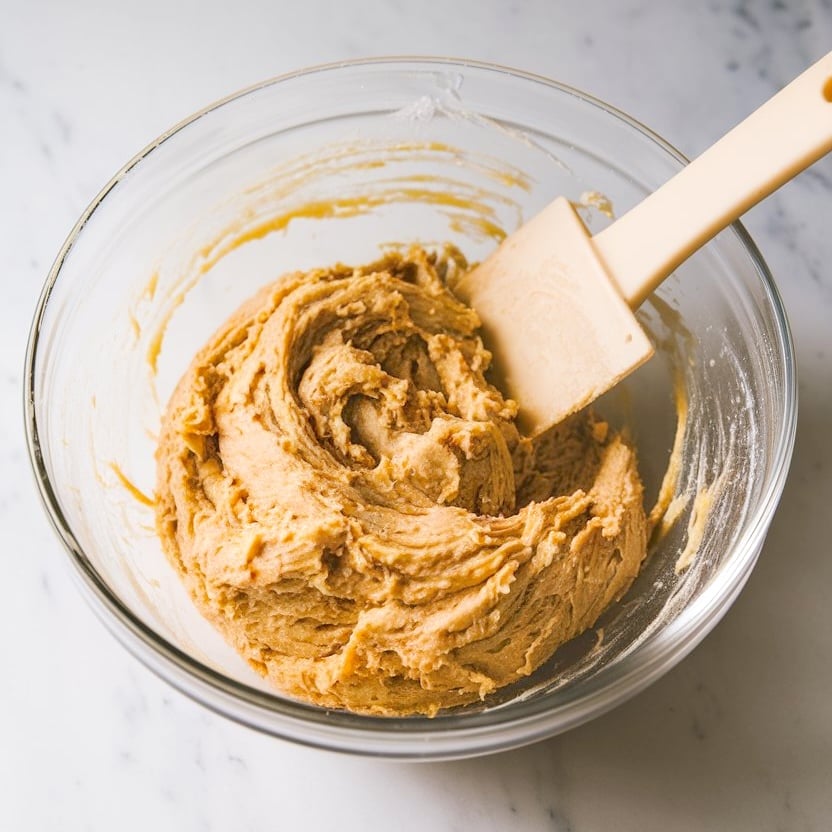
Put the cake mix, eggs, oil, and vanilla in one large bowl and stir until it forms a thick, sticky dough. It should feel like a soft, scoopable paste, not a batter. If it is too sticky to roll, refrigerate it for 15 to 20 minutes. This matters most with chocolate and red velvet mixes.
Newer cake mix boxes are often 13.25 ounces instead of 15.25. With a smaller box the dough is a little softer, so chill it for the full 20 minutes and keep the scoops the same size.
For Deep Cracks and a White Top
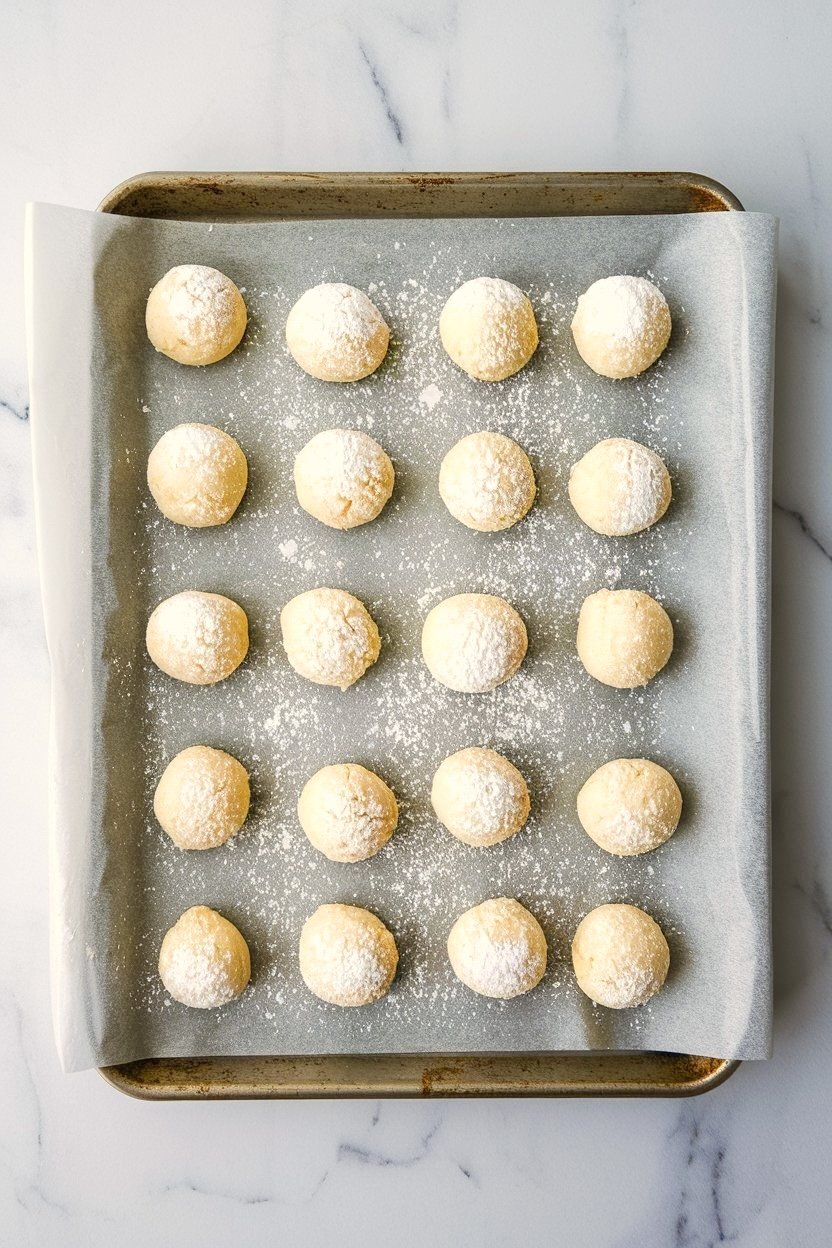
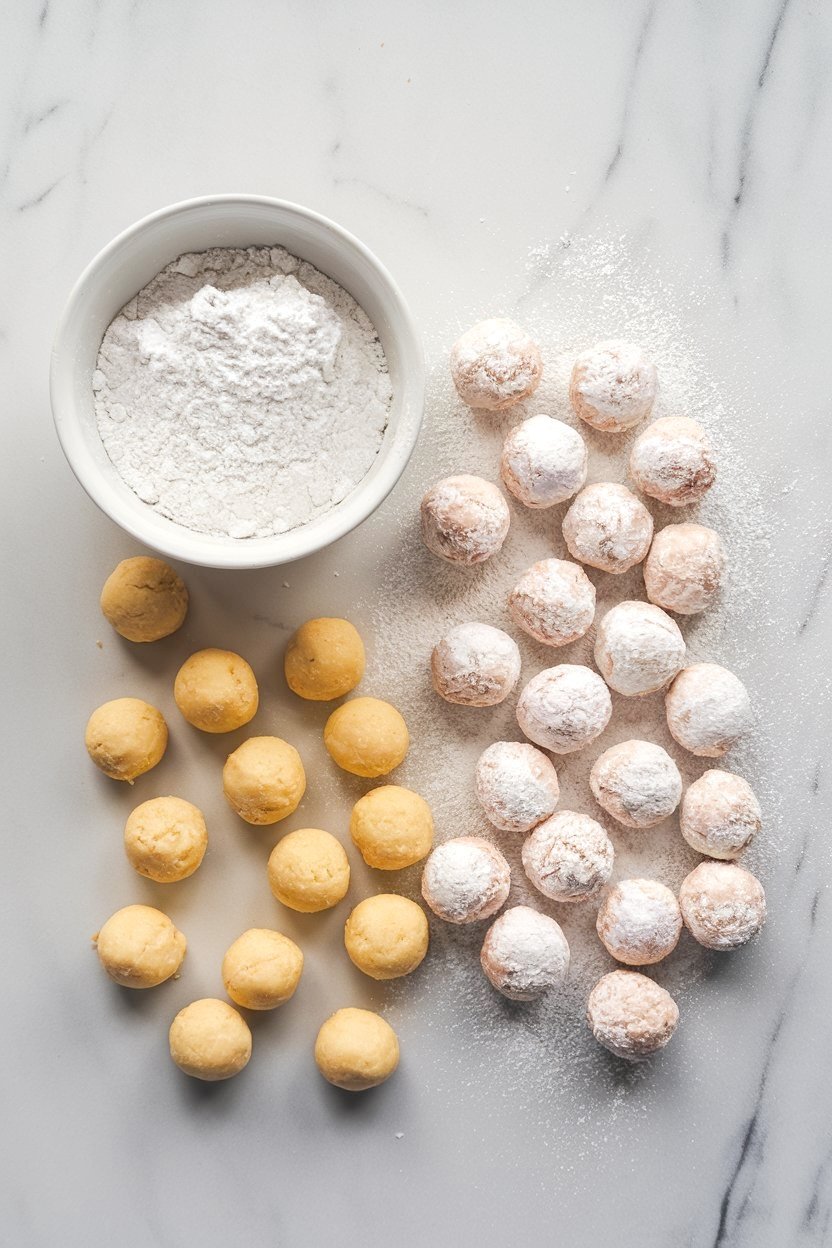
Scoop tablespoon portions, roll them into balls, and roll each ball generously in powdered sugar. Cover it completely, not just a dusting. A thick coat is what cracks open as the cookie spreads. Space them 2 inches apart on parchment.
Bake for 9 to 11 minutes, until the edges are set and the tops have crinkled. The centers should still look slightly soft. Let them rest on the tray for 5 minutes, then move them to a wire rack. They firm up as they cool.
- Sugar disappeared: the coating was too thin or the dough was very wet. Roll twice, or chill the dough first.
- Flat cookies: melted butter and warm dough both increase spread. Use oil and chill.
- Few cracks: the balls were too small or the coating was too light.
- Dry or crumbly: they baked too long. Take them out while the centers still look underdone.
Flavor Ideas for Every Season
Lemon cake mix with a little zest makes a bright cookie, close to my lemon crinkle cookies. Red velvet looks beautiful for Christmas and Valentine’s Day, and if you like it, try my red velvet crinkle cookies too. Strawberry cake mix with freeze dried berries stirred in is lovely for spring. Yellow cake mix with a splash of almond extract tastes nostalgic.
For the holidays, mix crushed peppermint into the powdered sugar or add a little edible glitter. For green Christmas cookies, see my Grinch crinkle cookies, and for a spiced option, gingerbread crinkle cookies. If you want an even easier drop cookie from a box, try my 3 ingredient cake mix cookies.
Storing and Freezing for Christmas Baking
Keep baked cookies in an airtight container at room temperature for 3 to 4 days. To freeze baked cookies, layer them in freezer bags with wax paper in between.
For holiday baking, I freeze the unbaked dough balls already rolled in powdered sugar. Bake them straight from the freezer and add 1 minute to the bake time. Make a few flavors in early December and you can bake fresh trays for cookie boxes whenever you need them.
Quick Answers
What are the 3 ingredients in cake mix crinkle cookies?
A box of cake mix, 2 eggs, and ⅓ cup of oil or melted butter. Powdered sugar is used only for rolling.
Which cake mix makes the best crinkle cookies?
Devil’s food or chocolate fudge cake mix gives the classic look and the most forgiving dough. Lemon and red velvet also work very well.
Do I have to chill the dough?
No, but if the dough is too sticky to roll, 15 to 20 minutes in the fridge makes it much easier to handle.
Why did my powdered sugar melt into the cookies?
The coating was too thin. Roll each ball generously, or roll it twice, so a layer stays on top while baking.
Can I freeze cake mix crinkle cookie dough?
Yes. Freeze the sugar coated balls and bake from frozen, adding about 1 minute.
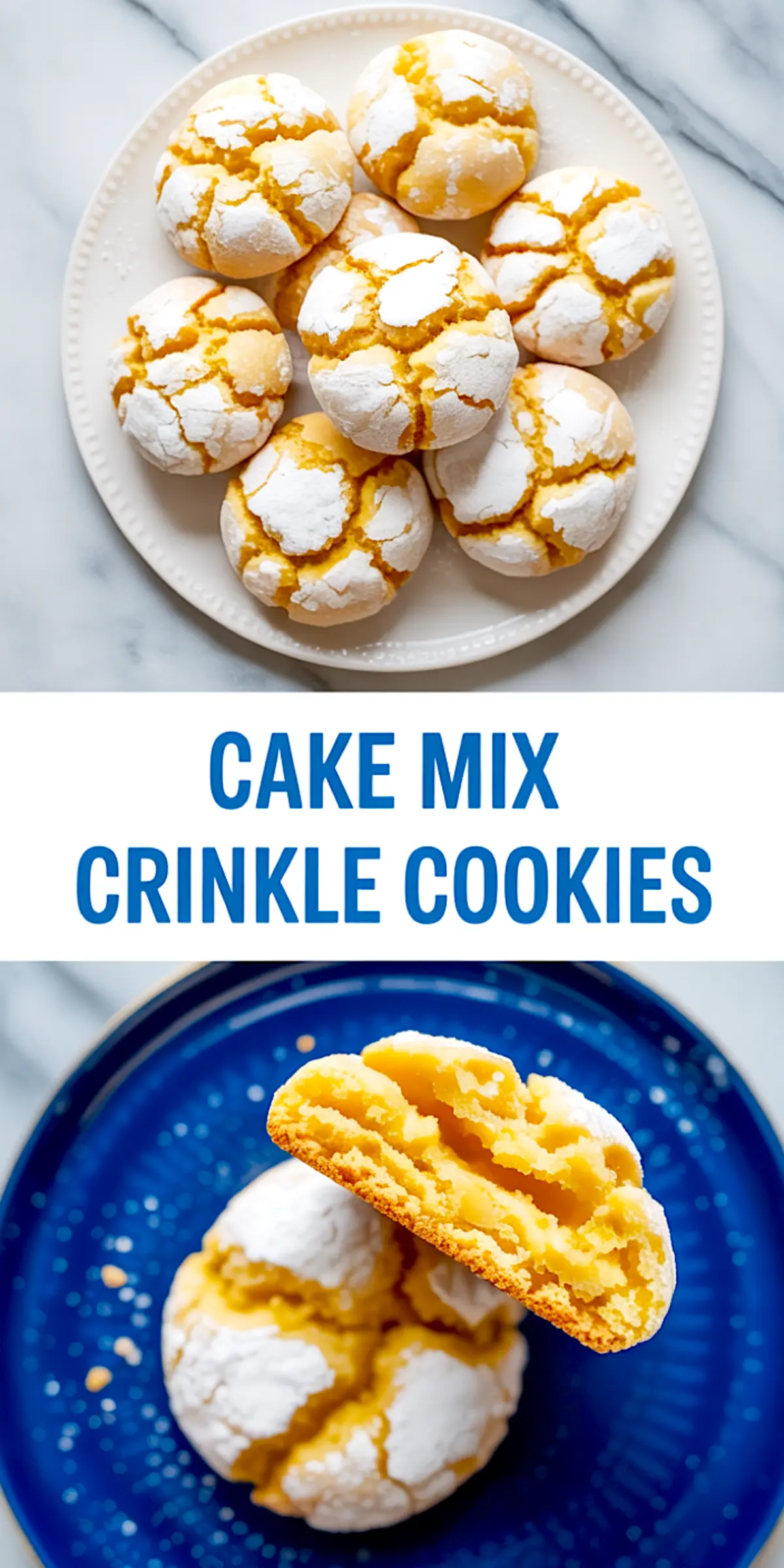
Save these cake mix crinkle cookies to your Christmas cookie board for the busy weeks. If you bake them, tell me in the comments which cake mix flavor you used, especially if it is one I have not tried.
Cake Mix Crinkle Cookies Recipe

These cake mix crinkle cookies are soft, chewy cookies made with one box of cake mix, 2 eggs, and oil or melted butter, then rolled in powdered sugar for a crackled white top. They are mixed by hand, bake at 350°F in 9 to 11 minutes, and make 20 to 24 cookies. A thick powdered sugar coating and pulling them while the centers look soft give deep crinkles. Use devil's food or chocolate fudge cake mix for chocolate cake mix crinkle cookies, or try lemon, red velvet, or strawberry for holiday cookie trays and Christmas cookie boxes. Freeze the coated dough balls and bake from frozen. They keep 3 to 4 days in an airtight container.
Ingredients
- 1 box (15.25 oz) cake mix (any flavor)
- 2 large eggs
- 1/3 cup vegetable oil or melted butter
- 1 tsp vanilla extract (optional)
- 1/2 cup powdered sugar (for rolling)
Instructions
- PREHEAT THE OVEN: Set the oven to 350°F (175°C) and line a baking sheet with parchment paper or a silicone baking mat.
- MIX THE DOUGH: In a large mixing bowl, combine the cake mix, eggs, oil, and vanilla extract if using. Stir with a spoon or spatula until the mixture forms a thick, sticky dough.
- CHILL THE DOUGH (OPTIONAL): If the dough feels too sticky to handle, place it in the refrigerator for 15 to 20 minutes to firm up slightly. This step makes rolling easier but is not required.
- FORM THE COOKIES: Scoop out tablespoon-sized portions of dough and roll each one into a ball using your hands. Roll each ball generously in powdered sugar until fully coated.
- BAKE: Arrange the coated dough balls about 2 inches apart on the prepared baking sheet. Bake for 9 to 11 minutes, until the edges are set and the tops have crinkled. The centers should look slightly soft—they will firm up as they cool.
- COOL: Allow the cookies to rest on the baking sheet for 5 minutes, then transfer them to a wire rack to cool completely before serving or storing.
Notes
Any flavor of cake mix works; chocolate, devil's food, red velvet, lemon, and strawberry are favorites. Oil gives a chewier cookie that spreads less; melted butter adds flavor but spreads more. If the dough is too sticky, chill it 15 to 20 minutes, especially with chocolate or red velvet mix or a smaller 13.25 oz box. Roll the balls generously in powdered sugar. Freeze unbaked coated dough balls and bake from frozen, adding 1 minute.
Nutrition Information
Yield
24Serving Size
1Amount Per Serving Calories 46Total Fat 4gSaturated Fat 1gTrans Fat 0gUnsaturated Fat 3gCholesterol 17mgSodium 10mgCarbohydrates 2gFiber 0gSugar 2gProtein 1g
