
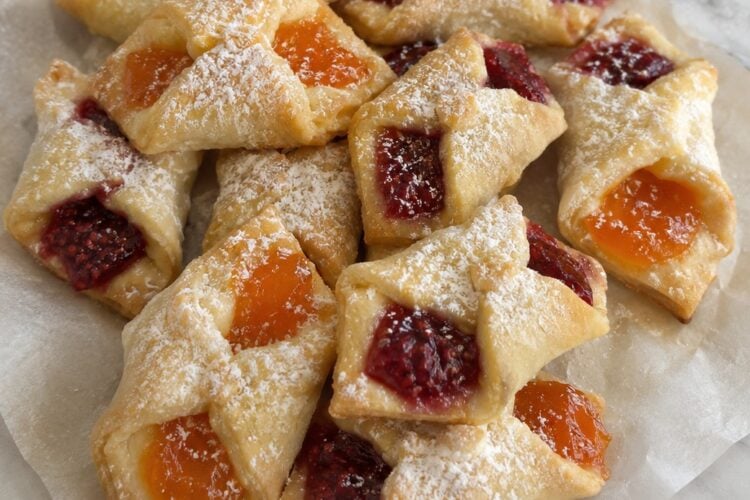
Good kolaczki cookies flake at the folded corners and go soft and a little tangy right where the cream cheese pastry meets the jam. The dough is cream cheese, butter and flour with a spoon of sugar, it rests at least 2 hours in the fridge, and one batch rolled 1/8 inch thick gives 48 cookies cut in 2 1/2 inch squares. The trick that stops them popping open in the oven is a dab of egg white between the two corners before you pinch them shut.
These are the Polish Christmas cookies that make a mixed tray look homemade: bright apricot and raspberry centers between all the chocolate and sugar cookies. The dough does its waiting in the fridge, so the work splits into two short evenings in a month when the oven is always busy. If you like a jam cookie with less folding, my cream cheese thumbprint cookies use a similar dough.

Cream Cheese, Butter and Only a Spoon of Sugar
Equal weights of cream cheese and butter, 8 ounces each, is the base. Use the full fat brick cream cheese, not the tub kind, which has more water and makes a sticky dough that bakes up tough. Both should be soft enough to press with a finger but still cool, around 65°F.
There is only 1 tablespoon of sugar in the pastry. The sweetness comes from the jam and the powdered sugar on top, and a sweeter dough browns too fast at the corners. Mix the flour in on low just until the dough comes together. More mixing builds gluten, and the pastry shrinks away from the filling.
Rolling on Sugar Instead of Flour
Work with cold dough. Split it in half, flatten each half into a 1 inch thick square so it rolls straight into a rectangle, and keep one half in the fridge while you work the other.
Dust the counter with granulated sugar instead of flour. It stops sticking just as well, gives the bottoms a faint crunch and never makes the pastry dry. Roll to 1/8 inch. Thicker squares refuse to fold, and thinner ones tear around the jam. A fluted pastry wheel gives the zigzag edge, but a knife and a ruler work.
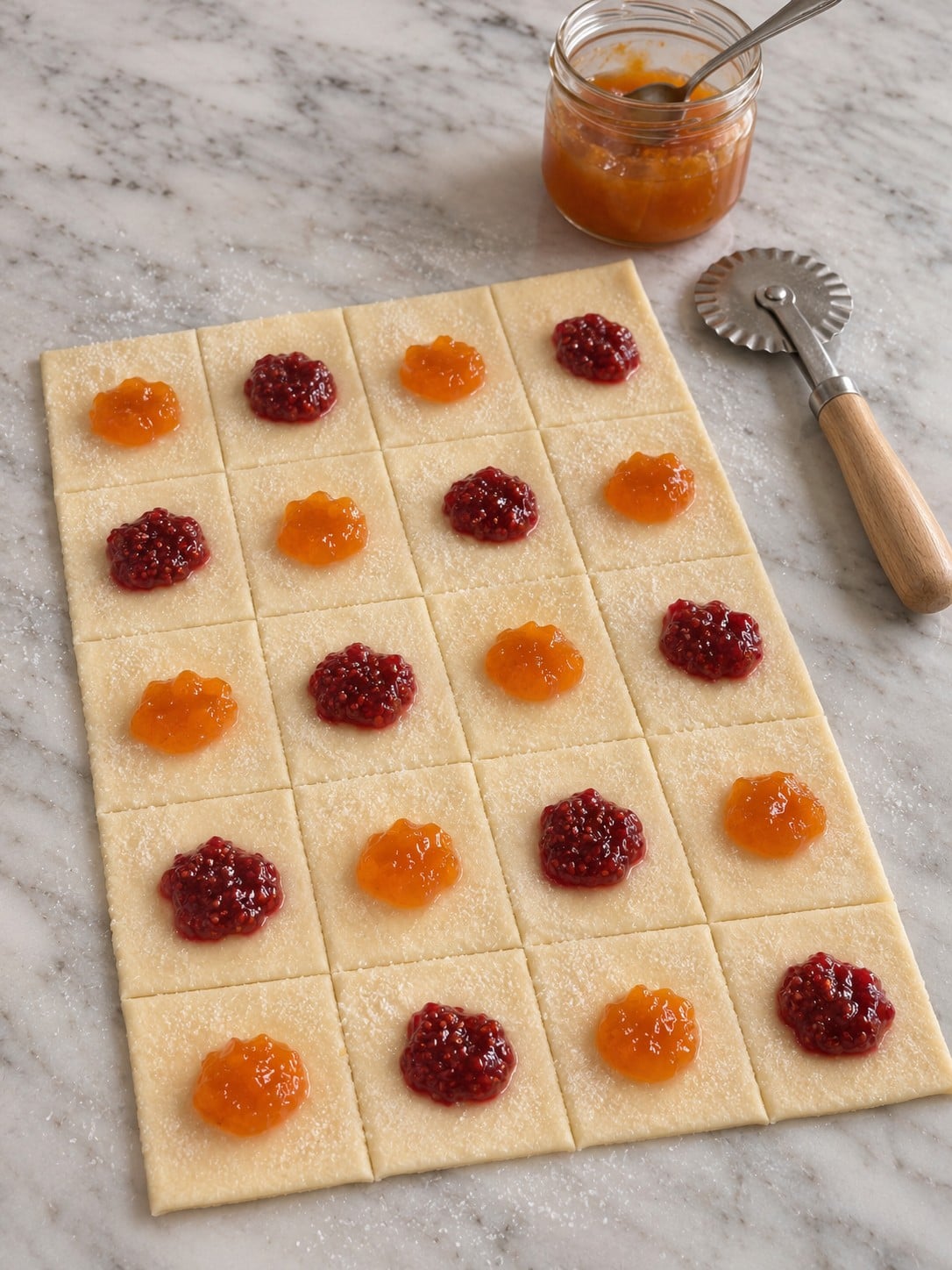
Jam That Stays Put
Loose jam boils in the oven and runs out of the open sides onto the pan, where it burns. Use thick preserves, canned pastry filling or a jam you have simmered down. My homemade apricot jam works if you cook it 5 minutes past the set point.
A scant 3/4 teaspoon per square is enough. It looks stingy on the raw dough, I know, but any more jam than that pushes the corners apart while they bake.
Sealing the Corners So They Stay Shut
Most recipes say pinch the corners and stop there. That is why so many open flat in the oven: the butter melts, the dough relaxes and two dry corners slide apart.
Brush one corner with beaten egg white. Fold the opposite, dry corner over the jam first, then lay the brushed corner on top so the egg white sits between the two layers. Pinch hard for 2 seconds. It sounds fussy. It takes a second per cookie. Then chill the shaped cookies on the sheet for 15 minutes before baking, which sets the fold before the heat hits it.
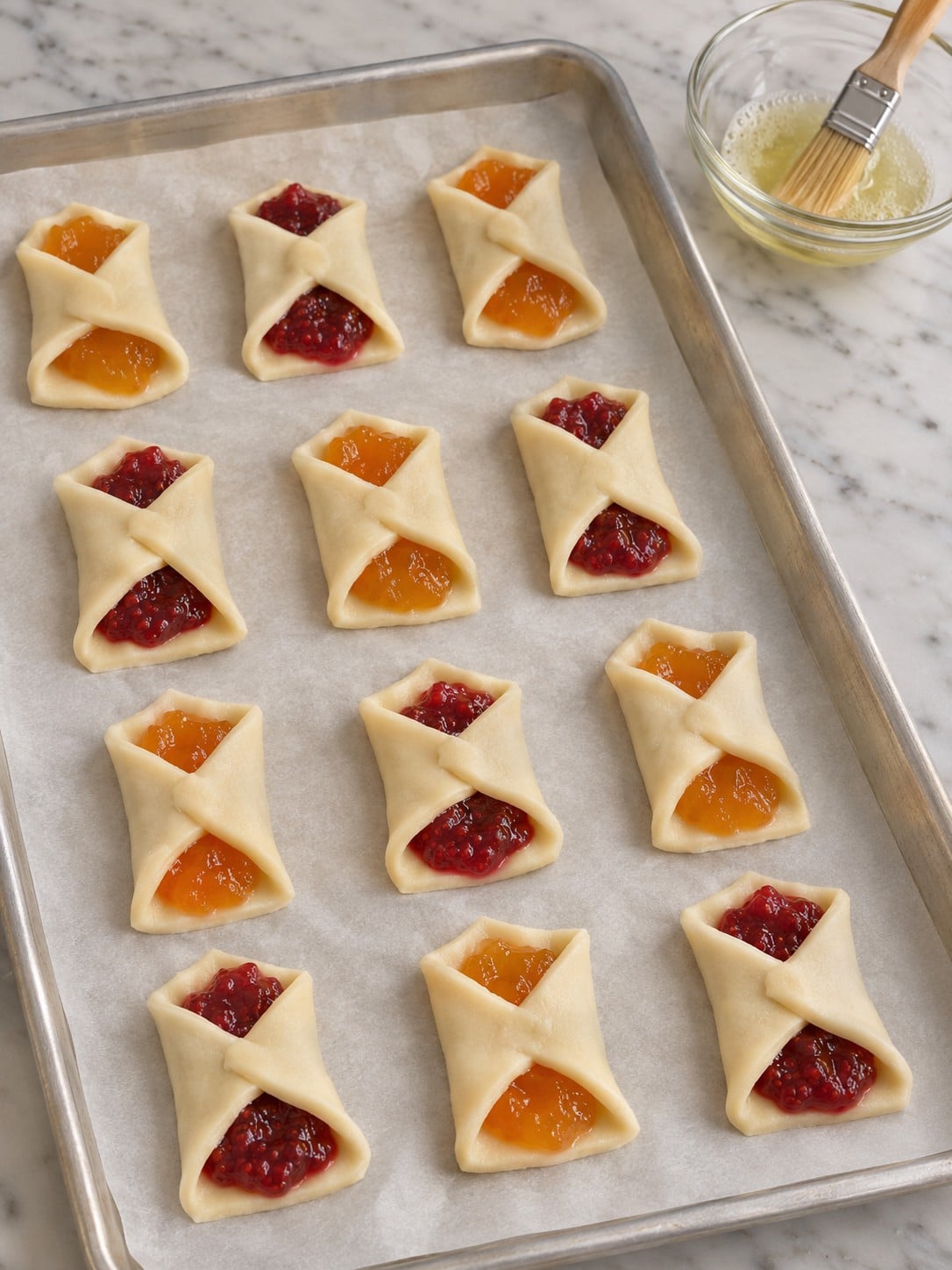
Baking Until Only the Tips Turn Gold
Bake one sheet at a time at 350°F for 14 to 16 minutes. Pull them when the corners are light gold and the bottoms are pale gold; the sides of the pastry should still look cream colored. Pale is right. Darker means the butter has cooked out and the pastry tastes dry by the next day.
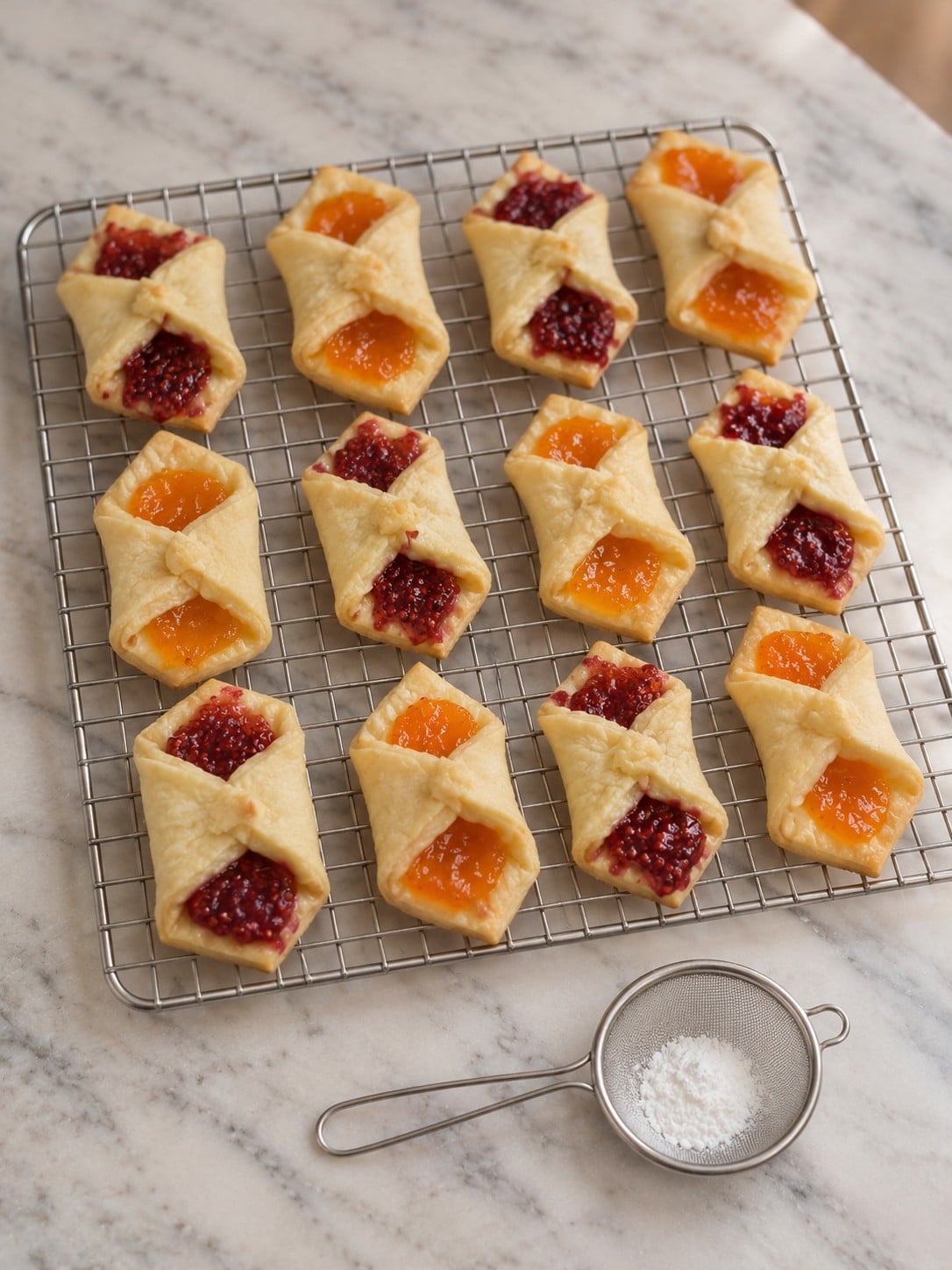
Leave them 5 minutes on the sheet, since the hot jam is soft and the cookies bend, then move them to a rack. Reroll the scraps once. A second reroll gets tough.
A Three Day Plan for the Cookie Tray
The dough holds 3 days in the fridge and 2 months in the freezer, so the cookies fit around a busy week:
- Day 1, 10 minutes: mix the dough, wrap the two squares and refrigerate.
- Day 2, about an hour: roll, fill, seal, chill 15 minutes and bake. Cool completely and store without sugar.
- Day 3 or the day of the party: dust with powdered sugar and set them out.
Baked, undusted cookies also freeze for 3 months in a box with parchment between the layers. Thaw them on the counter in their box so condensation forms on the lid, not the pastry.
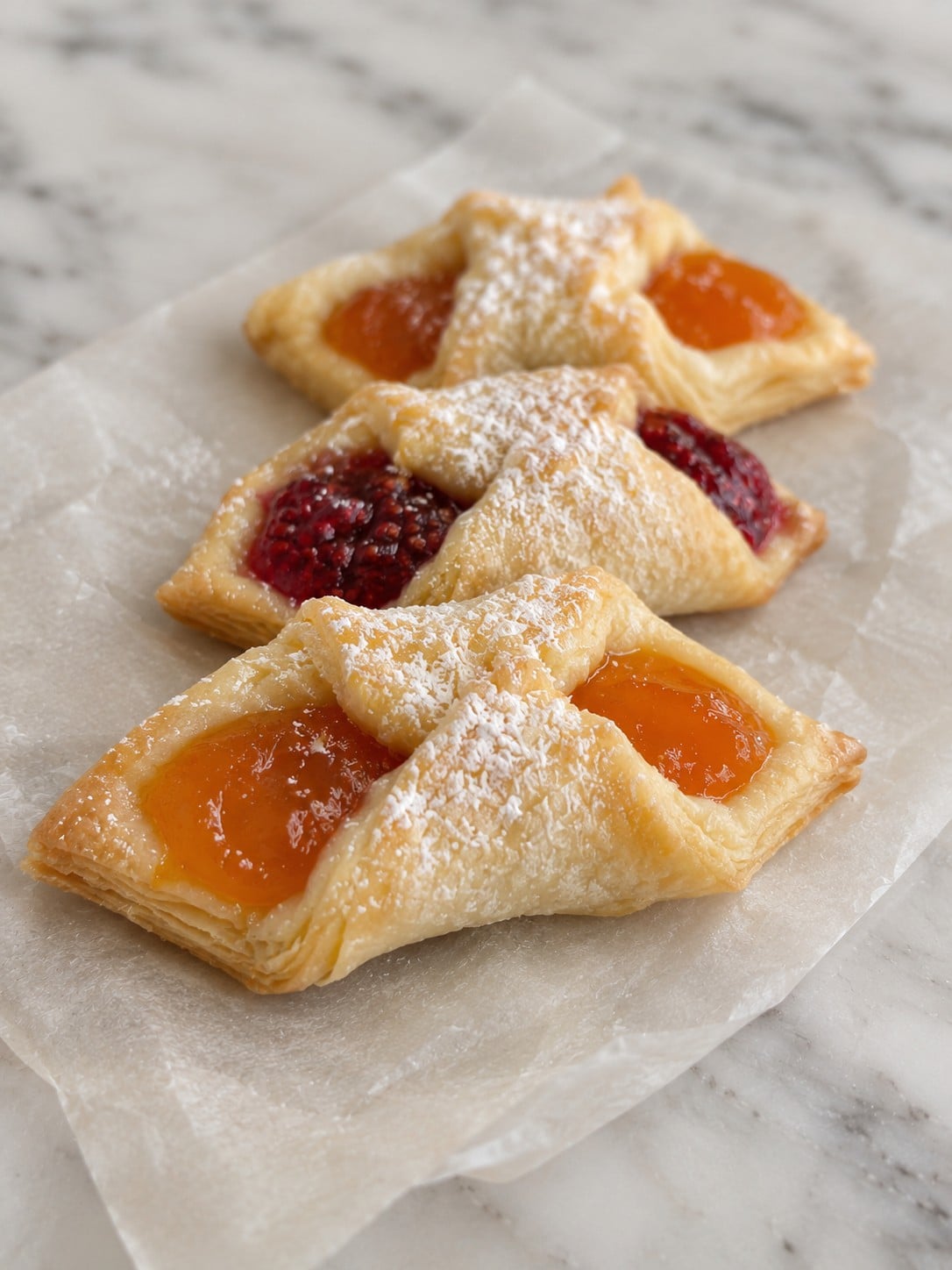
Powdered Sugar Goes On Last
Dust them right before serving. Powdered sugar on a cookie that sits in a tin overnight soaks into the jam and turns into a damp grey film. A small sieve and 1/4 cup of sugar covers all 48. Cherry, prune and poppy seed filling are the other Polish favorites, and each one bakes the same way.
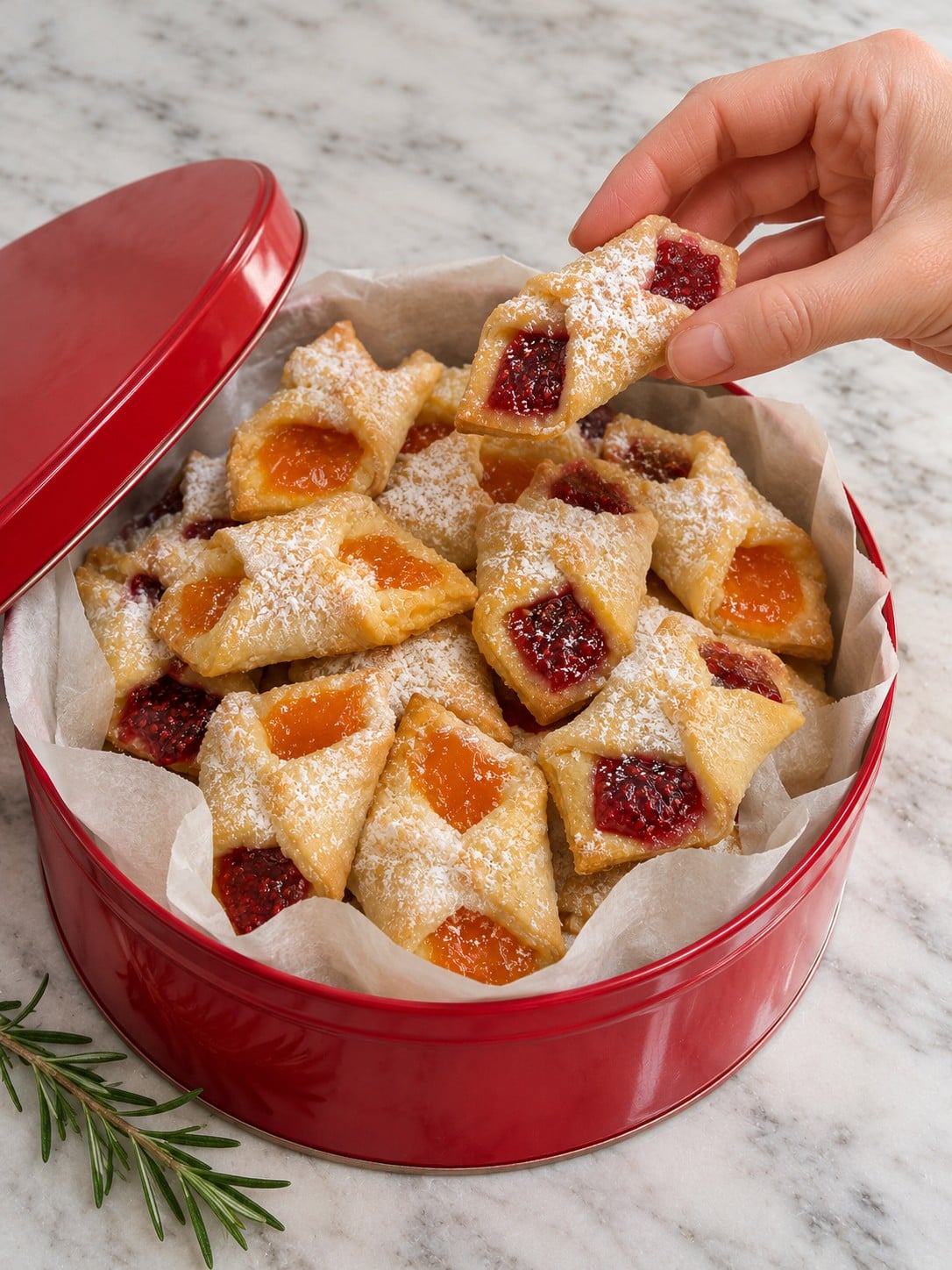
Next to Spritz, Rainbow Cookies and Toffee
Kolaczki bring the fruit to a Christmas tray. Set them beside butter spritz cookies for crunch, Italian rainbow cookies for color and Christmas M&M cookies for the kids. A few shards of English toffee fill the gaps in a gift tin.
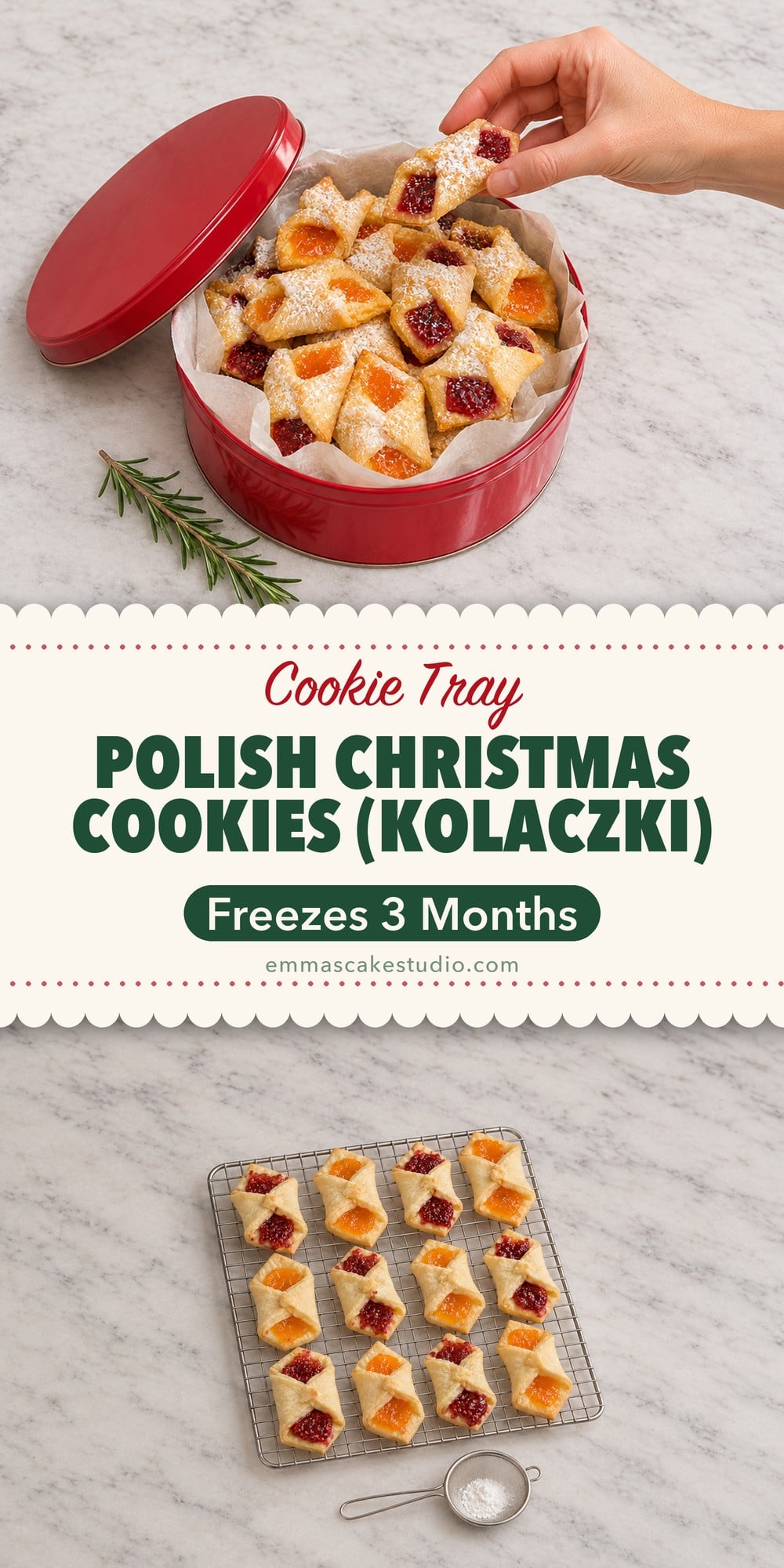
Stored airtight at cool room temperature, they keep 4 days and the pastry stays flaky the whole time.
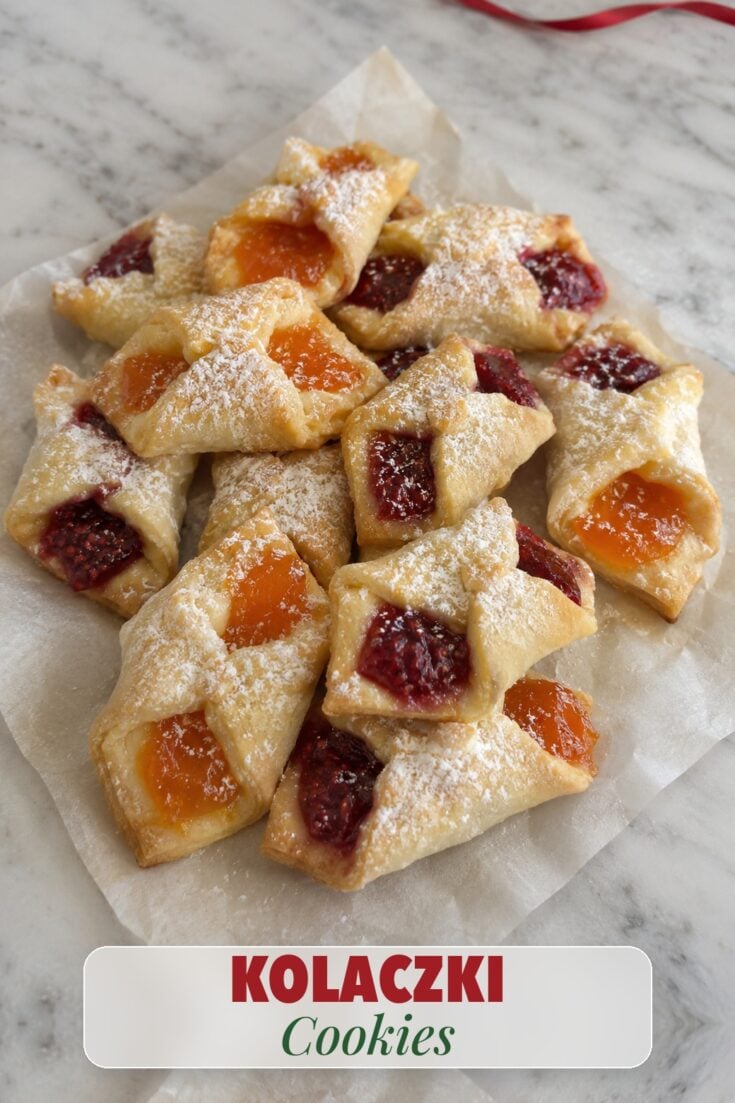
Kolaczki Cookies
Made it? Tap the stars to rate it.
Kolaczki cookies are Polish Christmas cookies made from a tender cream cheese and butter pastry, rolled thin, cut into squares and folded around a spoon of thick apricot or raspberry jam. The dough chills for at least 2 hours, then two opposite corners are sealed with a dab of egg white so they stay closed while the cookies bake at 350°F until only the tips turn golden. A light dusting of powdered sugar goes on just before serving. Set them on Christmas cookie trays, holiday dessert tables and cookie exchanges. Swap in cherry, prune or poppy seed filling, and keep them airtight for 4 days at room temperature or freeze them undusted for 3 months.
Ingredients
For the dough
- 8 ounces (226 g) full fat brick cream cheese, softened
- 1 cup (226 g) unsalted butter, softened
- 1 tablespoon granulated sugar
- 1/2 teaspoon vanilla extract
- 1/4 teaspoon fine salt
- 2 1/4 cups (280 g) all purpose flour
For filling and finishing
- 3/4 cup (240 g) thick apricot preserves or seedless raspberry jam (or canned pastry filling)
- 1 large egg white, beaten with 1 teaspoon water
- 3 tablespoons granulated sugar, for rolling
- 1/4 cup (30 g) powdered sugar, for dusting
Instructions
- Make the dough: Beat the cream cheese and butter on medium speed until smooth, about 2 minutes. Beat in the sugar, vanilla and salt, then mix in the flour on low just until the dough comes together.
- Chill: Divide the dough in half, flatten each half into a square about 1 inch thick, wrap and refrigerate at least 2 hours or overnight (up to 3 days).
- Roll and cut: Heat the oven to 350°F and line two baking sheets with parchment. Sprinkle the counter with granulated sugar and roll one half of the dough to 1/8 inch thick. Cut into 2 1/2 inch squares. Keep the second half in the fridge until you need it.
- Fill and seal: Put a scant 3/4 teaspoon of jam in the center of each square. Brush one corner with egg white, fold the opposite corner over the jam, then fold the brushed corner over it and pinch firmly for 2 seconds.
- Chill again: Space the cookies 1 inch apart on the sheets and refrigerate 15 minutes so the folds firm up.
- Bake: Bake one sheet at a time for 14 to 16 minutes, until the corners are light golden and the bottoms are pale gold. Cool 5 minutes on the sheet, then move to a rack.
- Finish: Reroll the scraps once. Dust the cooled cookies with powdered sugar just before serving.
Notes
The one mistake to avoid: sealing the corners dry. Brush one corner with egg white and pinch hard, or the cookies open flat in the oven.
Use thick preserves or pastry filling; thin jam boils out of the sides and burns.
Roll on granulated sugar instead of flour so the pastry stays tender.
Make ahead: the dough keeps 3 days in the fridge or 2 months frozen. Baked, undusted cookies keep 4 days airtight at cool room temperature or 3 months frozen.
Dust with powdered sugar just before serving; in a closed tin it soaks into the jam.
Nutrition Information
Yield
24Serving Size
2 cookiesAmount Per Serving Calories 176Total Fat 11gSaturated Fat 7gCholesterol 31mgSodium 56mgCarbohydrates 17gFiber 0gSugar 8gProtein 2g

Made it? Tap the stars to rate it