

Sourdough donut holes are one of the most rewarding ways to turn an active starter into a breakfast bake that feels genuinely special. They have the richness of an enriched dough, the tenderness you want from a good fried donut, and the light interior that makes each bite feel airy instead of heavy. Because they are small and quick to finish after frying, they also feel more manageable than a full batch of large filled donuts.
The CSV pushes hard toward discard terms, but this particular recipe is built around an active starter and a real rise, not a quick discard shortcut. That makes sourdough donut holes the cleanest and most honest target. It matches the actual dough, the texture, and the finished images better than forcing a discard angle the recipe does not truly support.

Following a special diet?
Every recipe on this site can be converted to gluten-free, vegan, dairy-free, keto, nut-free or egg-free with adjusted ratios so nothing falls flat.
Try the Recipe Converter →Why Active Starter Makes These Donut Holes Better
An active starter brings more than flavor here. It helps create the lift that gives the donut holes their open, tender interior, which is especially important in a fried dough recipe where density can ruin the whole result. The slight tang also keeps the dough from tasting flat once it is fried and coated.
That is what separates these from simpler cake style donut bites. They eat more like true yeasted donuts, with chew, stretch, and airy pockets inside. If you like starter based breakfast baking, sourdough English muffins use the same slow build idea in a very different format.
This Dough Is Rich But Still Manageable
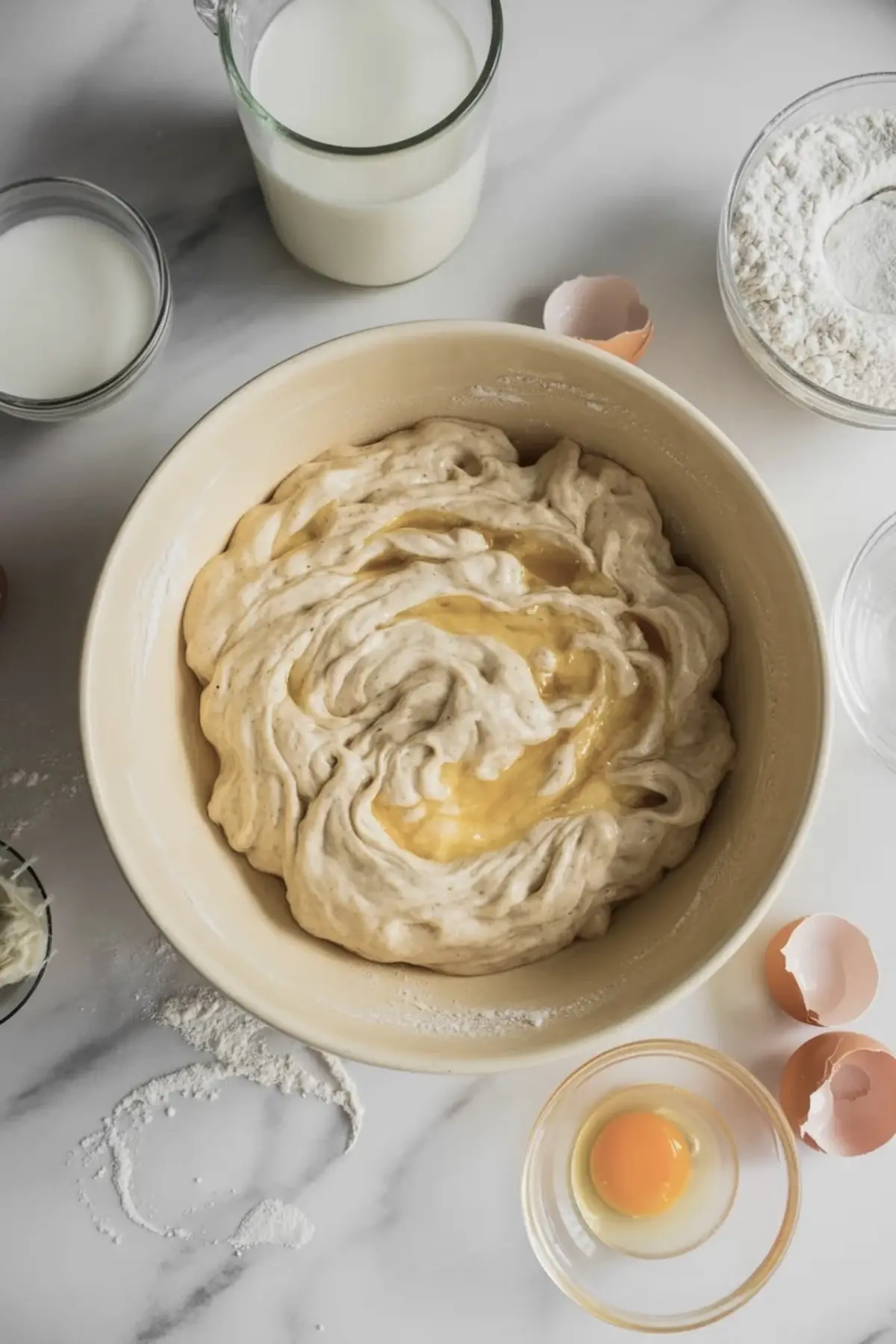
Milk, eggs, butter, and sugar make the dough richer than a lean bread dough, but the process is still approachable. Once mixed, it should feel soft and slightly tacky rather than loose or batter like. That balance matters because the dough needs enough structure to hold its shape through proofing and frying while still staying tender in the center.
The ingredient setup also explains why these donut holes feel more substantial than many quick breakfast bakes. You are building a true enriched sourdough dough, not just stirring discard into a shortcut batter.
The Rise And Chill Steps Make Shaping Easier
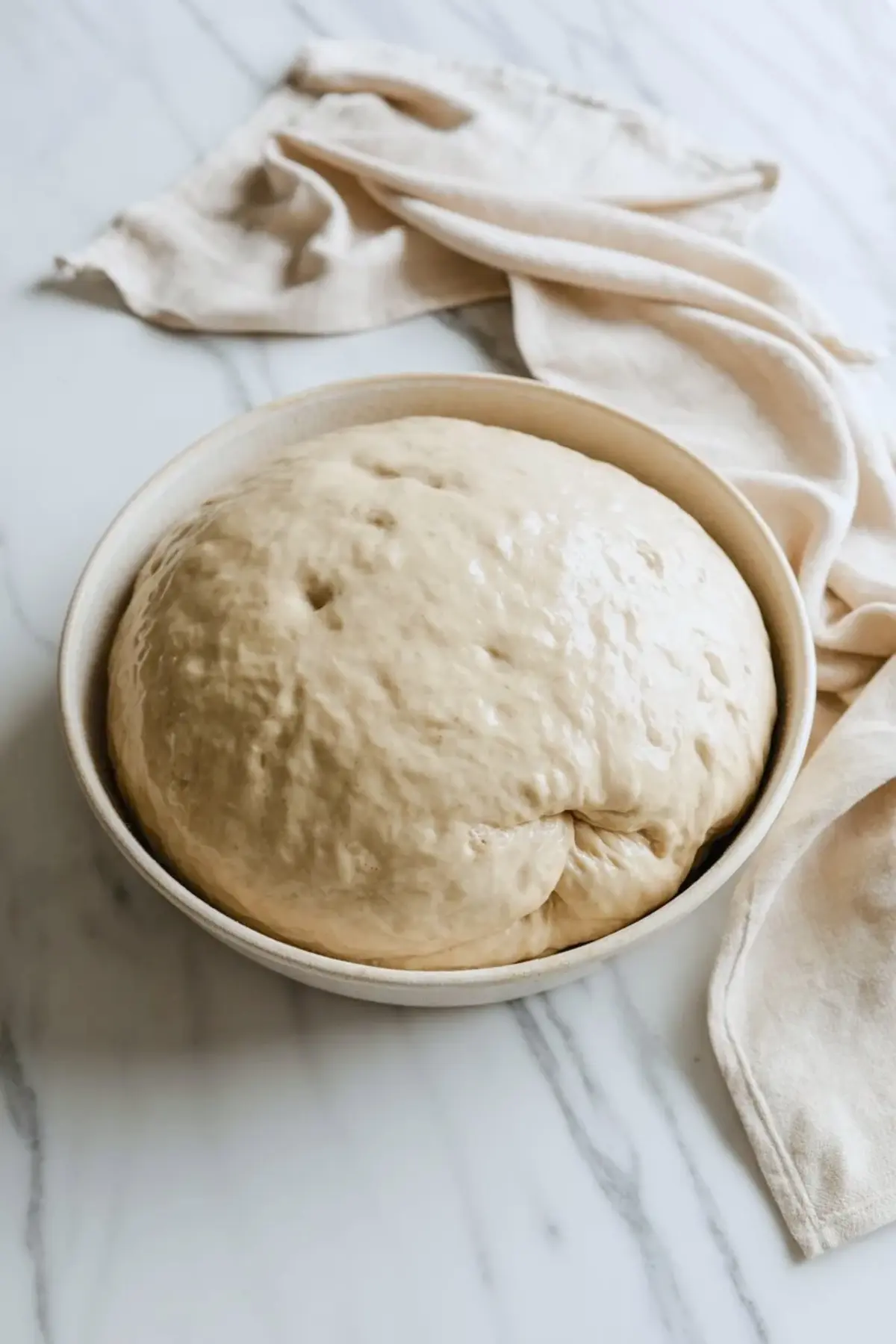
The first rise gives the dough its initial volume and flavor development, while the chill afterward makes the dough far easier to handle. That cold rest is useful because soft enriched dough can become frustrating if you try to shape it too warm. Once chilled, the dough is easier to portion and roll into smooth balls that proof evenly.
This step also makes the recipe more practical for real schedules. You can mix the dough, let it rise, chill it, and return when you are ready to shape and fry. That flexibility makes sourdough donut holes feel much more doable for a weekend breakfast or brunch project.
Shaping And Proofing Set Up The Final Texture
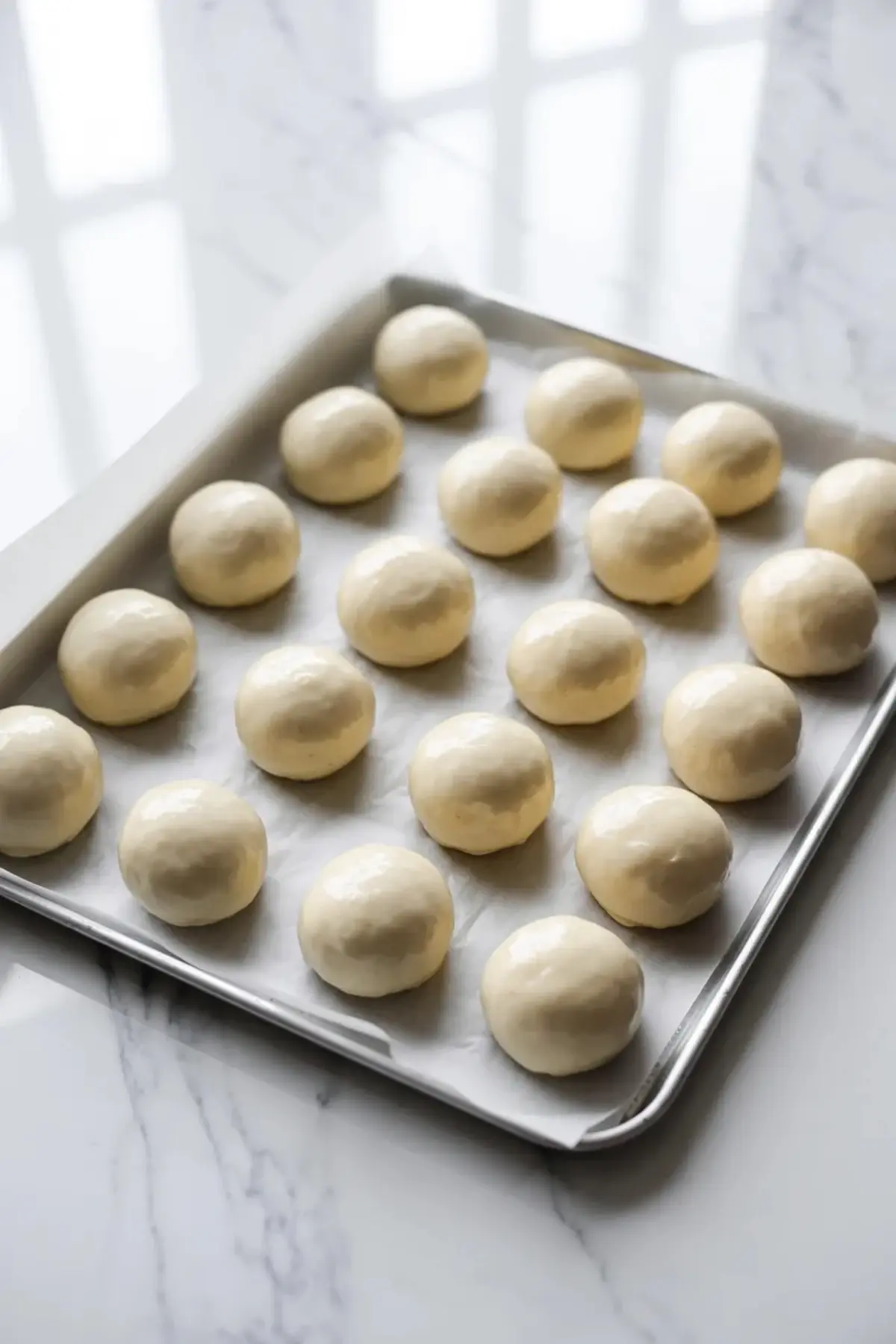
Rolling the dough into evenly sized balls helps everything fry at the same pace, which keeps you from ending up with some underdone centers and some overbrowned outsides. The second proof matters just as much. When the shaped balls look puffy and light, they are much more likely to fry into airy donut holes instead of tight, breadlike rounds.
If you enjoy classic fried breakfast treats, Nutella bomboloni show the larger filled version of this kind of donut experience, while these sourdough donut holes keep things smaller and easier to serve.
Frying Temperature Changes Everything
Oil that is too cool leads to greasy donut holes, while oil that is too hot browns the outside before the center is ready. Keeping the oil near 350 degrees helps the dough cook through while still building that evenly golden shell. Fry only a few at a time so the temperature does not crash and so you have room to turn them cleanly.
Once fried, the donut holes are flexible. Toss them in cinnamon sugar while warm, dip them in a simple glaze, or leave part of the batch plain so everyone can choose a finish. That mix and match quality makes them great for sharing, especially when you want one batch to cover different tastes without making separate doughs or toppings from scratch.

Best Ways To Serve Sourdough Donut Holes
These are strongest when served warm, ideally not long after frying, because the interior stays especially soft and the coatings taste freshest. They work well for brunch boards, holiday breakfasts, and coffee table treats when you want something that feels bakery style without needing full size donuts for every person.
Save this sourdough donut holes recipe when you want a starter project with a visible payoff. The dough takes a little time, but the final texture, golden exterior, and flexible finishes make the effort feel worth it fast. It is the kind of batch that disappears quickly once people taste how soft the centers stay while still getting that crisp fried edge.

Sourdough Donut Holes

These sourdough donut holes are light, fluffy, and deeply golden, with an airy interior that comes from an active sourdough starter and a proper two stage rise. The dough fries into soft donut bites that work beautifully with cinnamon sugar, vanilla glaze, or a simple dusting of sugar, so the batch feels flexible instead of locked into one finish. They are especially good for weekend breakfast, brunch boards, and make ahead dough prep because you can chill the dough before shaping and fry once it is fully proofed. If you want sourdough donut holes that taste rich, fry up tender, and make good use of starter in a true yeast style donut dough, this recipe gives you a reliable method from mixing through frying.
Ingredients
- FOR THE DOUGH
- 1 cup active sourdough starter
- 3 cups all-purpose flour
- 1/2 cup whole milk, slightly warm
- 2 tablespoons granulated sugar
- 2 large eggs
- 4 tablespoons unsalted butter, softened
- 1 teaspoon salt
- 1 teaspoon vanilla extract
- FOR FRYING
- Vegetable oil or canola oil for frying
- FOR THE CINNAMON SUGAR COATING
- 1/2 cup granulated sugar
- 1 tablespoon ground cinnamon
- FOR THE VANILLA GLAZE
- 1 1/2 cups powdered sugar
- 2–3 tablespoons milk
- 1 teaspoon vanilla extract
Instructions
MIX THE DOUGH: In a large mixing bowl, combine the active sourdough starter, warm milk, granulated sugar, eggs, and vanilla extract. Stir until smooth and fully combined. Add the all-purpose flour and salt, then mix until a shaggy dough forms. Add the softened butter a little at a time and knead until the dough becomes smooth and elastic, about 8–10 minutes by hand or 5–6 minutes with a stand mixer. The dough should feel soft and slightly tacky but not overly sticky.
FIRST RISE: Transfer the dough to a lightly greased bowl and cover with plastic wrap or a clean kitchen towel. Let the dough rise at room temperature for 4–6 hours, depending on the warmth of the kitchen, until puffy and nearly doubled in size.
CHILL THE DOUGH: Place the covered dough in the refrigerator for at least 1 hour to firm up the texture and make shaping easier. For overnight preparation, refrigerate the dough overnight and continue the next morning.
SHAPE THE DONUT HOLES: Lightly flour a clean work surface. Divide the dough into small portions and roll into balls about 1 1/2 inches wide. Arrange the dough balls on a parchment-lined baking tray and cover lightly with a towel or plastic wrap.
SECOND PROOF: Let the shaped donut holes proof for 1–2 hours until noticeably puffy and airy. Proper proofing helps create a light texture with soft pockets inside.
FRY THE DONUT HOLES: Pour about 2 inches of vegetable oil or canola oil into a heavy-bottomed pot and heat to 350°F (175°C). Fry a few donut holes at a time, cooking for 1–2 minutes per side until deeply golden brown. Remove with a slotted spoon and transfer to a paper towel-lined plate to drain excess oil.
COAT OR GLAZE: For cinnamon sugar donut holes, combine the granulated sugar and ground cinnamon in a bowl and toss the warm donut holes until coated. For glazed donut holes, whisk together the powdered sugar, milk, and vanilla extract until smooth. Let the donut holes cool slightly, then dip into the glaze and allow excess glaze to drip off before serving.
Notes
Use an active and bubbly sourdough starter for the best rise and airy texture.
Maintain the oil temperature near 350°F to prevent greasy donut holes.
Serve warm for the best flavor and texture.
Nutrition Information
Yield
24Serving Size
1Amount Per Serving Calories 257Total Fat 3gSaturated Fat 2gUnsaturated Fat 2gCholesterol 21mgSodium 164mgCarbohydrates 52gFiber 1gSugar 22gProtein 5g
