
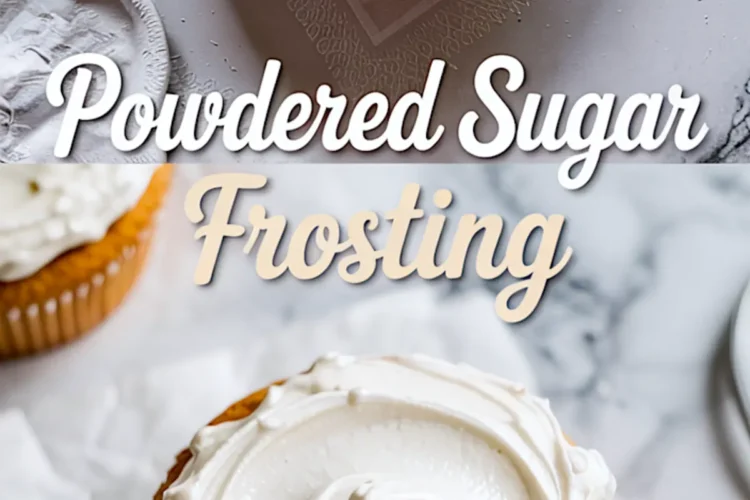
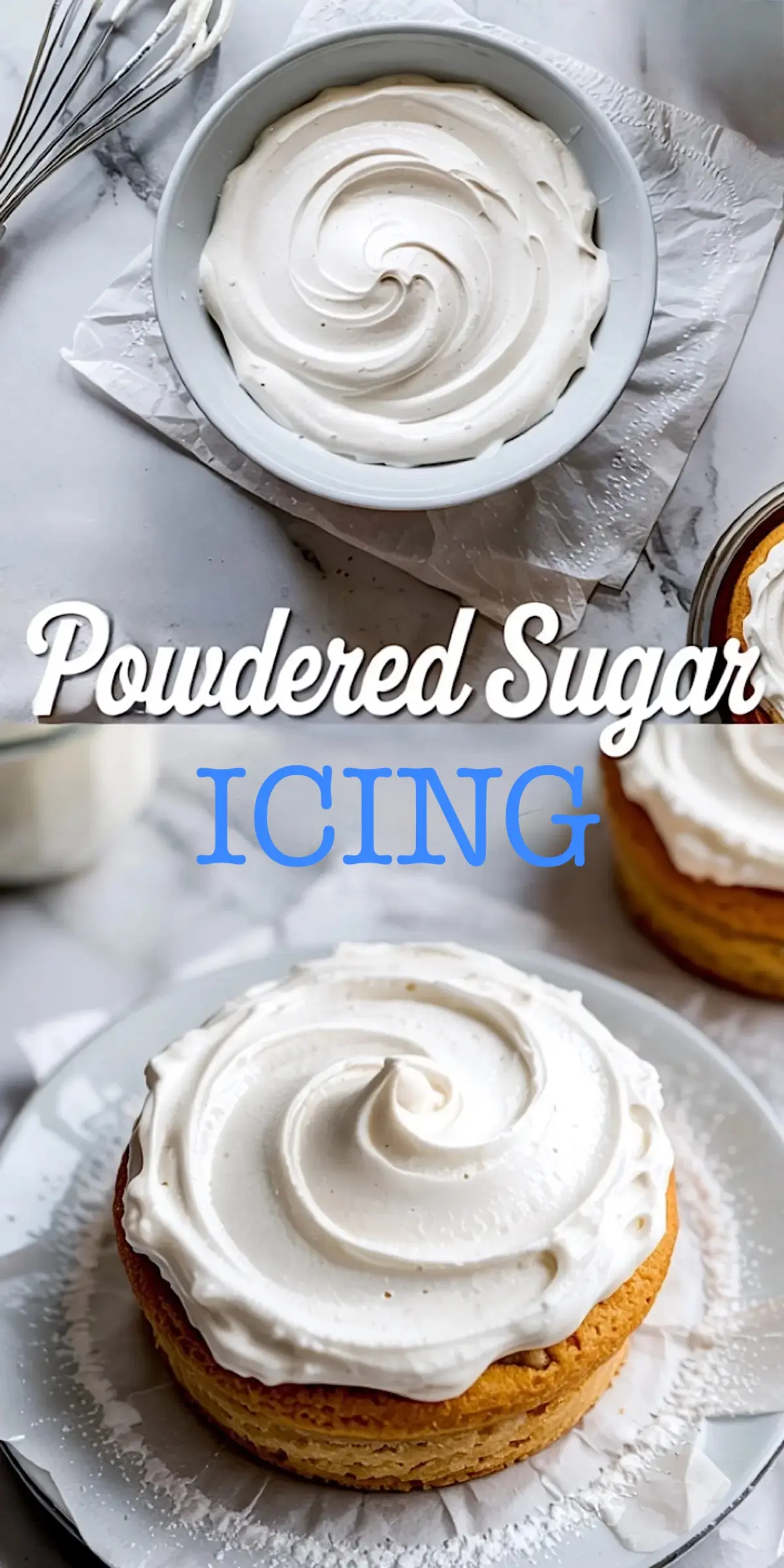
This powdered sugar icing is a smooth, glossy icing made with 2 cups of powdered sugar, 2 to 3 tablespoons of milk, and 1 teaspoon of vanilla, plus an optional pinch of salt. It takes about 5 minutes to mix and makes enough to frost one 9 inch round cake or 12 cupcakes.
The trick is adding the milk slowly. Start with 2 tablespoons, stir until the icing turns from dull to glossy, then add more milk a teaspoon at a time only if you need it. That one habit lets you choose between a thin glaze for bundt cakes, a spreadable cookie icing, or a thicker frosting for cupcakes, all from the same bowl.
Following a special diet?
Every recipe on this site can be converted to gluten-free, vegan, dairy-free, keto, nut-free or egg-free with adjusted ratios so nothing falls flat.
Try the Recipe Converter →Powdered Sugar Icing at a Glance
- Yield: frosts one 9 inch round cake or 12 cupcakes
- Time: about 5 minutes, no cooking
- Base ratio: 2 cups powdered sugar to 2 to 3 tablespoons milk
- Flavor: 1 teaspoon vanilla extract and an optional pinch of salt
- Texture: glossy and smooth, sets with a soft crust
- Storage: about 2 hours covered on the counter or up to 2 days in the fridge
- Use it for: sugar cookies, bundt cakes, cupcakes, cinnamon rolls, scones, and sweet breads
What You Need for Easy Icing With Powdered Sugar
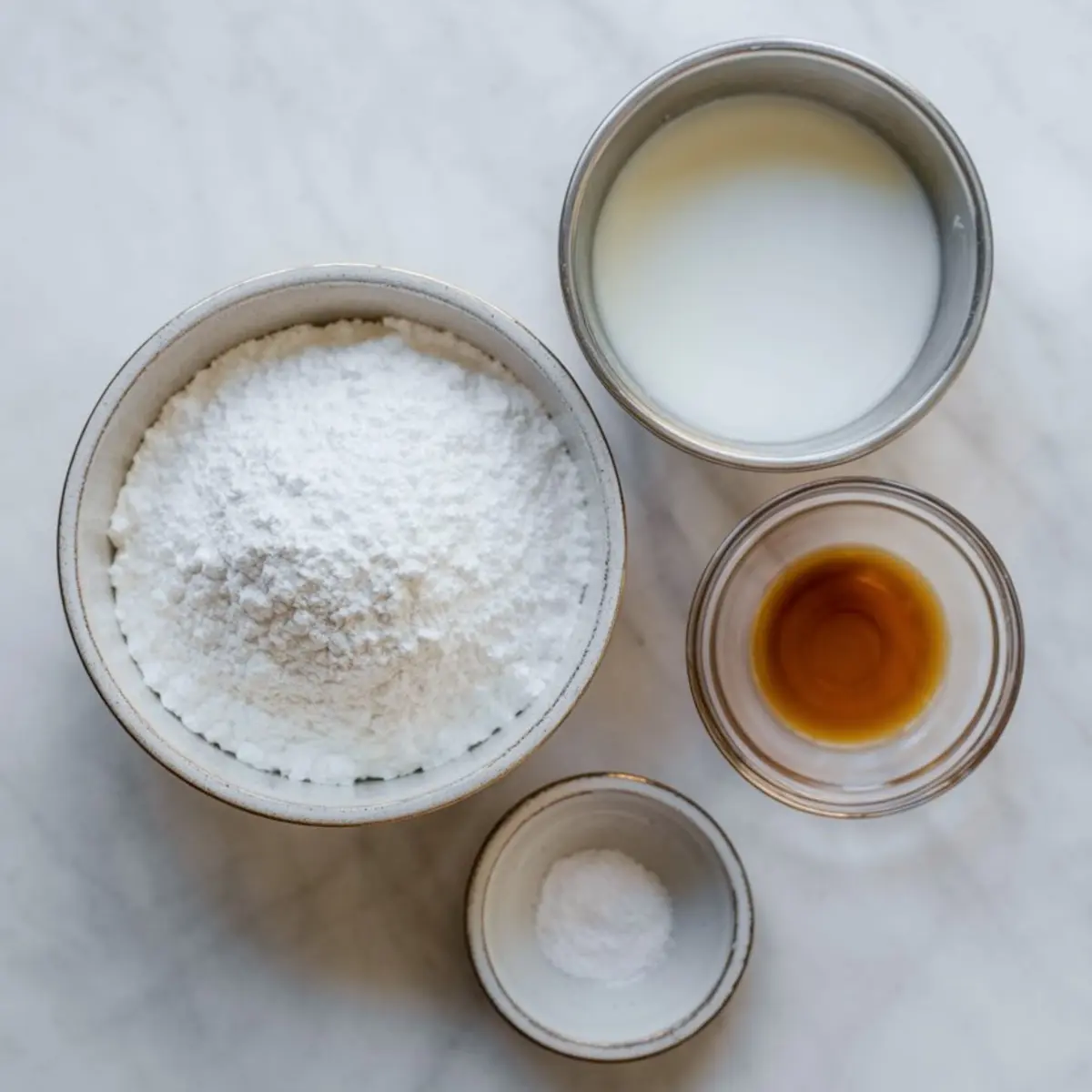
Powdered sugar forms the body of this icing. It dissolves into the liquid and creates that smooth, creamy texture. Choose one labeled 10X or confectioners’ sugar. It dissolves quickly and gives a glossier finish. Powdered sugar, confectioners’ sugar, and icing sugar are all names for the same finely ground sugar, so any of them works here.
Milk gives you control over thickness. Whole milk adds richness, but any milk or cream works, and non-dairy milk like almond or oat is fine if you are working around allergies. Vanilla brings balance. Without it, the icing tastes flat, so I use pure vanilla extract, not imitation. The pinch of salt is optional, but it softens the sweetness just enough without changing the flavor.
How to Make Icing With Powdered Sugar
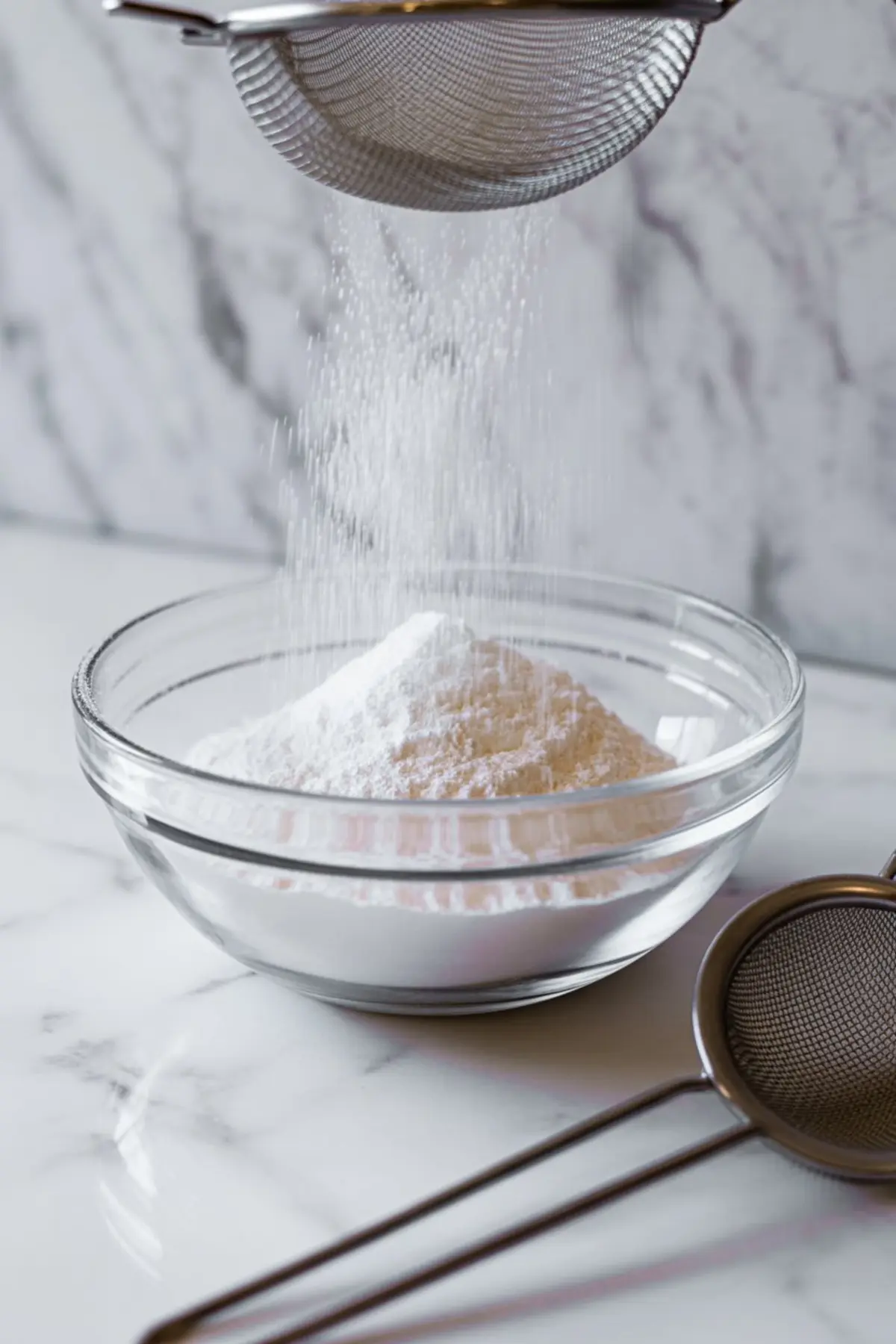
Add the powdered sugar to a medium bowl, sifting it in if it looks at all clumpy. Sifting is the step that keeps small lumps out of the finished icing, especially if the sugar has been stored a while. If you are short on time, break up clumps with a fork, but the finish may not be quite as smooth.
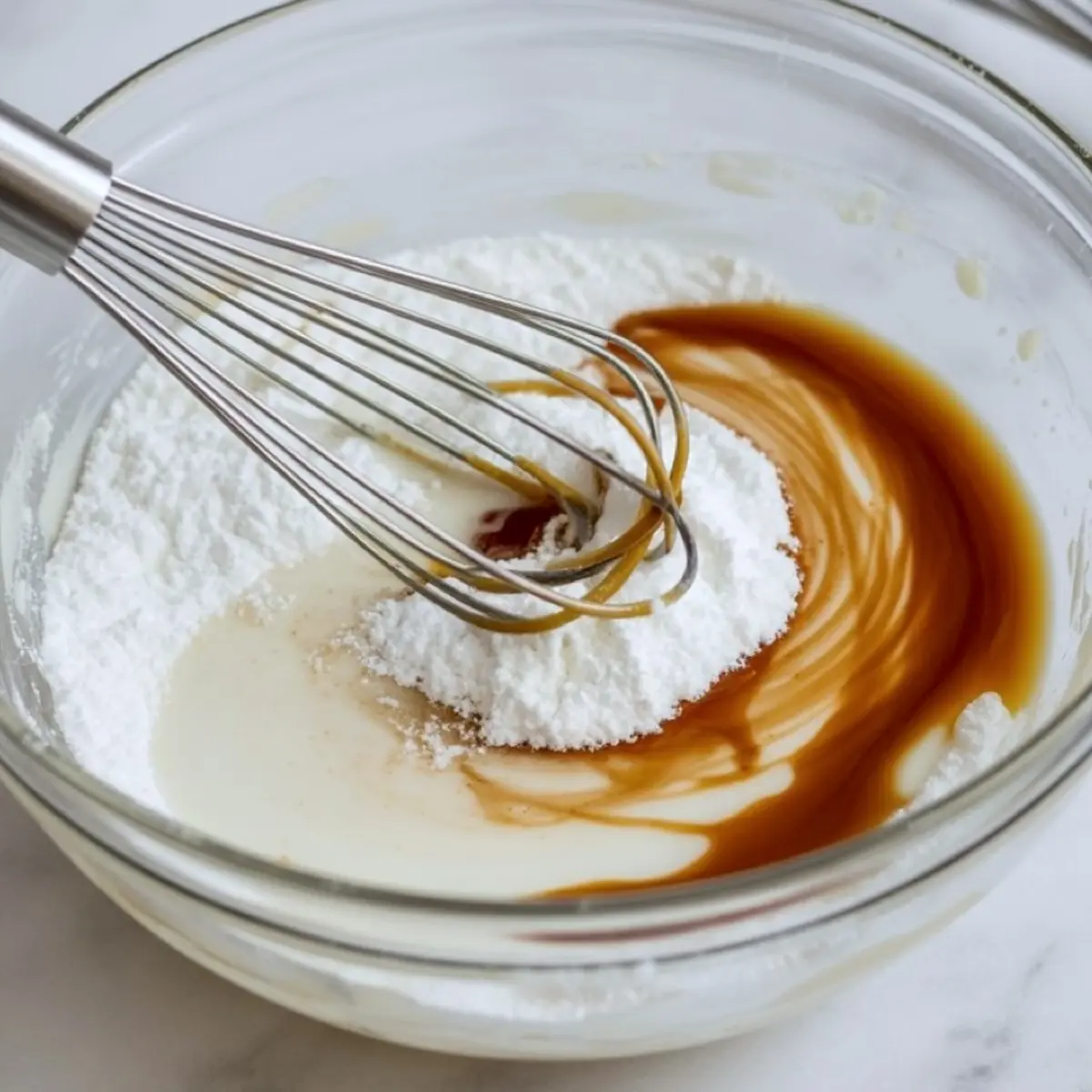
Pour in the vanilla and 2 tablespoons of milk, and add the pinch of salt now if you are using it. Stir slowly with a small whisk or a fork. The mixture looks dry at first, then turns into a thick paste, and finally becomes smooth and glossy. That change from dull to shiny is the sign it is ready.
If it feels too stiff, add more milk 1 teaspoon at a time and stir between each addition. If it gets too thin, stir in more powdered sugar. Once it is glossy and flows the way you want, stop mixing. Overworking it can add air bubbles that show on cookies.
Glaze, Cookie Icing, or Frosting: Getting the Consistency Right
The same recipe covers three textures. The spoon test tells you which one you have:
- Glaze: the icing drips off the spoon steadily but slowly. This is the one for bundt cakes, scones, and sweet breads like banana bread or lemon loaf.
- Cookie icing: it slides slowly off the spoon but does not run like water, and it stays in place on a cookie without spilling over the edges.
- Thick frosting: it sits on the spoon with only slight movement. Use this for spreading on cupcakes or the top of a cake.
To make thick icing with powdered sugar, stay at 2 tablespoons of milk and add more powdered sugar a tablespoon at a time. For a thinner drizzle, loosen it with milk a teaspoon at a time. If you need cookie icing that dries firm for stacking or gifting, use my sugar cookie icing that hardens instead, since this one sets with a soft crust.
Troubleshooting Runny, Thick, or Gritty Icing
- Icing is too runny: stir in more powdered sugar, about a tablespoon at a time, until it holds the texture you want.
- Icing is too thick: add milk 1 teaspoon at a time. Adding a big splash at once makes it hard to get back to the right texture.
- Icing tastes gritty: the sugar was not sifted well or has not fully dissolved. Let it rest for a minute and stir again. It usually smooths out.
- Icing crusts in the bowl: cover it with plastic wrap or press a piece of wax paper right on the surface while you work.
- Glaze cracks after setting: it was spread too thin or dried too quickly. Add a few more drops of milk next time so it settles evenly.
- Bubbles on cookies: the icing was overmixed. Stop stirring as soon as it turns glossy.
Powdered Sugar Icing Flavor and Color Variations
Swap the vanilla for almond extract for a classic sugar cookie glaze, lemon extract for citrus bakes, or peppermint extract for winter and Christmas cookies. To make chocolate powdered sugar frosting, whisk in 1 to 2 tablespoons of unsweetened cocoa powder and add a little extra milk to keep it smooth.
For color, a drop or two of gel food coloring gives a bright result without watering the icing down. I have used this trick for holiday cookies and themed cakes, and it is an easy way to make one batch into several colors for decorating.
Ways to Use Powdered Sugar Icing
Spread it on cooled sugar cookies for a glossy finish, or drizzle a thinner glaze over a bundt cake such as this snickerdoodle bundt cake. It is also a quick topping for cinnamon rolls, donuts, muffins, sweet bread loaves, and cranberry orange scones.
For fall and holiday cookie trays, a peppermint or vanilla version is lovely over soft nutmeg cookies. When you want something richer and fluffier for a layer cake, reach for vanilla buttercream frosting and keep this icing for drizzling and decorating.
Storage and Make-Ahead Tips for Holiday Baking
This icing is best used fresh, but you can store it short term. Kept tightly covered, it lasts about 2 hours on the counter or up to 2 days in the fridge. Before using chilled icing, let it sit at room temperature for 15 minutes and give it a good stir. Freezing is not ideal, because the texture changes after thawing and the sugar may crystallize.
For Thanksgiving and Christmas cookie decorating, mix a batch the day before, store it covered in the fridge, and stir it smooth once it comes to room temperature. Since it only takes 5 minutes, it is also easy to make fresh batches in different colors as you go.
Powdered Sugar Icing FAQ
Can you make icing with powdered sugar and water?
Yes. Water works in place of milk for a simple glaze. The icing will be a little less creamy and more translucent, so milk is the better choice when you want a rich, white finish.
How do you make powdered sugar icing thicker?
Add more powdered sugar, about a tablespoon at a time, and stir until smooth. Starting with only 2 tablespoons of milk also keeps it thick from the beginning.
Is powdered sugar the same as icing sugar?
Yes. Powdered sugar, icing sugar, confectioners’ sugar, and 10X sugar are the same finely ground sugar.
Can I make icing with granulated sugar?
Not with this method. Granulated sugar does not dissolve in a small amount of milk, so the icing stays gritty. Use powdered sugar for a smooth result.
Does powdered sugar icing harden?
It sets with a soft crust on top and stays smooth underneath. It does not dry rock hard, so for stackable decorated cookies use an icing made to harden.
Save This Powdered Sugar Icing Recipe
Pin this powdered sugar icing to your cookie decorating or holiday baking board so it is ready when you need a fast glaze or cookie frosting. If you try your own twist, like a new extract or color, leave a comment and a star rating below. It helps other bakers, and I would love to hear what worked in your kitchen.
Powdered Sugar Icing Recipe
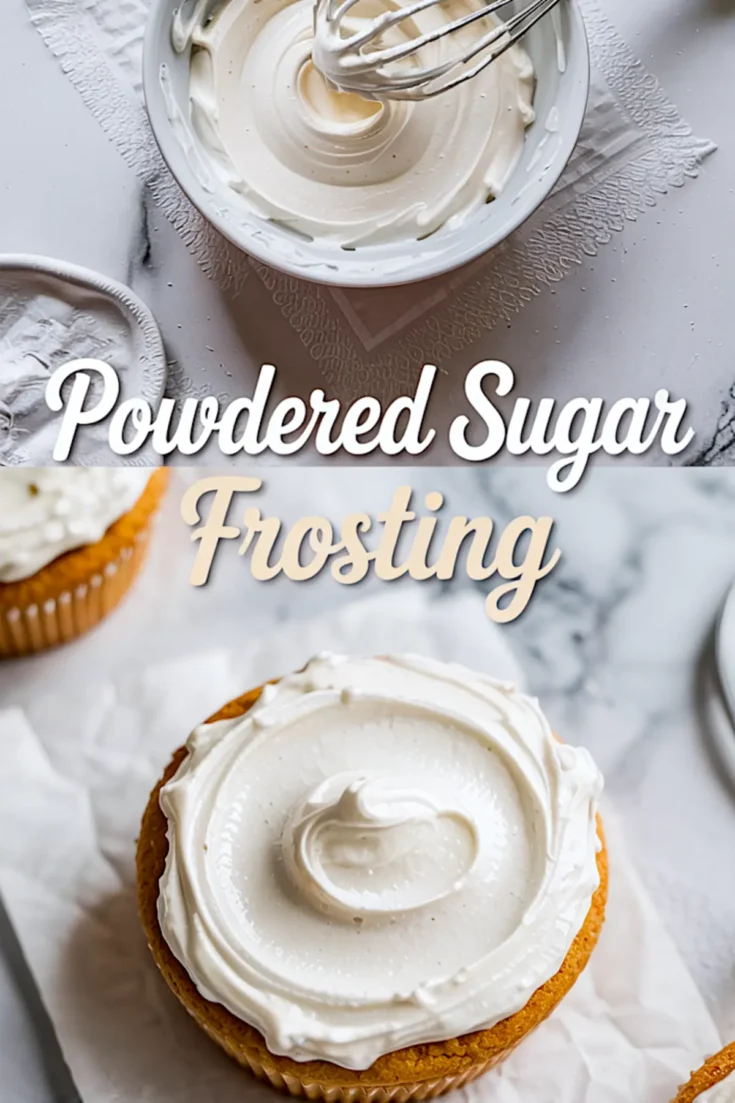
This powdered sugar icing is a smooth, glossy icing made with just powdered sugar, milk, and vanilla extract, plus an optional pinch of salt. It mixes in about 5 minutes with no cooking and makes enough to frost one 9 inch round cake or 12 cupcakes. Start with 2 tablespoons of milk and add more a teaspoon at a time to get the texture you want: a thin powdered sugar glaze for bundt cakes, scones, and sweet breads, a spreadable cookie icing for sugar cookies, or a thicker powdered sugar frosting for cupcakes. Sift the sugar for the smoothest finish. Flavor it with almond, lemon, or peppermint extract for holiday cookies, or tint it with gel food coloring.
Ingredients
- 2 cups powdered sugar
- 2–3 tablespoons milk
- 1 teaspoon vanilla extract
- Optional: a pinch of salt
Instructions
- SIFT THE SUGAR: Add the powdered sugar to a medium mixing bowl. Sift it in if it looks clumpy to ensure a smooth final texture.
- ADD LIQUIDS: Pour in the vanilla extract and 2 tablespoons of milk. If using salt, add a small pinch now.
- MIX UNTIL SMOOTH: Use a whisk or fork to stir the mixture. It will look dry at first but continue mixing until it forms a thick paste, then becomes a glossy, smooth frosting.
- ADJUST CONSISTENCY: If the frosting is too thick, add more milk 1 teaspoon at a time. If it becomes too thin, add more powdered sugar and stir until fully combined.
- CHECK TEXTURE: Aim for a spreadable consistency that holds its shape on a spoon but still glides easily across cake or cookie surfaces.
- USE IMMEDIATELY: Spread the frosting while fresh. It sets with a soft crust. If not using right away, cover the bowl to prevent it from thickening too quickly.
Notes
For thicker icing, add more powdered sugar a tablespoon at a time; for a thinner glaze, add milk 1 teaspoon at a time. If you prefer a different flavor, replace the vanilla extract with almond, lemon, or peppermint extract. For chocolate frosting, add 1 to 2 tablespoons of unsweetened cocoa powder and increase the milk slightly as needed. Store covered for about 2 hours at room temperature or up to 2 days in the refrigerator, then let it sit at room temperature for 15 minutes and stir before using. Freezing is not recommended.
Nutrition Information
Yield
12Serving Size
1Amount Per Serving Calories 87Total Fat 0.6gSaturated Fat 0.3gTrans Fat 0.0gUnsaturated Fat 0.2gCholesterol 2.3mgSodium 25mgCarbohydrates 20gSugar 19gProtein 1.0g
