

This lemon protein mug cake offers a fluffy, single-serve dessert that doubles as a sweet breakfast. It combines lemon juice, lemon zest, and protein powder into a high protein lemon mug cake that takes just one minute to cook. This mug recipe fits well into high protein recipes, especially for anyone craving lemon desserts without baking an entire cake. It works as a keto lemon mug cake when using almond flour and a low-carb sweetener.

Following a special diet?
Every recipe on this site can be converted to gluten-free, vegan, dairy-free, keto, nut-free or egg-free with adjusted ratios so nothing falls flat.
Try the Recipe Converter →A mug cake relies on a quick balance. You need enough lift to keep it fluffy, enough fat to keep it soft, and just enough flour to bind. Here, baking powder takes care of the rise, while almond milk and coconut oil balance moisture and richness. One scoop of vanilla protein powder helps form structure while boosting the protein content.
This ratio works well for a microwave recipe. A thick batter in a tall, narrow mug means you get a tender crumb that stays soft inside. If you’ve tried other mug recipes that turn rubbery, it’s usually from overcooking or too much dry mix.
For consistency, I start with 2 tablespoons of all-purpose flour. Almond flour works too, though it gives a softer, almost spoonable texture. I prefer the flour mix when I want it to hold its shape more cleanly.
What Each Ingredient Brings to the Recipe
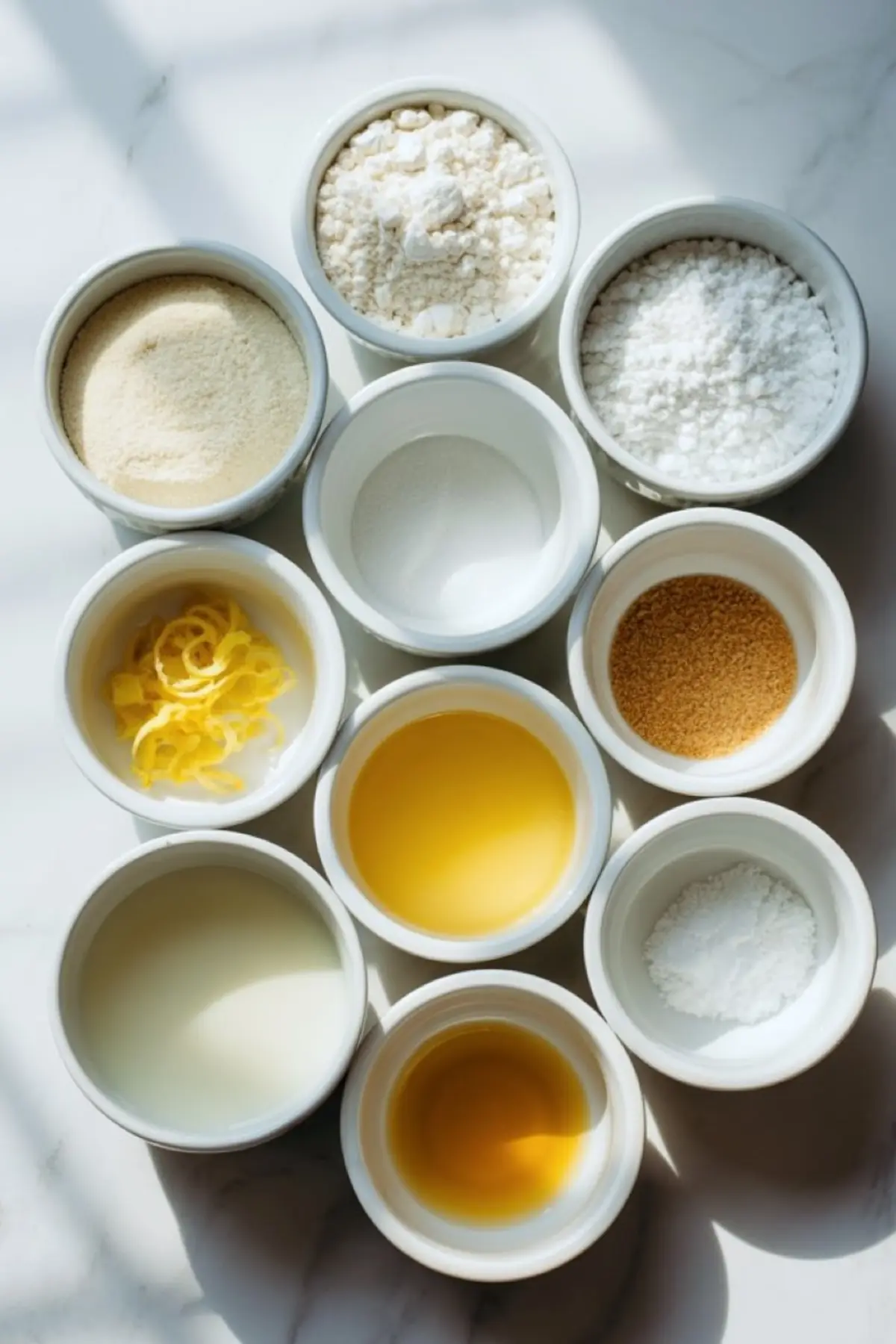
The vanilla protein powder forms the foundation here. I’ve tested both whey and plant-based versions. Whey gives a slightly lighter crumb, but either one works. Just make sure it’s smooth in texture and not gritty.
Lemon juice and lemon zest each do something different. The juice brings acidity and activates the baking powder, while the zest boosts the lemon aroma without watering down the batter. You need both for balance.
For flour, I switch between all-purpose and almond depending on what I want from the texture. The almond flour version fits better in keto lemon mug cake variations and feels softer.
Almond milk is neutral and light, and it mixes easily. Other plant-based milks work too. I’ve used oat milk before with no noticeable difference in texture.
The melted coconut oil keeps the crumb tender. Butter adds flavor, but I only use it if I plan to eat the mug cake immediately. Coconut oil holds up better if you let it sit for a few minutes before eating.
Lemon Stands Out Here
Lemon is the star. The acid keeps the texture from feeling dense. A small amount of zest adds fragrance you’ll notice as soon as you microwave it. I’ve tried versions with bottled lemon juice in a pinch, but the flavor never lands the same. Freshly squeezed lemon and a microplane make all the difference.
If you’re short on fresh lemons, you can swap the zest for a drop of lemon extract, but just one. It’s potent. Too much and the cake starts to taste artificial.
This cake sits right alongside other bright-flavored protein options, like the lemon blueberry chickpea cookies I’ve shared before.
Making the Batter Smooth and Even
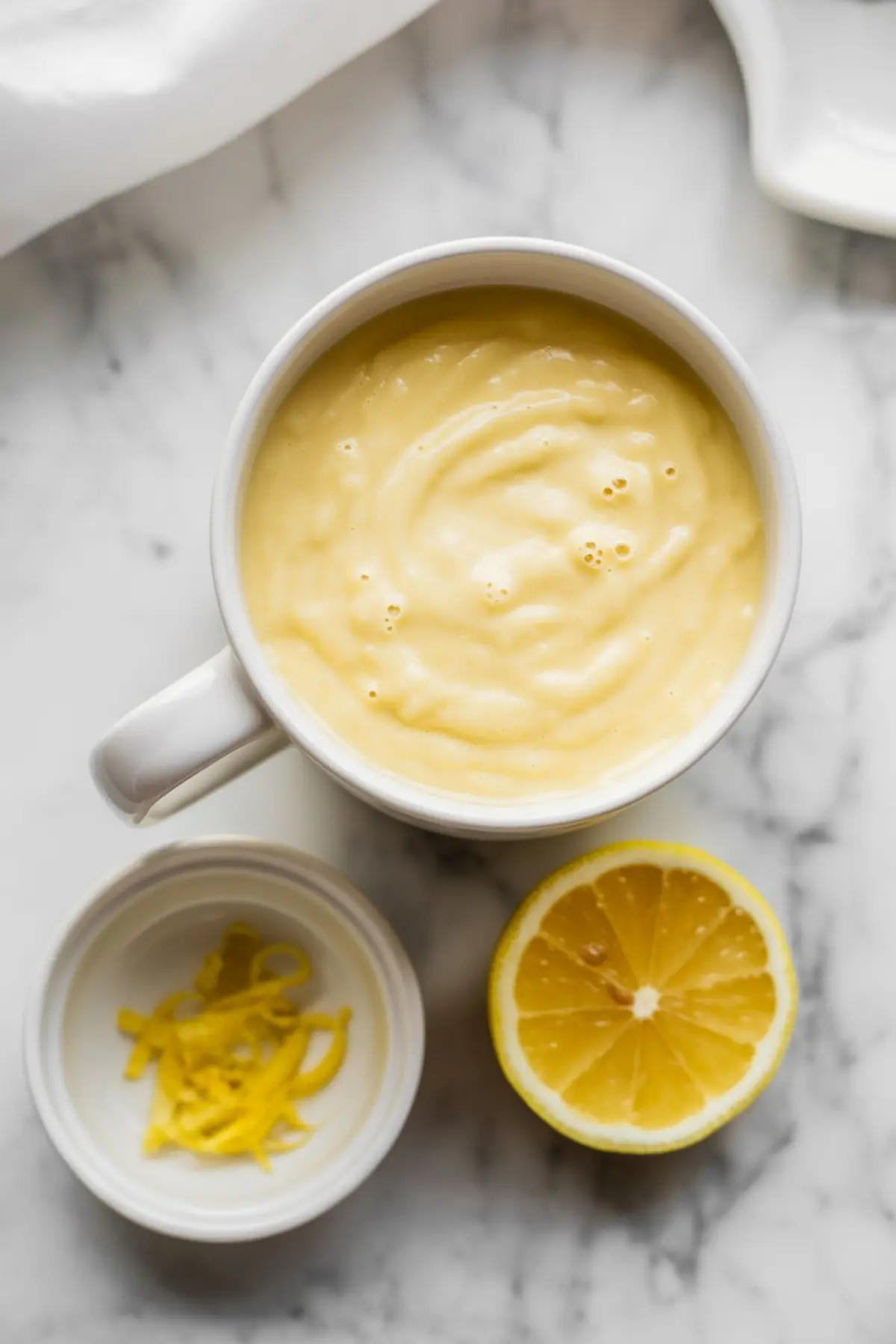
Use a standard 10 to 12-ounce mug. That size gives the batter enough room to rise without spilling. Stir the dry ingredients first so the protein powder doesn’t clump.
Once you add the wet ingredients, mix slowly at first, scraping around the edges. It should look thick, glossy, and smooth with a soft yellow tint. A fork works fine, though I sometimes use a mini silicone spatula to make sure I reach the corners.
After stirring, tap the mug on the counter once or twice to level the batter. This helps it cook evenly in the microwave.

You’ll see it start rising after 30 seconds. Check at 40. If the top looks set and the sides pull away slightly, it’s ready. Too long and the cake turns spongy. I’ve had good results with 50 seconds in an 1100-watt microwave.
If you’re looking for another quick fix idea, this chocolate protein mug cake follows a similar method with cocoa powder instead of lemon.
Signs It’s Cooked Just Right
The top should look matte and spring back when touched lightly. The center may appear just a little soft. That’s okay. It sets more as it cools.
Undercooked will feel wet and sink in the center. Overcooked goes stiff and dry, especially around the rim.
For your first time, start at 40 seconds and increase in short bursts. I’d rather it be slightly under and rest a moment than risk overcooking.
For another soft-textured treat, you might like these protein cottage cheese brownies. Very different flavor, but similar high protein focus.
Storage Tips
This cake is meant to be eaten fresh. That said, I’ve made it ahead a few times. You can mix the dry ingredients and store in a small container. When ready, just add wet ingredients and microwave.
I wouldn’t refrigerate the cooked mug cake. The texture firms up and becomes slightly chewy. But if you really need to, wrap it tightly and reheat gently in 10-second bursts.
It won’t freeze well due to the delicate texture, especially with almond flour.
Quick Tips From the Kitchen
Use fresh lemon zest. Don’t skip it. Stir thoroughly, especially in the bottom corners of the mug.
Start with 40 seconds. Increase only if the center looks visibly wet. Let it cool for at least one minute. That short rest improves the texture.
If you’re using almond flour, expect a softer, pudding-like consistency. Avoid protein powders with gritty texture. They don’t blend as well.
Save This Lemon Protein Mug Cake Recipe
Pin this lemon protein cake to your mug recipes or sweet breakfast board so you don’t lose it. It’s quick, bright, and endlessly useful.
Let me know in the comments how it turns out for you. If you tried a variation, I’d love to hear what worked best for you.
Lemon Protein Mug Cake

This high protein lemon mug cake is soft, fluffy, and packed with bright citrus flavor in every bite. Perfect for a quick sweet breakfast or single serve dessert, this recipe uses lemon protein powder, making it a satisfying treat with added fuel. If you enjoy muffin in a mug ideas or want to try more lemon protein recipes, this one is ready in minutes with minimal ingredients. A great choice for those following high protein recipes, and perfect when you’re craving lemon desserts without baking a full cake. Try this refreshing keto lemon mug cake for a low-effort treat that doesn’t compromise on taste.
Ingredients
- 1 scoop vanilla protein powder (whey or plant-based)
- 2 tbsp all-purpose flour (or almond flour for gluten-free)
- 1/4 tsp baking powder
- 1 tbsp granulated sweetener (erythritol, monk fruit, or sugar)
- Zest of 1/2 lemon
- 1 tbsp lemon juice (freshly squeezed)
- 3 tbsp unsweetened almond milk (or milk of choice)
- 1 tsp melted coconut oil (or butter)
- 1/4 tsp vanilla extract
- Pinch of salt
- Optional toppings:
- Greek yogurt or coconut whipped cream
- Extra lemon zest or a drizzle of honey
Instructions
- MIX DRY INGREDIENTS: In a microwave-safe mug, whisk together the protein powder, flour, baking powder, sweetener, and a pinch of salt until well combined.
- ADD WET INGREDIENTS: Add the lemon juice, lemon zest, almond milk, melted coconut oil, and vanilla extract to the mug. Stir thoroughly until the mixture is smooth and no dry spots remain. The batter should be thick but easily spoonable.
- MICROWAVE: Microwave the mug on high for 40 to 60 seconds. Begin checking at the 40-second mark; if the center is still wet, continue cooking in 10 to 15 second intervals. Do not overcook or the texture may become rubbery.
- COOL SLIGHTLY: Allow the mug cake to cool for 1 to 2 minutes. This brief rest enhances the lemon flavor and improves the overall texture.
- TOP AND SERVE: Add a spoonful of Greek yogurt, a bit of lemon zest, or a drizzle of honey on top. Serve warm and enjoy immediately.
Notes
For best results, use a standard 10 to 12-ounce microwave-safe mug. Cooking time may vary based on microwave wattage. If using almond flour, the texture will be softer and more delicate.
Nutrition Information
Yield
1Serving Size
1Amount Per Serving Calories 225Total Fat 4gSaturated Fat 1gUnsaturated Fat 3gCholesterol 3mgSodium 204mgCarbohydrates 40gFiber 2gSugar 13gProtein 6g
