

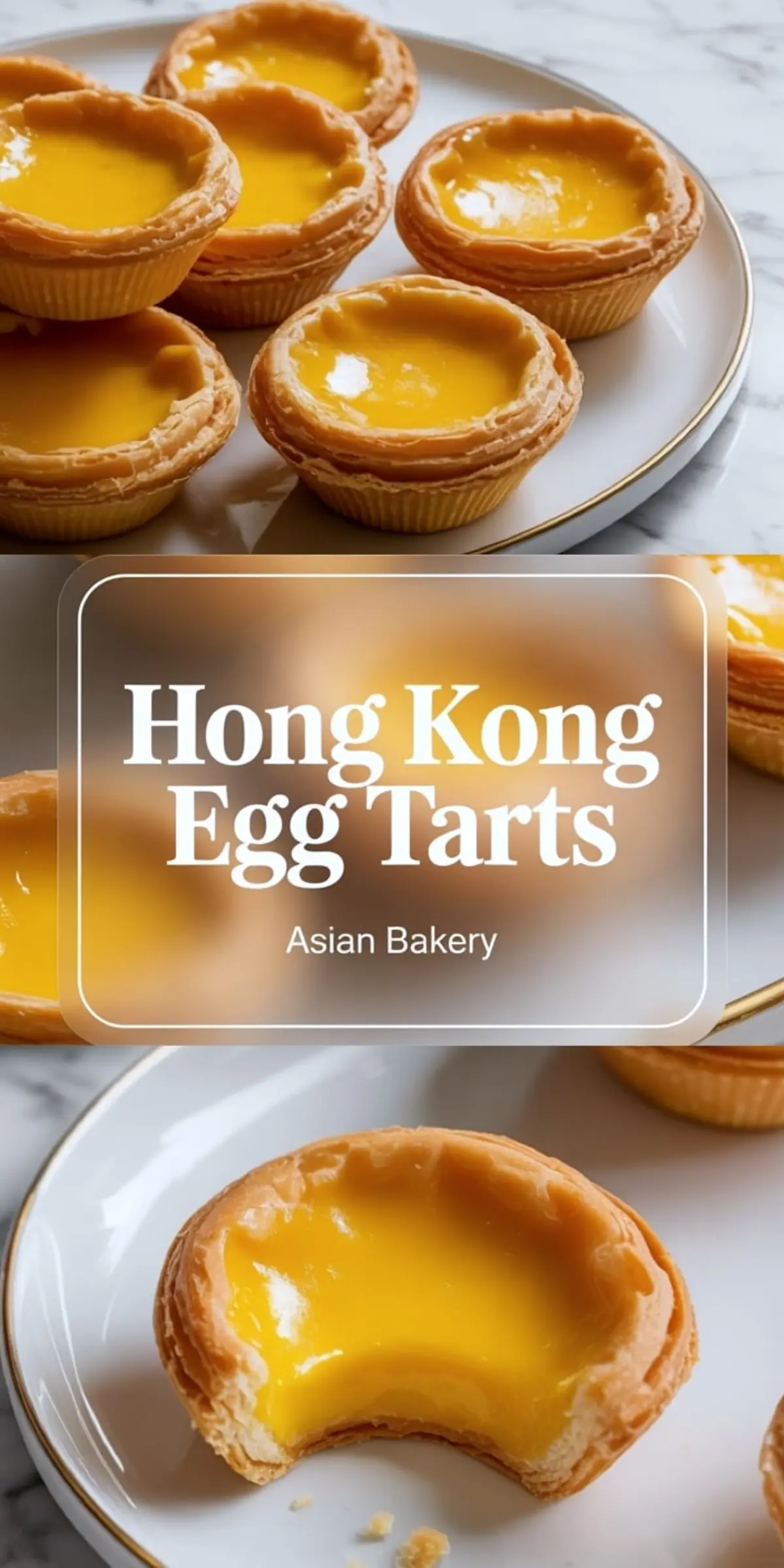
These Hong Kong egg tarts are Chinese egg custard tarts made with flaky store-bought puff pastry and a smooth custard of 3 eggs, sugar dissolved in hot water, evaporated milk, and vanilla. The recipe makes 12 tarts in about an hour, baked at 375°F for 25 to 30 minutes until the custard is glossy and just set.
The secret to the bakery look is gentle handling. Stir the eggs instead of whisking them, strain the custard, and pull the tarts when the centers still wobble slightly like jelly. That gives you a mirror smooth top and a custard that melts on the first bite.
Following a special diet?
Every recipe on this site can be converted to gluten-free, vegan, dairy-free, keto, nut-free or egg-free with adjusted ratios so nothing falls flat.
Try the Recipe Converter →Egg Tart Essentials
- Makes: 12 egg tarts
- Time: 30 minutes prep, 25 to 30 minutes baking, about 1 hour total
- Pastry: 2 sheets store-bought puff pastry, cut into 3.5 inch rounds
- Custard: 3 large eggs, ½ cup sugar dissolved in 1 cup hot water, ⅓ cup evaporated milk, 1 teaspoon vanilla, pinch of salt
- Oven: 375°F (190°C), center rack
- Done when: the center jiggles slightly when you tap the mold but is no longer liquid
Egg Tarts With Chinese Puff Pastry
In Hong Kong bakeries and cha chaan teng cafes, egg tarts (dan tat) come with two kinds of crust: a crisp, cookie like shortcrust, and a flaky puff pastry crust with many thin layers. This recipe makes the flaky kind. Traditional Chinese puff pastry is laminated by hand with a water dough and a lard or butter dough, which takes hours. Store-bought puff pastry gives you those same crisp, shattering layers in a fraction of the time, and it is what makes these egg tarts easy enough for a weekend bake.
Thaw the pastry until it is pliable but still cold. Roll it lightly to even the thickness, cut 3.5 inch circles, and press them into the molds, trimming the excess. Prick each base with a fork so it does not puff up under the custard, and chill the shells while you make the filling. Cold pastry holds its shape and rises in clean layers.
If you prefer the cookie crust style, shortcrust pastry works too. It will not puff, but it gives a more buttery, sandy shell. For more easy puff pastry bakes, try apple turnovers with puff pastry or puff pastry cinnamon twists.
Hong Kong vs Portuguese Egg Tarts
Hong Kong egg tarts have a pale yellow, glossy custard that is never browned on top, and a sweet, gentle egg flavor. Portuguese egg tarts, the kind made famous in Macau, use a richer cream custard that is baked hot until the top blisters and caramelizes in dark spots. If your tarts come out with brown patches, the oven was too hot for the Hong Kong style.
What Goes in the Custard
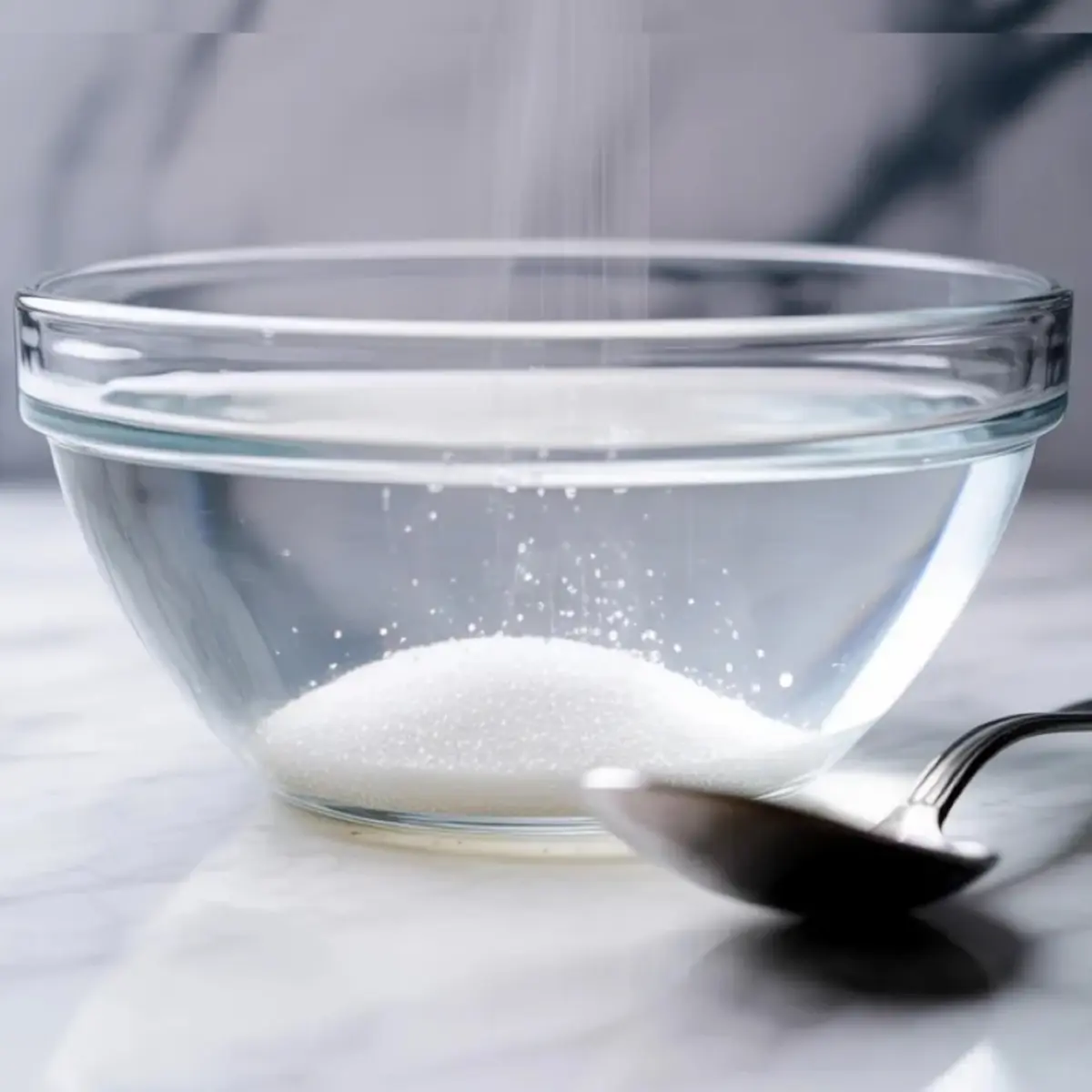
Sugar dissolved in hot water is the base. Dissolving it first means no gritty bits and no uneven sweet patches, and letting the syrup cool to room temperature before it meets the eggs keeps them from starting to cook.
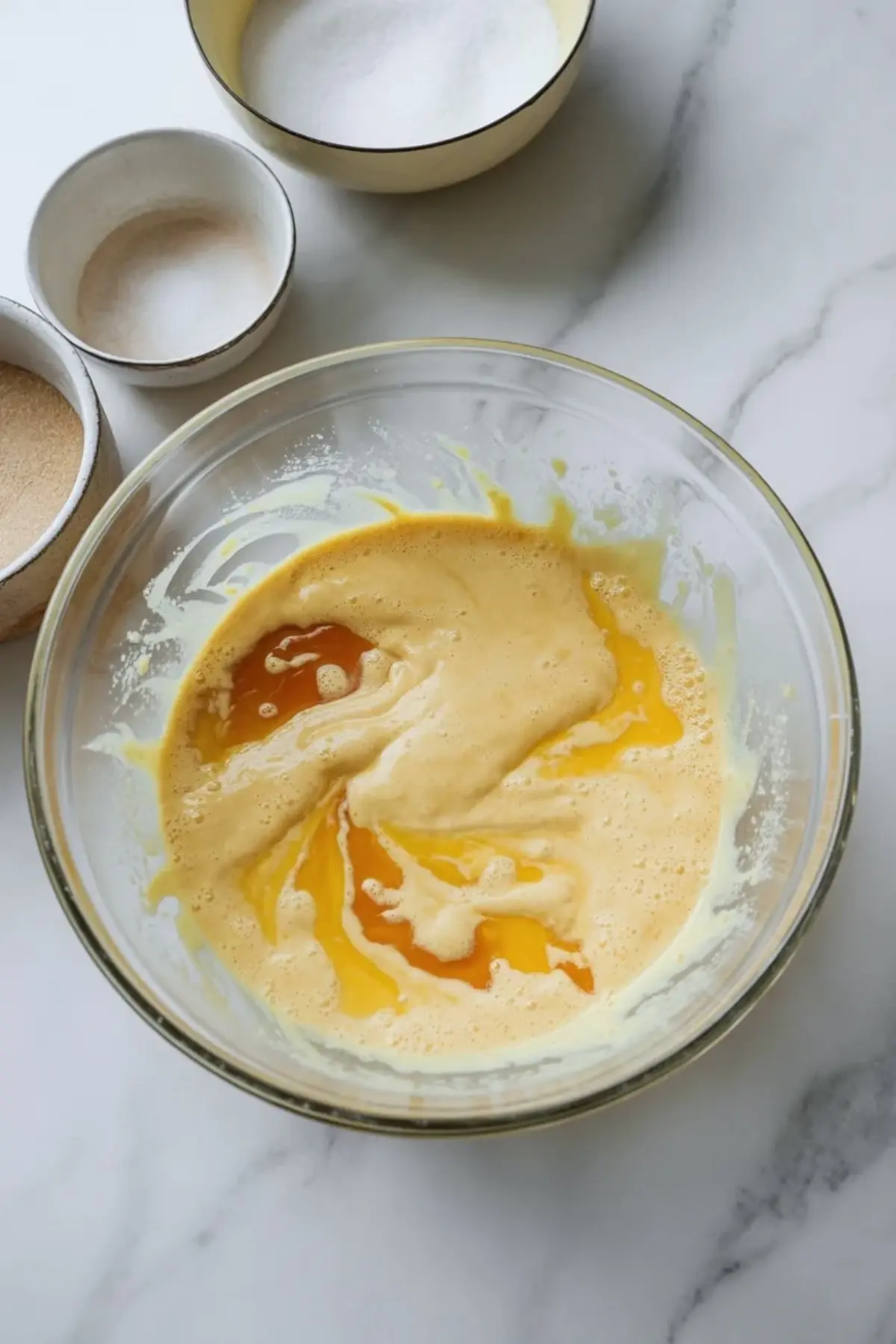
Evaporated milk deepens the color and gives the custard a creamy taste. Its low water content helps the filling set gently without curdling. Whole milk works, but the custard will be paler and less rich. Vanilla rounds off the eggy edge, and a pinch of salt keeps the custard from tasting flat. Overall that is 3 eggs to about 1⅓ cups of liquid, which sits right on the soft set line: enough structure to hold its shape once cool, but still silky.
Stir, Strain, and Pour
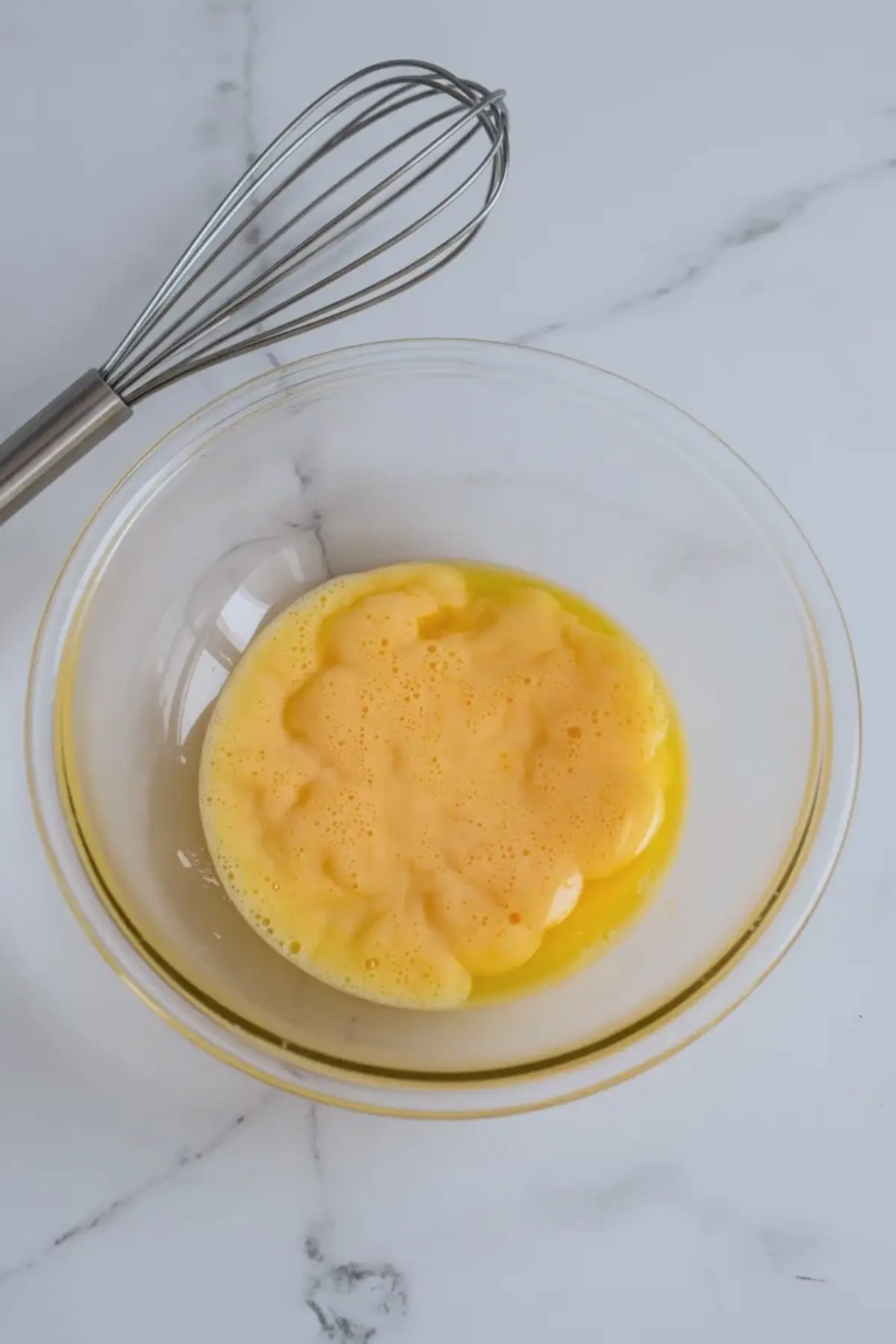
The eggs are the most fragile part of this recipe. Beat them gently with a spoon or fork, not a whisk. Whisking whips in air, and those bubbles turn into a foamy, pitted surface or a custard that puffs up and collapses in the oven.
Stir in the evaporated milk, vanilla, and salt, then the cooled sugar water, until everything is combined.
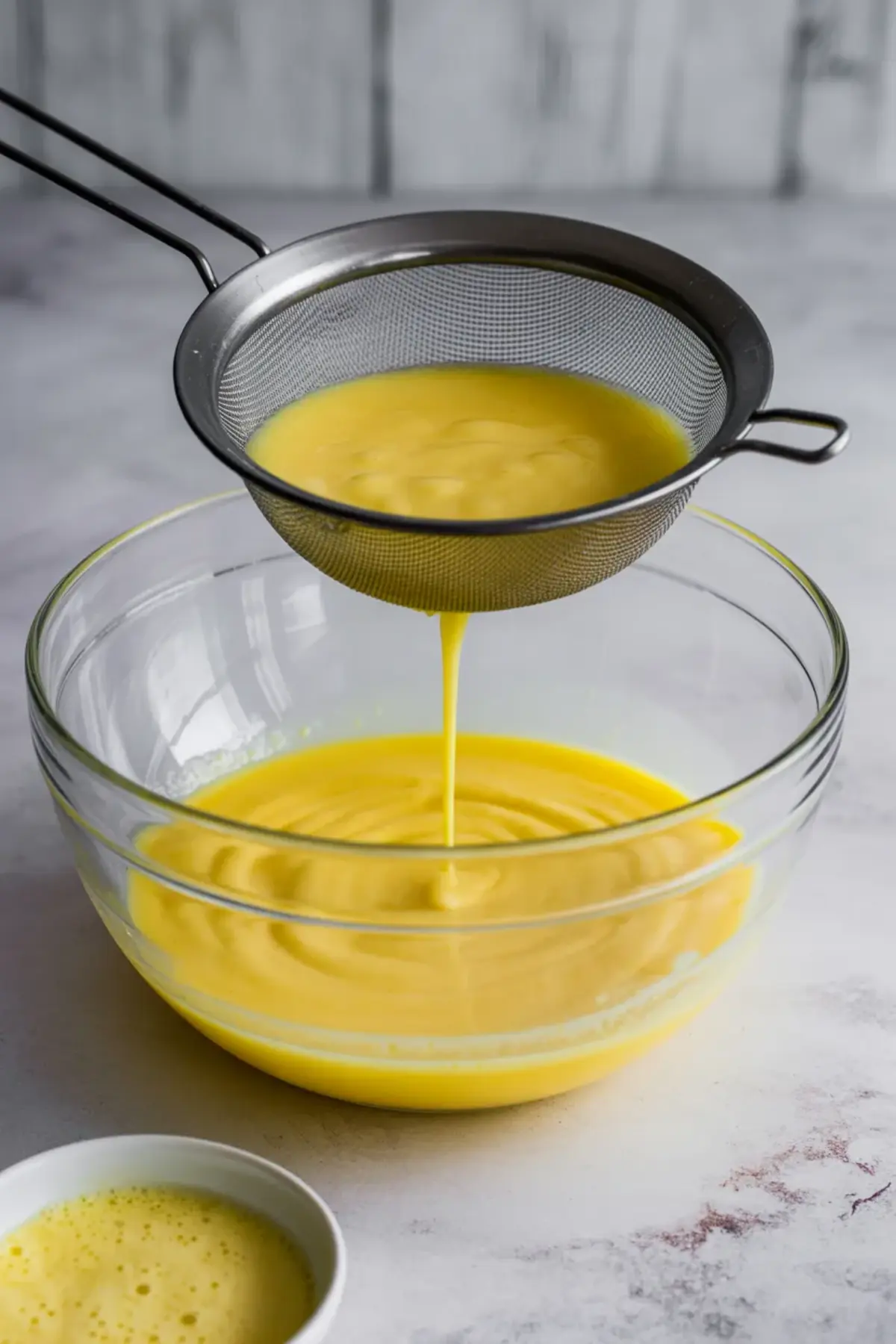
Now strain the custard through a fine mesh sieve into a pouring cup. This is not optional if you want a clean, glassy top. It catches any strands of egg white and foam. If you are unsure how smooth your custard is, shine a flashlight under the bowl, and any clumps will show.
Heat the oven to 375°F. Pour the custard into the chilled shells until each is 80 to 90 percent full, then bake on the center rack for 25 to 30 minutes. Do not open the oven in the first 20 minutes, since a sudden drop in temperature can cause cracks or sunken centers. At 25 minutes, tap the side of a mold: the center should tremble slightly like set jelly. If it ripples like liquid, give it a few more minutes.
Let the tarts cool in the molds for 10 minutes before moving them to a rack. Pulling them out early can warp the pastry or tear the delicate filling.
Why Egg Tarts Crack, Dome, or Leak
- Custard domed and then sank: the eggs were whisked and too much air got in. Stir gently with a spoon next time.
- Cracked surface: the oven ran too hot. Lower the temperature slightly or bake on the lower third of the oven.
- Cloudy or bubbly top: the custard was not strained, or it was stirred too hard.
- Leaky or soggy bottoms: the pastry was not pricked, or it was warm when filled. Dock the bases and keep the shells chilled until you pour.
- Pastry did not puff: it got too warm while shaping. Work quickly and chill the shells before baking.
- Brown spots on the custard: too much heat from the top. Move the tray lower and check the oven temperature.
Variations Worth Trying
- For a firmer bite, reduce the water to ¾ cup and add an extra tablespoon of evaporated milk.
- For a festive twist, add a little ground nutmeg and swap the vanilla for rum extract, a nod to eggnog pie.
- For matcha egg tarts, replace 2 tablespoons of the hot water with strong matcha.
- For a richer shell color, brush the exposed pastry edges with the egg wash before baking.
If you love a silky egg custard in sliceable form, try my egg custard pie or the classic custard pie. For holiday dessert tables, these sit well next to mini cranberry cheesecake tarts and chocolate cranberry tartlets. Another Asian bakery favorite worth making is soft Hokkaido milk bread.
Serving and Storing Egg Tarts
Egg tarts are at their best warm on the day they are baked, when the pastry is crisp and the custard soft. Chilled, the custard is firmer. They keep 1 day at room temperature loosely covered, or 3 to 4 days in the fridge, where the crust softens slightly but stays pleasant.
To freeze, wrap each tart in foil and seal them in a container. Reheat from frozen at 300°F for about 10 minutes, which warms the custard gently without cracking it and brings back some crispness to the pastry.
Tips From My Tests
- Aluminum tart molds bake more evenly than ceramic ones, because metal spreads the heat better.
- Avoid silicone molds. They do not hold their shape, and the crust will not crisp.
- One pass through a sieve makes a visible difference in shine.
Egg Tart FAQ
Can I use store-bought puff pastry for Chinese egg tarts?
Yes. This recipe is written for it. Two sheets of store-bought puff pastry make 12 flaky Hong Kong style egg tart shells.
Why is my egg tart custard not smooth?
The eggs were whisked instead of stirred, or the custard was not strained. Stir gently and strain through a fine mesh sieve before pouring.
Can I use regular milk instead of evaporated milk?
Yes, but the custard will be paler and less creamy. Evaporated milk gives the classic color and flavor.
How do I know when egg tarts are done?
Tap the mold after 25 minutes. The center should jiggle slightly like set jelly but not ripple like liquid.
Can I make egg tarts without tart molds?
A standard metal muffin tin works. Press the pastry rounds into the cups and fill them the same way.
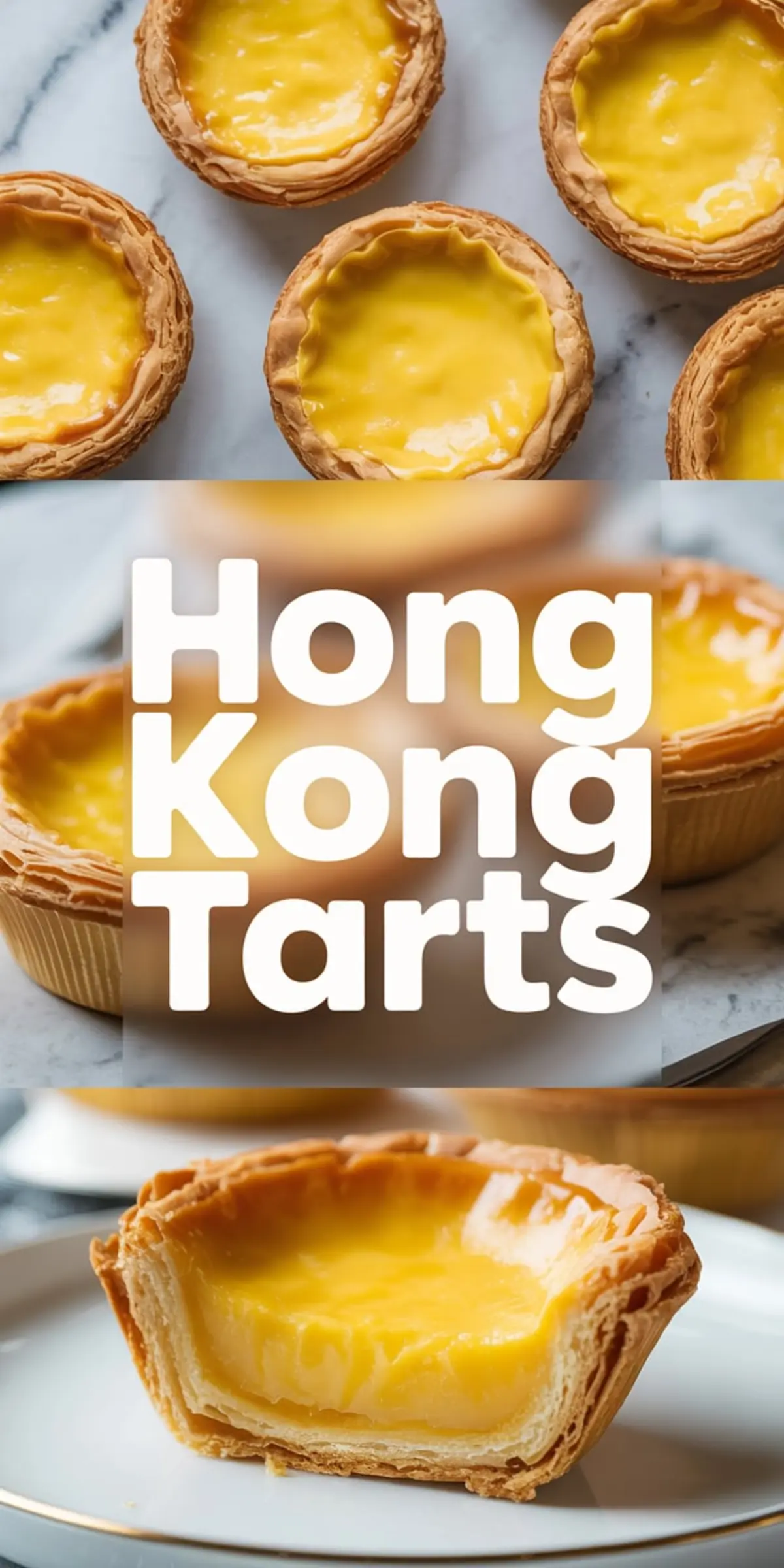
Save these Hong Kong egg tarts to your Asian sweets or pastry board so they are easy to find, and tell me in the comments which crust or filling you tried.
Hong Kong Egg Tarts Recipe

These Hong Kong egg tarts are Chinese egg custard tarts made with store-bought puff pastry and a silky custard of eggs, sugar dissolved in hot water, evaporated milk, vanilla, and a pinch of salt. The recipe makes 12 tarts in about 1 hour, baked at 375°F for 25 to 30 minutes until the flaky pastry is golden and the glossy yellow custard just wobbles in the center. Stirring the eggs gently instead of whisking and straining the custard gives the smooth, bubble free top you see in Hong Kong bakeries. Serve these egg tarts with Chinese puff pastry warm for dim sum, brunch, afternoon tea, or a holiday dessert table. Shortcrust works for a cookie style crust. They keep 3 to 4 days in the fridge and freeze well.
Ingredients
- FOR THE PUFF PASTRY SHELL:
- 2 sheets of store-bought puff pastry
- 1 egg (for egg wash)
- FOR THE EGG CUSTARD FILLING:
- 3 large eggs
- 1/2 cup white sugar
- 1 cup hot water
- 1/3 cup evaporated milk
- 1 teaspoon vanilla extract
- Pinch of salt
Instructions
- PREPARE THE PASTRY SHELLS: Thaw the puff pastry sheets according to the package directions. Lightly roll them out on a floured surface to even the thickness. Use a 3.5-inch round cutter to cut circles large enough to fit your tart molds. Gently press each pastry round into the molds, trimming any excess. Use a fork to lightly prick the bottom of each tart shell to prevent puffing. Place the prepared tart shells in the refrigerator to chill while you make the custard filling.
- MAKE THE CUSTARD FILLING: In a small bowl, dissolve the white sugar in the hot water and allow the mixture to cool to room temperature. In a separate bowl, beat the eggs gently, being careful not to over-whisk or create bubbles. Add the evaporated milk, vanilla extract, and salt to the eggs, then stir in the cooled sugar water. Mix until fully combined, then strain the custard through a fine mesh sieve into a clean bowl to remove any clumps or air bubbles for a smooth, glossy texture.
- ASSEMBLE AND BAKE: Preheat your oven to 375°F (190°C). Remove the tart shells from the refrigerator and carefully pour the custard filling into each shell, filling them about 80 to 90 percent full. Place the molds on the center rack of the oven and bake for 25 to 30 minutes. To check for doneness, lightly tap the side of a tart; the custard should jiggle slightly in the center but not appear liquid. Remove the tarts from the oven and let them cool in the molds for 10 minutes before transferring to a wire rack to cool completely or serve warm.
Notes
For best results, strain the custard carefully and avoid overbeating the eggs to maintain a smooth texture. Let the sugar water cool to room temperature before adding it to the eggs. Keep the pastry shells chilled until filling, and prick the bases so they do not puff. If you prefer a sturdier base, shortcrust pastry may be substituted for puff pastry. Store at room temperature for 1 day or in the fridge for 3 to 4 days. To freeze, wrap individually in foil; reheat from frozen at 300°F for about 10 minutes.
Nutrition Information
Yield
12Serving Size
1Amount Per Serving Calories 101Total Fat 4gSaturated Fat 1gUnsaturated Fat 3gCholesterol 64mgSodium 43mgCarbohydrates 13gFiber 0gSugar 11gProtein 3g
