
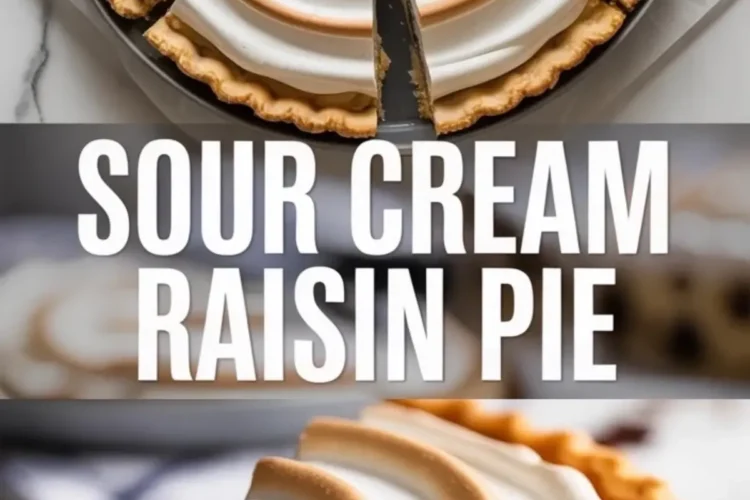
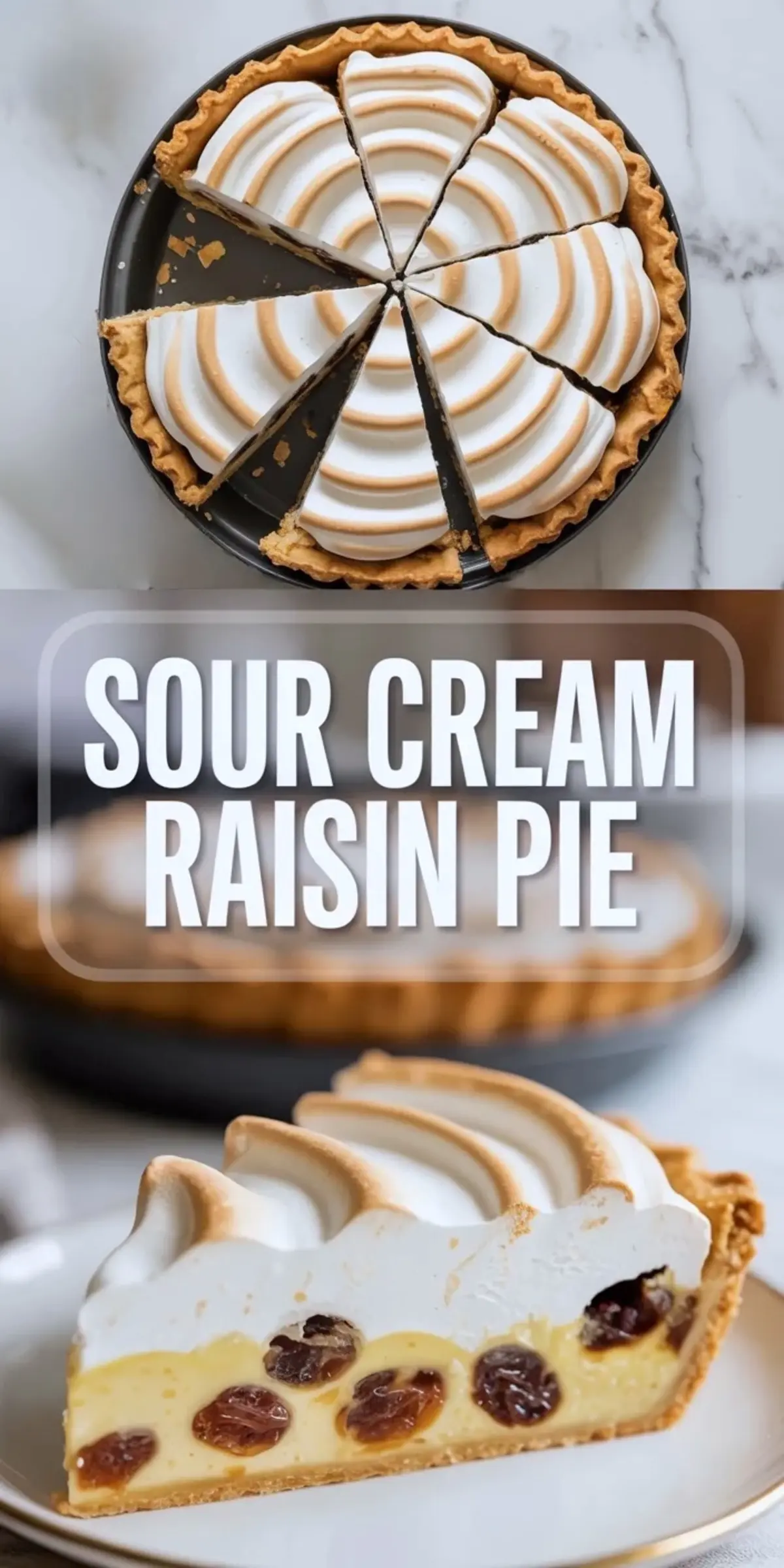
Sour cream raisin pie is an old fashioned Midwestern custard pie: raisins simmered in water, thickened with sugar and cornstarch, enriched with egg yolks and full fat sour cream, then capped with meringue. It takes about 45 minutes of hands-on work plus 3 hours to cool and chill, and makes one 9 inch pie, cut into 8 slices.
Nothing gets poured away here. The water the raisins plump in becomes the custard base, so every spoonful tastes of raisin, and the sour cream goes in off the heat to keep its tang bright.
Following a special diet?
Every recipe on this site can be converted to gluten-free, vegan, dairy-free, keto, nut-free or egg-free with adjusted ratios so nothing falls flat.
Try the Recipe Converter →The Numbers for One 9 Inch Pie
- Yield: one 9 inch pie, 8 slices
- Time: 20 minutes prep, 25 minutes cooking and baking, 3 hours cooling and chilling
- Raisins: 1 cup raisins simmered in 1 cup water for 5 minutes
- Thickener: 3/4 cup sugar and 2 tablespoons cornstarch, set with 2 egg yolks
- Tang: 1 cup full fat sour cream, stirred in off the heat
- Meringue: 2 egg whites, 1/4 teaspoon cream of tartar, 4 tablespoons sugar, baked at 350 F (175 C) for 10 to 12 minutes
- Keeps: 3 days covered in the fridge
Sour Cream Raisin Pie vs Raisin Cream Pie
They are close cousins. A raisin cream pie is a milk or cream custard with raisins folded in, so it tastes sweet and mild. Sour cream raisin pie swaps that dairy for sour cream, which gives the filling a gentle tang and a denser, almost cheesecake-like body that cuts through the sugar. Both are raisin custard pies, and both are usually topped with meringue.
This is a farmhouse pie from the American Midwest, and it is most closely tied to Iowa, where it still turns up on diner menus and at church suppers. If you like old diner pies, the buttermilk pie comes from the same frugal pantry: a few eggs, sugar and something tangy from the dairy.
What Goes Into the Raisin Custard
Start with a crust that is fully baked, dry and toasted before any filling touches it. A homemade pie crust or a sturdy store bought shell both work. A pale, underbaked crust soaks up the warm custard and goes soft.
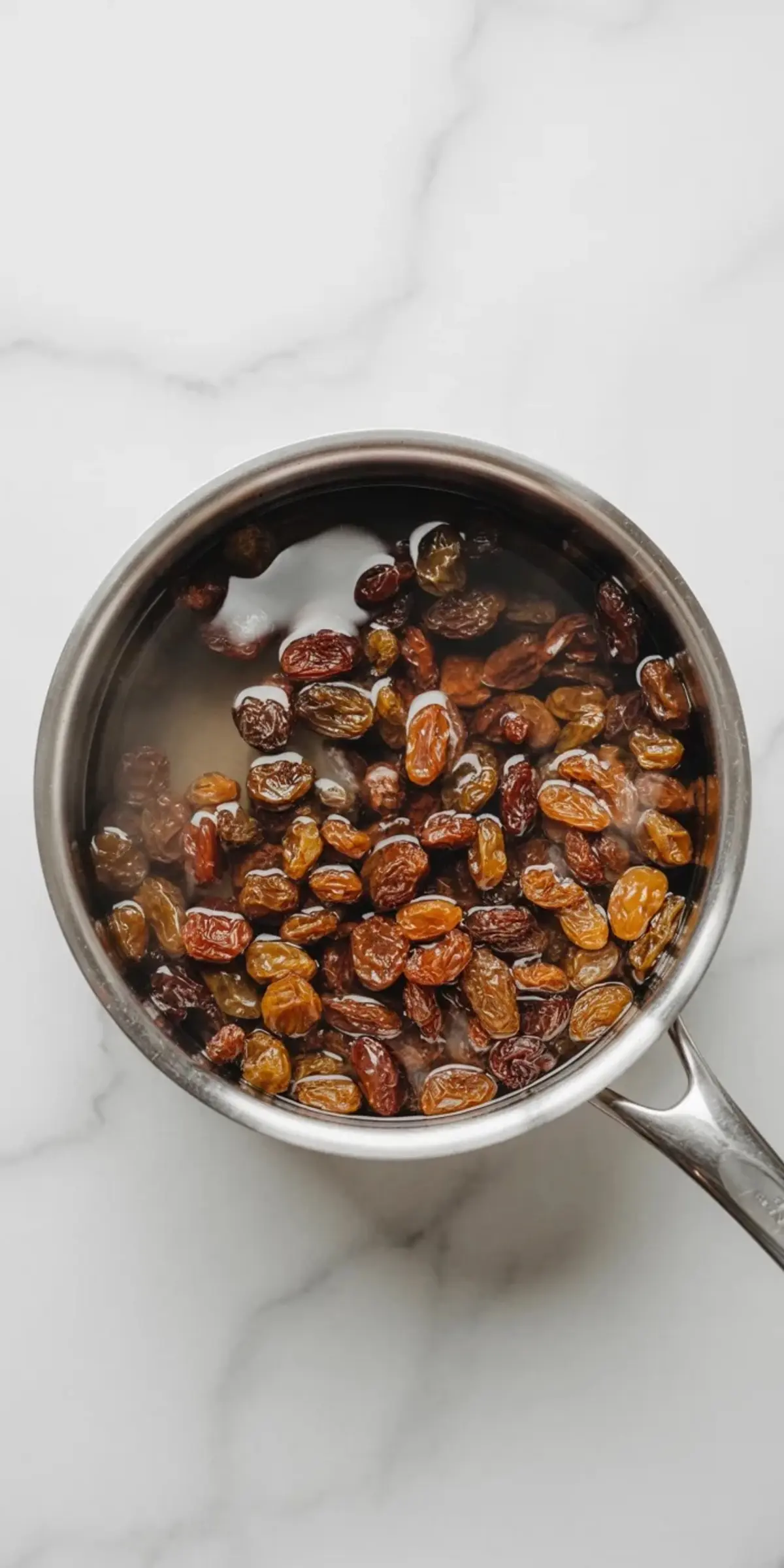
Any raisins work. Dark raisins give a deeper, caramel flavor; golden raisins look brighter in the slice and taste a little fruitier. Five minutes at a gentle simmer turns them plump and soft instead of leathery, and the water picks up their color and sweetness.
Use full fat sour cream. Light sour cream is thinner and can loosen the set, and it tastes flat next to the raisins. If you ever run short, homemade sour cream works the same way. The tablespoon of butter and the vanilla go in at the end with the sour cream, for a rounder, bakery-style finish.
Cooking the Filling on the Stove
Bring the raisins and water to a gentle boil in a small saucepan, then lower the heat and simmer for 5 minutes. Keep every drop of the liquid.
Whisk the sugar, cornstarch and salt together in a bowl first. Mixing them dry keeps the cornstarch from clumping when it hits the hot pan. Stir them into the raisins and cook over medium heat, stirring the whole time, until the mixture turns thick and starts to bubble. It goes from cloudy and loose to glossy and pudding-like in a few minutes.
Beat the 2 yolks in a small bowl and whisk in a few spoonfuls of the hot mixture, a little at a time. This warms them slowly so they do not scramble. Pour the yolks back into the pan and cook for 2 to 3 more minutes, stirring, with the custard just bubbling at the edges.
Do not cut those minutes short. Raw yolk carries an enzyme that breaks down cornstarch, and if the custard is not cooked through, a pie that looks set tonight can be soupy tomorrow. Done custard is thick, smooth, and holds a clear trail when you drag the spoon across the bottom.
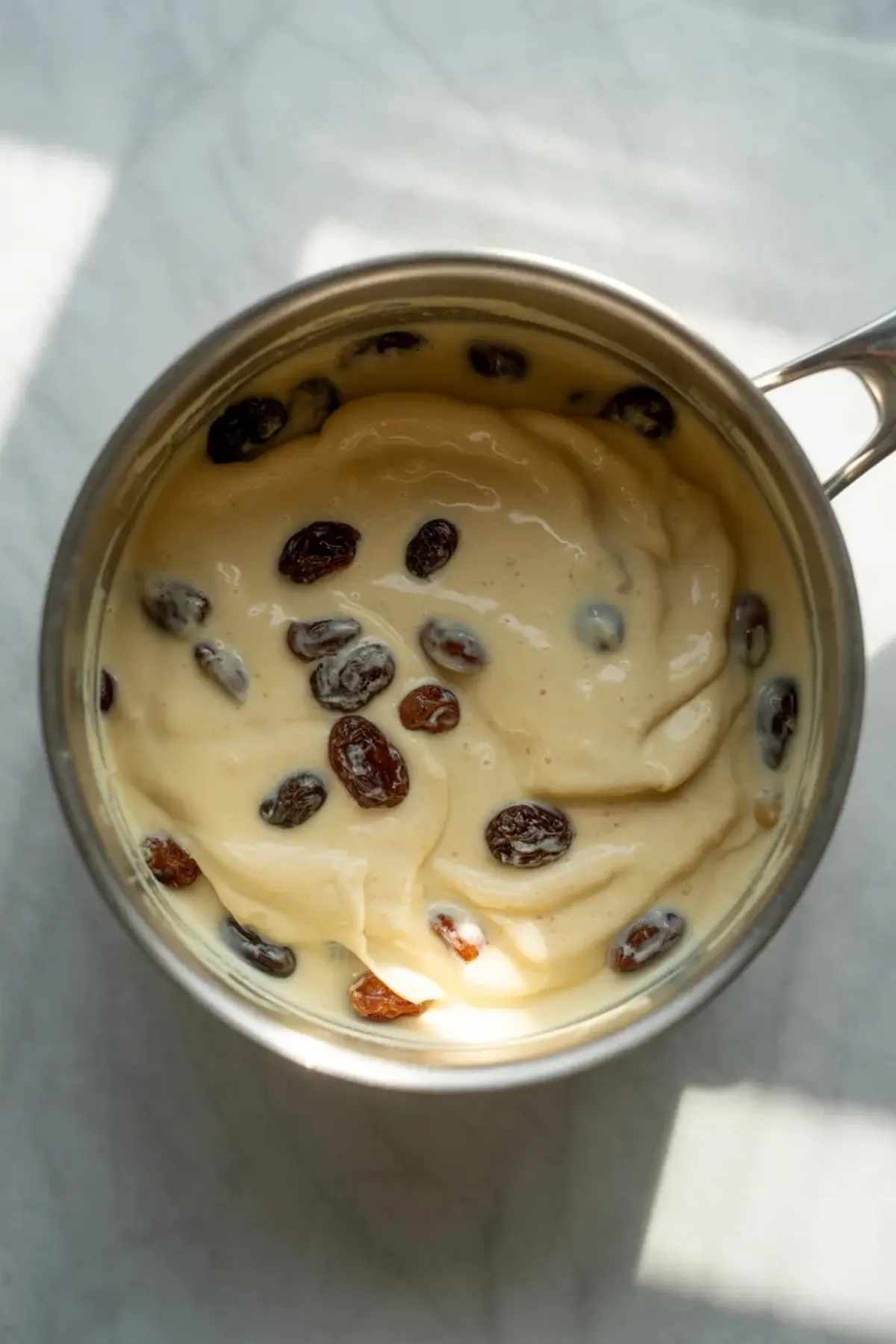
Take the pan off the heat and stir in the sour cream, butter and vanilla until silky. Off the heat matters: boiled sour cream can curdle and turn grainy. Pour the warm filling into the crust, spread it level, and make the meringue right away while the filling is still hot.
A Meringue That Seals Instead of Weeping
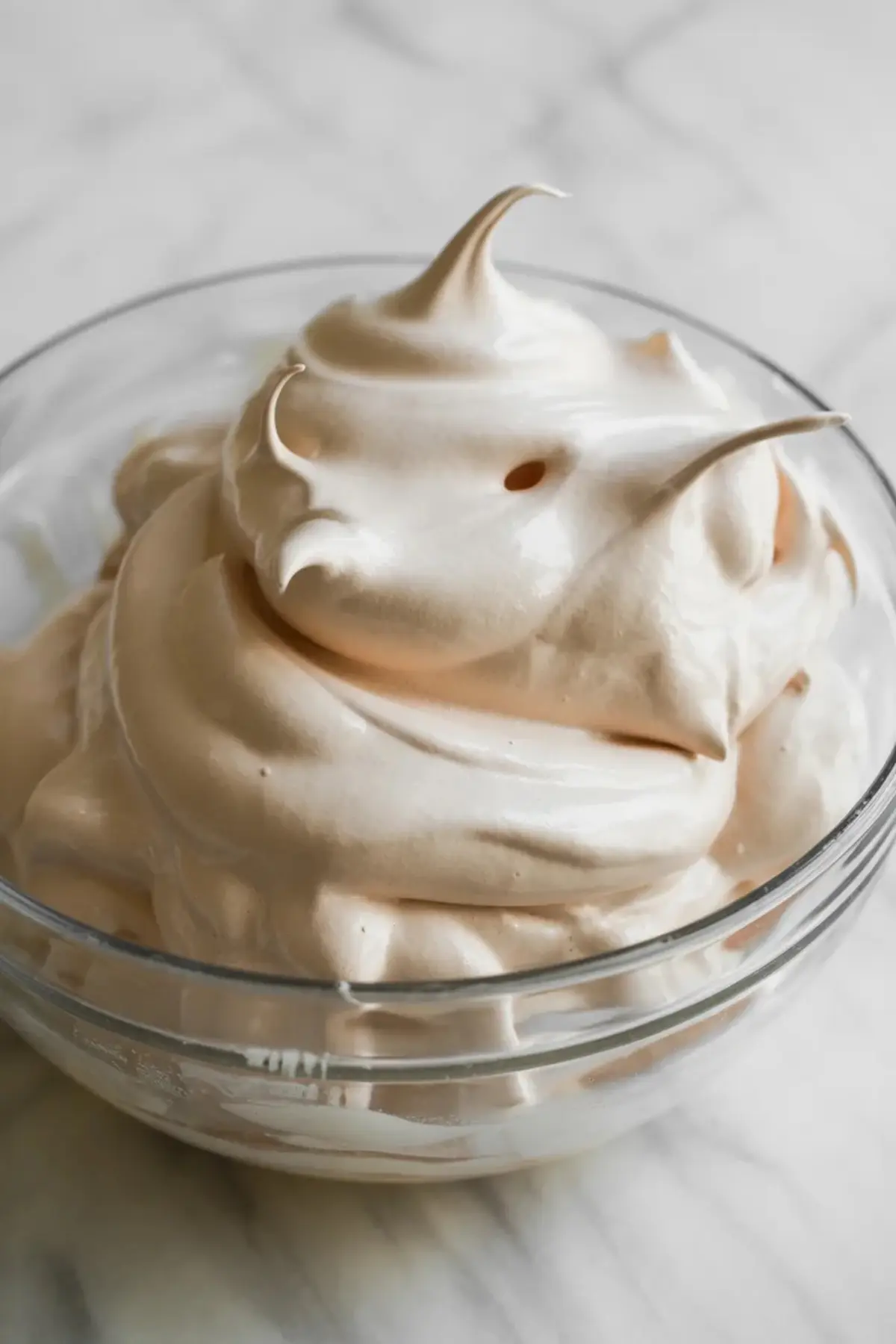
Beat the room temperature whites with the cream of tartar in a spotlessly clean bowl until soft peaks form. Then add the sugar one tablespoon at a time and keep beating until the peaks stand up stiff and glossy. Rub a little between your fingers. It should feel smooth, not gritty. Even a speck of yolk in the whites will stop them from whipping, so separate the eggs carefully.
Spoon the meringue onto the hot filling and push it out until it touches the crust all the way around. The heat from below cooks the underside, and the seal at the rim keeps it from shrinking back as it cools. Swirl the top with the back of a spoon and bake at 350 F (175 C) for 10 to 12 minutes, until the tips are light gold.
Two egg whites make a thin, soft cap, which keeps the raisin custard the star of the slice. For a tall meringue like the one on a lemon meringue pie, double it: 4 whites, 1/2 cup sugar, and 1/2 teaspoon cream of tartar, baked the same way.
When the Custard Runs or the Meringue Beads
- Filling is loose after chilling: the custard did not bubble long enough after the yolks went in, or the pie was cut before its 2 hour chill.
- Clear liquid under the meringue: that is weeping. The filling was cool when the meringue went on, so the underside never cooked.
- Amber drops on top: that is beading. The sugar was not fully dissolved, or the meringue baked too long.
- Meringue pulled away from the edge: it was not anchored to the crust.
- Lumps in the custard: the cornstarch went in without being mixed with the sugar first, or the pan was not stirred constantly.
- Scorched taste: the heat was too high. Medium heat and a spatula that scrapes the corners keep it clean.
Chilling, Slicing and Keeping Leftovers
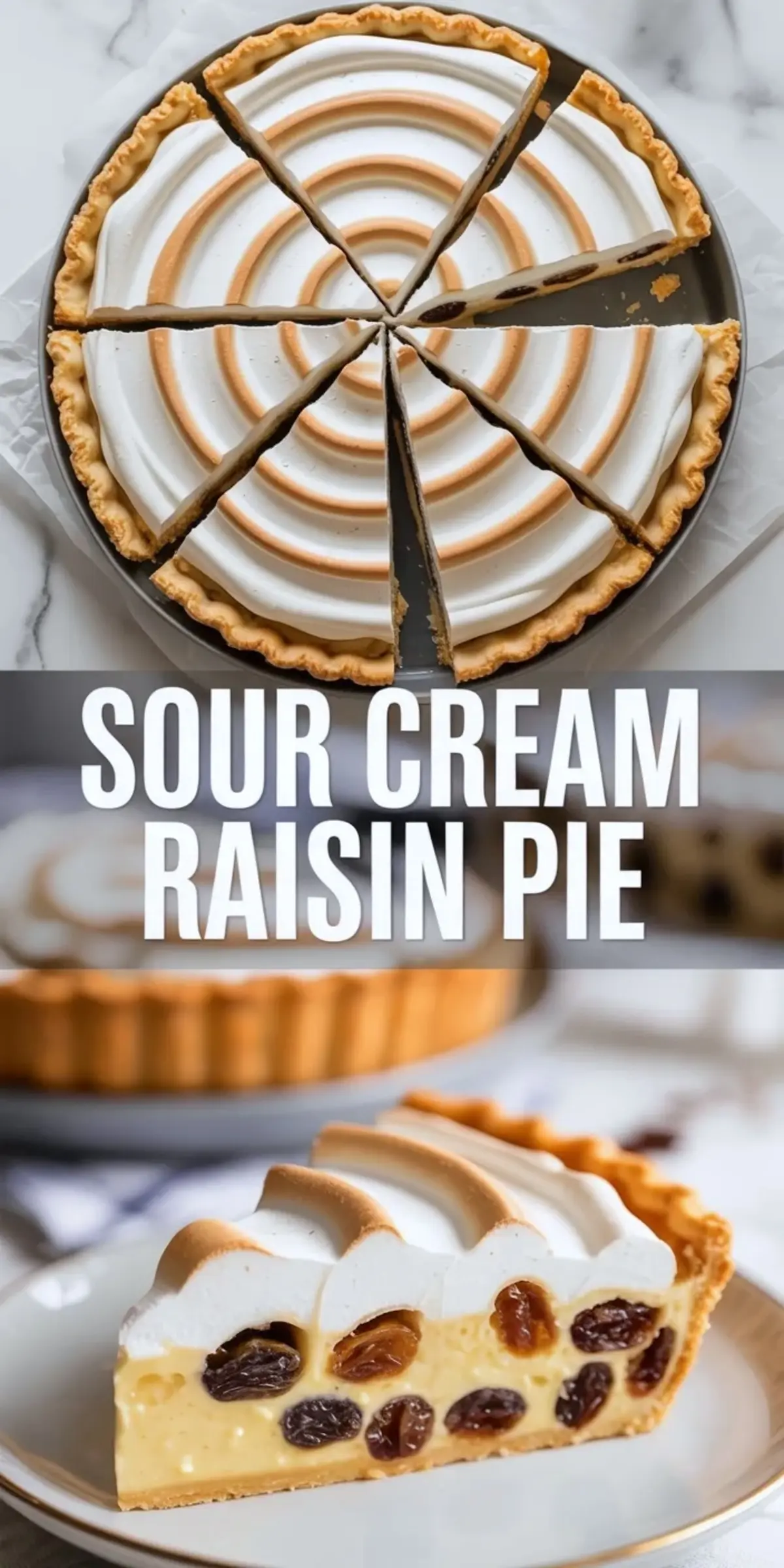
Let the pie cool on the counter until it stops steaming, then chill it for at least 2 hours. It slices cleanest straight from the fridge, with a knife dipped in hot water and wiped between cuts. Serve it cold or just cool, plain or with a cup of black coffee.
Cover leftovers and keep them in the fridge for up to 3 days. Freezing is possible for about a month if the slices are wrapped tightly, but the meringue goes soft and spongy after thawing, so this is a pie best eaten fresh. Thaw frozen slices in the fridge, never in the microwave.
Spice, Rum or Orange: Small Changes
For a spiced filling, whisk 1/2 teaspoon cinnamon and a pinch of nutmeg into the sugar and cornstarch. For a rum raisin note, add 1 teaspoon rum extract with the vanilla. A teaspoon of orange zest stirred in with the sour cream tastes fresh against the raisins.
Not a meringue person? Skip it, chill the filled pie, and top each slice with softly whipped cream. If you love cream pies, the Amish peanut butter cream pie and the custard pie are good next bakes, and a loaf of cinnamon raisin bread will use up the rest of the raisin bag.
Raisin Pie Questions From Readers
Is sour cream raisin pie served warm or cold?
Cold. The custard needs at least 2 hours in the fridge to set firm enough to slice.
Can I use golden raisins?
Yes. Use the same 1 cup and simmer them the same 5 minutes. The filling will look lighter and taste a little fruitier.
Why did my sour cream raisin pie turn runny?
Usually the custard was not cooked for the full 2 to 3 minutes after the yolks went in, or the pie was sliced before it chilled. Light sour cream can also loosen it.
Can I make it a day ahead?
You can bake it the day before, but the meringue is best on the first day. Make the crust a day or two ahead instead, and the banana cream pie uses the same pre-baked shell if you are planning a pie table.
Sour Cream Raisin Pie
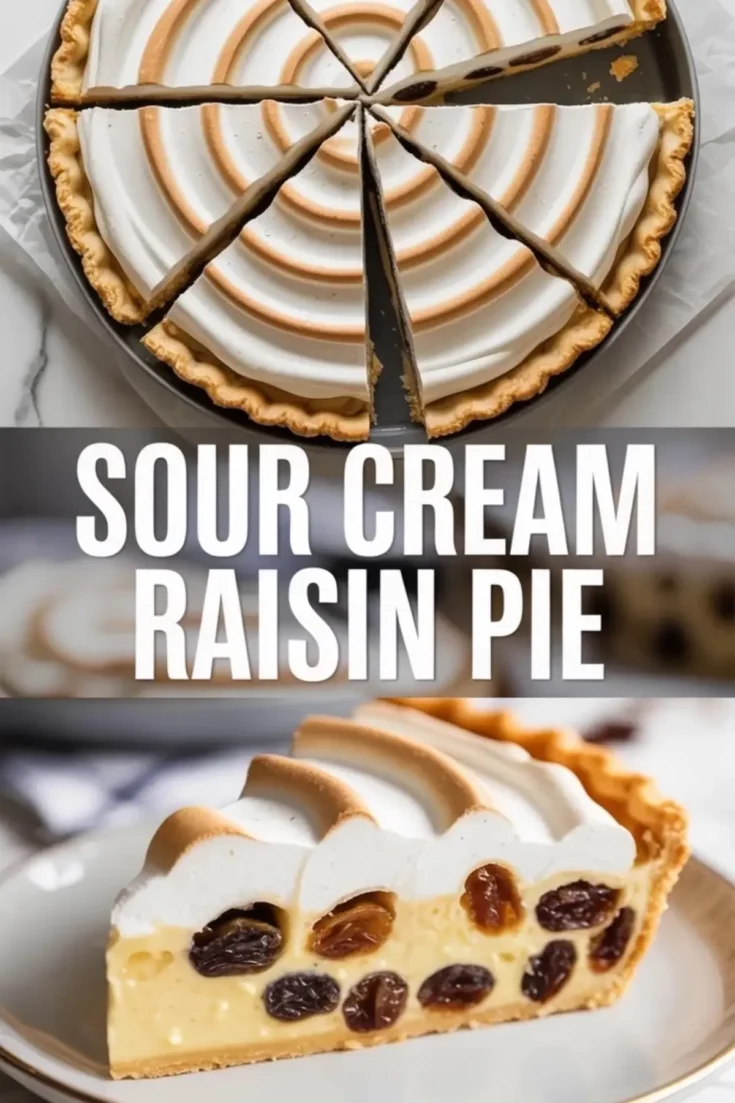
This sour cream raisin pie is an old fashioned raisin custard pie made with raisins simmered in water, sugar, cornstarch, egg yolks, full fat sour cream and vanilla, baked under a light meringue. It fills one pre-baked 9 inch crust, cuts into 8 slices, and takes about 45 minutes of hands-on time plus 3 hours to cool and chill. The raisin water becomes the custard base, and the sour cream is stirred in off the heat, so the filling is thick, silky and gently tangy. Serve it as a Thanksgiving pie, a church supper dessert or a raisin cream pie for anyone who likes old diner pies. Add cinnamon or orange zest if you like, and keep leftovers covered in the fridge for up to 3 days.
Ingredients
- FOR THE PIE CRUST
- 1 (9-inch) pre-baked pie crust (homemade or store-bought)
- FOR THE RAISIN CUSTARD FILLING
- 1 cup raisins
- 1 cup water
- 3/4 cup granulated sugar
- 2 tablespoons cornstarch
- 1/4 teaspoon salt
- 2 large egg yolks
- 1 cup full-fat sour cream
- 1 tablespoon unsalted butter
- 1 teaspoon pure vanilla extract
- FOR THE MERINGUE TOPPING
- 2 large egg whites, room temperature
- 1/4 teaspoon cream of tartar
- 4 tablespoons granulated sugar
Instructions
PREPARE THE RAISINS: Place the raisins and water in a small saucepan and bring to a gentle boil over medium heat. Reduce heat slightly and simmer for 5 minutes until the raisins plump. Keep the liquid in the pan because it forms the base of the custard filling.
MAKE THE CUSTARD BASE: Whisk together the sugar, cornstarch, and salt in a bowl. Stir this mixture into the saucepan with the raisins and their liquid. Cook over medium heat, stirring constantly, until the mixture thickens and begins to bubble. Continuous stirring prevents scorching and keeps the texture smooth.
TEMPER THE EGG YOLKS: Lightly beat the egg yolks in a small bowl. Gradually whisk in a few spoonfuls of the hot raisin mixture to warm the yolks slowly. Pour the tempered yolks back into the saucepan and cook for 2–3 more minutes, stirring constantly, until the custard becomes thick and smooth.
ADD SOUR CREAM AND FLAVOR: Remove the saucepan from heat. Stir in the sour cream, butter, and vanilla extract until fully combined and silky. Pour the warm filling into the pre-baked pie crust and spread it evenly.
WHIP THE MERINGUE: Place the egg whites and cream of tartar in a clean mixing bowl. Beat until soft peaks form. Add the sugar one tablespoon at a time while continuing to beat until stiff, glossy peaks form and the meringue holds its shape firmly.
SPREAD THE MERINGUE: Spoon the meringue over the hot filling immediately. Spread it gently to the edges of the crust so it seals completely. Use the back of a spoon to create decorative swirls on the surface.
BAKE THE PIE: Bake at 350°F (175°C) for 10–12 minutes until the meringue turns lightly golden. Watch closely to avoid overbrowning.
COOL AND SET: Let the pie cool at room temperature until fully set, then refrigerate for at least 2 hours before slicing. Proper cooling ensures clean slices and a stable custard texture.
Notes
Cook the custard for the full 2 to 3 minutes after the tempered yolks go in, with the mixture gently bubbling; undercooked yolk and cornstarch custard can thin out overnight.
Stir the sour cream in off the heat so it does not curdle.
Ensure no egg yolk gets into the egg whites, as fat prevents proper whipping.
Spread the meringue onto hot filling and seal it to the crust edge to help reduce shrinking or weeping.
For a tall meringue, double the meringue ingredients.
Store leftovers covered in the refrigerator for up to 3 days.
Nutrition Information
Yield
8Serving Size
1Amount Per Serving Calories 422Total Fat 14gSaturated Fat 6gUnsaturated Fat 8gCholesterol 69mgSodium 203mgCarbohydrates 70gFiber 2gSugar 51gProtein 6g
