

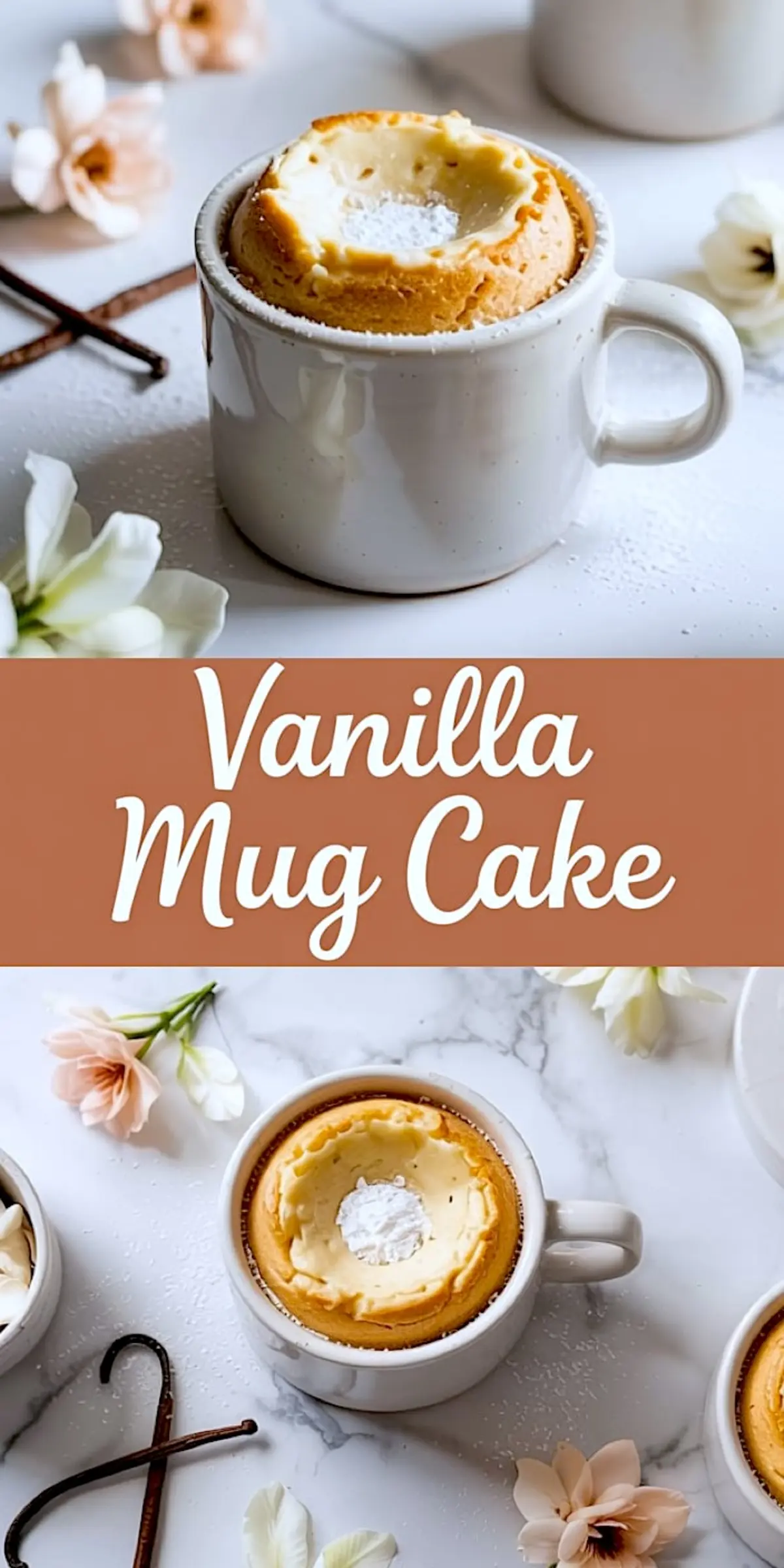
This vanilla mug cake is a single serving microwave cake made with 4 tablespoons of flour, 2 tablespoons of sugar, baking powder, milk, melted butter, and vanilla, with no egg. You mix it with a fork right in the mug and microwave it for 60 to 90 seconds, so the whole thing takes about 5 minutes.
Leaving out the egg is the trick. A whole egg is far too much for one small cake and turns it spongy and rubbery in the microwave. Without it, the crumb stays light and soft, and the butter and vanilla actually taste like cake.
Following a special diet?
Every recipe on this site can be converted to gluten-free, vegan, dairy-free, keto, nut-free or egg-free with adjusted ratios so nothing falls flat.
Try the Recipe Converter →Cake in a Cup: The Basics
- Makes: 1 mug cake, one generous serving
- Time: 3 minutes mixing, 60 to 90 seconds cooking, 1 to 2 minutes resting
- Mug: microwave safe, at least 10 to 12 ounces so it does not overflow
- Batter: 4 tbsp flour, 2 tbsp sugar, ¼ tsp baking powder, pinch of salt, 3 tbsp milk, 1 tbsp melted butter, ½ tsp vanilla
- Egg: none
- Best eaten: warm, within about 10 minutes
Why This Microwave Mug Cake Stays Soft
I have made dozens of mug cakes that tasted more like sponges than sponge cake: too chewy, too eggy, too dense. This one finally hit the balance. The crumb is light, the vanilla is clear, and it rises gently instead of puffing up and collapsing. The flavor reminds me of the base in my simple moist vanilla cake, only scaled for one and cooked in under two minutes.
Two things keep it tender. There is no egg to overcook, and the batter is mixed only until smooth, so the gluten stays relaxed. The short rest after cooking matters too. Straight from the microwave the texture feels firmer, and a minute later it softens and finishes setting.
The Ingredients, and Butter vs Oil
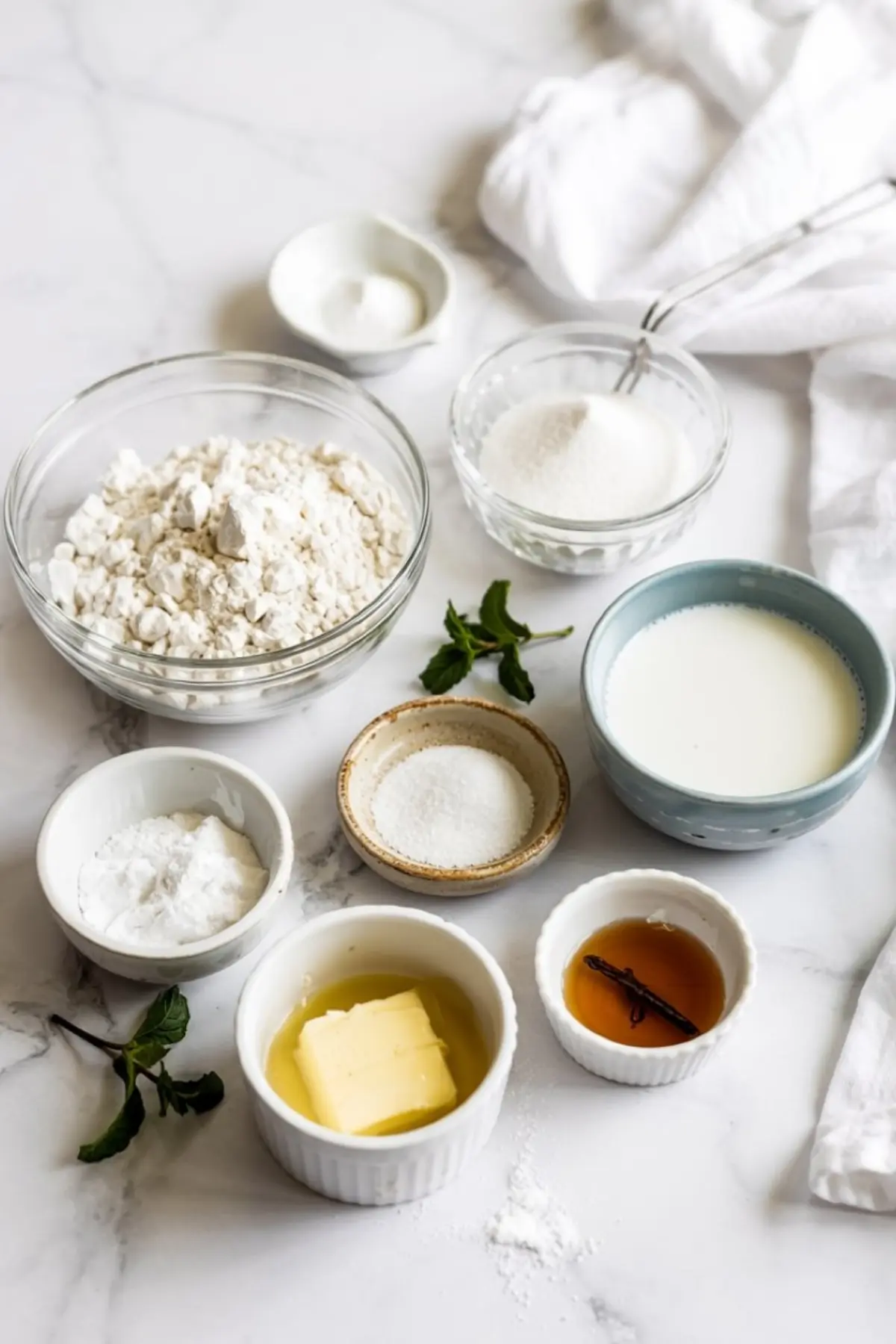
All you need are flour, sugar, baking powder, salt, milk, melted butter, and vanilla. I have tested this mug cake with and without an egg, and without it the crumb is more consistent and holds up better to toppings.
I have also made it with both oil and butter. Butter gives a richer flavor that pairs better with vanilla. Oil keeps it slightly moister when rewarmed but tastes flat, so butter wins unless you plan to reheat it later. Any milk works: whole milk gives the softest texture and the deepest color, and oat or almond milk are fine swaps.
How to Mix It in the Mug
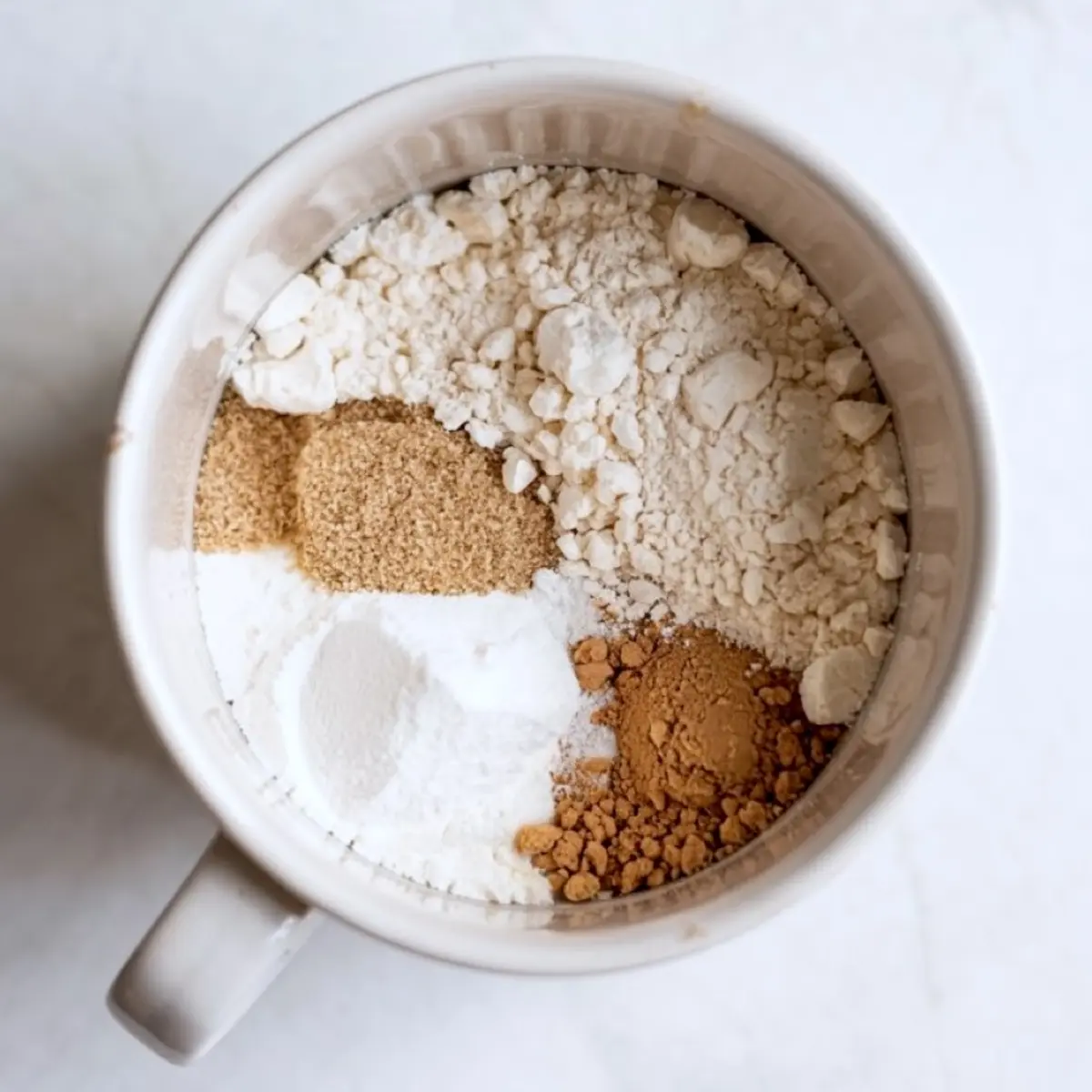
Add the flour, sugar, baking powder, and salt to a large mug and stir with a fork until even. Check the bottom corners, because dry flour loves to hide there and ends up as a raw pocket.
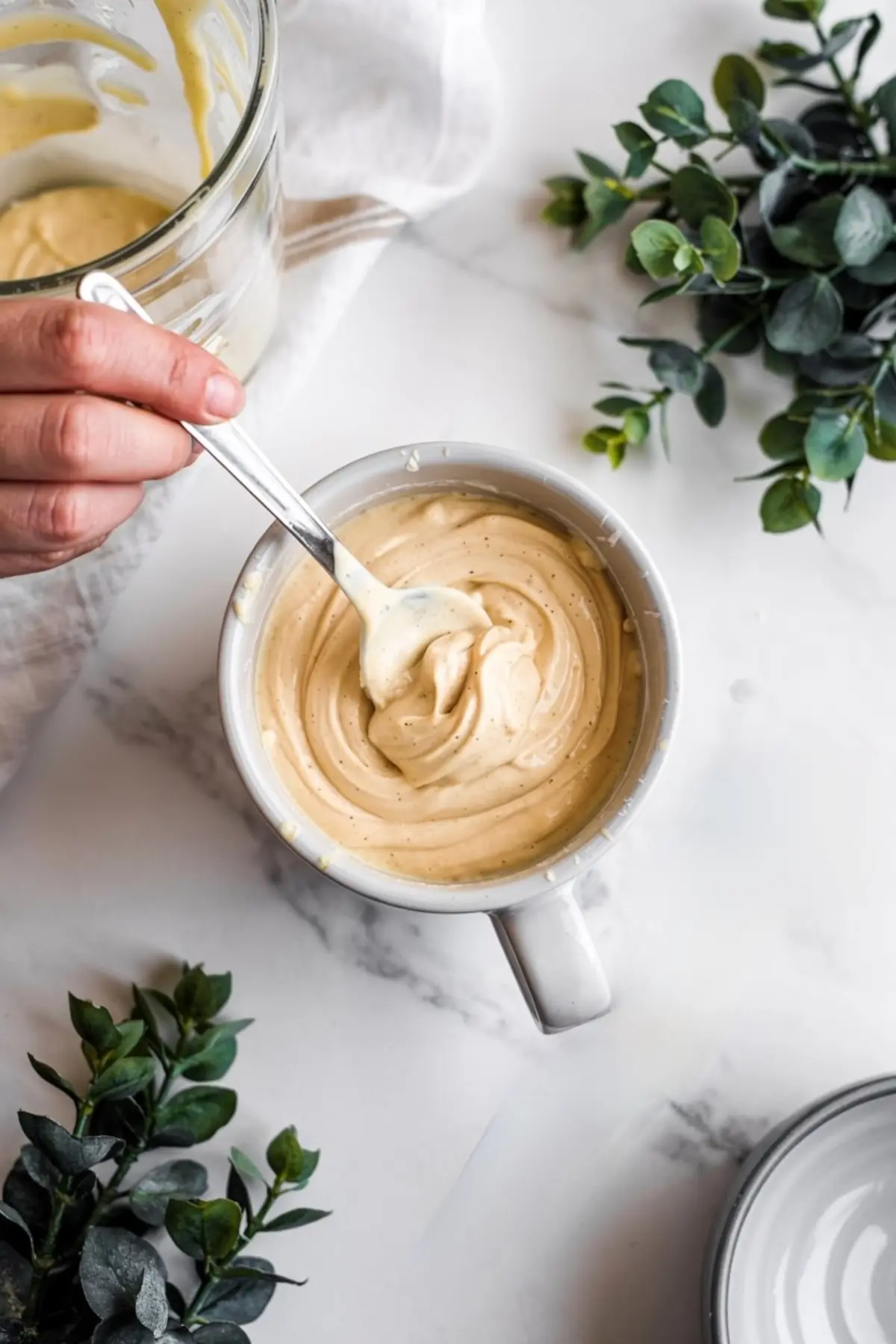
Pour in the milk, melted butter, and vanilla. Stir only until the batter is smooth and no dry spots remain, then stop. Overmixing makes the cake dense. If you are adding white chocolate chips, sprinkles, or a pinch of cinnamon, fold them in right before microwaving.
How Long to Microwave a Mug Cake
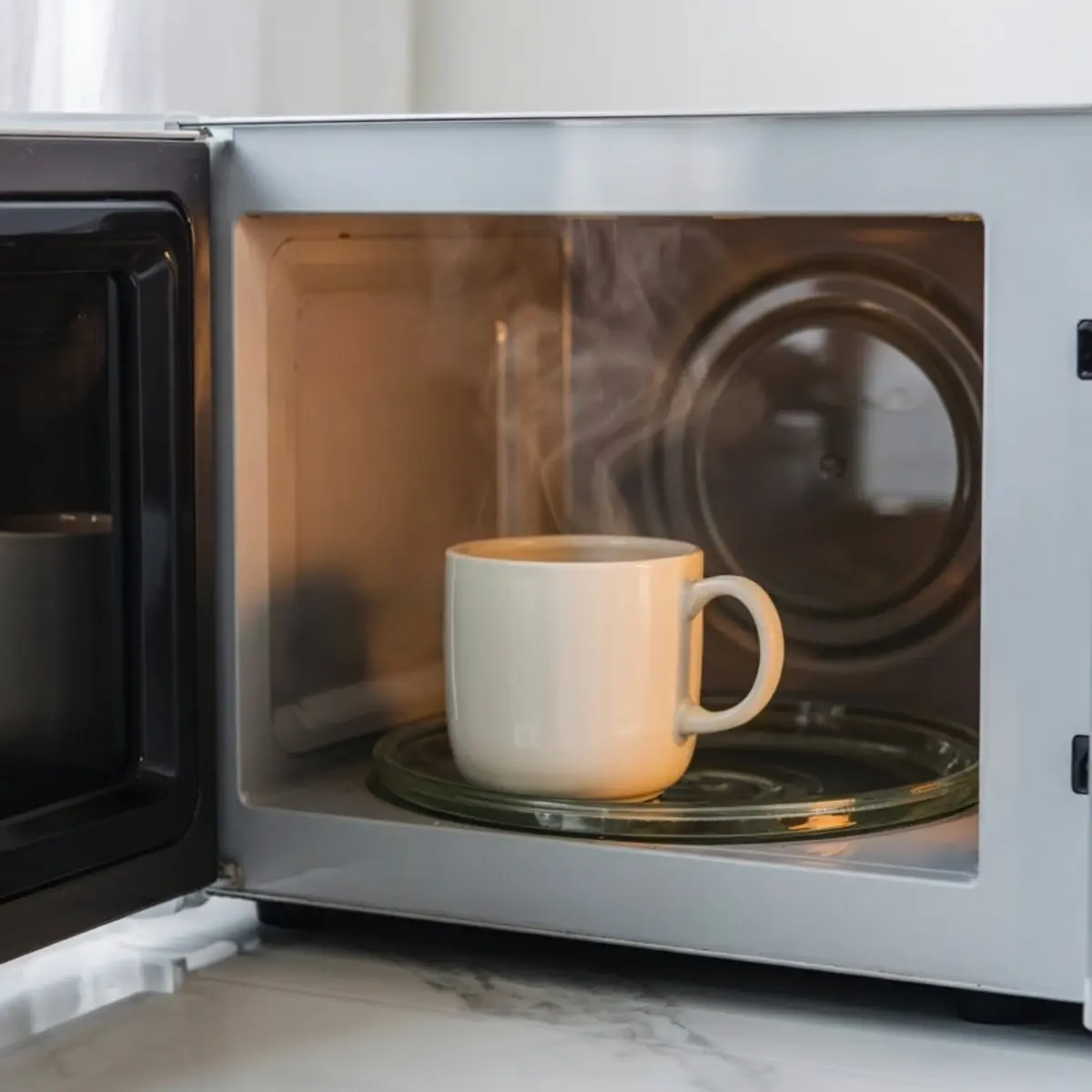
Microwave on high for 60 to 90 seconds. Start at 60 seconds and check: the top should look dry and spring back when you touch it. If the center still looks wet, keep going in 10 second bursts until it sets.
- 1000 to 1200 watt microwave: start checking at 60 seconds; most cakes are done by 70 to 75.
- 700 to 900 watt microwave: expect closer to 90 seconds, then add 10 second bursts if needed.
- Not sure of your wattage: look for the label inside the door, and use 60 seconds as your first check either way.
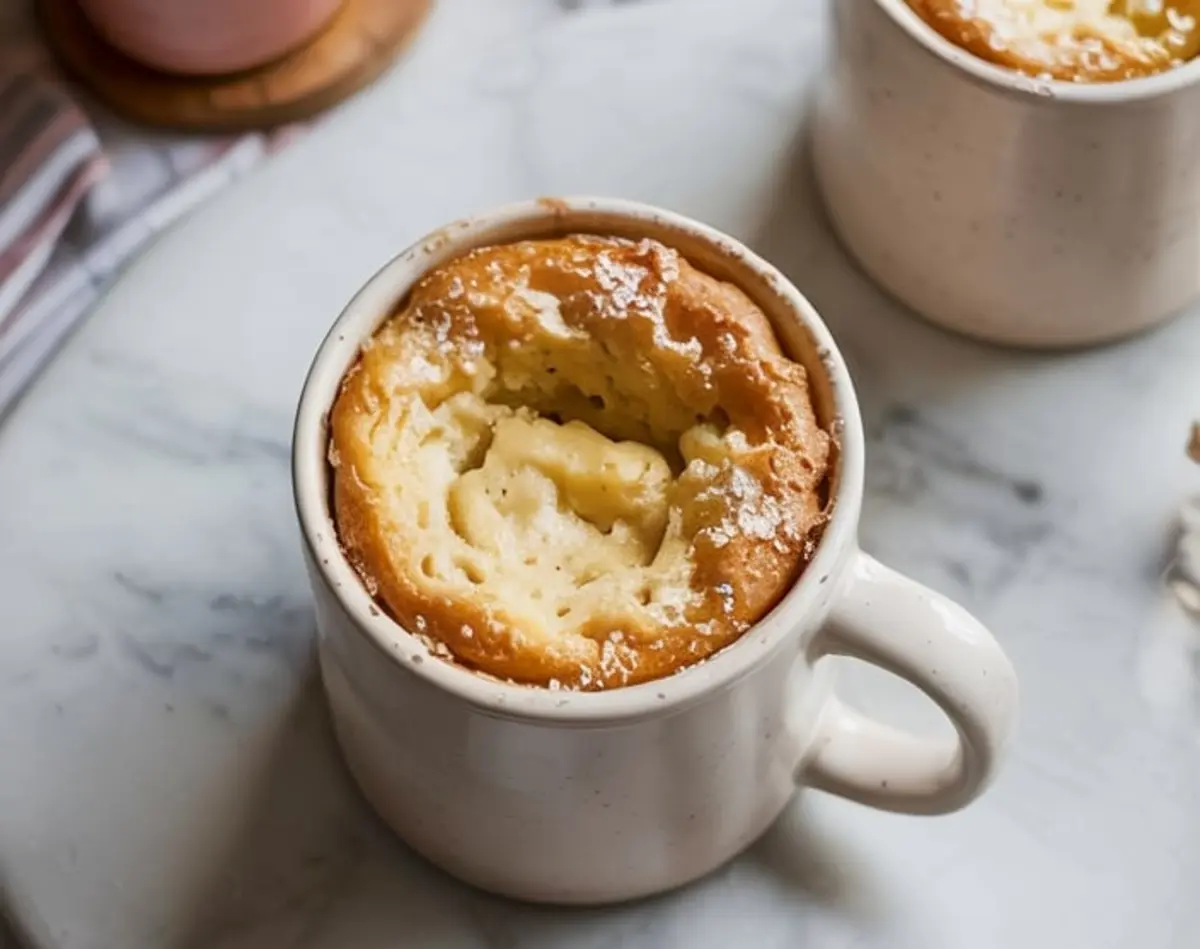
Let the cake rest for 1 to 2 minutes before eating. It keeps cooking from the heat of the mug, and the crumb softens as it cools slightly.
Rubbery, Gummy, or Overflowing?
- Rubbery or tough: it cooked too long. Cut the time by 10 to 15 seconds next time. A deeply cracked or bubbling top is the warning sign.
- Gummy center: it needed another 10 seconds, or it was eaten before the short rest.
- Overflowed: the mug was too small. Use one that holds at least 10 to 12 ounces.
- Dense and flat: the batter was overmixed or the baking powder is old.
- Raw flour pocket at the bottom: the dry ingredients were not fully mixed. Scrape the corners with the fork.
Toppings and Flavor Twists
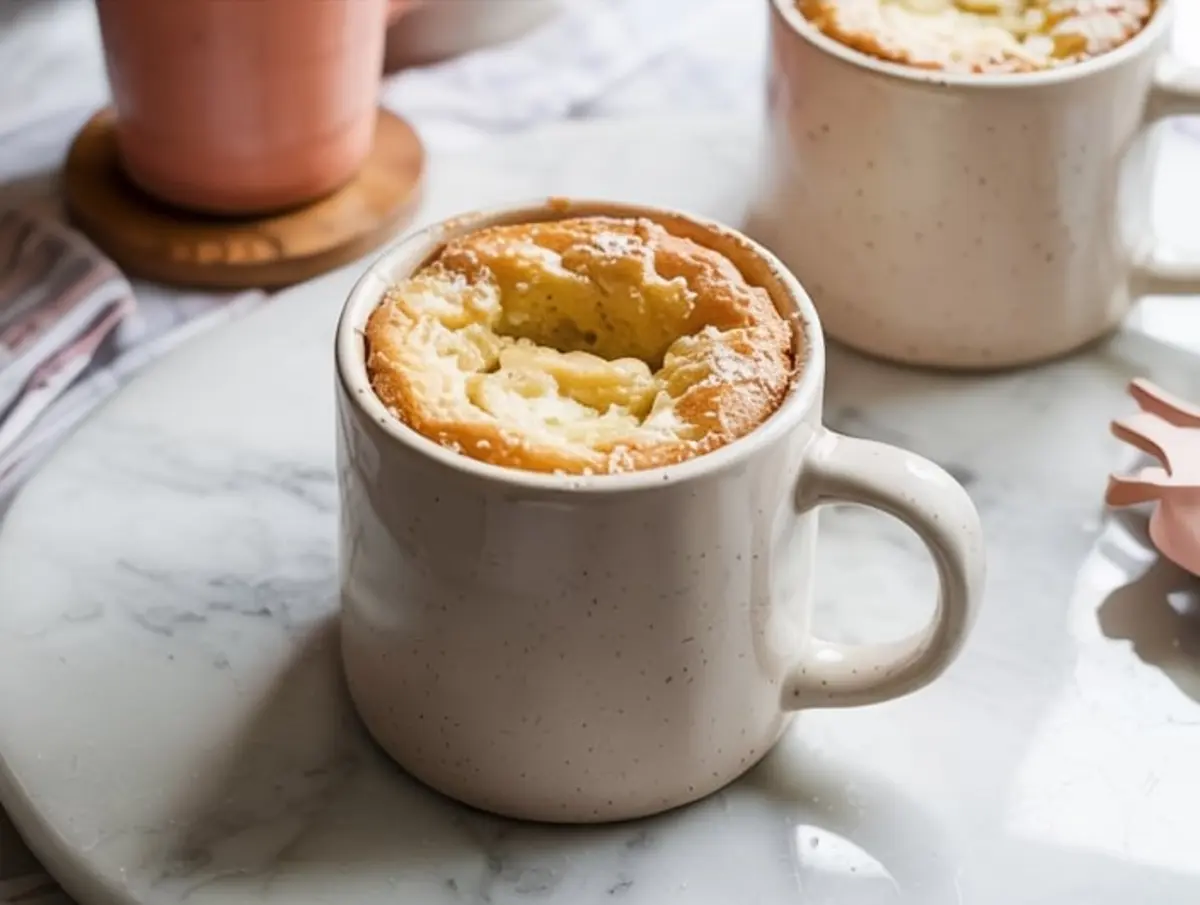
- Dust with powdered sugar, or add a dollop of whipped cream.
- Drizzle a spoonful of powdered sugar icing or pipe a little vanilla buttercream on top.
- Birthday cake mug cake: fold in 1 tablespoon of rainbow sprinkles before microwaving.
- Cinnamon sugar on top, inspired by my vanilla bean cinnamon rolls.
- A spoon of blueberry jam, strawberry compote, sweetened Greek yogurt, or a little lemon zest.
If you like single serve desserts, try the protein mug cake, the high protein lemon mug cake, or a cozy gingerbread mug cake for the holidays.
Make-Ahead Mug Cake Mix
Since this is one serving, it helps to prep a few dry mixes at once. Measure the 4 tablespoons of flour, 2 tablespoons of sugar, ¼ teaspoon of baking powder, and a pinch of salt into small jars or bags and label them. When a craving hits, tip one into a mug, add the milk, melted butter, and vanilla, and you are 2 minutes from cake. Baking for two? Mix and microwave each mug separately. Two mugs in the microwave together cook unevenly and need more time, which makes the edges tough.
This cake is best eaten warm within the first 10 minutes. If you do have leftovers, cover the mug and refrigerate it, then warm it for about 10 seconds. It will not have quite the same lift after chilling.
Mug Cake Questions
How long do you microwave a vanilla mug cake?
Microwave it on high for 60 to 90 seconds. In a 1000 watt or stronger microwave start checking at 60 seconds; in a 700 watt microwave it usually needs closer to 90.
Why is my mug cake rubbery?
It was overcooked, or the recipe used a whole egg. This recipe has no egg, so check it at 60 seconds and stop as soon as the top springs back.
Can I make a vanilla mug cake without milk?
Use any non dairy milk, such as oat or almond milk. Water works in a pinch, but the cake will be less rich and a little drier.
Can I add an egg?
It is not needed. A whole egg is too much for this small amount of flour and makes the cake spongy.
Can I bake a mug cake in the oven?
Yes, in an oven safe mug or ramekin. Bake at 350°F for roughly 15 to 20 minutes, until a toothpick comes out clean.
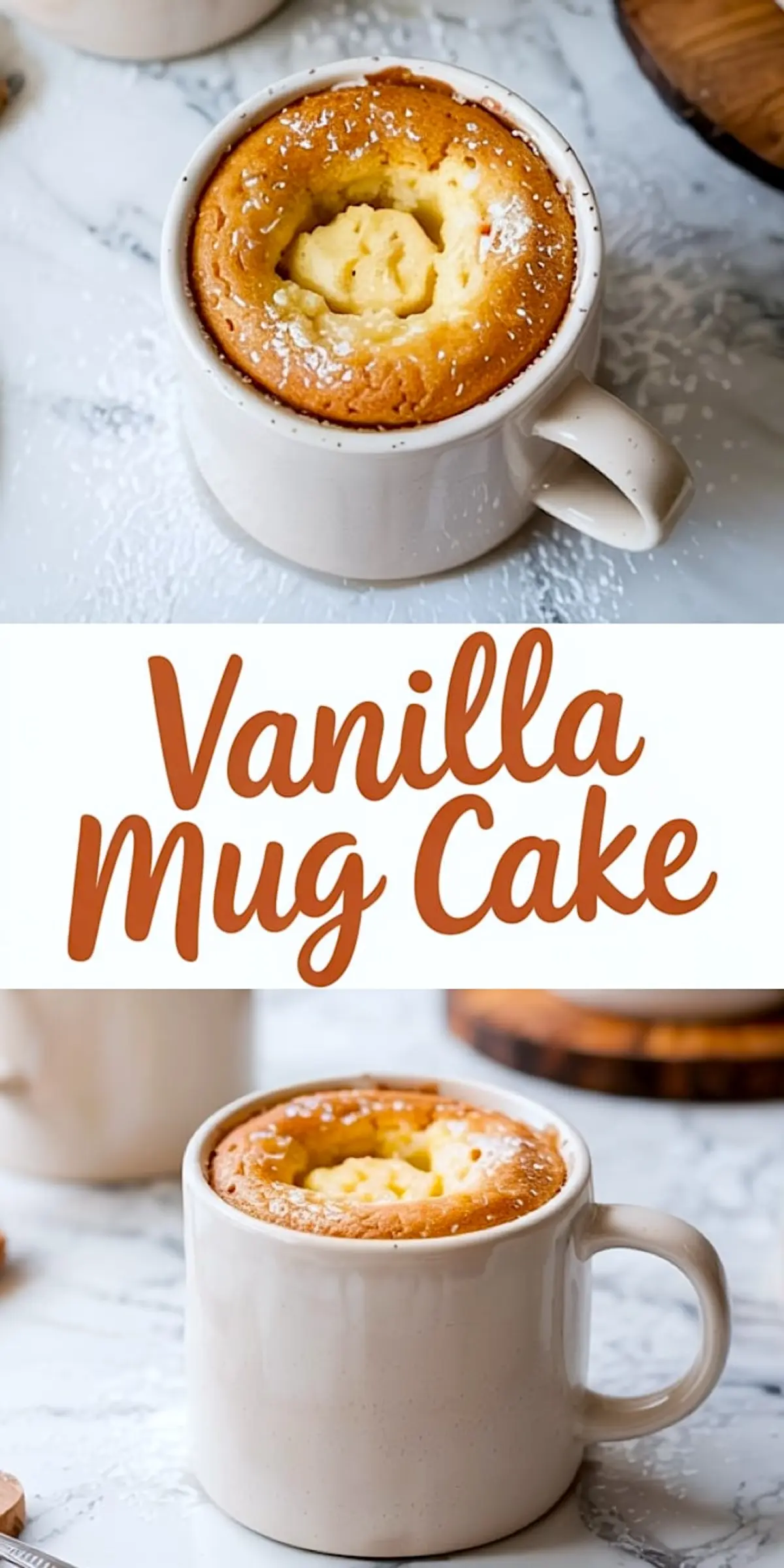
Pin this vanilla mug cake so it is ready the next time a late night craving hits, and tell me in the comments how you topped yours.
Vanilla Mug Cake

This vanilla mug cake is a single serve microwave cake in a mug made with flour, sugar, baking powder, a pinch of salt, milk, melted butter, and vanilla, with no egg. It makes one soft, fluffy mug cake in about 5 minutes: mix it with a fork right in a 10 to 12 ounce mug and microwave for 60 to 90 seconds until the top springs back. Leaving out the egg keeps the crumb light and tender instead of spongy or rubbery. Enjoy this cake in a cup as a quick late night dessert, a birthday cake mug cake with sprinkles, or a treat topped with whipped cream, jam, or powdered sugar. Start at 60 seconds in a 1000 watt microwave and closer to 90 in a 700 watt one. It is best eaten warm.
Ingredients
- 4 tablespoons all-purpose flour
- 2 tablespoons granulated sugar
- ¼ teaspoon baking powder
- Pinch of salt
- 3 tablespoons milk (any kind, whole milk preferred)
- 1 tablespoon unsalted butter, melted
- ½ teaspoon pure vanilla extract
- Optional: white chocolate chips, cinnamon, or powdered sugar for topping
Instructions
- GRAB A MICROWAVE-SAFE MUG: Choose a mug that holds at least 10 to 12 ounces to prevent overflow as the cake rises during cooking.
- MIX DRY INGREDIENTS: Add flour, sugar, baking powder, and salt directly into the mug. Stir with a fork until evenly combined.
- ADD WET INGREDIENTS: Pour in the milk, melted butter, and vanilla extract. Mix thoroughly with the fork until the batter is smooth and no dry spots remain.
- MICROWAVE: Heat the mug on high for 60 to 90 seconds. Begin with 60 seconds and check the center. If it appears undercooked, continue microwaving in 10-second intervals until the top looks set and springy.
- COOL SLIGHTLY & SERVE: Allow the cake to rest for 1 to 2 minutes before eating. Add optional toppings like powdered sugar or whipped cream if desired. Enjoy warm straight from the mug with a spoon.
Notes
Microwave wattages vary, so exact cook time may differ slightly: start checking at 60 seconds in a 1000 to 1200 watt microwave and expect closer to 90 seconds at 700 to 900 watts. Use a mug that holds at least 10 to 12 ounces. Stir only until smooth. Avoid overcooking to keep the cake soft and moist, and let it rest 1 to 2 minutes before eating. Best enjoyed warm within 10 minutes.
